Interview by Belén Vera
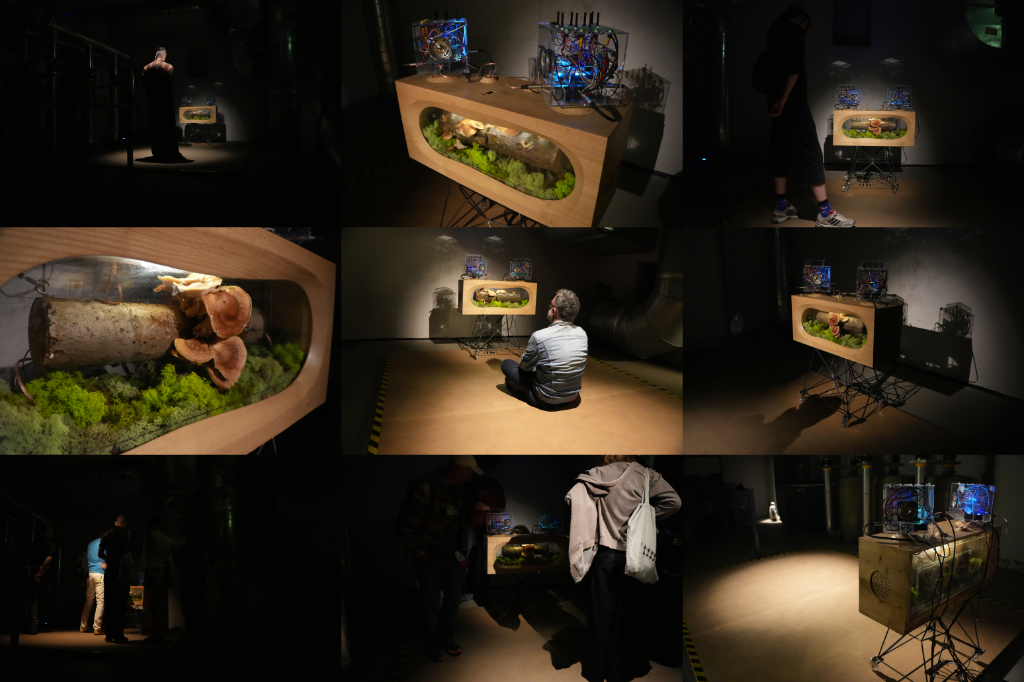
What would you think of an artwork that turns the electrical activity of fungi into sound, not as a metaphor, but as a way of listening to how soil regenerates itself? In the practice of Santiago Morilla, this gesture is not an eccentric experiment but part of a long-term investigation into how humans might inhabit a world marked by contamination, ecological decline and multispecies interdependence. His installation Ritual Device for Fungal Humus Culture, presented in the exhibition PANIC: Complex. Absurd. Ominous at Ars Electronica Festival in 2025, transforms the growth of saprophytic fungi into a responsive soundscape that shifts according to both fungal activity and the movements of the audience, detected through sensors embedded in the soil. What emerges is an interactive environment where humans and fungi modulate each other’s presence through sonic feedback, suggesting a form of empathy that is both performative and ecological.
Developed during the Tilling Roots and Seeds residency programme, the project asks a question central to Morilla’s research: what does it mean to care for soil today, and how might that care influence the way we grow food, imagine futures or coexist on a damaged planet? In his work, the soil is no longer a passive surface but an active partner; a place where decomposition, recycling and regeneration become political acts, revealing the crucial role of interspecies collaboration in sustaining the conditions of life.
This installation is not an isolated case within Morilla’s practice. Across photography, video, digital cartography, site-specific installations, and performative actions, he explores the intersections of aesthetics, politics, and cultural ecology. His projects often address the invisible infrastructures that sustain ecosystems, as well as the fragile negotiations that occur between humans, animals, plants, fungi and technological agents. Rather than simply representing these relationships, Morilla builds devices, actions and experiential interfaces that allow them to unfold in real time. These prototypes of encounter—what he terms “political parliaments”—invite different species to become participants in shared processes, testing alternative modes of communication, coexistence and decision-making.
Whether working with fungal bioelectricity, the hydropolitics of rivers and reservoirs, or the coevolutionary behaviours of ants and plants, Morilla’s work expands the notion of who and what can be considered a political subject. His installations encourage audiences to recognise themselves as part of interconnected metabolisms and fragile symbioses, positioning art as a laboratory for multispecies understanding. Behind these experiments Santiago Morilla imagines future forms of ecological attention and why listening may be one of the most urgent cultural practices of our time.
At what point did you realise that your artistic practice would become so directly connected to science, ecology and research based on living processes?
I think understanding why my practice is so strongly linked to science, ecology and living processes requires explaining where I come from. My background has been hybrid from the beginning. I started by studying science, specifically Agricultural Engineering, after an education centred almost entirely on scientific disciplines. I spent two years in that technical degree, which I found interesting, but it didn’t fully satisfy me.
At the same time, my life was moving in other directions. I earned my first salary as a musician; I was a drummer in a funk-punk band and was also painting murals and doing graffiti in the streets. I’ve always had that mix between the sciences and the living arts, between the technical and the performative, between the public sphere and the visual. Over time, I’ve even come to understand that hybridity through neuroscience: activities such as music or sport activate different areas of the brain and create connections that bridge analytical thinking and intuitive thinking. For me, that was simply natural.
Eventually, I left Agricultural Engineering and enrolled in Fine Arts. I completed the degree specialising in New Media in Helsinki, and began working as a web and interactive programmer while continuing to intervene in public space. That dimension of the public has always been fundamental for me: the idea of working outside the gallery, in contact with human communities, but also, as would later happen, with non-human communities.
That was when I began to realise that public space is not only a social ecosystem, but also a biological, material and climatic one. Plants, animals, fungi, and mycorrhizae, as well as abiotic factors such as temperature, humidity, and wind, profoundly shape our dynamics. My practice began to grow aware of this, and without planning it, I entered the field of ecology as a scientific and cultural discipline. It wasn’t an epiphany, but an organic process in which my interests gradually aligned.
Your installation Ritual Device For Fungal Humus Culture was presented at Ars Electronica 2025 within the exhibition PANIC: Complex. Absurd. Ominous. In what way did this work respond to the questions around fear, complexity and imagining possible futures?
This project was born within a European programme about the future of food and the crises we will face regarding access, soil quality and sustainability. I won a residency grant in Barcelona and worked with several teams, from the University of Barcelona to hydroponics companies such as Tectum Garden, food research centres like Fundació Alícia or the Ferrer Foundation, in a context where art was not meant to illustrate but to generate knowledge through its own logic.
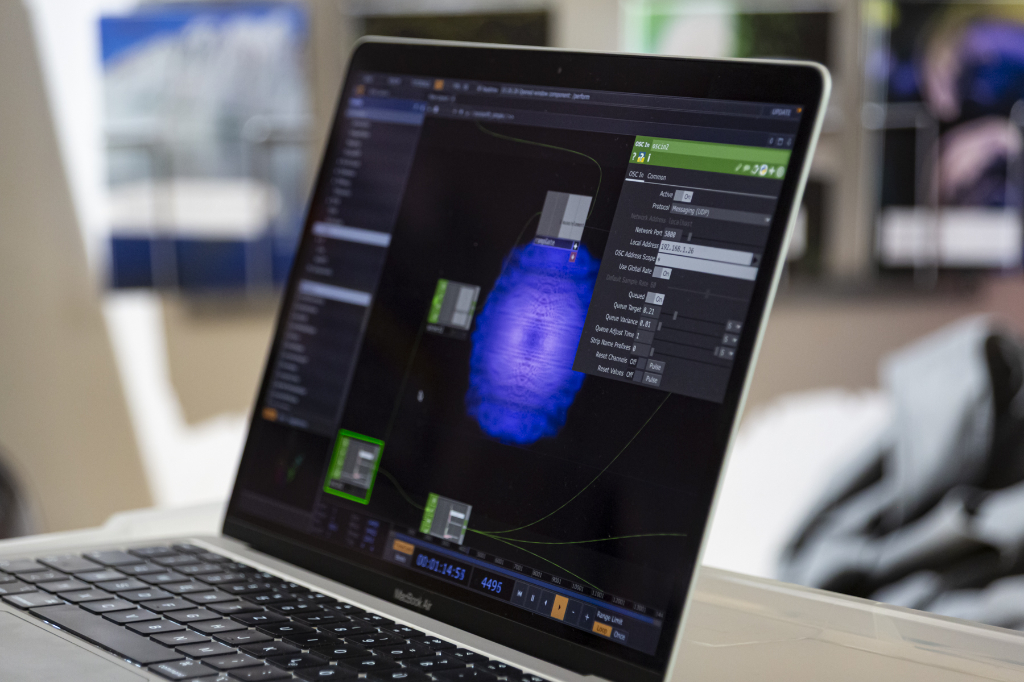
As I researched regenerative agriculture models and non-extractive practices, I understood that soil health, its microbiota, its rhythms, and its capacity to regenerate were essential indicators for imagining viable food futures. That is where my artistic research took shape. Together with collaborators such as Joaku de Sotavento, we developed a device capable of monitoring and sonifying the electrical activity of mycorrhizae and plants, translating those impulses into MIDI data and audiovisual records. This process evolved into a piece that connects science, technology and living ecosystems to think about how we imagine, and how we feel, the possible futures of food and of caring for the land.
The piece transforms fungal activity into sound through biosonification. Could you explain how this process works? How do the metabolic and electrical changes of fungal growth become sound within the installation?
The process begins by monitoring electrical and metabolic changes in fungal cultures, especially in mycorrhizae and saprophytic fungi such as shiitake, using sensors that measure their bioelectrical activity. These impulses are translated into MIDI values, which we then programme to convert into sound. In this way, the vital patterns of the fungus, from its growth, its exchange with the substrate, to its rhythmic activity, are expressed as a real-time sound composition.
Based on that scientific foundation, I developed a domestic, open and replicable device that allows anyone to cultivate mushrooms and listen to their evolution as if it were a small living sound system. The idea is that anyone can track the growth of their mushrooms through sound: when the fungus changes phase, is ready to harvest, or regenerates, its electrical activity varies, and the piece translates this into an audible experience. It’s a way of bringing these processes into everyday life, turning a domestic growing environment into a performative and sensory installation.
In the project, you state that everyone should be a musician, dancer and mushroom farmer at the same time. How should we understand this statement within the logic of the work?
When I say that “everyone should be a musician, dancer and mushroom farmer at the same time,” I mean something both symbolic and very practical. We need to relate to living systems with a more refined, embodied and sensitive form of attention. In the project, mushroom cultivation is not just about producing food; it is about learning to listen to their electrical rhythms and metabolic variations. Biosonification allows us to perceive that activity as if it were a real-time musical composition.
That’s why I talk about dancers and musicians: when interacting with the installation through movement, weight, and the vibration of the body, visitors enter into a sonic dialogue with the fungal ecosystem. The piece proposes exactly that: understanding that our presence modifies the environment and that the environment responds to us. Being a “farmer, musician and dancer” is, ultimately, an invitation to cultivate a more reciprocal, attentive and creative relationship with the living processes that sustain us.
How did the residency Tilling Roots and Seeds influence the evolution of the project?
The Tilling Roots and Seeds residency was decisive for the project’s evolution because it allowed me to work in a decentralised way and adapt the research timeline to each phase’s needs. It wasn’t a fixed residency; I spent periods in Bologna (Italy), Barcelona, Murcia, Asturias, and Badalona, depending on the people, laboratories, or communities I needed to work with. This flexible format gave me access to a very diverse range of profiles (scientists, farmers, mycology experts, and ecological centres), and each encounter shifted the direction of the project.
I entered with an initial idea, but the more I learned about regenerative agriculture, soil microbiotas or mushroom production, the more the work itself changed. As in the most alive forms of research, the project ended up shaping me as much as I shaped it.
What political dimensions do you see in humus and in working with microorganisms? Can we think of soil as a territory of resistance in times of ecological collapse?
Soil is, literally, a battlefield — not only ecologically but politically. The word “human” shares its root with humus, the common substrate on which we depend for food and for sustaining life. Yet we continue to treat soil as an inert territory, available to be exploited, displaced or contaminated without consequence. But it’s the opposite: in a single spoonful of healthy soil, there are more living beings than visible stars in the sky. An immense network of organisms, symbioses and mutualisms upon which our food, and ultimately our survival, depends.
As I delved deeper into the research, I realised it is not enough to talk about plants or air; we must look below, to fungi, mycorrhizae and soil itself as a living ecosystem. Numerous researchers say it: our future will depend on how we treat soil, whether we recognise it as an equal with rights or continue reproducing the extractivist logic inherited from a Judeo-Christian worldview of human dominion (linked to mastery, the desacralisation of nature, and an anthropocentrism that places humans at the “top of creation”).
That is where the political dimension emerges. What we eat, how it is produced, the waste we generate, the territories we contaminate, everything passes through the soil. And today that ecosystem is losing the battle: from factory-farm runoff to poor management of industrial waste, we are talking about impacts that extend kilometres beneath our feet.
This is why I’m so interested in mycorrhizae and saprophytic fungi, which are the planet’s great recyclers and indicators of ecosystemic health. In a context of ecological collapse, thinking of soil as a territory of resistance means recognising it as a living, political agent, not as a mere support for human activity.
In your project Myrmecologies, you investigate the long coevolution between plants and ants. What discoveries or insights from this evolutionary history were key to building the artistic dimension of the work? Was there something that surprised you or shifted your perspective?
In Myrmecologies, I once again work with living processes and systems involving multiple agents. And when you work with real organisms like plants, ants or fungi, the first thing you learn is that you cannot control everything. You set the conditions, design a framework, but what happens inside also belongs to those other bodies and dynamics. That loss of control, which for some researchers is a source of anxiety, is precisely what interests me. That’s where an idea is truly tested.
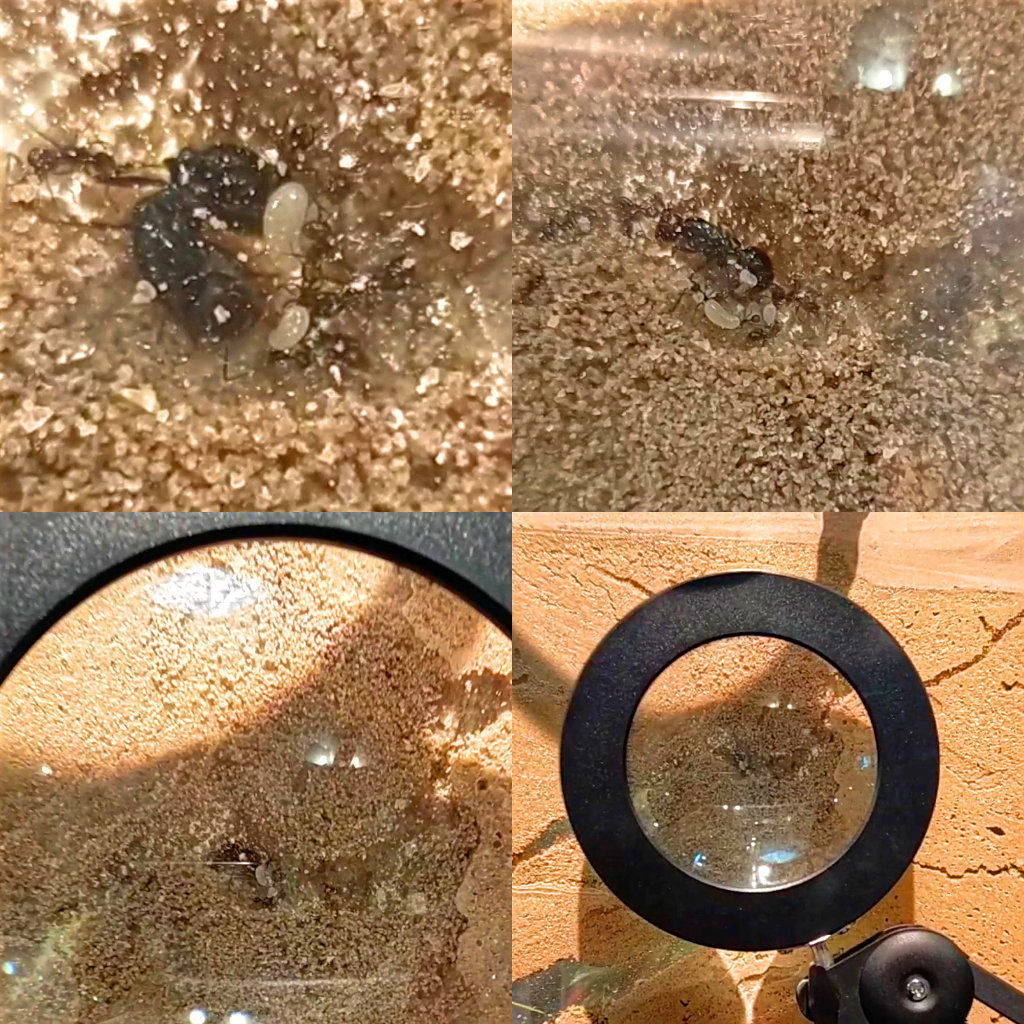
The coevolution between plants and ants was key to the project’s construction. They have spent millions of years developing cooperative relationships, from seed dispersal to territorial strategies and, in some cases, even collaborating with fungi inside their nests. Studying these interdependencies helped me imagine autonomous biotopes where each species, including humans, occupies an active place within a network.
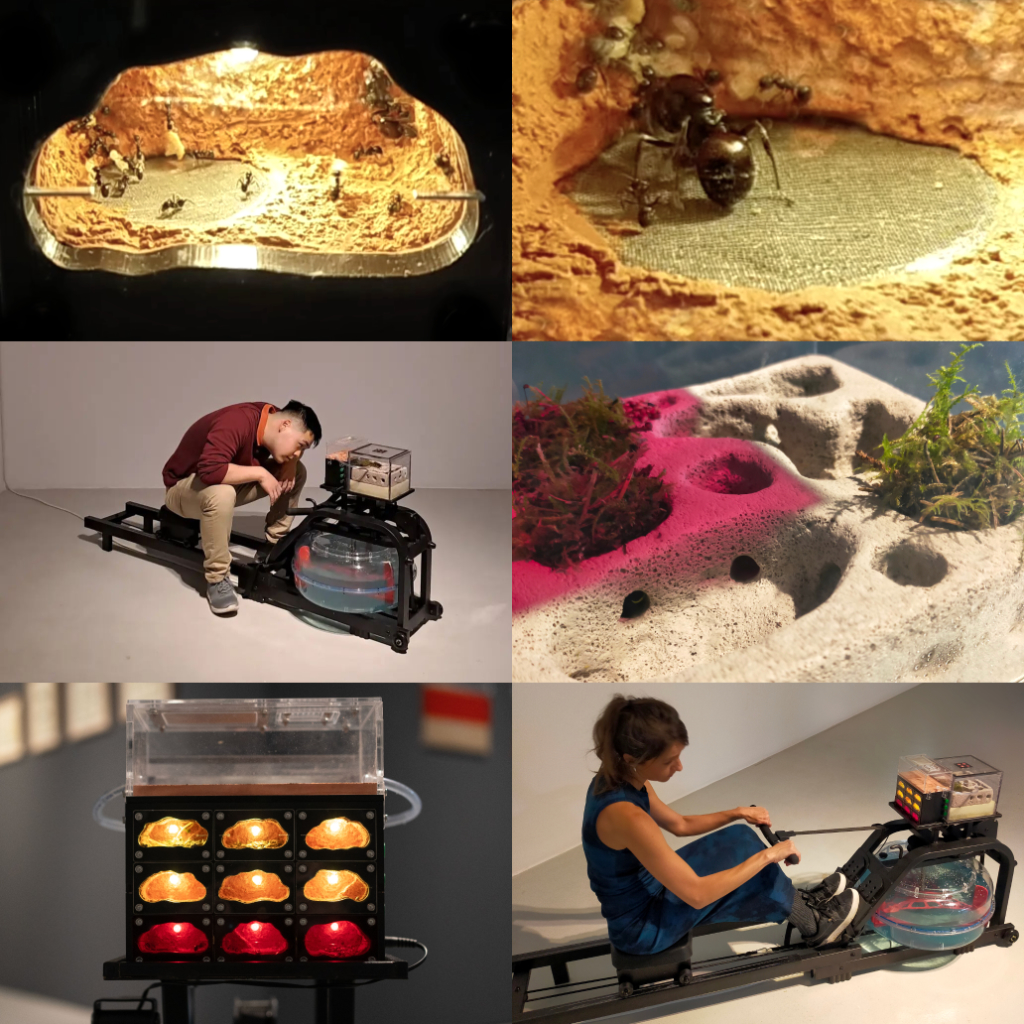
One of the challenges was understanding what plants and ants needed to coexist without suffering, what their vital minimums were. That produced a double metaphorical and relational dimension: in the installation, the human had to pedal so that the water could rise, irrigate the plants, moisten the ant nests and return to the starting point, already filtered, maintaining the equilibrium of the ecosystem. If they stopped pedalling, the system could collapse or reorganise. That tiny everyday decision revealed the extent to which our presence, or our negligence, affects what surrounds us.
Something that surprised me? Yes, the real agency of the organisms. I remember that during the exhibition at Centro Párraga, one ant escaped and formed a small colony of its own. That tiny fugitive shifted my perspective; it reminded me that the work is not a controlled scenario designed by the artist, but an ecosystem in which other beings also decide, act, and transform the space. For me, that is the heart of the project: allowing the non-human to participate, move, escape and create its own narrative.
In myrmecology, researchers speak about the affective influence of ants on ecosystems. What types of affects emerge when a human approaches a colony not as an observer, but as a caretaker?
I believe that when a human approaches an ant colony through care, several layers of affect and understanding emerge. In projects like Myrmecologies, I am interested precisely in activating those layers. At a first level, there is the sensory experience: seeing how they organise, how they build, how they respond to your presence creates an immediate empathy. Then an ethical dimension appears, understanding that they are complex, intelligent organisms with advanced architectures and behaviours, forces you to rethink how you relate to them and to other non-human beings.
But the most interesting layer arises when you commit to their care; the work affects you, and you affect the work. That reciprocity transforms perception and generates a small “micropolitics” of its own. It changes how you look at the ground, how you understand an ant nest, even how you step, or avoid stepping, on an ant after living alongside them. Suddenly, the non-human is no longer a backdrop but an agent with whom you share space and responsibility. I try to make my works operate across all those layers — formal, ethical, political, and affective — because I believe that contemporary art, when working with living organisms, is not only to be looked at but also accompanied and learned from.
For this installation, you create a situated technology that moves between the scientific and the fictional. What devices did you develop to explore interspecies relations, and what conceptual role does each play in the installation?
For this installation, I developed several artefacts that function as situated technologies, halfway between scientific and fictional. Each of them allowed me to stretch the relationship between humans and ants from a different angle. On the one hand, I deliberately built playful pieces such as a skateboard and several model aeroplane sculptures that housed small ant nests. They weren’t functional devices but sculptural provocations, objects that question the idea that we can fragment an ecosystem, put wheels or wings on it and appropriate it as a portable accessory. These gestures aimed to shift the viewer’s perception and confront them with the absurd nature of our extractive relationship with the non-human.
On the other hand, I developed fully operative machines, such as a rowing device that pumped water into the biotope. Here, the human body acts as a vital motor for the ecosystem. Rowing hydrates the ant colony, while prolonged inactivity forces the ecosystem to reorganise itself into a new equilibrium beyond our control. This feedback loop also affects the person’s physical condition, reinforcing a performative dimension that highlights coevolution and mutual dependence.
The installation was completed with a larger biotope, an ecosystem shared by plants, ants and humans, with pumping and irrigation mechanisms that kept the life cycle running. Taken together, all these devices function as an interspecies choreography: some are speculative, others functional, but all point to the same fundamental question: how we coexist, influence, and affect one another within a shared system.
You have approached water as a living archive of territory in two projects that take different directions: Hydropolitics of La Ribera del Marco and Hydropoetics of Los Barruecos. How would you describe the intuitions, experiences or questions that shaped each project, and what did you learn from moving between political critique and sensory experimentation?
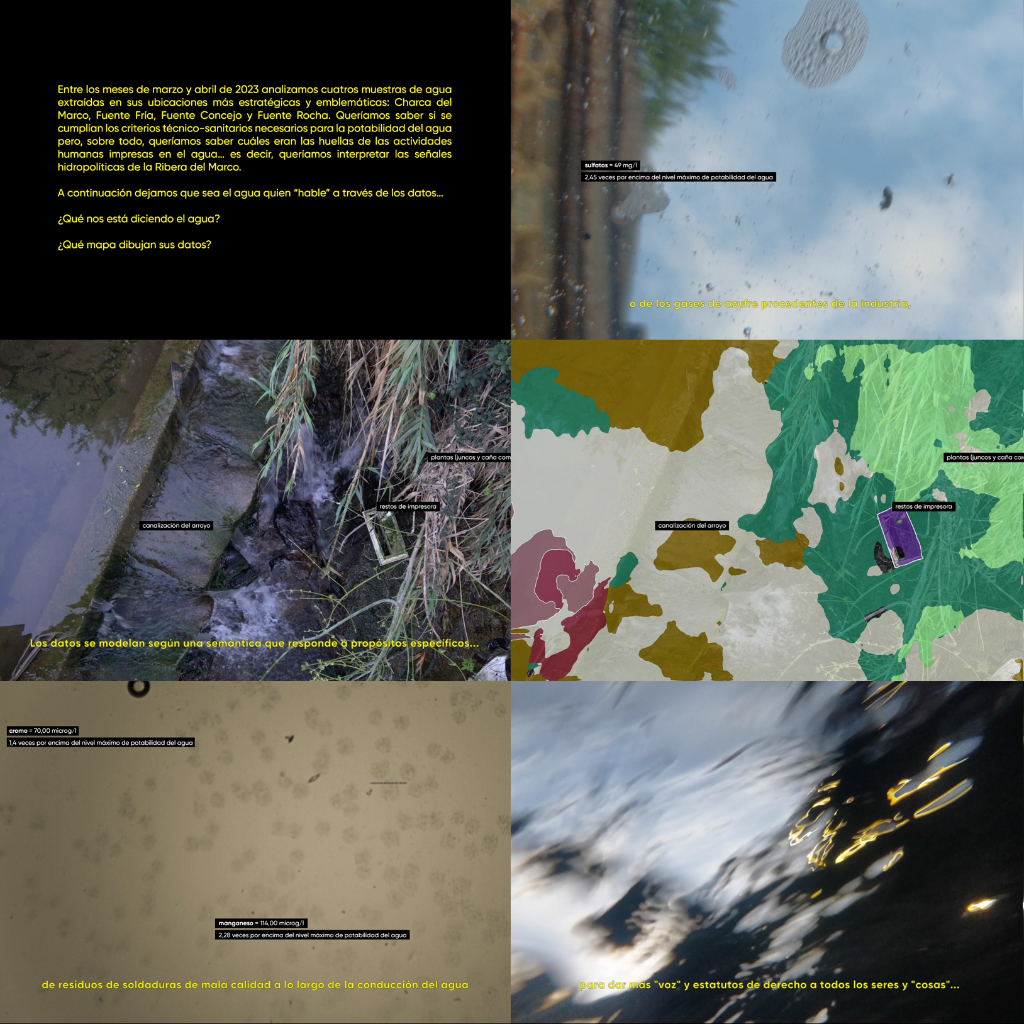
Both projects are rooted in the same impulse: allowing territory to speak for itself and understanding water as both a political and sensitive entity. In the context of the festival Cáceres Abierto, I worked from a situated practice, arriving without a preconceived work, listening to the place and trying to give voice, as a “parliament of things,” to what usually remains outside the “human parliament,” as Bruno Latour would say.
In La Ribera del Marco, that process led me to engage in openly political research. The city has grown with its back to a historical spring, degraded by industrial and mining pollution, from which the population still paradoxically drinks at several of its fountains. My proposal was simple and direct: analyse the water with a specialised laboratory and present the data exactly as they were, without interpretation. Posters with phrases like “Do you know how many sulphates you’re drinking here?” were considered a cause for public alarm and censored two days before opening. That conflict revealed to me just how political ecology always is.
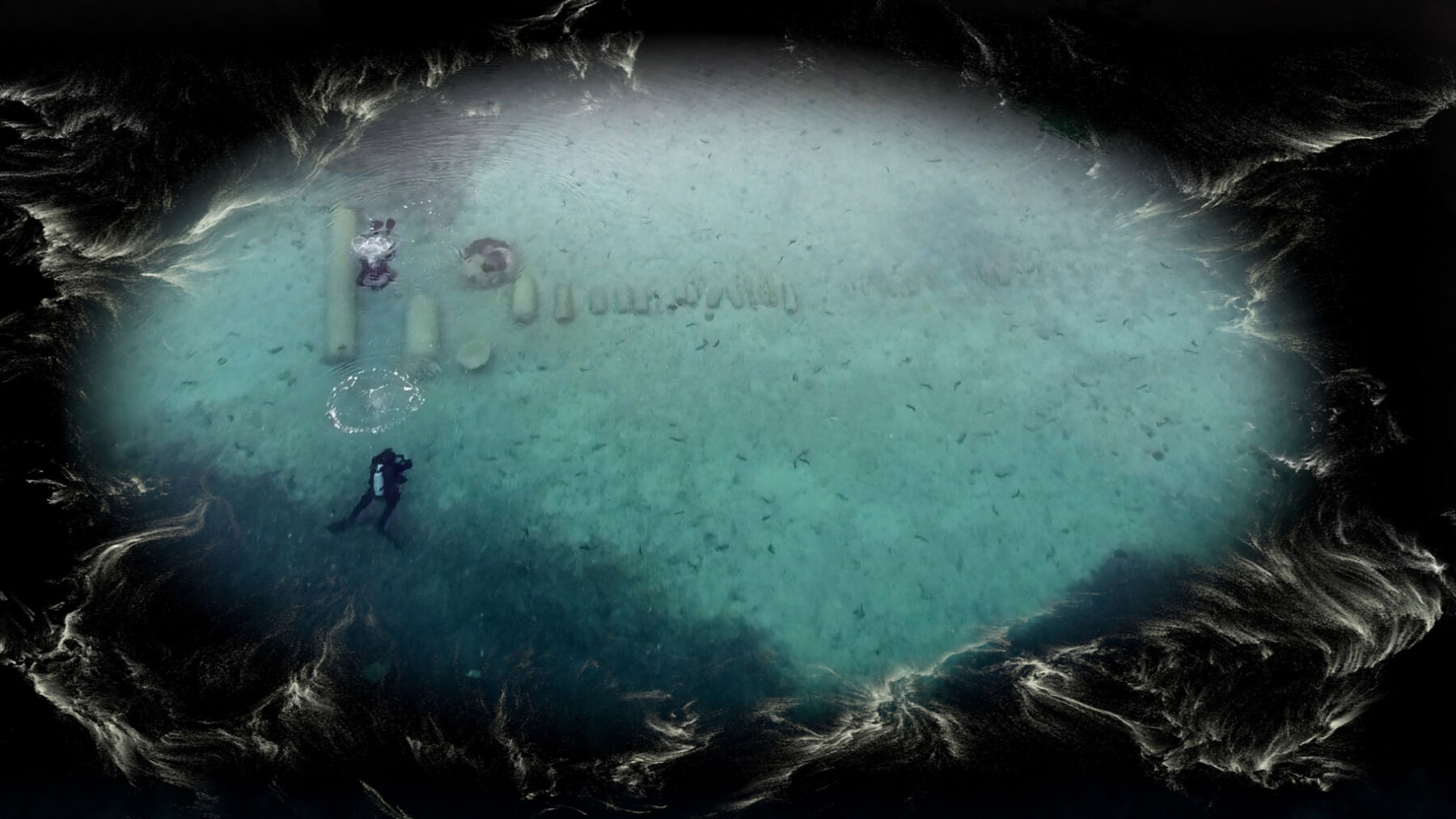
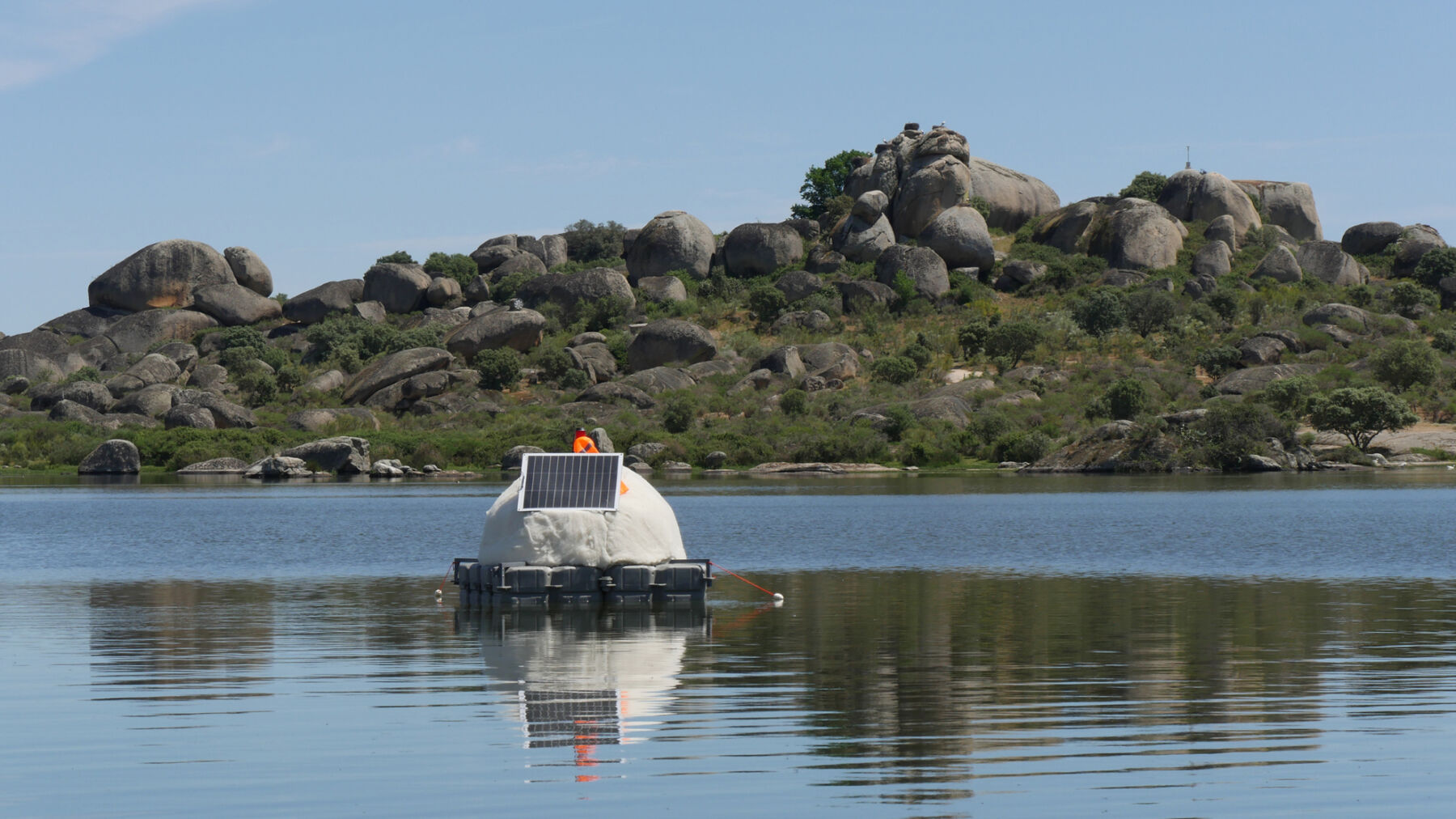
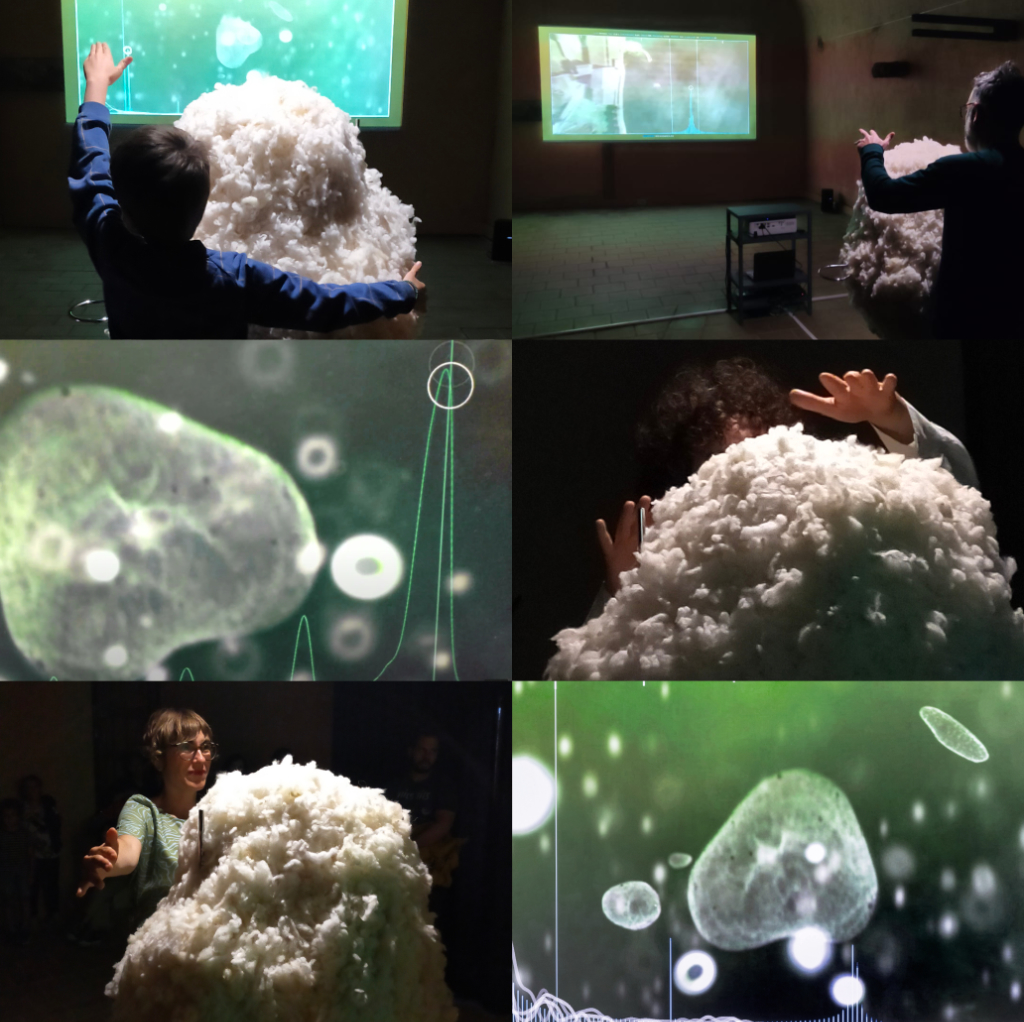
In Hydropoetics of Los Barruecos, however, I was interested in water as a sensory and poetic threshold. I installed a large, self-sufficient buoy with solar panels, biotic and abiotic sensors, and an underwater camera that transmitted data in real time to the museum. These data modulated a theremin sculpture so that the public could see and hear the reservoir change through its own movements. Here, the relationship with water was more experiential: a choreography between the human body, sound and underwater life.
Moving between both projects taught me that water can be at once a political archive and a sensitive organism, a space of conflict and a poetic mediator. Each territory demands its own language.
What are you reading, what inspires you lately, or which artists, musicians or thinkers do you feel accompany your research?
Recently, I’ve been very immersed in everything published by the Argentinian publisher Caja Negra. I’ve been particularly influenced by Let’s Become Fungi: The Art and Teachings of Mycelium by Yasmine Ostendorf-Rodríguez, The Mushroom at the End of the World by Anna Lowenhaupt Tsing, and Art and Cosmotechnics by Yuk Hui. I’m also absorbed by The Jerusalem Mulberry by Paola Caridi (Errata Naturae), a history of war and resistance in Palestine and the Middle East told through the perspective of trees.
In terms of sound, I listen to a lot of ambient electronics, drones, and dark ambient, and I closely follow the German label Nonplace, with Burnt Friedman as a constant reference. In Spain, I’m a big fan of the collective Menhir, which fuses electronics, ambient, and mysticism, and I also often return to the Nordic nu-jazz of the Jazzland Recordings label or the Belgian-German project Dictaphone, which mixes minimalist jazz and musique concrète with a post-punk spirit.
As for artists accompanying my research, the list is long, but right now I’m especially interested in Laura Cinti, Forensic Architecture, Trevor Paglen, Heath Bunting, Thijs Biersteker, and David Bowen, among others. All of them are practices that think from the edges between technology, ecology, activism and new ways of understanding the living.
After Ars Electronica, what themes would you like to continue exploring regarding interspecies relations, cultivation and sound? Tell us about your upcoming projects.
I would like to continue researching living soils and their biosonification, as well as situated technologies, solarpunk and transdisciplinary approaches to pollination. Pollination is understood as a reproductive metaphor between species and as a vital process of collaboration and communication, in which design and art operate as mediating practices between botany, ecology, architecture, and contemporary thought to design shared worlds. In this regard, I am currently participating in an R&D process that will activate a series of design, production, activation, and support processes for urban pollinator gardens, involving artistic platforms, researchers, scientists, and other local community agents.
In addition, in 2026, I will take part in several group exhibitions and a solo project at a Media Art festival in Germany, all centred on post-nature and eco-critical art, addressing the increasingly widespread idea of ecosystemic collapse and problematising our technological dependence. I also plan to premiere a video essay in a medium-length format, the result of extensive research on mycorrhizae and saprophytic fungi as indicators of crop and forest health, respectively.
What’s your chief enemy of creativity?
Oversaturation, accelerated rhythm, multitasking, the kind of exhaustion that leaves no room for intuition or rest. Creativity needs unproductive time, slowness, and the possibility of boredom without guilt.
You couldn’t live without…
Empathy. It is the minimum condition for any form of coexistence — human or interspecies — and for any act of creation. Without empathy, the world becomes a territory of domination; with it, it can become a space of relation based on the intrinsic value of the beings that surround us.