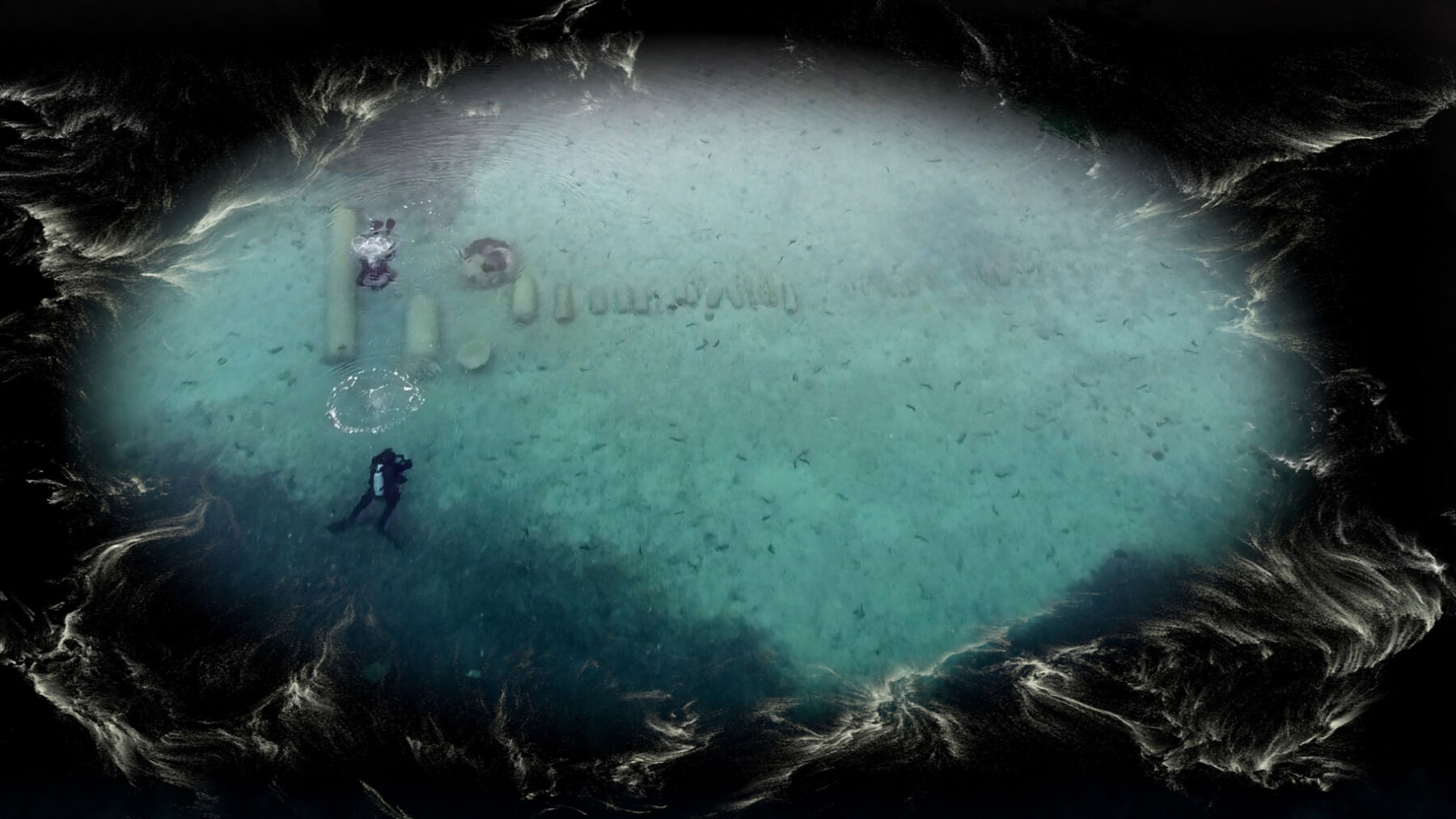
Text by Nam Huh
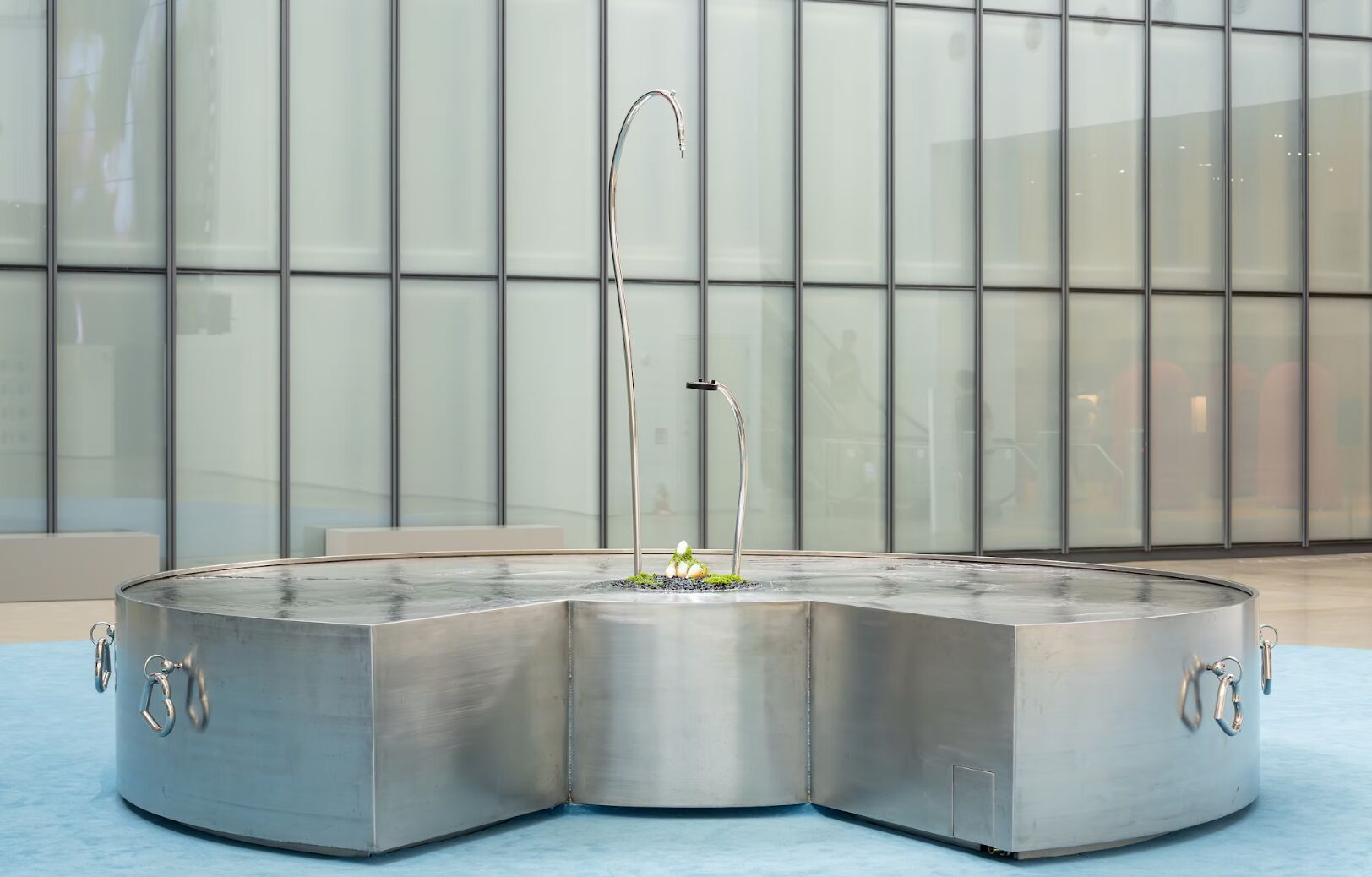
The Architecture of the Already-Decided
We exist within a strange temporal paradox where the future has never been more loudly discussed, but has never felt more narrow. It arrives not as an open horizon, but as a pre-packaged commodity, delivered through the cold, clean logic of the predictive model. This is the era of the foreclosed future, a landscape where every potentiality is calculated and filed away long before we have the chance to inhabit it. From the high-frequency trading algorithms that dictate economic inevitability to the climate simulations that present ecological collapse as a mathematical certainty, we are witnessing the transformation of time into a fixed asset. The future is no longer a site of wonder or struggle; it is a territory already mapped and surveyed, further settled by the interests of the present.
Walk into any boardroom or institutional corridor, and you will find a narrative ready-made. Whether it is a venture capital firm or a state-sponsored ecological agency, the script remains remarkably consistent. Innovation is presented as an inevitability to which we must submit; disruption is rebranded as progress; even the most visceral crises are treated as branding opportunities for resilience. The result is a profound sense of atmospheric suffocation. Our collective imaginary is shrinking even as the rhetoric of the new expands. We are being force-fed an authorised shape of tomorrow – a sanitised, planetary-scale visualisation, rendered in the high-resolution blues and greens of a corporate keynote, which demands that we either adapt or fall behind.
This machinery of prediction does not merely observe the future; it creates the very conditions it purports to see. It functions as a sophisticated filter, a high-pass sieve that identifies risk and opportunity while quietly sifting out the erratic, the minoritarian, along with the unprofitable. By the time the forecast reaches our screens, the excess of human and non-human life has been purged. What remains is a monoculture of time – a singular, unyielding track that leaves no room for the drift, the detour, or the queer survival. It is a world where the spreadsheet has replaced the soil, and the calculation has replaced the dream.
The Plasticity of Prognosis
To challenge this enclosure, we must turn toward a methodology of plastic prognostics. This is not a search for a more accurate prediction or a more powerful algorithm; that would only be a faster way to the same dead end. Instead, it is a move toward a methodology of tending. As philosopher Catherine Malabou posits, plasticity is the capacity to both receive form and to give form. [1] A plastic material can be moulded by external forces, but it also possesses a certain resistance – a power to explode the very form it has been given.
In the digital realm, we often mistake fluidity for plasticity. But where fluidity suggests a frictionless movement, plasticity suggests a struggle. It suggests that the future is something we must work with manually, heat up, and reshape. To tend is to shift our posture from the mastery of the forecaster to the humility of the gardener. It is to acknowledge that the future is not a destination to be reached, but a living, mutating entity – one that requires care, vulnerability, and, most crucially, the allowance for malfunction. By leaning into this plasticity, we reclaim the future from the domain of the calculated and return it to the domain of the contested, the wet, and the beautifully undecided.
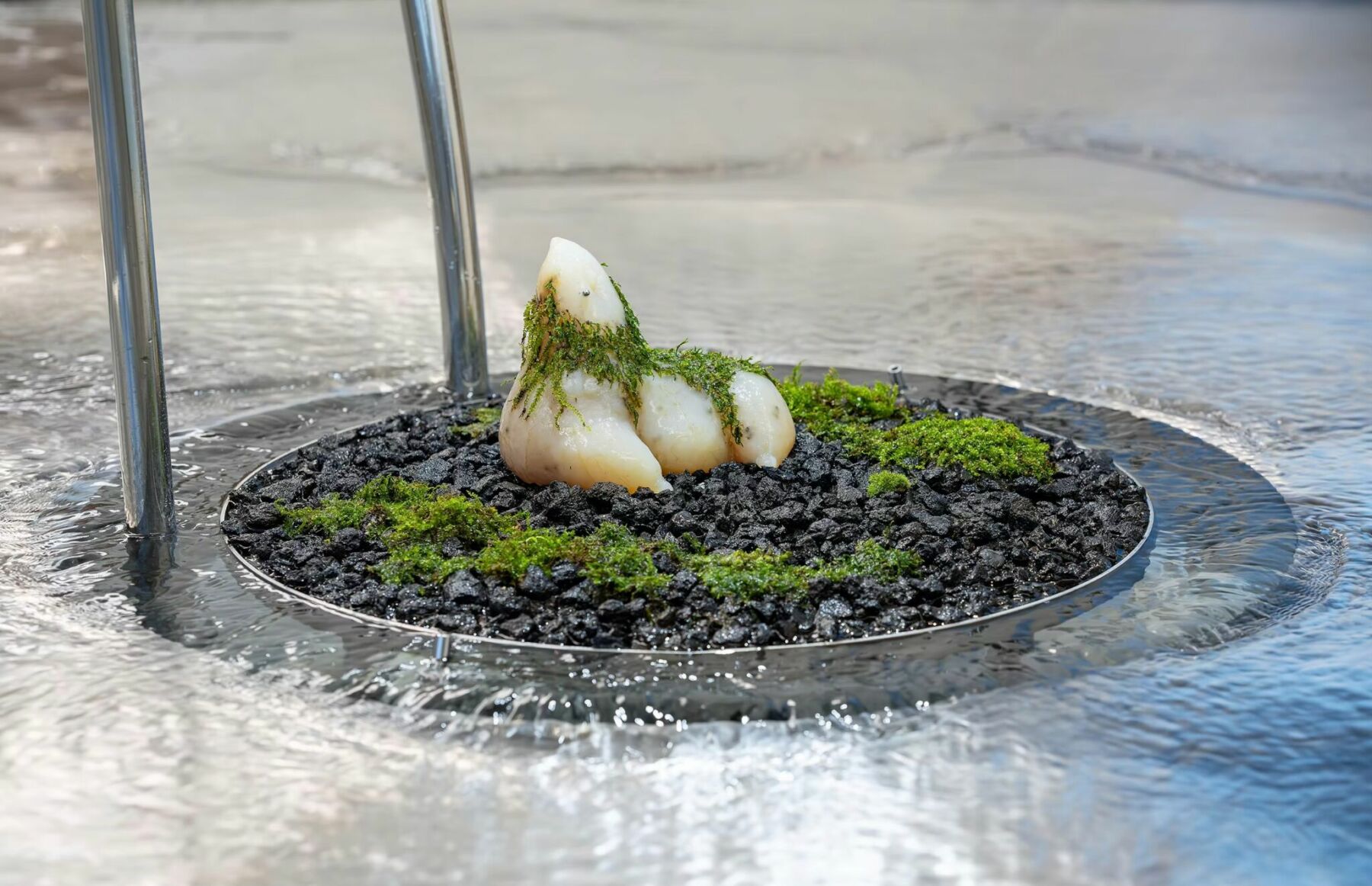
Monsters in the Latent Space
If the institutional forecast is a dry, static map, TZUSOO’s work is a sudden, torrential downpour. In the 2025 project Agarmon, the predictive model’s sterile surfaces are flooded with a different kind of data – the kind the machine was never meant to hold. TZUSOO does not attempt to fix the AI or make it more representative; instead, she leans into its capacity for hallucination, treating the machine’s errors as a fertile soil for a new kind of synthetic biology.
The organisms that populate Agarmon are not the clean, recognisable flora and fauna of a standard ecological simulation. They are jittery, iridescent entities that seem to vibrate with the tension of their own making. There is a specific wetness to these renders – a digital viscosity that feels almost tactile. It is as if the plastic of the screen has begun to melt and reform into something monstrous. These creatures do not move with the pre-programmed grace of an optimised avatar; they stutter. They exhibit a temporal dissonance, moving at a frame rate that feels out of sync with the world around them.
This stutter is not an accident – it is a refusal. By centring the hallucination, TZUSOO disrupts the authorised shape of the future. While the tech-industrial complex uses AI to predict and control the environment, TZUSOO uses it to create a habitat that is inherently uncontrollable. She shows us that the latent space of the machine – the mathematical gap between what the AI knows and what it imagines – is actually a site of radical plasticity. In Agarmon, the monster is not a threat to be managed by an algorithm; it is a neighbour to be tended to. It is a reminder that the future is still capable of surprising us, provided we are willing to listen to the glitch rather than the forecast.
Tissues of the Otherwise
To understand how TZUSOO’s monstrous ecologies connect to the human experience, we must look at the scale of the habitat. While TZUSOO works in the expansive, simulated outdoors of the machine’s mind, Yarli Allison moves the focus to the most intimate habitat of all: the body. There is a profound bridge between these two practices found in the concept of minoritarian care. Where TZUSOO’s work breaks open the external landscape, Yarli Allison’s Stem Cell Clinic (2025) turns that same plastic impulse toward the interior landscape of the body.
In the Stem Cell Clinic, the digital space is transformed into a sanctuary for histories that the authorised future has tried to erase. For the diasporic and queer subject, the future has often been foreclosed by the traumas of the past. Allison counters this by creating a virtual environment where the very tissues of the body are treated as a malleable archive. The visual field is dominated by simulated membranes and translucent layers of skin that appear to breathe and pulse. Unlike the non-porous, perfect skin of a commercial digital human, Allison’s textures are raw and porous. They are skin-bound histories, holding the weight of displacement while simultaneously reaching toward a new form of survival.
This is the ethics of the tissue. In the clinic, the future of the human subject is not something to be predicted by a healthcare algorithm; it is something to be tended through a process of minoritarian care. The plasticity here is deeply somatic. By using a VR/web platform to let viewers interact with these digital cells, Allison invites us into a process of mutual vulnerability. They demonstrate that speculation does not have to be a high-stakes gamble on a market; it can be the gentle, persistent act of rebuilding a lineage that was broken. In Allison’s work, the digital is no longer a cold tool of surveillance, but a soft, wet medium for healing.
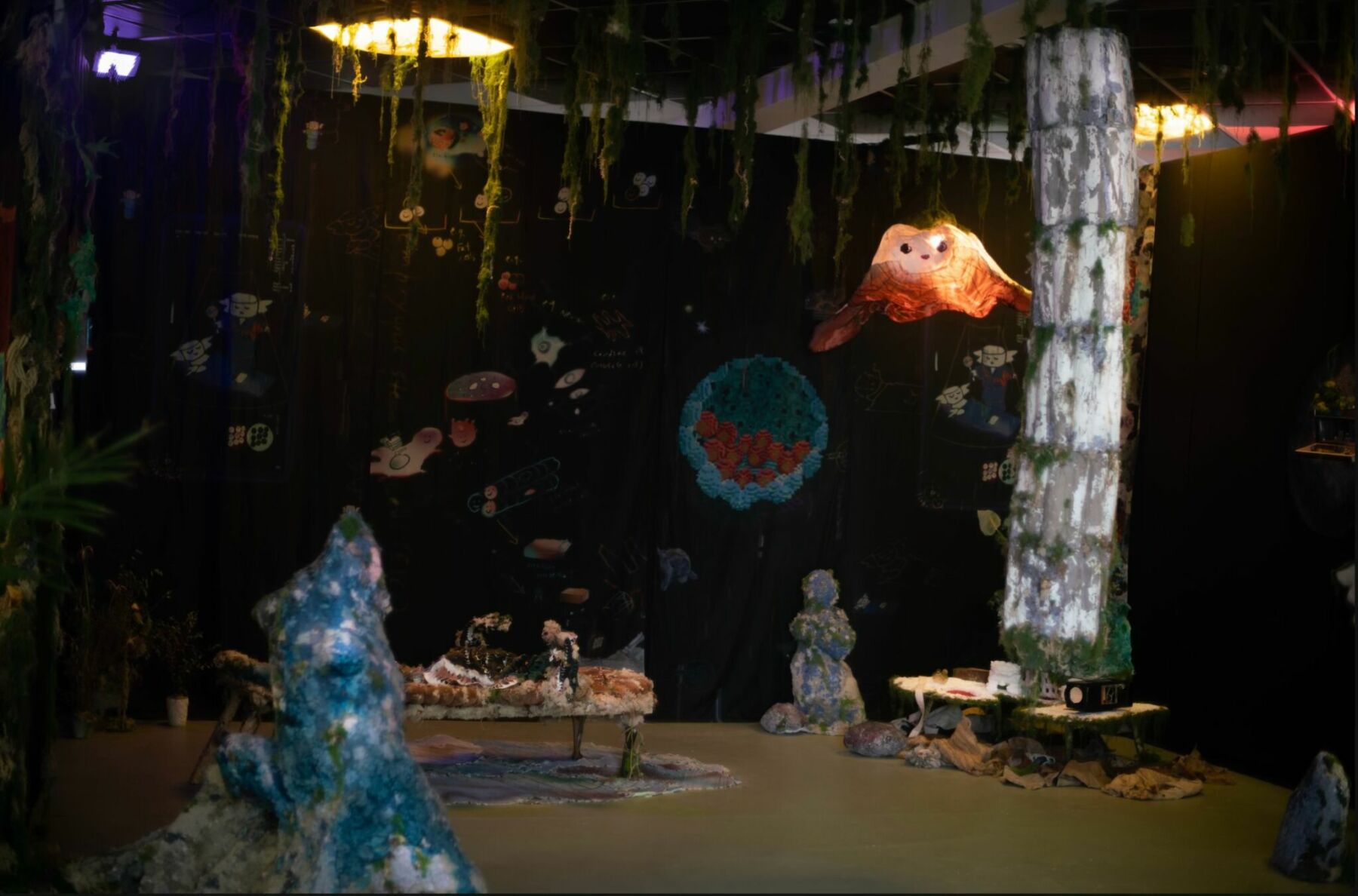
The Viscosity of Care
When we place TZUSOO and Allison together, the fragmental nature of our current technological discourse begins to heal. They are both engaged in a form of digital gardening, but they operate at different ends of the spectrum of plastic.
TZUSOO offers us a methodological experiment in how to live with a machine that is no longer behaving. She shows us that the ecological dread we feel in the face of climate modelling can be transmuted into a curious, monstrous interdependence. Allison, meanwhile, offers an ethical framework for holding on to ourselves when the machinery of the future tries to render us invisible. They show us that the temporal dissonance of the diaspora – the feeling of living in a present that doesn’t quite fit – is actually the starting point for a new kind of futurity.
Both artists are working from East and Southeast Asian diasporic positions (in Germany and the UK), a hybrid vantage point that allows them to see through the authorised Western scripts of progress. They recognise that the speed of innovation is often just a way to outrun the viscosity of care. By slowing down and leaning into the “wet” and the “glitched,” they create a space where the future is no longer a fixed asset but a contested domain. They replace the speed of the tech-narrative with the viscosity of the artistic process. They are not interested in the next update; they are interested in the next mutation.
A Manifesto for the Undecided
The plastic prognosticate demands a fundamental shift in our relationship to time. We must move away from the mastery of the forecaster – the one who stands outside of time and attempts to control it through data – toward the care of the practitioner. TZUSOO and Yarli Allison remind us that the machinery telling us the future has been decided is itself a construction. It is a form that can be melted, reshaped, and exploded.
By prioritising mutation, interdependence, and minoritarian care, we can begin to imagine otherwise. This is a strategy of drift over direction. The future is not a destination but a skin we are currently growing. It is plastic, it is wet, and it is still very much undecided. This refusal to arrive is the ultimate act of artistic agency. It is a commitment to the glitch and the unscripted moment where the plastic finally breaks, revealing the raw potential underneath. It is the realisation that in the gap between the forecast and the reality, we find our capacity to author tomorrow.