Interview by Belén Vera
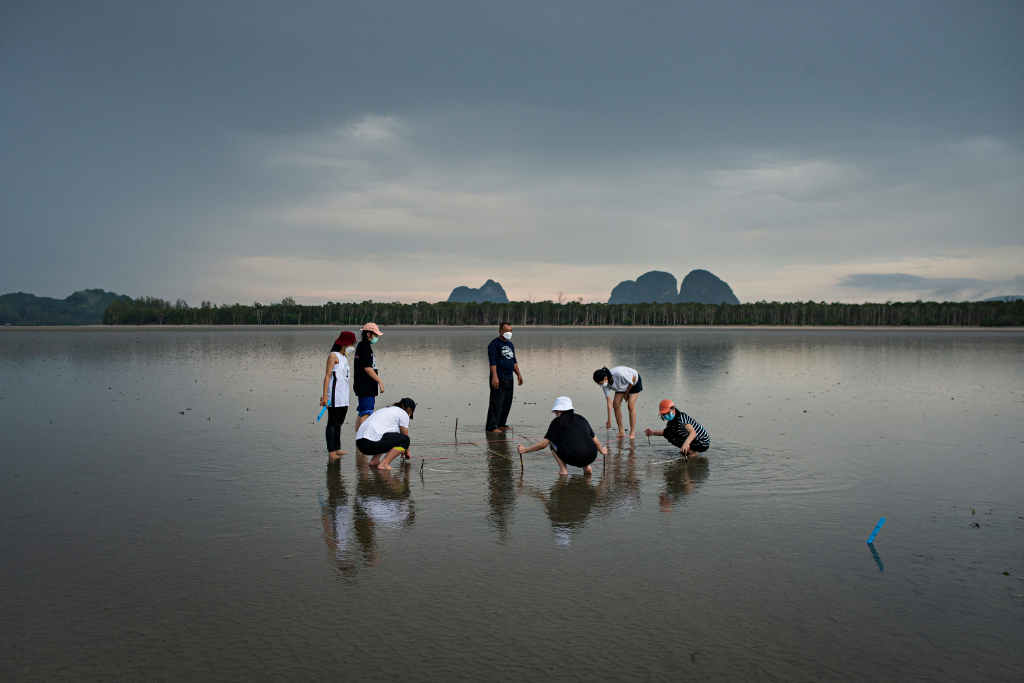
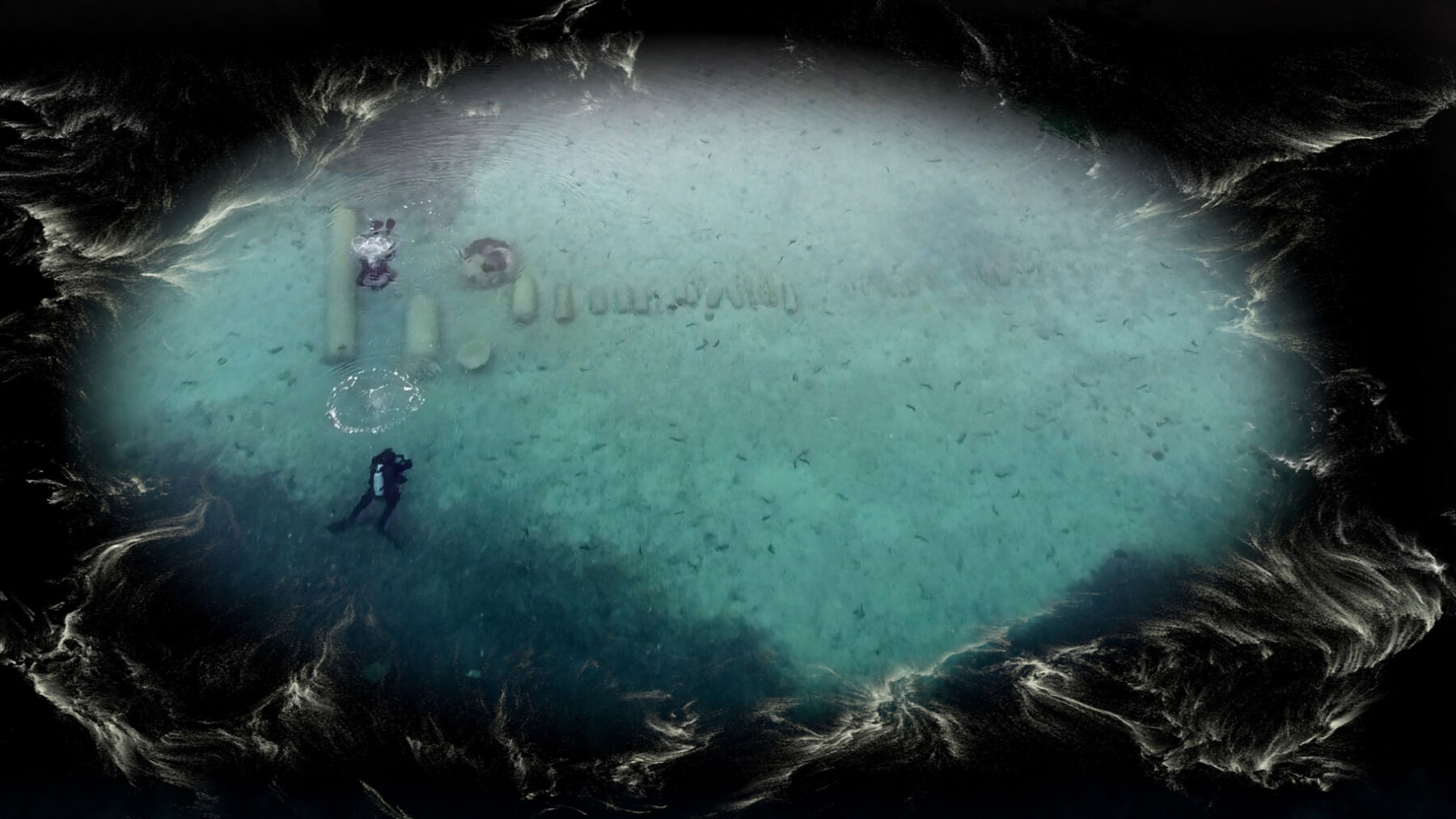
In the soft rain, the young members of the Trang community are replanting seagrass along Sikao Bay’s shores. Their reflections shimmer in the water as they work to restore what was once lost. The project began in 2004 after violent storms wiped out vast stretches of seabed along the coast. As pH and oxygen levels declined, biodiversity collapsed — the seagrass vanished, taking with it the small fish, crabs, and molluscs that had once been a vital part of the community’s diet and economy. Refusing to accept this decline, residents from across Thailand, led by local youth, started harvesting and transplanting seagrass back into the bay. Years later, their dedication is paying off. The transplanted meadows now flourish, bringing life back beneath the surface.
How can we access the processes that sustain life when they remain largely imperceptible? Giacomo d’Orlando’s practice emerges from this question, positioning photography as a tool for inquiry into the ecological and scientific systems that shape contemporary reality. His trajectory begins within the framework of commercial photography in Verona, where image-making is defined by control, clarity and production. Yet, this early stage soon revealed its limitations. The distance between producing images and engaging with the conditions they represent led him to reconsider his position. In 2015, he left the studio environment to work as a volunteer photographer in Nepal, marking a decisive shift towards a documentary practice grounded in lived contexts.
Since then, d’Orlando’s work has developed at the intersection of environmental documentation and scientific research. His projects are often informed by close collaboration with scientists, requiring a process of immersion that precedes image-making. Rather than approaching science as a subject to be illustrated, he engages with it as a system of knowledge to be interpreted. In this sense, he defines his role as that of a “visual translator”, mediating between specialised research and broader publics through a visual language that maintains complexity.
This methodology is evident in projects such as The Very Hungry Microbes That Could Just Maybe Cool the Planet, where he engages with experimental approaches to climate mitigation, or Nemo’s Garden, an underwater agricultural project that explores alternative forms of cultivation within marine environments. In both cases, the photographic image operates as a site where processes that are temporally extended or materially subtle can be rendered perceptible. His long-term project Symbiosis expands this line of inquiry into a wider ecological and social framework. Structured into three chapters spanning Southeast Asia, Australia, and the Philippines, the work reflects on the interdependence between coastal communities and marine environments.
Drawing from the biological concept of symbiosis, the project foregrounds the mutual dependencies that sustain these ecosystems, while also exposing their vulnerability. Across geographically distant contexts, recurring patterns emerge. Rising sea levels, overfishing and coral degradation produce comparable conditions, while local forms of knowledge offer convergent responses. The ocean thus operates as a transnational continuum, complicating territorial boundaries and reinforcing the interconnected nature of these phenomena.
Currently presented as a solo exhibition at The Current, a contemporary art centre located in Stowe, Vermont, where the three chapters are brought together for the first time, Symbiosis acquires a new analytical dimension. The juxtaposition of these contexts reveals a network of relations that exceeds the specificity of each site, allowing the work to be read as a broader reflection on ecological interdependence. In this context, d’Orlando’s work does not seek to provide answers, but to make visible the conditions that require new forms of attention. The following conversation expands on these ideas, offering insight into his process, collaborations and ongoing research.
You began your career working as a commercial photographer in Verona. What made you decide to leave that path and dedicate yourself to documentary storytelling?
Right after graduating from high school at 18, I took on all kinds of jobs while trying to find my way into photography. I knew quite early that I wanted to become a documentary photographer, but it took time to understand how to get there.
In 2011, I finally had the opportunity to work as an assistant in a photography studio. Those were difficult years in Italy after the economic crisis, so I was genuinely happy just to be working in that environment. But after four years, I realised that advertising photography wasn’t what I had imagined for myself. It felt distant from the reasons I had picked up a camera in the first place. I didn’t see a future in it, not only professionally but also personally.
So in 2015, I decided to take a leap of faith. I left the studio and started over, working as a volunteer photographer for an NGO supporting women victims of violence in Nepal. That experience marked the beginning of a completely different path.
The title Symbiosis suggests a relationship of mutual dependence rather than conflict. What does this concept mean to you in the context of the climate crisis?
I carefully chose the title Symbiosis for my series. I was inspired by the symbiotic relationship between corals and zooxanthellae, tiny single-celled algae that live within coral tissues. This relationship is essential to the survival of both organisms. That idea stayed with me throughout the project. In many of the places I’ve photographed, the relationship between people and the environment is still very tangible. It’s something you can observe in daily life, not just in theory. With Symbiosis, I’m trying to reflect on that connection—on how dependent we are on the ecosystems around us, even when we don’t realise it. And how easily that balance can be disrupted.
Symbiosis is composed of three chapters, photographed in Southeast Asia, Australia and the Philippines, regions with very different ecological and cultural relationships with the ocean. While working across these contexts, did you encounter fundamentally different ways of understanding the sea, or did you find common threads between them?
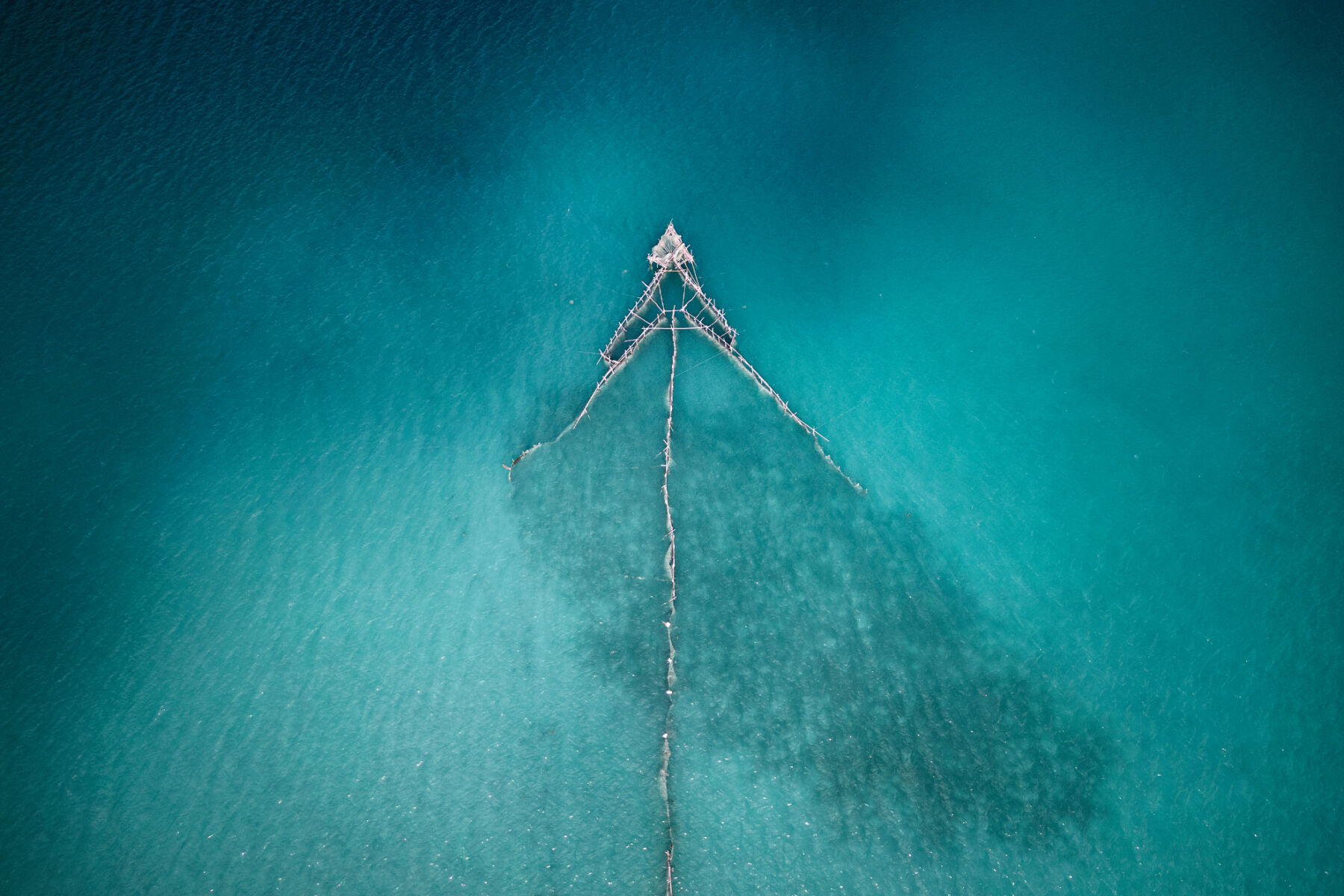
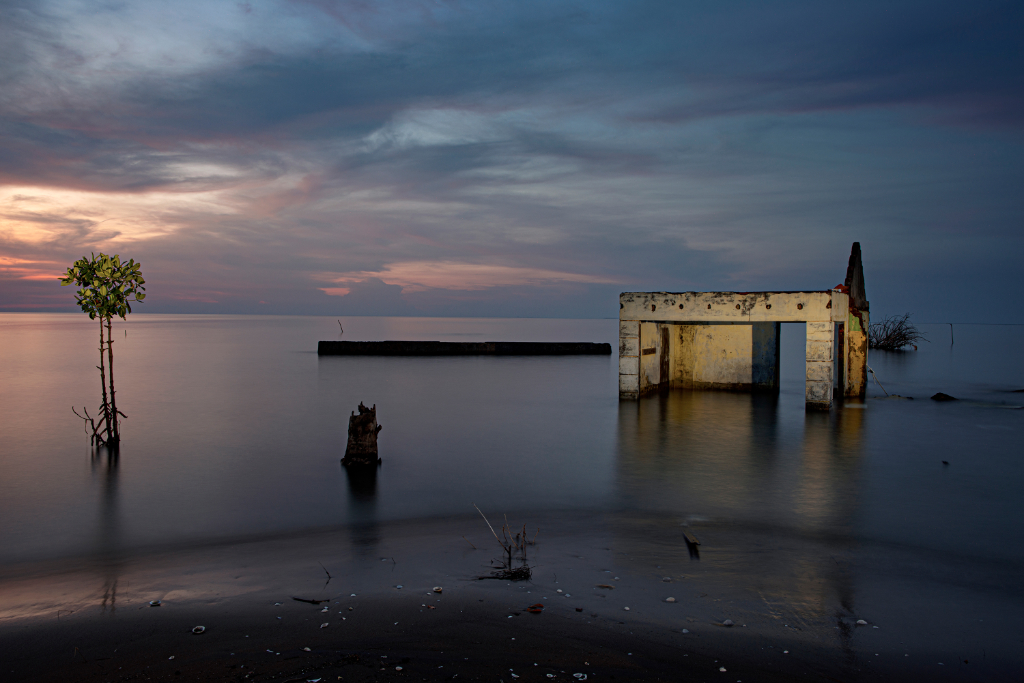
Working on Symbiosis has revealed both differences and strong similarities. While each place has its own cultural and ecological context, the ocean itself becomes a unifying element. Communities separated by vast distances often face the same challenges—rising sea levels, overfishing, coral degradation—and, interestingly, they often identify similar solutions. The ocean ignores borders. The same tides that shape a village in the Philippines influence coastlines thousands of kilometres away. That continuity became one of the project’s underlying structures.
At The Current, the exhibition brings together the three chapters of Symbiosis for the first time in a single space. How does seeing these different regions together change the narrative of the project?
Seeing the chapters together makes that sense of connection much clearer. When the work is presented separately, each story stands on its own. But when they are brought into the same space, you start to notice patterns and echoes between them. For me, that’s an important step, because the project was never meant to be about isolated places—it’s about the relationships that link them together. I see Symbiosis as an evolving project, and expanding it to other regions will make these connections even more visible over time.
Seeing the project presented as a whole, did it reveal connections or meanings that were not so evident while you were working on the individual chapters?
Yes, absolutely. At the beginning, I was focusing on specific places because of particular issues or solutions I wanted to document. But over time, I started noticing how similar those responses were across different countries.
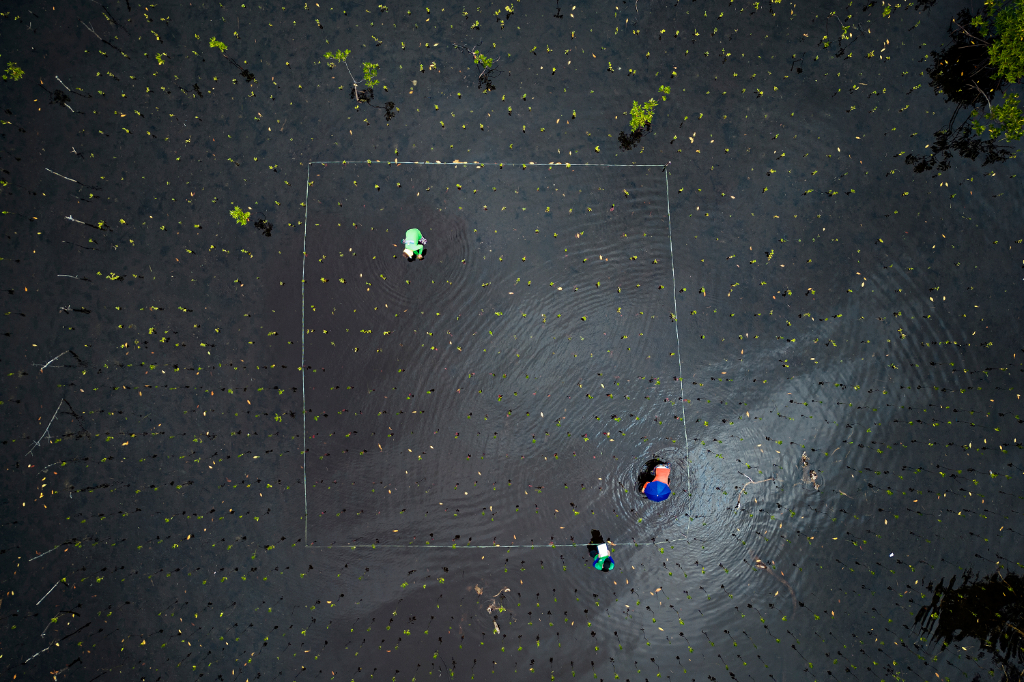
For example, in Indonesia, the Philippines and Thailand, communities facing coastal erosion independently recognised mangrove restoration as one of the most effective responses. This creates both a challenge and an opportunity. The challenge is to photograph similar realities in a way that remains visually engaging and avoids repetition. The opportunity is that these similarities make the connections undeniable—they show how closely linked these environments and communities really are.
Many of the people appearing in your photographs are small-scale fishermen or Indigenous communities who contribute the least to climate change but are often the most affected by it. How important was it for you to give visibility to these perspectives?
For me, this is one of the most important aspects of Symbiosis. We’re talking about communities that have contributed very little to climate change, yet they are among those most affected by it. I felt it was important to create space for their voices. What I found particularly powerful is their deep knowledge of the environment—something that is often overlooked. Their relationship with nature is based on observation, experience, and respect. Including their perspectives makes the work more grounded. It brings the conversation back to people and to how these changes are actually lived daily.
In several assignments, such as The Very Hungry Microbes That Could Just Maybe Cool the Planet, your work seems closely connected to scientific research. What exactly is your role within these projects? How involved do you become in the research process itself?
I’ve always been fascinated by science, especially since I started working on environmental topics. I see myself as a curious observer, and, if you will, a visual translator. Scientific research can be complex and sometimes difficult to access, but it plays a crucial role in how we understand the world today. My role is to observe, learn, and translate that work into images understandable to a wider audience without oversimplifying it. I also believe that some of the most meaningful solutions come from the intersection between scientific research and local knowledge. Photography can help make that intersection visible.
Do commissioned assignments influence your personal projects? Have any of them evolved from editorial work into longer-term personal research?
They do, mainly in terms of the time I can spend on personal projects, but that doesn’t bother me. Assignments often enable me to explore subjects or locations that would be challenging to access independently. As with everything in life, it’s all about balance. I like being busy working on multiple stories, but I also like taking the time to investigate each one in depth. For now, I prefer to keep Symbiosis as my only long-term project. It allows me to stay focused and immerse myself in it while still working on other stories throughout the year.
Compared with photographing communities or ecosystems, what are the biggest challenges of visually narrating scientific research?
Photographing science requires preparation. One of the main challenges is understanding the subject. You need to spend time learning before even picking up the camera. It’s also important to balance your eagerness to take a good photo with respect for the scientist’s work. Most scientific projects are at high risk for contamination, especially when working in labs or collecting samples in the field. You need to know your place. But the most interesting challenge is probably creative: finding a way to translate processes that are often repetitive or not immediately visible into something engaging and meaningful for people outside that field.
What’s your next challenge?
Continuing Symbiosis while keeping it fresh is definitely one of the biggest challenges. When working on a long-term project, there’s always a risk of repetition, both visually and conceptually. Sometimes it’s important to slow down, take a step back, and rethink your approach. I would like to expand the project with a few more chapters in Southeast Asia and the Pacific before 2029, but I’m trying not to rush it. Each new story needs the right time and conditions.
What’s your chief enemy of creativity?
I think the worst enemies of creativity are impatience and anxiety. Creativity doesn’t come on demand—it needs time to develop. I find inspiration in many different places, from photography and painting to cinema and nature. The challenge is to let those influences settle and then transform them into something that feels personal.
You couldn’t live without…
If I need to take pictures, it’s definitely my camera. But more than that, I’d say a smile. I feel very lucky to do what I do, and I try not to take that for granted. Even in difficult situations, that awareness helps me stay open to people and to the stories I’m witnessing.
Website https://giacomodorlando.com/
(Media courtesy of the artist)