Text by Meritxell Rosell
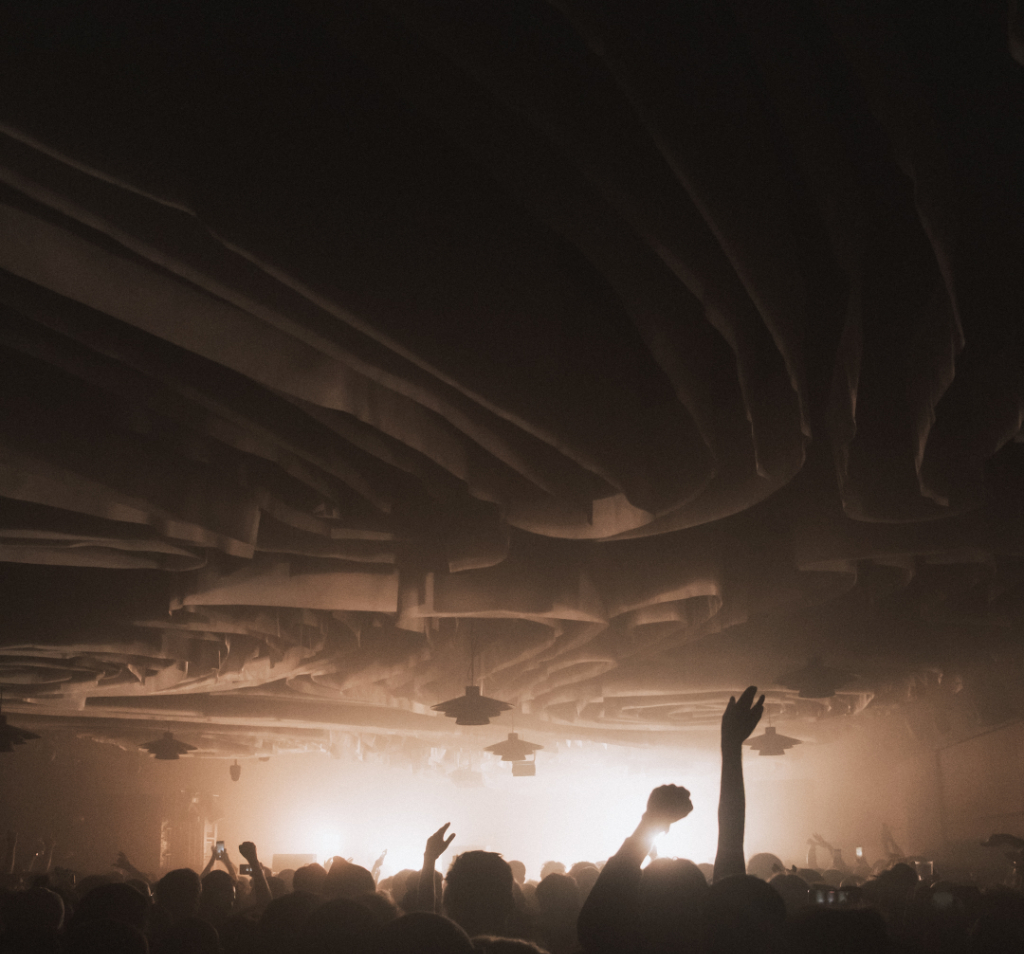
There is something quietly fierce about building a festival around fragility. In the current global state of affairs, which rewards hardness, speed, certainty, and feeds on power tensions, FIBER festival’s 2026 edition (28-31 May, Amsterdam) examines the topic through the theme of Fragile Forces. It might sound like a contradiction at first, but it opens a paradox in which fragility and strength are in dialogue: fragile forces as a source of collective strength at the core of the human experience.
From these premises, FIBER enquires: what does it mean to listen, perform, and play in relation to fragility? What kinds of forces can instil resilience when something seems beyond repair? After last year’s theme of Wildness, which addressed acceleration and the need for artistic and social rewilding, this edition invites visitors to catch their breath, slow down, regroup and focus on forms of vulnerable resistance.
The festival program will expand on these questions through two interconnected exhibitions, Fragile Resonances and Fragile Terrains, functioning as two separate chapters to reflect on the concept of ‘fragility’ as a form of strength rather than a weakness. One through sound art and ways of listening, the other through the sonic particularities of matter.
Artists have long used duration and material scale to place human existence within larger temporal and ecological forces. Phill Niblock’s The Movement of People Working transforms repetitive labour into something almost geological, while Trevor Paglen’s The Last Pictures sends one hundred images into geostationary orbit, where they may outlast human civilisation. Tacita Dean’s FILM and Floh similarly explore analogue time, material decay, and the tension between human and geological timescales. Together, these works point towards some fragile forces, suggesting that what exceeds human control, whether in matter, duration, or time itself, is not something to resist but something to attune to.
The nine works spread across Fragile Resonances and Fragile Terrains at de Brakke Grond share a common intuition: what appears most fragile is also often what matters the most.
Fragile Resonances brings together five Dutch and Belgian sound artists, presented as part of Neighbouring Frequencies, in collaboration with STUK and de Brakke Grond. Showcasing a shared sensitivity to sound as something that is not only heard, but also moves, connects, and unfolds within space.
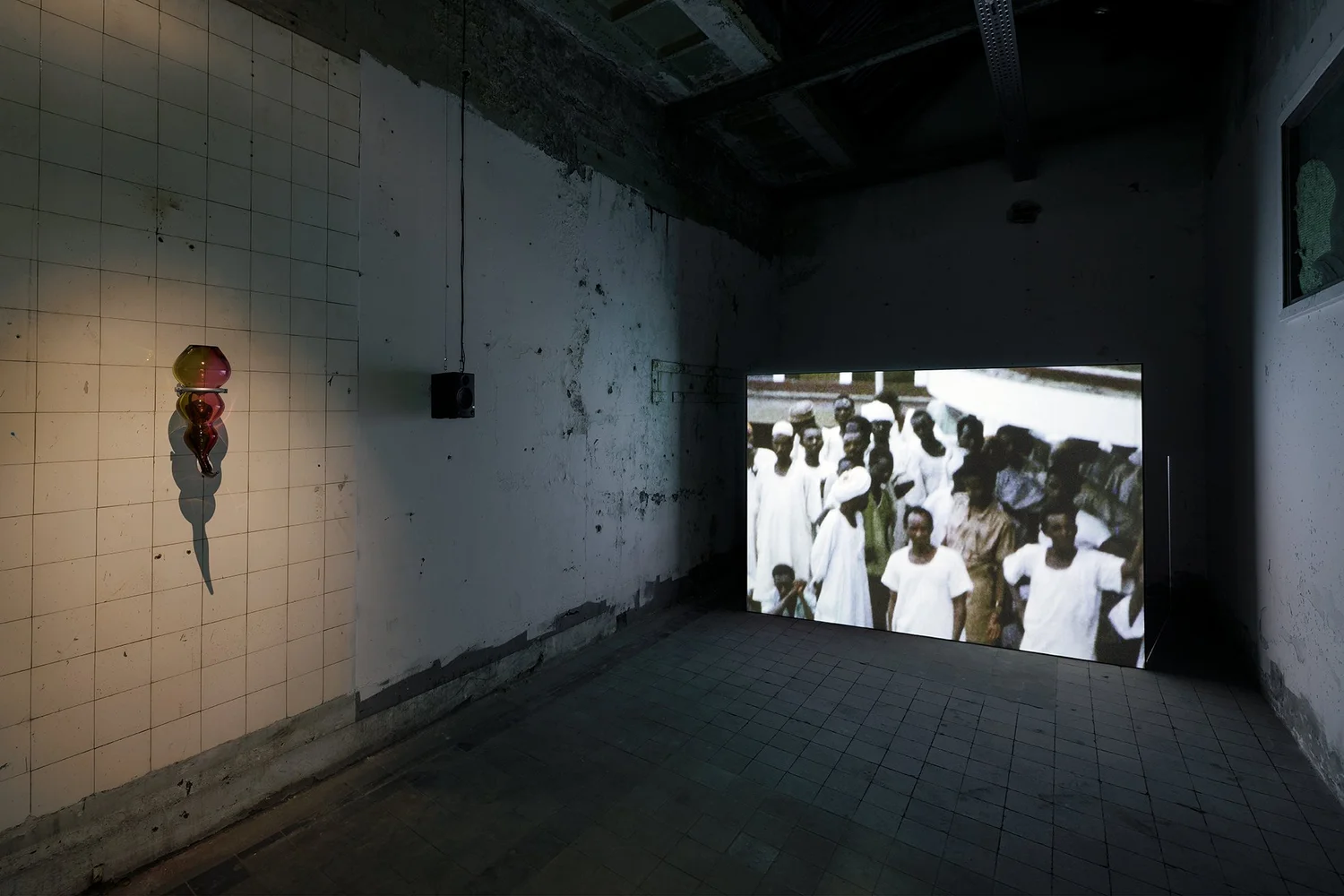
The works share a common starting point: something small, barely there, on the edge of perception. In AYO‘s SO(N)R (2026), it is an absence: the lost sound of the Abu, a traditional Luo wind instrument historically used to announce death within the community, and with no known recordings, reimagined for this piece in blown glass to score a silent 8mm archive of colonial-era East Africa. Brahim Tall’s The Choir of Dissonance (2025) begins with whispered voices in English, French and Portuguese that slowly accumulate into something dense and almost physical, tracing how individual expression can build up into shared force.
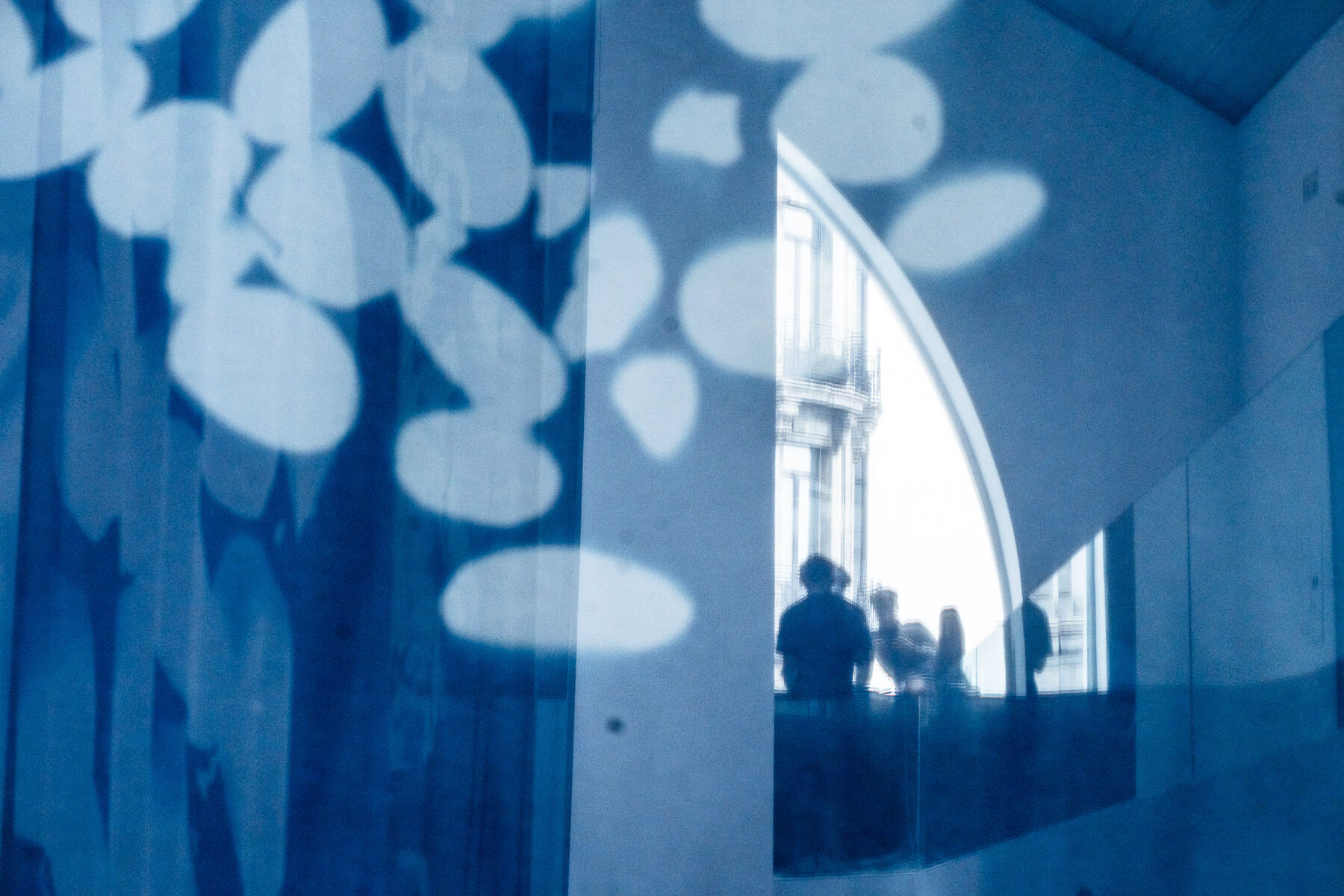
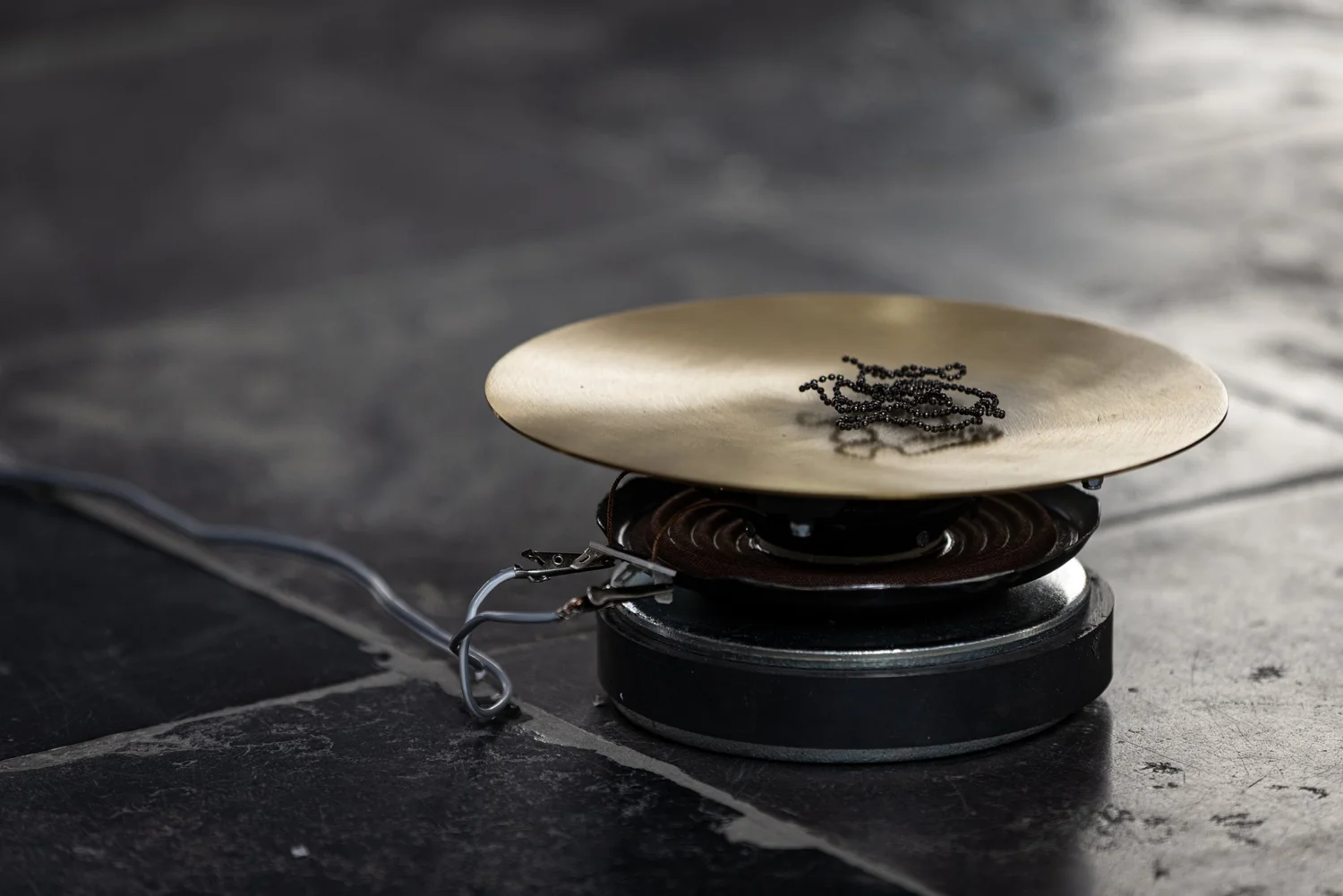
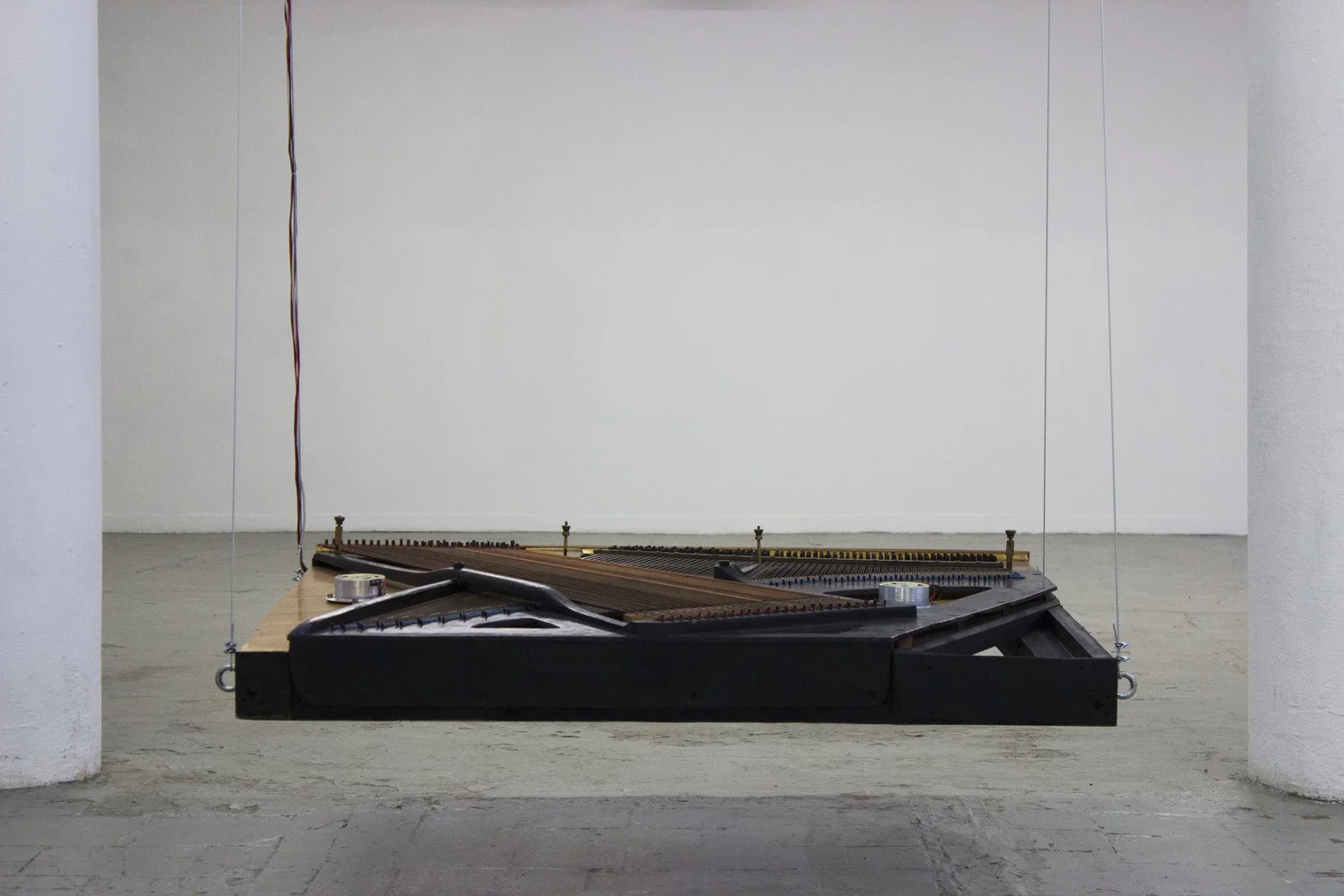
Franziska Windisch’s Random Walks (2025) sets bead chains vibrating on brass plates, driven by inaudible low frequencies, where small movements accumulate into complex, spatial compositions. Mariska de Groot translates light into sound through kinetic projection instruments in Incidence of Light (2019), where light patterns are captured by sensors and converted into sound, forming dynamic systems. Lastly, in Piano / Forte (2018), Mike Rijnierse and Rob Bothof strip two piano harps of their keyboards and set them swinging like pendulums, their motion translated into frequencies that return to the instrument through electromagnets. No longer activated by keys, the piano becomes an architecture of vibration.
As FIBER mentions, these works become layered, emotional sound experiences that show how a sum of small elements can lead to powerful changes. And that, beyond our immediate perception, there are often far more complex relationships woven into our living environment.
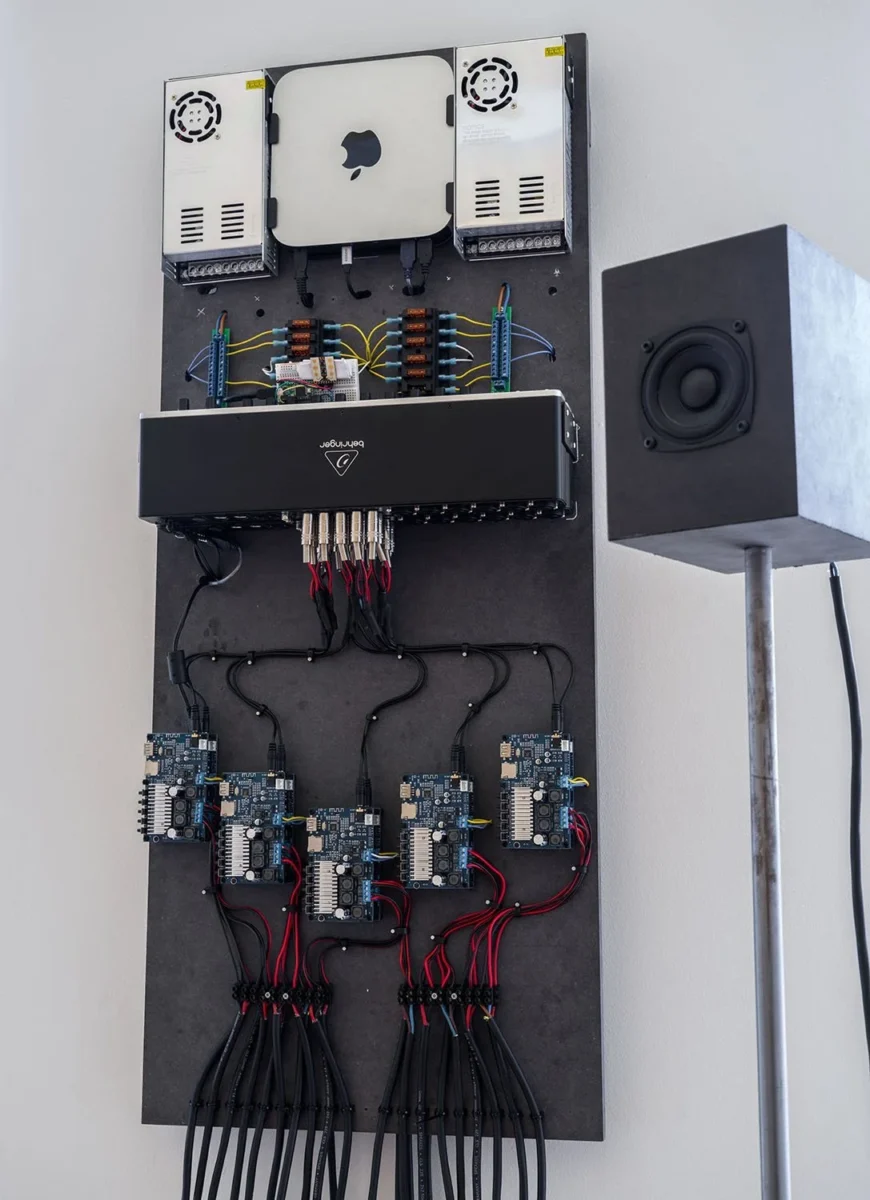
Brahim Tall (2025)
In the second part of the exhibition, Fragile Terrains, the artists invite us to turn our attention towards material instability, undetectable environmental processes, and more-than-human systems in unpredictable flux. Fragility is highlighted as a micro-force: distributed and subtle, yet capable of producing large-scale effects over time.
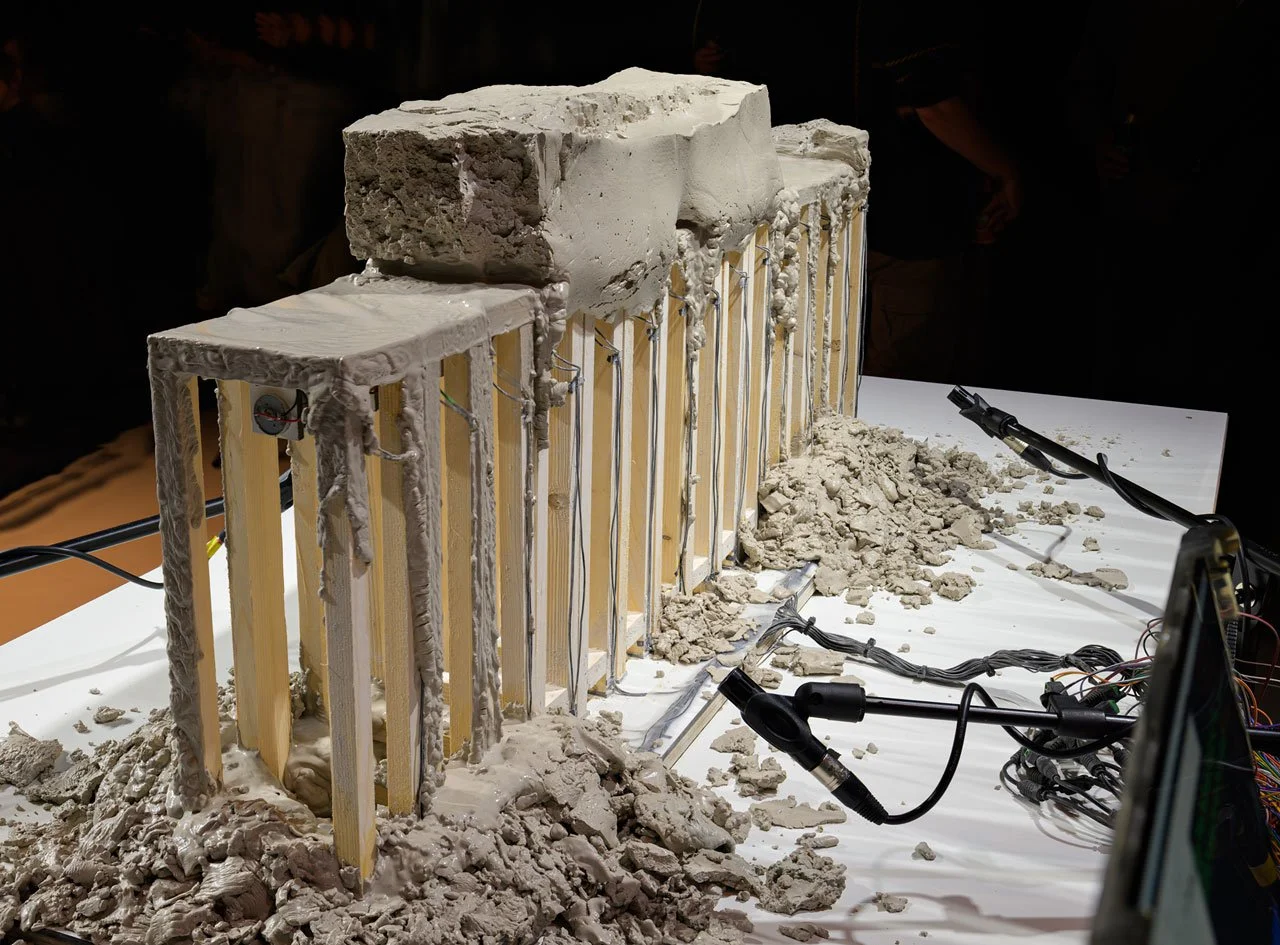
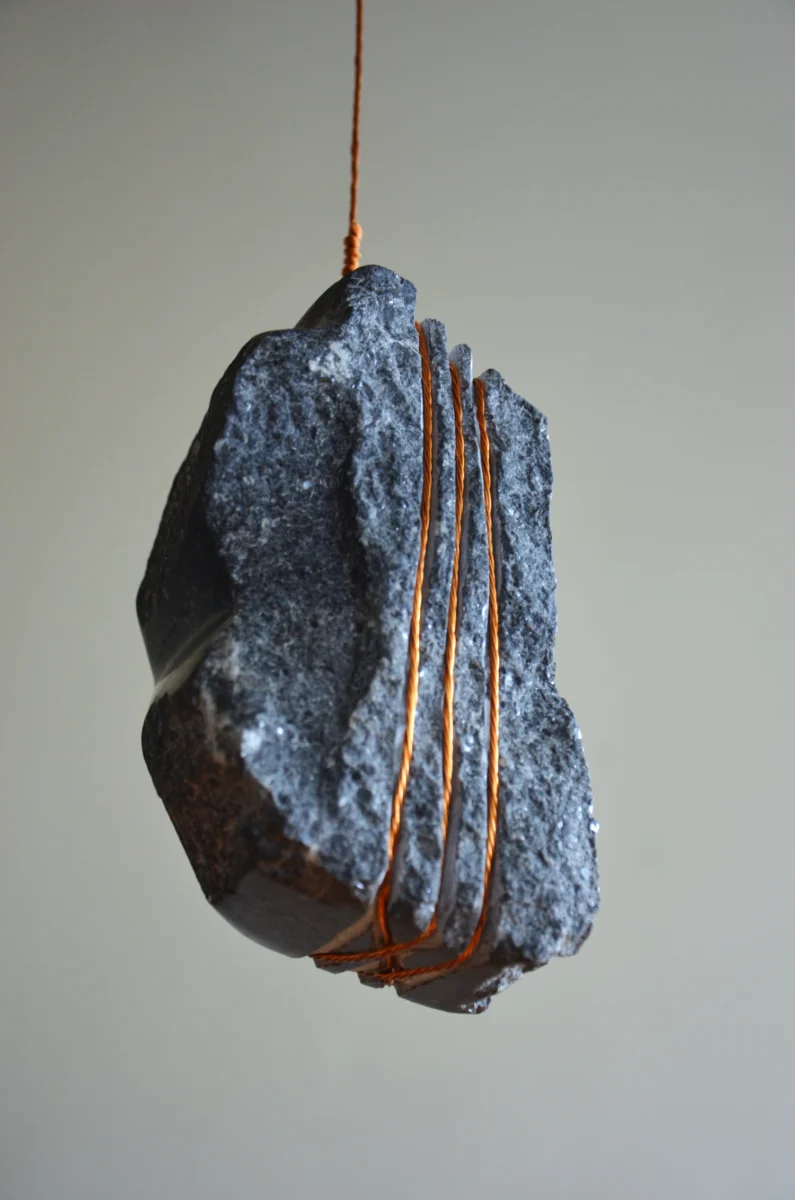
Aldo Brinkhoff’s Thixocymatics (2025), developed with materials scientist Eduardo Mendes, uses tools from the construction industry, specifically concrete formwork, to create an instrument that carefully manipulates a block of thixotropic calcium. Rather than producing stable patterns, the material resists predictability. The material refuses to settle, continuously slumping and reshaping. In Ce que la pierre retient du vivant (2026), Anaïs Lossouarn strokes suspended stones until they resonate, returning those sounds through headphones alongside the recorded heartbeats of everyone who held the same stone before you, establishing an interplay between human and mineral.
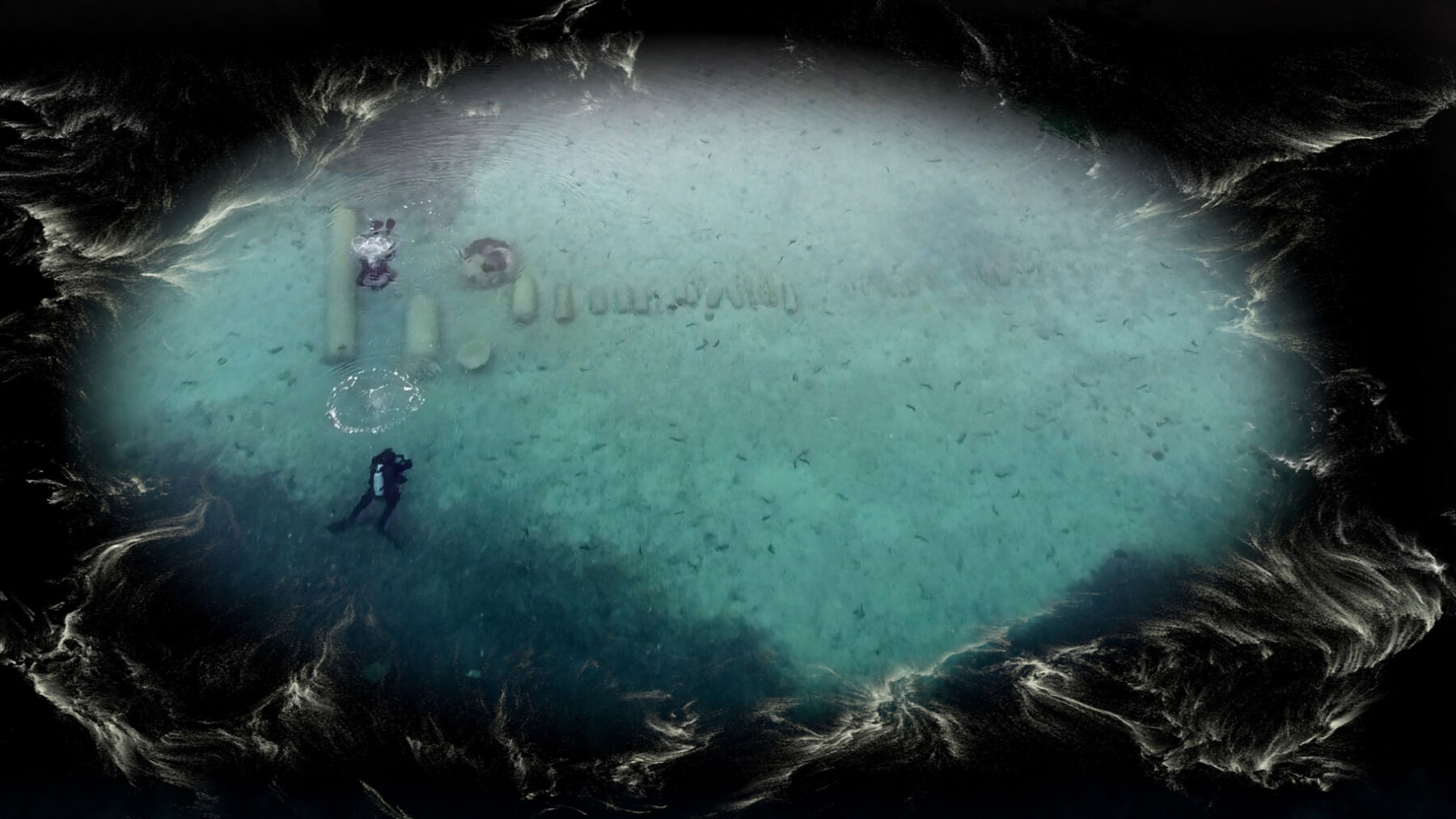
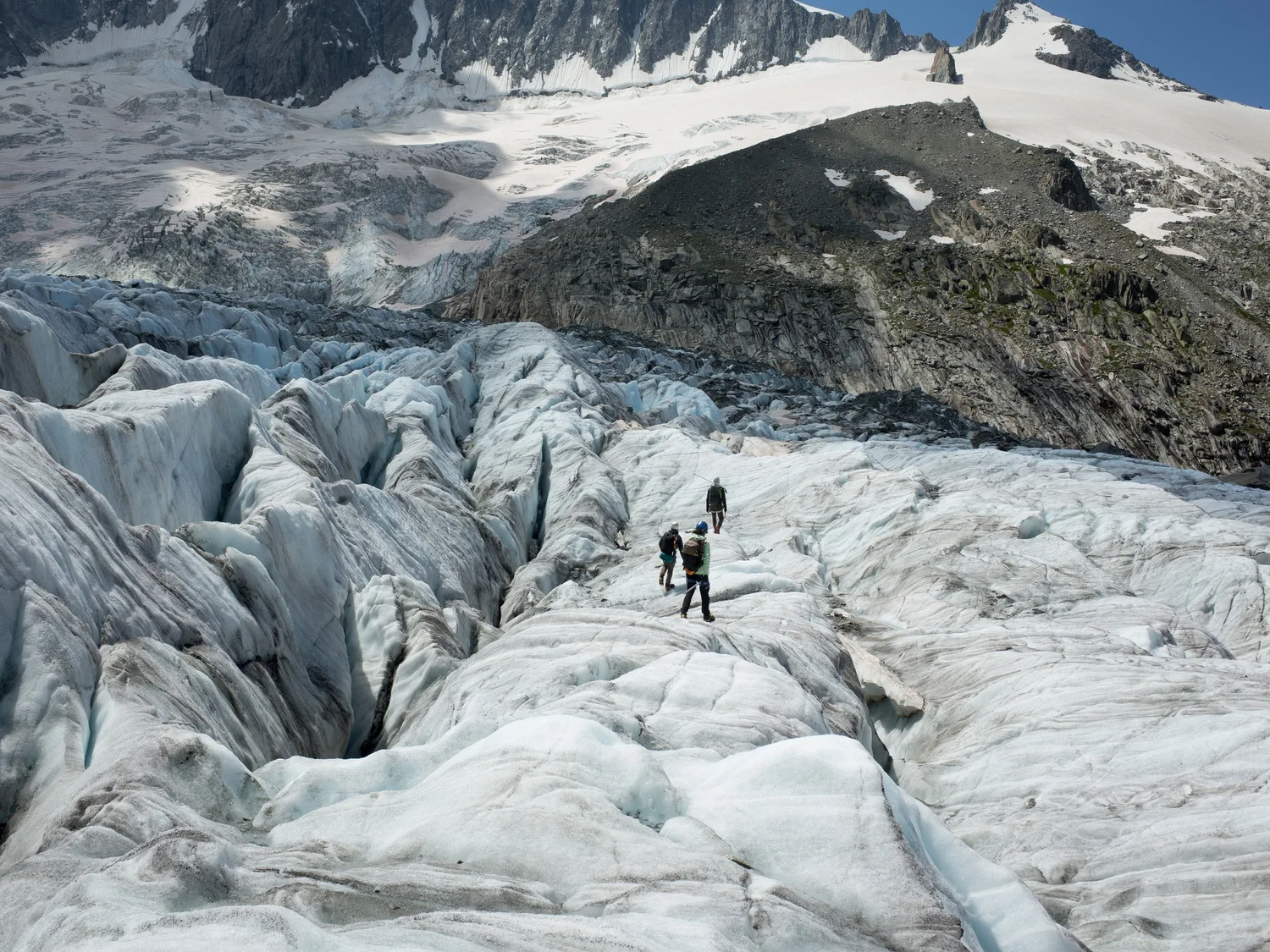
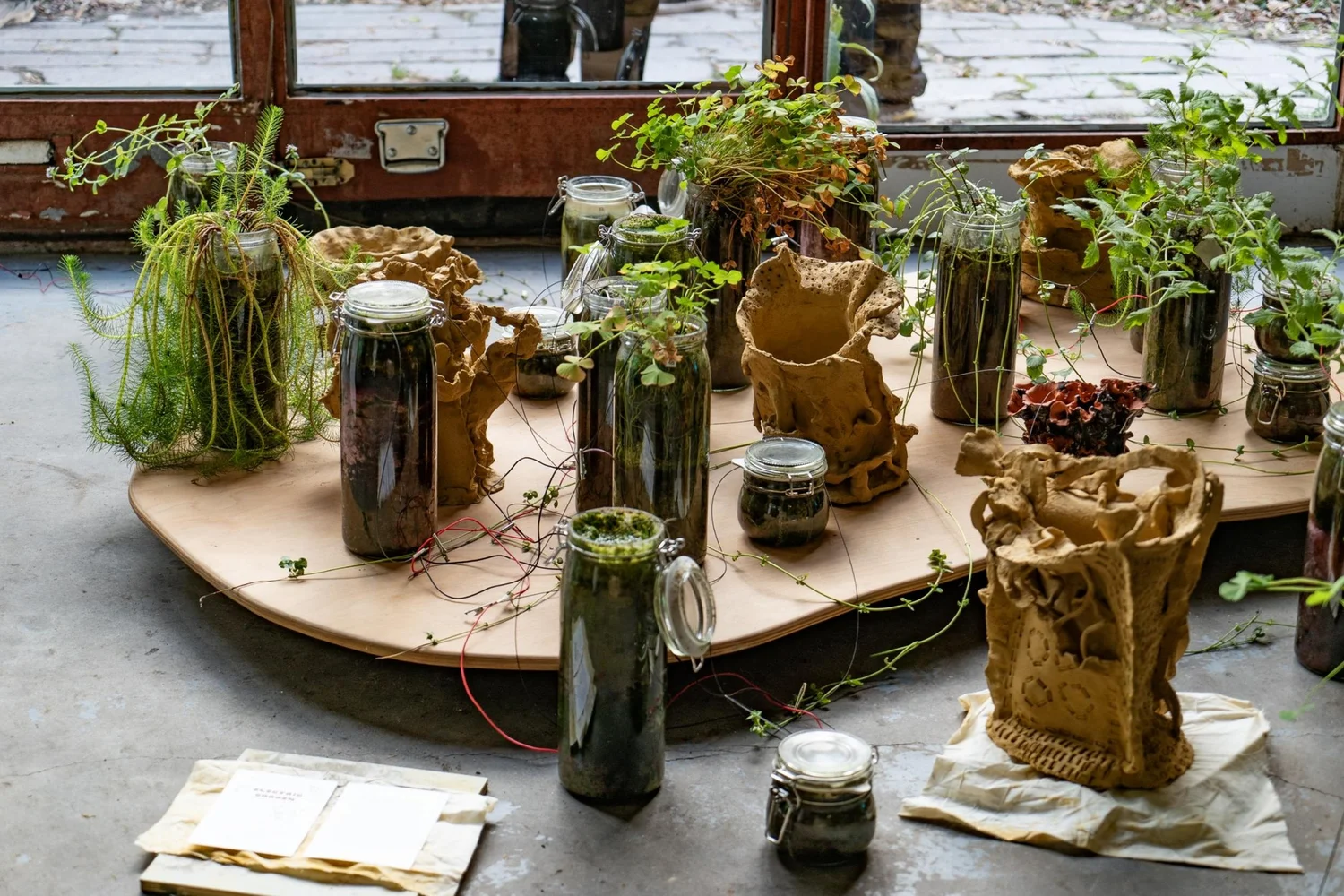
Robin Koek and Jean-Emmanuel Rosnet‘s De glace et d’eau (2026) is an augmented sound fiction tracing the slow disappearance of a glacier through a lifetime of listening. Visitors move through a spatialised soundscape of on-site field recordings, inside what Koek describes as a fragile balance between presence and disappearance, between what can still be perceived and what is already slipping away. Sunjoo Lee’s Garden of Mnemonics (2026) hands agency over entirely to non-human rhythms: small computers powered by bacteria in mud-filled ceramic vessels, chirping only when the microbes have metabolised enough energy to activate them.
FIBER reflects: What is the impact of human action, control, and humanity’s ultimate inability to truly grasp the nature of these territories? And what new stories, rituals and care might emerge as a result of a different way of thinking about matter?
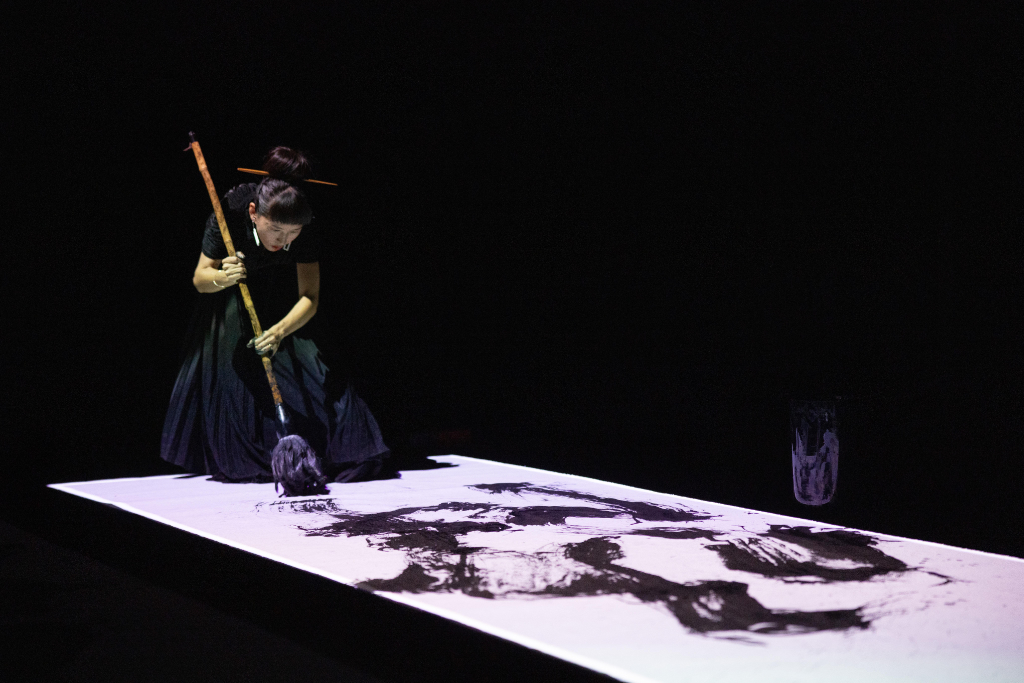
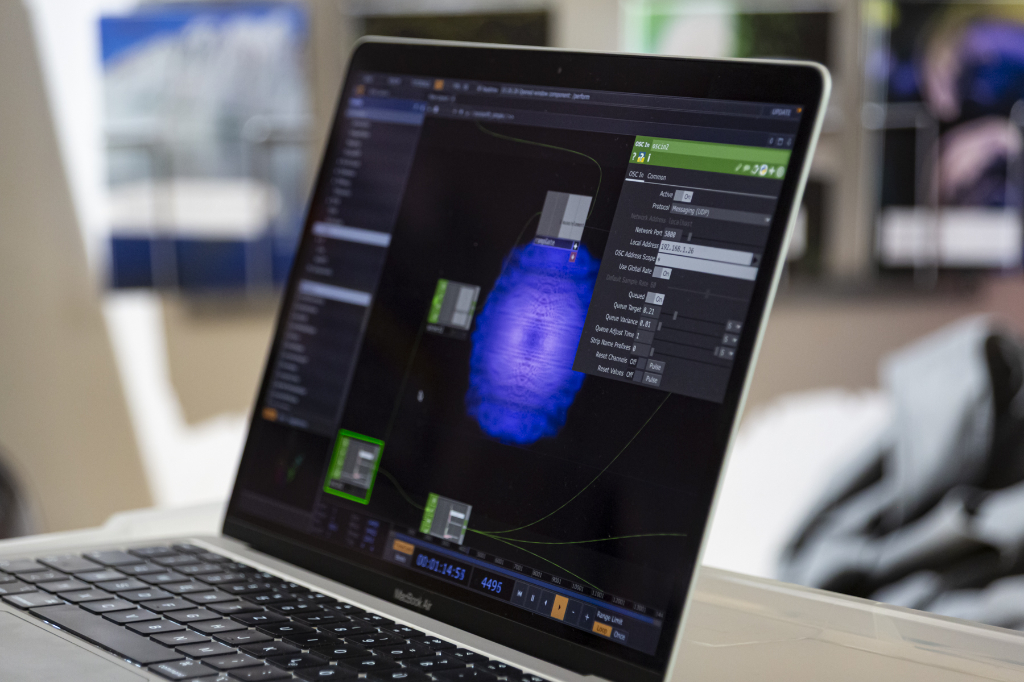
The theme and exhibition framework extend into two main live AV performances. Montreal trio Mesocosm’s Edge Effects builds synthetic ecosystems in real time where sound and image co-evolve across modular synthesis, field recordings, and real-time visuals, sometimes clashing, sometimes harmonising, as they trace the contours of imagined ecological encounters. The work sits, as the artists put it, between science and myth, using instability and noise as a site of potential rather than failure. The artists share that they are especially interested in the logic of ecological edge zones: boundary spaces between chaos and order, between the digital and the organic, between simulation and reality, where new behaviours can emerge.
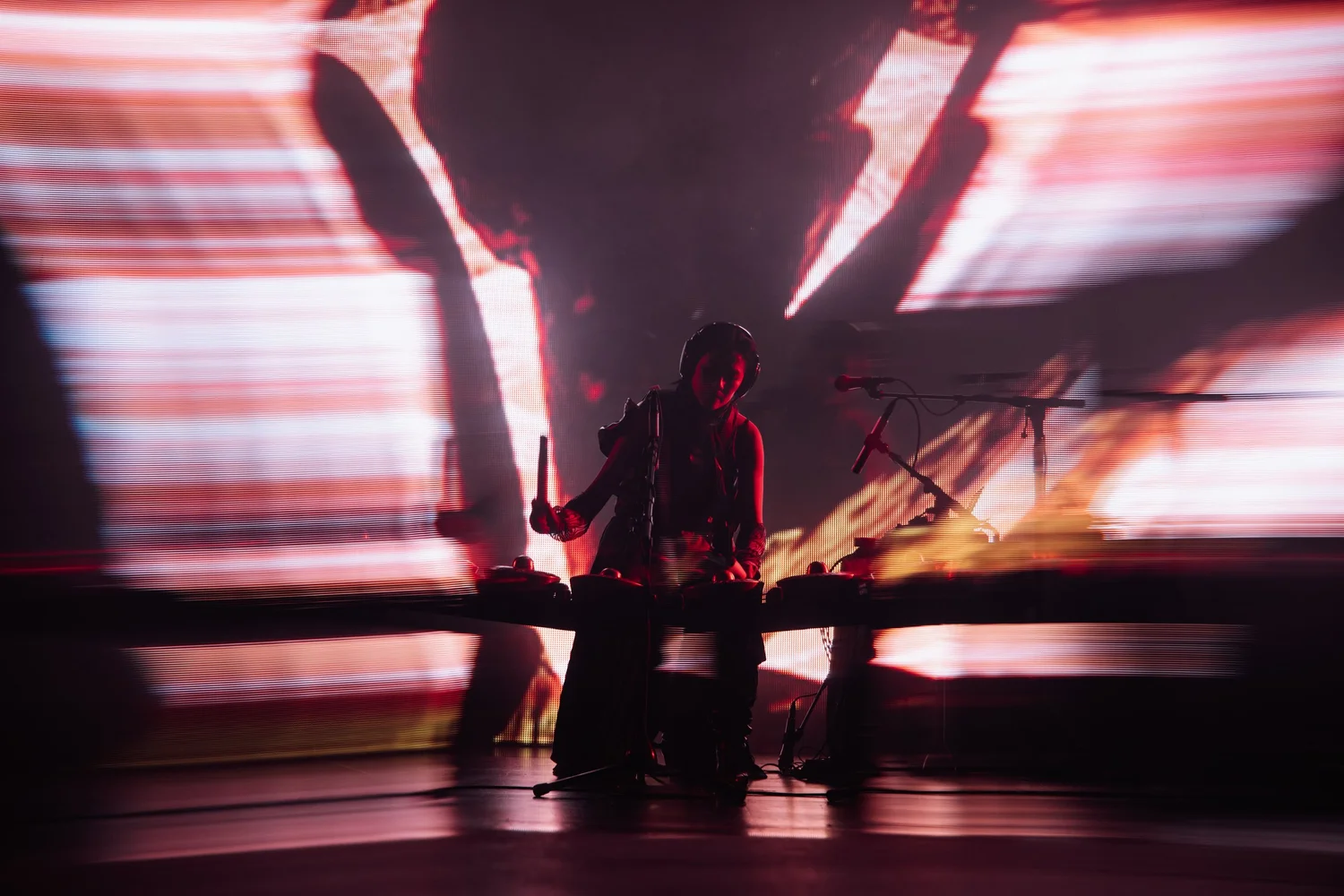
For the other show, Filipina-Australian artist CORIN’s DIWA moves across different but connected territory: a live AV performance rooted in Filipino folk traditions, skyworld myths and ancestral cosmologies, blending kulintang gong instrumentation and polyrhythmic structures with industrial percussion and granular synthesis, with visuals developed with VFX artist Tristan Jalleh drawing on volcanic and oceanic landscapes of the Philippine archipelago.
Where the exhibitions ask visitors to slow down and attend to the barely perceptible as an intimate experience, these performances frame fragility, ecology and culture as an expanded, shared experience.
Circling back to the Fragile Forces theme, Foucault argued that power is never simply imposed from above but moves through us, shaping what we can say, think and imagine. Cameroonian philosopher Achille Mbembe provides further insight: his concept of necropolitics names the central function of modern power in determining who gets to live and who is left to die, foregrounding colonial and racial violence. But what the current moment also reveals is how that power has colonised even our sense of time and relevance: the relentless acceleration, the demand for productivity, and the feeling that slowing down is a form of failure.
How we can resist is here proposed not through confrontational politics but through the quieter, more durable forces of attention, care and collective attuning between us and within the environment we live in. Judith Butler also argued that acknowledging vulnerability is not a sign of weakness but the condition for any genuine ethics of care. Fragility here is not a problem to be solved. It is the ground on which something like collective attention becomes possible. What FIBER proposes, carefully, is that slowing down and paying attention to what is already disappearing, muffled or hidden might be one of the most meaningful things we (and art) can do right now.
*Exhibition Part 1 (Fragile Resonances) opens from 22 May to 20 June 2026 and Part 2 (Fragile Terrains)from 22 to 31 May 2026.