Text by Tuçe Erel
Recent curatorial practices in art, science, and technology increasingly foreground questions of mediation, accessibility, and public engagement, yet their outreach often remains limited to already-specialised audiences. Medium- and large-scale exhibitions started to rely on technologically complex, immersive formats that unintentionally reproduce barriers to access, engagement, time, and institutional belonging or accommodation.
Rather than expanding audiences, immersive formats, particularly VR and interactive installations, often concentrate access within tightly controlled conditions, raising the question of who can encounter such works and under what circumstances. While technologically mediated artworks are frequently associated with niche or expert publics, the issue is more materially grounded: access is shaped by economic constraints, institutional infrastructures, and the logistical conditions under which immersive works are presented. High ticket prices, limited visitor capacity, time-based entry systems, and the need for technical mediation all contribute to a narrowing of participation.
The discussion in this article centres on a growing gap in access to technology-based immersive VR art practices in an era when knowledge production and digital world-building have become increasingly widespread. While the democratisation of knowledge through online platforms and open-access academic initiatives continues to expand [1], the parallel rise of immersive art within art, science, and technology, particularly through VR headsets and interactive installations, introduces new forms of limitation.
The development of immersive experiences started in theatre during the early 2000s. The London-based theatre company Punchdrunk [2] is a pioneer of the genre, offering a personalised experience across various rooms and backdrops, along with an interactive exchange between the actor and the audience, in contrast to the traditional stage-audience setup, which is often one-sided and hierarchical. Over time, with the advent of cheaper and more accessible VR headsets and tools for creating VR worlds, immersive experiences diversified and evolved into hybrid formats.
Therefore, the growing presence of VR headsets in exhibition spaces and art festivals, along with the integration of immersive projects into film festival programmes, indicates a shift in how audiences are invited to interact with artworks. VR-based works create highly engaging, sensory environments and can provide access to otherwise inaccessible visual or embodied experiences. However, this intensified mode of engagement often results in reduced audience participation and increased logistical challenges.
In this regard, two selected examples will illustrate different modes of accessibility: the challenges and limitations of immersive VR projects, and access points available to different audiences, including those with visible and invisible disabilities.
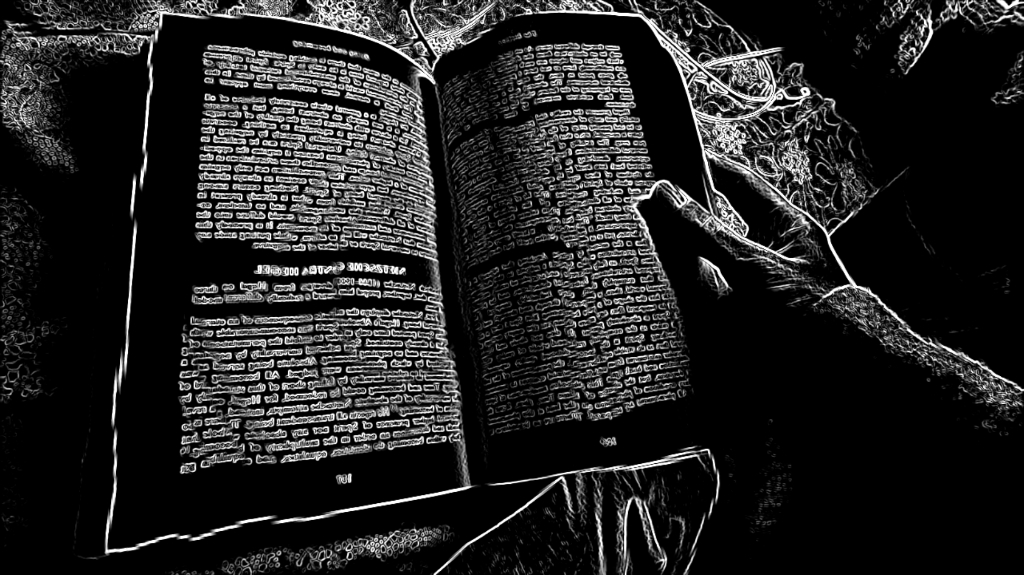
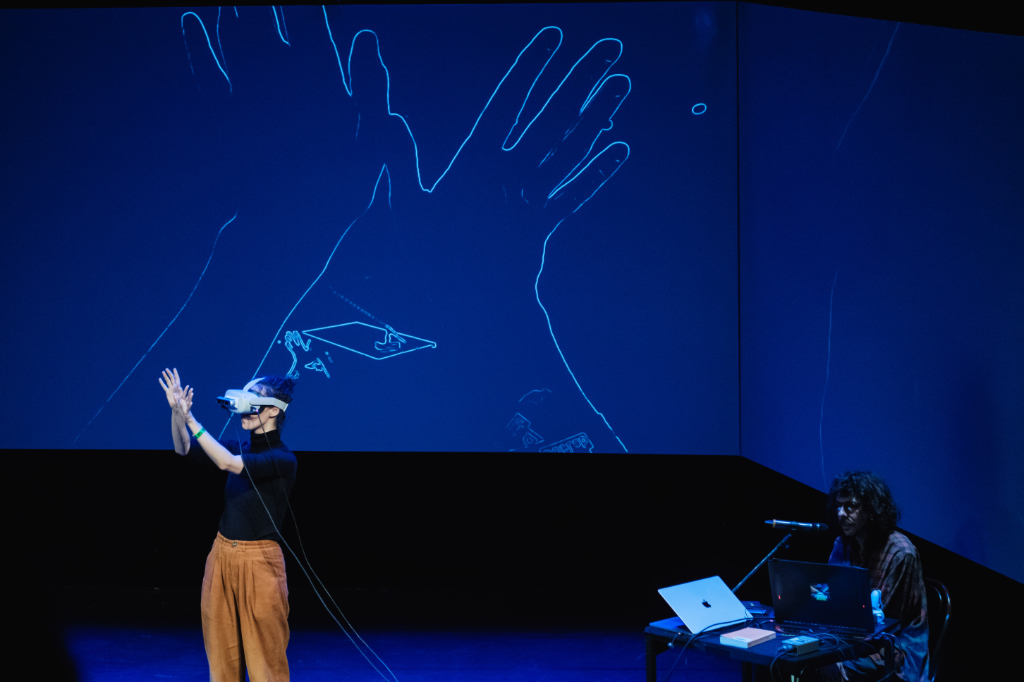

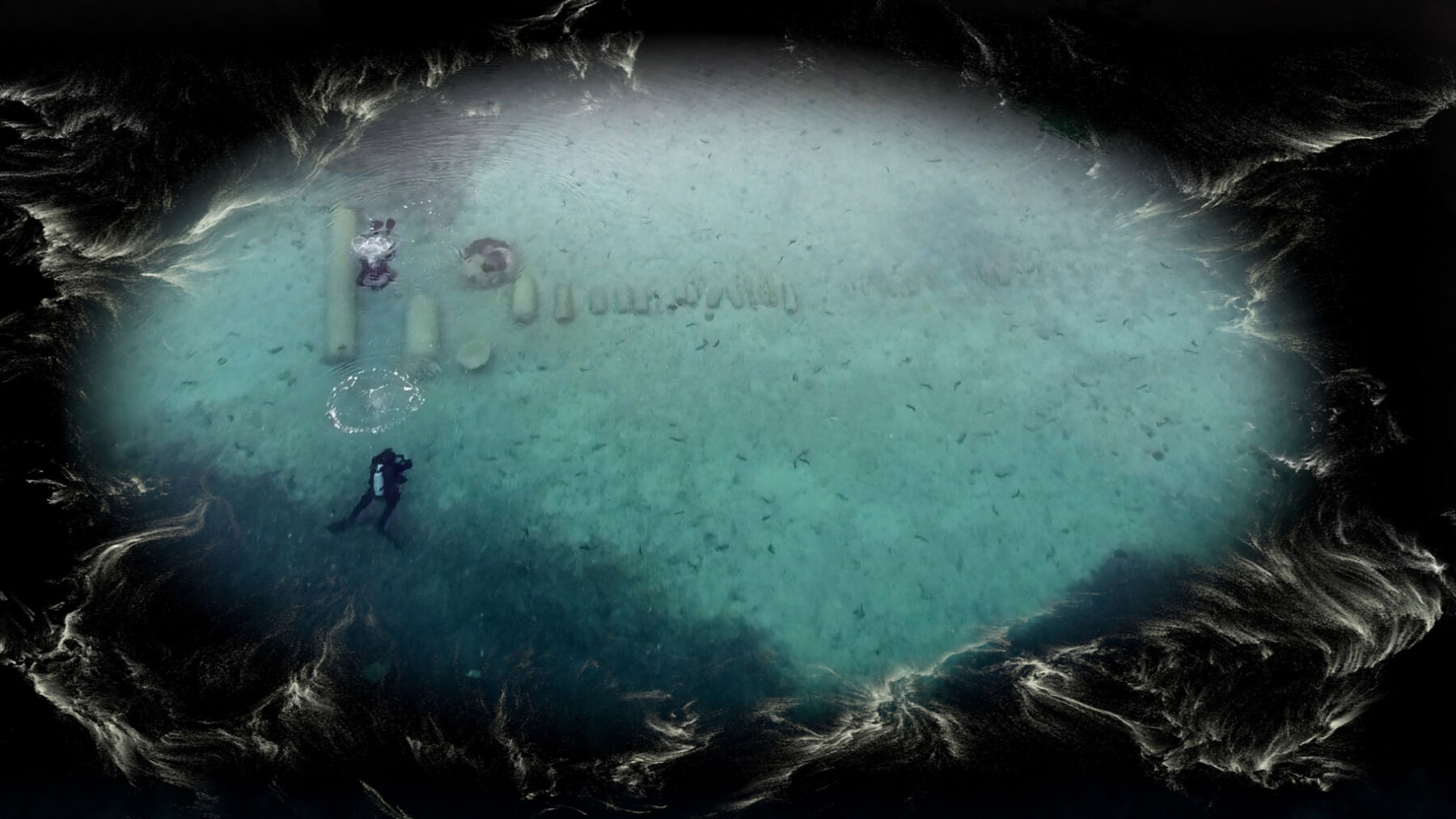
The first project is Jamais Vu: Turbulence (2023) [3] by Ben Andrews and Emma Roberts, which explores a chronic vestibular condition that causes migraine attacks and their effects on sight, based on Ben Joseph Andrews’ own medical condition and experiences. This guided immersive experience combines a real-world installation, such as a replica of the artist’s work desk, with a VR headset featuring a camera that replicates their visual perception during attacks, when the sight shifts to black and white. Different objects activate various chapters, guiding visitors through the visual impact of these episodes. “Jamais Vu”, a psychological term, refers to the experience of momentarily failing to recognise objects or words [4].
By merging tangible objects on a table that the audience can explore with the camera-embedded VR headset, the project helps them disorient and reorient themselves during the VR experience. Based on an interview [5] with the artists and my own experience as an audience member, it is a clear and engaging experience that encourages viewers to reflect on their individual feelings and reactions to the changing world of sight and colour, as well as the discomfort it causes.
It is indeed valuable to offer an opportunity to experience a medical condition and its sensory effects without having the condition itself, fostering empathy for the artists or patients. In this way, using VR and immersive tools in the arts can enhance understanding of invisible disabilities and serve as a means to combat ableism, discrimination and prejudice against people with physical, mental, visible, and invisible disabilities.
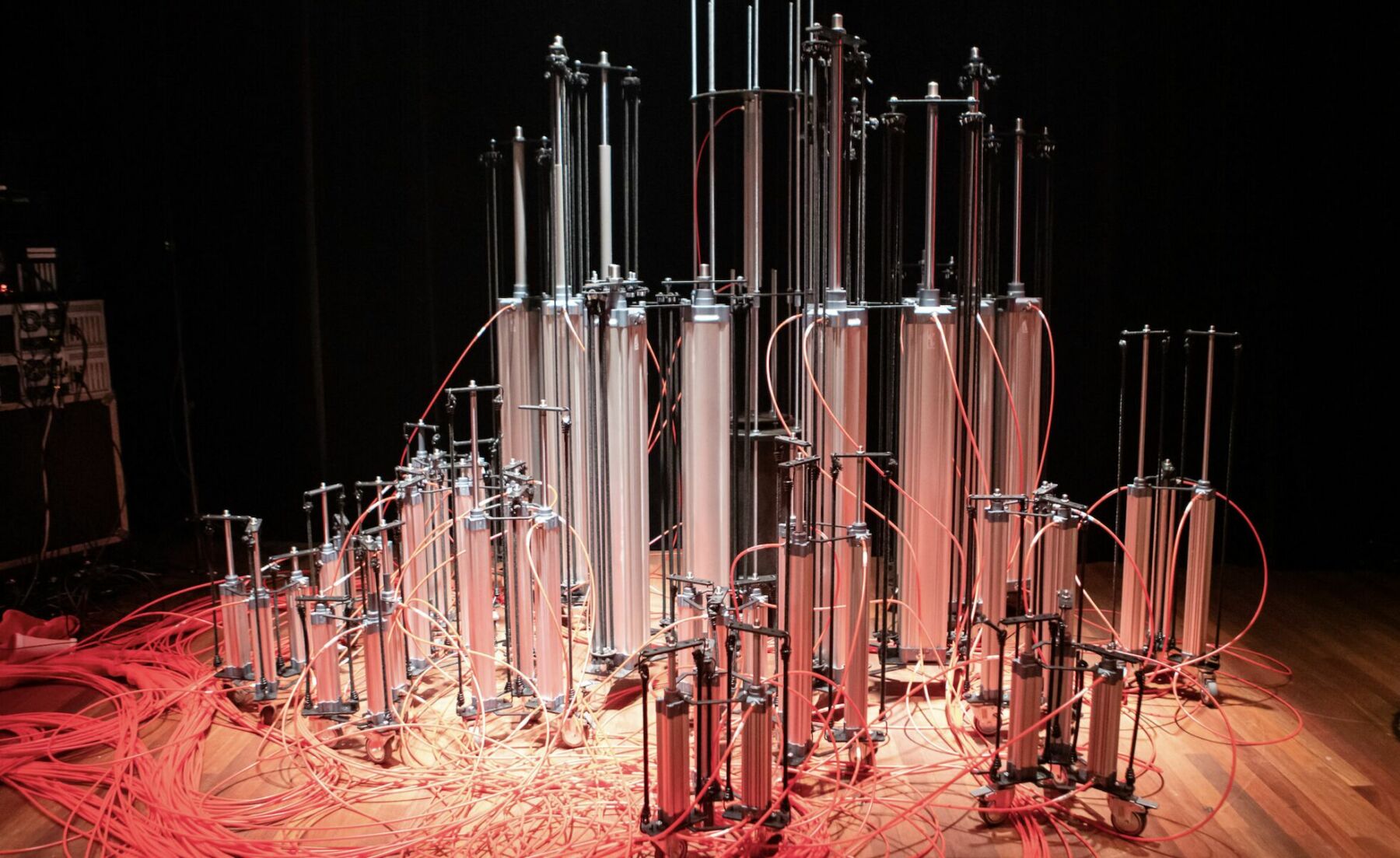
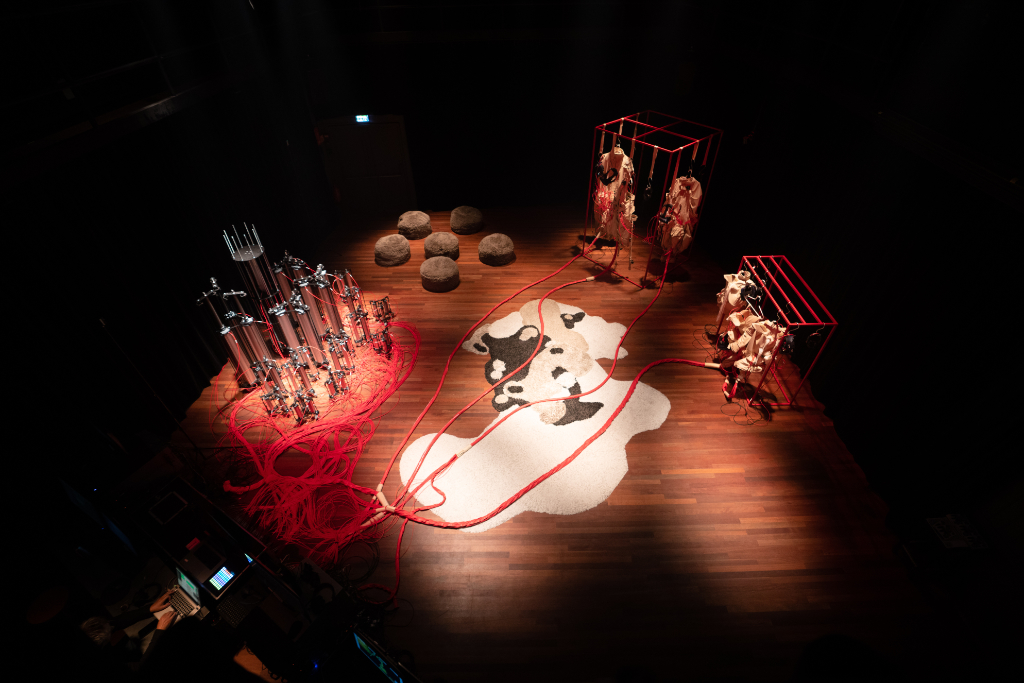
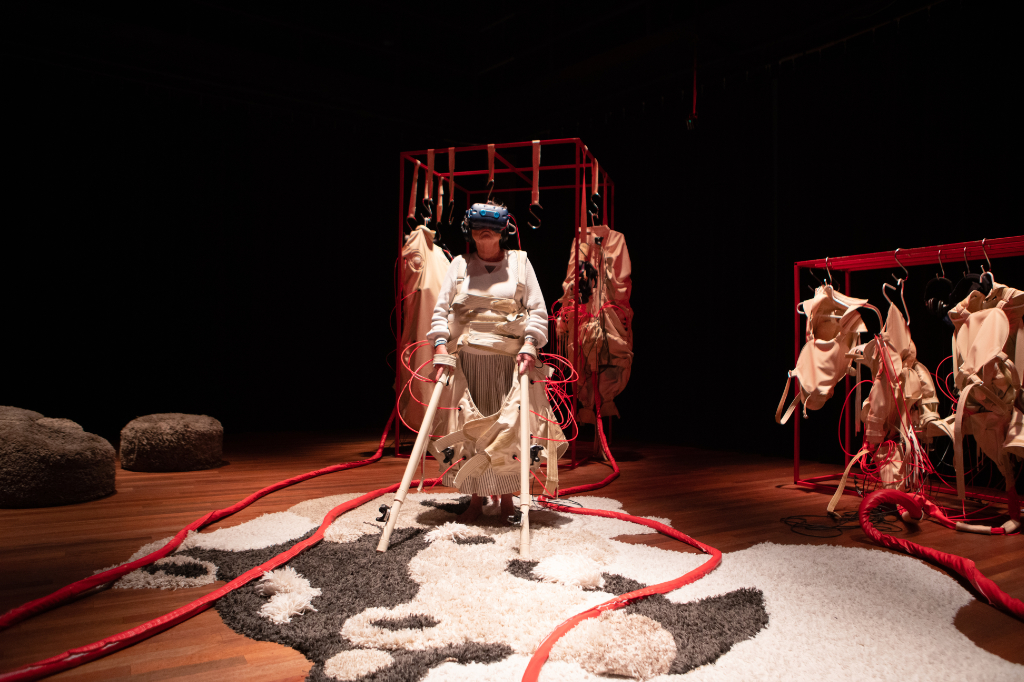
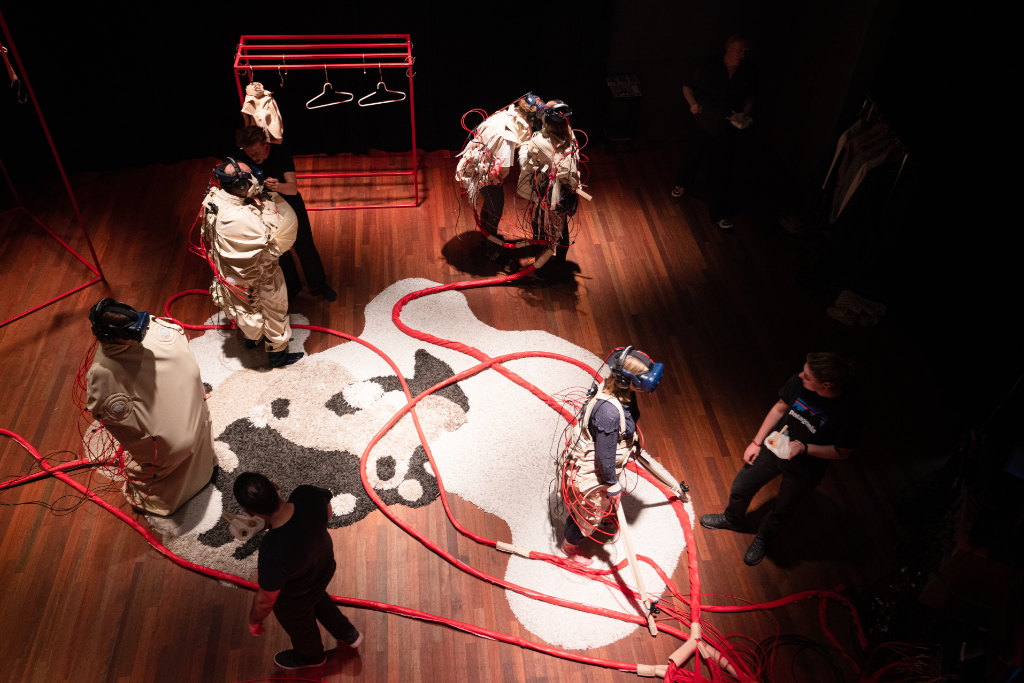
The second project is Symbiosis, a theatrical, performative and multisensory VR installation [6]. This immersive project can be experienced by six people at a time, through three individuals and three people in one connected experience based on a chapter in Donna Haraway’s book Staying With The Trouble [7], The Camille Stories: Children of Compost, in which a speculative kinship story between human and monarch butterflies and their five-generation-long connection in the lands of ecologically disturbed due to mining. The story shares the symbiotic relationship between the Camillle people, living in West Virginia, and their chosen monarch butterfly species, which co-evolve, co-exist, and survive the mass extinction.
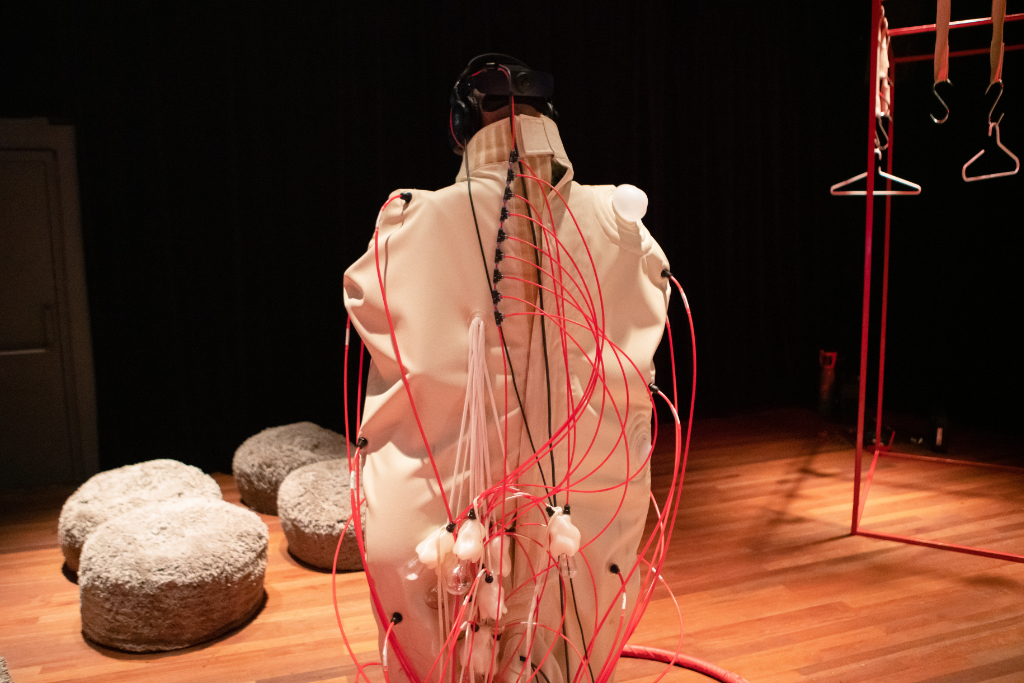
In addition to the VR setup, participants or audience members are asked to wear body costumes with haptic electronics and tentacle-like extensions. They are informed that there will be small bites to enhance the sensory experience during a 15-minute journey. The worldbuilding and characters in the project are based on Haraway’s last chapter in the book, which is a fictional short story that depicts a symbiotic relationship between humans and monarch butterflies to save the species from extinction.
The story unfolds against the backdrop of an ecological crisis. While scientific discourse describes the present as the sixth mass extinction [8] and questions the validity of the Anthropocene [9] as a geological category, Haraway’s critical approach merges with the artistic response with speculative imaginaries, critical tools, and proposals for awareness and care.
The Symbiosis has six characters: “Camilla, a Colorado River Toad, a Slime Mould, or a three-part Multibody creature consisting of a Head, a Body, and an AI entity.” [10] Before the experience starts, each participant is asked to select one of the characters, and they are informed about the sensory elements: haptics in the suits, the suits’ mobility limitations based on their structure and tentacles, and tasting small bites corresponding to the character, accompanied by a smell that complements the tasting experience. Of course, tasting is based on the participant’s consent.
Choosing the Camille character, my limited experience was insufficient to review the entire project, but that is not the main point, because immersive experiences are designed to foster individual and varied encounters with one’s cohort. From this perspective, Symbiosis succeeds in its primary aim. However, from a curatorial perspective, in an exhibition or festival setup, one hopes to reach a larger audience. My critique here relates to the limited audience, not only for Symbiosis, but in general. I have encountered numerous exhibitions where the VR headset was left on the ground, either broken or without a mediator. If it works, there is usually a queue and some waiting, which causes many audience members to miss the opportunity to experience it.
There are accessibility issues from a disability perspective. Given the nature of VR, such works are mostly inaccessible to visually impaired audiences, even with guidance. Whereas some theatres can offer special hours for visually impaired audiences, a tour of the stage, and a mediator to facilitate an introduction to the environment, these cannot be provided in a VR setting. Additionally, when a VR setup requires a body costume and mobility, it can exclude wheelchair users. Such VR environments can be challenging for neurodivergent individuals, as the weight of the headset, sound, and lighting in the virtual world may trigger medical attacks and create discomfort.
Both projects demonstrate the aesthetic and experiential potential of immersive technologies, and it is clear that there are merits that cannot be ignored. They push the boundaries of perception, narrative, and embodiment, offering encounters that cannot be replicated through conventional media.
The methodologies and implementations of sensory tools can be beneficial in different scenarios for supporting and helping the audience with visible and invisible disabilities, as Sevasti Eva Fotiadi explains in her article Multisensory Technologies for Inclusive Exhibition Spaces: Disability Access Meets Artistic and Curatorial Research [11], where a haptic vest translates audio into vibration, which allows new opportunities for different hearing abilities and brings a new tactility to the sound in the art and cultural spaces.
Fotiadi’s research shows that hard-of-hearing participants showed eager interest in the vibration that translated from the sound. As art institutions have been striving to be more inclusive and accessible to people with diverse disabilities, creating haptic gestures for sound significantly improves conditions for d/Deaf audiences in art spaces.
The growing interest in and use of immersive technologies in artistic practices, and their selection by curators, indicate a shift not only in how artworks are created but also in how they are distributed, accessed, and experienced. While such formats provide heightened sensory engagement and new ways of perceiving, they also operate within tightly managed conditions that restrict their public reach. The promise of increased access, which is often linked to digital and technological innovation, remains unevenly realised when these works rely on limited resources, time-restricted participation, and physically demanding interfaces.
These two examples demonstrate that immersive projects can foster empathy, embodiment, and critical awareness, particularly regarding ecological crises and invisible physical and mental conditions. However, these gains are accompanied by structural exclusions: limited audience capacity, queuing systems, technical fragility, and barriers related to physical and sensory accessibility. In this sense, immersive practices do not simply extend the field of cultural production; they reproduce the accessibility issues that cultural institutions have faced for decades.
This raises a fundamental curatorial question: not only what kinds of experiences are being produced, but also under what conditions they are made available and to whom. If outreach remains a central concern of contemporary curatorial practice, particularly within cultural institutions, it cannot be addressed solely by adopting new technologies. Instead, it requires a critical evaluation of the infrastructures that shape participation, including time, labour, maintenance, and bodily access.