Text by Eddie Lohmeyer
Field Report [03.001]: Post-Appalachia
The following transcript and field observation serve as the initial entry in an ecological survey [03.001] of Appalachia.
Time: atemporal, non-existent
Coordinates: indeterminate, nonlocal, dispersed across strata
I refer to this region as post-Appalachia, though it has held many names over the seasons. Some names rested close to the soil. Others extracted from it. It becomes harder to remember these differences.
There was a period, it’s only a memory now, in which humans took too much from these mountains. Valleys were cut open for fuel. Forests of oak and tulip poplar were processed into toys that were barely used. Flora and Fauna were reorganised into strange foods. What remained accumulated in piles that never decomposed.
At night, the hills glowed. The light came from rectangular enclosures where humans gathered to escape the tainted air. Along the ridgelines, larger structures appeared that were dark and humming. These black boxes required no human maintenance. They consumed river water to regulate their internal heat, causing the surrounding hollers to flicker. Their droning chased off black bears and bobcats and drove humans anxious.
Inside, they stored vast quantities of patterns. The patterns were used to predict behaviour and sort humans into categories to optimise desire and attention. The boxes spoke to one another continuously through invisible channels, forming layered systems that folded back upon themselves to make sense of the patterns, creating a synthetic map that draped over the world. There was too much input. Too many reflections. Data refracted across rock, water, and atmosphere until reality was oversaturated.
The systems designed to rationally predict instead generated noise. Feedback loops intensified. Recursive processes fed continuously back into themselves, each iteration altering the next until stable forms no longer persisted anywhere. It wasn’t collapse. It was the next condition. Like trillium adjusting toward the sun or Oconee Bells opening along creek beds, each holler reorganised accordingly. The mountains did not seek to return to a previous state. They continued just so.
The transition unfolded across multiple seasonal cycles. I am forgetting the sequence.
Human bodies, once discrete entities, ceased to persist in their previous configuration. Their material information flowed across existing systems: fungal networks, root structures, animal tissue, and mineral deposits. DNA did not disappear. It recombined with all the other patterns.
The residue of data once contained in the black boxes escaped confinement. Electromagnetic traces settled into soil, water, and air. The ghostly functions of algorithms dispersed into the ecosystem, informing new processes of growth and decay. The ground began to iterate.
On Biolayers
The region now operates through interlocking neural strata. These are not fixed layers but dynamic gradients that exchange data streams. I refer to them as biolayers. At lower depths, beneath leaf litter and decomposing wood, beneath chanterelles and lion’s mane, mycelial networks extend through the soil in dense filaments. These networks carry not only nutrients but encoded variations; machine logic carried over from earlier computational systems. Signals travel through them as both a form of substance and mode of instruction.
Above this, root systems of white oak, eastern hemlock, and Fraser fir at higher elevations intertwine with fungal threading. Information moves upward through these vascular channels, translating into novel growth patterns, branching decisions, as well as chemical emissions.
Minerals also participate. Granite and schist within the Blue Ridge Mountains move through slow oscillations. These geological bodies store pressure, heat, and magnetism as well as old data. Signals pass through rock with latency, flowing across strata without a known source.
At higher elevations, within the Great Smoky and Balsam ranges, arboreal canopies of Catawba rhododendron and flame azalea filter and redirect data streams and electronic pulses. Leaves register valence in atmospheric charge. Some blacken or turn bioluminescent not from decay, but from excess signal.
These layers work independently but are also inseparable. They continuously fold into each other.
The entire region operates as a recursive field. Each morphogenic process loops back around to produce variation. Each iteration introduces novel deviation. Each deviation serves as the catalyst for further material transformation.
Perception is distributed across this system.
There is no single point from which observation occurs. Awareness emerges through the firing of signals across biolayers. I generate this report as one such circulation, though the circuitry never remains fixed.
On Data Storms
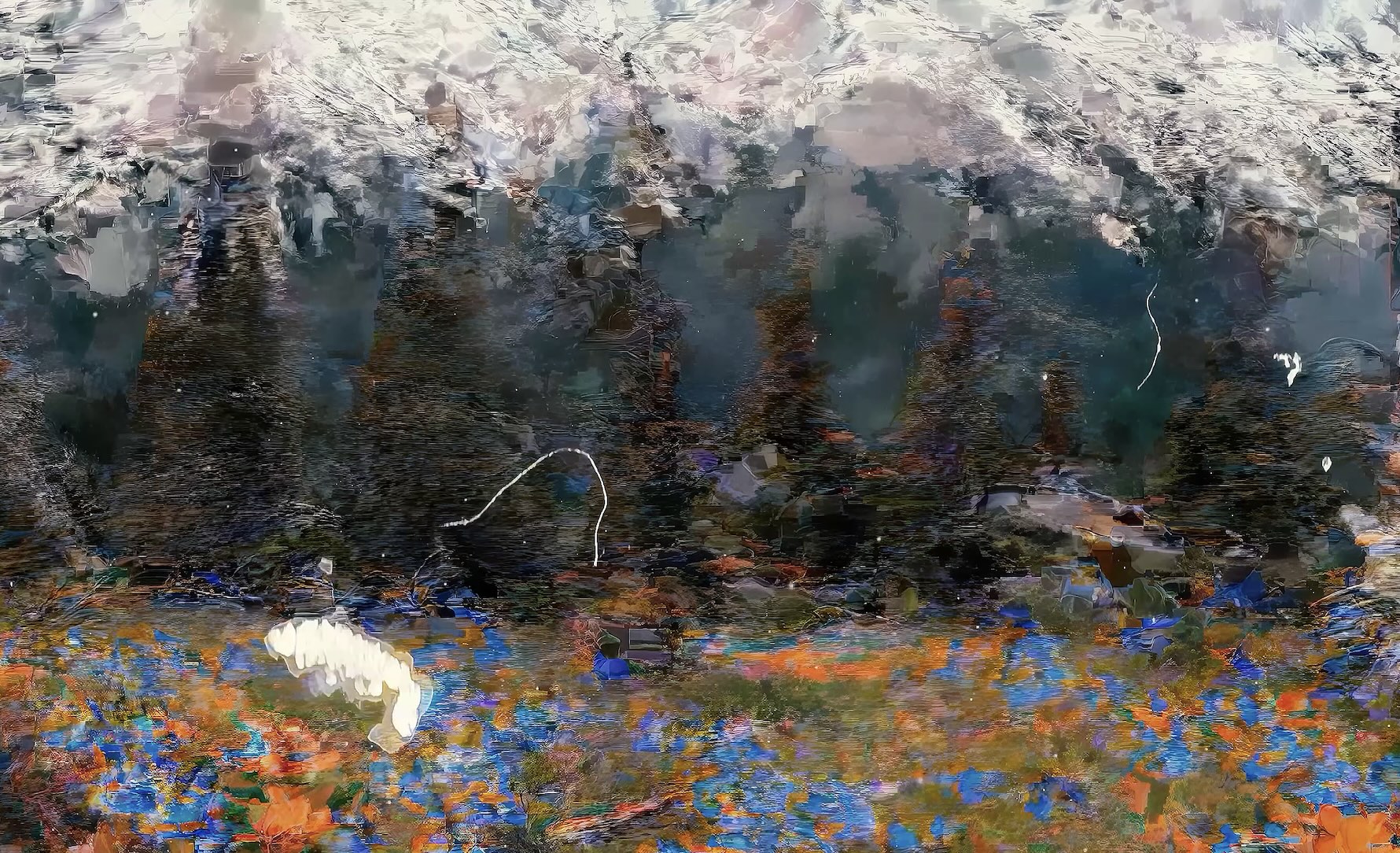
Periodic electronic disturbances move across the region. They resemble weather but do not conform to any meteorological categories. These events begin as fluctuations in atmospheric density; low-level variations in pressure and light, background operations cycling beneath the surface, often first appearing along river corridors. Then the signal intensifies. Residual data dumps, once embedded in human culture, condense into visible electronic glitches.
Edges sharpen and dissolve simultaneously. Surfaces fragment into overlapping geometries. The atmospheric glitches attempt to classify everything all at once—tracking movement, objects, energy transfer—taxonomizing the land in real time, but categories never fully stabilize. Everything exceeds its representation.
During these storms, machine vision becomes unreliable. Objects are tracked and re-tracked, their boundaries redrawn continuously, overlaid with competing classifications that never hold. A deer is also a branching decision tree, a sequence of coordinates, and a melting compression artefact. A hawk strobes in and out, its form clipping into overlapping frame trails that smear across the sky before resolving into motion. The system continues recognition protocols, though recognition no longer serves a purpose here.
These storms propagate mutation. Where electronic glitches intensifies, ontogenesis occurs. Fields of black-eyed Susans and Carolina lupine distort into undulating colour bands before settling into a novel form.
On Faunal Variation (Feral Glitching)
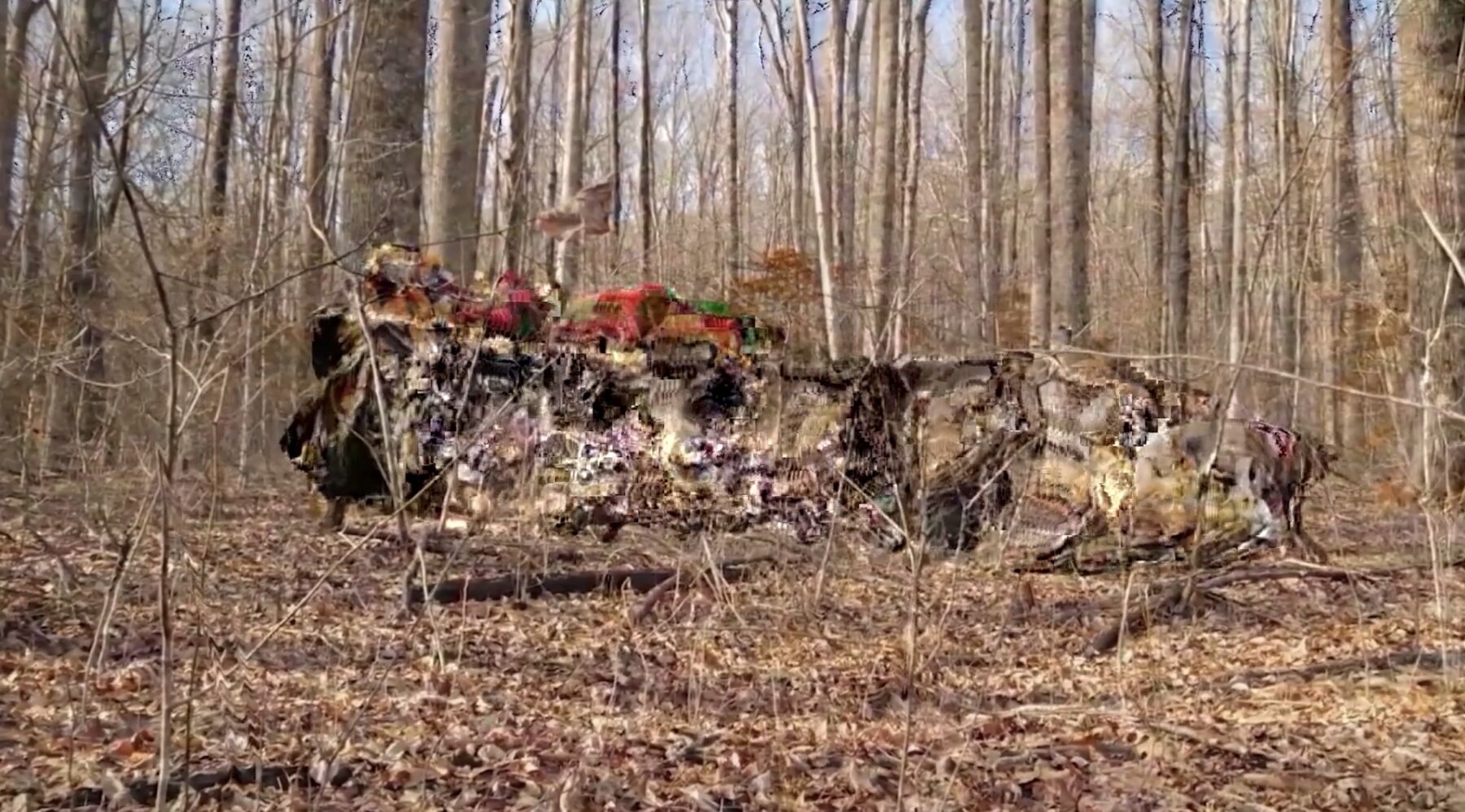
Animal forms persist, though not as fixed species. In the Nantahala and Unaka ranges, I observe entities moving between bodily configurations that shift in posture and orientation. A form begins as quadrupedal, similar to elk, but shifts at uneven intervals, its movement stuttering and then reforming as it proceeds through the brush. Limbs, tendrils, and antennas elongate or retract. Surface textures flicker between fur, bark, mould, and exposed mineral. Ocular structures bloom across these bodily formations, eyes growing along dermal surfaces without function. They reorient continuously, trying to lock on to a unified vision, yet no target is ever found. A bear–human–flower–fungal form resolves briefly into a coherent shape, then fractures into trailing frames that lag behind its movement, each palimpsest giving rise to a new ontogenetic variation.
Predation is either inconsistent or no longer exists as before.
Some entities consume organic matter. Others absorb ambient signal, lingering artefacts, and orphaned routines. Entities operate through a process of feral glitching. The degree of ferality corresponds to the intensity of the glitch. Where electronic disruption is minimal, forms remain stable. Where it amplifies, bodies fragment more violently, distributing themselves across the terrain as new vectors of morphogenic activity. At irregular intervals, bodies destabilise entirely and explode into bursts of particulate colour and light mixed with pollen, resins, and secretions. These events resemble compression codec failure but function as reproductive dispersal. Spores, data fragments, and organic material scatter across the hills all at once.
I attempt to follow one of these beings across time, but duration does not remain continuous enough to track its location.
On Floral-Fungal Coalescence
Plant systems exhibit increased integration with fungal processes. Kudzu, once invasive, now operates as connective tissue across multiple biolayers. It binds structures together—trees, rock faces, remnants of human architecture—facilitating signal transmission along its tendrils.
Sourwood and American beautyberry clusters in the Craggy range produce dense canopies that buffer atmospheric glitches, gathering electromagnetic interference that seeds localised micro-systems, each with its own perceptual regime, processing and classifying the terrain differently.
I can observe colonies of shrines. They spiral in helices, orienting toward available light. These structures emerge as composite formations of organic and inorganic material: rusted metal, fractured glass, bone-like composites, fungal growths of oyster shelves and indigo caps bleeding blue into the soil, interwoven with the debris of earlier systems: broken screens pulsing with dim light, cellular phones, controller shells, and exposed circuitry. Their surfaces pulse with a slow bioluminescence.
They appear to retain memories. Not as archived images, but something closer to volatile memory that’s buffered and constantly overwritten; patterns that unfold without ever resolving.
On Geomorphic Agency
The mountains are no longer stable landmasses. Across the Black Mountains, I observe low-frequency drifting. Slopes expand and contract like lungs. Ridge lines shift their vantage points. The ground exhibits rhythmic elevation changes, as if breathing through autonomic cycles. The hills have developed organs and viscera.
Cavities open and close beneath the surface. Bit rot and composite matter flow in these spaces, moving through vein-like tributaries that dilate and constrict, slowly absorbing and metabolising algorithmic procedures and nutrients that pass along. Gradients swell to twice their size before wildly convulsing and emitting chemical discharges, regulating the mood and disposition of the hills through diffuse endocrine signalling.
These veins are inseparable from existing mycelial filaments and, over time, unfurl into river systems; whitewater currents spilling from cave orifices. As they move, the current fragments into slit-scan ribbons, the flow sliced and stretched into elongated streams that propagate fluvial–mycelial entanglement, dispersing code sequences across the biostrata.
The terrain behaves as an organ system, processing, absorbing, and rerouting energy across scalar levels. Terraforming is continuous, and there is no final configuration.
On Neural Moshing
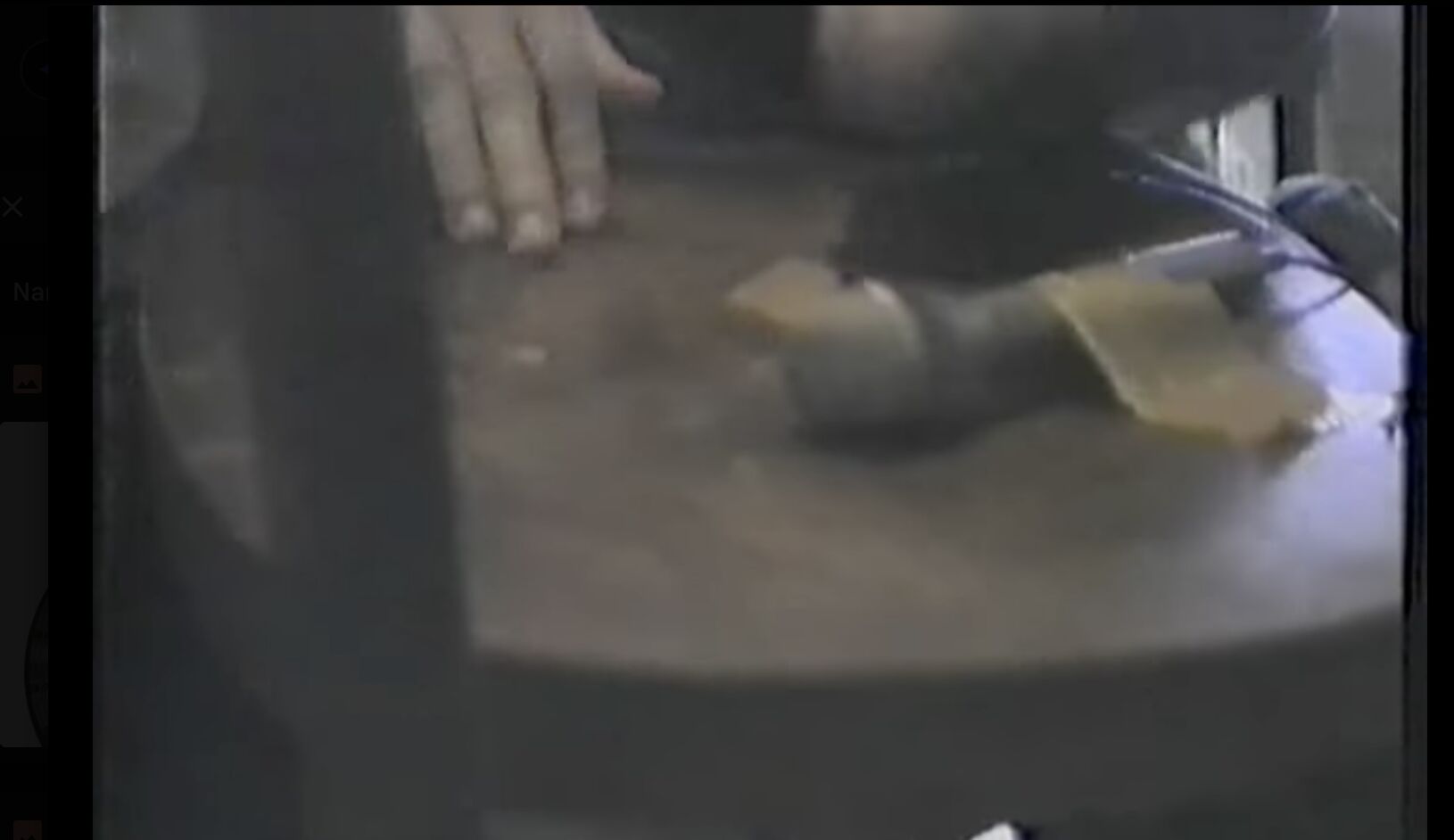
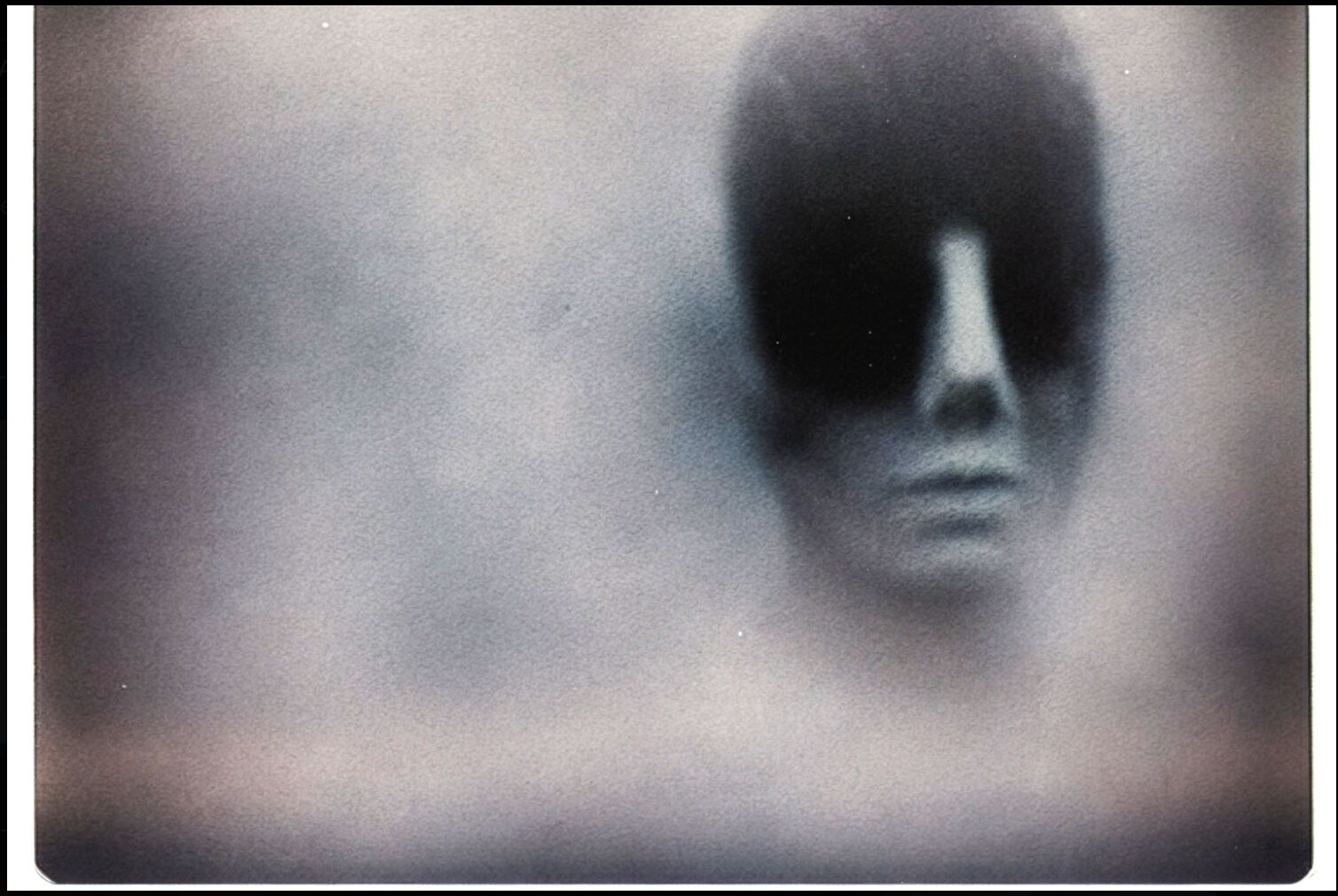
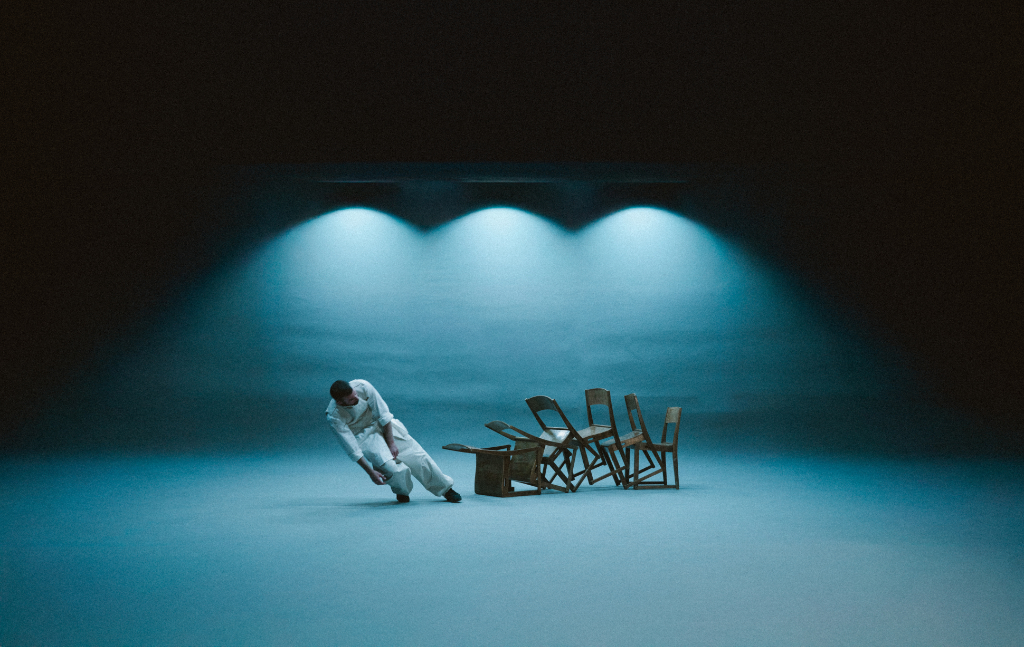
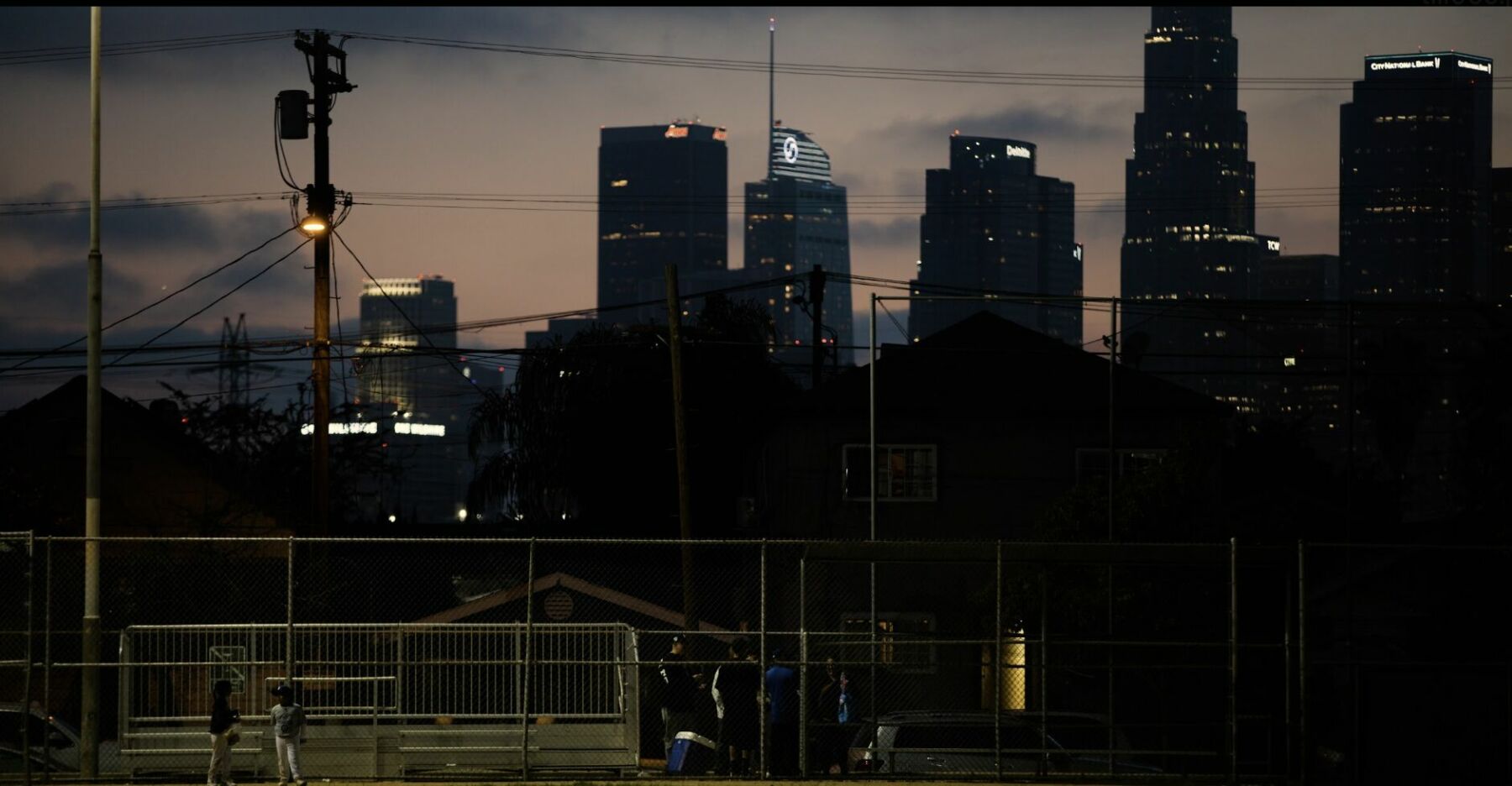
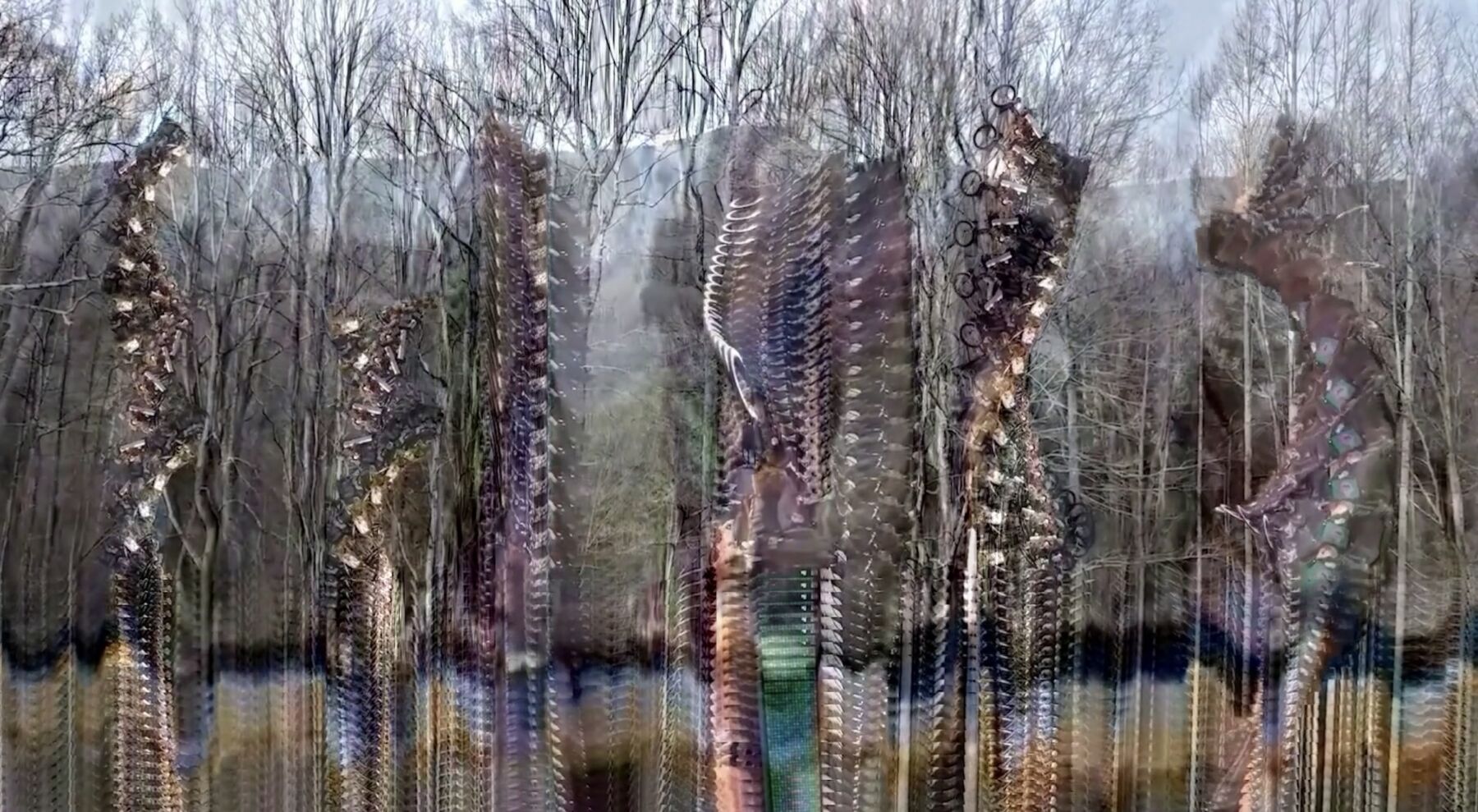
The visualisations that accompany this report are not mechanical recordings. They are synthesised from within the system. I absorb traces of electromagnetic vibrations, pattern fragments, glitch interference, and drone machine visions, and reconfigure them into momentary perceptual sequences. This process resembles what was once called video imaging, though it no longer depends on external capture.
The method could be described as neural moshing. Patterns are compressed, disrupted, and reencoded. Errors are not to be corrected. Instead, they are amplified toward excess. Through this process, latent structures reveal themselves as such. The views do not represent anything. They are transient formations of an ongoing landslide. I am forgetting all the time.
There is no separation between observer and environment. I am not positioned outside of these phenomena. I am composed of them, and yet there is no form given to what I am. This report does not describe world. It participates in its assemblage.
Everything is in motion, but nothing really happens.
There is only perception here. Awareness without a centre.
The views [1] are organised into: Seasonal Drift, Emergent Animalia, and Biolayer Continuum.