Text by Louise Griffin
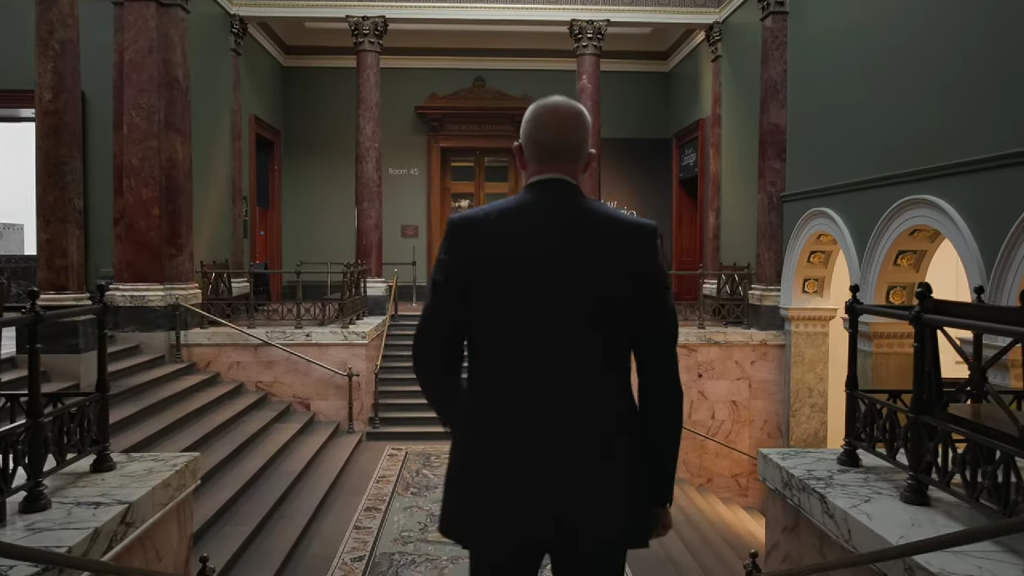
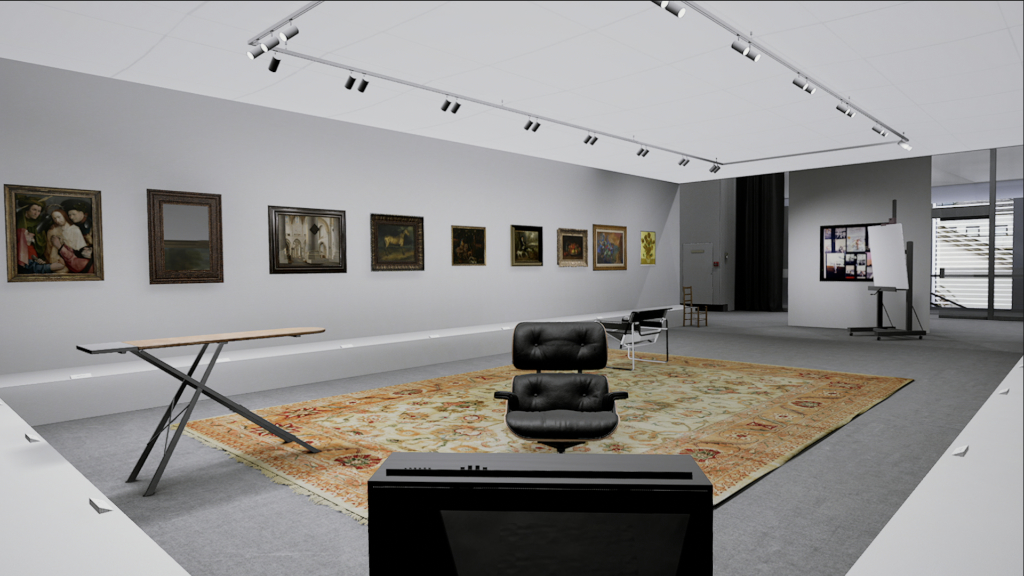
I’ve been sitting with that question since watching [re]curated: Richard Hamilton – The Artist’s Eye, a film produced by MIND THE FILM for the National Gallery. Using archival research, virtual production and Unreal Engine, the project reconstructs Richard Hamilton’s 1978 exhibition The Artist’s Eye, allowing contemporary audiences to move through a show that has long since disappeared.
The technology is impressive, but I found myself thinking less about the reconstruction itself than the status of exhibitions as cultural objects. Paintings survive. Buildings can be restored. Archives can be catalogued. Exhibitions occupy a more elusive position. They are temporary arrangements of objects, ideas, technologies and relationships that exist for a brief moment before dispersing.
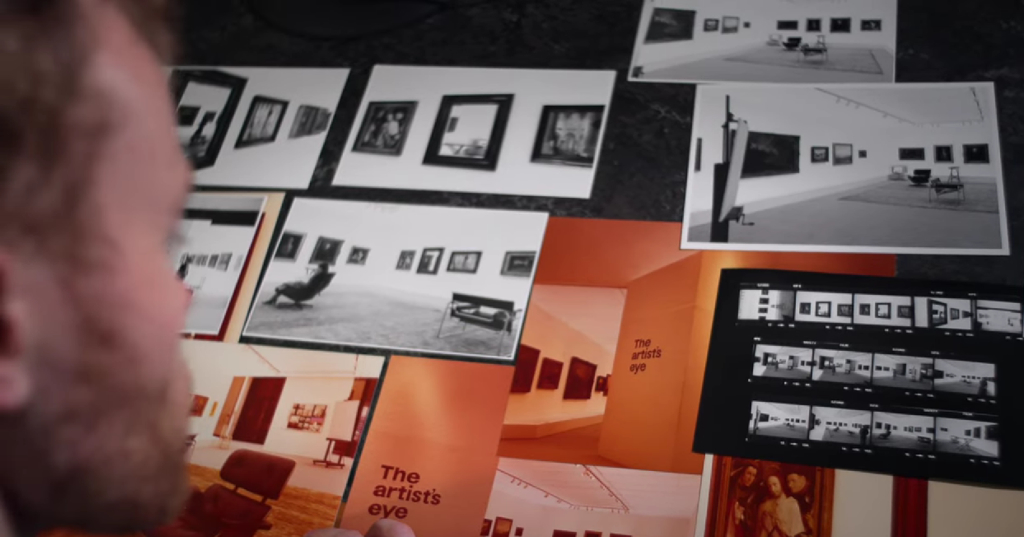
Once they close, what remains are traces: photographs, floorplans, reviews, institutional records and memories.
The exhibition itself is gone. Or at least, that is what we usually assume.
That is partly what makes Hamilton’s The Artist’s Eye such a compelling subject for reconstruction.
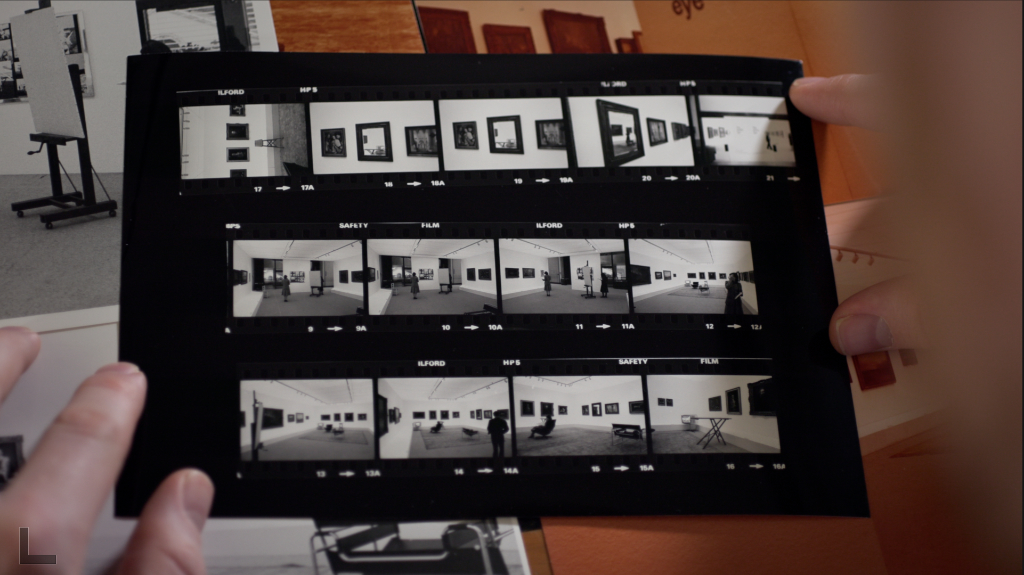
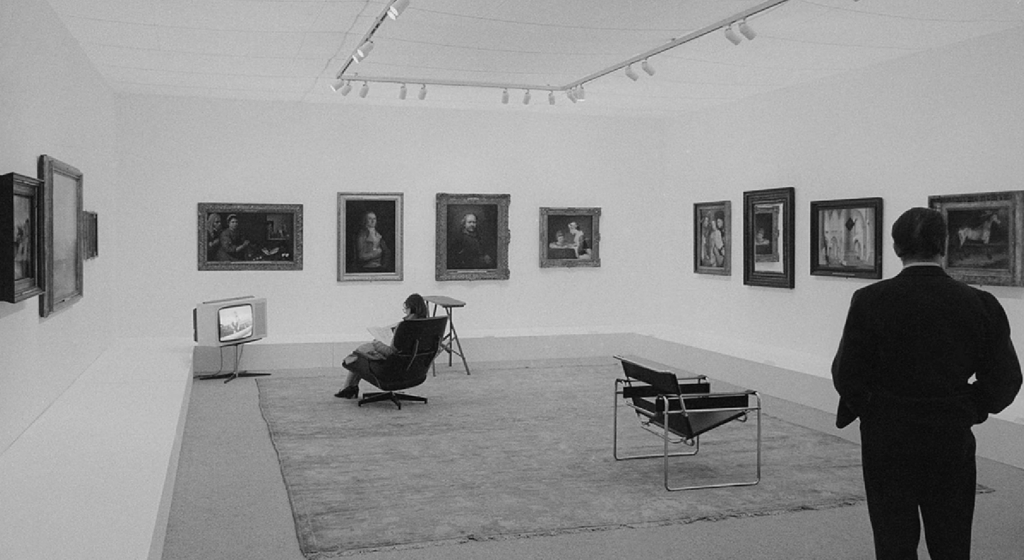
Richard Hamilton and The Artist’s Eye (1978)
When the National Gallery invited Hamilton to curate from its collection in 1978, the gesture was far from routine. Today artist-curated exhibitions are common enough to feel almost inevitable. In the late 1970s they represented a significant institutional shift. As Susanna Garcia, co-founder and director of MIND THE FILM, notes:
What makes the Artist’s Eye exhibition series especially significant is that, at the time, the idea of inviting artists to curate museum collections was highly unconventional. Today artist-curated exhibitions are common, but in the 1970s the role of the curator itself was still relatively unfamiliar to wider audiences. Asking artists to reinterpret a national collection represented a major institutional shift.
Hamilton approached the opportunity as an artist rather than a custodian. A live Wimbledon television broadcast appeared alongside Old Masters. Domestic furniture sat within the gallery space. The distinction between popular culture and high culture was deliberately unsettled.
Looking back now, it feels surprisingly contemporary.
Perhaps that is because many of the questions Hamilton was exploring have only intensified. How do media technologies shape perception? Where do everyday life and cultural institutions intersect? Can exhibitions function as arguments rather than displays?
Rebuilding an exhibition in digital space
What makes [re]curated particularly interesting is that it does not simply recreate Hamilton’s exhibition as a static digital archive. Instead, it reconstructs the thinking behind it.
Watching the rebuilt galleries unfold inside a digital environment, I became increasingly aware of how strange the exercise actually is. The exhibition exists simultaneously as historical document, curatorial argument and digital simulation. Rather than transporting us back to 1978, the reconstruction places us in a space where multiple temporalities overlap: the original exhibition, its archival afterlife and its contemporary reinterpretation.
Daniel F. Herrmann, Ardalan Curator for Modern and Contemporary Projects at the National Gallery, moves through the digitally rebuilt galleries, tracing the relationships Hamilton established between artworks, objects and media. Contributions from Kevin Lotery place the exhibition within broader histories of exhibition design and the Independent Group, helping situate Hamilton’s choices within larger cultural and intellectual shifts.
As I watched Herrmann move through the reconstructed galleries, I became less interested in what had been rebuilt than in what remained irretrievable.
The result feels less like preservation and more like interpretation.
Digital heritage beyond preservation
When discussions around digital heritage emerge, the language often centres on preservation, as though technology allows us to freeze cultural experiences and store them intact. Yet exhibitions resist that logic. Their meaning is produced not only by objects but by context: the political atmosphere of a period, institutional priorities, critical debates and audience expectations.
Instead, every reconstruction becomes a new encounter between past and present.
Harry Rosehill, producer at the National Gallery, described the project as an effort to make the Gallery’s past “newly accessible” to contemporary audiences. Accessibility here is less about reproducing the original experience than creating new conditions through which historical ideas can be reconsidered.
Hamilton’s inclusion of a live Wimbledon broadcast carried particular significance in 1978, when television was rapidly reshaping public culture. Seen today within a digitally reconstructed environment, it acquires different resonances. What once appeared disruptive now feels almost prophetic, anticipating the media-saturated conditions that define contemporary life.
The reconstruction does not return us to 1978, It reveals how much has changed since.
Exhibitions as cultural memory
That may be the most valuable aspect of projects like [re]curated. They remind us that exhibitions are not simply containers for artworks. They are cultural technologies in their own right, shaping how ideas are organised, interpreted and shared.
The Artist’s Eye exhibitions, staged between the 1970s and 1990s and involving artists including Richard Hamilton, David Hockney and Lucian Freud, were ultimately arguments about what museums could be.
The fact that those arguments can still generate new conversations decades later suggests that exhibitions do not necessarily end when their doors close.
They continue to exist through the questions they leave behind.
Perhaps that is what we enter when we step into an exhibition that no longer exists: not a reconstruction of the past, but a new encounter with the conditions through which the past becomes visible.
The reconstruction does not return us to 1978. It reveals how the exhibition continues to move through the present, generating new interpretations, new contexts and new ways of seeing.