Text by Katažyna Jankovska
What is time? Is time a linear progression, or can multiple temporalities coexist at once? As Achille Mbembe observes, we are experiencing a clash of temporalities: geological, deep, historical, and experiential times that fold into one another. If we are accustomed to thinking of time as a sequence of past, present, and future, how might we begin to think of it as simultaneous? [1]
The question of time and multiple temporalities is central to this year‘s Biennale Danza, the International Festival of Contemporary Dance, which takes place from 17 July to 1 August. Directed by Sir Wayne McGregor under the theme Time Does Not Exist, it presents more than 60 events over two weeks, including 9 world premieres, 3 European premieres, and 8 Italian premieres. 140 artists will perform at various locations in Venice, showcasing the variety of artistic languages and traditions.
Following last year’s theme, Myth Makers, where artists were invited to create modern myths and craft ancient, speculative, and contemporary narratives, this year, Biennale Danza offers a complex and layered view of interwoven stories from different times, places, and generations, connecting lands, bodies, rituals, and temporal landscapes. Here, past, present, and future converge, revealing the continuity of intergenerational knowledge.
The provocative claim by Italian theoretical physicist Carlo Rovelli – that time does not exist – becomes a connecting thread of this year‘s festival. Rovelli suggests that time, at least as we know it, might not be a real, existing phenomenon. It is not a fundamental feature of the physical universe, but rather an emergent, subjective, or relativistic concept. It also questions our understanding of time moving steadily forward from the past to the future. And yet, even if time doesn‘t exist, our perception of time does. The common cultural understanding of time as linear, with ticking clocks governing our lives, the past behind us and the future ahead of us, is largely a Western concept that became naturalised by the 19th century.
In contrast to linear, quantifiable, and progressive Western colonial temporalities, Indigenous ontologies of time revolve around circular and spiralling concepts of time. In these understandings, the present is always in dialogue with the past and future. Time comprises multiple temporalities, in which ancestral knowledge, memory, and connections to land keep the past active in the present, while both continue to shape the future [2].
As Mbembe writes in On the Postcolony, time is not a series but an interlocking of presents, pasts, and futures that retain their depths of other pasts, presents, and futures, each age bearing, altering, and maintaining the previous ones. Such understandings stand in direct contrast to Western notions of progressive time. Colonial projects often imposed linear narratives of progress to dominate and reshape societies, disrupting Indigenous temporalities and using time itself as a mechanism of governance and control.
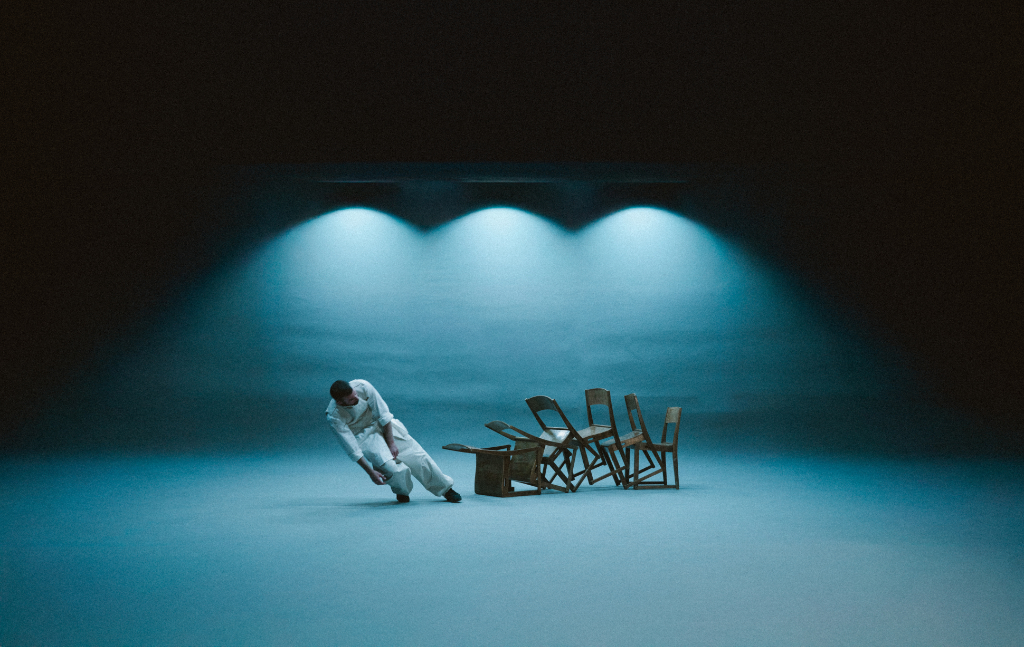
How can a focus on time and temporality open new pathways to reclaim land and self-determination? One way to disrupt colonial temporalities is to use stories with interwoven temporalities to create historical continuity. Through storytelling and narrative, cultures can fill the gaps created by colonial erasure, interweaving the past and intergenerational knowledge into the present.
Here, storytelling and choreographic thinking serve as tools to reimagine stories through the movement of bodies. As Kasia Wolinska and writer Frida Sandström write, The dancing body is continuously recomposing the history that it shapes and inhabits. In its circular existence, a linear, Western understanding of time is bent, making both past and future present in the body at work as a living container [3]. Many of the works presented at Biennale Danza 2026 approach temporality through such embodied histories, exploring how memory, land, inheritance, and identity continue to shape the present.
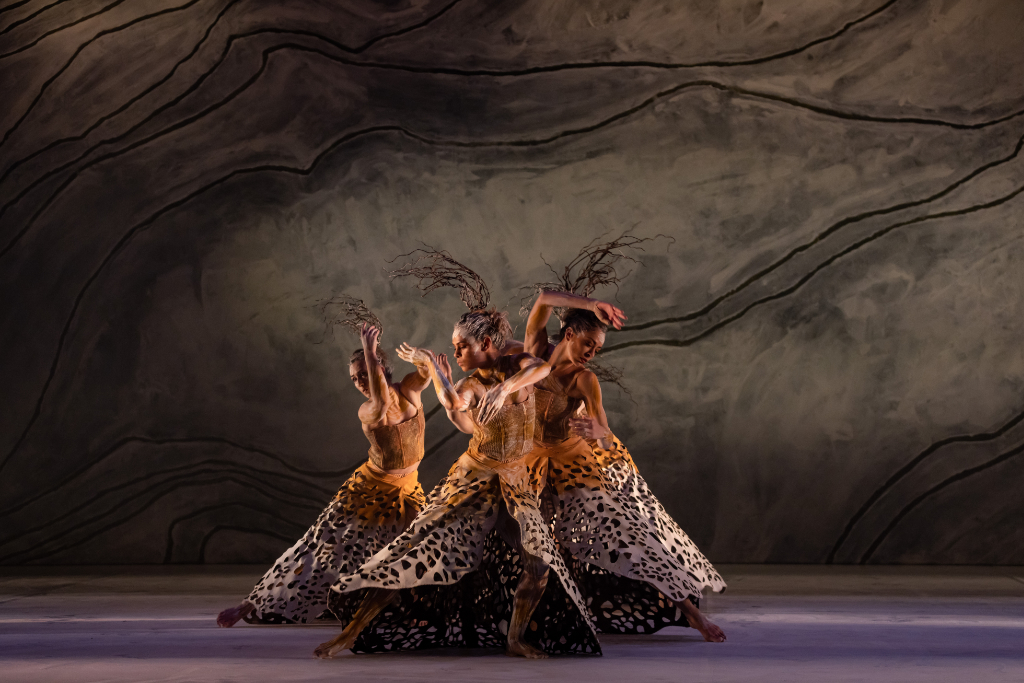
This year‘s Golden Lion winners, Bangarra Dance Theatre, present Terrain, choreographed by Frances Rings and scored by David Page. A company of professional Aboriginal and Torres Strait Islander performers, and the first Australians to receive the Golden Lion award since its inception, they tell the story of Kati Thanda – Lake Eyre. An homage to Country and First Nations peoples’ relationship to Country, the performance shows the cultural connection between body and land, where Country remains with the body like a second skin.
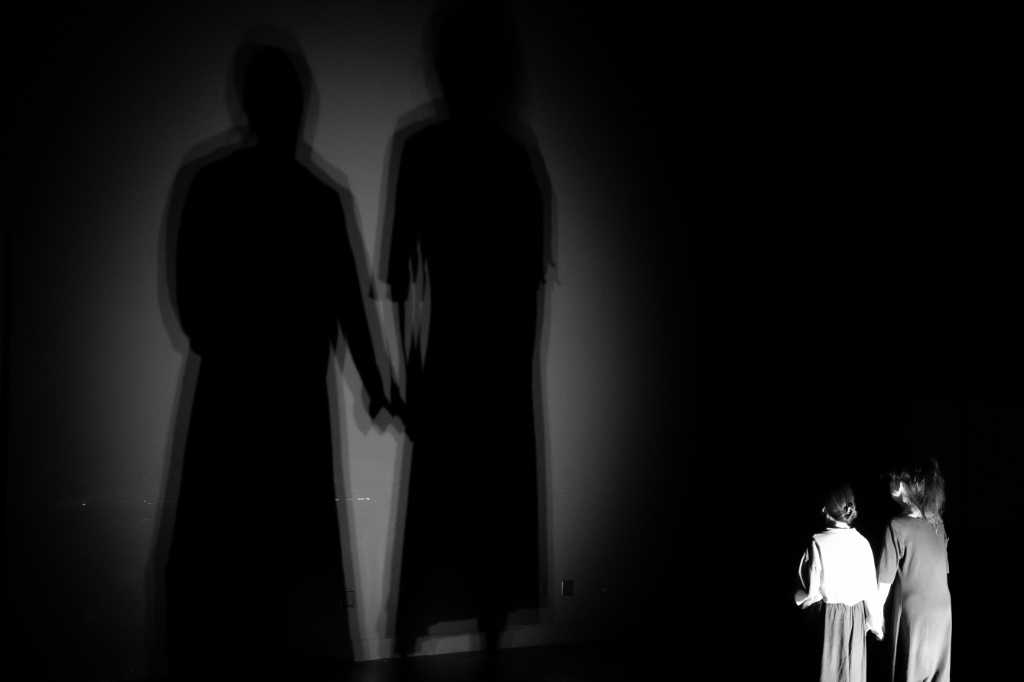
Franco-Malagasy dancer and choreographer Soa Ratsifandrihana presents Fampitaha, fampita, fampitàna (meaning “comparison,” “transmission,” and “rivalry” in Malagasy), drawing on her Malagasy origins and diasporic experience. The work unfolds as a rediscovered dialogue between the children of diasporas and their places of origin. Láhppon/Lost by Hlín Hjálmarsdóttir, with music by Valgeir Sigurðsson, becomes a physical narrative of the 1852 Kautokeino rebellion – one of the most violent in Sámi history – a turning point after years of conflict between the Sámi and the Danish-Norwegian authorities. The futuristic stage and costumes by Henrik Vibskov build on Sámi traditions, reflecting customs, building practices, and techniques.
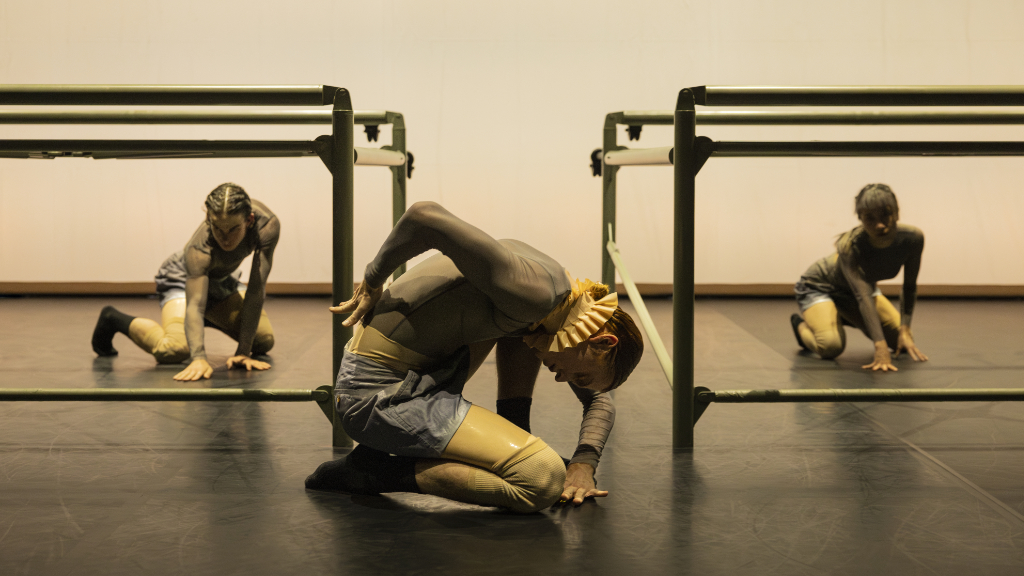
South African artist Mamela Nyamza presents The Herd/Less (a Biennale Danza Co-Commission and European Premiere). The performance explores the tension between collective unity and control, drawing on the dual meaning of the herd: the community moving in harmony and the rigid movement of a controlled group. Using traditional southern African sticks and cloth associated with masculine authority, which become both symbols of position and tools of control, the piece reflects on the violent reality of a collective stripped of agency.
The ageing body is often seen as the clear representation of linear time. Yet if thinking otherwise, the body also inscribes memories onto itself and carries inherited stories. With the mission to transform the perception of ageing within dance and create space for world-class dancers whose careers have already shaped ballet and contemporary dance across decades, WINN – When, If Not Now, presents the world premiere of Scirocco: Death in Venice – Bridge of Sighs. WINN is a dance company of world-class dancers and choreographers aged 40 and over, founded by Marijn Rademaker and Slava Tütükin. In an industry that has long celebrated youth, WINNDance Company asks an important question of the arts world: what if an artist’s most profound work begins after 40?
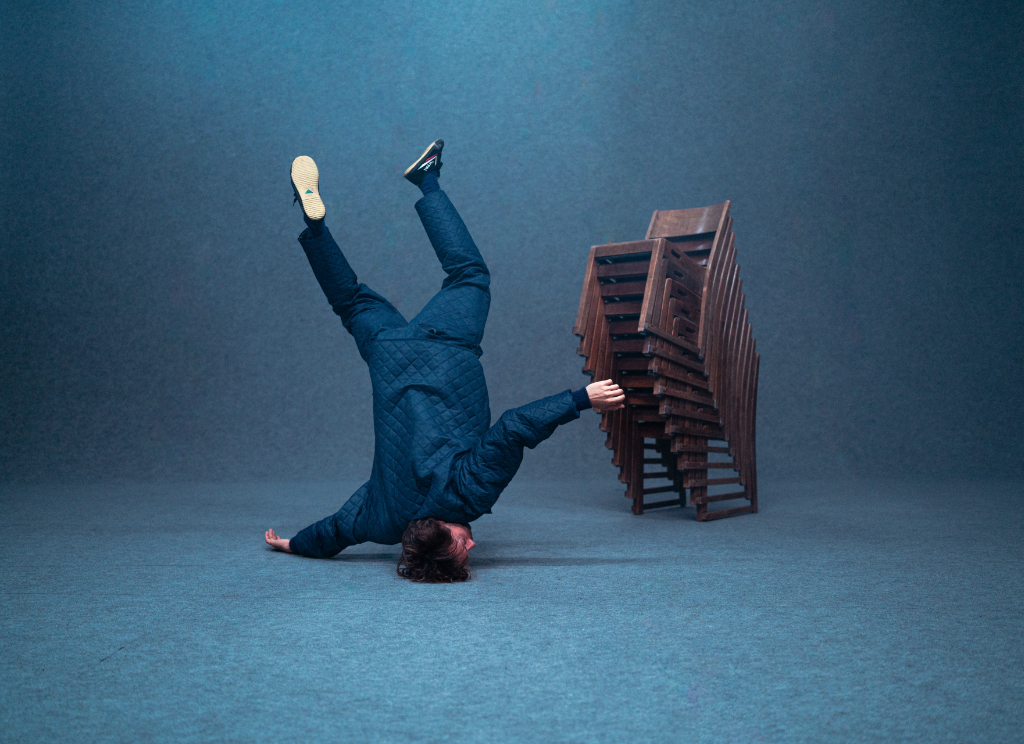
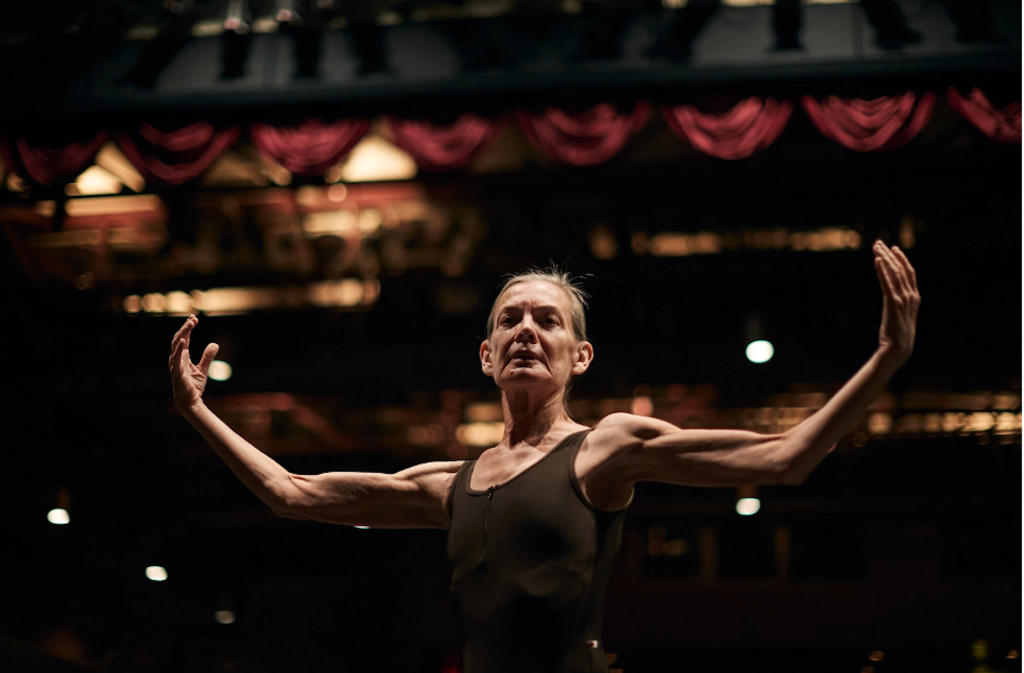
Marianne Hirsch’s concept of postmemory is evident in What Is War, which reflects on inherited memories of war that inscribe themselves on bodies and the collective memories of subsequent generations. Coming from two different backgrounds, Eiko Otake, who grew up in postwar Japan, and Wen Hui, who grew up in China during the Cultural Revolution, explore together the signs of violence written into bodies – both their own and those of many others. Drip Tekhne, the latest work by pioneering Australian choreographer Adam Linder for Danish Dance Theatre, presents a speculative evolution of how our bodies become technical vessels for dance. Engaging with the intersection between human bodies and digital technologies, Linder raises questions about how our physicality is shaped within an increasingly virtual world.
The program also creates bridges across time and generations. Choreographer Molissa Fenley’s celebrated solo work, State of Darkness, finds new life performed by a new generation of New York’s acclaimed dancers. Originally commissioned by the American Dance Festival in 1988, State of Darkness challenges Stravinsky’s cacophonous “Le Sacre du Printemps” (The Rite of Spring) with an intense 35-minute solo performance.
What does it feel like to be in time? Why do some moments seem to last almost forever? Why does life sometimes feel like it rushes past its experiencer? Tempo by visual artist, magician, and stage director Kalle Nio, in collaboration with Brazilian choreographer Fernando Melo, explores time – its perception, acceleration, deceleration, and eventual end. Tempo raises questions about how we truly experience time and how we can understand it. At the same time, it confronts the audience with its own temporality. Winner of the international call, Oli Mathiesen, a New Zealander of Maori origin, presents Just Between Me and Jesus, a provocative piece inspired by club culture that explores the inner worlds of Christian-raised queer youth and the collision of faith and sexuality.
Alongside the dance program, in celebration of the 20th International Festival of Contemporary Dance and 28 years since the official launch of the Biennale Danza program, the exhibition, created in collaboration with ASAC, will showcase and honour the achievements of this festival’s past, delving into the extensive Biennale Danza archive. Through film, photographs, text, documents, objects, talks, and live interactions, the exhibition will reflect on the festival’s impact. Each artist presenting or performing at the Biennale Danza 26 will offer a public workshop. Curated conversations before and after performances will offer opportunities to meet artists and engage more deeply with their work and artistic visions.
Dance has always had a special relationship with time. It unfolds through duration, rhythm, and repetition, often altering or suspending our perception of time. Through performances that engage with ancestral knowledge, diasporic memory, ageing bodies, technological futures, and inherited histories, Biennale Danza 2026 reveals time not as a singular, universal experience but as a network of overlapping temporalities. Echoing Mbembe’s proposition that different temporalities continually fold into one another, Biennale Danza invites audiences to consider how stories, bodies, and generations remain connected across time, and how dance can make those connections visible.