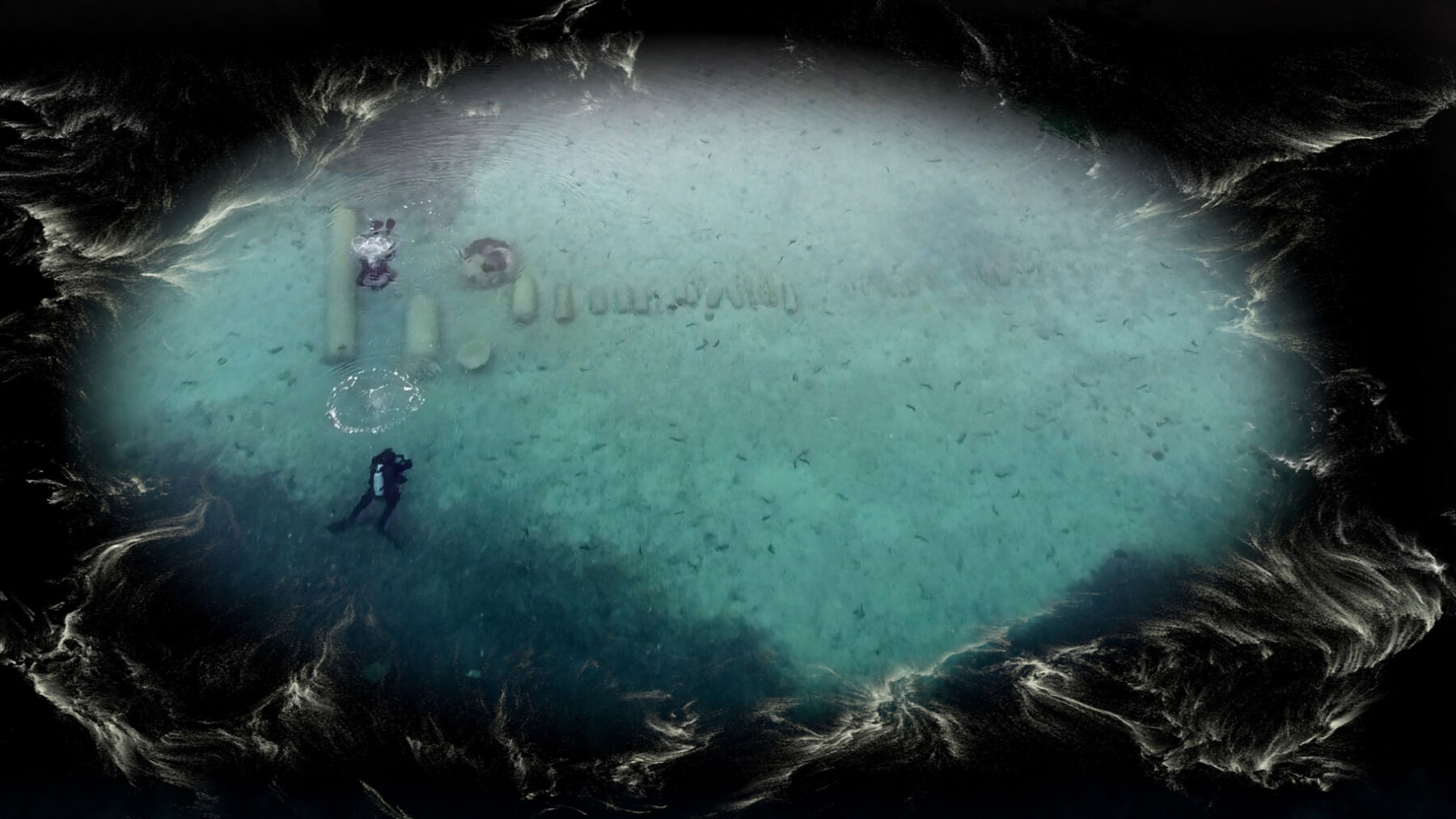
Interview by Rae (Mee-Jin) Tilly
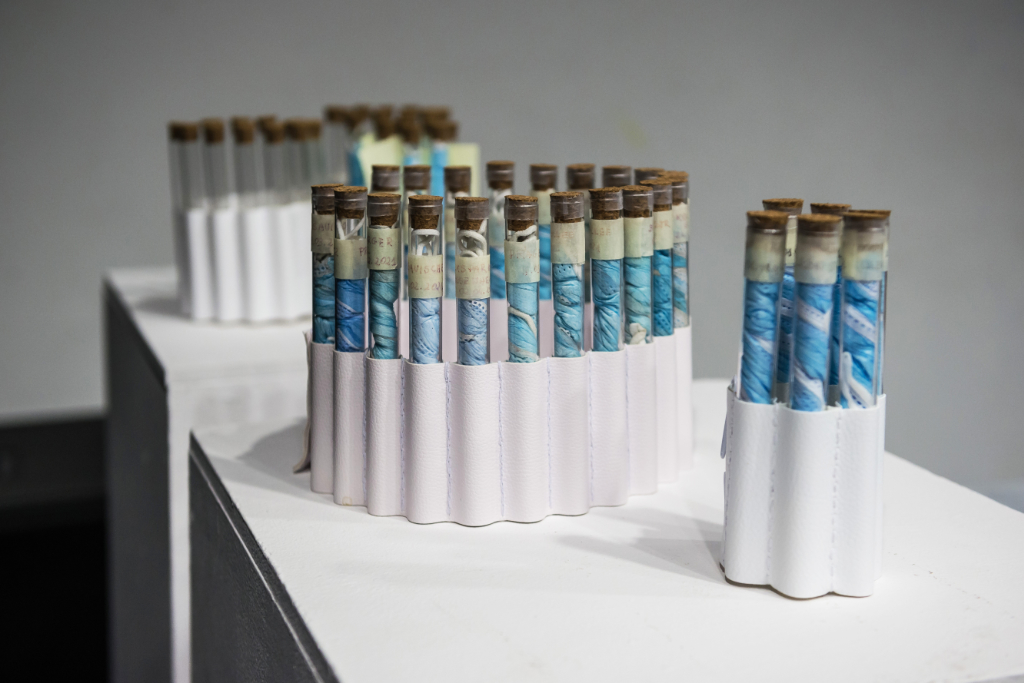
For most people who were not severely affected by COVID-19, the virus has left a lasting impression. What acutely consumed years of our lives, dictating our movements and interactions, plays little role in how we understand ourselves and engage with our surroundings today. Karolina Żyniewicz will be reminding us of what we have forgotten this month as she returns to Art Laboratory Berlin to continue her project, Signs of the Times*.
Żyniewicz began collecting masks from public areas of Berlin during the pandemic in the spring of 2021 to analyse biological traces left behind on them. Her initial aim was to collect samples from the masks to determine the genomic transcripts of the cultured microorganisms. Since then, the project has taken on new trajectories as her aims have evolved. After recognising that collecting discarded masks long after their owners left them behind hindered her ability to hear the stories attached to them, she began collecting masks from willing participants who spoke about their memories of the pandemic during the collection process.
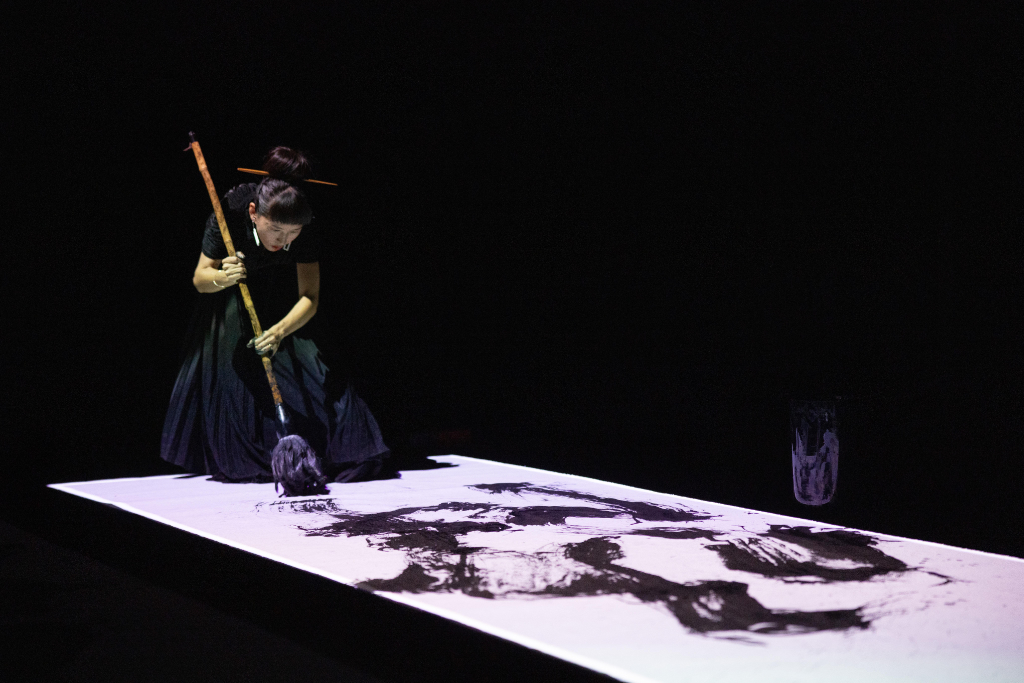
In 2024, in Zagreb, Croatia, Żyniewicz used her findings to create written texts for a performative exhibition. Her next step: to perform her transcription at Art Laboratory Berlin. Żyniewicz has stated that Sign of the Times is dedicated to remembering and forgetting, appearing, and disappearing. And it’s not just our memories of the pandemic that have disappeared. During the pandemic, the masks we wore were ephemeral; they served a purpose, but only temporarily, as contamination necessitated their replacement. But as days turned into months and months turned into years, their usage declined. As a consequence, the ritual of wearing them lessened until the material and ritual disappeared, and along with them, our memories.
Death was a very real and grave consequence of the pandemic. And it’s a topic that never fades from the general consciousness, even after our memories of pandemics might. Scientists look to understand it, doctors look to treat it, and poets are consumed by it. Sign of the Times engages this exploration through the collection of biohazardous material and in the retelling and recalling of what it felt like to live through so much death.
Many of Żyniewicz ’s other works also pivot around death. Looking at postnecropolis, we see Zyniewicz merging funeral traditions with the natural cycle of matter, specifically the peat bogs of Ireland. In from life to death and back, Żyniewicz uses necrophagic insects to examine the role of aestheticisation in the process of changing the human perception of biological life. And with safe suicide, Zyniewicz grows her own cells to prepare them for death. When viewed alongside Signs of the Times, it is impossible to divorce the organic material (bogs, microbes, cells, insects, or otherwise) from the exploration of death itself. In this way, we see an artist who is at once consumed with understanding our collective and communal relationship to our ends, but also an artist whose very personal exploration into her own fate interests her greatly.
The pandemic worked in much the same way, as we attempted to understand mortality. But there is also a slight flirtation, a tempting of fate, that we see Żyniewicz plays with as well, for there is both danger and agency in deciding to collect what could be hazardous to one’s own health.
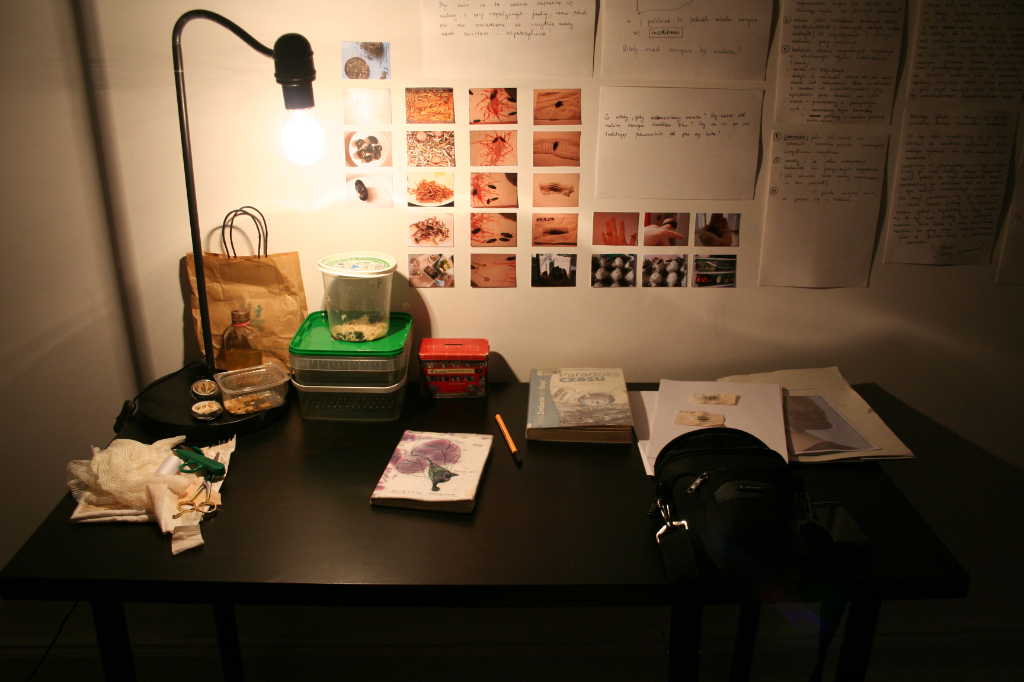
The world experienced the COVID-19 pandemic globally. One can imagine, at certain levels, a commonality in how human beings experienced COVID, both individually and collectively. What has your work with Signs of the Times exposed about individual vs collective experience and memory?
I collected over 100 audio testimonies between 2021 and 2024. This was not a classic sociological study, so I did not follow any strict interview protocol. Only the opening question was always the same: What do you think you will remember most about the pandemic in 10–20 years from now? Some people spoke for five minutes, while others needed a longer conversation. I did my best not to limit anyone. While listening to each person and speaking with them, I was fully focused on their individual story. I also avoided any judgment, even when someone admitted to not following the rules for various reasons.
I would remember certain singular stories for some time, but gradually those memories began to blur. I could return to each of them while transcribing the audio recordings by hand. This process meant embodying each story while also beginning to see them as part of a larger collection. Once they became text, I noticed certain common elements across all the confessions. It was almost like discovering categories, such as: being happy staying at home / being depressed by the confinement; being stuck abroad; being ill with COVID-19; having a friend or family member in a high-risk group; believing that the pandemic would change the world / doubting that humanity would learn anything from the experience; enjoying the anonymity of wearing a mask / struggling with the necessity of covering one’s face. I could probably carry out a statistical analysis of the recurrence of certain elements in these confessions, but that is not the point of this project.
To talk about the pandemic is to also talk about xenophobia, racial dynamics, wealth gaps, and geopolitics. The different stages of this work (collection, performative exhibition, and interviews) took place in a Western European context that shaped the DNA, memories, and thoughts that have resulted in this project. How does this impact your work, or does it at all?
You are right that the majority of the mask and memory collecting sessions took place in Western Europe. I also conducted remote meetings with people in Canada, as well as one in-person session in Buffalo, New York, in the United States, which is still within the Western world. This is a natural limitation of the project, due to my travel schedule.
I would be more than happy to carry out the project in other parts of the world. However, even while working only with people from Western countries, I heard a great deal about how the issues you mentioned at the beginning of your questions influenced individual experiences of the pandemic.
During the first phase of this project, you collected masks from public areas in Berlin where you lived. The initial fear that gripped most individuals stemmed from the severity of the illness and the unprecedented speed of its transmission. By collecting discarded masks, objects designed to stop the virus, you collected potential biohazards without knowing its original owner. Was this a concern to you? If so, what precautions did you take? If not, why?
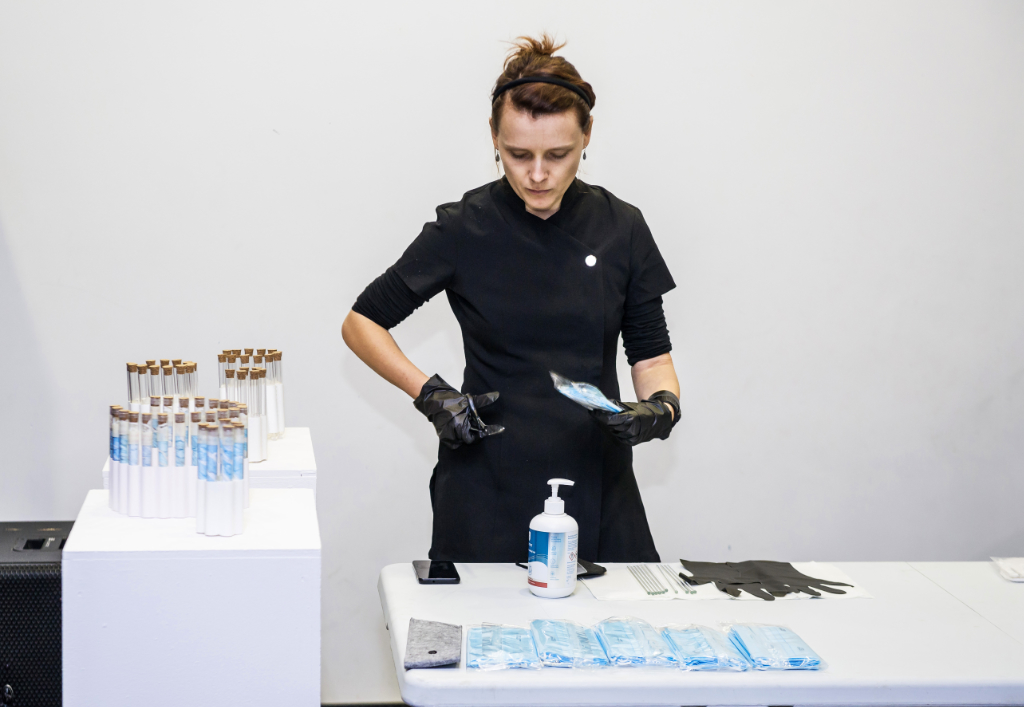
The stage of the project you are referring to was conceived as an abjectual performance. The biohazardous risk was crucial to it. I confronted my own fear and uncertainty, equipped with gloves, a mask, and zip-lock bags.
It was an interesting action because the performance was taking place mainly in my imagination. I can’t determine when a particular mask was discarded or who its wearer was. What I found particularly interesting was that the shame of doing something unusual in public space and being judged by passersby was much stronger than the concern that I might contract an infection from contact with discarded masks. I felt almost like an exhibitionist—ashamed and excited at the same time.
I tended to choose less crowded streets and parks. Nobody ever paid attention to what I was doing. No one even asked. Everything was happening in my head. The core of this performance was my confrontation with myself as I approached biological and cultural boundaries.
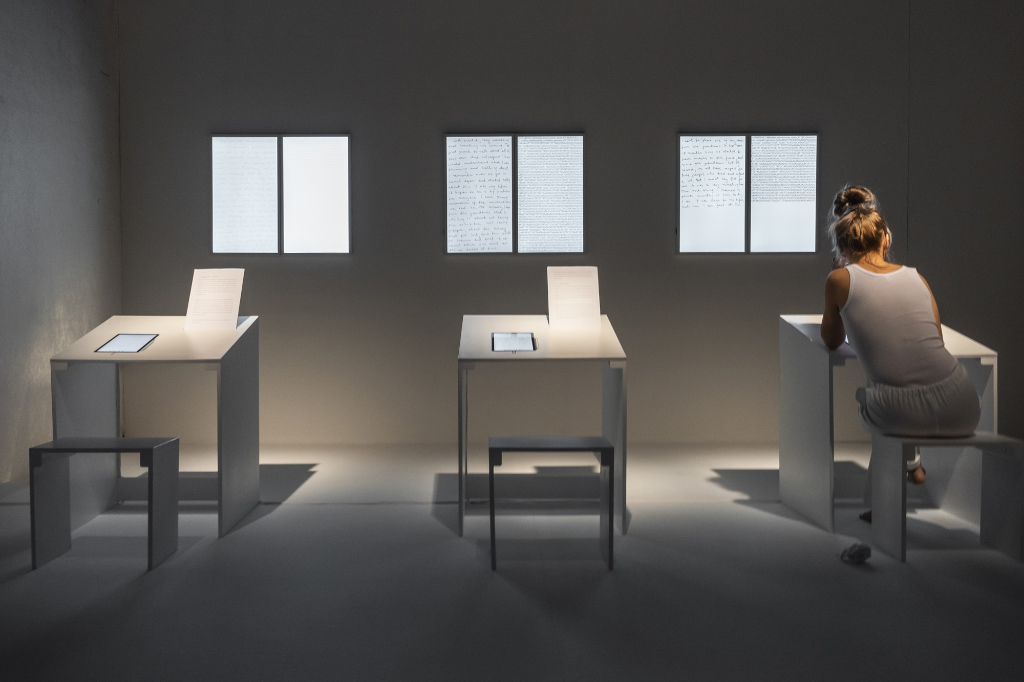
You will be exhibiting Signs of the Times at Art Laboratory Berlin, where you will “transcribe entries from [your] notebooks onto a tablet using a stylus…the handwritten results [will] appear on a monitor on the wall. On another monitor, the genetic transcript of microbial material from one of the masks…[will appear] letter by letter, line by line.” As we become increasingly removed from the pandemic, our memories and emotions about it evolve. How does this impact each performance for you and the audience each time?
The exhibition at Art Laboratory Berlin is the second time when the performance happens. I am convinced that this show will open a new chapter in the project, allowing me to answer this question more fully. At this point, I can already say that I observed a meaningful difference between running the “memory clinic” in 2021–2022 and in 2023–2024. The last session in the United States, in particular, showed me that people struggle to recall the pandemic. At the same time, they seem completely comfortable with this blurriness of memory.
For many, the physical gesture of putting on the mask unlocks memories that had been inaccessible. The exhibition at Kontejner Zagreb was surprising for visitors, I know this from speaking with them. Their reaction was almost, “Oh no, here we go again.” Initially, I thought I was doing something very important by documenting that period and preserving its stories. However, as the project developed, its trajectory showed me that this topic is almost like a “spoiled egg.”
After the installation’s premiere in Croatia, I tried to submit the project to festivals and exhibitions, but it didn’t seem to fit anywhere. I even came to accept this situation as part of the project’s metanarrative. The show in Berlin is therefore a very meaningful step for the project, because it brings it back on track and allows me to investigate what we remember about the pandemic in 2026, and how the memories gathered in previous years continue to resonate with us.
The masks are not just storing human DNA (identity) and the microbiome (bacteria/fungi); they are also storing pathogens (viruses such as SARS-CoV-2, influenza, etc.). What safeguards have been put in place to prevent potential biohazards?
First of all, I was never interested in the human DNA that could be found on the masks. Nor was I interested in detecting the SARS-CoV-2 virus itself. My point of interest was the microorganisms that are not immediately obvious when we think about masks. I was mainly curious about the bacteria co-plotting the stories that people were sharing with me. I believed that each mask possesses its own individual biological character, just as every memory does.
At the same time, certain microbial species are present on many masks, especially when we consider contamination from the surrounding environment, particularly the air. This creates an interesting analogy with the individual and collective memories we discussed at the beginning of the interview.
The biohazardous risk was present in the project from the very beginning, just as it was present in every other corner of our reality. I followed the hygienic protocols, using gloves, a mask, and hand disinfectant, everything that formed the core of our perception of safety and cleanliness.
The collected mask samples were (and in some cases still are) packed in test tubes, then placed in sealed plastic bags and stored at low temperature in the freezer. Was all of this safe enough? I cannot be sure. Our control over the leaking reality is very limited.
DNA is a recurring medium for you. In Similarity of Differences, blood samples were collected with explicit consent. However, in Signs of the Times – collecting biological traces and memories, the masks were collected from public spaces, meaning the human DNA and genetic material on them were obtained without the donors’ knowledge or consent. In an era of increasing concern over genetic privacy and data sovereignty, how do you reconcile this lack of consent with the ethical implications of sequencing and archiving anonymous human genetic data?
You are right, I work quite often with DNA, mainly as a form of language. I am also deeply interested in how the imagination surrounding genetics functions in society. I have worked on GMOs several times. I intentionally use the word imagination rather than knowledge, because I see a significant lack of knowledge that gives rise to many controversies.
One fear related to DNA is that it constitutes our individual inscription and can be stolen, leading to the theft of our identity. It is not entirely impossible or unrealistic that some individuals may have harmful intentions, but thinking about this all the time would drive us all crazy. Whatever we do, and wherever we go, we leave our genetic fingerprints behind, for instance, in hair or saliva.
In all my projects, I stress that every kind of knowledge brings responsibility. Since I probably know at least a little more about genetics than the people discarding their used masks in public spaces, even given my long-term collaboration with my PhD supervisor, the geneticist Professor Paweł Golik, I take responsibility for ensuring that the samples are not used in a harmful way. It is also crucial to stress, once again, that I have never been interested in sequencing or reading human genetic data from the masks.
Looking more closely at the blood samples collected for Similarity of Differences: Stage 1 involved sample collection. Stage 2 attempted to read DNA from each blood sample and combine all samples into a single test tube. What was the goal of individual readings compared to the goal of readings once the samples were combined?
I will start by clarifying that the individual samples were not analysed for two different reasons. The first reason was that some people expressed concern that by giving me their blood sample, I would read their genome. The second reason was purely technical: on Ruhnu Island, where I conducted the project, there was no proper freezer, so the samples remained at a relatively high temperature, which caused DNA degradation.
In general, DNA was not the most important aspect of the project. Much more important was blood itself, and its biological, social, and cultural meanings. I approached people on the island, asking them for only a single drop of their blood. It may seem very simple, but it was not. I was asking them to give me a small, symbolic portion of something essential to their bodies.
I was equipped with new sterile needles, cotton pads, gloves, and small zip-lock bags for the cotton pads soaked with blood. Some people were completely comfortable with the task and were simply curious about why I needed it. Others were suspicious and feared that I would steal their DNA. Many participants were simply afraid of the sight of blood or the pain of pricking their finger. A great number of decisions had to be made before they agreed to give me what I was asking for.
What I eventually did in the lab was to soak the collected blood-stained cotton pads in a special medium to recover any DNA that had survived, then combine all the samples into a single test tube. It became a collective sample, just as the project itself was a collective ritual and experience.
In safe suicide, you grew your own cells to kill them in various experimental ways: it was your “multiple cellular suicide.” I imagine this process to actually be the opposite of destruction, as there is a symbolic factor of dying multiple deaths and a catharsis of release from the versions of ourselves we decide to shed. Did you view this work in a similar vein, and if so, did each symbolic death correlate with the manner and method of killing?
The multiplicity of cellular death was central to the safety of the suicide. The project is based on playing with physical matter, its meanings, and its language. I committed suicide at the cellular level instead of destroying myself in vivo. There was an even more interesting opposition than the one you identified. Before I began killing my cells (B lymphocytes), I first immortalised them. Yes, immortality is possible in the lab, even though its meaning is very different from what it means outside the laboratory. Immortalised cells acquire a cancerous character. I induced this transformation in my cells using the Epstein–Barr virus. Did this make them indestructible, like science-fiction monsters? Absolutely not.
The limit on cell division (the Hayflick limit) had been removed so that they could proliferate indefinitely, but they still could not survive outside the incubator without fresh medium. By starving my immortalised cells, flooding them with alcohol or bleach, exposing them to UV light, or poisoning them with substances such as doxorubicin, I kept reversing their immortality. There was also always the uncertainty of whether killing my cells could be counted as a form of my own broader self-destruction.
At a certain stage in the project’s development, I raised the bar for myself by attempting to trigger a very precise mechanism of cellular death: apoptosis, the process that scientific language itself describes as cellular suicide. It turned out that planning death to occur exactly as we want it is not an easy task. Speaking of control, I would like to add that the number of cells I killed intentionally and the number that died without my intervention were similar. Nothing teaches us better about humility than life…and death.
You have stated that the topics of your work are often related to broadly understood life and death and their social and biological dimensions. We can see this is safe suicide, as well as word’s matter, a project run in collaboration with the Liver Center of Western New York, focused on shaping the medical discourse related to hepatitis C and other liver diseases, as well as Signs of the times. After all, the pandemic has resulted in over 7.1 million deaths as of March 2026 (according to WHO data). You are also a member of the Good Death in Warsaw. Can you elaborate on your relationship to death?
I could say that the topic of death has somehow always been very present in my thinking and artistic practice. I have tried many times to explain to myself why this is, and I have partly succeeded.
I grew up in a small village in central Poland, and from the very beginning of my life, I witnessed the butchering of animals. Later, my grandfather, who used to do the butchering, became ill with a malignant sarcoma. For more than a year, he suffered at home, developing a severe open wound on his leg. Death was in the smell of the air in our home at that time.
Finally, when I was thirteen years old, my anorexia began. It was an extreme form of balancing on the edge between life and death; safe suicide is rooted in that experience. Probably all of these experiences have led me to embrace death as a natural element of living. My first biology-based artwork was Non omnis moriar, which I created in my third year at the Academy of Fine Arts. It was a sculpture filled with meat. Over time, the natural processes of decomposition took over. I, too, could have died from an infection caused by a small puncture from one of the sculpture’s construction wires, poisoned by Clostridium botulinum from the rotting meat.
Somehow, I find death extremely authentic, honest, and fair. How people try to deal with it is fascinating to me—which is why I came to the Institute of the Good Death. It is a boundary topic that brings discomfort and painful reflection to many people. I see it as a small mission of mine to trigger discomfort, especially now, when everything is expected to be cool and easy.
Zooming out from the microscopic: In looking through the breadth of your work, there are three projects of yours where location seems to play a direct role in the work itself: preserving Ireland, which was your attempt at preserving the most famous traditional grocery products in peat, non – human culture producers – bioethnography, which involved collecting samples throughout different districts of Mexico City, Mexico, and self defence (2024-in progress), which has been carried out in different places but whose (trial version) of performative installation uses recordings taken from a bomb shelter in Kranj, Slovenia. What significance do Ireland, Mexico City (and by extension, Mexico), and Kranj (and by extension, Slovenia) hold for you personally and artistically? Are there any connecting threads between these places for you?
There is no obvious connection between all the locations I have mentioned, except for my presence. Ireland and Mexico were places of residence. Whenever I go for a residency, I try to learn as much as possible about the specific place. I love travelling, but travelling purely for the sake of travel is usually not enough for me. I explore the world through my work.
Projects such as preserving Ireland and non-human culture producers were my exploratory expeditions. Kranj is a different story—a completely unexpected discovery. I was in Ljubljana for the TTT (Taboo, Transgression, Transcendence in Art&Science) conference in September 2025, and together with a Polish friend, we decided to escape for a while to Kranj, where she wanted to see a photography exhibition. We randomly ended up in a former bomb shelter, which included a reconstruction of the experience of bombardment.
I am currently working on a project titled Self Defense, in which I work with poisonous plants. Part of it involves embroidering poisonous shields. One Slovenian colleague mentioned that during the war in Yugoslavia, her mother embroidered while hiding in a bomb shelter. I found this to be a beautiful form of resistance, and I used the contrast between the sound of heavy weaponry (recorded on Kranj) and delicate craft in a performance prototype during my AREHolland residency in Enschede. Signs of the Times was/is a project on the move; it travelled with me wherever I went. I used every opportunity to install my mobile “memory clinic.”
What’s your chief enemy of creativity?
Hmm, it is hard to say…perhaps rush, chaos…and a lack of solitude.
You couldn’t live without…
My work.
*Curated by Regine Rapp and Christian de Lutz, the exhibition Signs of the Times is open from 24 April and will run through 7 June 2026, at Art Laboratory Berlin, with an artist talk on Sunday, 26, at 3 pm (CET). More info via the link.