Text by Atay Ilgun
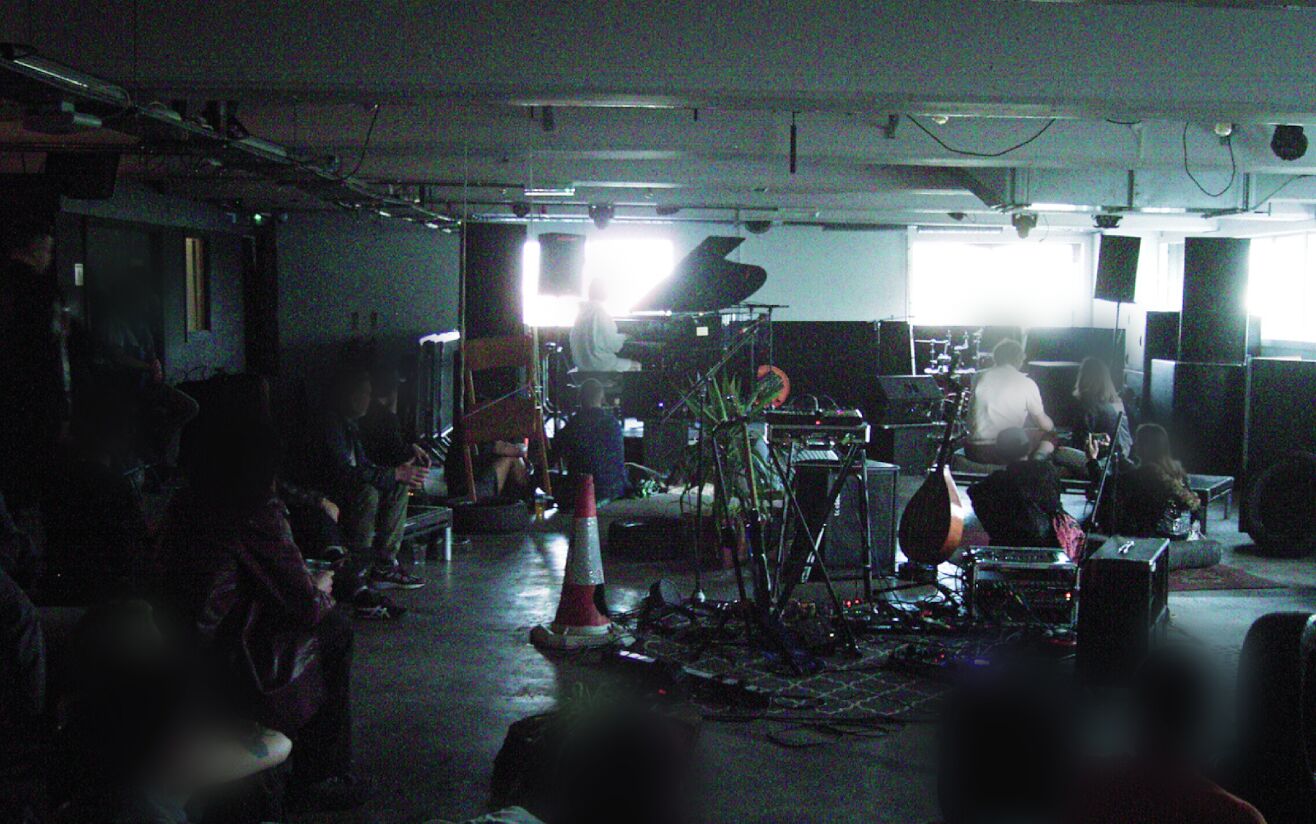
PARKS is a new recurring live programme at IKLECTIK, London. Well-settled into their new home in Peckham Levels, the independent cultural platform has evolved into more than a ‘gig space’, becoming an Art Lab that shapes a radical, cross-disciplinary approach to culture-making.
With PARK, iklectik are setting the ground for rethinking what curating live events can be. This daytime performance series, curated by Atay Ilgun, a staple of the Iklcltik team since the early days, is aimed at working against traditional notions of programming, visibility, and institutional framing. Each edition features unannounced artists and is structured around presence, experimentation and live immediacy rather than fixed promotion or billing culture.
Ahead of the third edition of PARK, which will run on Sunday, 28th June (2 to 10 pm), Ilgun gives us a personal insight into this new, exciting newcomer into London´s experimental scene.
On PARK’s Inception
Personally, I’ve always been drawn to local histories and the texture of a place, so when we first moved to our new home in Peckham as IKLECTIK, I found myself reading pretty much everything I could about the building, its history, the old collectives, and overall Peckham itself. I’ve lived in South-East London for years, but honestly, I hadn’t spent enough time here to feel familiar with its cafés, its scene, the everyday layer of it. So, IKLECTIK’s new home was built in 1982 as a multi-storey car park for the Sainsbury’s that once sat at the front of the site. It fell largely disused after the supermarket left in the early nineties, and the middle floors reopened as Peckham Levels in 2017, after a community petition stopped the building from being demolished. I guess, given our history of being evicted from a place for a development that never happened. I feel there’s something quietly fitting about arriving into a building that was itself saved from erasure. IKLECTIK took a room on one of the upper floors. PARK takes place in that room.
The name came out of a meeting with Eduard [Solaz], founder and director of IKLECTIK, where we bounced ideas around. I wanted something with a slight nod – almost don’t wanna mention-, but maybe even a bit of a piss-take, to the lack of garden, without it being explicitly an homage, without all the weight of historicity and nostalgia, but something playful, with some wordplay in it. And anyone who knows me knows I’m somewhat into cars, so part of me also wanted to lean into the fact that we’re in a car park, which is, frankly, pretty cool. At some point, we both arrived at the same thought: why not just call it PARK? Playful, simple, both meanings at once. I must confess, it’s caused some confusion about whether it’s an outdoor event. We were getting a lot of messages and all, but personally, I don’t mind a bit of confusion, and I think it’s the best name we could have landed on.
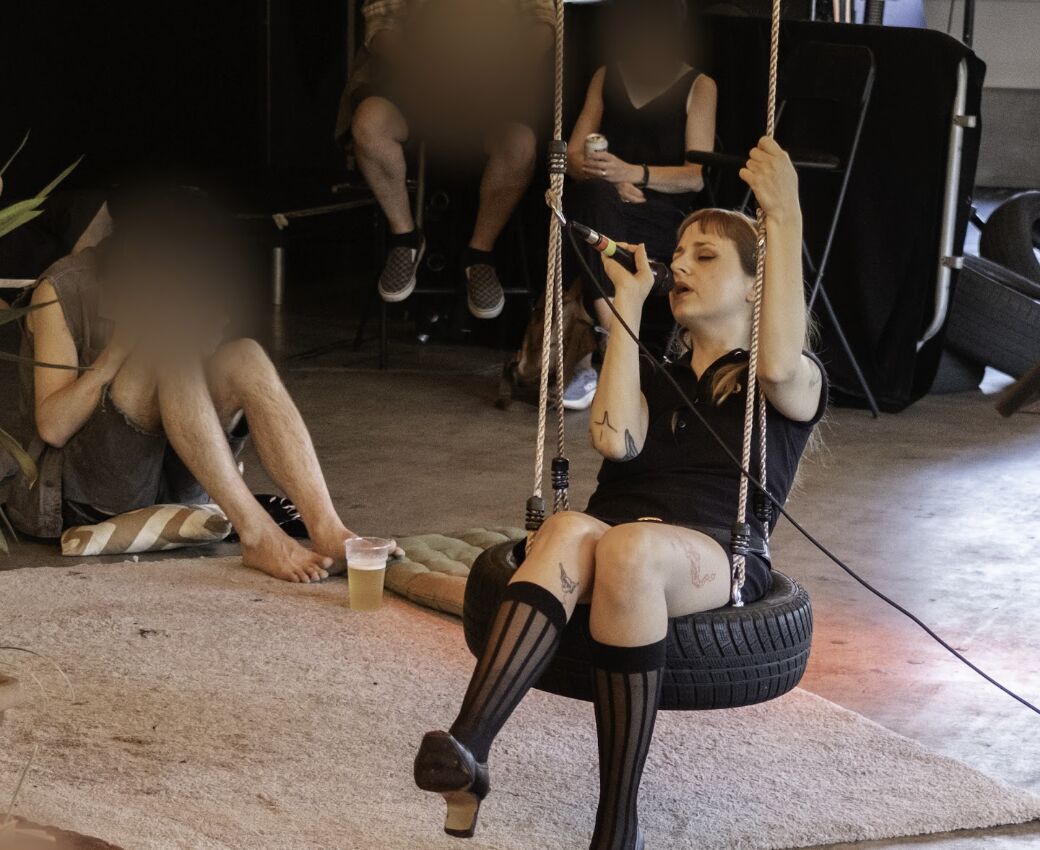
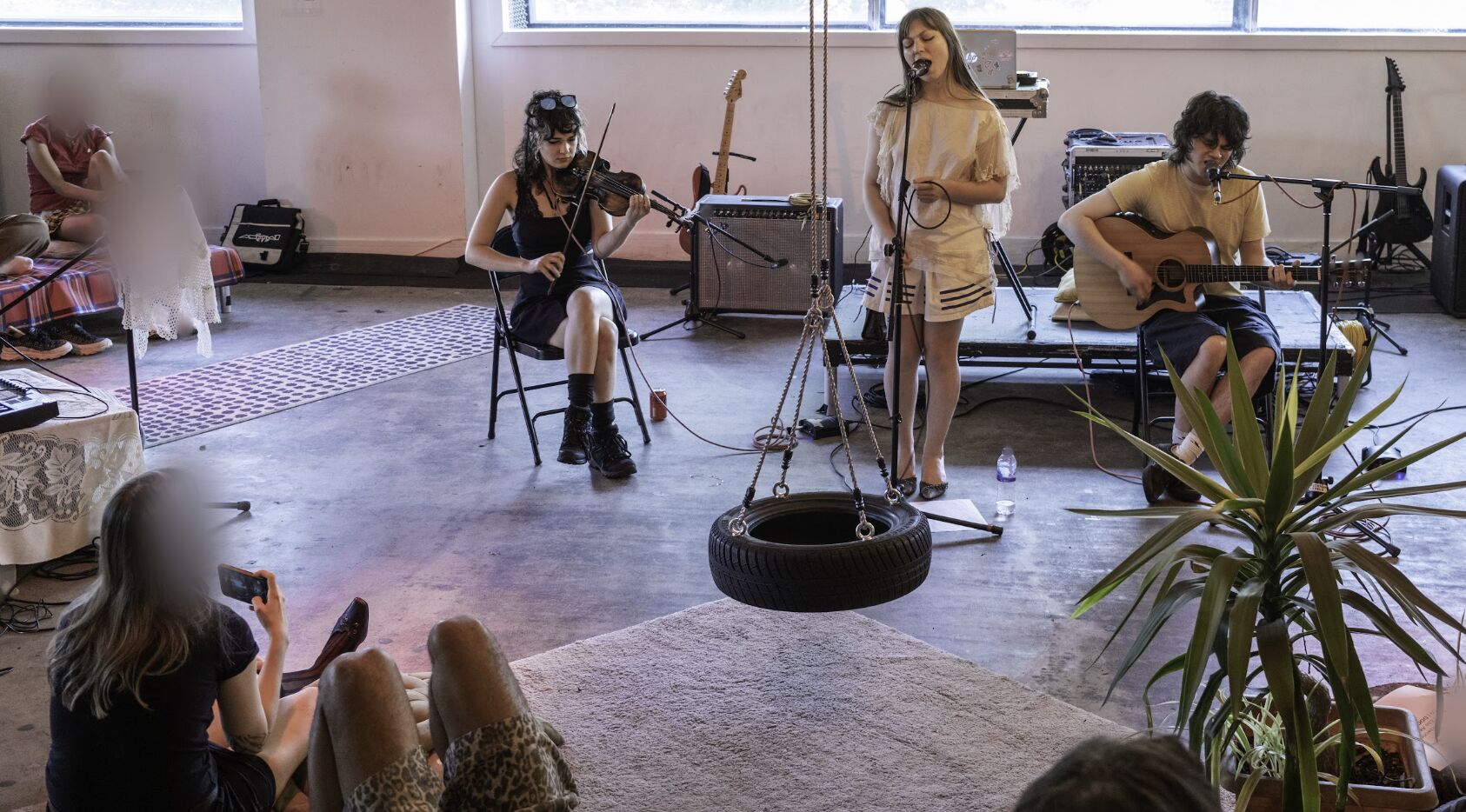
From there, we started thinking about how the idea could materialise in the room. Eduard suggested a tyre swing, which works symbolically as both a park and a car. We brought across some iconic elements from the old space, like the hanging chair. At the second edition (May 2026), there was an actual tyre swing, and one of the musicians ended up singing on it mid-performance, which, to me, was one of the cutest scenes we’ve had in the new home.
London´s bittersweet relationship with grassroots and experimental scenes
But the issue is, we did not always work from a car park. IKLECTIK spent ten years in an oasis-like garden in Waterloo, building a programme of more than 1,800 events from a single Victorian building tucked behind the train station, the garden as much a part of the space as any room inside it. In January 2024, we were evicted to make way for an office development. We lost the garden, as most small cultural spaces in London eventually do.
That last sentence is almost a cliché now, which is part of the problem — we’ve become so attuned to it that the loss of a grassroots venue in London barely registers as news anymore.
Just think of places like Corsica or The White Hotel. To me, and I imagine to many others, these venues feel almost eternal. Yet every closure announcement arrives with the same strange duality: on the one hand, it feels completely normal in the context of London; on the other, it still lands as a shock to the system when you think about the memories, communities, and sentimental value attached to each place.
Each closure gets reported as an isolated misfortune, a lease that ran out, a landlord who sold, a development that won. But the pattern isn’t a series of accidents. It’s the slow conversion of the city’s cultural infrastructure into real estate, and the spaces that go are almost always the small, strange, unprofitable ones that the scene actually grows from.
Talking to people across generations forces you to zoom out of London’s cultural time.
The stories tend to follow a pattern: there was this venue, run by these people, then a collective took it over, then someone was doing the most out-there events for a few years, then it closed. You start to see your own place inside that sequence, and you realise how lucky you are to occupy any timeframe at all within it. There’s an irony in that recognition. You want to make the most of the moment, as you would with anything in life, while also trying to find some balance with what the city demands of you, which is usually pace, cash flow, and the rapid production of cultural value.
In our case, when you lose the building, you’re forced to ask a question that a stable institution can avoid for years: what is an art space or music venue actually for? How much of it was the building, and how much of it was something else? For nearly two years, we were nomadic, putting on events wherever we could, in borrowed rooms across London and beyond, even though I wasn’t directly involved in many of them. You find out very quickly which parts of your identity were the architecture, and which parts travelled with you. The people. The trust. The way a particular crowd listens.
I almost try to avoid words like “brand” or “market”, but in a way, this is London doing its magic on you. The identity crisis, the uncertainty about your place within it all, becomes a kind of gift. Losing a space forces you to reassess, search within, and ask what remains when the walls disappear.
Maybe that’s why I have a certain affection for the city. The disruption becomes a form of renewal. And perhaps, to me, that’s ultimately what PARK represents.
So, PARK is one answer to that question. I don’t think it’s an attempt to recreate what we had, and I’m pretty sure it isn’t what Svetlana Boym called restorative nostalgia, the longing to rebuild a lost and idealised home. It feels more like an attempt to stay in the present, to build a character from what is actually around us rather than from what we miss.
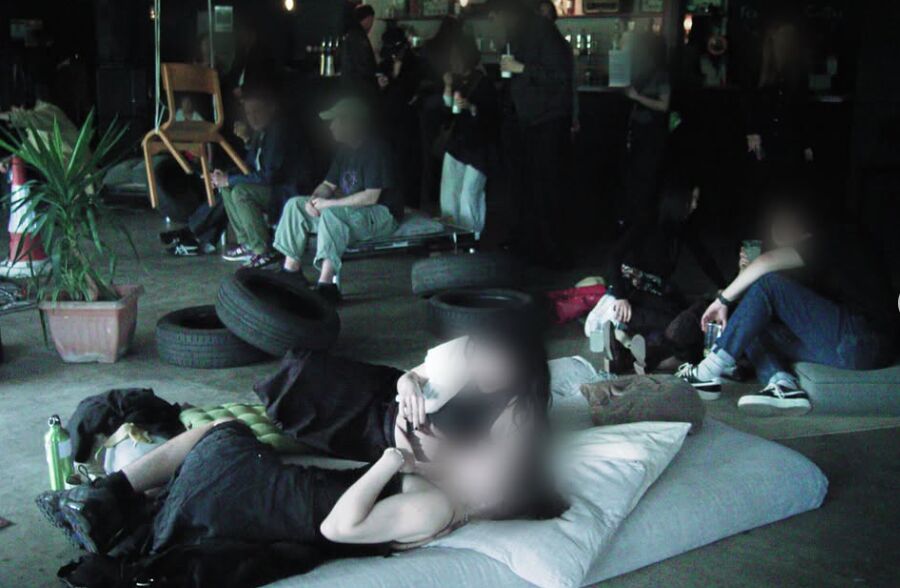
The scattered car tyres, the graffiti-covered tunnels nearby, the trains passing against the sunset, these are the starting points now, not the garden. Maybe even a new community, a new inner circle of friends, musicians we never had before, nights in Peckham drifting between Frank’s Cafe, a kebab shop, Vespers, SET Social, all working in tandem.
PARK unfolds
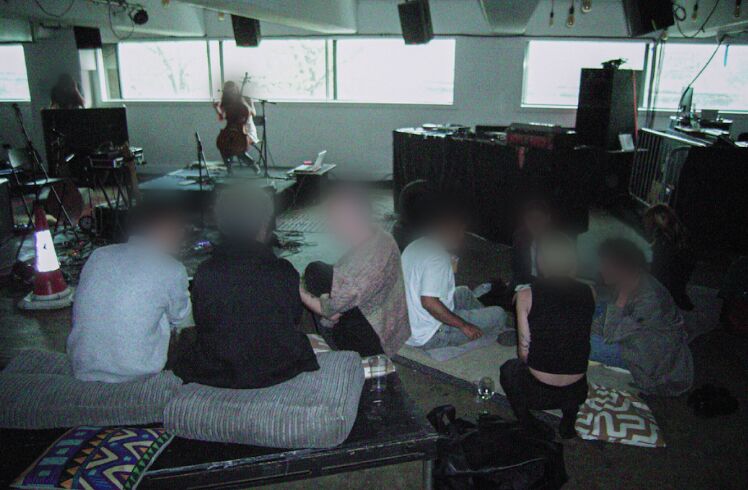
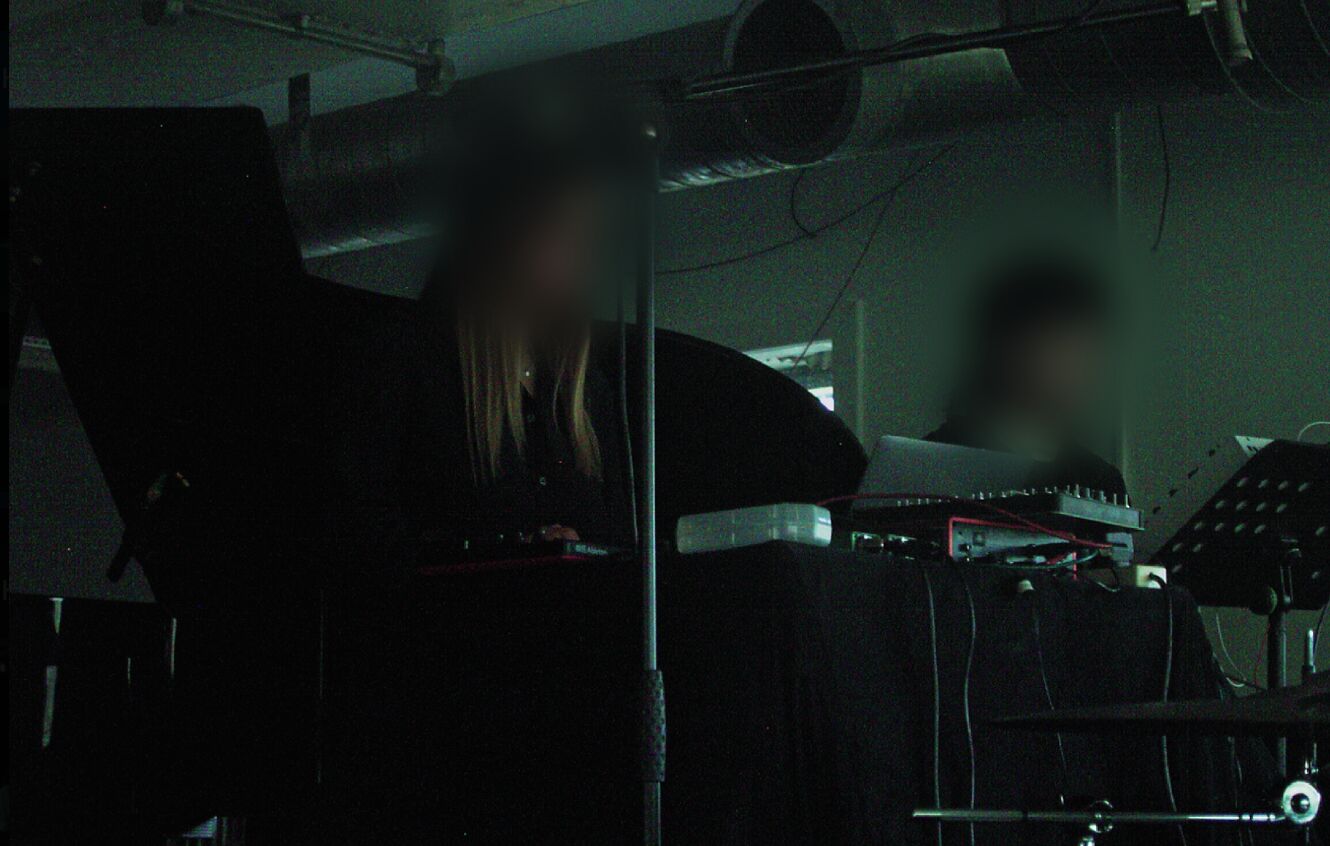
The form follows from that. PARK strips away the layers a venue is normally expected to carry, the social media visibility, the name-driven promotion, the constant churn of billings. The lineup is unannounced. Six artists per edition, almost all performing at IKLECTIK for the first time, play to a room with no stage, soft scattered seating, and a relatively strict no-phones policy. The intervals between sets are long and deliberately social.
The vibe to me feels so personal and intimate. With Eduard, we even found ourselves shy about sharing pictures of the audience, but you’d have people lying around reading a book, drawing, knitting, two people lying on top of each other having a cheeky kip with the sun on their face from the window, while someone else plays an ambient tune they made last week, and others just chatting the afternoon away with their besties.
This is, in part, a response to how London consumes music. The city books too far ahead, talks too much about who is playing, and moves too quickly through it all. Everything is tracked, ticketed, hyped months in advance, then forgotten. You open Instagram, and the first thing you see is sponsored content, the same promoters, the same big events, the same venues. And it makes me realise that most of the genuinely memorable shows I’ve been to, whether as an artist or just as someone in the audience, weren’t at any of those events. That’s a useful thing to notice. It reframes what you’re actually looking for, on both sides of the stage.
An unannounced lineup is a small refusal of all of that. It asks the audience to trust the curation rather than the names, and it asks the artists to show up unburdened by their own market value, free to share a demo made the night before as readily as a finished set. The hierarchy of the billing dissolves. Everyone in the room, on the floor or on the stage, is meeting the same sound for the first time.
I want to quote an artist who played at the second edition of PARK, Estelle:
“Sososososos grateful for last night’s space – genuinely needed in a time where I’m feeling at a crossroads with industry perception, the idea of performing and being a bit checked out overall. A well-needed breath of fresh air. Seriously making me rethink how I wanna perform. Absolutely amazing artists I was graced to be with, thank you”
Reading that the next day, I felt this was exactly the kind of response PARK was built to make possible, and it’s worth dwelling on why. She describes arriving at a crossroads with industry perception, feeling checked out on the very idea of performing, which is precisely the condition the named-billing economy tends to produce. When an artist is reduced to their market value, asked to deliver a polished set under their own brand, performance curdles into obligation. What PARK is trying to offer instead is a room with no stage, no announced lineup, no hierarchy of billing, and the freedom to show up as the most present version of yourself rather than as a product.
That she left “rethinking how I wanna perform” felt to me like the clearest possible vindication of the format. The point was never simply to host good sets. It was to create the conditions under which an artist could remember why they perform at all.
New Models
When I first started at IKLECTIK, I was in a stretch of playing festivals where the experience felt rather soulless: in through the back door for soundcheck in the afternoon, sometimes not even seeing the audience until the moment you walked on, then out with your backpack afterwards. Watching Isa, Eduard, the musicians arriving early, hanging around, meeting fans and friends, the audience drifting in, just the warmth of all of it, was what made me want to play live again. And I’d consider myself lucky if I could re-create that feeling with any artist. So Estelle’s note made me realise it wasn’t only me. There’s a borader condition that the format seems to be addressing.
And with a “breath of fresh air”, the role of venue and staff in it comes into play. It is a modest phrase for something quite radical, a space that gives an artist permission to be uncertain, unpolished, human in front of an audience, and finds that more valuable than any amount of professional gloss. If PARK works, that’s the metric I care about. Not ticket numbers or press, but artists meeting their own practice again, unburdened, in a concrete room above a car park.
There’s a model question buried in all of this, and it’s the one I find most interesting, and as a curator, I take it as a challenge. A promoter sells names, a collective has its community, regulars, and so on. However, a venue or artspace, even though it of course also has its community and overlaps with other promotional efforts, if it is doing something worthwhile, it sells experience, and the trust that what happens inside the room will be worth your afternoon, regardless of who is on.
That trust is the hardest thing to build, and the slowest. It is also, I think, the only thing that lasts. The venues that endure in London are not the ones with the biggest bookings. They are the ones that become a habit, a default, a place people go without checking the listing first.
So PARK is partly a wager on that kind of trust, made deliberately and from scratch, in a concrete room above a car park in Peckham. It is a reflection on character itself: how much of an institution’s identity comes from architecture, branding, and permanence, and how much instead emerges from people, energy, repetition, memory, and the simple, repeated act of holding a space together for an afternoon.