Interview by Meritxell Rosell

Barcelona has always been a place for design, visual illusions and experimentation. Digital design and visual arts have flourished in the last 20 years. More recently, another surge has arrived, with new studios and individual creatives entering the scene at an incredible rate.
Barcelona-based international publications like Apartamento, schools like Elisava and IED, production companies like Canada, and festivals like Sonar, OFFF, and the more recent MIRA have played an essential role in driving artistic innovation and technological development in the city.
One of these creatives contributing to this development is Aleix Fernandez Curell, founder and creative director of the audiovisual production studio Onionlab. Established in 2005, Onionlab is a multidisciplinary studio focused on interactive products and experiences, using projection mapping, virtual reality, motion design movies and audiovisual shows.
In Onionlab, Aleix blends his passion for technology, design and art, bringing about aesthetic details and technical innovation. Aleix is also co-founder and director of the music social community Playmoss, a project they were exhibiting for another year at Sonar +D last June.
Returning to Aleix’s work with Onionlab, he creates illusions with lights, projections and lasers, a digital take on contemporary light masters such as Olafur Eliasson and James Turrell. In his mapping works, the projections transform the static surface into something dynamic and full of life.
The series Evolució (Evolution) (2013), which premiered at the Geneva Mapping Festival, explores graphic and sound abstraction of evolution: the transformation, construction, and alteration of reality through time. The studio was also commissioned to produce different audiovisual pieces for the Spanish Pavilion at the World Expo of Korea in Yeosu (2012): Deep Ocean took inspiration from scientific expeditions promoted by the Spanish government in the 18th century, presenting life in the deepest parts of our oceans.
Biology also inspired a piece produced for the Ricardo Bofill Taller de Architecture and exhibited at the 2014 Venice Biennale. The piece, with the name Towards Biology, focused on ecology and social and technological aspects.
WordsOfData (2015) is another of Aleix’s projects (and this is a personal one), comprising a series of medium-format pieces that focus on the contrast between an overload of information and the void produced by new technologies. Using mapping techniques, he transforms data from Twitter, depicting words in messages as geometric figures.
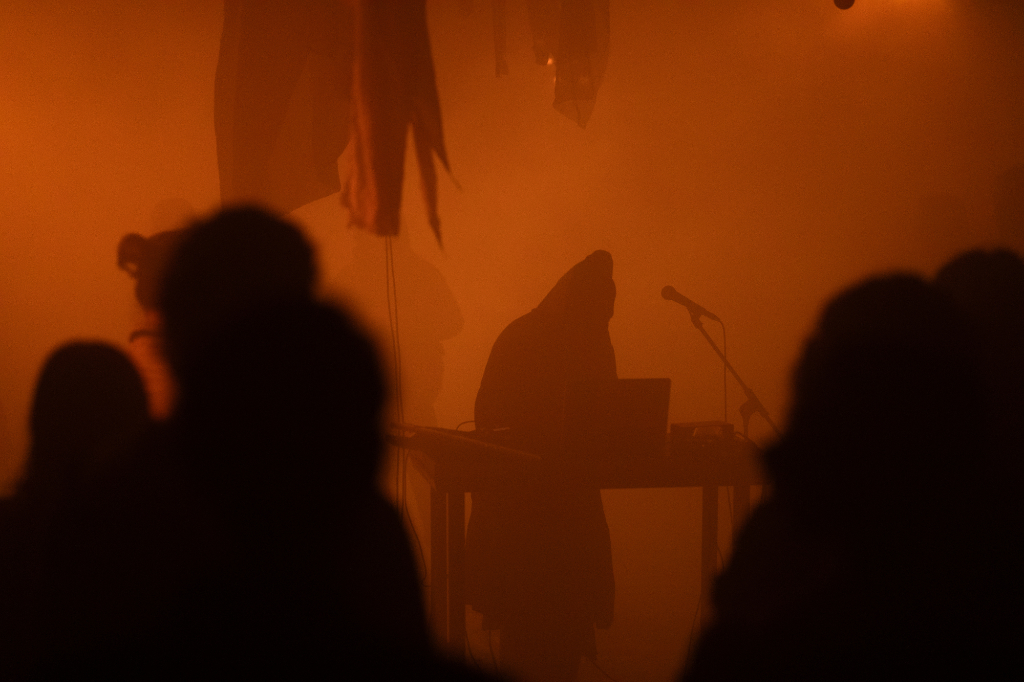
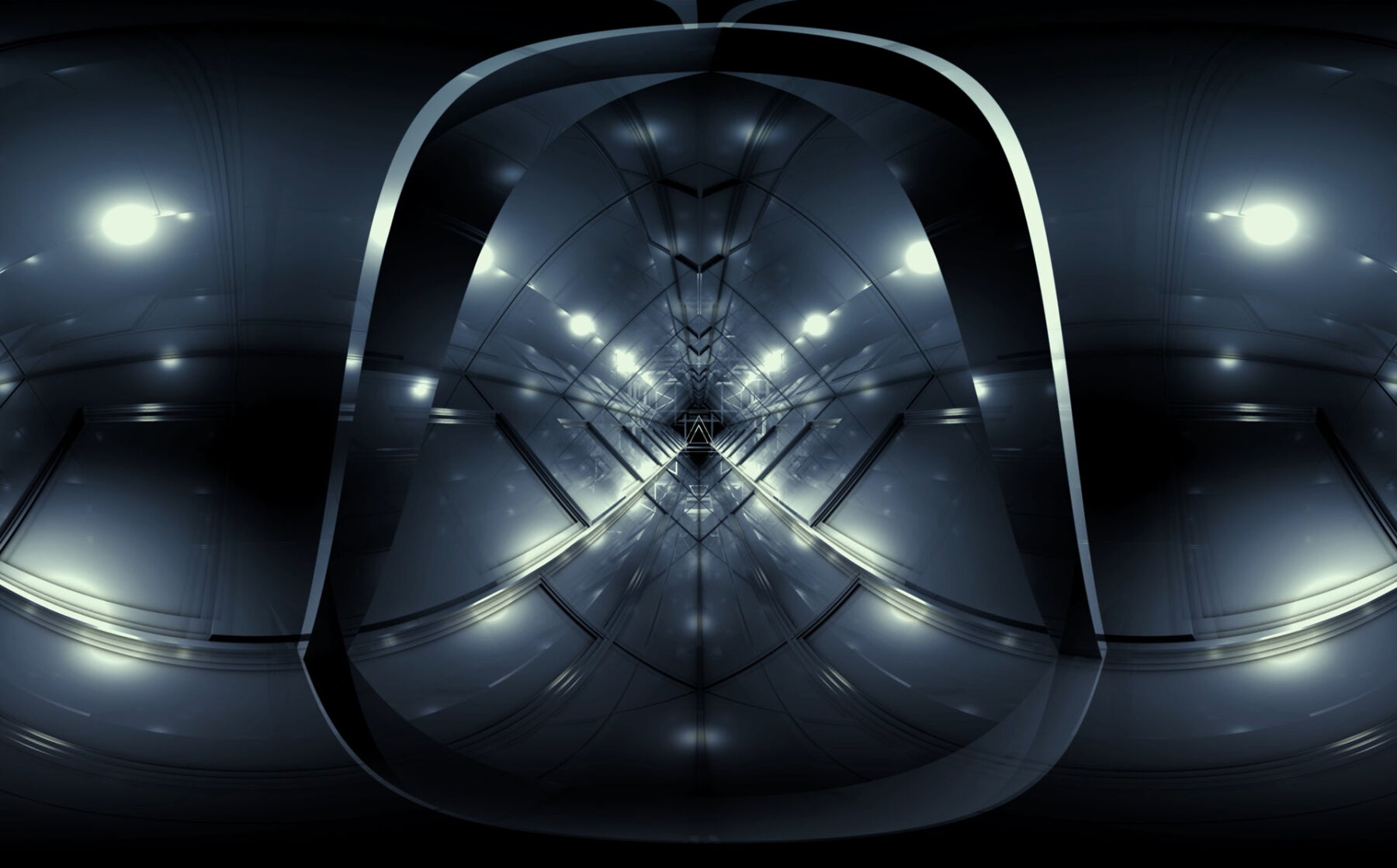
More recently, Onionlab has been exploring new territories in virtual reality with projects such as Sunmachine (2016), a piece that proposes an imaginary trip around five worlds, which he presented last October in London. Aleix came to participate in the second event in the Nocturnal City series [1], which explores the interplay between London and Barcelona nightlife.
Seeing his creations at the forefront of the latest technological advances in digital visual arts and design, we are sure we’ll be hearing much more about Aleix in the future.

Your work is at the intersection of art, design and technology. Where and how did that fascination begin?
It is an overlap of layers you add to your life for different reasons. I think my curiosity for art comes from my mother, an artist and art teacher. Technology has always interested me, but I suppose that I learnt what I needed to know through studying multimedia engineering, the knowledge that I later applied mainly to creative pieces and projects but with a clear objective, which therefore resulted in pieces designed to fulfil a function.
They are pieces produced in my studio, Onionlab, and include facade mappings, VR experiences, and exhibition content. My purely artistic side comes from working on projects without clear, well-defined objectives.
In Onionlab, you “create audiovisual content and interactive experiences for companies that want to be related to technology, design and art”. Which project have you enjoyed most? And the most challenging one?
It is very complicated to answer this question. Still, maybe the hardest projects, which have also been the most rewarding ones, are the mapping that we did for the Mapping Festival and which was projected onto the Geneva Museum of Art and History: “Evolució”, the contents that we made for the Spanish Pavilion in the World Expo of Korea and the piece “Towards Biology” that we produced with and for the Ricardo Bofill Taller de Architecture for the Venice Biennale.
The most difficult of these three was definitely the second, because of its complexity and the dynamics of mounting a piece at a universal expo.
WordsOfData is a series of medium-format pieces that, using mapping projection techniques, focuses on the contrast between an overload of information (Twitter data, more precisely in this piece) and the void produced by new technologies. Could you tell us a bit about the intellectual process behind it?
In WordsOfData, I want to reflect on the overload of information we get from social networks and how this affects us negatively through a lack of concentration, confidence, a sense of emptiness and stress. The idea of #wordsofdata is to take all this information and use it to generate the exact opposite: audio-visual structures that are serene, repetitive, and hypnotic, allowing us to escape and feel calm and content for a few minutes.
In order to do this, I start with a concept or tag, for example, #death and collect thousands of Tweets that I can use as material to build on. Specifically for the piece “#death”, I represent each #death Tweet with a dot and modify its intensity or size according to the number of re-tweets or the number of followers its owner has. Finally, I apply this in movement on a surface or in a way that symbolises the concept of “Death” for me.
Where do you see taking your work into?
I would like to continue moving around in a loop for a long time, tackling and researching the same concept in different mediums, formats and techniques. Research and experimentation are, for me, the most beautiful features of art. Although one of the things that will influence that experimentation is, without a doubt, technology, the eternal ally.
What is your chief enemy of creativity?
Thinking like an adult. Playing and experimenting without fear or prejudice is great for creativity.
You couldn’t live without…
Design, art, technology, music, sport, sun and my bike…