Text by Robert Barry
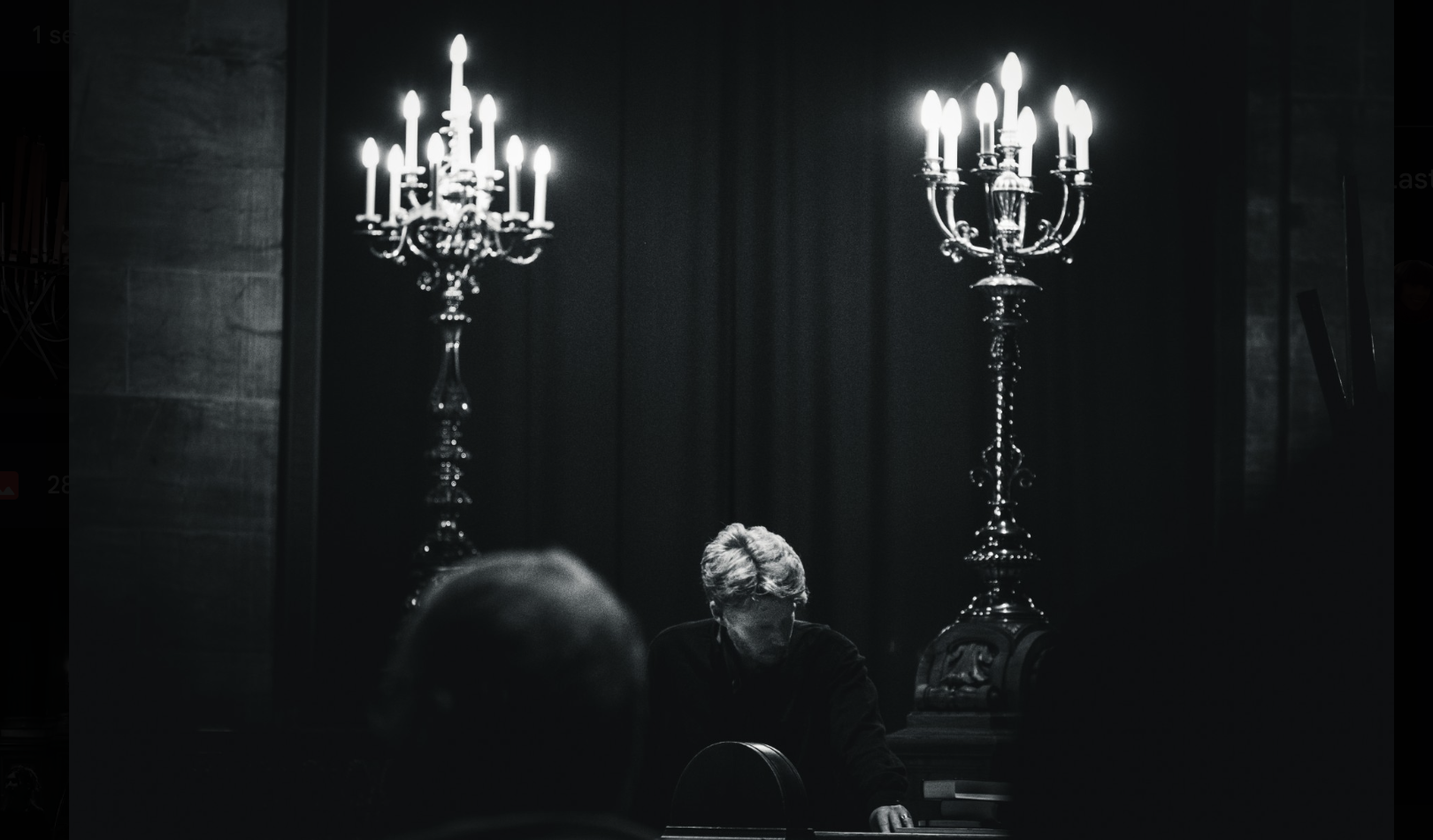
The church organ is in crisis. According to an article earlier this year in The Telegraph, every week about five of the instruments end up dumped into landfill. Others fall silent from disrepair, with not enough people still possessing the expertise needed to fix them and not enough churches with the money to pay for repairs even if there were.
A survey by the National Churches Trust suggests the pipe organ could be effectively extinct in this country by 2070. In Denmark, the situation is scarcely better. As older musicians retire, younger musicians are not taking up the training to replace them. On the other hand, declining church attendance has resulted in many houses of worship being deconsecrated, put to new uses as cultural centres or yoga studios. Once the cornerstone of Danish society, a country where as recently as 1984 some ninety percent of the population counted themselves members of the danske folkekirke; the church organ today finds itself increasingly marginalised.
“In Australia, it’s different,” Calum Builder tells me. “When I came to Denmark, you come into the church – every church – there’s a pipe organ. There are maybe two or three thousand organs in Denmark, a place of six million people. You go into the local church, that is very small, and they still have a pipe organ. We don’t have that in Australia.” We’re talking online on the eve of release for Builder’s new record, Although Changed, I Arise the Same, an album of long, breathy tones humming in sympathy with the voices of singers Johanna Sulkunen and Zola Mennenöh.
With his coat-hanger grin and shock of red hair, Builder could be a shoo-in for a live-action Woody Woodpecker, though his loose striped shirt and bright-eyed mien would make for rather a preppier take on the character than the hysterical bird familiar from old Walter Lantz cartoons. Woody Woodpecker as directed by Whit Tillman, perhaps, or maybe John Hughes. “My reference for pipe organs before coming here was Sydney Opera House,” he continues, “and St Mary’s Cathedral in Sydney, the massive Catholic cathedral, Melbourne Town Hall, Sydney Town Hall… I got to play the Sydney Town Hall one. That was the largest organ in the world when it was built. But it’s not the same.”
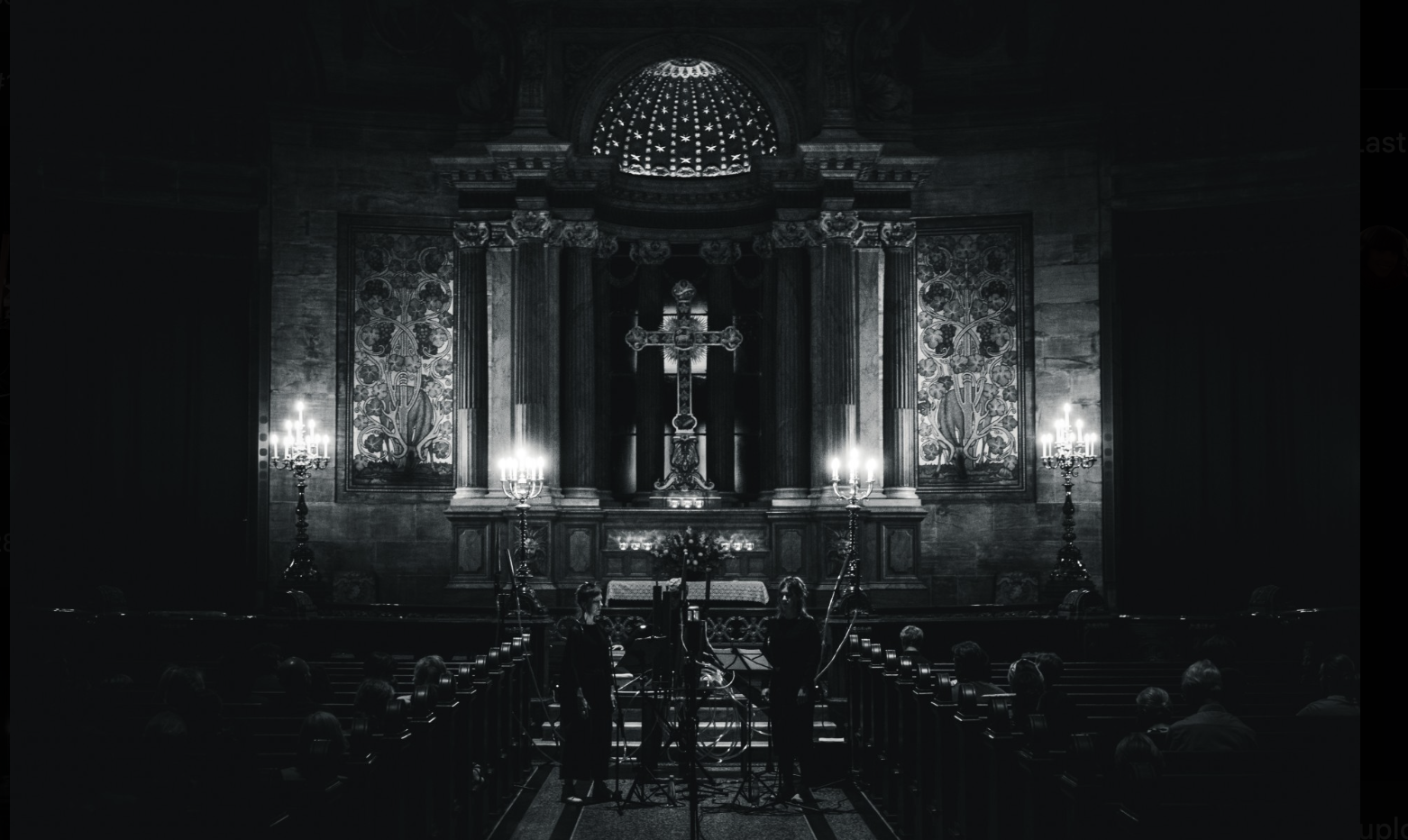
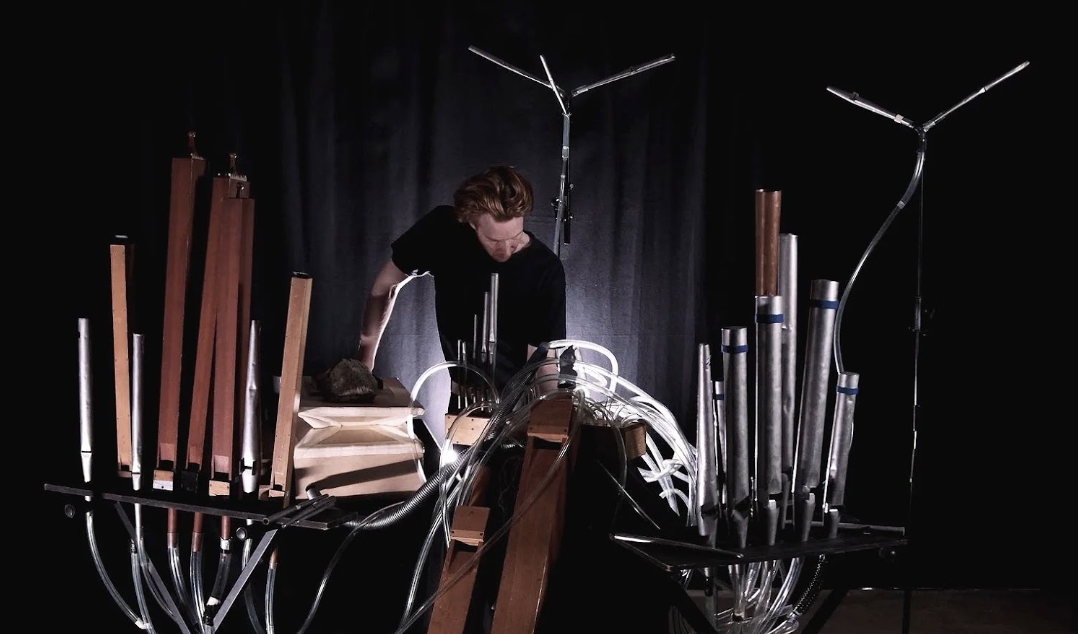
Were it not for the fact that Denmark’s pipe organs now have a status somewhat equivalent to that held in the UK by Nana Mouskouri records and the soundtrack to Bilitis – formerly ubiquitous, now flooding secondary markets, with a resale price approaching zero – then Builder’s record could probably never have been made. Over the course of the past half-decade, the Sydney-born composer has been steadily taking the instrument apart and putting it back together again, stripping it from its original context and re-inserting it in people’s homes, in ex-industrial spaces or out in the open air. An instrument thought to date back two millennia, once the soundtrack to the arenas of Ancient Rome, the backbone of the Western liturgy, is here radically reinvented, becoming something more like a halfway house between a modular synth and a municipal plumbing system.
It all started during the pandemic. “I was working on a piece for a string trio, Crush Collective, with organ, and myself on saxophone,” Builder recalls. The organist on that commission was a guy called Svend Hvidtfelt Nielsen, who happened to work at a church called Mariendals Kirke. Just round the corner from Builder’s place in northwest Copenhagen. Due to lockdown restrictions, the church itself was “very empty”, so Hvidtfelt Nielsen gave Builder the keys and left him to explore.
The organ at Mariendals Kirke is a mechanical instrument installed in 1964, with 18 different stops, built by Troels Krohn of Frederiksborg Orgelbyggeri in nearby Hillerød. Builder still remembers the excitement of the first time he crept inside the beast. “That was just a great time,” he recalls with a wistful look in his eyes. “And a really great learning experience.” He was enraptured by the thing that afterwards he found himself longing for some sort of “memento”, a little souvenir to keep from the experience. And that’s when he started scrolling through Den Blå Avis, a local e-commerce site that’s more-or-less a Danish version of eBay.
“First I bought some silver facade pipes from out west,” he tells me. “But the woman – I paid, but she just ghosted me.” Undaunted, Builder continued to click and scroll, scouring the site for more pipes. “I ended up buying something else, some wooden pipes. I wasn’t even thinking about how big they are. I’m in a small apartment. And the woman messages me and says you can come and meet me to pick up these pipes. So I just go. We were meeting in the middle of a football field. She popped her boot and had these pipes in a duffel bag. Then when I get back, there’s this coffin, like a little coffin [had arrived at my apartment. A hundred and fifty centimetres tall, full of wooden pipes.” All of a sudden Builder had far more pipes than he knew what to do with. But he wasn’t going to stop there.
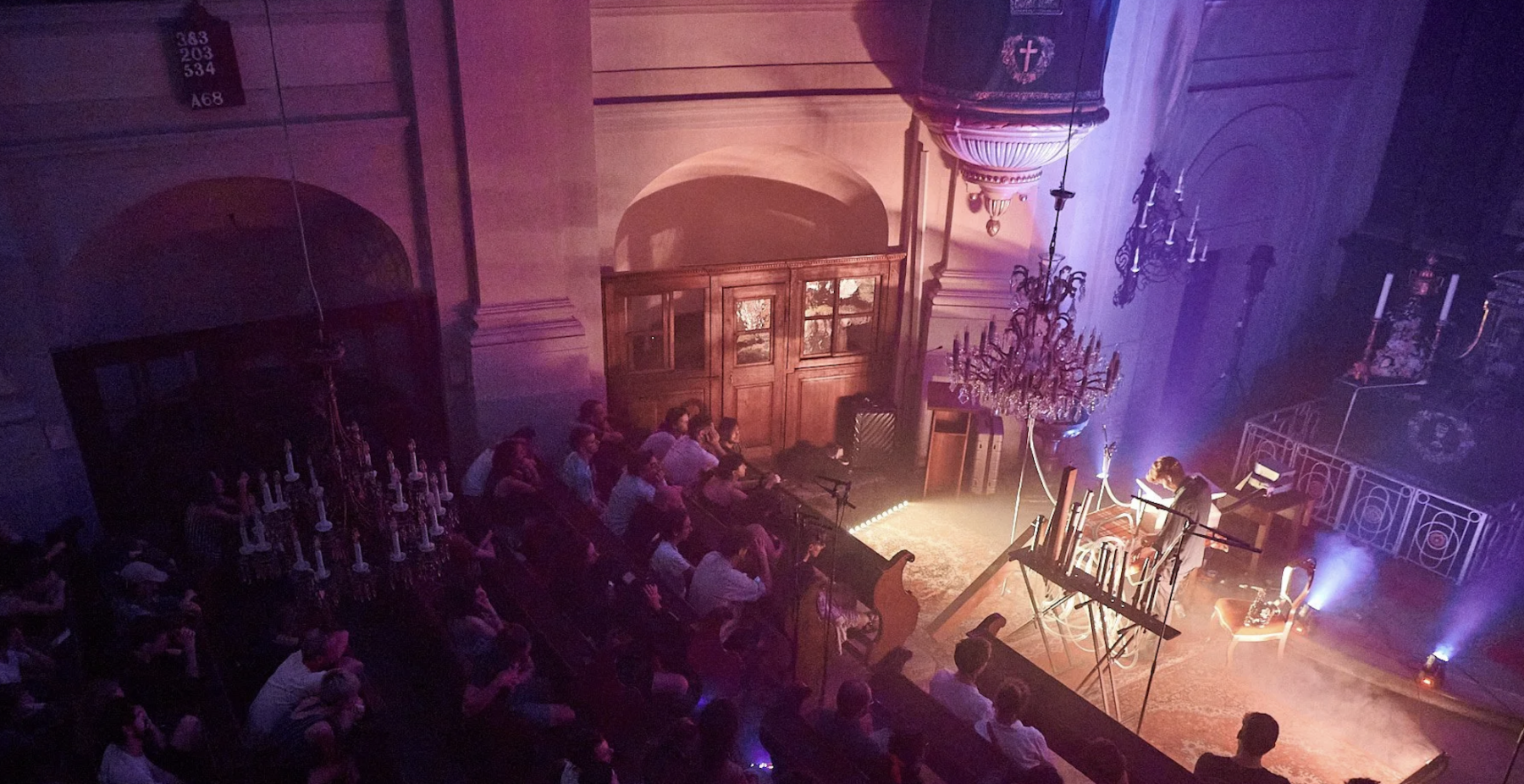
By this time it’s December 2021. He’s got more than a dozen organ pipes in his already cramped apartment, and he’s experimenting with vacuum cleaners and mattress pumps, trying to see what kind of sounds he can get out of them. From the local DIY shop, he started raiding the plumbware shelves for piping and connections with taps and valves so he could control the flow of air to different organ pipes. At one point, he recalls seeing a video of Japanese artist FUJI|||||||||||TA online, playing his own handmade pipe organ.
“He only had ten or twelve pipes,” Builder recalls. “And I already had more.” At the time he was studying at Copenhagen’s Rhythmic Music Conservatory. He brought what he was working on in to show his class. “And when you show something to people and they’re like, this is cool, suddenly you’re like, oh yeah, I guess it is cool.” One of his classmates suggested he get in touch with a friend, Ea Borre, an artist who had trained as an organ builder and now lived down south in Rødvig.
Before he knew it, Builder found himself driving all over the country, picking up different pipes and organ parts. “At some point,” he says, “people start writing. That was the weirdest thing. Someone on the west side of Denmark wrote to me. I heard that you’re looking for some pipes. Kind of like a pipe dealer.” He got another email from someone in Switzerland with a whole organ they were trying to offload. “I’m like, why did you write to me?” Still, he took the pipes all the same.
“The thing that really gripped me,” he says, “was I felt bad that all of these organs were in churches – not that I have anything against the church. But it’s like it’s just so set. I liked the idea of moving it around. That you could just take this thing, like a proto-synthesizer. I really enjoy putting it in these different random spaces.”
Builder is one of a number of musicians in recent years to take this most ancient of instruments and push it in a new, more exploratory and experimental direction. Along with FUJI|||||||||||TA, one could also point to Áine O’Dwyer’s album Music For Church Cleaners, to Ellen Arkbro and Kali Malone’s work with drones and just intonation, to visual artist Massimo Bartolini’s installation at 2024’s Venice Biennale, and the ongoing collaboration between Cory Arcangel and organist Hampus Lindwall, commissioning new works for organ from artists like Seth Price, Haroon Mirza and Hanne Lippard. This small renaissance in avant-garde organ music is perhaps the mirror and the complement to the contemporaneous crisis in church organ music.
“My thought,” Builder says when I ask him why he thinks so many radical musicians of the present generation have turned to the organ, “is that in the last few years, maybe people are missing…” For a moment he trails off. “I wouldn’t want to speak for people,” he continues, “but something about physicality. It’s very real. Every time I play, or I see someone working in this lineage, people always say, oh I felt that in my gut. It’s a very physical feeling they have. You can hear the air.”