Interview by Daniela Silva
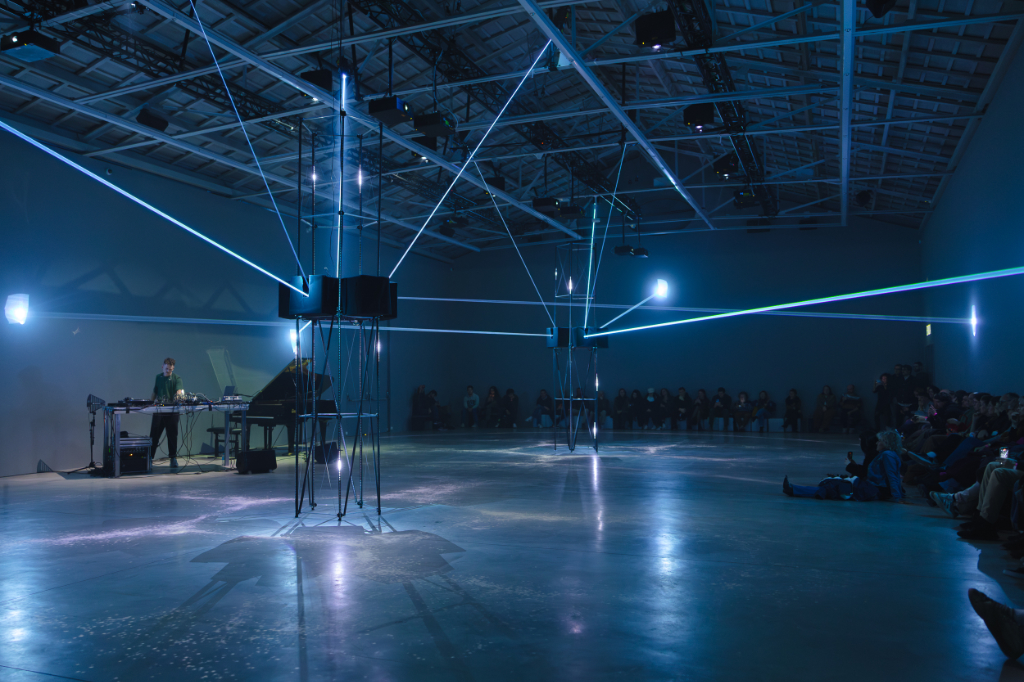
In recent years, immersive light art has gained increasing visibility across museums, festivals and digital art centres. Within this expanding landscape, certain practices stand out for their conceptual precision and sustained exploration of how space is constructed and experienced. Universos de Luz. Percepción y espacio, presented at Bombas Gens Centre d’Arts Digitals, marks the most ambitious exhibition to date by Radiante Light Art Studio and offers a clear articulation of this position.
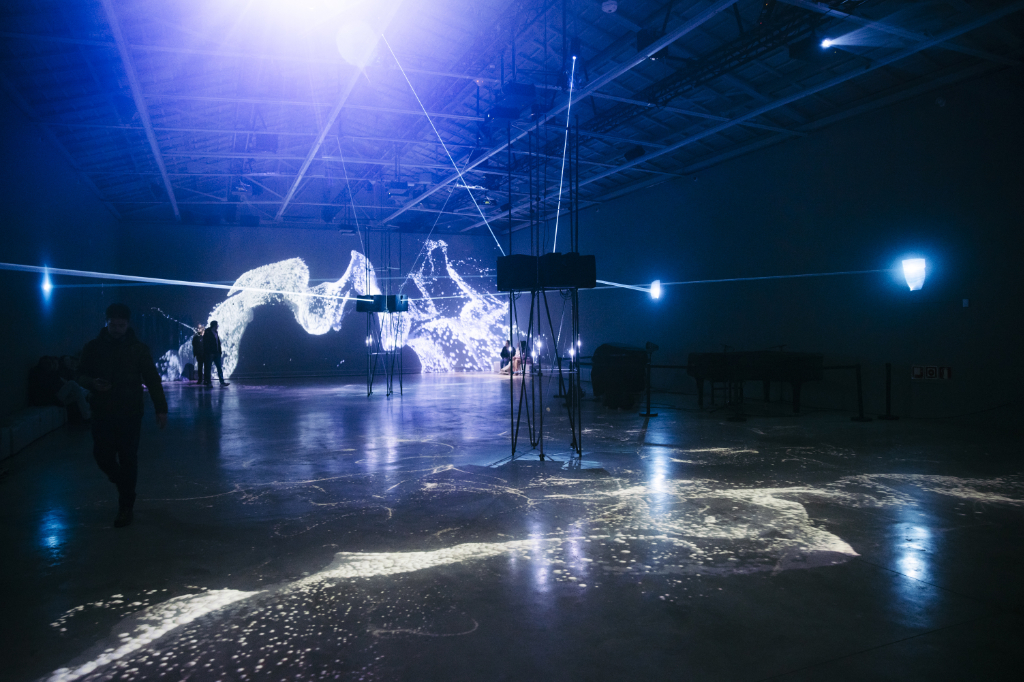
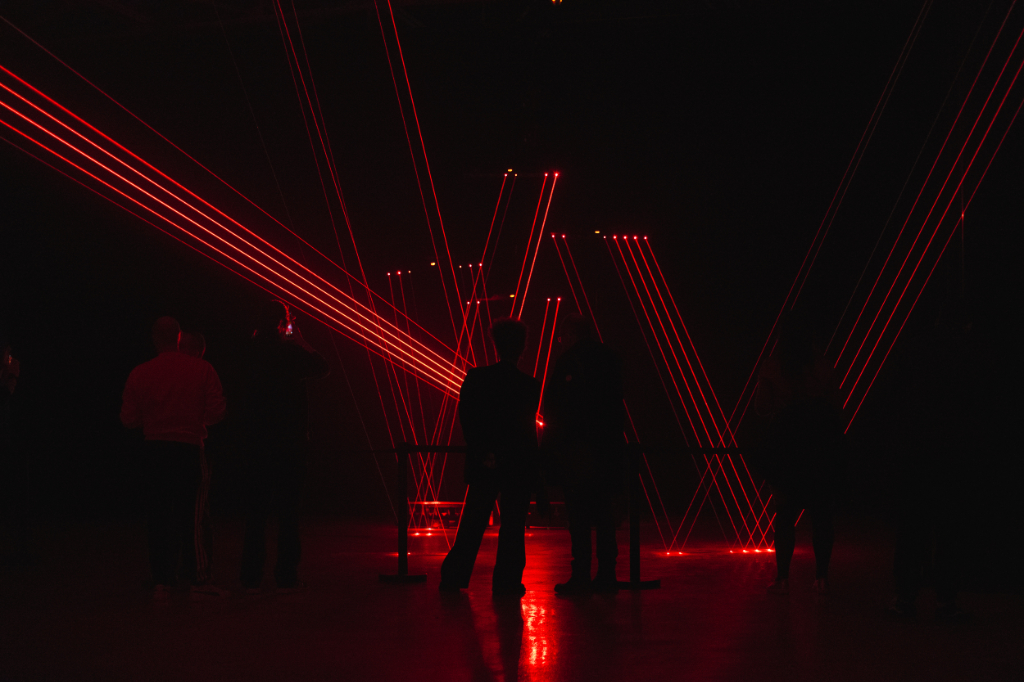
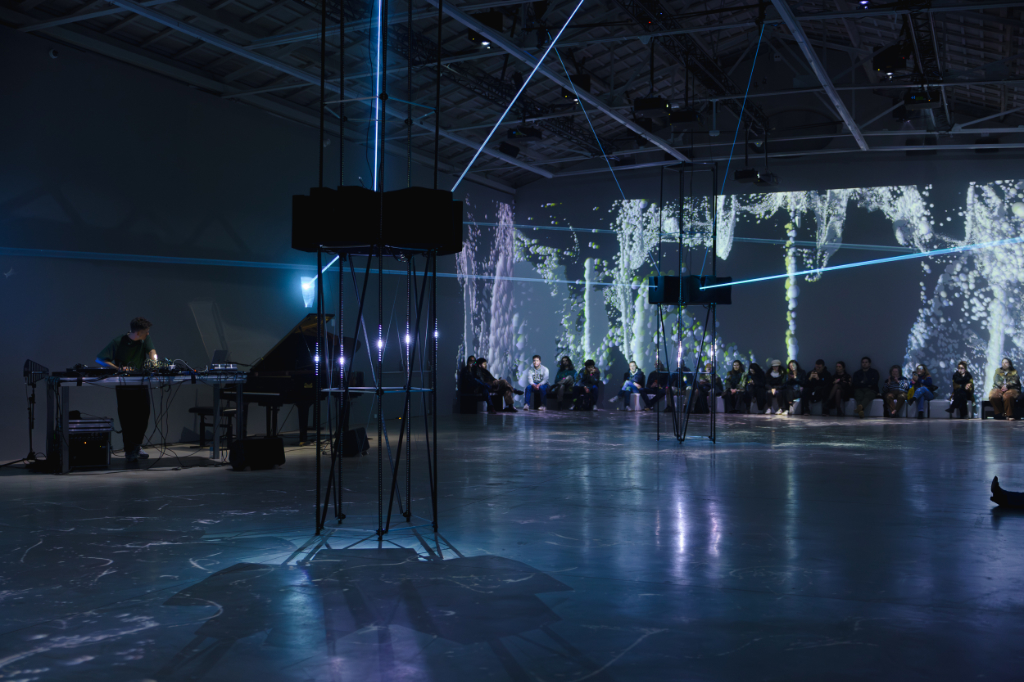
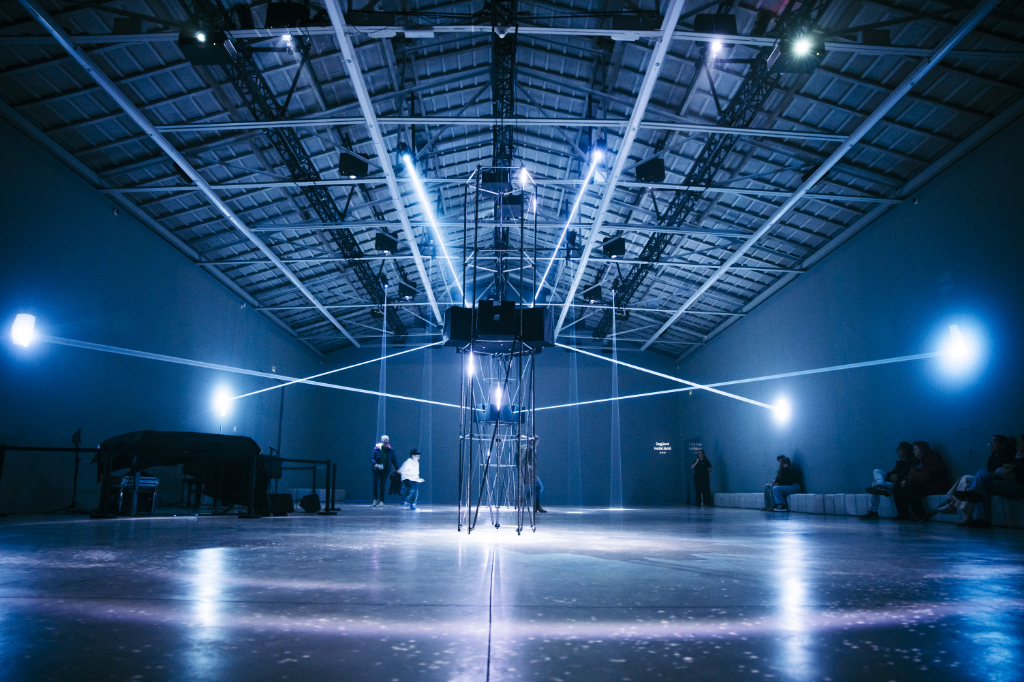
Structured as a progression through shifting perceptual states, the exhibition brings together works previously shown in international contexts alongside newly commissioned pieces developed specifically for the space. Throughout the journey, light operates as a structural material and an atmospheric condition. Volumes expand and dissolve through reflection and refraction. Surfaces shift in density through movement. The body becomes the instrument through which spatial transformation is registered, tested and negotiated in real time.
At the centre of the exhibition is No Kepler, an expanded iteration of Umbral (Verge), recognised in 2025 as the world’s best immersive light installation. The work integrates a live sound composition by Iván Llopis, reinforcing the rhythmic and spatial dimension of the experience. Within this environment, light behaves as a pulse and density, shaping a threshold that unfolds through duration and presence. The installation situates viewers within a fluctuating field where orientation is never fixed, and perception remains in constant adjustment.
Other installations, such as Cartography of the Ray and Worlds of Light, construct geometric constellations that respond to the visitor’s movement. Lines of light trace trajectories across architecture. Luminous planes generate shifting fields that alter orientation and scale. The encounter oscillates between intimacy and collectivity, between disorientation and clarity, inviting an attentive recalibration of perception and a heightened awareness of spatial contingency.
In dialogue with Radiante, we explore the moment when light emerged in their practice as a material capable of constructing space and emotion. The studio reflects on how technology is incorporated with deliberation, how tools are selected for their narrative and cultural implications, and how exhibition journeys are organised through rhythm and progression rather than accumulation. Their reflections also address the broader cultural conditions in which immersive environments operate and the responsibilities that accompany their growing presence.
Within Universos de Luz, architecture becomes a mutable field defined by intensity, rhythm and sensory awareness. Light acquires weight, direction and texture. Perception itself becomes a site of design, continuously shaped by context, expectation and attention.
When did you begin to understand light as something capable of constructing architecture and shaping emotional dimension?
It was a gradual process. When we stopped thinking of light as something that simply reveals what already exists and began to treat it as a material capable of defining, expanding or dematerialising space, we understood that it could construct architecture. Our curiosity about how reality is interpreted, how colour, context and expectation influence perception, led us to assume that light does not merely accompany space; it redefines it and charges it with meaning.
Are your works meant to be contemplated, inhabited, or activated through movement?
It depends on the project. Some works are contemplative and propose a more introspective relationship; others invite direct interaction or even co-authorship, where the visitor alters the installation through presence and movement. In many cases, we are interested in giving the body an active role, allowing circulation and positioning to transform perception. We use disorientation and surprise to suspend established patterns and enable a more attentive, embodied reading of the work.
How do you ensure that technological complexity remains in the service of meaning rather than spectacle?
The starting point is always conceptual. We clearly define what we want to question or activate before deciding how to materialise it. Technology is incorporated when it provides precision or opens a specific narrative possibility. Each tool carries its own cultural imaginary, and its selection directly affects how the work is read. We are often interested in altering the expected behaviour of certain technologies to create a disruptive narrative, rather than using them to display technical prowess.
Do you see your installations as instruments for recalibrating perception in an increasingly mediated world?
Yes. We are interested in interrupting perceptual automatisms. When someone stops anticipating what will happen next, a different form of attention emerges. We observe and engage in dialogue with those who move through the installations, analysing the diversity of interpretations. Understanding this complexity allows us to tension or shift consolidated perceptual models, revealing how cultural and social constructions shape our gaze.
What curatorial vision guides the construction of your exhibition journeys?
We tend to conceive them as trajectories rather than accumulations of pieces. Rhythm, transition between states and the relationship between works are central. Each installation prepares the next, generating a progression that may move from disorientation to calm, or vice versa. Light is understood as structural material and as energy that articulates space, establishing an ongoing dialogue between architecture and perception.
How does context influence your creative approach?
Context is decisive. Many of our works are site-specific or adapted to both physical and sociocultural environments. We analyse the architecture, materials and expectations associated with the place. From there, we decide whether to reinforce those references or create tension with them. Space is never neutral; it conditions scale, narrative and technical decisions.
With immersive light art gaining increasing cultural relevance, how do you imagine the future of light-based practices, as large-scale collective experiences, intimate perceptual encounters, or integrated elements within everyday architectural space?
It will likely develop along multiple parallel directions: large-scale collective formats, more intimate proposals and a more organic integration into everyday architecture. As technology becomes increasingly accessible, the distinguishing factor will be conceptual rigour and the capacity to create works that move beyond immediate impact.
What’s your chief enemy of creativity?
External attempts to shape our work toward directions that do not align with our research or principles. Maintaining conceptual coherence is essential to preserving the integrity of the process.
You couldn’t live without…
The international network that is gradually forming around this field. An ecosystem that operates as a refuge for highly specialised practices, enabling the sharing of research, sustaining risk-taking and maintaining rigorous lines of work in dialogue with diverse contexts.