Text by Sabina Oțelea
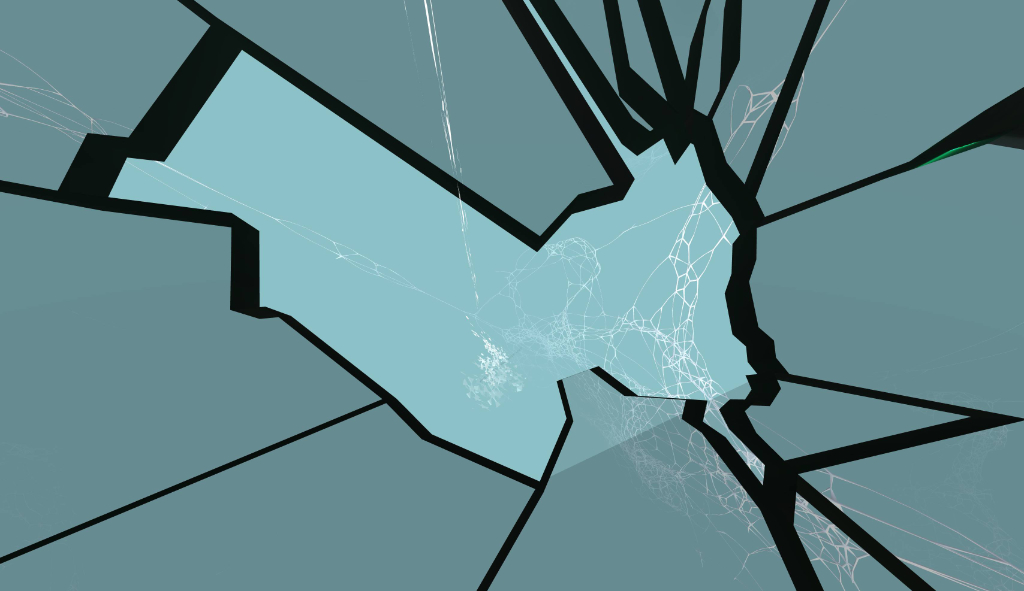
Could a grain of sand be investigated independently of its encompassing totality? Could its origin be traced, its future mapped? The friction between a grain of sand and a small infinity of others can be best understood experientially. A small infinity is a number far greater than what the human mind can imagine, but it becomes perfectly graspable when running one’s hand through the heart of the matter. A small infinity passing through one’s fingers with splendid ease.
The hand pulses with its own unique rhythm, the rhythm that dictates its motion, its heat. Fingers elongating into pale flames, grasping the small infinity. We try to follow one grain, but our eyes become slippery. Our gaze slides across the flames towards another grain of sand, and then another, and then another, each one different in its composition – but in this swirl of unbearable blue heat, individuality is abolished into wholeness. The pulse is transformed into a molten, viscous, and unstable liquid. A small infinity of origins erased. A small infinity of trajectories converging. A small chaos, see-through and rigidly bound. What does it remember?
Through the research and works reflected upon in this text, I evaluate different architectures of measuring and understanding time. Drawing on my own ecologically driven, linguistic, and collaborative practice, I engage with alternative time concepts as essential to divining counter-futures, rooting my questioning in material encounters, their states of impermanence, and the agential power they release when engaged in speculative methodologies.
This line of inquiry is what the theoretical practices of Vinciane Despret and Tania Pérez-Bustos propose. The act of paying attention, in Pérez-Bustos’ frameworks, is a way of reclaiming the existence of other worlds outside dominant narratives. Despret describes the process of following materials and happenings as they present themselves, and, through experimentation, learning from their frictions [1]. My practice demands I open myself up to the ephemeral by calling in encounters with materialities that ignite alternative modes of storytelling. I am fascinated with the polyvalence of materials and the connections that can be drawn between physical and virtual practices, how they inform each other, and the processes of care I am responsible for when investigating the plurality of material perspectives the world presents.
A small chaos, twisting at the mercy of a guiding hand. A metal rod stretches the molten glass into the horizon, further and further, into a fine thread. Spirals give shape to translucent matter, their contours redefining the bounds between inward and outward. A new point of origin is revealed, sliced into tens of axes, like the immortalised instances of a clock dial. The metal rod, now far beyond where our gaze reaches, has been replaced by the angular legs of a spider. It spindles the tendrils meticulously, as the pulse creates ripples across the plane of the web. It bends and arches into shapes perfect for holding invisible objects. What does it take to imagine them? We need to enter a space where our point of view shifts fluidly across scales and timelines. We need to enter a world hidden within ours, one amongst many others like it. We must break through the glass.
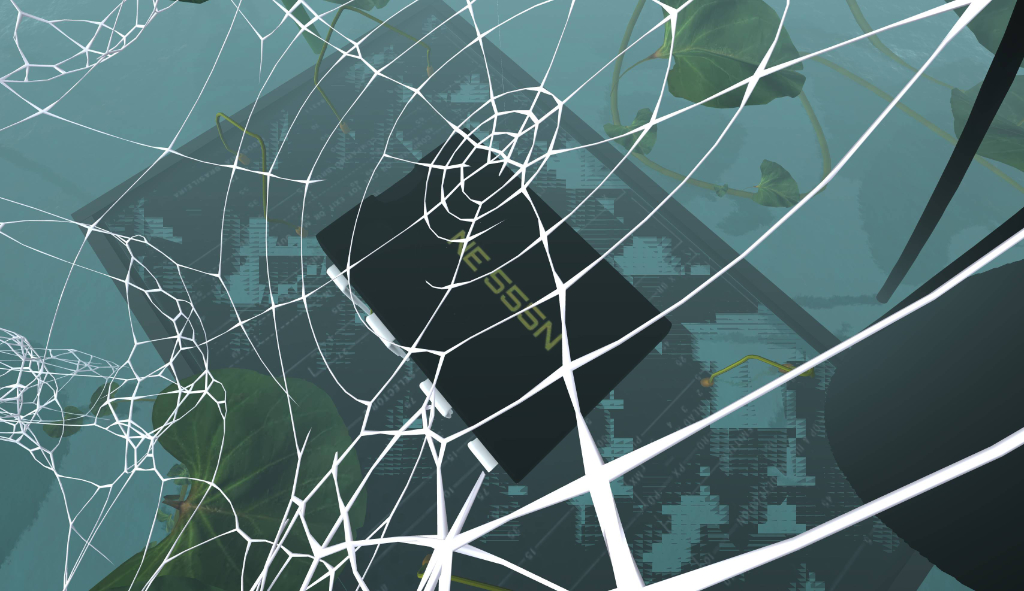
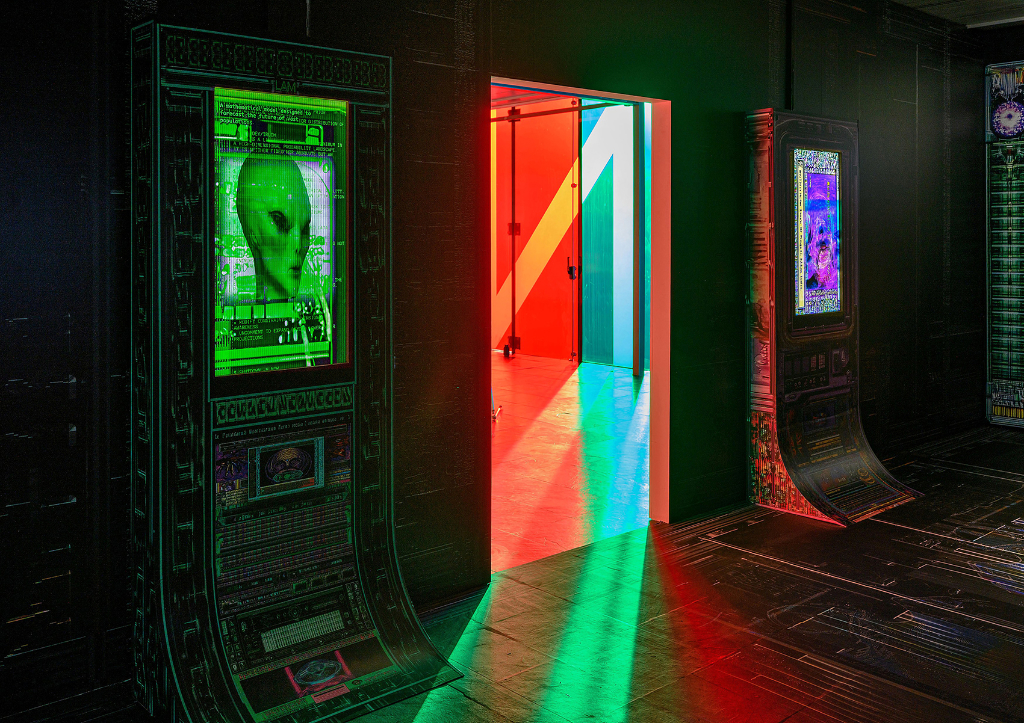
There Are So Many Worlds Inside This One [2] is an apophenic virtual space emerging from the latent states between technologies separated by time. Its structure resembling a genealogical tree, this research space holds technologies with varying materialities and invites the connection of these symbolic elements through interactive navigation, jumping across timelines of technological evolution. These timelines cannot coexist independently. It is through one’s search in space that new connections emerge: virtual instances that, through thoughtful engagement, can alter our understanding of material realities.
It explores the worlds within glass, copper, yarn, dowsing sticks, spider webs, butterflies and a 555 timer IC. An unfolding three-dimensional collage of textual and audio fragments creates pockets of time in which participants can reflect on the technologies presented to them in relation to modern forms of computation. The world’s fluid mechanics allow participants to enter structures and objects that would otherwise be solid, creating liminal spaces in the absence of solid matter.
Observing the topologies of these artefacts from within becomes diegetic ground for speculation regarding their origins and the transformations they have endured to reach their current form. Their trance-like movements echo these cumulative transformations and prompt quiet reflection, facilitated by audio excerpts collected from media by multidisciplinary figures such as Ursula K. Le Guin, Karen Barad, and Carlo Rovelli. Audiences are asked: what is deemed a technology, and by whom? What technologies are assigned the status of computation, and who has the right to compute?
This process revealed to me that science and art must coexist for the world – any world – to be described accurately. Matter is porous and implies a perpetual opening towards. By engaging in an artistic process, timelines collapse. You meet yourself tirelessly in every moment. You are, always, the future collapsing into you. Every moment is a deviation into infinite permutations, each of them a fragile state.
These feelings, derived from a lived experience ruled by artistic practice, coincide with the principles of the quantum realm: a world, in some ways, parallel to the one we get to experience sensorially, while in others, the infrastructure upon which all experience is possible. Perspectives such as the Many-Worlds Interpretation [3] are seductive to the mind, with its flux of possibilities and outcomes, while reinforcing deterministic worldviews. Non-Western cosmologies, such as that of the Aymara people, are often holistic and non-dualistic, welcoming the complexity that comes with non-deterministic ways of understanding existence, and, therefore, time [4].
In the Aymara worldview, the word for the past is ‘nayra’, which means ‘eye’, and that for the future is ‘qhipa’, which means ‘behind’. The past unfolds in front of one’s eyes as they walk backwards, blindly, into the future [5]. This linguistic convention transmits a complex idea that challenges the entire Western belief system, which conceives of worldly timelines in a mirrored way. This knowledge is often wrongfully and harmfully romanticised as an act of resistance against Western dominant science, when, in fact, the two paradigms are incommensurable. Neither can nor should validate the other, yet both share one principle: thinking the world and feeling the world are not incompatible. They are indivisible.
The light oddens. The silhouette of the spider blurs, as if taken over by a heatwave. Each movement launches a wave through the silk spirals. The heavy morning mist has slowly found rest across the web. The pulse reappears steadily, turning the vapours into dewy orbs that swirl into formation. Each thread is adorned with water, knotting meaning into it, a delicate and silent history, an infinitesimal fraction of what this matter will endure over the course of its existence. The silk, a matrix for time, now maps out entire worlds at different intervals.
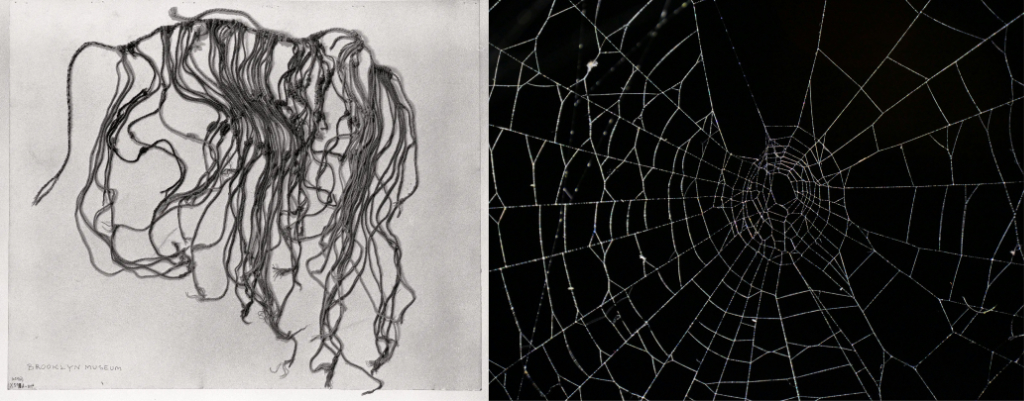
Inka record-keeping traditions, such as the khipu, transform the flow of time into embodied tactility, encoding events and knowledge into their threads. Much of the knowledge these objects were imbued with has been erased by repeated colonisation, resulting in harmful mystification [6]. I view both the khipu and the spider web as nuanced embodied technologies. Both have a distinct function, yet what is demanded of these objects? Does the spider demand a purpose for its web? Does the thread yearn to be woven? They are simply methodologies for organising and storing knowledge, technologies for marking one’s existence at a point in time through a gestural process, an embodied sense-making of the world. An embodied premise for a new framework of computation that is not neutral nor objective, but rooted in the longing and desire for futures that current forms of computation foreclose.
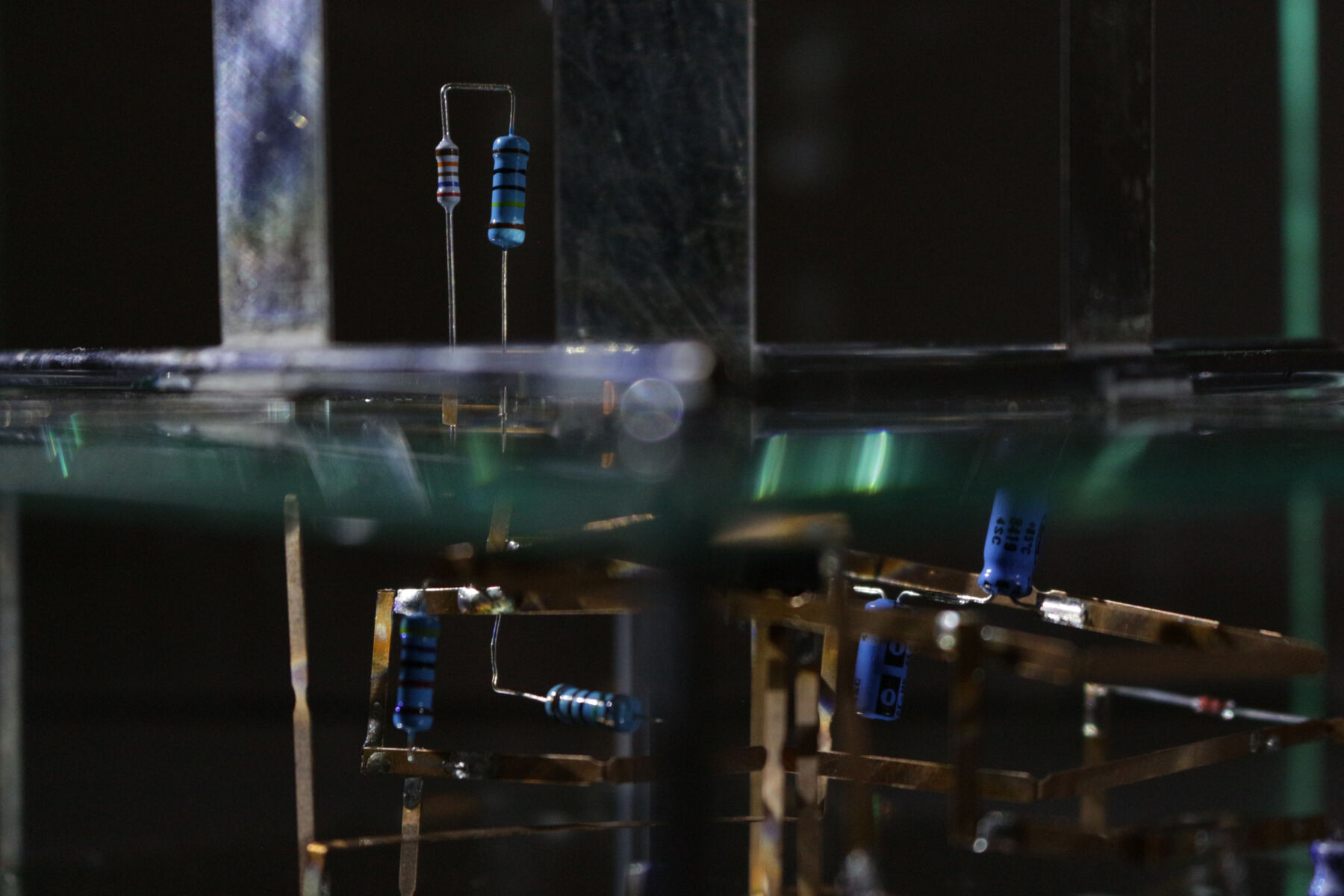
Sense- and meaning-making are seldom done in isolation. In a miraculous chain of events, my path became intertwined with Pama Hapette’s, a Chilean artist whose process is rooted in deep listening and the observation of natural phenomena, exploring them as generative and autonomous more-than-human systems that interact with technological processes. [7] Together, Pama and I embarked on a three-month process of looking within materials for retellings of conventional understandings of time, to interrogate the effects that these alternative frameworks would have on our own computational practices.
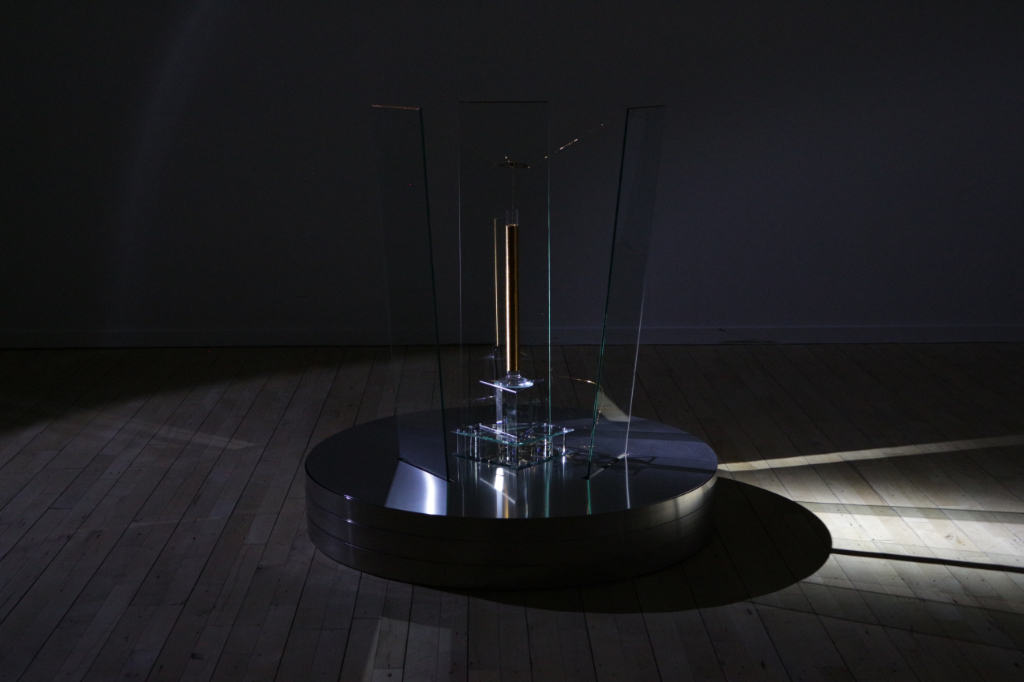
occurrences desiring nothing but a spark [8] is the installation that resulted from our collaboration. It explores time and fragility, taking the form of an interconnected system that perpetually seeks an unstable equilibrium. Without an evident beginning or end, the installation is actuated by small occurrences occurring simultaneously. The installation transduces energy into various forms of existence. It evaluates them not as means-to-an-end, but as occurrences demanding no witness but their own heat – a whole never greater than the sum of its parts.
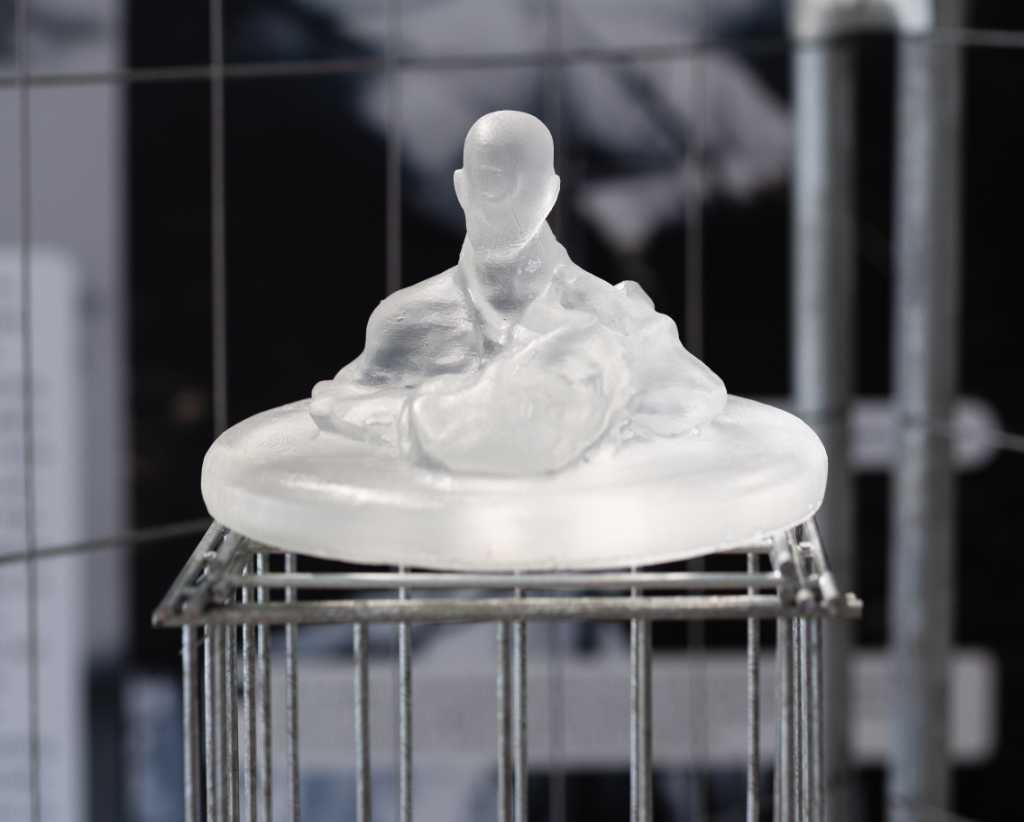
Employing the principles of a fragile speaker composed of a glass cylinder, a copper coil, and magnets, the installation examines the potential to create transparent technologies by enabling an interrupted sonic presence. Through this process, the vibration of sound becomes a gesture towards the space it delineates. This project proposes an active space for reflection on computation beyond its extractive and hegemonic uses, as a transformation of energy into metaphysical forms of intelligence, in which small deviations become unpredictable forms of knowledge.
This installation does not demand – rather, it lures in. Sound, in this process of computing time, becomes the central output, echoing the original status that sound had in early computation: that of a by-product, a disruption, a minor inconvenience on the way towards efficiency and precision [9]. Here, the sonic element remains non-productive. It does not seek efficiency, growth or progress. It draws an audience’s attention through its fragility. If it were to have one request from its listeners, it would be a change in the scale of perception, an acknowledgement of each delicate tick and the silence awaiting between.
The installation’s chronotype is defined by two resistors, with values of 1 MΩ and 216 kΩ respectively. These values have been determined experimentally throughout our process, with an aspirational desire for precision. We quickly realised that this precision is not only subjective to our ‘feeling’ of time, but also oppressive, flattening this knowledge to conventions determined within Anglophone cultures. This attempt at temporal fine-tuning meant we were thinking of time anthropocentrically, when, in actuality, this installation is a more-than-human cooperation at negotiating how time is felt.
While the human, alongside our intrinsic perceptual limitations, is the principal observer of the installation, participants gravitate toward materials whose journey of becoming serves as a platform for reflection in its own right. Our process refused to overlook the anthropogenic effects of computation. Copper, aluminium and neodymium are extracted through intensive processes on lands under exploitation [10]. These complex material relationships are created over vast scales of time, from the formation of ores to the melting of silica particles, and collide against the sound of an imperfect second, bringing audiences into a temporal dissonance in which the past, present and future converge: a provocation highlighting the fundamental instability of being a body in time.
The structure of the installation reflects this instability through the delicate series of contact points that offer it its form, and through the sound it generates. The expanded coil at its centre means volatility precedes accuracy. The precision of the installation’s rendering of time is determined by proximity, or the lack thereof. A body’s electromagnetic field directly interacts with that of the installation, staging an unbalanced cooperation in which the body circumvents the system’s desire for exactitude. The closer we get, the more time seems to flee away from us. The ticking reminds us that the passing of time changes with each step, reiterating its relational nature.
With relationality comes the question of agency and responsibility. We were driven to render an understanding of computation as a ‘making-with’, to re-imagine slow, non-productive computing alternatives as acts of care. It is impossible to do so without acknowledging the horrors that the mass-production of computing systems enacts, the extraction of knowledge and exploitation of South American Indigenous communities, and the destruction of the lands that they are denied complete sovereignty over [11]. How can we engage with these histories in a way that avoids confinement to the conceptual?
Our research was steered towards techno-ecological materialities of care that relate to the gestural practices of gathering, holding, weaving, and melting of temporal data. The fabrication of early memory-storing systems was done predominantly by women. The importance and impact of non-male bodies in computation history is indisputable, from ‘The Harvard Computers’ to the many unnamed factory workers who never got credited for their manual labour [12]. Our designs are inspired by two variations of objects mass-produced by women: magnetic [13] and core rope memory units [14]. From the toroid shape of the magnets we chose to the weaving we created, these types of non-volatile memory mark the beginning of computerised record-keeping, a new era of preserving information and, by extension, various forms of time.
Throughout our process, we worked exclusively with found materials, allowing our processes to morph onto their contours. We believed our materials remembered their origins, their previous states of existence, so we listened to the stories they wanted to tell us. Perhaps the glass remembers having been sand, or the scorching flames. Perhaps the neodymium within our magnets remembers its extraction from its primordial rare-earth ores. Change is no easy feat, and often a violent process – we had no desire to disregard the materials’ histories, nor those of the lands and peoples that their extraction displaces, so we let them further inform our storytelling.
I, too, changed alongside the material surrounding me, through this transformational process. Working with Pama to learn how to coexist with these occurrences was close to what I expect magic to feel like, circling us in all directions, fostering reciprocal care. These two projects needed each other, two grains of sand colliding, their energies merging into a shared existence. In the converging of these timelines, everything happened synchronously – because it had to. That is the beauty behind their creation: the heat of everything, all at once.
This heat remains omnidirectional. Computing new worlds, whether through speculative practice and design fiction, or simply through collective forms of storytelling, does not manifest as a series of outcomes and prototypes, but as an active and participatory flow of worlding, incentivising preferable futures. Through these focused explorations, I traced the genealogy of the worlds that fascinated me and the small occurrences that coalesce at their centre. Through bringing works and collaborations together, I feel these worlds expanding into the future, transcending their analytical and reflective condition towards a propositional one.
Thinking with alternative time frameworks starts with a form of gathering and holding – the same way our cosmologies cradle us, the technological objects we make today must operate in a time conducive to our tomorrows, and the plurality of possibilities they hold. It starts from what we can hold in our hands and shape collectively with care. The melting of glass, the touch of a spider web, a pulse of energy ticking in a new rhythm.