Text by Belén Vera
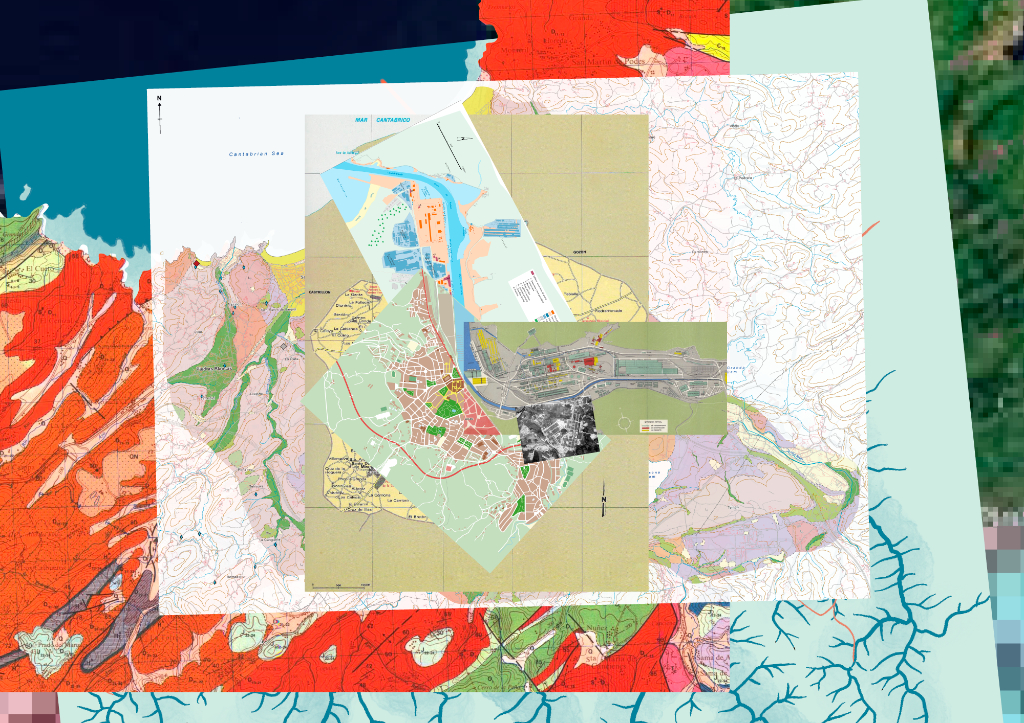
During the last decade, climate crisis has gradually shifted from being a recurring subject within contemporary art to becoming one of its main conceptual and curatorial infrastructures. Today, it feels almost impossible to imagine a biennial, museum programme or international art festival that does not engage, in one way or another, with ecology, extractivism, sustainability, energy transition or more-than-human coexistence. Yet these concerns rarely operate as isolated thematic categories anymore. Instead, they function as connective frameworks through which other urgencies emerge: migration, industrial memory, social inequality, transformation or the political dimensions of infrastructure itself.
Initiatives such as the Helsinki Biennial, focused on the relationship between public space, ecology and sustainability, have contributed to consolidating a cultural landscape where environmental concerns increasingly occupy a central place within contemporary art. More recently, the Art & Environment Festival, launched by Art of Change 21 in Paris, has further expanded these conversations by bringing together artists, researchers, institutions and environmental organisations to rethink sustainability not only as a subject matter, but also as a curatorial and institutional methodology. The Venice Biennale itself has progressively incorporated artistic practices dealing with postindustrial landscapes, environmental collapse, colonial infrastructures and multispecies relations, reflecting how deeply these questions permeate the international art world today.
Far from operating solely as spaces of representation, many of these platforms understand art as a tool capable of activating alternative forms of perception, collective imagination and situated knowledge. Sustainability no longer appears simply as content, but as something that traverses the very structures of cultural production: the relationship with territory, the temporality of exhibitions, the material conditions of artistic practice and the forms of collaboration established between artists, scientists, institutions and local communities.
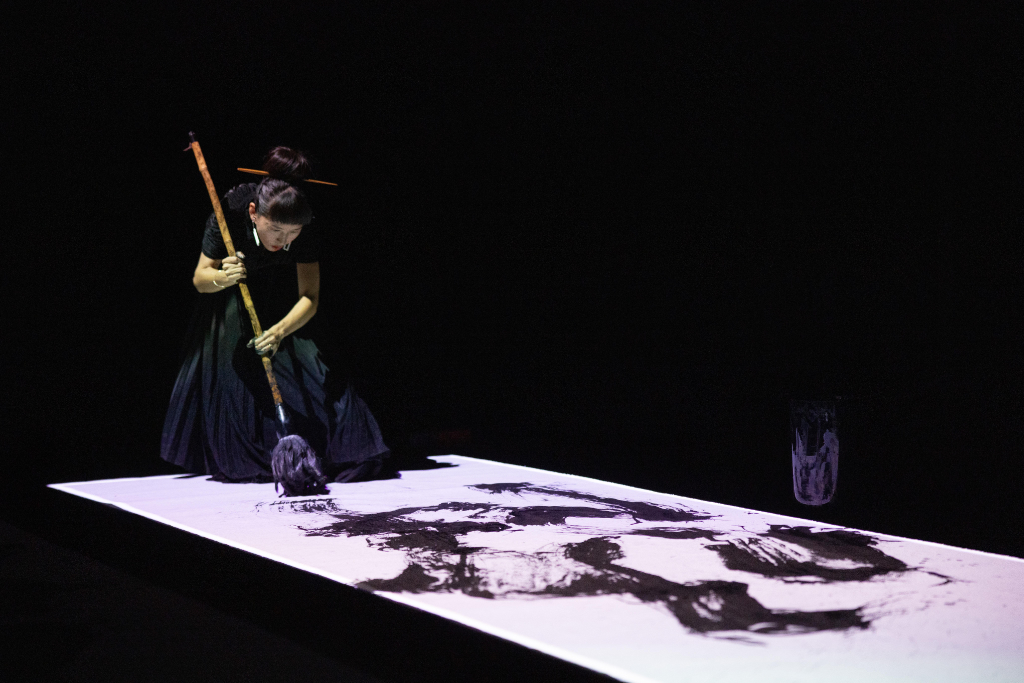
It is precisely within this context that the first edition of the Bienal Climática: arte, industria y territorio (Climate Biennial: Art, Industry and Territory) emerges in Avilés (Spain). Running from June 12 to September 20 under the title Ensayar lo inesperado (Rehearsing the Unexpected), the ambitious programme transforms the Asturian city and its surroundings into an expanded territory of contemporary creation, industrial memory and ecosocial reflection. More than forty national and international artists and collectives will participate across exhibitions, performances, territorial itineraries, citizen laboratories, radio programmes, screenings and public interventions unfolding throughout thirteen different sites across the city.
Rather than proposing a centralised exhibition model, the Bienal unfolds as a dispersed curatorial constellation where industrial heritage, public space, working-class memory and urban landscape become active elements within the exhibition narrative itself. Deeply tied to the steel and port history of northern Spain, Avilés appears here not simply as the host city of the event, but as a space through which ongoing tensions surrounding industry, sustainability and social transformation can be collectively rethought.
The Bienal Climática was born from a very concrete question: what kind of cultural infrastructures do we need today in order to collectively face ecosocial transitions? explains curator Amanda Masha Caminals. Her approach deliberately expands the notion of climate beyond atmospheric emergency alone. Climate here does not refer only to the atmosphere or environmental crisis, but also to a social climate that increasingly feels polarised and tense.
This expanded understanding also permeates the curatorial structure of the project itself. We were interested in building a space capable of approaching climate through multiple entry points, a plurality of concerns, narratives and forms of knowledge. A context able to sustain long-term processes of research, collaboration and place-based engagement through multiple forms of participation and access.

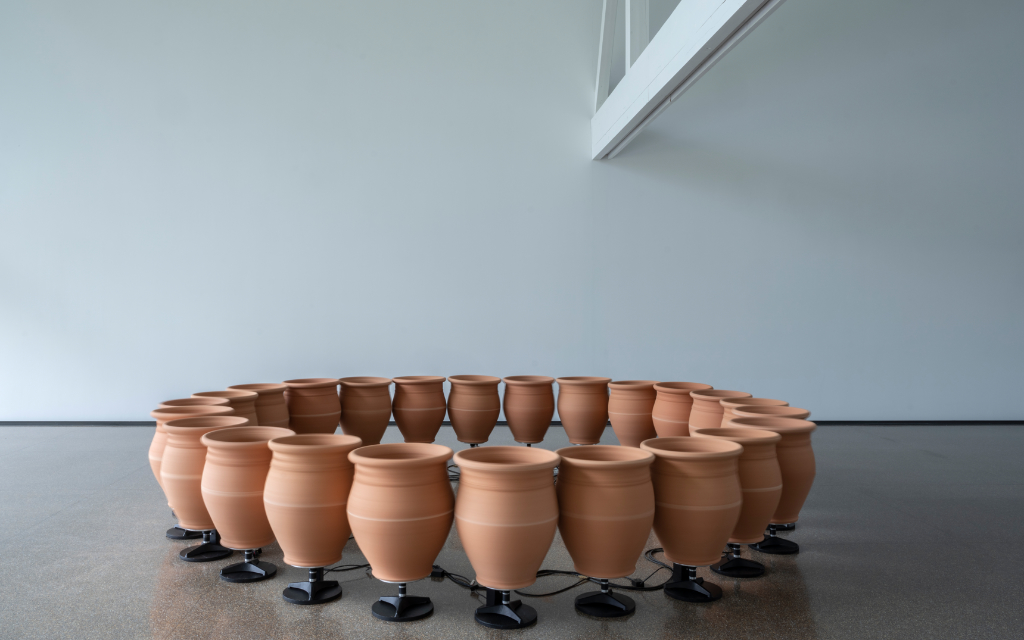
The artistic programme is articulated through three interconnected thematic axes: Estación Meteo (Weather Station), centred on new ways of observing and communicating the atmospheric; Industrias Presentes (Present Industries), focused on the imaginaries surrounding industrial and energy transition; and Duelos y Júbilos (Grief and Joy), dedicated to the emotional, spiritual and affective dimensions of contemporary transformation. These thematic axes function as porous territories where climate crisis intersects with bodies, infrastructures, memory, territory and collective forms of coexistence, instead of remaining confined to fixed curatorial categories.
The three main exhibition chapters function almost like a trilogy of this collective rehearsal of the unexpected, says Masha Caminals. The journey begins by looking at the atmosphere from a broader perspective, then moves towards industry as one of the historical activities linked to what we now call the Anthropocene, before arriving at a more affective and relational approach to all these questions. Not in order to provide closed answers, but to open spaces where we can collectively think about how we inhabit a time of transformation.
Within this structure coexist artists whose practices have long explored the relationships between ecology, extractivism, politics, archives and material histories. Participants include figures such as Lawrence Abu Hamdan, Carolina Caycedo, Otobong Nkanga, Naiza Khan, Amanda Piña, Agnes Essonti, Gabriela Bettini and Mario Santamaría, among many others.
Many of these practices operate through hybrid formats that bring together artistic research, sound, cartography, archives, performance and community-based processes. Amanda Masha Caminals explains, Certain projects emerge from very situated territorial conflicts, while others operate through symbolic, affective or cosmological registers. But that diversity matters precisely because it responds to the complexity of what we call climate. It is not merely an atmospheric or scientific issue, but something that traverses infrastructures, imaginaries, memories, bodies and ways of living together.
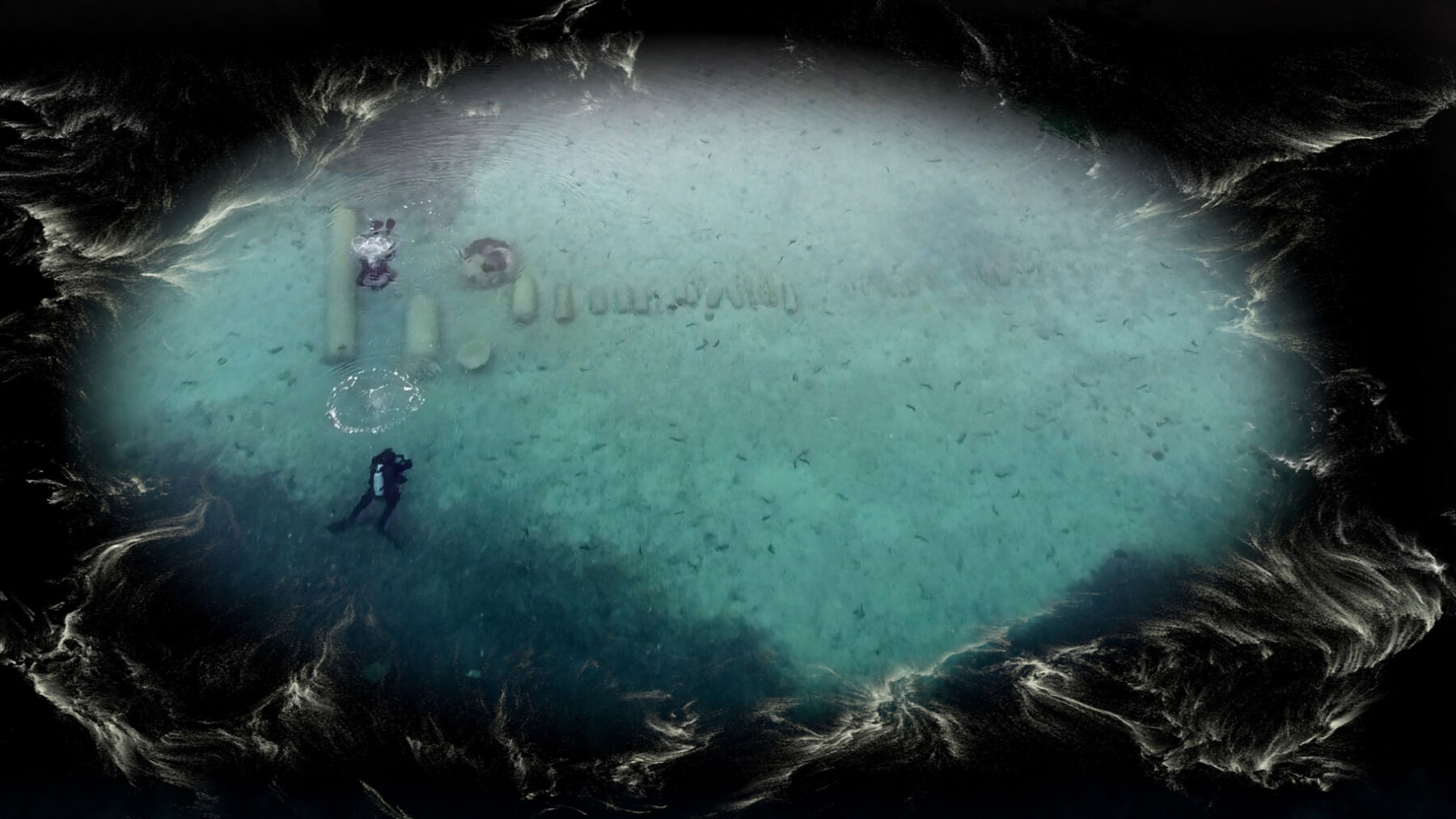
One of the most compelling aspects of this first edition lies in its strong commitment to site-specific production and long-term territorial processes. The Bienal has commissioned fourteen new productions ranging from installations and sculptures to audiovisual works and performative interventions developed in direct dialogue with the Asturian context.
These coexist alongside historical works, research-based projects still in development and pieces borrowed from institutional collections, generating a curatorial framework where memory, investigation and contemporary production remain deeply interconnected. One thing we were very clear about from the beginning was that we did not want to reproduce the usual imperative of exhibiting only finished works, Masha Caminals notes. We were equally interested in opening space for ongoing research and processes that remain alive.
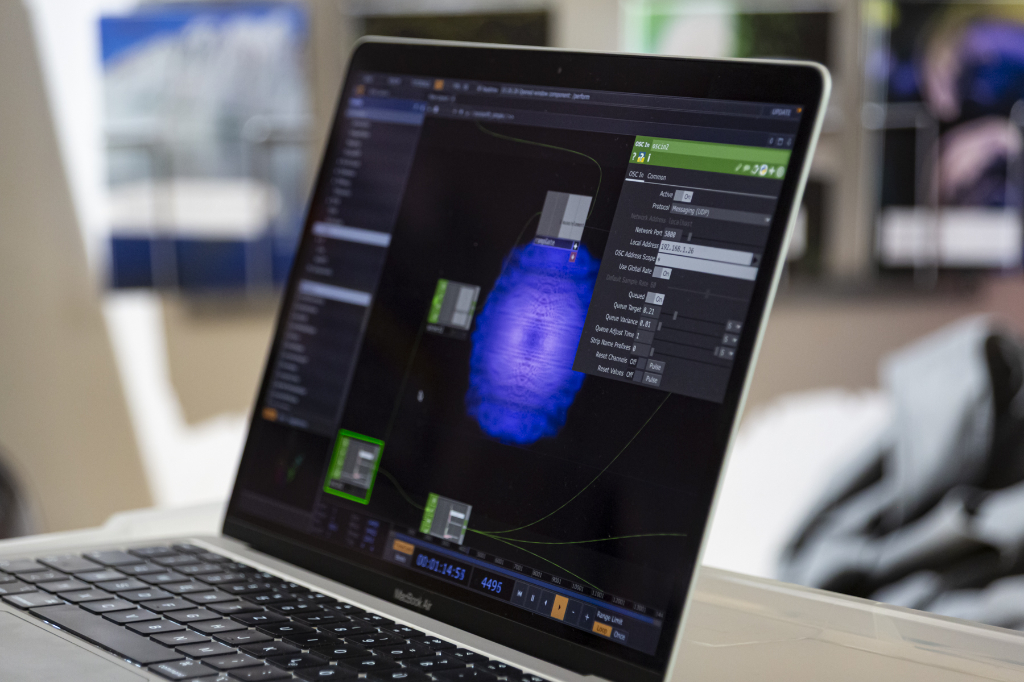
Many of these new productions have emerged through the ACTS residency programme (Art, Science, Technology and Society), developed together with institutions such as AEMET, the Fundación Ciudad de la Energía and the Factoría Cultural de Avilés. Rather than framing art and science as occasional collaborations, the programme functions as an interdisciplinary research platform through which artists engage with meteorology, energy transition and ongoing industrial transformation.
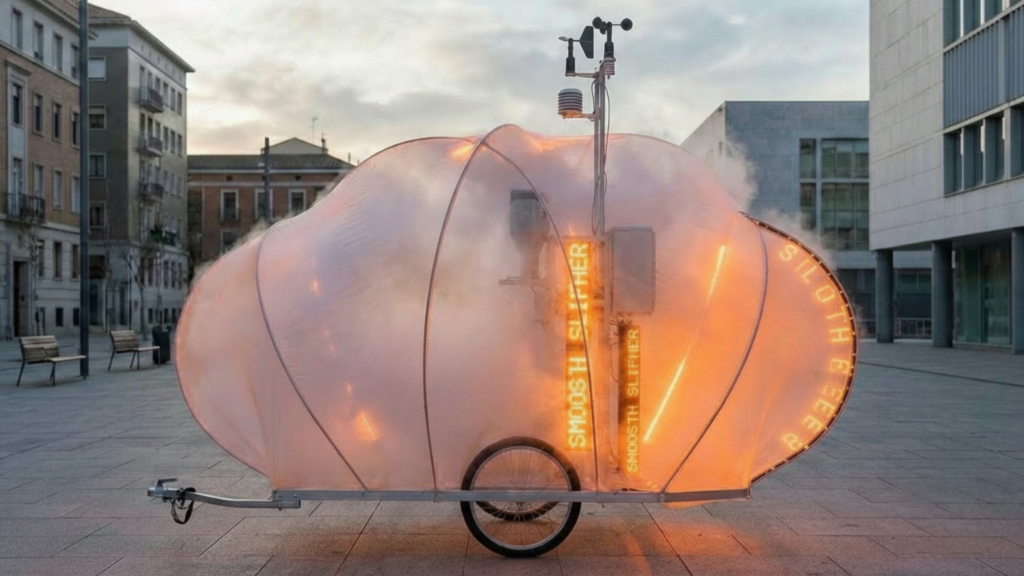
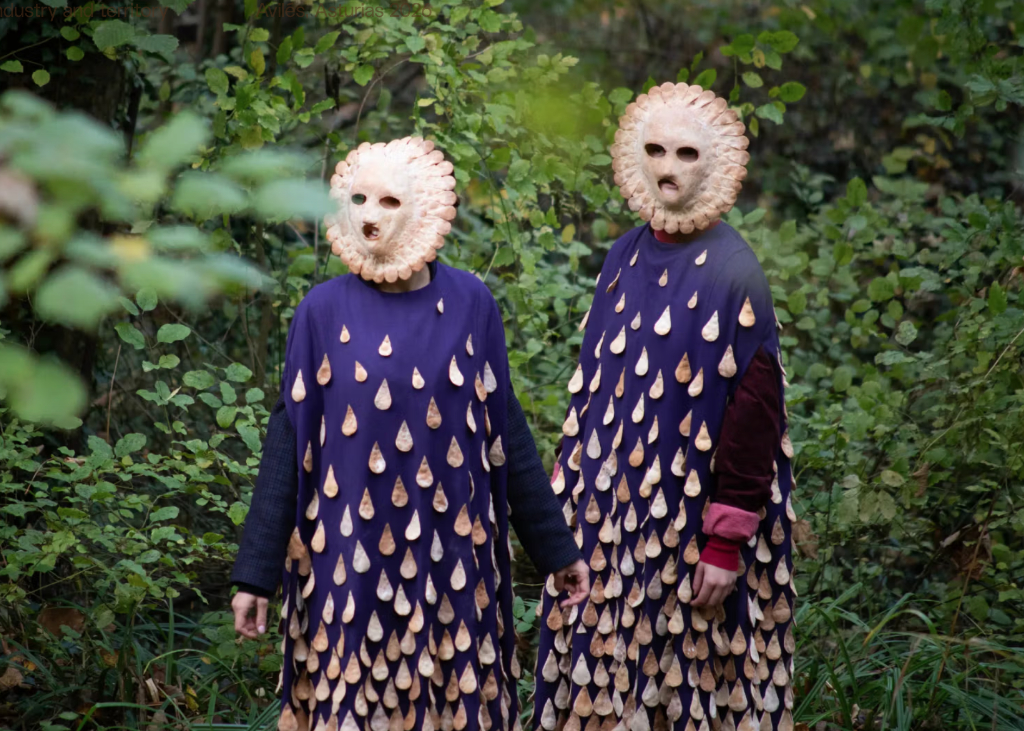
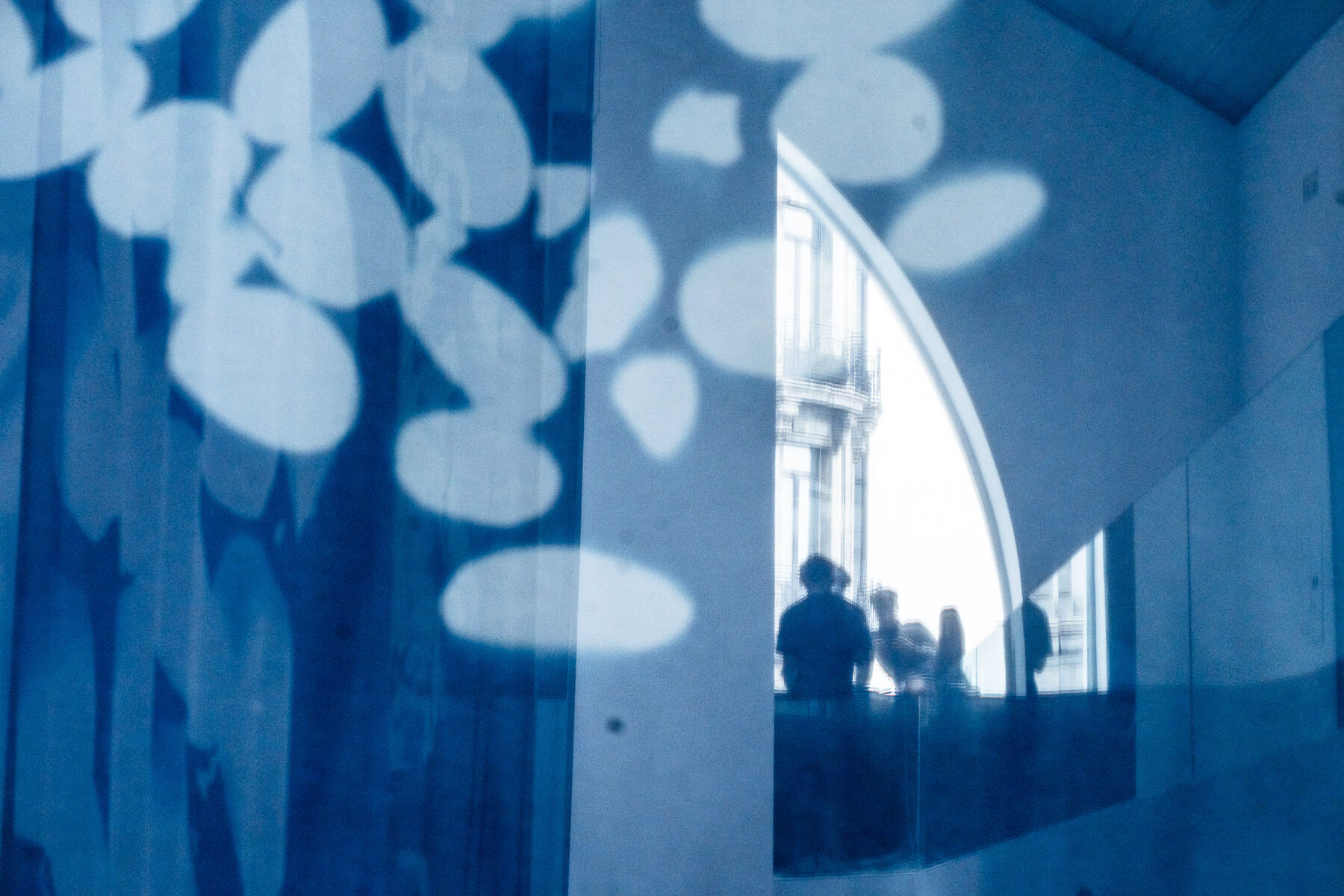
Several artists involved in the AEMET residencies worked directly with meteorologists, technicians and scientific archives to investigate alternative ways of observing and representing atmospheric phenomena. Five artists are exploring how we observe and study weather in a moment marked by climate emergency, explains Masha Caminals. Among the resulting projects are Marion Balac’s investigations into non-human meteorological perspectives, the atmospheric installations of Enar de Dios Rodríguez and Nube Móvil by Rotor Studio, conceived as a hybrid between mobile weather station, public sculpture and itinerant architectural device that will travel through Avilés collecting atmospheric data later transformed into collective visual experiences.
The territorial dimension becomes particularly visible within Industrias Presentes, displayed across spaces deeply embedded in Asturias’ industrial and working-class history, including the former ENSIDESA campus, Espacio Portus and the Factoría Cultural de Avilés. Asturias is a region profoundly shaped by mining, steel production and industrial imaginaries, says Masha Caminals.
Industry occupies a paradoxical position today: it has been one of the human activities most responsible for transforming the planet’s atmospheric conditions while simultaneously becoming one of the strategic sectors within the so-called green transition. The exhibition approaches industry and ecological transition through complexity and contradiction, avoiding reductive narratives. What emerges is a field of questions through which current industrial transformations can be observed both critically and affectively,she adds. This tension appears across works dealing with extractivism, industrial infrastructures, labour memory and postindustrial imaginaries.
The Bienal also incorporates projects developed through mediation and community-based collaboration within En Colectivo, curated by Zoe López together with organisations such as La Benéfica de Piloña, Néxodos and Escuela de Teitau. These initiatives expand the very notion of the Biennial as a cultural device by foregrounding listening, situated participation and collective production.
For Masha Caminals, these collaborations are not a peripheral layer of the programme but one of its central foundations. Many of the ways of living, organising and relating to the environment that we tend to imagine as belonging to the future already exist, she explains. They are already happening across different scales and contexts. In this sense, En Colectivo seeks to recognise and amplify forms of collective knowledge and local stewardship that have long been active across Asturias. Rather than speaking about territory from the outside, we wanted to work alongside those who are already sustaining, thinking and transforming it from within.
The programme extends across thirteen different sites connecting historical architecture, industrial infrastructures and public institutions. Venues include the Camposagrado and Valdecarzana palaces, the Centro Niemeyer, the CMAE, La Grapa, a former municipal fish market converted into a cultural venue, La Curtidora and the ArcelorMittal University Campus, originally built as the ENSIDESA School of Apprentices. The city itself becomes an expanded itinerary where contemporary art, industrial landscape, working-class memory and public space remain in constant dialogue, summarises the organisation.
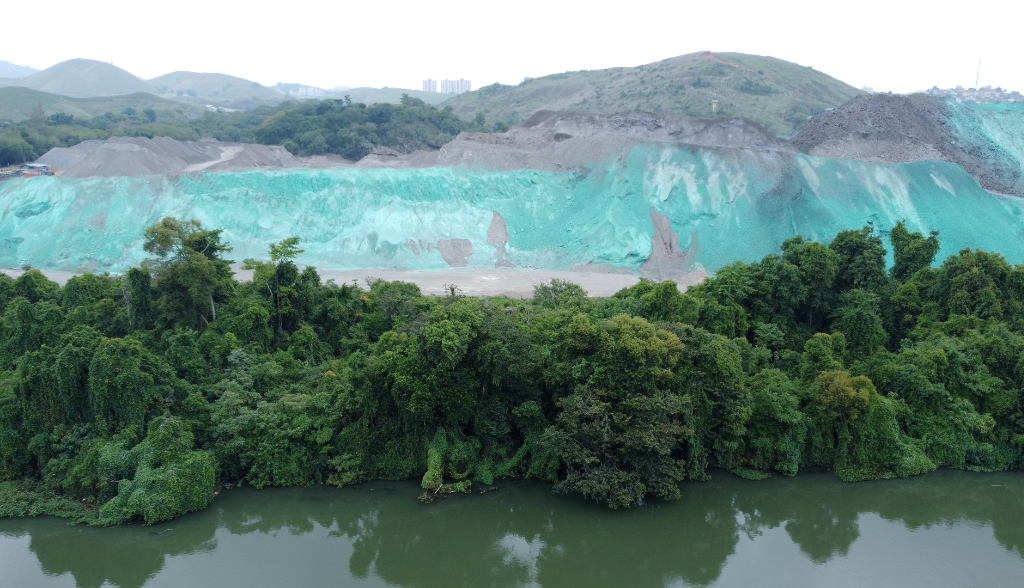
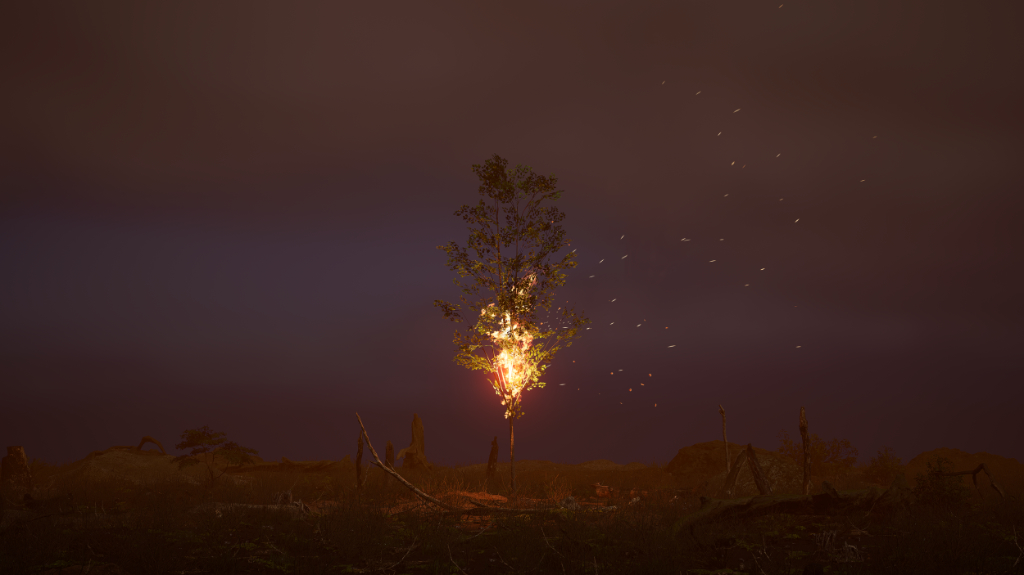
This relationship between art and territory also permeates much of the public programme, conceived as a platform for collective experimentation and civic participation. Among its most significant initiatives are the Critical Cartography Derivas, developed together with residents, researchers and local agents to explore industrial memory, urban transformation and the ecological dimensions of Avilés and its estuary. Other projects include El banquete de las doncellas by Agnes Essonti, a communal action revisiting the historical figure of Mauregato and Florecimiento by Amanda Piña, centred on indigenous knowledge and multispecies ecologies.
Alongside these interventions, the Bienal incorporates workshops, citizen laboratories and participatory programmes that expand the project beyond the conventional exhibition format. Initiatives such as Andrea Molina’s Eco-fiction Laboratories, the Laboratorio cívico Avilés or Diseño de futuros, developed with Oxfam Intermón, approach speculative fiction, collective imagination and civic participation as tools for envisioning alternative social, cultural and energy futures.
The Bienal also enters into dialogue with other exhibitions and institutions engaging with ecology, architecture and territorial thought, including ¡Aquí hay petróleo!, organised by Fundación Biodiversidad and the Círculo de Bellas Artes, as well as several exhibitions presented together with the Centro Niemeyer, among them What Darwin Missed by Joan Fontcuberta, Agua by Edward Burtynsky and Naturalezas Vivas, a large-scale collective exhibition bringing together more than sixty artists.
The Bienal was never conceived as a thesis exhibition, Masha Caminals reflects. It emerged through sustained spaces of collaboration where institutions, artists, scientists, collectives and local organisations could investigate together. That methodology runs throughout the project, positioning the Bienal less as a platform for certainties than as a shared exercise in imagining possible futures.
In that sense, Ensayar lo inesperado (Rehearsing the Unexpected) becomes more than the title of this first edition. It describes a way of inhabiting uncertainty through collective experimentation, situated knowledge and cultural practice; an attempt to understand climate not only as an environmental condition but also as a social, political and emotional landscape in constant transformation.