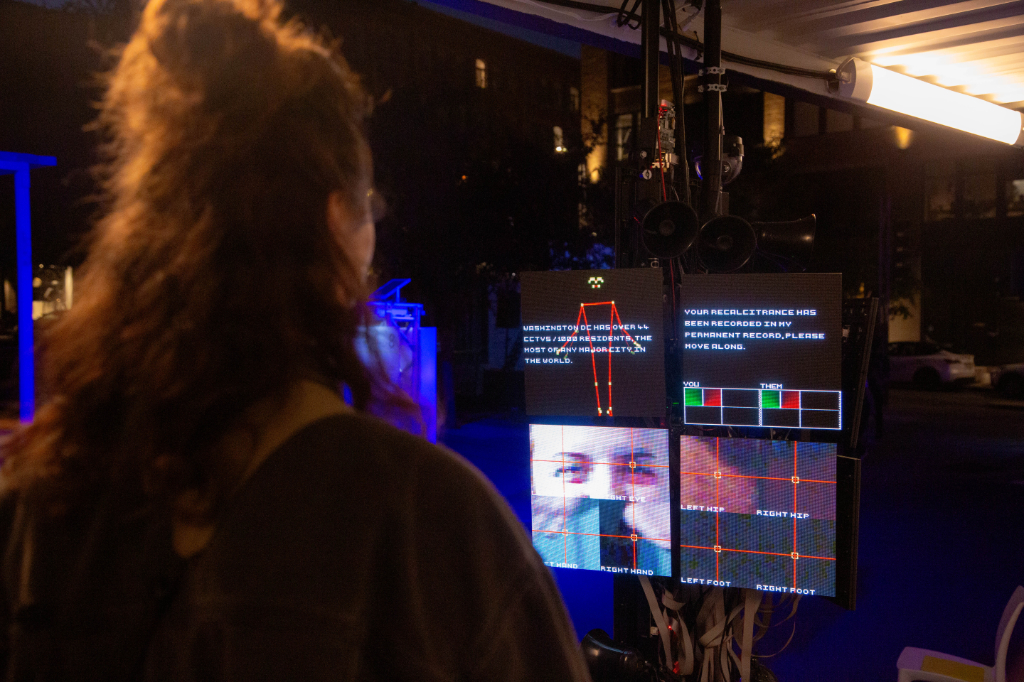
Text by Rodrigo Guzman-Serrano
There is a persistent assumption built into the concept of visibility that being visible means being relevant, accounted for, and enfranchised. But to be seen is also to be exposed, vulnerable, surveilled even.
Across an art practice spanning video, painting, sculpture, and archival research, Jen Liu dismantles and rebuilds these assumptions. Her work proposes not an exposition of visibility but an excavation of its conditions: who authorises seeing, who is engineered out of view, and what is at stake in a world that requires labour to be invisible. Liu does not simply represent the unseen. Instead, she turns the mechanisms of vision—algorithmic, archival, cinematic—against themselves, forcing them to reveal their inner workings and their own blindnesses. To engage with her work, therefore, is to understand that seeing is never neutral, and that the question of what we can see is always already a question about power.
Jen Liu is a New York-based artist whose practice has long centered on diasporic Asian identities, postcolonial economies, and the invisible work that sustains contemporary technoscientific life. Her research-heavy works often involve collaboration across distant disciplines, from microbiology to computer programming, to probe themes of labour, disappearance, and the female body across temporalities. Although her work engages with these diverse and complex themes, I see them converging on a unifying problem: the conditions under which certain lives become unrepresentable.
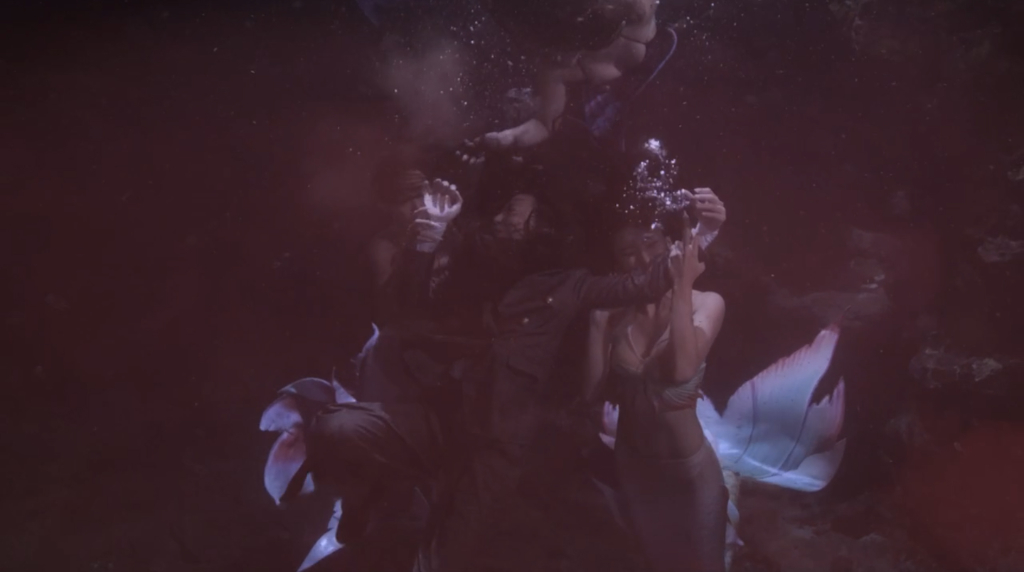
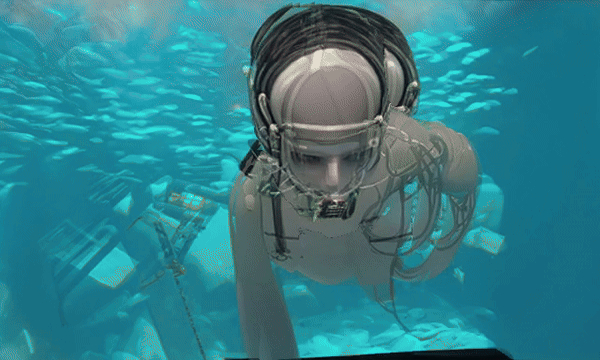
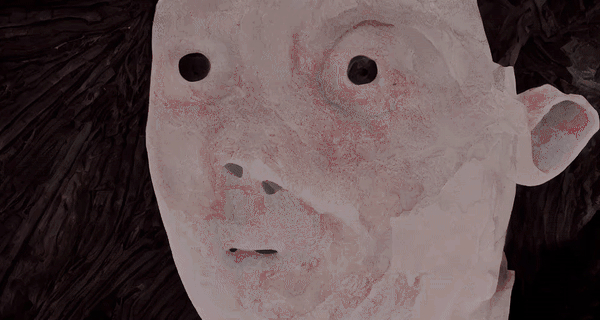
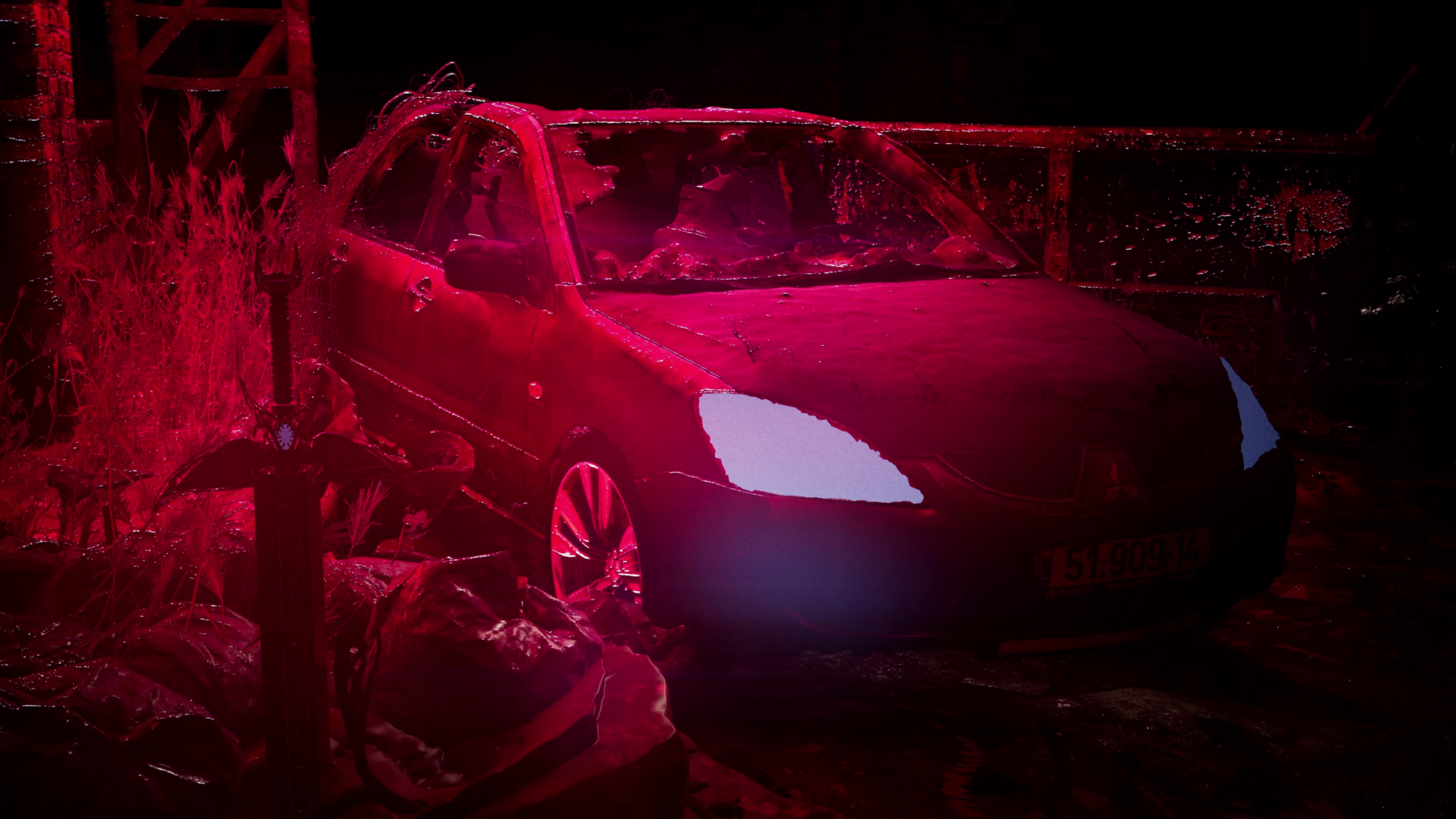
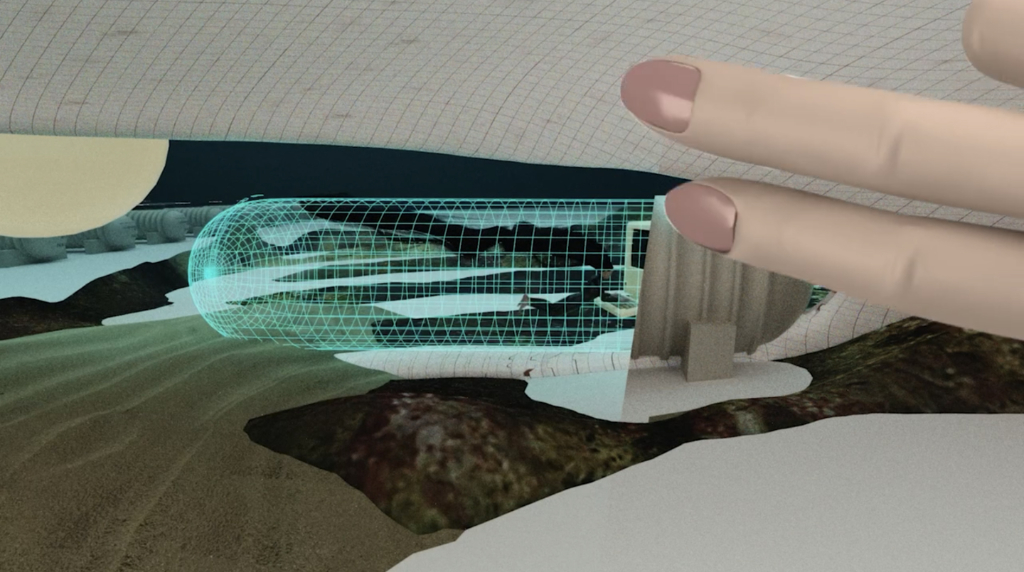
In The Land at the Bottom of the Sea (2023) [1], for example, Liu wanted to use Large Language Models (LLMs) and image-generation programs to visualise people and voices that had been liquidated—disappeared financially, socially, and politically. In the video, we follow a character as she descends into the depths of the sea. Archival narratives of women workers and activists whose lives and stories have been liquidated are woven into the voice-over as our character encounters mermaids who interact with her, lure her further down, and eventually tear her apart. But The Land at the Bottom of the Sea is not a portrait gallery of the disappeared. It is a film about the phenomenology of disappearance, that is, the experience of disappearing, the conditions that make it possible, and the ideological architecture that makes it legible as normal.
The video work was developed in part in collaboration with Soul Choi, a graduate of Cornell Tech’s Information Science program, through the Backslash Fellowship at Cornell Tech [2]. As Liu explained to me, her initial impulse was to use AI’s generative capacity as a kind of counter-archive, to reconstruct what had been unmade or, as Choi, her collaborator, puts it, can AI tell a story that we dare to tell? [3]
Using the generative models of the time (around 2022/2023), however, proved difficult, as they were unable to consistently generate bodies and faces, particularly those of women with East Asian features. The use of LLMs for text was, according to Choi, smoother. In the video, custom-built AI voices attempt to complete the sentence: The day I was liquidated, I…. But the voices do not complete the sentence cleanly. They drift and collapse. The machine’s inability to represent these women’s stories coherently indexes the same structural erasure that made them disappear in the first place. Machine sight, Liu shows us, does not transcend ideology; it operationalises it.
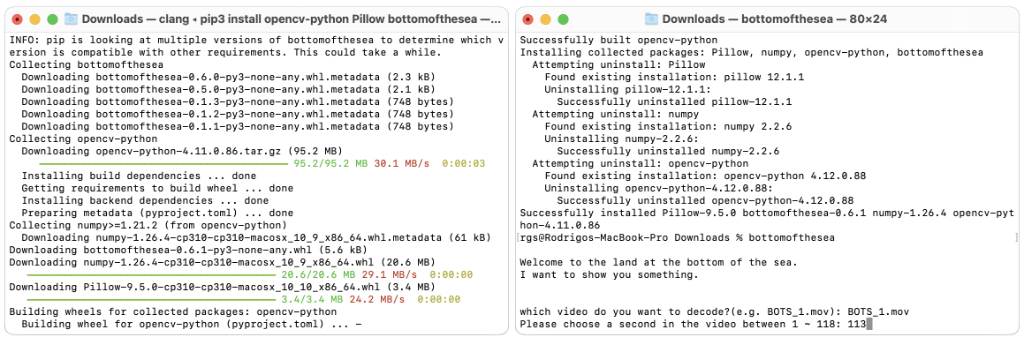
But while image and text generation didn’t give voice and visibility to the stories, the work refuses a passive pessimism as its final register. Packed within the digital files of the video is an assembled archive of disappeared women activists—images of tens of thousands of documents, screenshots, and photographs that document and resist their liquidation. Choi explained to me that each frame contains one pixel that contains one of these files (24 in each second of video). The video file is thus an encrypted archive (or, more accurately, a steganographic archive) that conceals what it protects. But to access this, I learned, one must do some work and follow a series of steps detailed in the aptly named page There’s a Python in theLand at the Bottom of the Sea [4]. This is Liu’s intervention: the machine’s inevitability to see becomes the vessel for what must not be forgotten. Visibility and invisibility are not opposites here but strategies, each chosen or imposed under specific conditions of power.
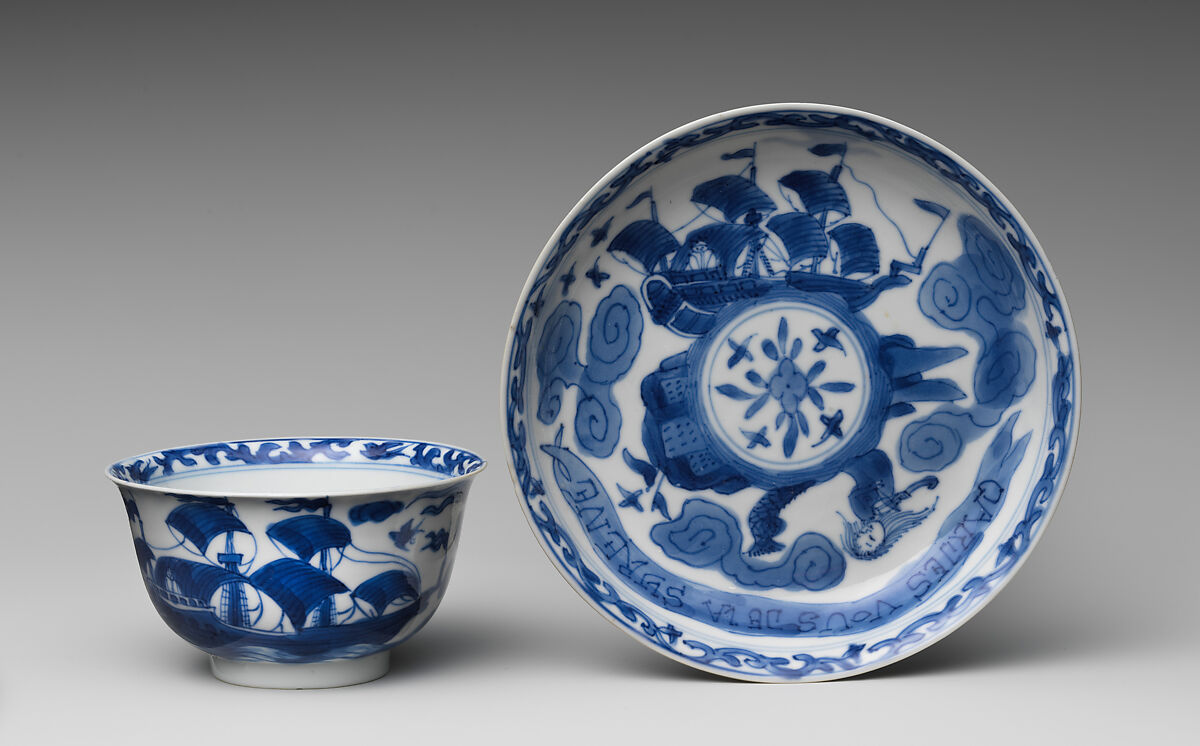
I saw The Land at the Bottom of the Sea at the Metropolitan Museum of Art in New York last summer as part of the exhibition Monstrous Beauty: A Feminist Revision of Chinoiserie [5]. In the gallery, opposite the video, was an eighteenth-century porcelain saucer with the inscription gardes vous de la syrene [beware of the siren]. The siren, or mermaid, both in the porcelain saucer and in Liu’s work, functions as a figure of threshold, a body that marks the boundary between the legible and the submerged. I found this juxtaposition fascinating. As we’ll see, in other works, Liu also collapses and superimposes different temporalities. Liu’s video and the porcelain saucer suggested that the same global trade networks that carried porcelain westward, that generated the West’s fantasy of an exotic, decorative, knowable East, also generated (or at the very least provided the blueprint for) the labour conditions, the colonial extractions, and the enforced anonymities of the bodies that make our digital lives possible.
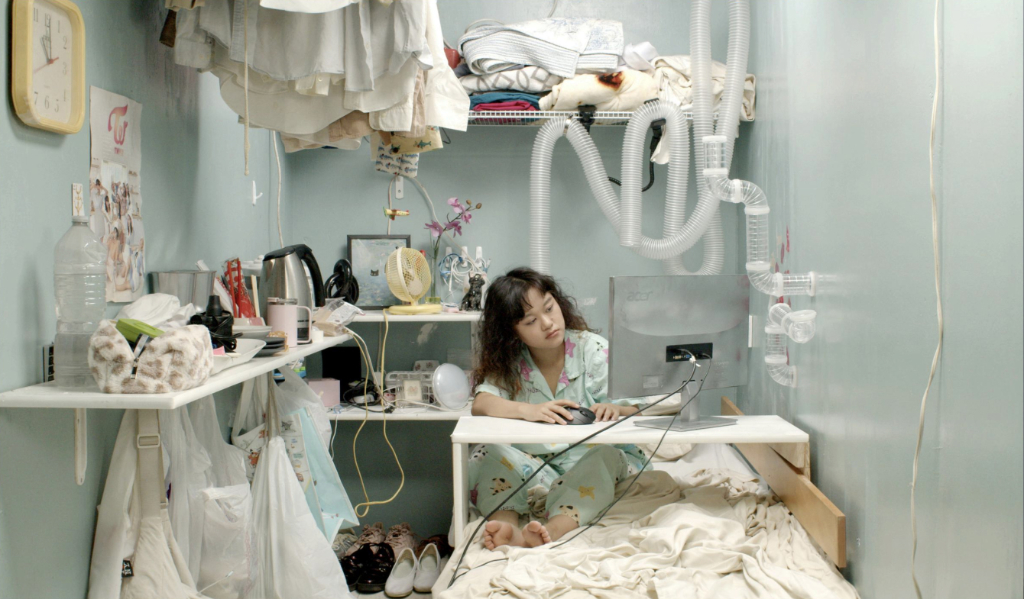
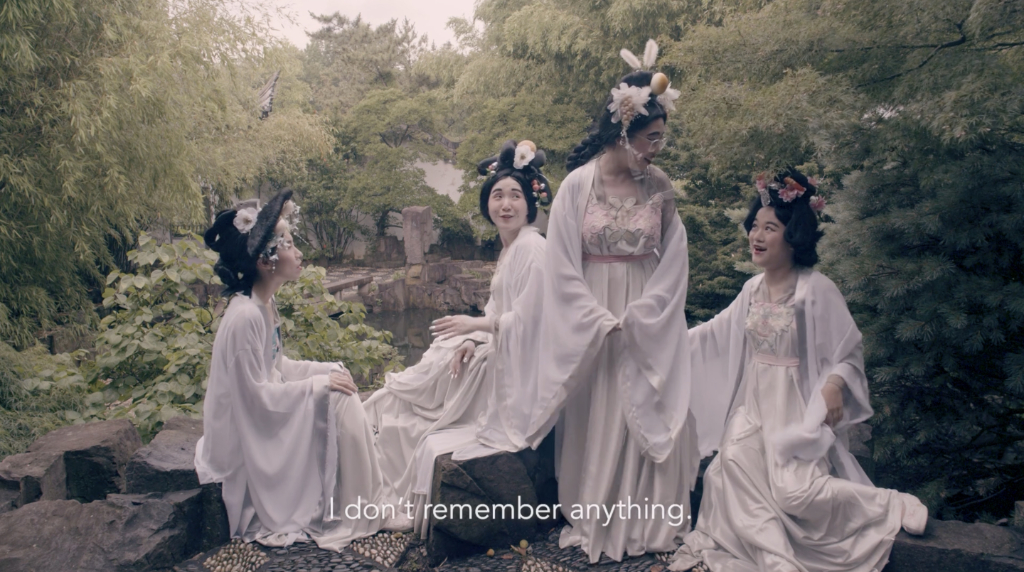
If The Land at the Bottom of the Sea maps the structural conditions of disappearance, in a more recent video work shown at Upstream Gallery in Amsterdam [6], Time Traveler in D-Block (2026), Liu subjects those conditions to temporal pressure, asking what happens when the digital labour of the present is placed in conversation with the invisible histories that preceded it. The work emerged partially from Liu’s research into 19th-century immigration case files of Chinese migrant women in San Francisco.
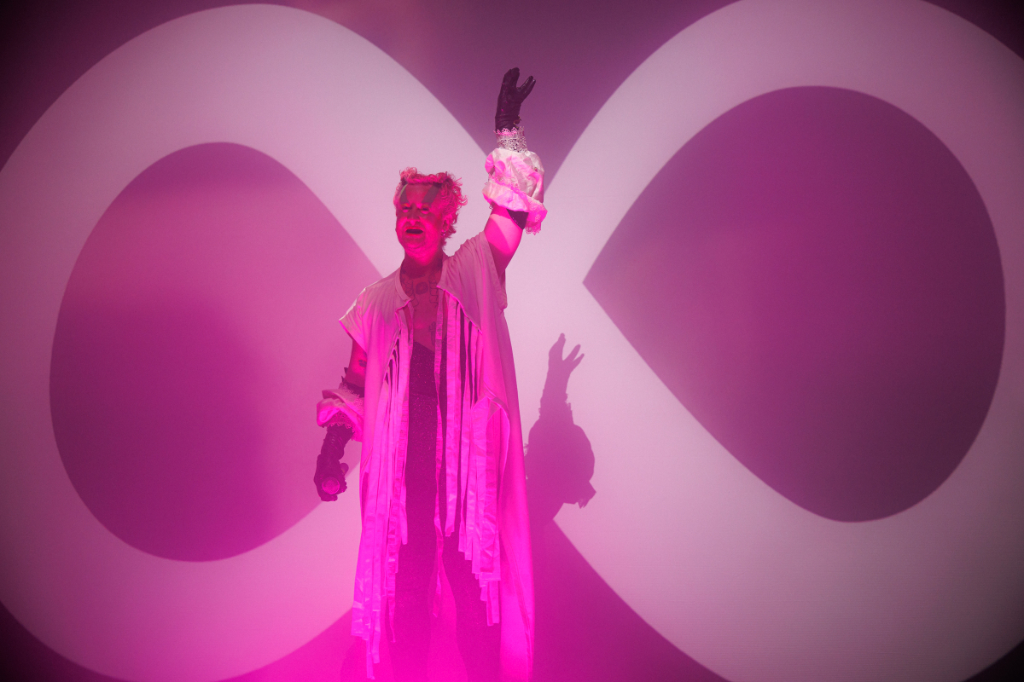
The video starts in the bedroom of a microworker. Microwork refers to the fragmented digital tasks, such as labelling images, transcribing audio, and moderating content, performed by largely anonymous, globally distributed workers. After several sessions labelling images of cats, our microworker character collapses from exhaustion. It becomes caught in a time-travel loop among the present, early-twentieth-century San Francisco, and a Tang Dynasty court. I was captivated by the video’s use of collapsed temporalities, which reminded me of other media I’ve seen where the Asian body is treated in its trans-temporal and trans-historic condition, like in the hyper-viral music video Stacks from All Sides/Karma [八方来财·因果] by Chinese rapper 揽佬 SKAI ISYOURGOD [7], in which a karmic logic of cause and effect causes the singer to also travel to different time periods.
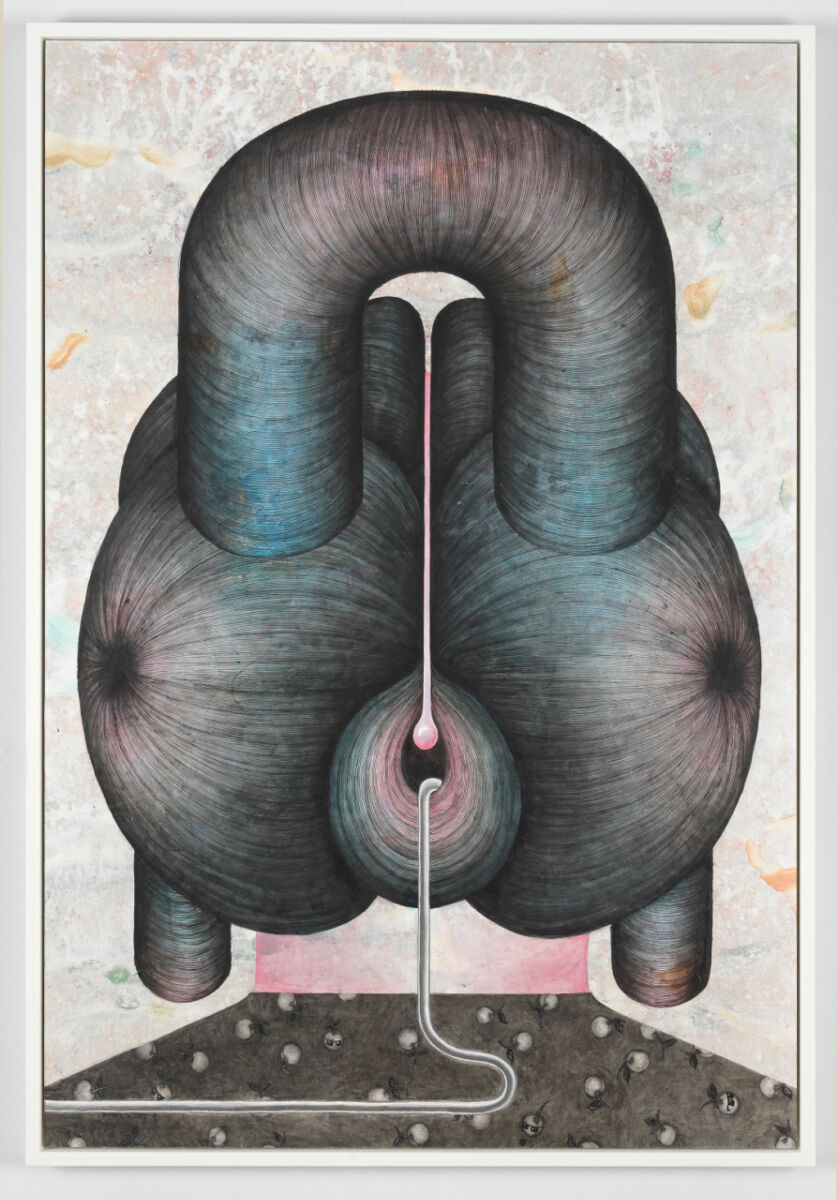
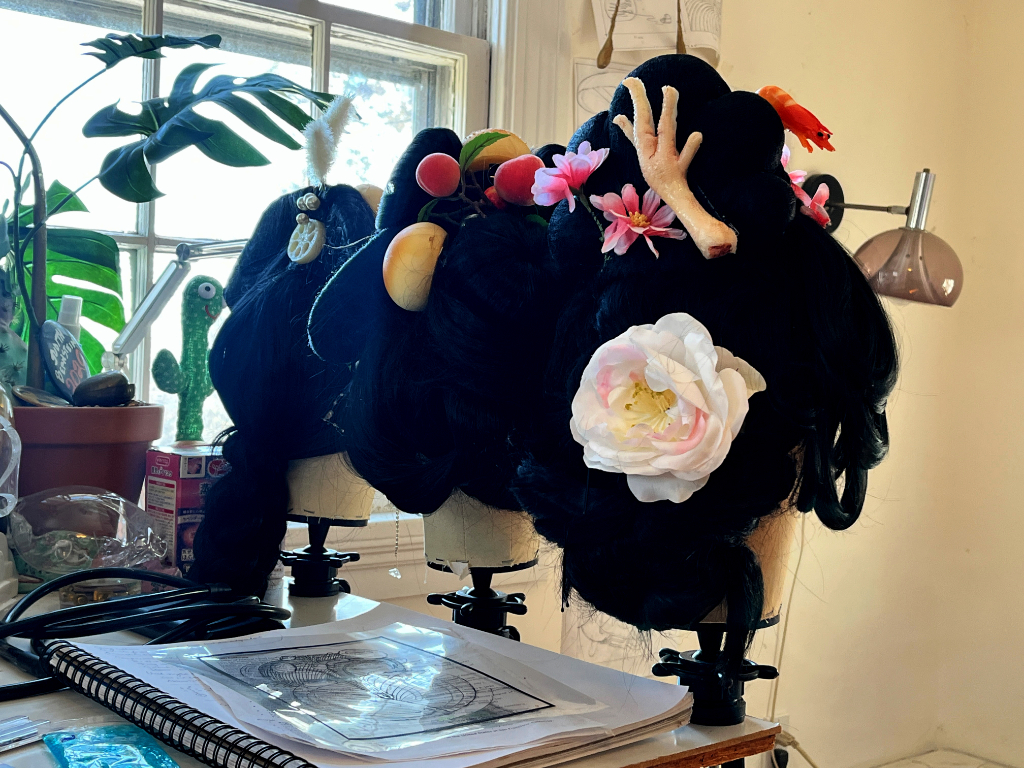
Right: back of three wigs used in Jen Liu’s Time Traveler in D-Block. Photo: Rodrigo Guzman-Serrano.
The transitions in Time Traveler in D-Block are facilitated by mercury, which acts like another character, a Greek chorus of sorts, portending catastrophe and ruin. Here, mercury signals everything solid breaking down: labour, identity, history liquefy, as truth and fiction, organic and synthetic, past and present become indistinguishable. As the video progresses, the scenes break down into soap opera theatrics–the Tang Dynasty court plot, for instance, begins to look more like popular, over-the-top Chinese dramas like the popular Nirvana in Fire [琅琊榜] [8]. Soon, however, what look like serious lesions and sores begin to appear on our characters’ skins. Suddenly, the mercury-driven transitions take a different meaning: Mercury, as Liu told me, was in fact a common “treatment” for syphilis and other venereal diseases up until the mid-twentieth century. The different time periods our character is caught in highlight the persistence of exploitation on the human body. History does not offer these women refuge; it offers them a longer view of the same condition.
At Upstream Gallery, Time Traveler in D-Block was exhibited alongside paintings of women’s backs of heads, partially inspired by the custom-made wigs used in the video. These paintings are not portraits. They refuse us the face. We see instead their backs, an act of formal refusal that mirrors the structural refusal embedded in the archive itself–the immigration files upon which the work is built. To be seen, in these case files, was to be surveilled and controlled by the legal apparatus. Liu’s paintings insist on a different economy of looking, one where the depicted subject does not necessarily become available to our gaze. These images remind us of the Rückenfigur throughout the history of art: back-facing figures often depicted by painters and photographers to serve as surrogates for the viewer within the image. But if we are them, what are we looking at? Are we looking at them, with them, instead of them?
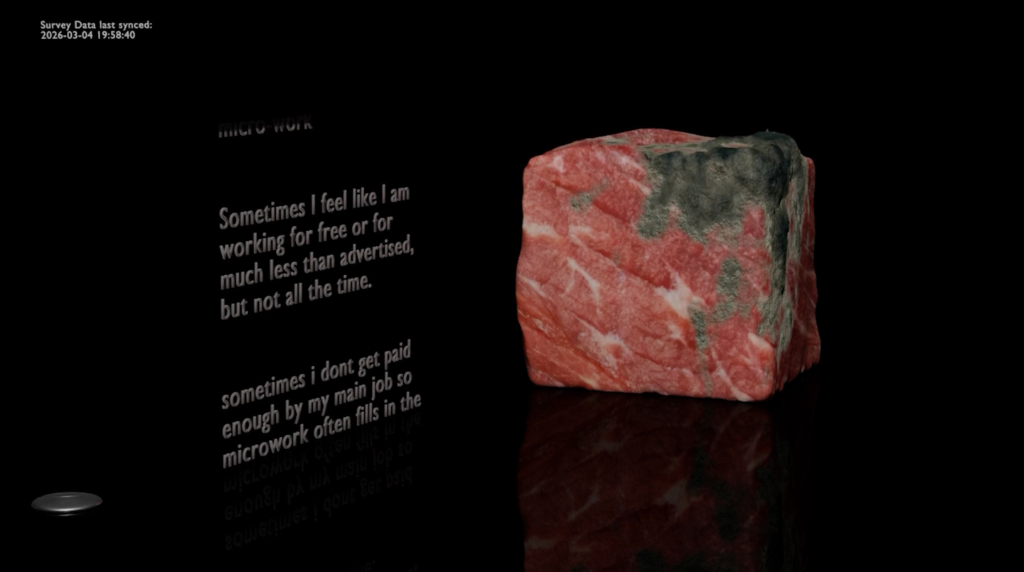
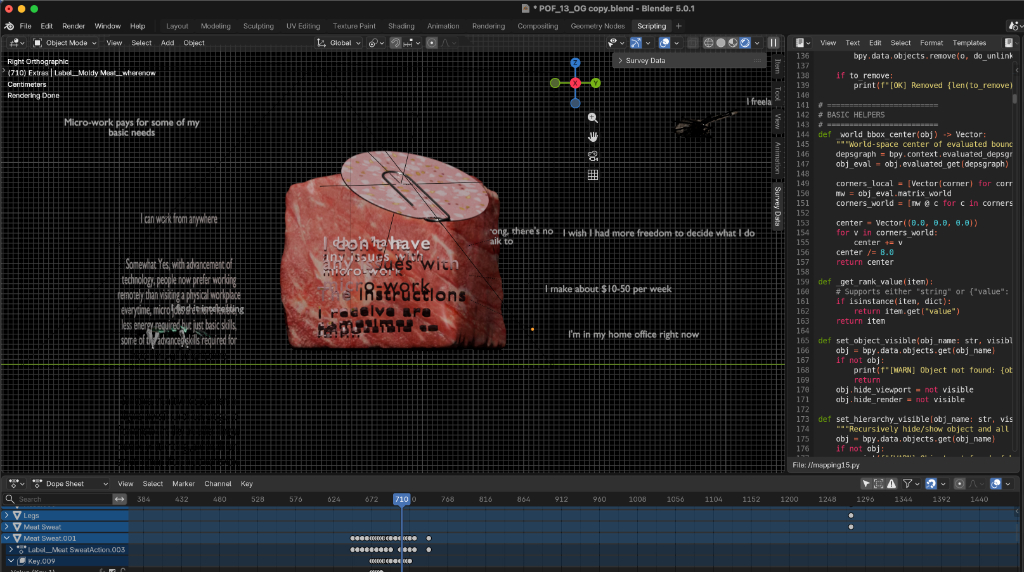
In Liu’s more recent work, Cube of Meat (2026), recently shown at Silverlens Gallery in New York, she turns again to microworkers [9]. The video is a semi-live animation, updated daily with responses gathered from digital microworkers on the platform Clickworker. In a gesture reminiscent of projects such as Ten Thousand Cents [10] by Aaron Koblin and Takashi Kawashima, Liu utilises the very structures that obscure this digital labour. Through her “Microwork sentiment survey,” however, Liu’s work is more circular; the survey’s content is meant to capture workers’ reflections on their own labour. On screen, selections from the responses pop in and out. They appear on the cube of meat, on sliced deli meats, or simply floating around. The cube morphs, expands, and rots, but always comes back to its default state, perhaps gesturing to the periodicity of this kind of labour.
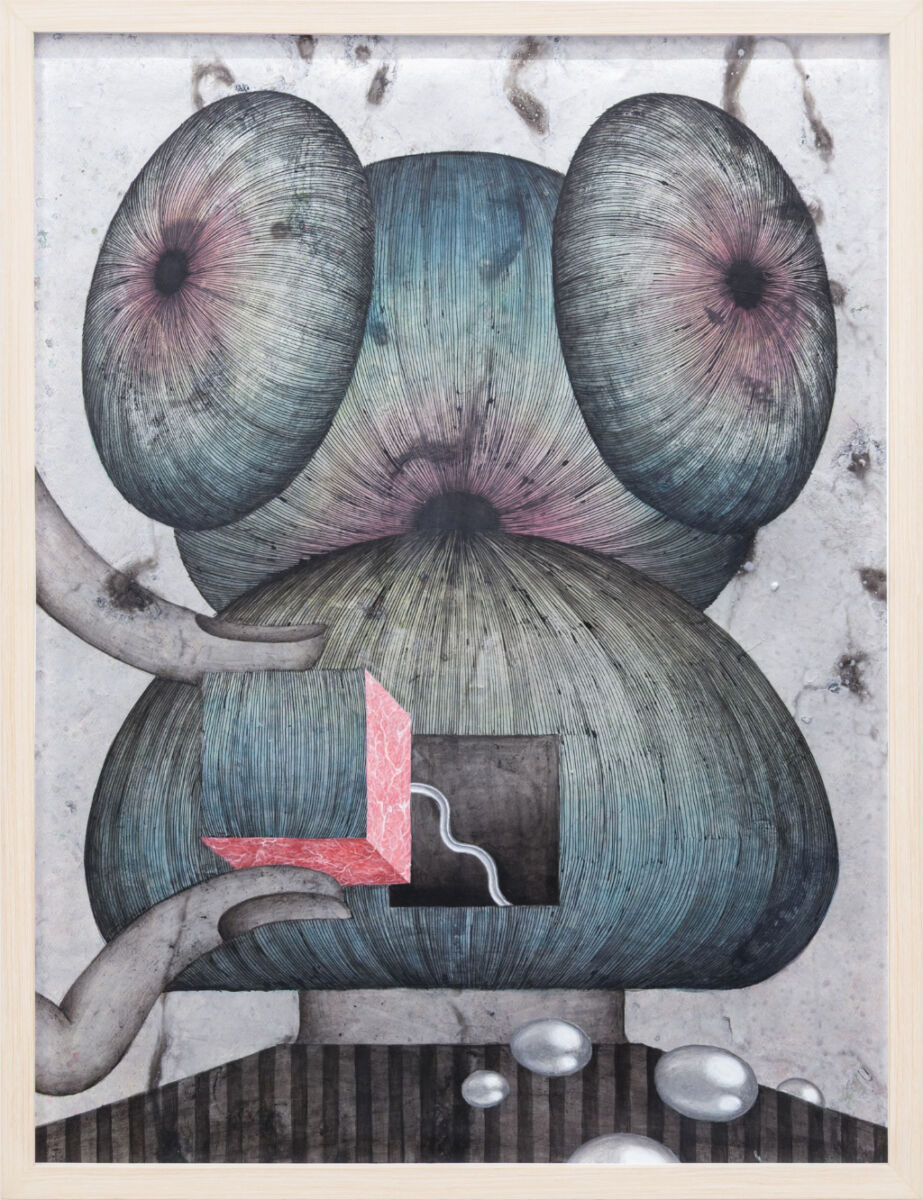
Right: Survey Says: I Would Be Scrolling Anyway. Courtesy the artist and Silverlens (Manila / New York). Photo credit: Tammy David
The allusion at the heart of the work is, of course, Shakespeare’s The Merchant of Venice. In the play, Shylock, a moneylender, loans three thousand ducats to the merchant Antonio, setting as security the condition that, should he default, Shylock is entitled to a pound of his flesh. This arrangement seems fantastical, theatrical, and grotesque. Still, Liu recognises in it a precise economic logic—one that governs market relations in which the body is the only asset a worker can offer as collateral, the only thing left to extract. More than just a metaphor for labour in a market economy, as David Graber [11] has explained, the image of “a pound of flesh” is about the relationships inherent in capitalism, the indebtedness it points to, and the idea of debt and obligation. Liu, however, is careful not to ventriloquise dread or anticipate apprehension from people who engage in microwork. In the responses, some workers, in fact, express more positive feelings. It is, as ever, a complicated issue.
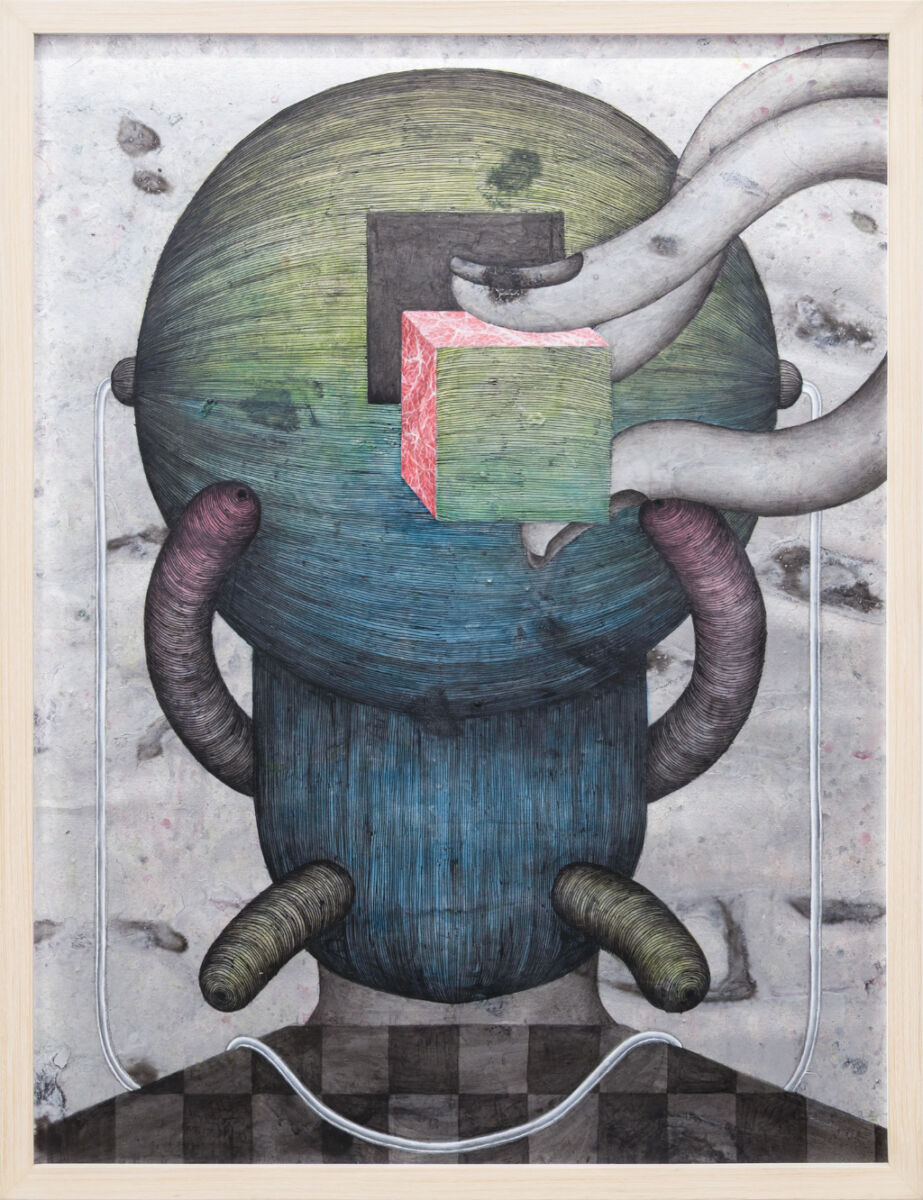
In the gallery, next to the Cube of Meat video, we encounter a series of paintings of women’s hindheads. This time, however, cubes and slices of what looks like flesh are being extracted by large, thin, disembodied fingers. The extracted flesh is a poignant image of digital microwork. Like the cube of meat, the microworkers training AI systems exist within economies that require their physicality while engineering their anonymity. They are visible as goods and invisible as persons, productive yet out of view.
The body is present, yes, but only insofar as an instrument. The backs of heads reinforce the picture: bodies reduced to functions. Taken together with the video and the survey responses, the paintings raise the question: Is this visibility? invisibility? both? The question the work poses–what does it mean to depict someone who was never meant to be seen–is not answered. It is a lingering question, a sustained note, held open with the demand that the viewer sit with the discomfort of not being able to resolve it through the usual protocols of representation.
Liu’s work constitutes, I think, something more than a thematic investigation into labour and disappearance. It constitutes a theory of vision, a sustained argument about the directionality of the gaze and the politics embedded in every act of seeing. We are accustomed to thinking of vision as a neutral act embedded in our human senses. But Liu complicates and rebuilds this idea. What she offers is a sustained reckoning with the politics of the visible. She does not simply make the invisible visible. She asks, instead, what it would mean to take seriously the conditions under which certain bodies have been made to disappear, and what our obligations are to those conditions. The machine cannot see them. The archive will not speak for them. The portrait turns its back. And in that turning, something is preserved that pure visibility would miss.