Text by Hannah van den Elzen
We are living in turbulent times. The present feeling haunted by catastrophe: genocide, ecocide, the violence of Big Tech, and the unsettling experience of watching things fall apart in real time.
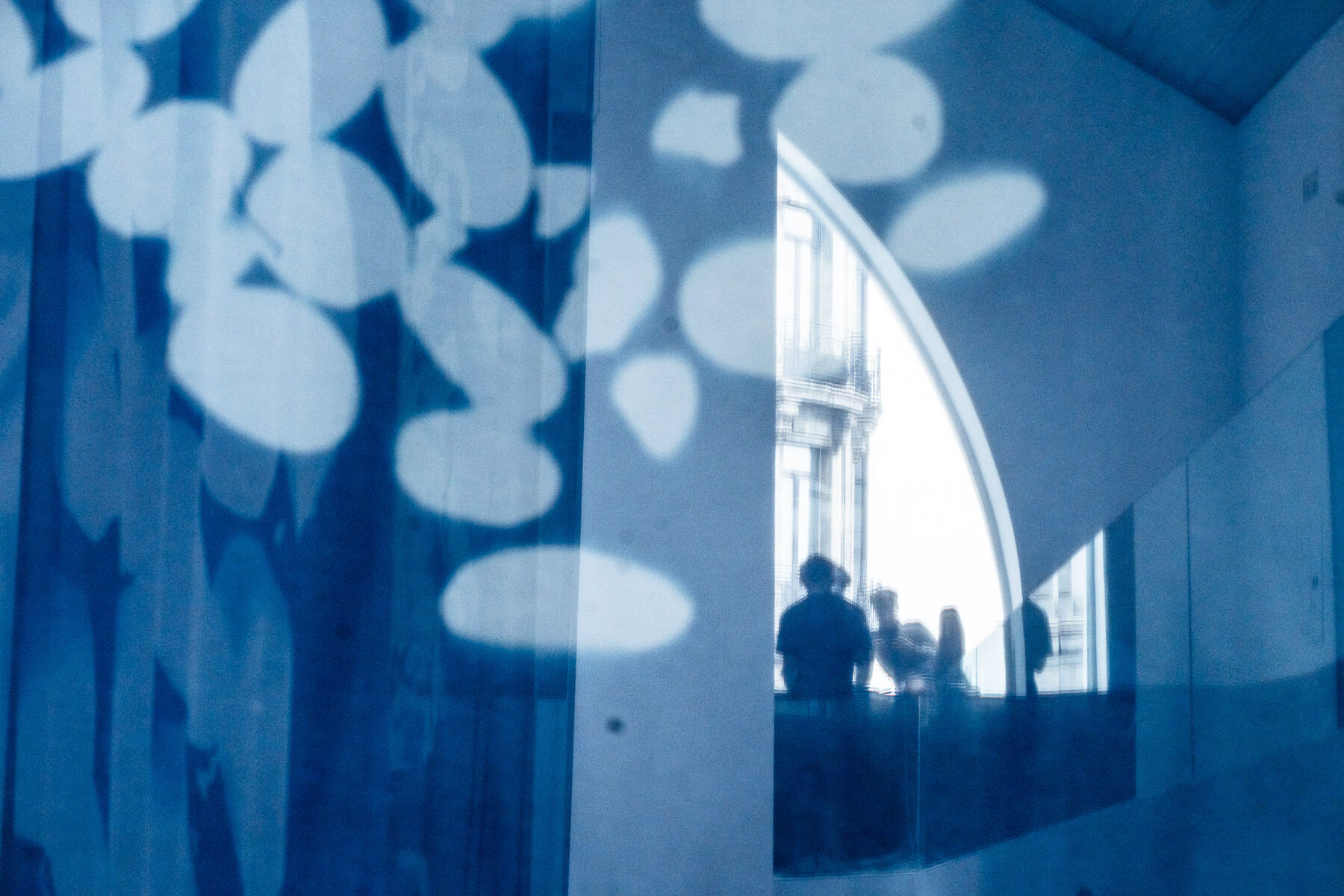
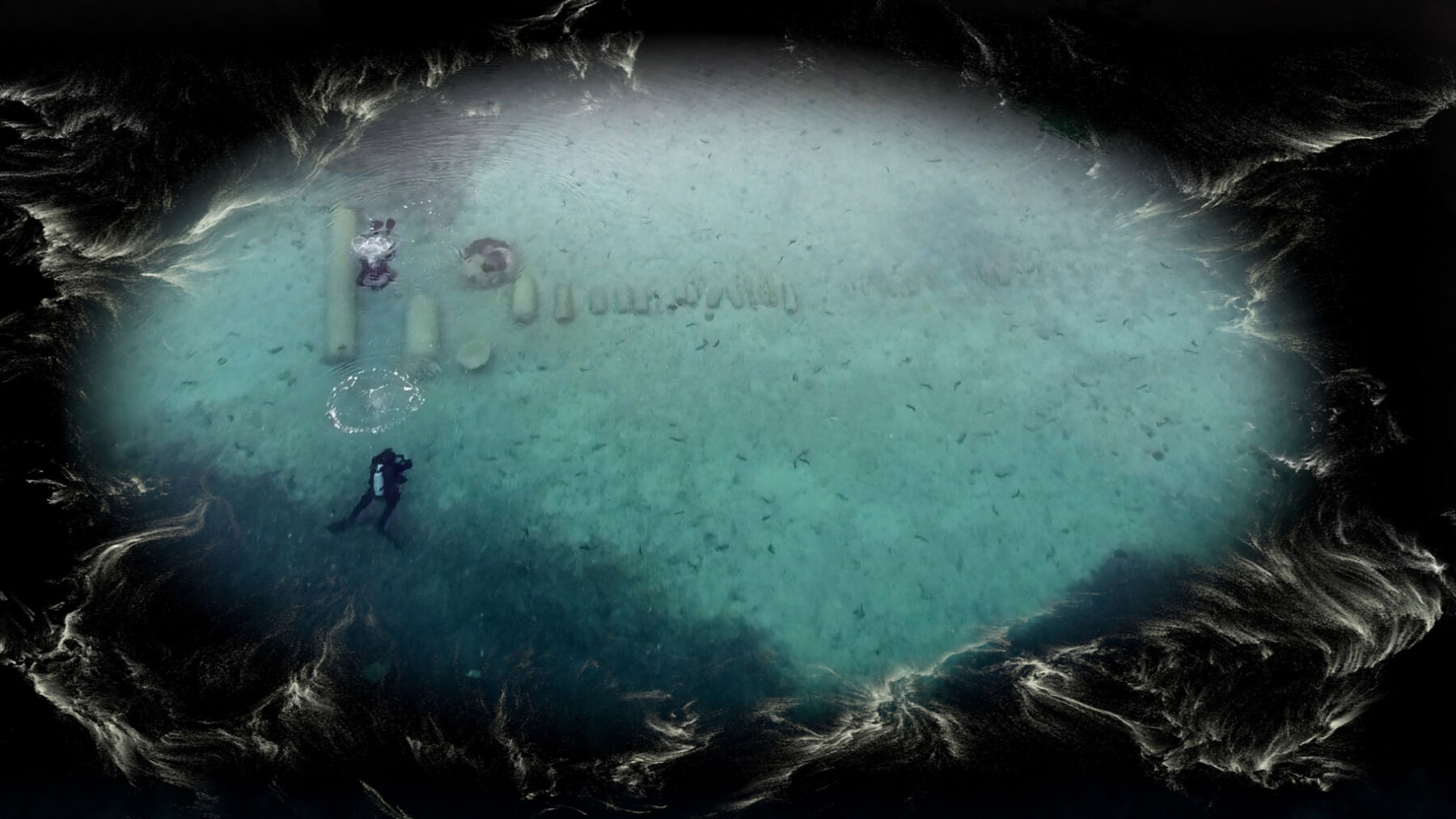
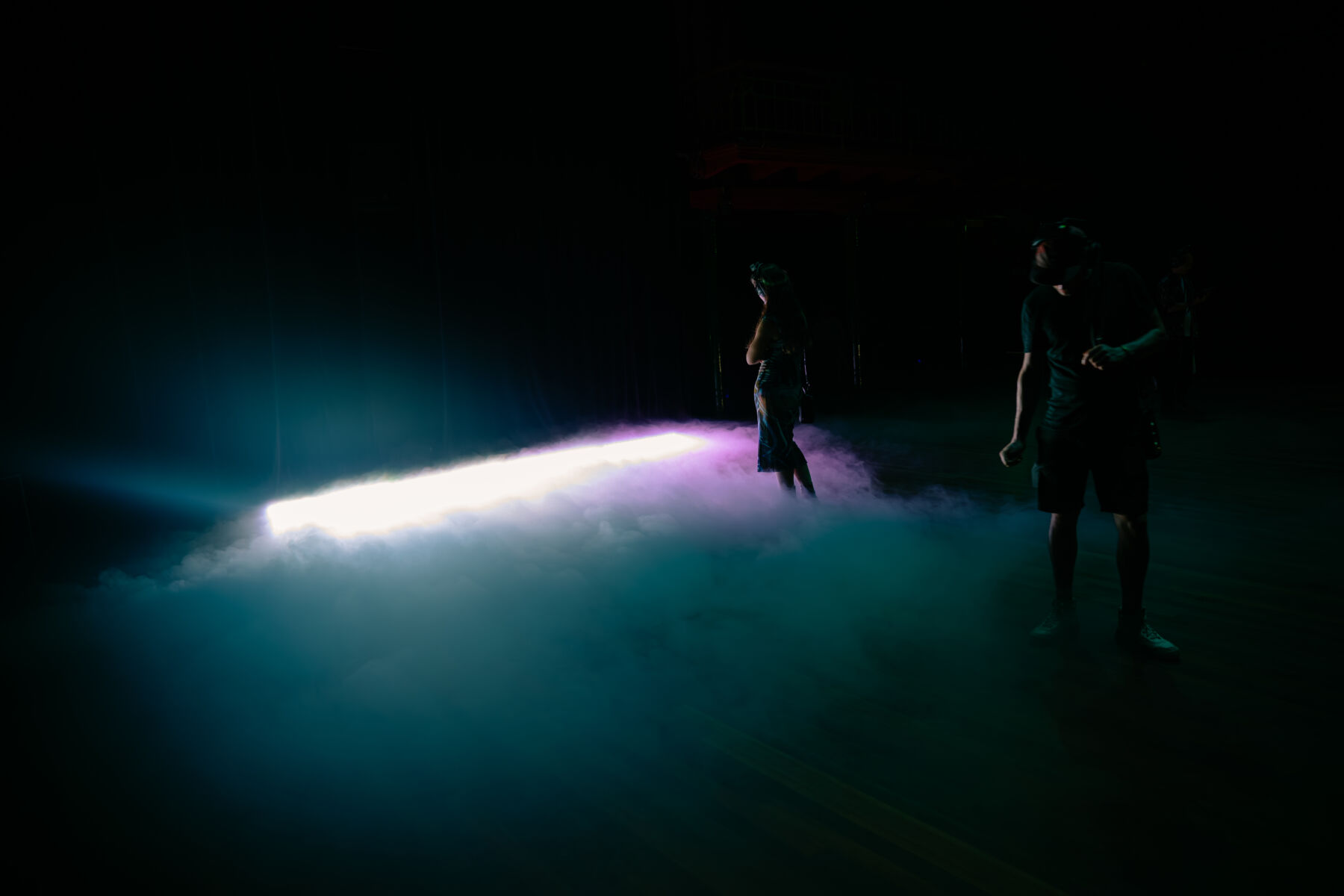
“A single drop can change the course of a river”, a phrase spoken by writer Fanny Taillandier as part of the immersive installation De glace et d’eau (2026) by Robin Koek & Jean-Emmanuel Rosnet, echoed after experiencing the work during FIBER Festival 2026. As I moved through a landscape of drifting cold mist, evoking clouds suspended inside an iceberg, I followed an augmented sound fiction tracing the gradual disappearance of a glacier. A bodily encounter reminding me how we are moving on fragile terrains.
Melting ice, burning forests, collapsing ecosystems. Human actions leaving irreversible traces on the environment we inhabit. Simultaneously, escalating political violence and wars across multiple regions. All exposing the fragility of social and political systems, with extractive technologies, platform monopolies and the normalisation of authoritarian politics only deepening these fractures.
How do we move from these dystopian realities towards a more hopeful future? How can we build collective forms of resilience in a world feeling broken and exhausted?
FIBER Festival’s 2026 edition, Fragile Forces, explores the fragility of our current time not as a condition of weakness, but as a site of resistance, care and reimagination. Rather than denying vulnerability, the festival program – containing exhibitions, performances, club nights and symposium sessions – asks how fragility can become a force for rebuilding relationships and care for each other, technology and the environment.
The installation De glace et d’eau (2026) by Robin Koek & Jean-Emmanuel Rosnet, as part of the exhibition Fragile Terrains at de Brakke Grond, embodies this approach through an intimate encounter with environmental loss. Guided by Fanny Taillandier’s narrative of a woman who spends her life recording a glacier’s creaks and its subtle transformations, the work unfolds through a three-dimensional soundscape responding to the listener’s movement. Suggesting that meaningful change often begins with sustained listening: recognising that one single drop can change the course of a river.
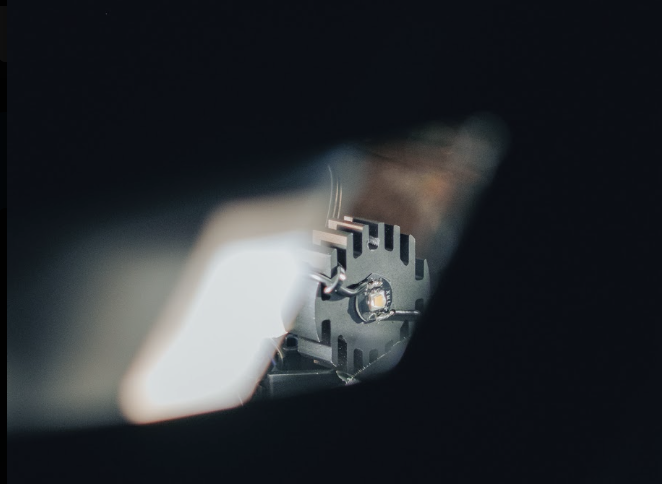
A similar principle showing how minimal actions can generate significant consequences emerges in the work Piano / Forte (2026) by Mike Rijnierse and Rob Bothof, presented in the exhibition Fragile Resonances. In this work, two stripped piano harps swing beside one another, their movements translated into frequencies returning to the instrument by electromagnets. The slightest touch sets a chain reaction in motion. This installation reimagines the piano as a responsive ecosystem in which every action reverberates through another body. A continuous push and pull, where resonance becomes a metaphor for interdependence.
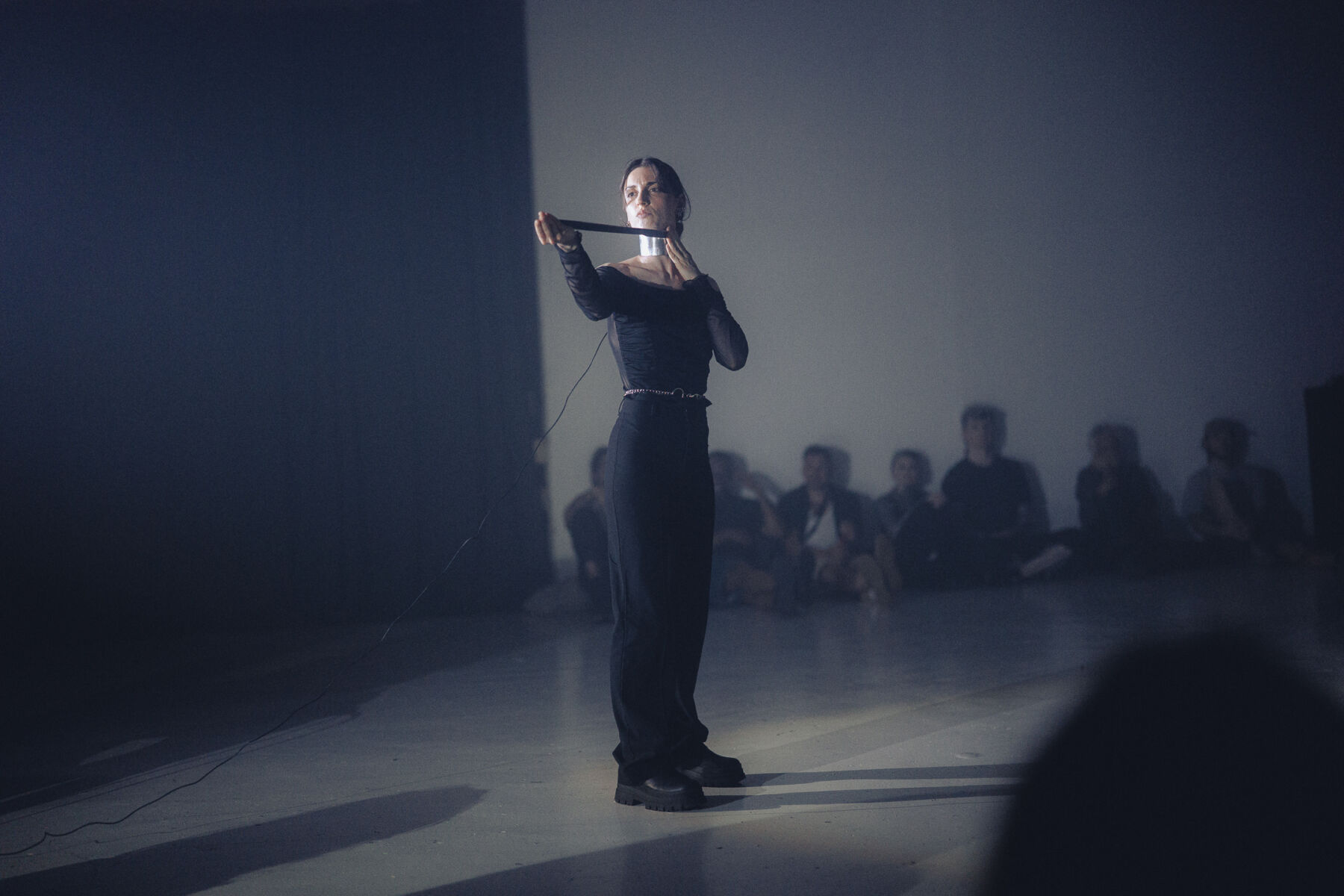
This tension between control and release is also visible in Charlene Dannancier’s newest performance, It Might Be Otherwise (2026), presented at TILLATEC on Saturday evening. Using metal collar microphones and body-mounted metal instruments, Dannancier transforms physical movement into sound. Accompanied by a hybrid light scenography by performers on site, the work inhabits tension and dissonance by fragility, constantly shifting into resilience and back again.
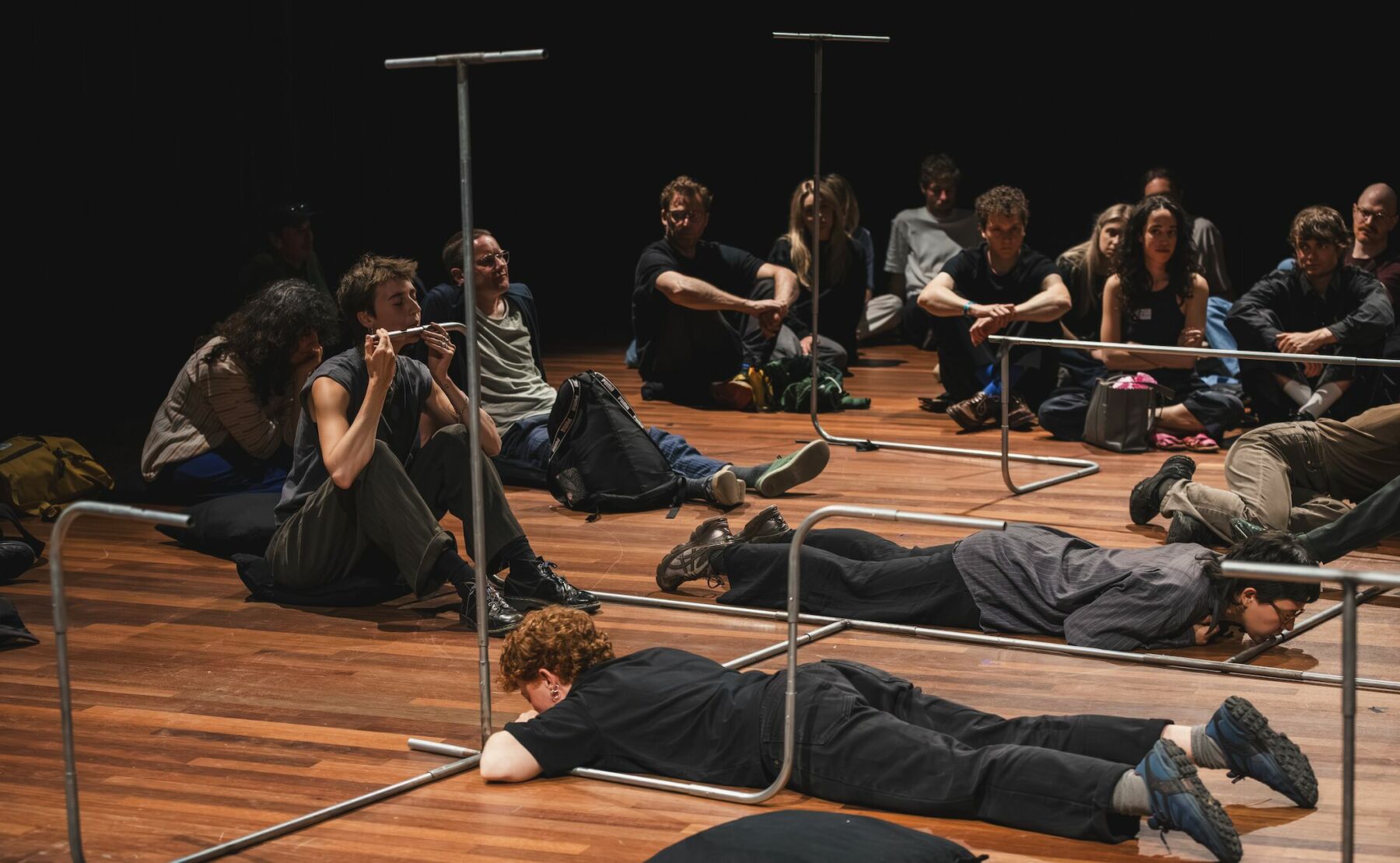
Throughout the festival, sound repeatedly emerged as a participatory practice. During Sound Art Sunday at de Brakke Grond, the installation One and Many Flutes by Hannah Todt transformed a monumental steel flute into a site of shared listening. Five performers interacted with each other through different mouthpieces – connected to the same flute – producing sounds that seemed to answer and influence one another. As visitors gathered closely around the work, everyone was immersed in a sonic environment in which every breath affected the whole. Resulting in a feeling of togetherness and mutual dependence.
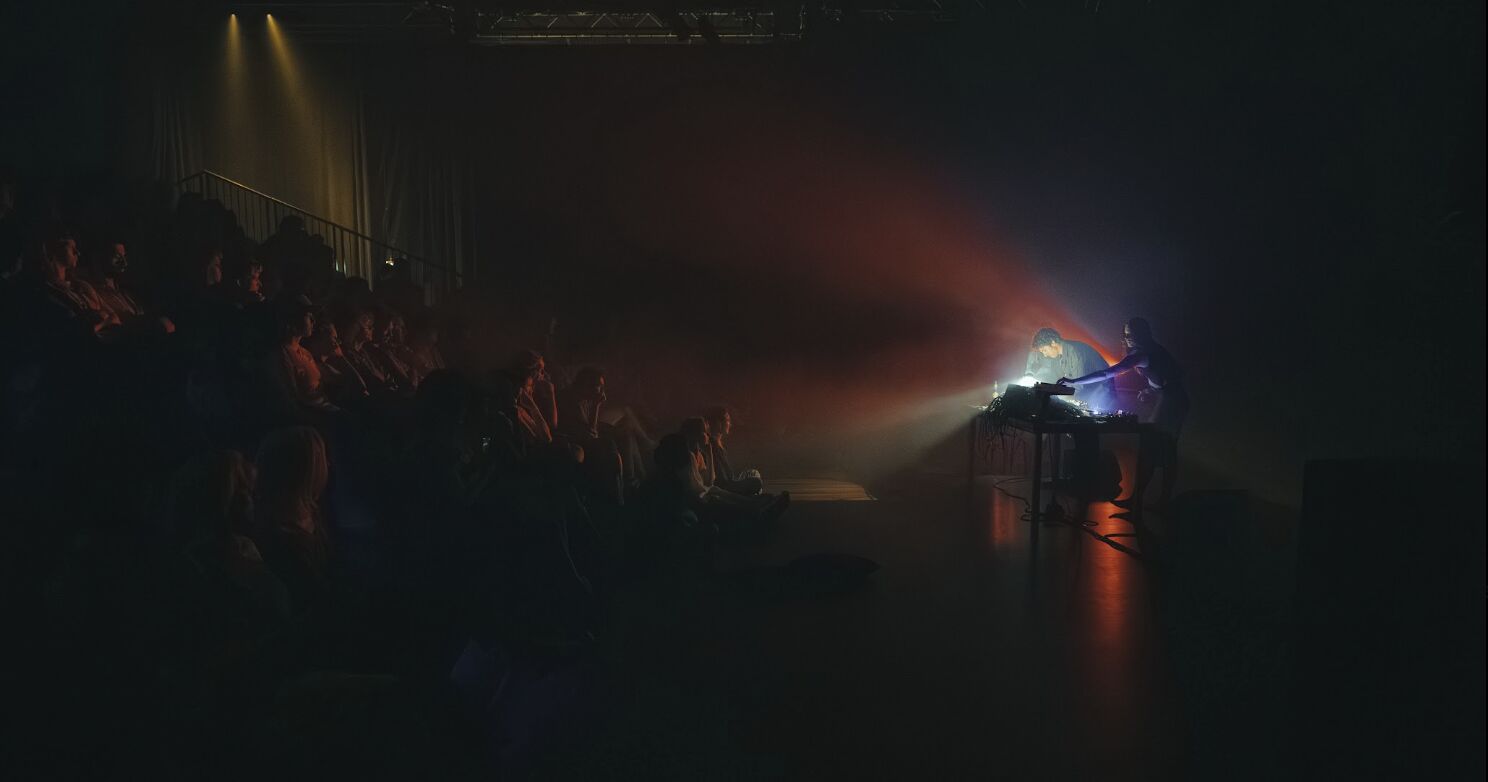
Similar ideas were brought to light in performances such as the live analogue sound experiment by Crawler (Zohar & Castle) ft. Gervaise, in which hardware-based sound systems combined with the spoken word by Gervaise foregrounded experimentation, immersion and physical presence over polish. Across these works, sound functioned as a material force, producing shared spaces of listening through intensity and attention.
Fragile Forces explored how sound can serve as a space for healing, speculation and geopolitical intervention.
These political dimensions of listening particularly became evident in the work of sound researcher Bint Mbareh, who contributed to the festival symposium. Through her research on the sound of water in Palestine, Mbareh challenges settler-colonial epistemologies by foregrounding Palestinian ways of knowing. Resulting in rain-invoking music and shrine pilgrimages, in which sound becomes both a spiritual and political force: a means of preserving memory, sustaining resistance and imagining liberation.
Building on these themes, the 2026 FIBER Festival edition questioned how vulnerability and care can contribute to more restorative relationships with ecological and technological systems. While the exhibition investigated the fragility of ecological systems and the performances and sonic works positioned listening as a tool for resistance and healing, the symposium, in turn, evaluated technological and social infrastructures by highlighting the urgent need to slow down fast tech.
Can we leave harmful internet platforms behind and create alternative technological cultures?
The symposium session Platforms Full of Hate & Desire addressed the current state of the internet, shaped by extractive social media platforms and AI systems that impact our mental health, culture, and democracy. How can we escape warfare propaganda, extreme-right political ideologies, tradwife and manosphere influencers? How can we slow down fast tech?
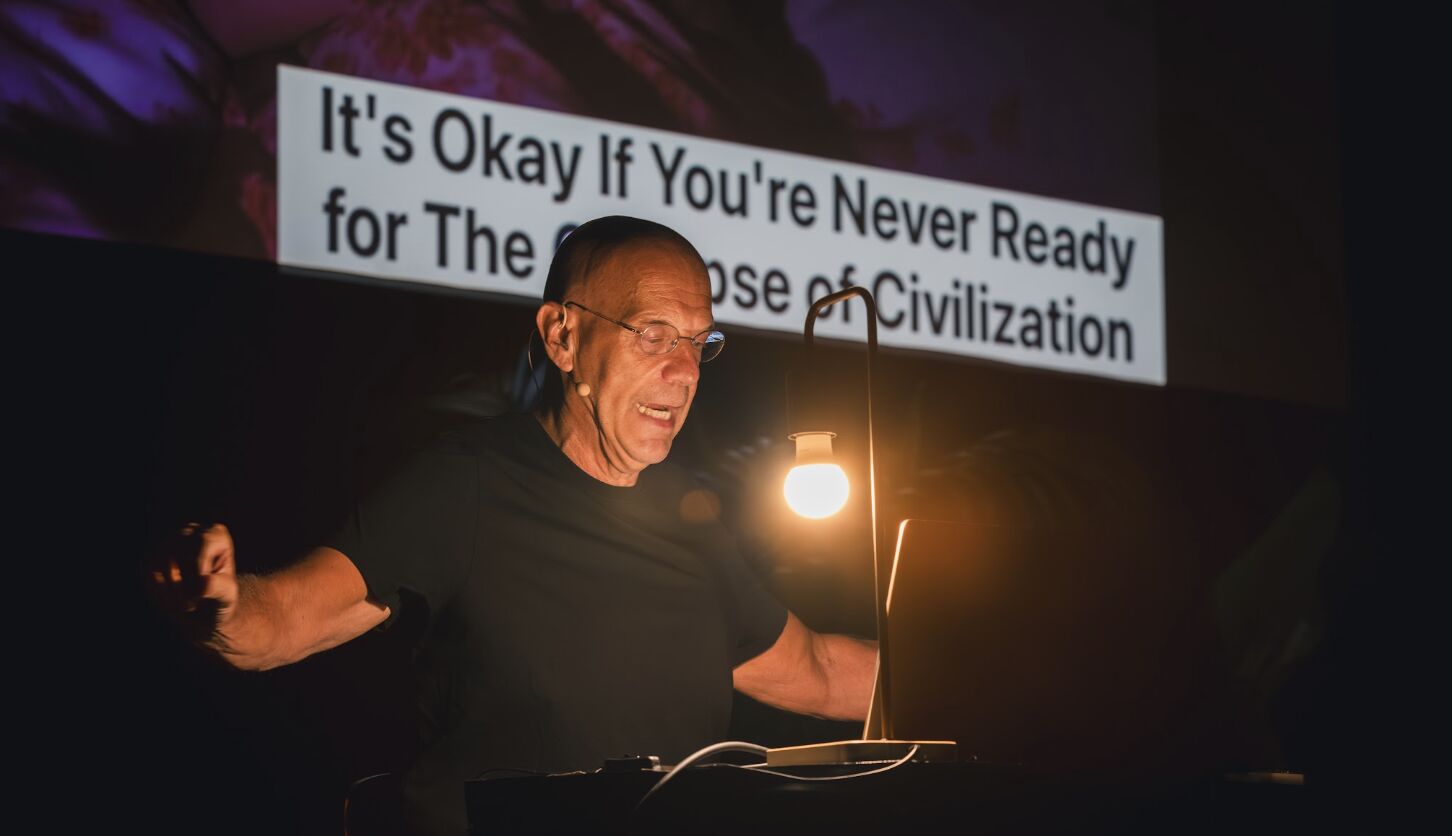
These concerns echo Geert Lovink’s recent book Platform Brutality, describing how digital platforms have entered a openly hostile phase, producing what he calls infrastructural violence. Subtle forms of behavioural influence, toxic aspects woven into our personal, social and political lives, leave us with social media wounds.
The symposium did not remain at the level of critique. Katažyna Jankovska’s recent book Off-Grid points towards self-organised networks and forms of autonomy that emerge when dominant systems fail. Dean Spade similarly argues for mutual aid, collective care and community infrastructures as practical responses to ongoing crises. Meaningful alternatives – the symposium suggested – can only emerge through careful analysis, collective experimentation and sustained social practice.
Ultimately, this is what FIBER Festival’s Fragile Forces demonstrates. Through shared acts of listening, care and collective imagination, the festival repeatedly returns to the same insight: fragility is not the opposite of strength. It is the condition that makes solidarity necessary.
The festival offers a vision on how to care within damaged systems. Throughout the programme, visitors gather to listen, reflect and imagine together. In doing so, the festival becomes a community of people attempting to shape different futures. One gesture, one conversation, one drop at a time – because one single drop can change the course of a river.