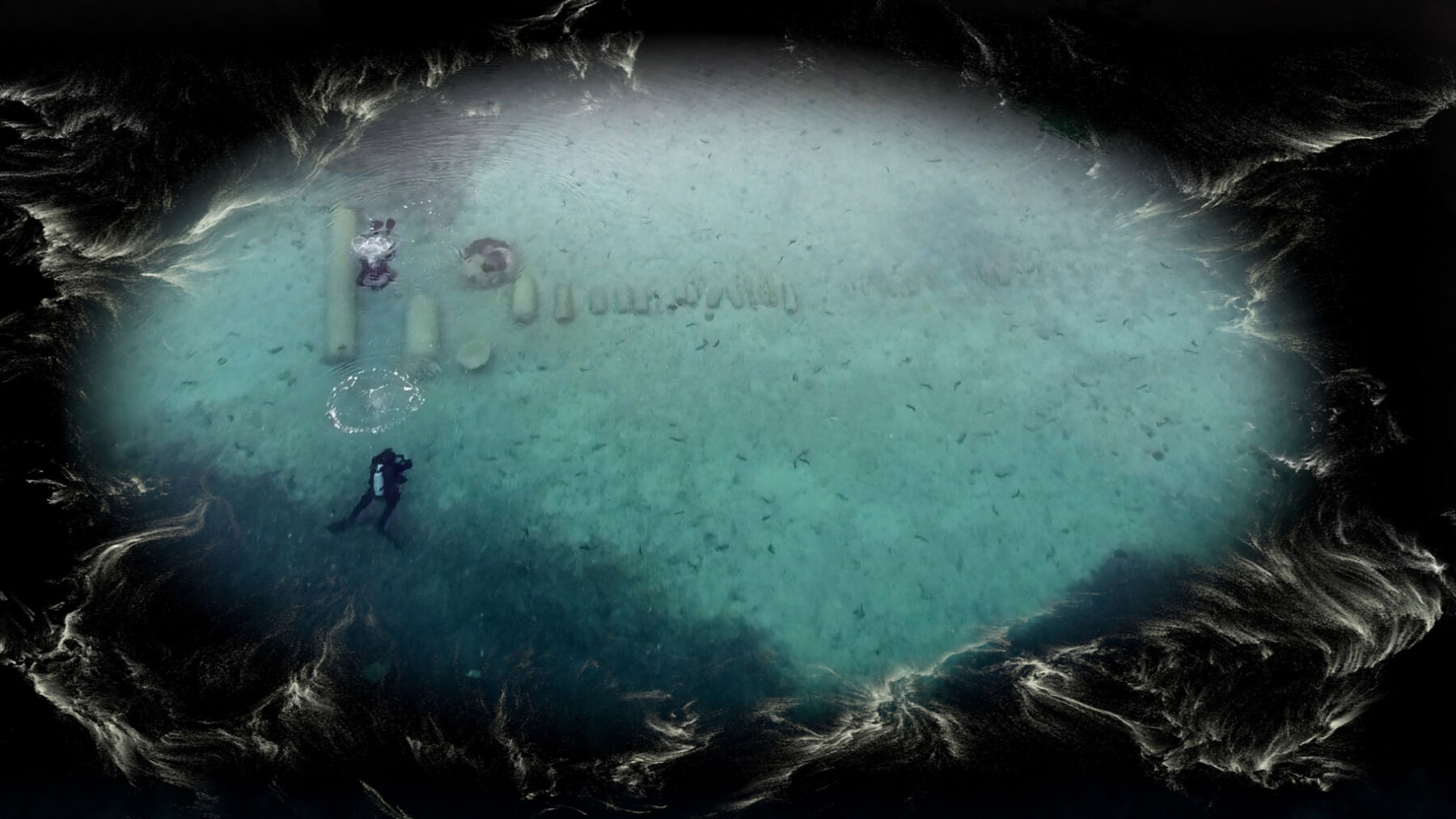
Interview by Jonathan Bergström
For more than four decades, Tucson-based conceptual artist Patricia Carr Morgan has explored the traces left behind by people, places and histories. Through sculpture, photography, installation and public art, her practice examines how memory is constructed through material, questioning the fragile relationship between permanence and disappearance. Whether through abandoned personal belongings, cinematic imagery, asphalt, soil, or, more recently, digital code, Morgan selects materials in response to the concept behind each work.
Her earlier works frequently explored memory through objects and material culture. In Enclosure XVIII, inspired by a visit to the tomb of Tutankhamun, Morgan created a contemporary tomb where visitors were invited to leave personal objects and memories, gradually forming a collective memorial over the course of the exhibition. Similarly, Endocardial Vocabulary: Trammeled drew upon objects collected from estate sales and junk stores, arranging them within a symbolic “memory theatre” where scanned images gradually faded throughout the exhibition. In Priapic Cube, developed while living in downtown Los Angeles, Morgan worked with asphalt after observing it throughout the city, using the material as a reference to continuity and fertility, inspired by the La Brea Tar Pits and the surrounding urban landscape.
Questions surrounding memory and reality also appear throughout Reality is a Good Likeness, including Out of the Past and united states: Myth and Reality. In these works, Morgan rephotographed film frames, inserted herself or additional objects into scenes from film noir, and combined her own photographs of the American West with imagery from Western films, using these constructed compositions to reconsider narrative and perception.
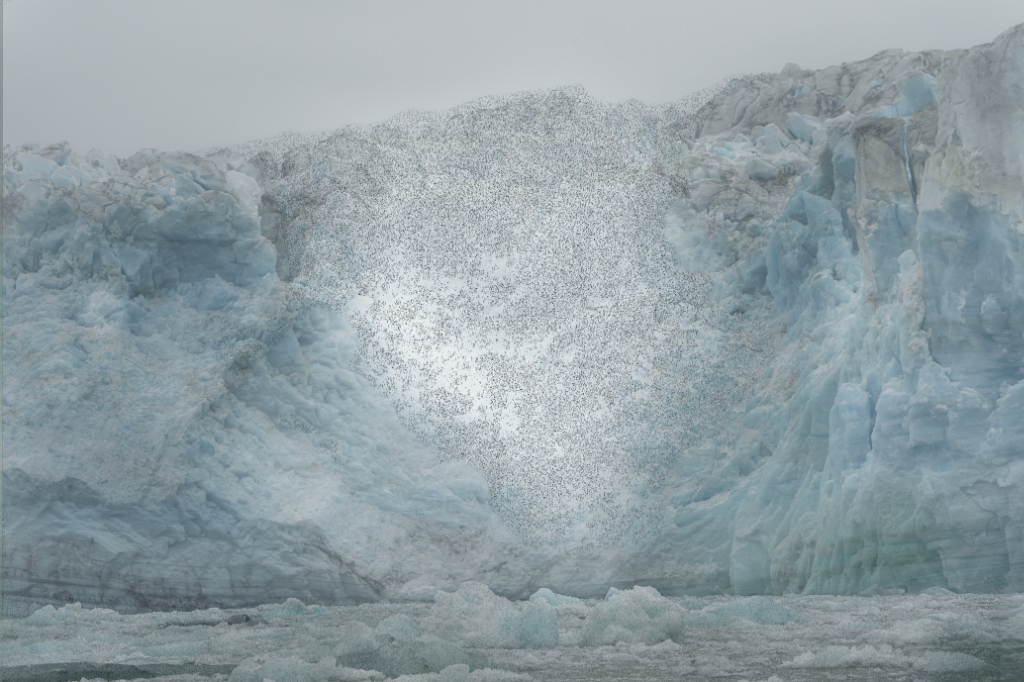
Her most recent body of work, I love you don’t leave me, turns to photographs made in Antarctica and Greenland, examining the effects of climate change through images of receding glaciers. Works such as Blue Tears present large-scale photographs of glacier ice in an immersive installation, while her latest series transforms glacier photographs into digital code, reducing the image to the binary language that underpins digital technology.
Together, these works extend ideas explored throughout Morgan’s earlier practice into an examination of disappearing natural environments. While her focus has shifted from personal objects and memories to glacial landscapes, questions of loss, preservation and what remains continue to connect the different bodies of work.
Your works bring together a wide range of materials, from neon, soil, and personal objects to photography and digital code. What role does material experimentation play in your artistic practice?
The concept is always my first concern; then I think about all the possible materials and how an inherent meaning relates to my idea. As you mention, I’ve used neon, soil, personal objects, photography, and code—not because I’m experimenting with materials, but because they are already part of our lives and prompt associations. Soil can be barren or regenerative. An abandoned personal object might allow an idea to feel true. Printing only code is a literal presentation of what we have. Personal experiences, which are also universal, are the origin and these dictate the materials. Material experimentation is in service of the concept.
Many of your projects begin with encounters with specific objects, places, and histories. How do research and direct experience influence the development of a new project?
My projects are frequently sparked by something I’ve read alongside what’s meaningful in my own life. As a mother of two, questions of nurturing, food and community were never far from my mind, so what I read tended to come through that filter.
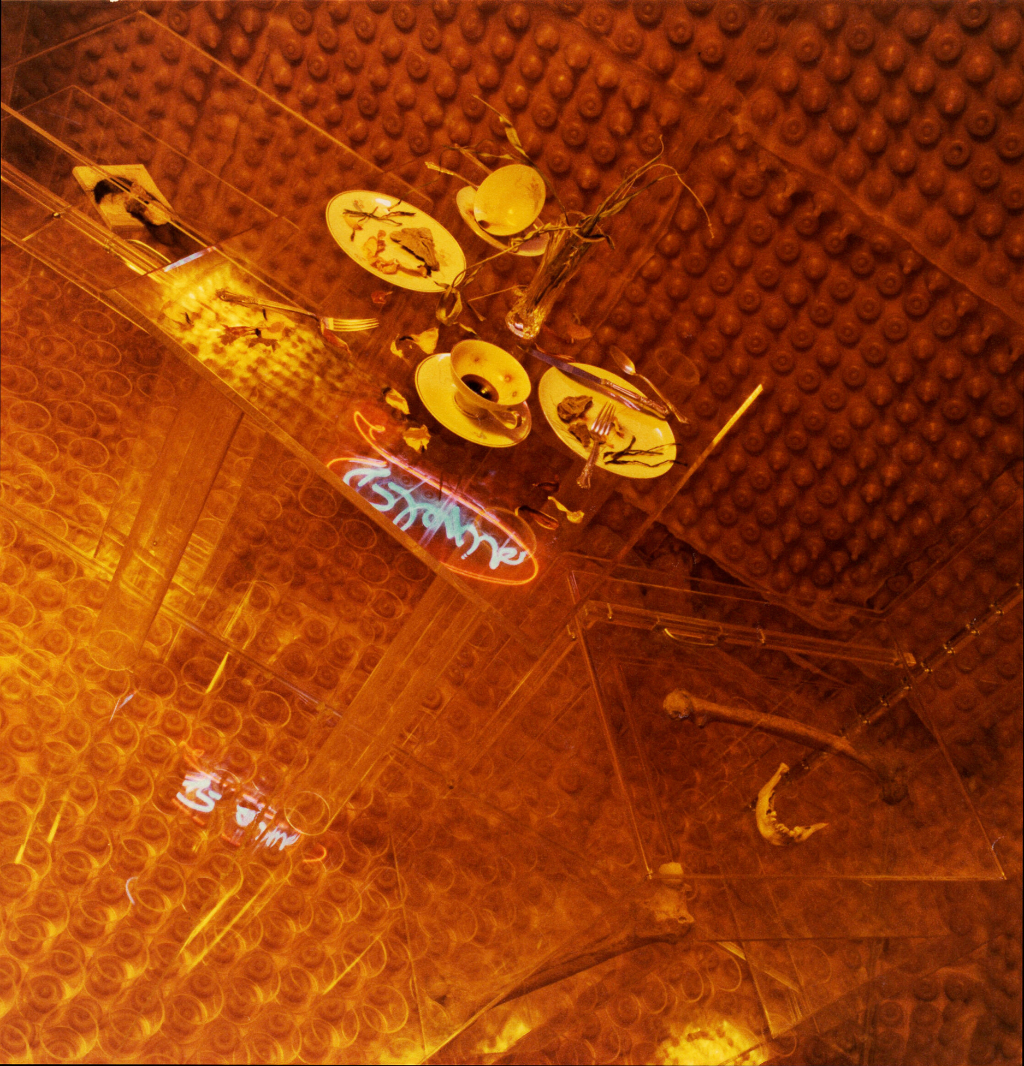
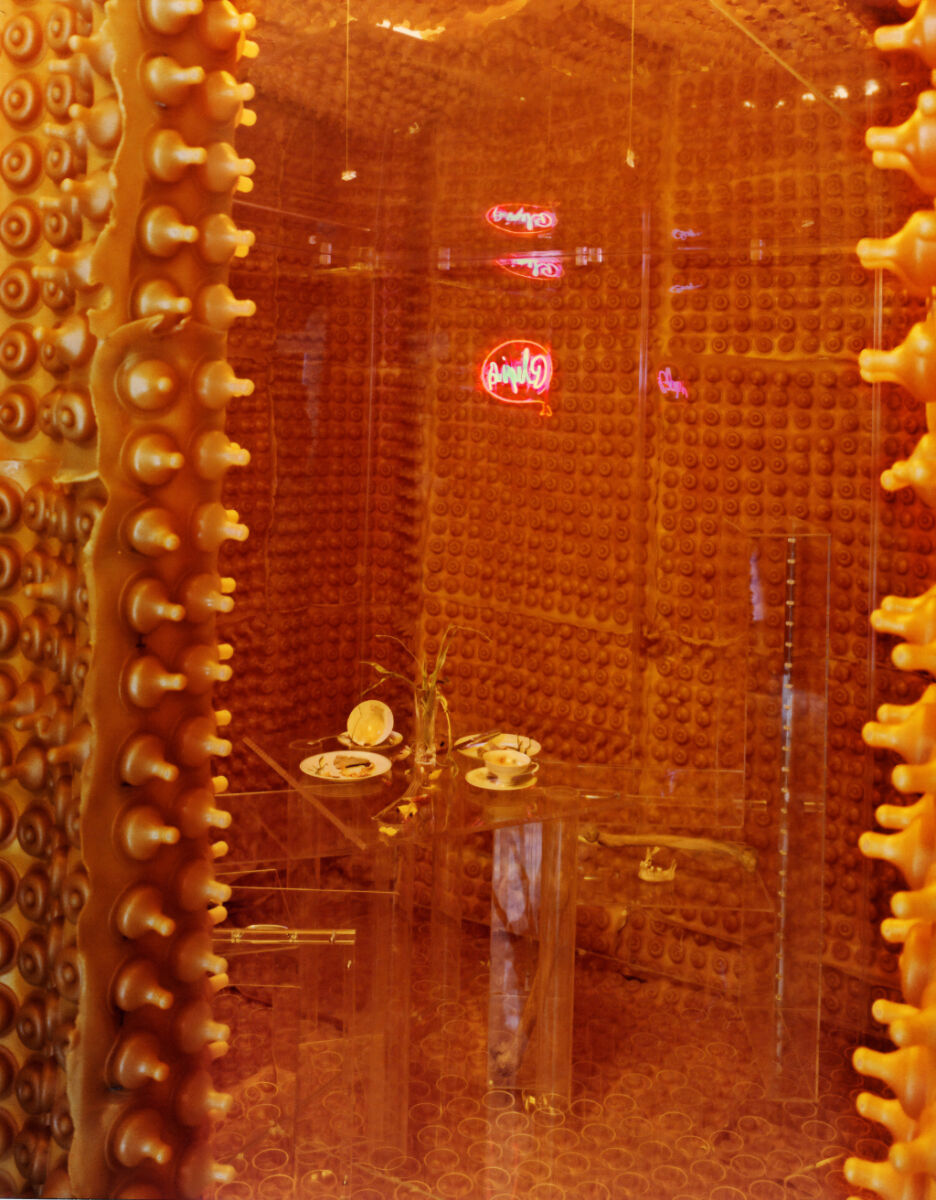
A good example is Dinner at Plexi’s. In Lewis Thomas’s 1972 essay “Antaeus in Manhattan,” he describes an art exhibition that uses a two-million-strong ant colony from Central America as its material. The ants are isolated in a plastic-walled bin, provided with food, and yet, Thomas writes, “within a day all 2 million were dead.” That image of isolation stayed with me, and I related it to the nurturing needs of all life, including ourselves.
I put a clear Plexiglas cube approximately 8 x 8 feet inside a larger clear Plexiglas cube lined with a symbol of nurturing: baby bottle nipples. Yet, the cube allows the viewer access only to a hard, slick, plastic surface, never the supple nipple. Inside Plexi’s, two cabinet-chairs contain traces of the diners who died, isolated inside their own sealed enclosure, leaving only the desiccated remains of a last meal on the table.
In Enclosure XVIII, inspired by your visit to King Tutankhamun’s tomb, you created a contemporary tomb where viewers could leave behind personal objects and memories. What interested you about the ability of objects to carry traces of human experiences and the lives connected to them?
Through the centuries, humans have treasured things connected to loved ones who have died, and those objects either confirm a specific reality we have shared or inform our perception of a reality unknown to us. While Tutankhamun’s tomb held objects for his use in an afterlife, childhood toys were included, and we can imagine a young boy with them.
In Enclosure XVIII, each object was placed on the bier by a viewer and left with an unknown story. A pristine matchbook might be the memory of a special dinner; a pocket square, folded just so, might be for someone who dressed with intention; a crepe paper flower was probably the memento of a happy time. The note about a father dying in a hospital was a prayer. I left a rose for my mother to add one more stranger’s offering to the rest. Together, these became a community of memories, built of strangers’ quiet moments.
Following a similar exploration of memory and what remains, your work Endocardial Vocabulary: Trammeled examined forgotten objects found in estate sales and junk stores, with their scanned images gradually fading throughout the exhibition. How do you think about the preservation and loss of memory, and the ways personal histories can disappear over time?
Endocardial Vocabulary: Trammeled began with my memory of personal lost objects, things that disappeared when as a teenager my house blew up because escaped gas filled its basement. Memories that were prompted by a special card or a map with the tracings of a journey were gone. The discarded objects at junk stores and estate sales became poignant reminders of others’ lost memories.
Since ancient times, the concept of imaginary rooms called “memory theaters” have been used to facilitate memory by mentally placing information in different locations in an imaginary space. Endocardial Vocabulary: Trammeled is a symbolic memory theater with remnants resembling a house and specimen jars filled with collected memorabilia, and like our minds it loses its oldest information as new information arrives. We obsessively cling to some of what survives and let the rest slip away, frequently without doing the choosing ourselves. Memory is fickle.
Both Out of the Past and united states: Myth and Reality involve layering different sources of imagery, from classic films and vernacular photographs to your own images. What draws you to bringing together images from different contexts, and what possibilities does this process create for you?
Out of the Past and united states are both part of a trilogy titled Reality is a Good Likeness. Having seen many film festivals, I have always enjoyed sitting in the dark theatre to be immersed in the fabricated reality of film. I’m always intrigued by the multiple collaborative skills that go into its creation. Film works a lot like our own reality as it is influenced by many different people making different decisions and contributions.
Any additional information we discover can alter our perception and understanding, and the audience finally “finished” it through the lens of their own experience. I realised I could add more, and because I deeply appreciate film noir cinematography, I went through those films frame by frame to find scenes with room for a new addition. I borrowed the title from the film Out of the Past for this series and rephotographed film frames with either myself or an added object that could have changed the narrative.
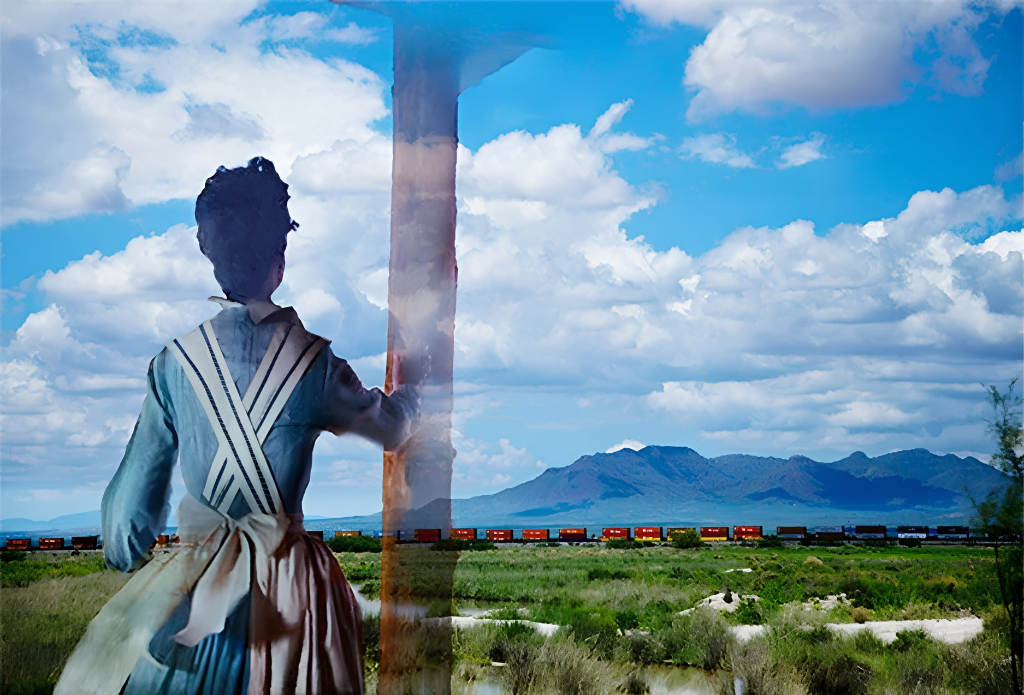
On a broader scope, technology marked the passage of time as well, as each composite tableau is photographed with a pinhole camera and printed digitally. Westerns interested me for a different reason. While film noir left room for me to slip inside the frame and influence the narrative, this genre had already impacted how people saw the American West and what it meant to be a hero within that context.
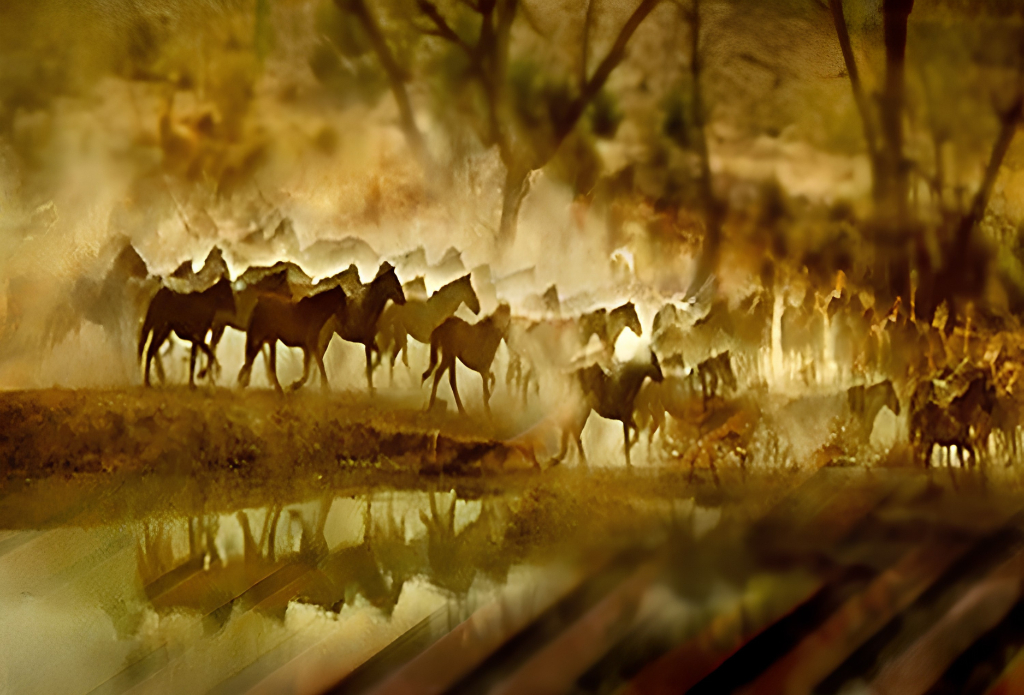
This series, united states, gave me the opportunity to travel throughout the West myself, photographing the existing West, where the legacy of wild horses is impeded by the cattle guard of reality. Combining these photographs with frames from Western movies was a way of fabricating contradictions and irony.
Priapic Cube developed from your experiments with tar and asphalt while living in downtown Los Angeles. How did your surroundings at the time influence your relationship with these materials and the creation of the work?
Priapic Cube came from the time when I was living in downtown Los Angeles, seeing asphalt in almost every direction: the streets, the rooftops, and the La Brea Tar Pits. Had I been anywhere else, working with asphalt would not have occurred to me.
The tar pits preserved prehistoric life, the Neanderthals used tar to make their tools and Homo sapiens extended the asphalt to cover the natural habitat. Building on these histories, I decided to use it as a reference to continuity and fertility. The 8 x 8 x 7 feet Priapic Cube has interior walls and a ceiling slathered with messy, drippy asphalt, while the exterior plate glass creates a shimmering, seductive, black reflective cube.
Extending from the gallery wall, an iconic yellow brick path references a felled priapic (Priapus, the ancient phallic fertility figure) and leads the viewer to the interior of the cube, where it ends in disarray. Hanging above the disassembled bricks is a single bulb lighting the dull, dried asphalt that covers the interior, except for the rich but barren soil that carpets the floor.
Your earlier works revolve around the traces humans leave behind, while your recent works focus on disappearing natural environments. How did this evolution within your practice come about?
This newer work is really the same question turned toward a different kind of leaving. It is the remains of neglect and destruction. Our warming climate is itself a trace of human activity and loss. The conceptual thread never broke, it’s still about what we leave behind just on a much larger scale.
Living in the desert, I’m part of a community already concerned about a future without enough water and summers that are barely survivable. I wanted to do a project about our warming climate but hadn’t determined how and I didn’t realize glaciers would be the answer until I had an opportunity be in Antarctica. There I saw the magnificent beauty and power of the glaciers and more fully understood the dangers they held. I had found my focus.
Your latest body of work introduces digital code into images of receding ice. What interested you about bringing together glacial landscapes threatened by climate change with the language of digital technology?
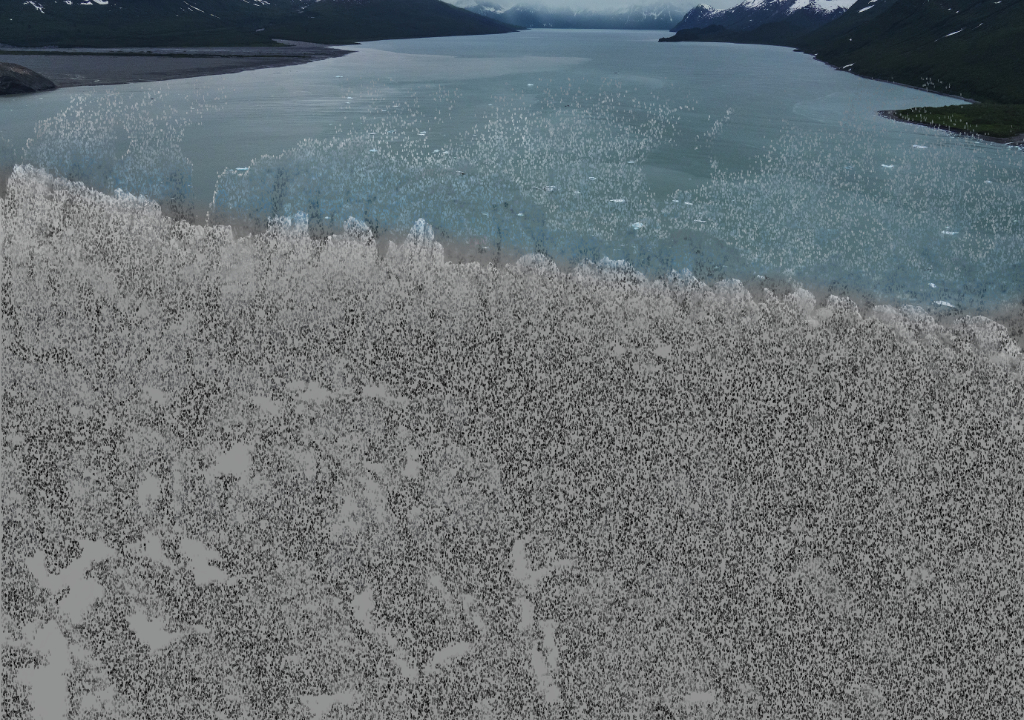
The glaciers are the newest chapter of something that’s been in my work from the beginning. Climate change is a personal concern that is universal and my goal is to draw attention to a sense of loss. All of the glacier images are under the umbrella of I love you don’t leave me. Much of my work addresses what remains when something disappears, and here I’m thinking about what the glacial metamorphosis leaves for the future.
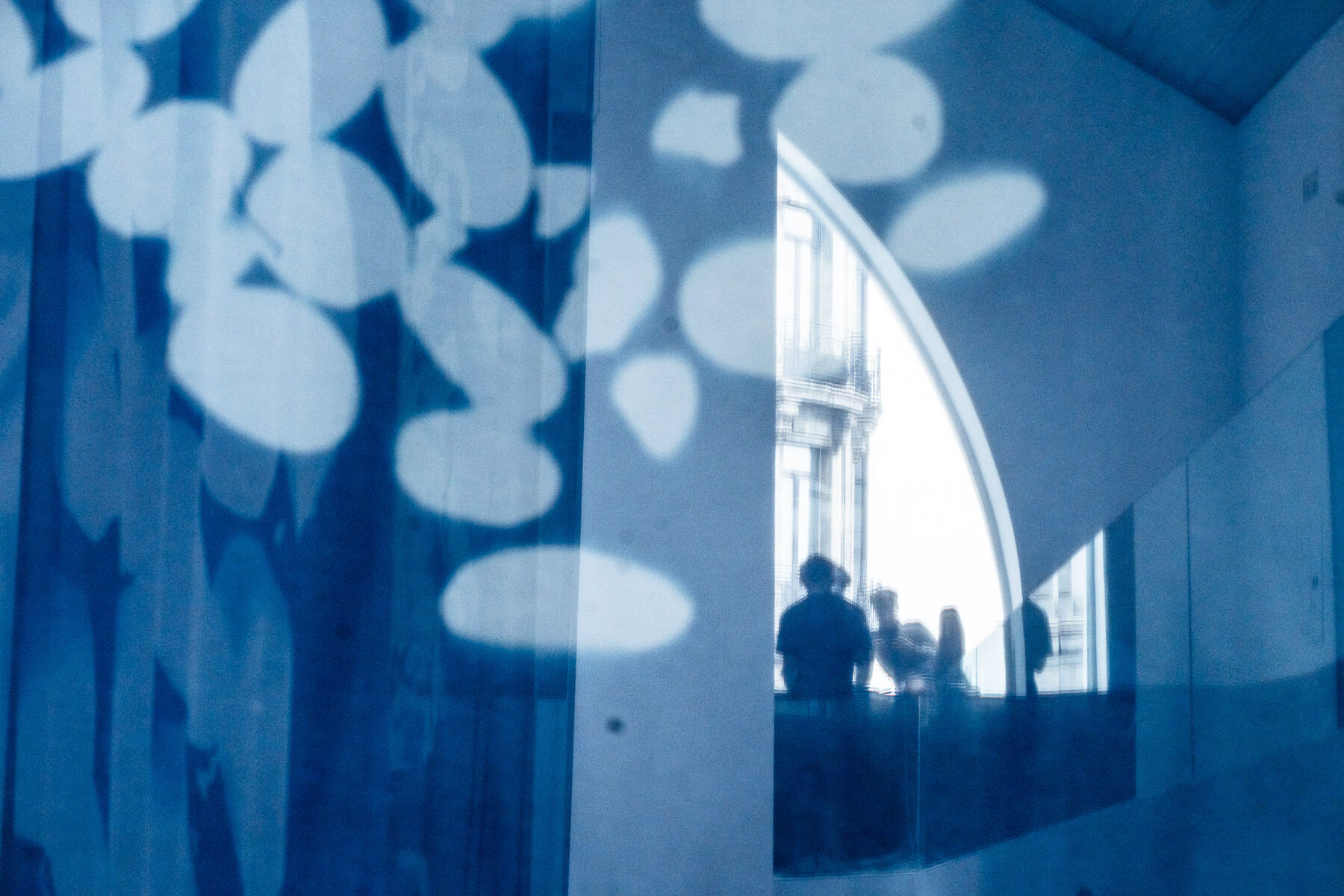
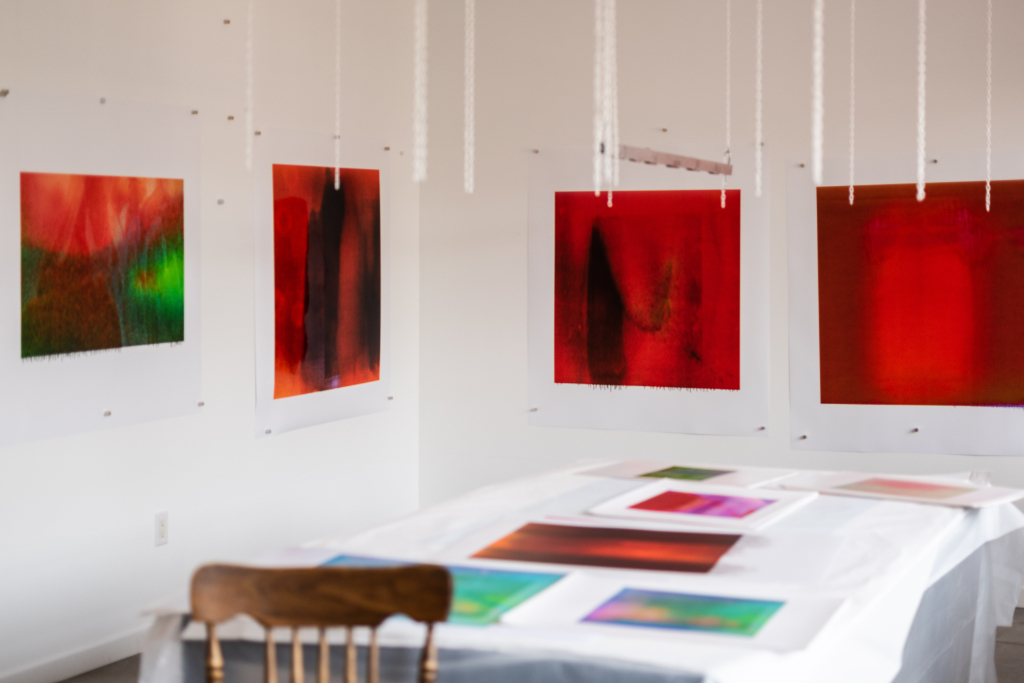
An important prelude to this is the installation Blue Tears. It is constructed of fifteen 17 x 4-foot-tall images of glaciers printed on silk organza and hung from the ceiling to form a cuboid that, throughout the exhibition, falls one by one to the floor. At the end, only one remains. Moving to only visualising the code of such images is a literal translation of what will remain if we follow our current path. The glaciers will be gone and all we will have is the digital code that makes the image. It is only logical that, to demonstrate our losses, I would strip the visual image to its essence: the code that creates the image- our reality, our memory, 0s and 1s.
Many of your works involve transformation, objects fade, materials change, glaciers melt, and images are reconstructed. What draws you to these recurring themes within your work? Has your understanding of these themes changed throughout your career? If so, how?
I think of my work as conversations about experiences we all share but not necessarily simultaneously. This is different. Our warming climate is rapidly changing our lives, and it is a global experience that we share simultaneously. There is no lasting shelter, no zone of comfort. It needs our attention.
What’s your chief enemy of creativity?
Miscellaneous chores.
You couldn’t live without…
Interesting questions, such as these. Thank you.