Text by Belén Vera
After 100 days of exhibitions, performances, screenings, workshops, walks, conversations and collaborative processes, the first edition of Bienal Climática: arte, industria y territorio has come to an end in Avilés. From June to September, more than forty artists and collectives took part in over sixty activities that transformed the city into a space for thinking about climate through contemporary art, science, technology, industrial memory and public participation.
Under the title Ensayar lo inesperado (Rehearsing the Unexpected), the programme brought together artists including Lawrence Abu Hamdan, Carolina Caycedo, Otobong Nkanga, Naiza Khan, Amanda Piña, Agnes Essonti, Gabriela Bettini and Mario Santamaría. Their projects unfolded across exhibitions and performances, as well as workshops, public conversations and forms of artistic research rooted in the territory. Avilés itself played a central role in that framework. Its industrial history, working-class neighbourhoods, cultural institutions and surrounding landscape became part of a programme concerned with the connections between ecological transformation, production, labour, infrastructure and memory.
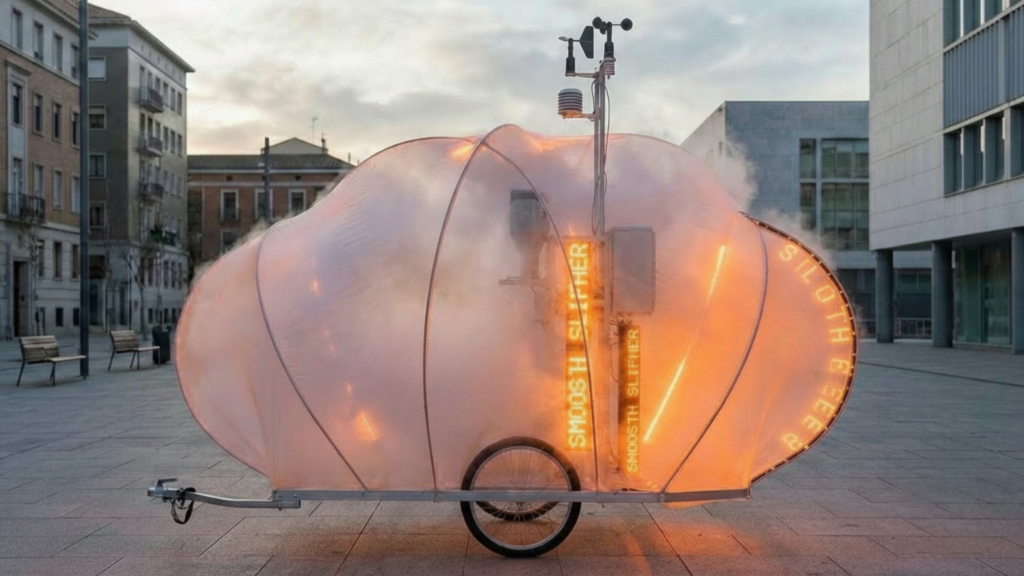
This approach was particularly visible in projects that connected artistic practice with scientific and environmental research. Rotor Studio’s Nube Móvil, for instance, emerged from a creative residency developed in collaboration with AEMET. The project translated atmospheric data and meteorological phenomena into a physical and perceptual experience, making processes that usually remain abstract or invisible tangible through artistic means.
Elsewhere, the Bienal expanded through the State Meeting of the Art, Science, Technology and Society Network (Red ACTS), the Festival de lo Común, the screening programme Centinelas del Clima, a walk through the workers’ district of Llaranes and the conversation Activismo y lucha climática: tres generaciones activistas en diálogo. Together, these initiatives approached climate as a network of social, technological, environmental and cultural relations.
This plurality became one of the defining aspects of the first edition. Artists, scientists, researchers, institutions, environmental organisations, industry and local communities entered the same conversation from different positions. Ecological transition appeared throughout the programme as something inseparable from the ways territories are inhabited, transformed, remembered and shared.

During the public presentation of the Bienal’s results, Hugo Morán, Spain’s Secretary of State for the Environment, stressed the importance of cooperation between scientific knowledge, institutional capacity, business experience, cultural creativity and citizen participation. His words echoed one of the central ideas running through the programme: responses to the climate crisis require forms of collaboration that cross disciplines and sectors.
It was within this context that Avilés hosted, during the Bienal’s final stretch, the second Regional Meeting of the International Biennial Association (IBA). The encounter gave institutional form to many of the questions that had been developing throughout the previous months. Directors and representatives from the Berlin Biennale, Liverpool Biennial, Ljubljana Biennial of Graphic Arts, Anozero – Coimbra Biennial of Contemporary Art, Lisbon Architecture Triennale, Sharjah Art Foundation, Lubumbashi Biennale, Alexandria Biennale and Walk&Talk Azores came together to discuss sustainability, collaboration and institutional transformation.
Their presence also shifted the scale of the conversation. After one hundred days in which Bienal Climática had explored how ecological questions affect territories, communities and cultural production, the meeting turned that same scrutiny towards the institutions themselves. How should biennials operate within the ecological, economic and social conditions they seek to address? What kinds of structures and working methods are needed for cultural organisations to participate meaningfully in long-term transformation? One key moment was Towards a Regenerative Culture, a session that proposed expanding the conversation beyond environmental impact to the role cultural organisations can play in strengthening communities, circulating knowledge and resources, and building collective capacity over time.
For Amanda Masha Caminals, curator of Bienal Climática, that shift is fundamental. If cultural institutions are to meaningfully contribute to the transformations our societies need, we must move beyond understanding sustainability solely as reducing our environmental impact, she argues. For Masha, regeneration also means considering what cultural institutions can generate around them: stronger communities, shared resources and knowledge, and new forms of solidarity and collective capacity. The emphasis moves towards what institutions can sustain within the social and cultural ecosystems they inhabit, and to the kinds of structures and relationships that may remain useful beyond a single programme or event.
Christian Oxenius, director of IBA (International Biennial Association) approached the gathering from a complementary, more operational perspective. For him, regional meetings such as the one held in Avilés create something that everyday institutional life rarely leaves enough space for: open exchanges about what works, what has not worked, what we need from one another, and what resources or possibilities may already exist and simply need to be activated.
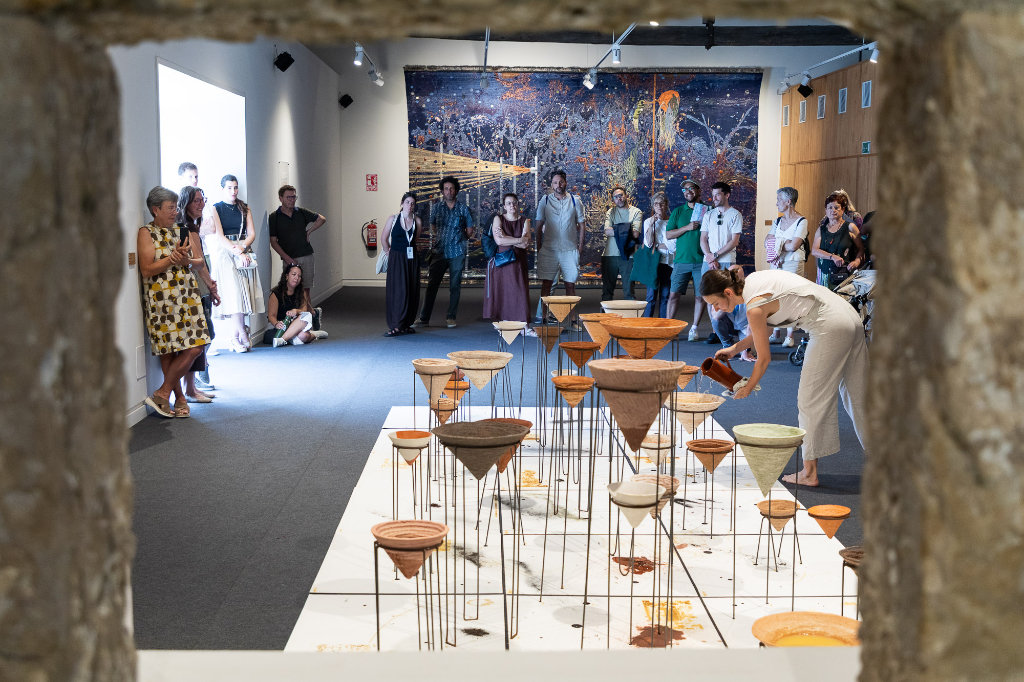
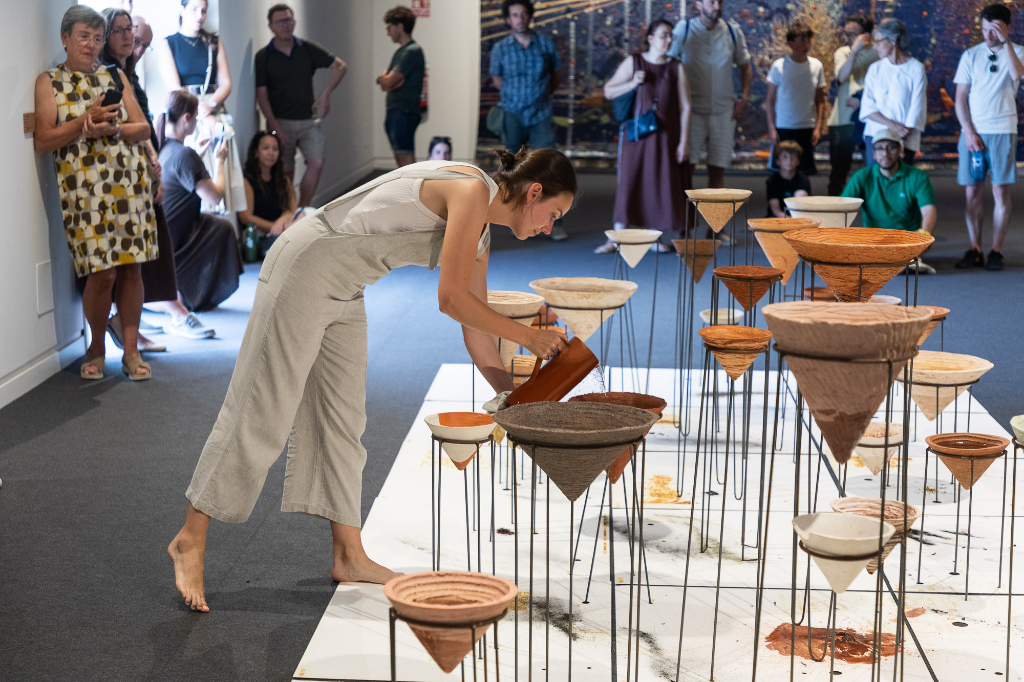
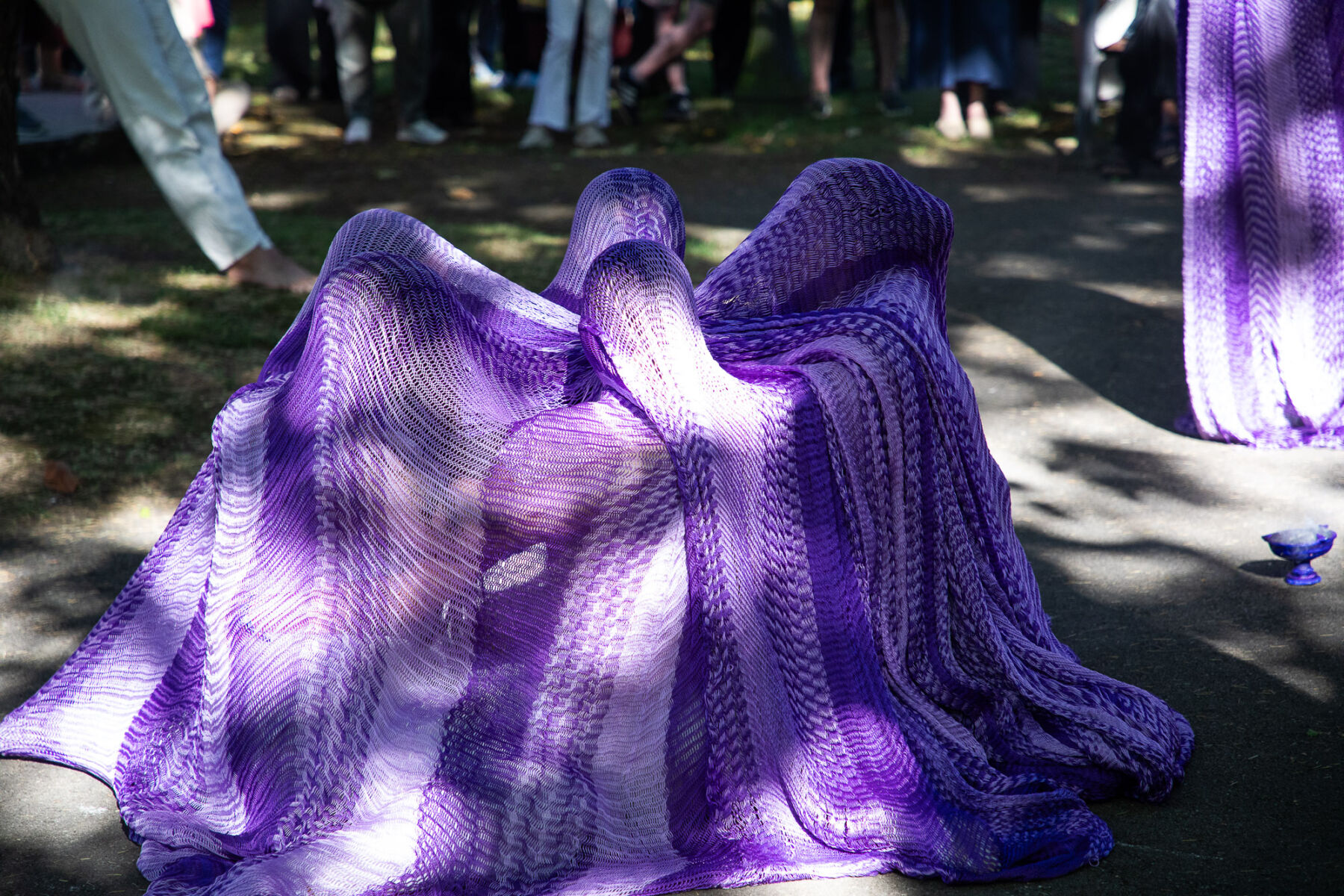
That possibility of speaking openly seems central to the value of these meetings. As Oxenius explains, they allow biennial makers to move beyond institutional presentations and share concrete experiences, including approaches that have succeeded, models that have proved difficult and needs that may already be shared across different contexts. The conversations also point towards forms of collaboration that can begin on a relatively modest scale. Sometimes the starting point may simply be a conversation, sharing a useful tool or a contact, Oxenius suggests. What matters is the possibility of identifying existing resources and relationships that can later be activated through wider networks.
This was also one of the reasons why the presence of representatives from ministries, national cultural networks and private funding bodies became significant. Their participation broadened the discussion beyond the biennials themselves, bringing questions of funding, shared infrastructures and institutional responsibility directly into the conversation. For Oxenius, this wider ecosystem is essential. Cultural organisations operate within networks of public administration, funding structures, local communities and other institutions, and some of the challenges they face cannot be addressed individually. The Regional Meeting therefore became a space in which questions of sustainability could be discussed alongside the practical conditions that determine how institutions actually work.
The meeting also presented a Sustainable Toolkit for Biennials, driven by the Ministerio de Cultura de España and developed from the experience of Bienal Climática and structured around governance, territory, responsible production and integrated evaluation. It offered one of the clearest examples of how the debates explored during the programme could be translated into practical institutional tools. The toolkit reflects a wider attempt to connect ecological thinking with the structures behind cultural production: how decisions are made, how resources circulate, how relationships with a territory are built and how the effects of a project are evaluated.
The relevance of this discussion becomes especially clear in relation to biennials, whose concentrated temporality is part of both their strength and their complexity. They can generate intense periods of activity, visibility and exchange, yet their duration is necessarily limited. Bienal Climática repeatedly returned to the question of how some of those processes might continue beyond the event itself.
In this sense, the meeting in Avilés also offered a way to look back at the previous hundred days from another angle. Questions first explored through artistic practices, scientific collaborations, environmental debates and forms of public participation were now being considered through the internal structures of cultural institutions. The discussion had moved from the content of the programme towards the conditions that make such programmes possible.
One of the Bienal’s final gestures makes this question of continuity tangible. In collaboration with Bosquia, one hundred trees will be planted to mark the one hundred days of the Bienal. The gesture introduces another measure of time into the project. The exhibitions have closed, the workshops have ended and the temporary structures have been dismantled. The trees will continue to grow, carrying the programme into a timeframe that exceeds the cultural event itself.
Perhaps this is one of the most productive questions left by the first Bienal Climática: what can a biennial activate that continues after its programme has ended? If Rehearsing the Unexpected provided the conceptual premise for this first edition, its legacy may lie in the relationships, tools and methods capable of extending beyond those one hundred days in Avilés. The closing encounter with IBA sharpened that question further, shifting the discussion from climate action towards a broader understanding of regenerative culture and the role institutions themselves can play within the transformations they seek to address.