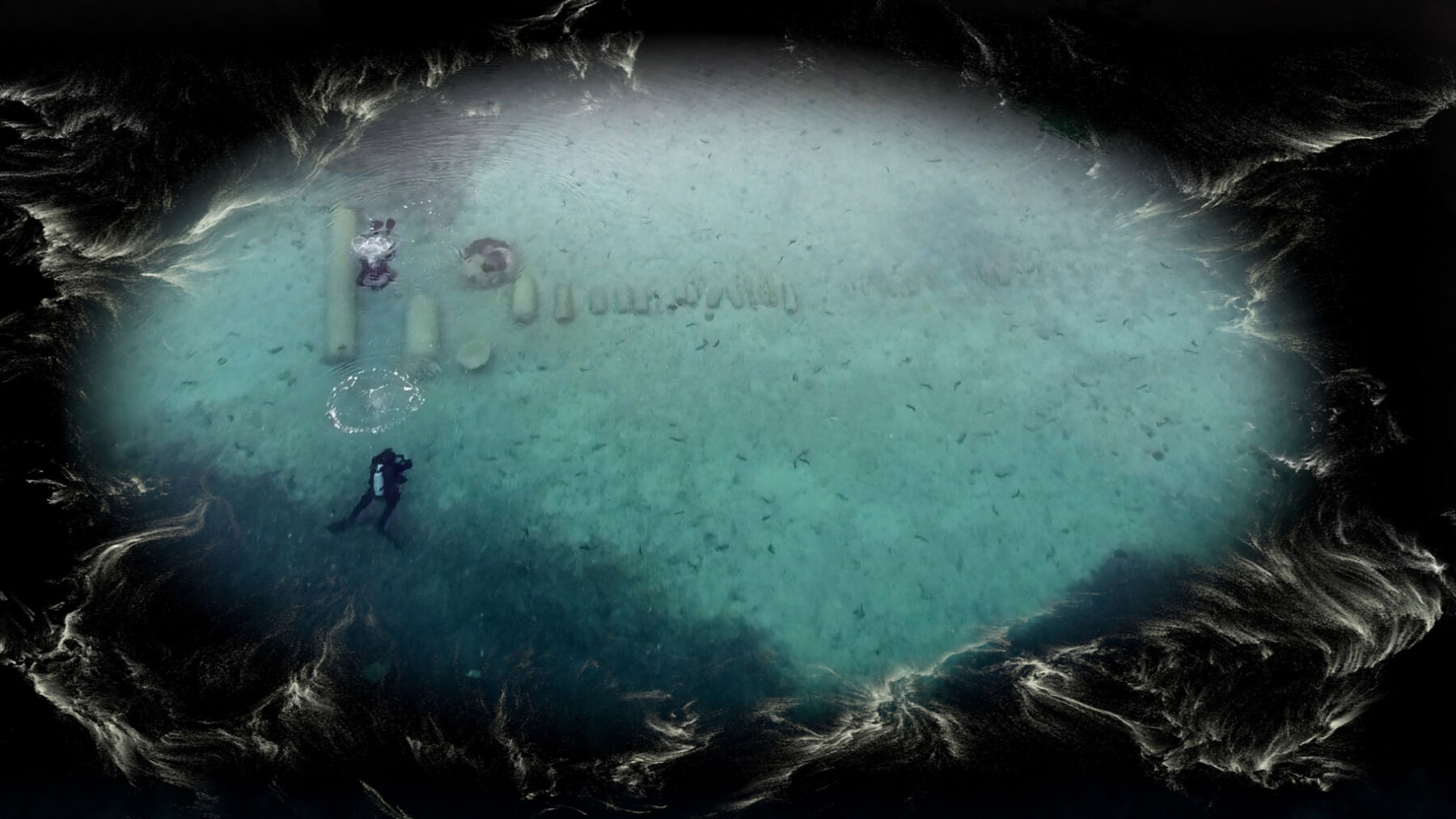
Text by Rae (Mee-Jin) Tilly
Science has a curious tension: it is simultaneously the most inaccessible and accessible field of academia for the general public to grasp. Years of cumulative studies are needed to dissect and discuss scientific methods, extrapolate meaning from data, or even understand the significance of numbers placed before or after a decimal point. And yet, a cursory look at any streaming platform shows in-demand pop science and science-lite documentaries about a wide range of topics, from David Attenborough-narrated nature films to Quantum Physics, where Neil deGrasse Tyson is likely to make an appearance.
This duality highlights the significance of the field of science, the public’s genuine interest in it, and the resulting need to make science accessible and understandable to the general public. However, accessibility goes beyond intellectual comprehension. When introducing a complex subject to the general public, even if there’s some initial interest, it helps to anchor the topic to something familiar or personally meaningful. Making emotional or personal connections can smooth the learning process and help people better absorb and retain information.
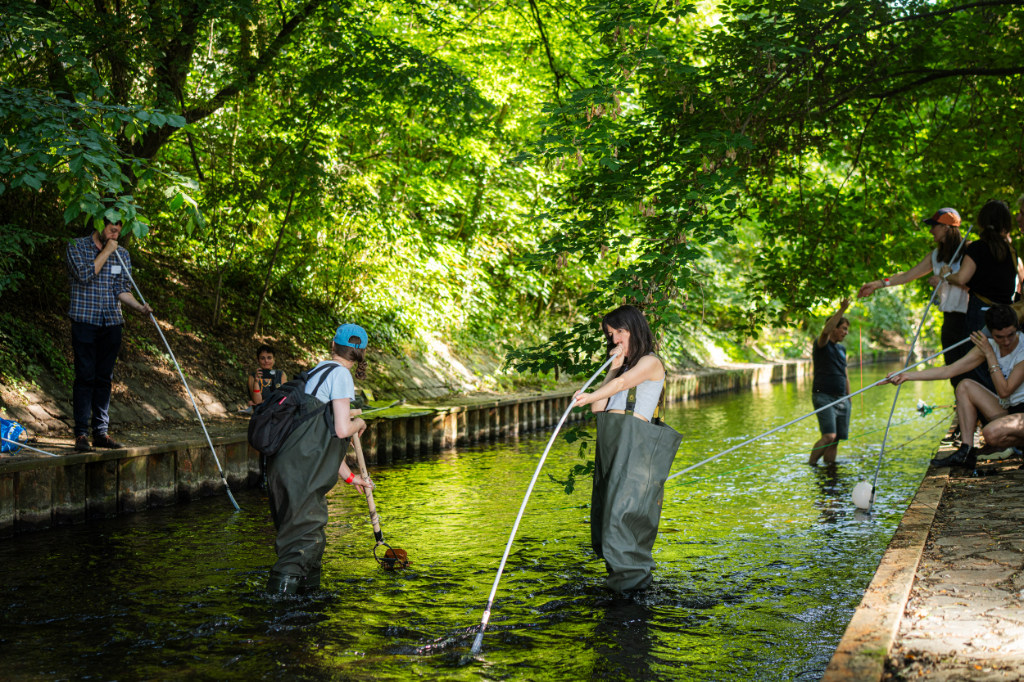
Interdisciplinary experiences can provide these. By weaving artistic practice, somatic experience, and direct physical contact with the subject matter – water – the BODIES OF WATER festival, organised by Art Laboratory Berlin and held at Berlin’s River Panke, explored this way of learning. For example, exploring microbes and water pollution through the lens of a local river that participants could physically visit, touch, and experience made the scientific concepts more tangible and easier to understand.
BODIES OF WATER festival is funded by Berlin University Alliance (BUA) as part of their program, ON WATER, which intends to make water research more visible to the public through exchange and conversation. Artists and scientists from DIY Hack the Panke (a research group focused on applying scientific and artistic research in and around the River Panke) and Prof. Regine Rapp and Christian de Lutz of Art Laboratory Berlin facilitated and curated a weekend full of interactive activities, sitting at the intersection between art and science.
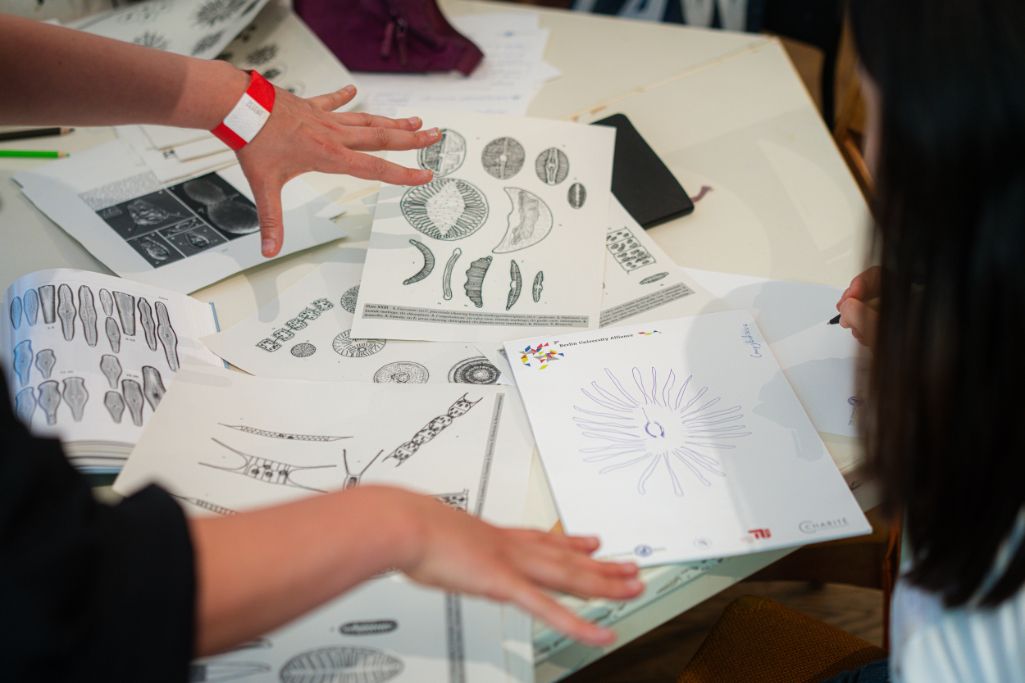
We started on Saturday, June 21, at the river’s edge with HYDRO ENCOUNTERS – BECOMING COMPANIONS, a reading session and water sample collection with artist and researcher Sybille Neumeyer and bio artist and researcher Fara Peluso. Participants were asked to check in with their bodies and the body of water itself. A companion reader helped guide the session: Take time to arrive at the river Panke… maybe find a way to be in touch with her waters…For a moment, close your eyes and listen… who is here with you?… Human and non-humans…Think about who might not be visible…missing in and around the river. This experience of navigating the River Panke as a feminine entity, accompanied by femme facilitators, to an audience primarily composed of women, seemed extra poignant and quietly powerful. We also collected water samples that we viewed under the microscope to explore microbes.
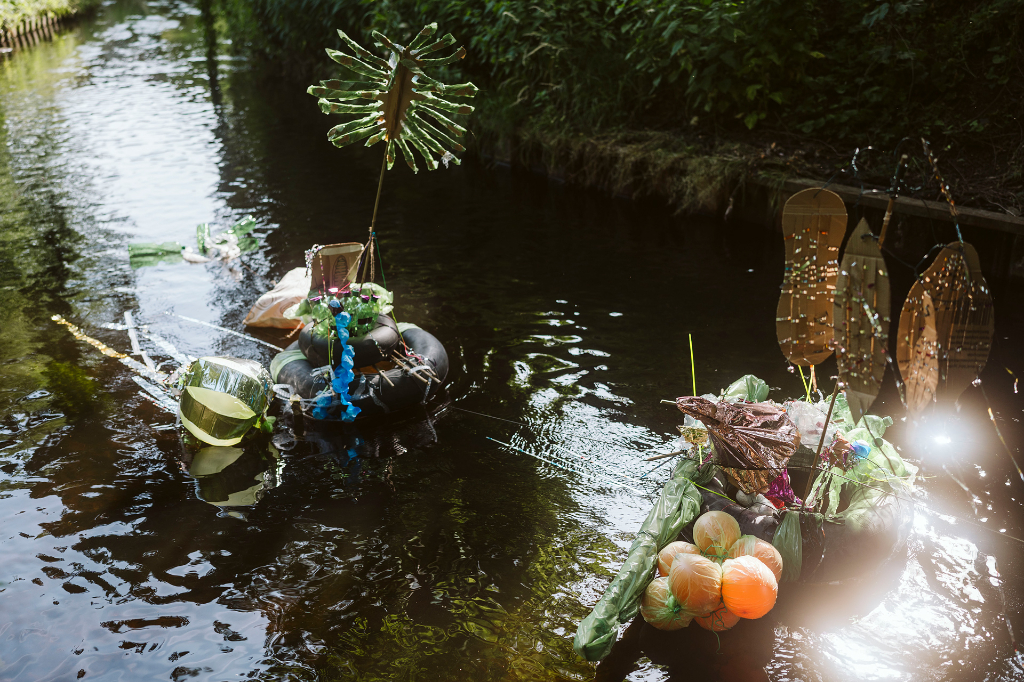
This allowed for a seamless flow into the first workshop, AMPLIFYING RIVER COMMUNITIES, where we took what we saw as inspiration to create artistic sculptural interpretations for Sunday’s parade. Educational conversations were lightly woven into the workshop as Neumeyer and Peluso presented the physical manifestation of their work with algae in the form of biospheres and bioreactors. Prof. Dr. India Mansour and Dr. Joana MacLean also led the session. Both spoke about their work as microbiologists and relationship to the River Panke as well.
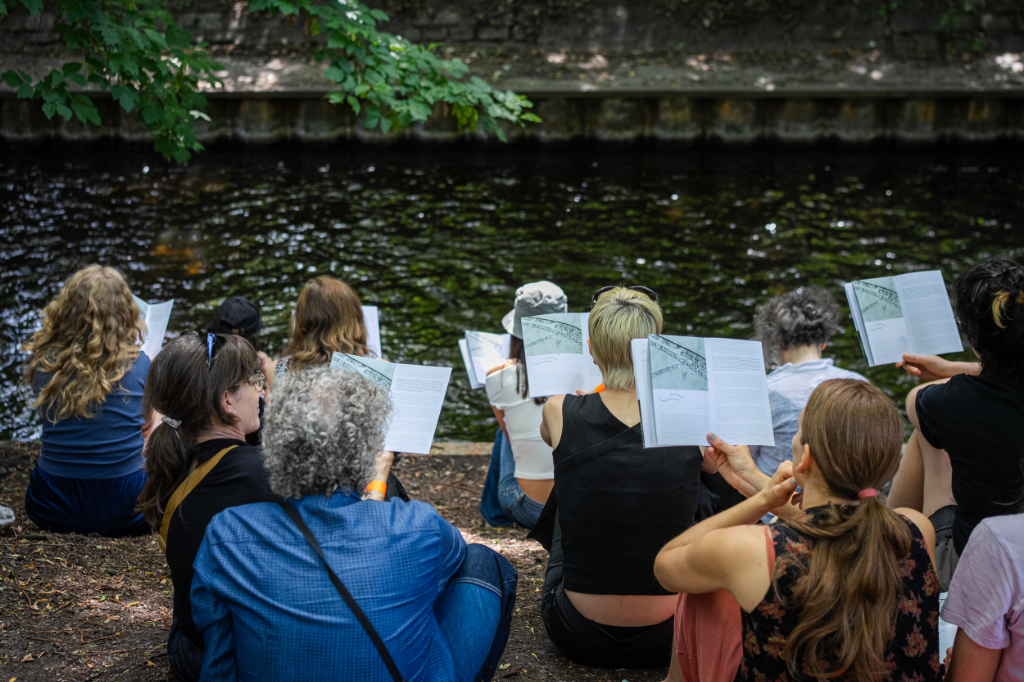
Listening to them speak about their involvement in DIY Hack the Panke returned us to the concept of aqualiteracies discussed just a few hours before, riverside. Aqualiteracies — a term inspired by Bonaventure Soh Bejeng Ndikung’s concept of corpoliteracies — centers water as living beings, in all their states, phases, and rhythms and focuses on reciprocal affective relationships with […] them in everyday life, in their transformations through time, and in relation to our own bodies.
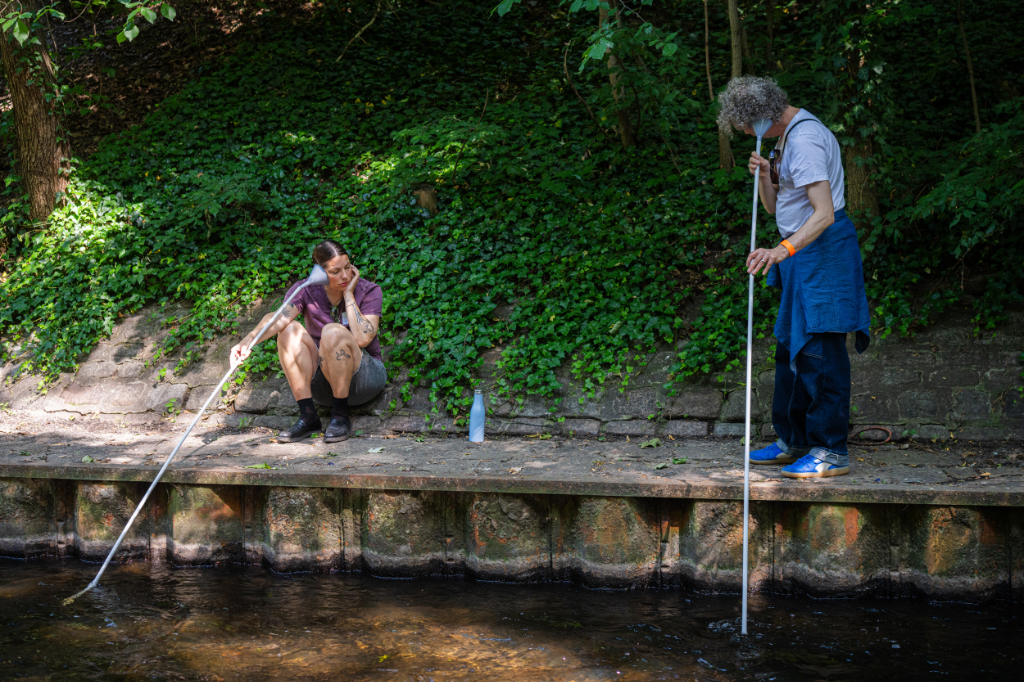
With these microbial and emotional connections fresh in mind, we returned to the water and dove right into the second workshop, BERLIN FLOWS, featuring artist and chemist Dr. Kat Austen, media artist and sound artist Nenad Popov, artist and researcher Sarah Hermanutz, and ecohydrologists Dr. Maria Warter and Dr. Christian Marx. Here, we were invited to interact with the River Panke through scientific and somatic investigation, measuring its flow with scientific calculations and engaging with it through listening, watching, and feeling. We could feel her vibrations through the gentle but powerful tug of a string looped in the water.
Next, it was time to take a break from getting our hands wet. Prof. Regine Rapp and Christian de Lutz of Art Laboratory Berlin moderated a cross-disciplinary panel discussion – WATER, BODIES, AND PLANETARY HEALTH – where they looked more concretely at human choices and their impacts, not just on the River Panke, but bodies of water in general. Dr. Kat Austen walked us through her transdisciplinary methods for projects such as Coexistence in the post petro plasticene, medical scholar Hélène Furaha Hauch educated us on the impact that pharmaceutical and prescription drugs, like diclofenac – have on our climate and water cycles, and aquatic ecologist Jonas Mauch walked us through his research with the invasive species quagga mussels, their impact on our lakes, and their “butterfly effect” or in this case the “quagga effect” illustrating how a vector for destruction can sometimes also indirectly be a vector for something positive.
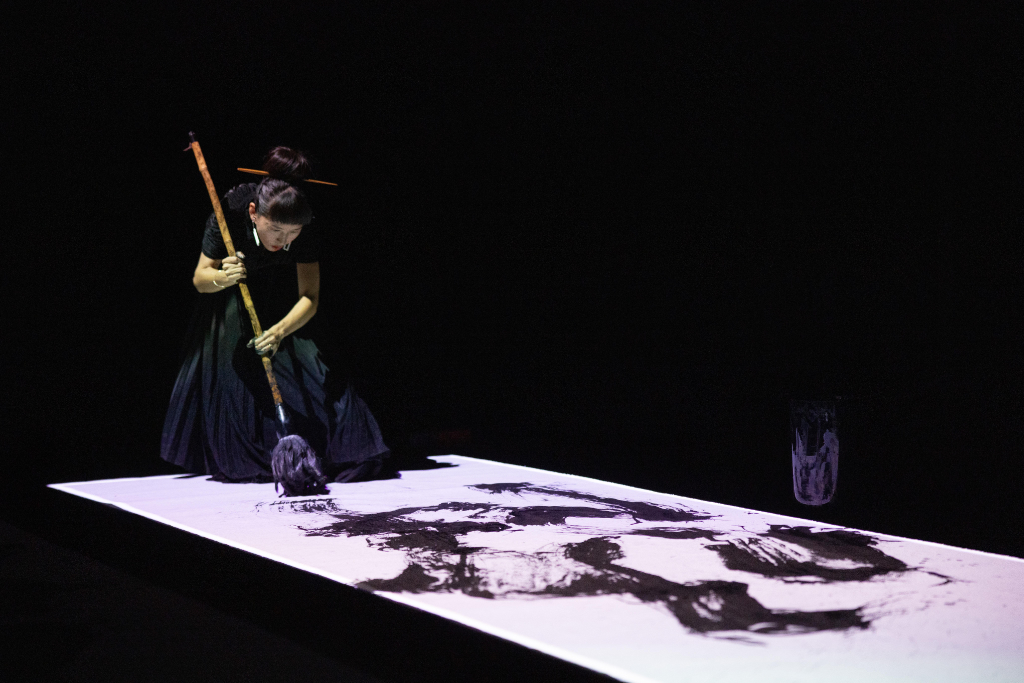
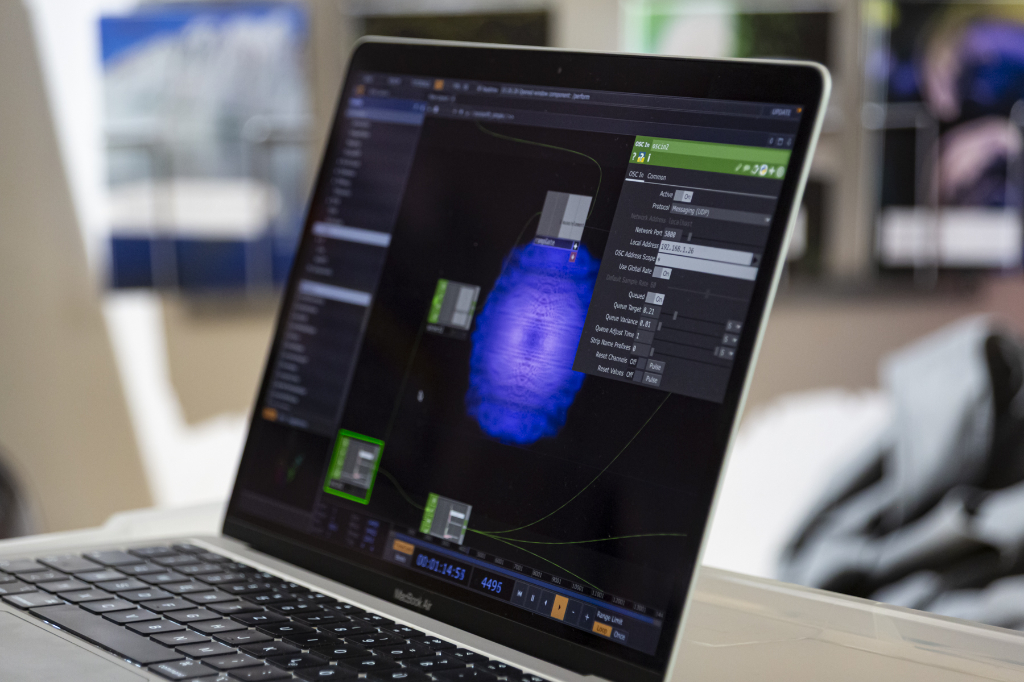
The day ended where it began, being with the River Panke — this time in the form of an audiovisual performance led by Dr. Kat Austen, Nenad Popov, and Sarah Hermanutz. It was a beautiful way to synthesise and personally reflect on what was collectively created inside and around the water’s edge that day. In this moment, the focus was not on measurements or statistics, but on how water made one feel.
Sunday 22 June saw a talk – ATMOSPHERIC WATER HARVESTING (AWH) – on atmospheric water harvesting with ocean policy expert Johannes Müller, and ended with a “microbial parade”. Physical objects crafted over the two days were displayed, showcasing new ways to care for and connect with the River Panke. Here, the “microbial” became enlarged not through a microscope but through collaborative artistic expression. In this way, DIY Hack the Panke’s and Art Laboratory Berlin’s overarching goal was beautifully realised, expressing a part of a larger whole: A long-term relationship to the River Panke, combining DIY methods with speculative and hydrofeminist measures of care. While the day’s activities concluded at the river’s edge, the weekend’s impact will ripple far beyond these last 48 hours.
All biological life depends on bodies of water. But as the ice caps melt, the temperatures skyrocket and plummet, and more toxins and pollutants flow up and down stream, it can all feel a bit defeating. Similarly (metaphorically, at least), we often ask ourselves: why make our beds if we are just going to unmake them when we get into them at night? We make them respect the space around us—the space we inhabit. BODIES OF WATER functioned similarly, with the River Panke acting as a touchpoint for calling attention to our larger need to respect nature, which is also our home, where we and many other organisms live.
And here we also see DIY Hack the Panke, Art Laboratory Berlin, and ON WATER converge and merge into a larger basin, where the goal is to build upon the relationship between institutions, DIY practices, and the public in relation to our interdependent, symbiotic relationship with flora and fauna. Many likely left the festival feeling more connected to a body of water than they did upon entering. This newfound connection can hopefully catalyse tangible, quantitative environmental action. The additional hope is that aqualiteracies continue to challenge our rigidity and push us away from tired Western narratives, as we look towards broader understandings of planetary justice for bodies both human and non-human, as argued by Andreas Philippopoulos-Mihalopoulos.
As the funding situation in Berlin becomes ever more tenuous, it’s worth asking what kind of city we want to live in. Projects like BODIES OF WATER don’t just offer a real-time experience of touch, sound, intellectual stimulation, and artistic creation. They build social connections, public knowledge, and can spur collective action. These are not soft outcomes. They are the foundations of resilience, and without continued investment in people, community, and the environment, the long-term costs — in disconnection, disengagement, and degradation — will far outweigh any short-term savings.
When we focus on nurturing these experiences, much like the microbial biospheres explored in the AMPLIFYING RIVER COMMUNITIES workshop, our cities — which are in a way, closed environments — are allowed to flourish and re-generate season after season. Taking this metaphor one step further, biospheres are nested like little Matryoshka dolls, and no place on earth is truly its own island.
Even biospheres, which seem closed, still depend on external inputs. We can also choose to open up that biosphere, interact with the space outside, and ultimately connect back to our largest biosphere of all—Mother Earth, experiencing how our independent systems co-mingle and flow together, taking a turn into the blue.