Text by Hannah van den Elzen
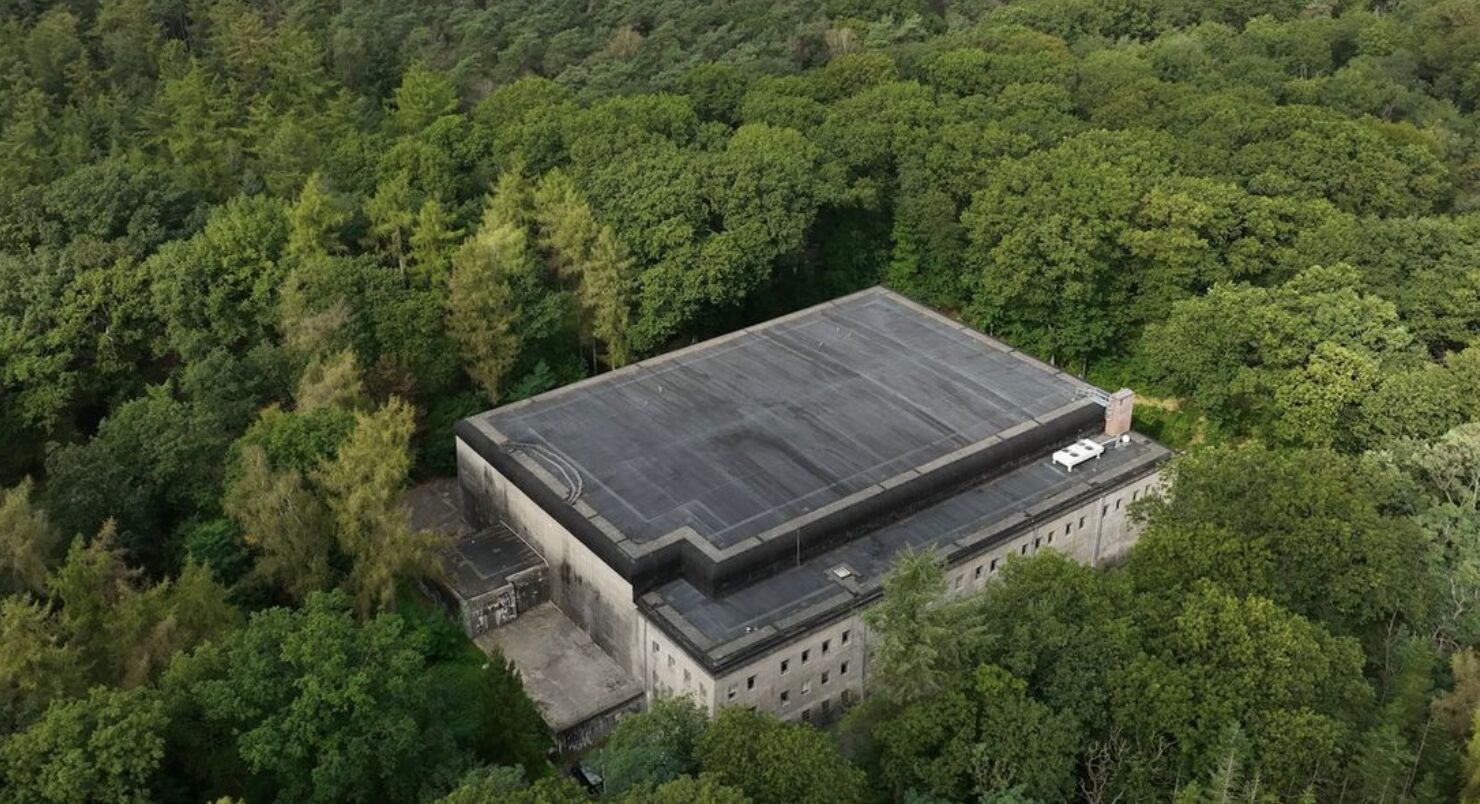
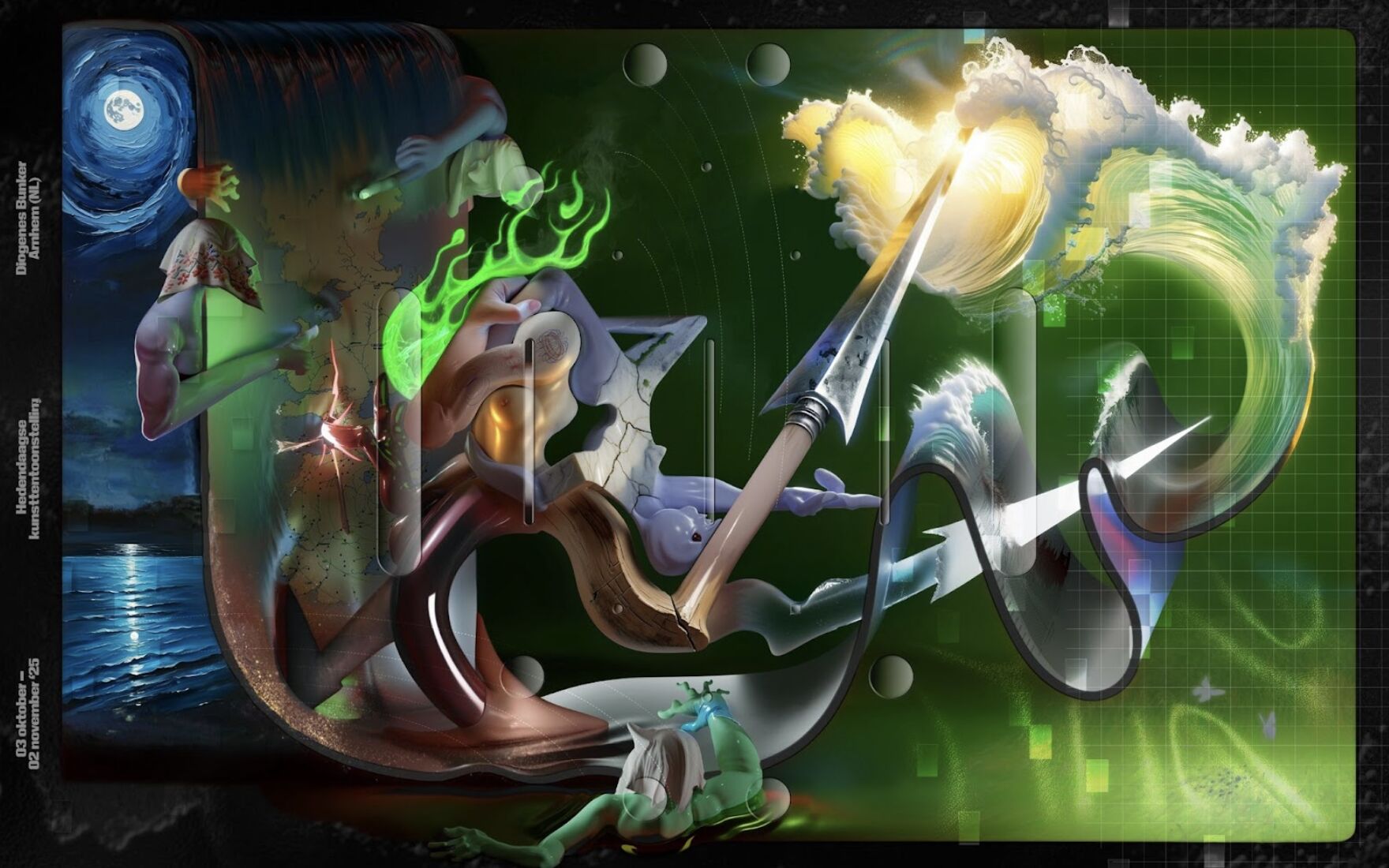
Hidden in the landscape of the Hoge Veluwe in Arnhem lies an architectural megastructure that has been open to the public only rarely: the Diogenes Bunker, one of the largest bunkers in the Netherlands. The exhibition Emerging Exits reopens this hidden site, transforming its monumental architecture into a living total installation.
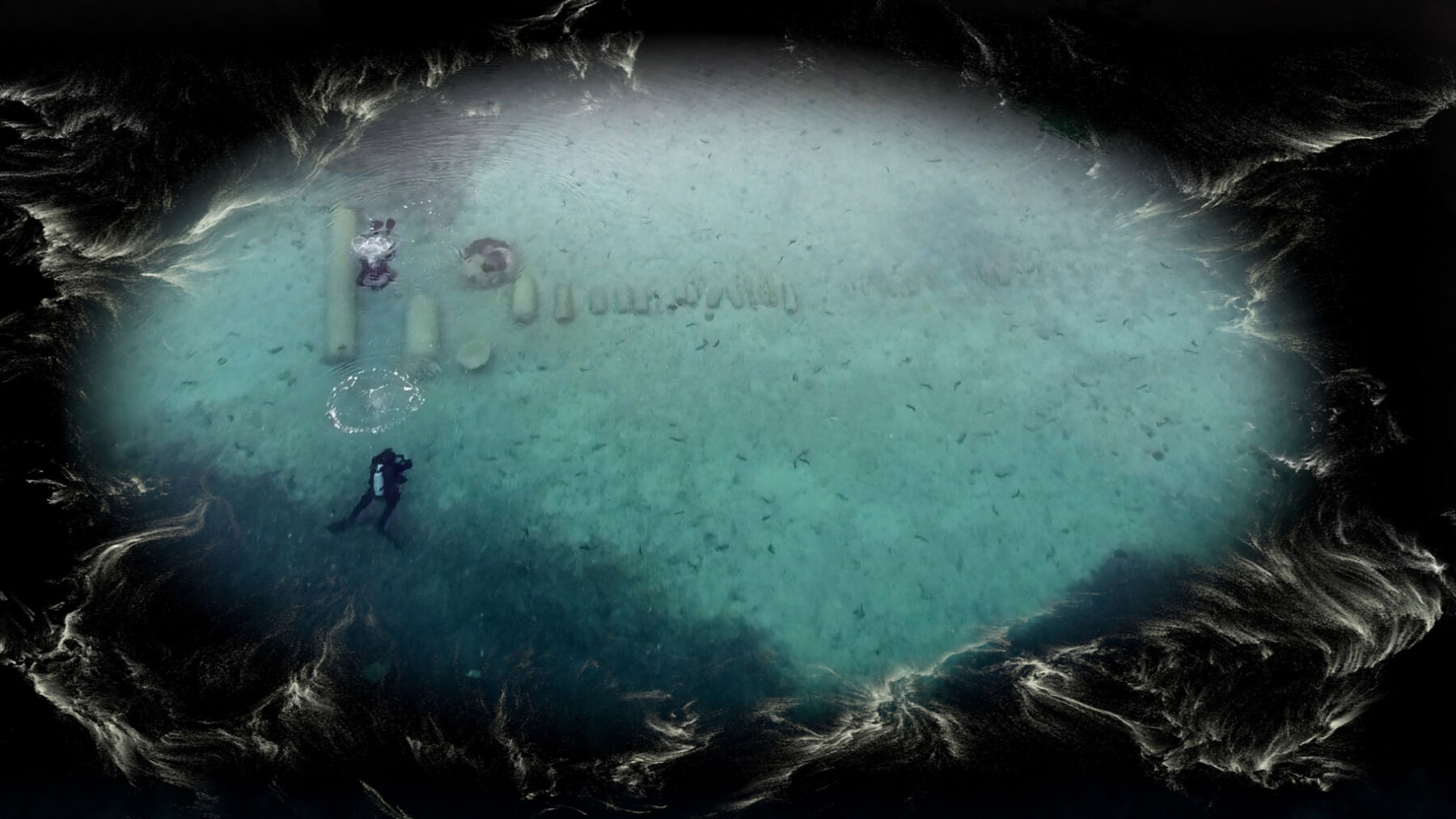
Fifteen contemporary artworks at the intersection of art, science, ecology, and technology engage with the history of the bunker while reimagining its mechanics of detection, analysis, and control. Their works confront persistent ecological and political threats while proposing other ways of sensing and knowing.
Built in 1942 by the German occupiers, the Diogenes Bunker served as a Luftwaffe command centre, coordinating the defence of Dutch, Belgian, and Northern German airspace. Using a network of radars and observation posts, data was collected, transmitted via telephone and telex lines, and projected onto a large map, measuring 12 by 9 metres. Despite its scale and ambition, the bunker remained operational for only nine months.
What if, this time, the bunker with its three-meter-thick concrete walls becomes a place to map hidden dynamics? How can we anticipate threats and collectively envision alternative perspectives? From October 3rd onwards, you can explore the work of the artists Isabelle Andriessen, Kévin Bray, Zeno van den Broek, Ali Eslami, Silvia Gatti, Anna Hoetjes, Jeroen Jongeleen, Kees van Leeuwen, Maksud Ali Mondal, Julian Oliver, Tega Brain & Bengt Sjölén, Vica Pacheco, Irakli Sabekia, Sissel Marie Tonn, Miloš Trakilović and Rodell Warner.
The artists address themes ranging from war and conflict to collective memory, ecological depletion, myth, and transformation. Their interdisciplinary practices span generative installations, video works, sculpture, and architectural interventions. Emerging Exits resonates with the very logic of the bunker – collecting data, plotting strategies, and instructing counter-responses. Yet the artworks subvert this logic: they pick up signals of threat, expose the systems that shape reality, and speculate on scenarios beyond control. The exhibition unfolds in three chapters, choreographed through light and darkness by artist Zalán Szakács.
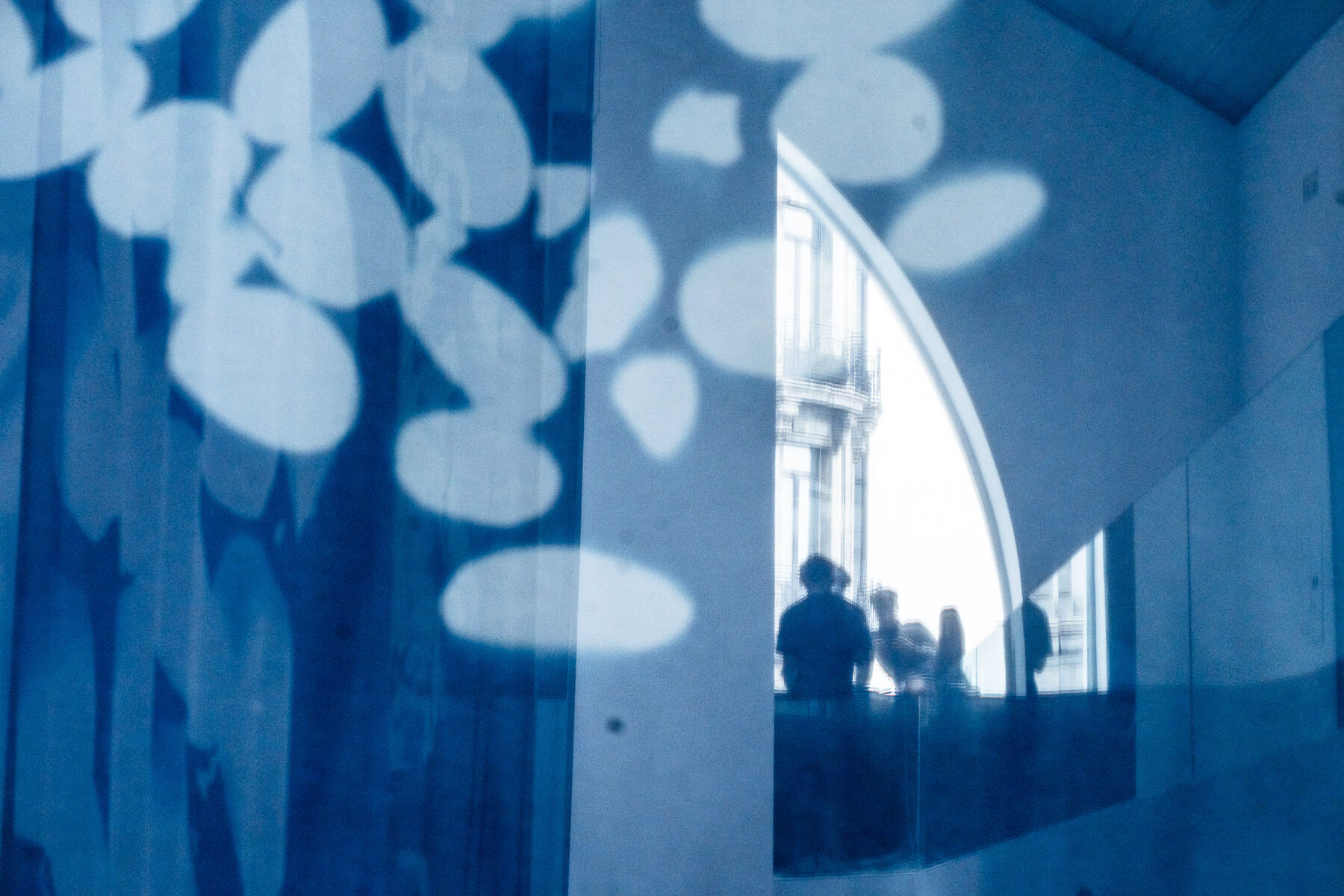
In the first chapter, Sensing Threats, Zeno van den Broek presents Radiant Static (2025) in the monumental staircase that once formed the bunker’s grand entryway. The site-specific work interweaves local microsounds with global macrosounds, drawing on field and electromagnetic recordings around the bunker, alongside found footage of protests. The work immerses the audience in a system where diverse groups – humans, non-human life forms and technological devices – collide and generate friction.
Thick concrete walls, long corridors disappearing into the distance, and a labyrinthine network of passageways in which one could easily get lost. Some spaces are small and oppressive, while others feel expansive and almost cinematic. The longer you spend inside the bunker, the more you gradually lose your sense of time and space, Jacco Ouwerkerk, director and curator of Emerging Exits, comments.
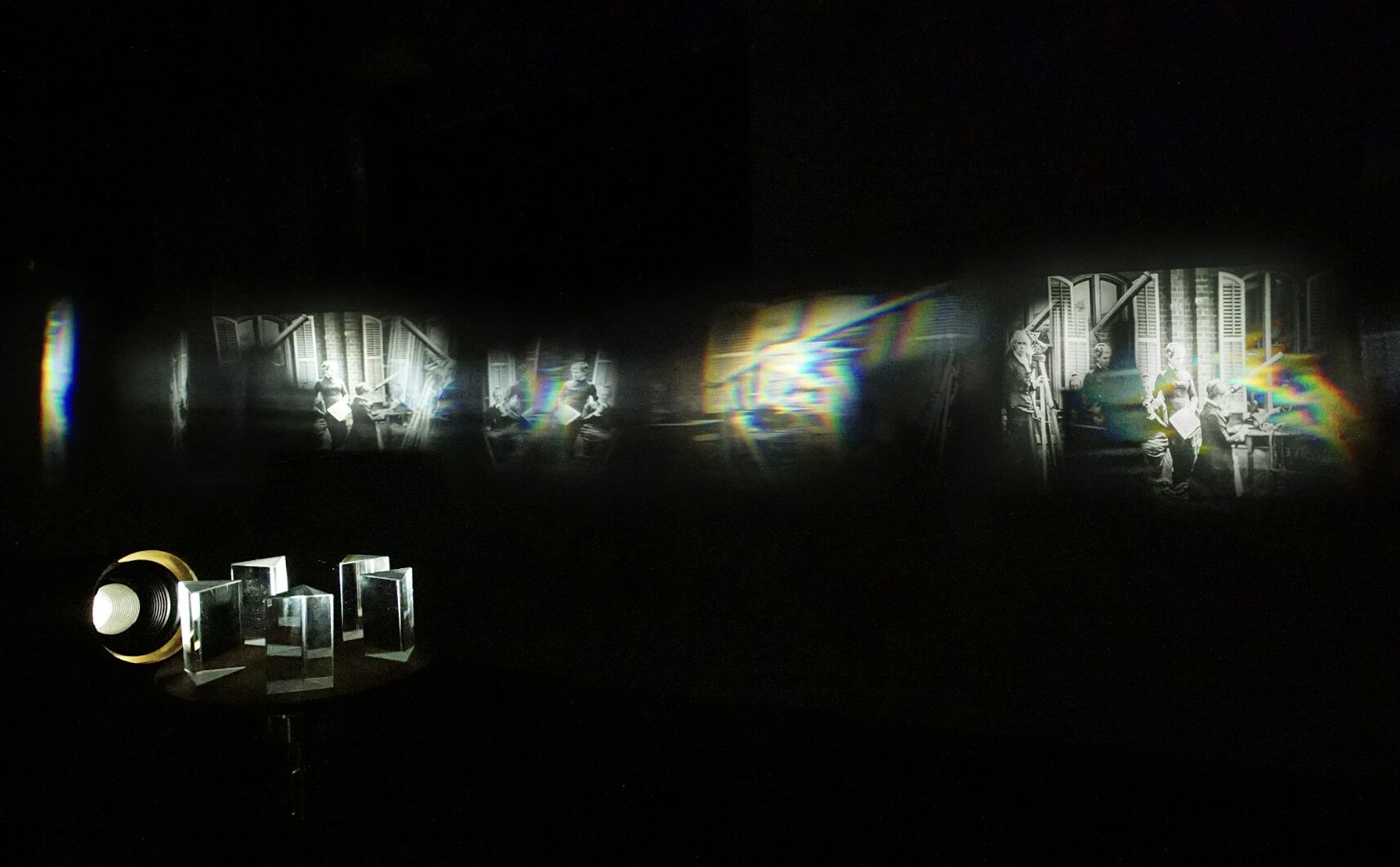
The second chapter, Command Centre, interrogates structures of control. Among the works is Anna Hoetjes’ Spectral Ghosts (2020), which reanimates overlooked knowledge systems by turning scientific history into tangible experience. Using a self-built spectroscope – a 19th-century device for analysing starlight – the work projects an image of Maria Mitchell, the first female astronomy professor. In doing so, it recalls the forgotten contributions of women who shaped astronomy, while also resonating with the bunker’s own past, where women once served as ‘human projectors,’ plotting aircraft positions onto the vast command map.
We were very intrigued by the intricate mechanisms of the Diogenes Bunker, in which hundreds of people processed information, effectively turning the building into one giant computer. Art can also function as a radar or transmitter, and in the exhibition, the works subvert the closed system of control and instead open up perspectives in which living systems can emerge, Marijn Bril, curator of Emerging Exits ellaborates.
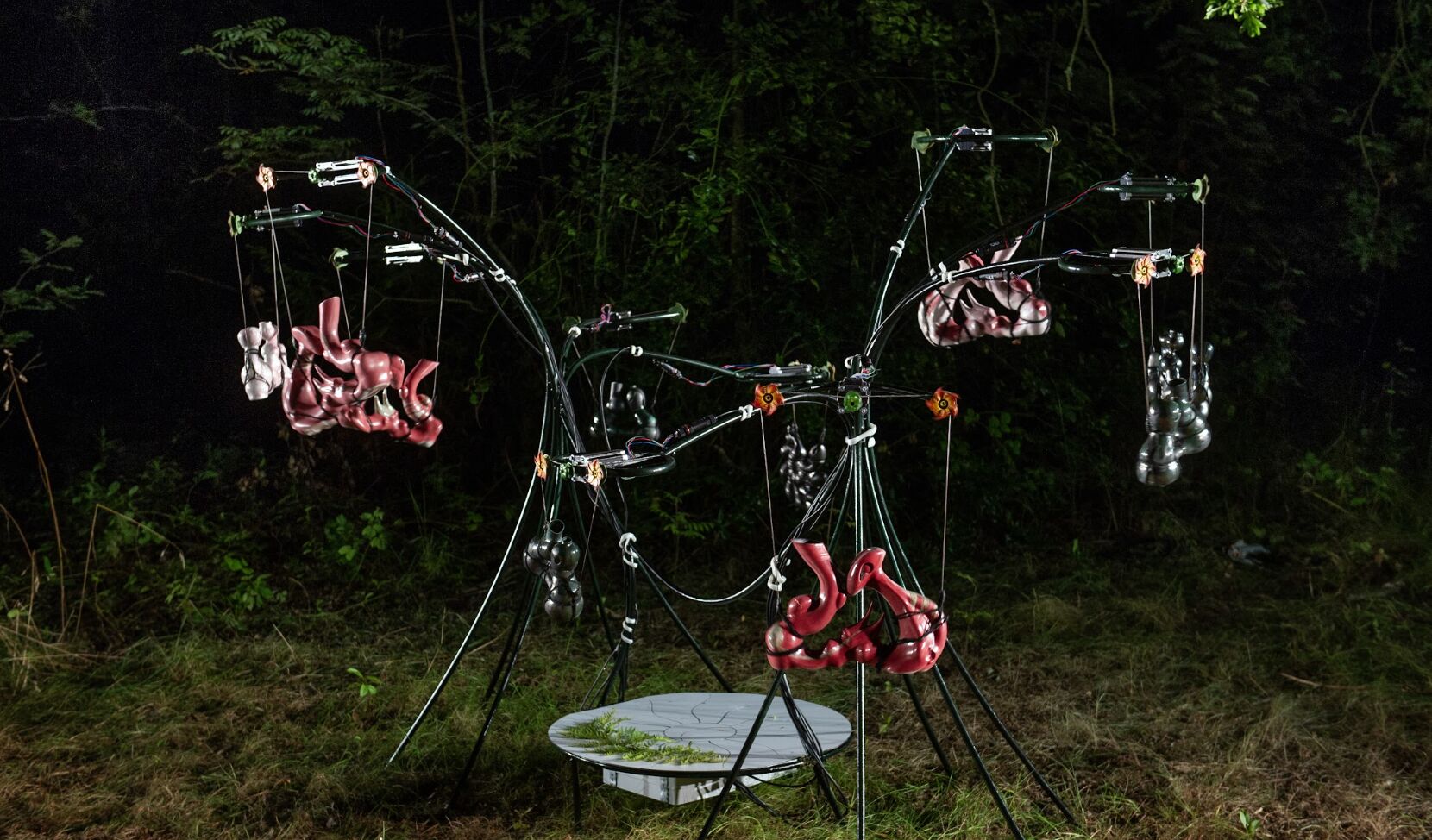
The final chapter, Speculative Scenarios, reimagines past and present technologies to shed light on alternative forms of knowledge. Here, the whistling tones of Vica Pacheco’s Mitote (2023) animate the space through tree-like structures from which moving water vessels are suspended. Powered by ritual breath, Mitote summons a speculative chorus where invented creatures blur boundaries between nature and machine, linking the bunker’s concrete structure to the surrounding forest.
Emerging Exits offers a unique experience and the final chance to enter the historic Diogenes Bunker before it permanently closes to the public. Cut off from sunlight and mobile reception, the exhibition becomes an ‘exit’ from today’s complex reality, where time slows down and other perspectives come into view.
Emerging Exits is on show from October 3rd — November 2nd, 2025. The exhibition is an initiative by Stichting Schuilstad and curated by Jacco Ouwerkerk and Marijn Bril.