Text by Rae (Mee-Jin) Tilly
There is a prevailing notion that art and science are wholly separate fields. One discipline is seen as rooted in fact, ruled by reason. The other is considered an emotional process, where empiricism plays a lesser role. Yet this division is misleading. To me, they exist more as a Venn diagram, and the middle part, where the sets overlap, is where things become truly interesting. As early as 2021, art historian and curator Regine Rapp and curator and researcher Christian de Lutz, both co-directors of Art Laboratory Berlin of Art Laboratory Berlin (along with six others) co-authored the paper “Ten Simple Rules for Hosting Artists in Labs” [1].
This piece explored the synergy between art and science: Art and science are in a tension that is most fruitful when these disciplines observe and penetrate each other and experience how much of the other they themselves still contain [2]. It addressed how both the scientist and the artist analyse data through tools and research to better understand the world around them. It also suggested ways scientific labs could host artists in residence. Art Laboratory Berlin’s research project CHRYSALIS. ARTISTS IN LABS will put this into direct practice. Regine Rapp and Christian de Lutz unveiled CHRYSALIS. ARTISTS IN LABS during Berlin Science Week 2025 on 8 November 2025 with a panel discussion hosted by Art Laboratory Berlin.
CHRYSALIS. ARTISTS IN LABS is an artist-in-lab residency focused on interdisciplinary exchange between art and science. For the panel discussion, the project presentation of CHRYSALIS. ARTISTS IN LABS at the Berlin Science Week 2025, four artists (Helena Nikonole, Julius Holtz, Sybille Neumeyer and Margherita Pevere) have been paired with scientists (Álvaro Rodríguez, Ludmila Litvin, Matthias Rillig and Germán Joosten) from respected Berlin-based scientific institutions. These artists have a specific interest in neuroscience, AI, biodiversity, and ecology. The scientists who will work with them study subject matter that directly or indirectly relates to their research. They will work together over the next year, and the resulting work and experiences will culminate in workshops and a group exhibition at Art Laboratory Berlin in autumn 2026. Thus, portraying the primary goal of CHRYSALIS to enhance artistic research and outcome through scientific research, computation, and method-based discovery.
During the panel discussion held at Art Laboratory Berlin on November 8, only Helena Nikonole, Álvaro Rodríguez, Julius Holtz, Ludmila Litvin, Margherita Pevere and Germán Joosten participated. Each team introduced itself and their previous work individually, which shed some light on how projects and interests could culminate in collaborative efforts for CHRYSALIS. ARTISTS IN LABS. The presentations were followed by questions from Regine Rapp, Christian de Lutz, and the audience. As with many panel discussions, we were only able to scratch the surface of this research project. Many questions remained. However, I followed up with the panellists as well as Regine Rapp and Christian de Lutz after the panel via Email.
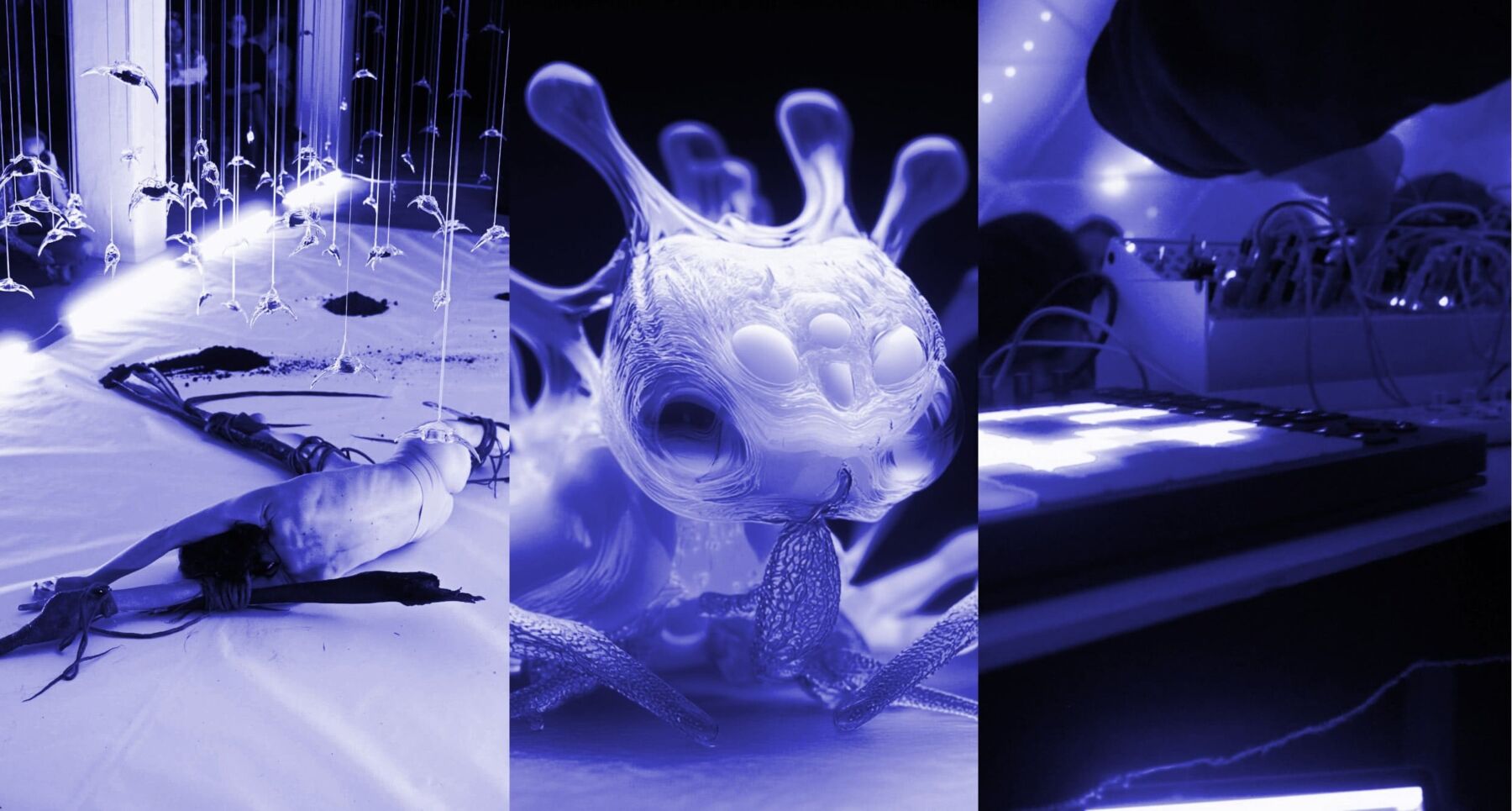
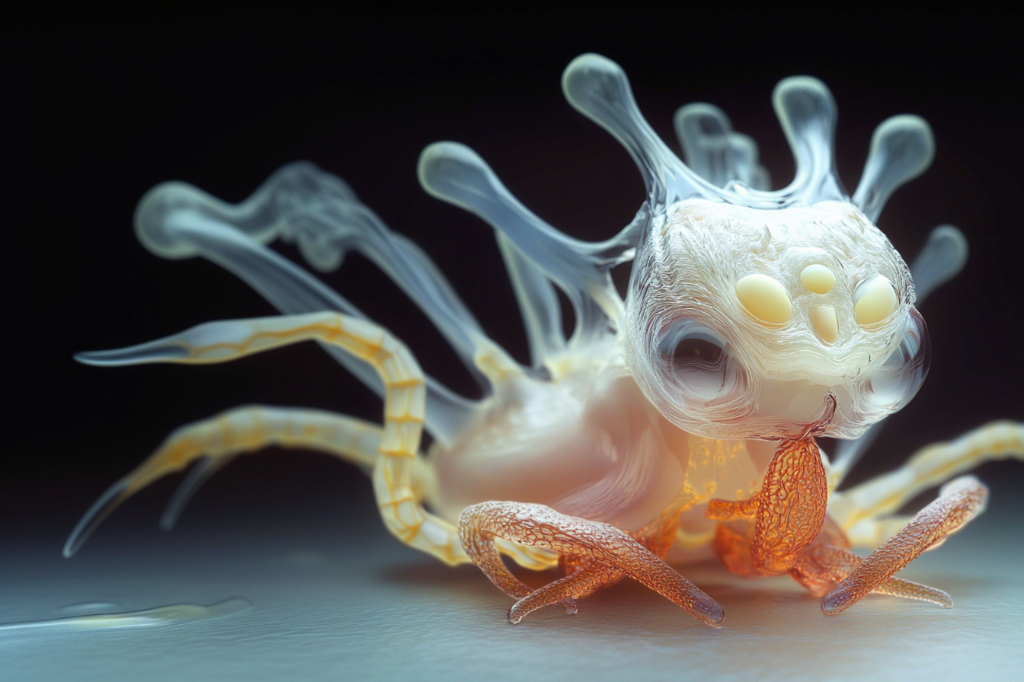
New media artist and independent curator Helena Nikonole is a visiting artist in the Rillig laboratory, where biologist Álvaro Rodríguez conducts his research. There, Nikolone will continue her previous work at the intersection of biosemiotics and machine learning. Most notably, Nikonole will be exploring speculative species and evolution. While Rodríguez will aid Nikonole’s work with his expertise in understanding microbial populations in the soil. The pair’s ultimate goal is to create science-informed artwork, with science communication and creativity as hopeful side effects. Both will also use metagenomics—the study of genetic material from a sample as a whole, rather than isolated organisms—as a driver for this creative work. Studying microbial communities in their natural environments provides a starting point for creativity, enabling the creation of speculative species that harness the synergy of organic matter, technology, and human imagination.

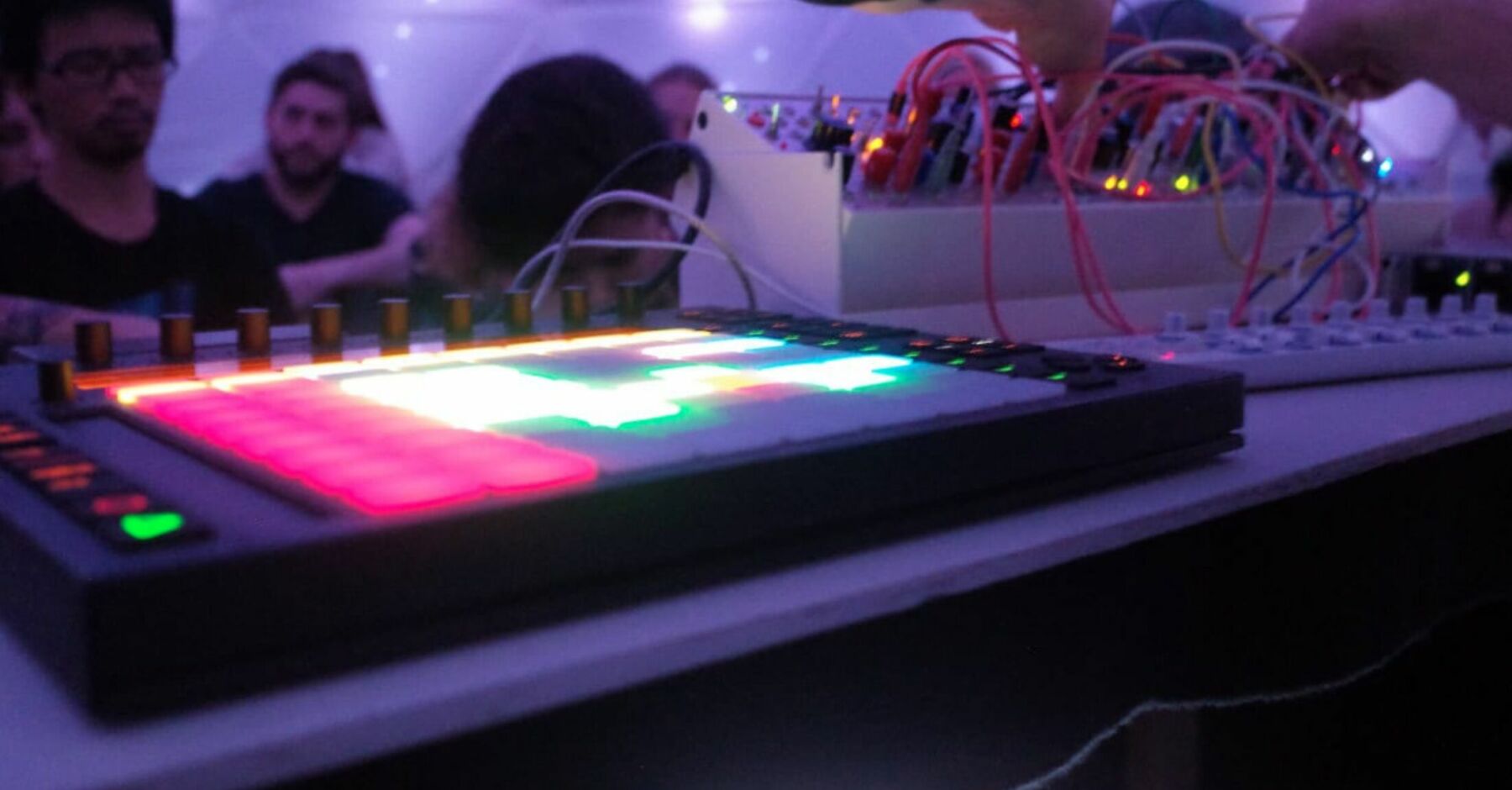
Composer and sound researcher Julius Holtz’s work has endeavoured to understand how human beings interact with sound environments and the impact that active listening can have on the mind. Holtz will work with Ludmila Litvin, a research associate in sleep research and clinical chronobiology at the Institute of Physiology, Charité-Universitätsmedizin Berlin, to build on his previous work in neuroscience and neurofeedback. This is an interesting pairing for an artist focused on active listening, as both Holtz’s and Litvin’s work involves the same medium: waves. By interpreting and manipulating these waves, they can create engaging, novel outcomes. The subconscious and conscious are two sides of the same coin, and there is much to explore and interpret about how humans interact with sound during sleep and lucid states.
Lastly, artist and researcher Margherita Pevere, whose work explores ecology, vulnerability, and death, will continue to expand on her long-term research project, Untaming Death. Death is not just the driver of endings but also the driver of beginnings and middles. Pevere’s goal is to explore the influences of death on how ecosystems function, change, and evolve. Pevere will dive deeper into this topic in relation to urban ponds, making the pairing with Germán Joosten, an environmental researcher focused on urban waters, a no-brainer. Pevere is looking forward to combining her knowledge of the local ecologies with state-of-the-art research. For his part, Joosten is excited about bringing an artist’s perspective into the lab.
In the conversation following the panel discussion, I sensed a general attitude that complex processes and empirical knowledge would enable artists to delve deeper, and that artistic input would enrich creativity and broaden the scientists’ perspectives. Ultimately, I believe that artists and scientists share many similarities. Both look to engage with the world around them. Neither is satisfied with simply seeing, but looks to investigate, compile, and generate. Borrowing tools and methods from each other’s disciplines allows both the artist and the scientist to cast a wider net. By working with an expert in the opposing field, this net will not only sit at the surface level but also reach deeper.
Neither the material nor the immaterial results of these pairings were what was on display. Nor was the goal of today’s panel to showcase final products or output. CHRYSALIS. ARTISTS IN LABS is currently in its early stages. The panel instead served as a brief peek into the artists and scientific dialogue partners themselves, as well as to announce the intention of this residency. Additionally, holding this discussion as part of Berlin Science Week was a way to showcase the symbiotic relationship between art and science and to generate valuable discourse.
And thus we relate to the name of this project and its ultimate goal: A chrysalis is the pupal stage of a butterfly where an incredible transformation takes place —inside this shell made of a hardened exoskeleton, a caterpillar’s internal tissues break down and undergo histolysis (self-digestion) to provide nutrients for the developing butterfly. The hemolymph (insect “blood”) aids in this process by carrying nutrients and hormones indispensable to the processes of metamorphosis. A chrysalis is both a scientific marvel and a visual masterpiece, producing something that is equally artistically and scientifically stunning as the butterfly emerges. In this way, we replace internal tissues and blood with an artist and a scientist. We encase them in dialogue. We wait for metamorphosis to take place. When the artist and scientist emerge, we will be left with artwork and conversation. But I also expect the non-performative act of transfer to be the metamorphosis itself. As with Schrödinger’s cat, anything and everything during this incubation period inside this chrysalis is possible.