Text by Tuçe Erel
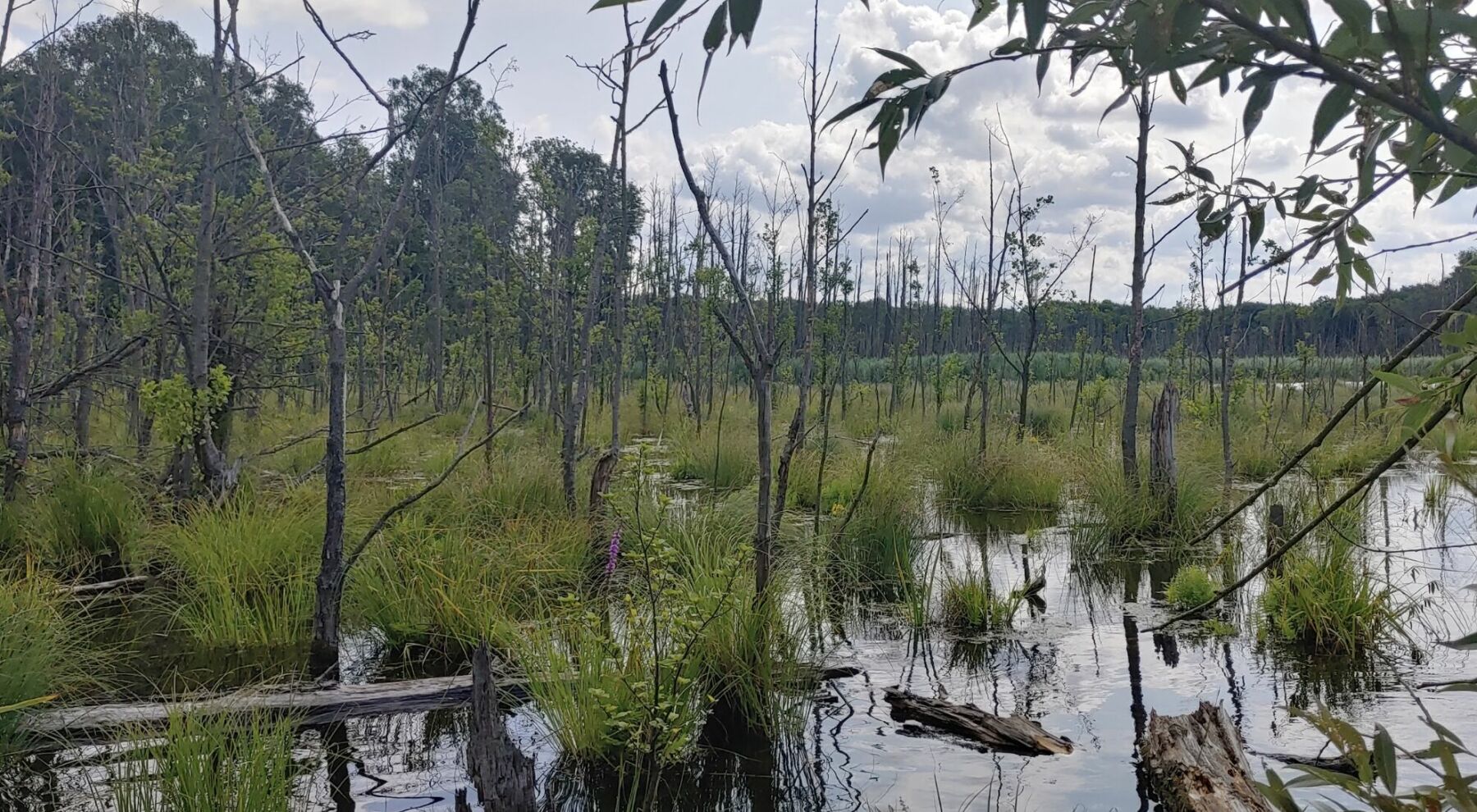
Swamps and birds go together; when the swamp disappears, so do the birds.
Annie Proulx’s Fen, Bog, and Swamp
As Pauline Doutreluingne wraps up her series, Swamping, I am writing to share my personal reflection and review of the program. As a fellow curator working at the intersection of art and science, with a strong focus on ecology-oriented projects, I have been following Swamping from afar. Unable to attend this ambitious program in person, I reflect on the ideas and concepts that Swamping was built upon.
Swamps and why they matter ecologically, symbolically and politically
When I began thinking about Swamping, I found myself returning to Annie Proulx’s Fen, Bog and Swamp [1], a book that reads like both an ecological elegy and a warning. Proulx reminds us, quoting Oliver Rackham, that “the history of wetlands is the history of their destruction.” Most of the world’s wetlands emerged as the ice sheets melted at the end of the last Ice Age, when fens, bogs, swamps and estuaries became the most fertile and biodiverse zones on the planet. They were once places of abundance, full of birds, insects, amphibians and plant life; their seasonal cycles of sound and motion could be heard long before they were seen. Today, however, they survive mostly as remnants, drained for agriculture, cities and industry.
I grew up near a lake where, every spring, the reeds were chopped down and burned to prevent mosquitoes from nesting. For years, this practice was considered a simple act of maintenance as a human correction of nature’s excess. Eventually, the municipality came to a different conclusion: the reeds were not merely mosquito habitats but entire ecosystems that sheltered fish, birds, amphibians and countless smaller organisms. The reed beds have since become part of the mise en scène, recognized as a vital habitat rather than an inconvenience. I am sure this story resonates with many similar memories of local examples of small-scale, well-intentioned but destructive human interventions. These moments echo a much longer history.
Western industrial logic has treated wetlands as “wastelands” that were purposeless until drained. Since the fifteenth century, the rise of capitalism and imperial expansion has led to peatlands being viewed as land awaiting productivity. Yet, as Proulx observes, water always resists control. Despite dams, levees and drainage systems, water eventually reclaims its course. It reminds us that nature’s flexibility and persistence exceed human design.
As global warming advances, scientists acknowledge the importance of the role of carbon emissions in wetlands more than in forests, although wetlands take up only 3% of the planet [2]. These “blue carbon sinks”, which are mangroves, salt marshes and peat bogs, sustain the planet’s respiration through cycles of water, air and soil.
For me, this interdependence between water, soil, air and life echoes the structure of Swamping. Each exhibition within the program can be seen as a layer within a larger ecosystem of thought. Together, they reveal the interconnectedness of artistic, poetic and ecological processes; and how artistic and curatorial research can operate like a wetland itself: absorbing, filtering and sustaining the flows of knowledge between art, science and the world.
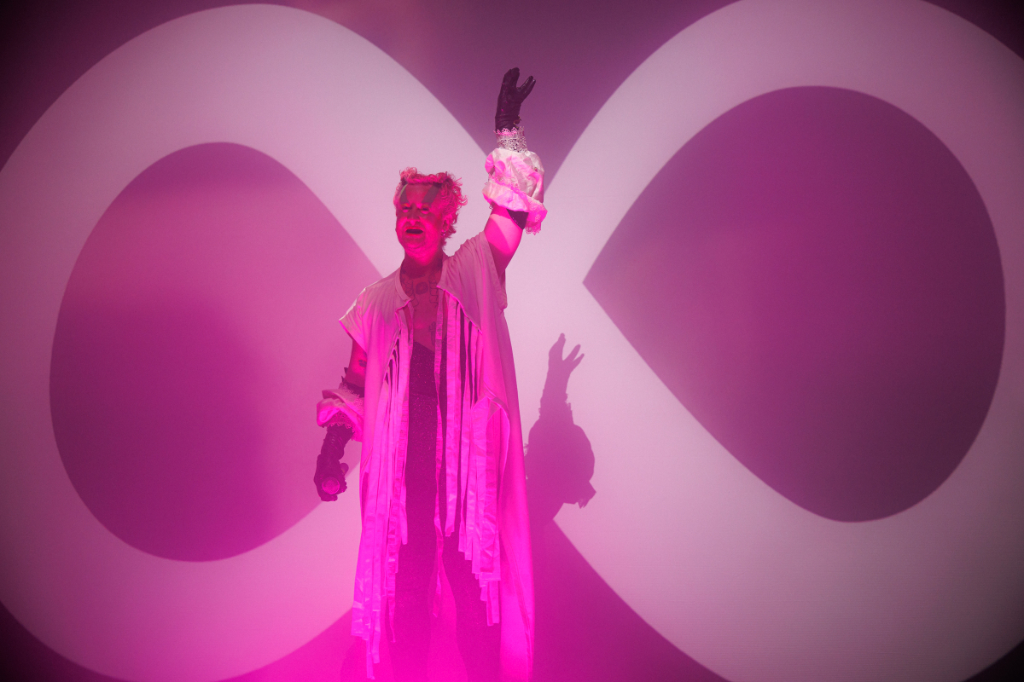
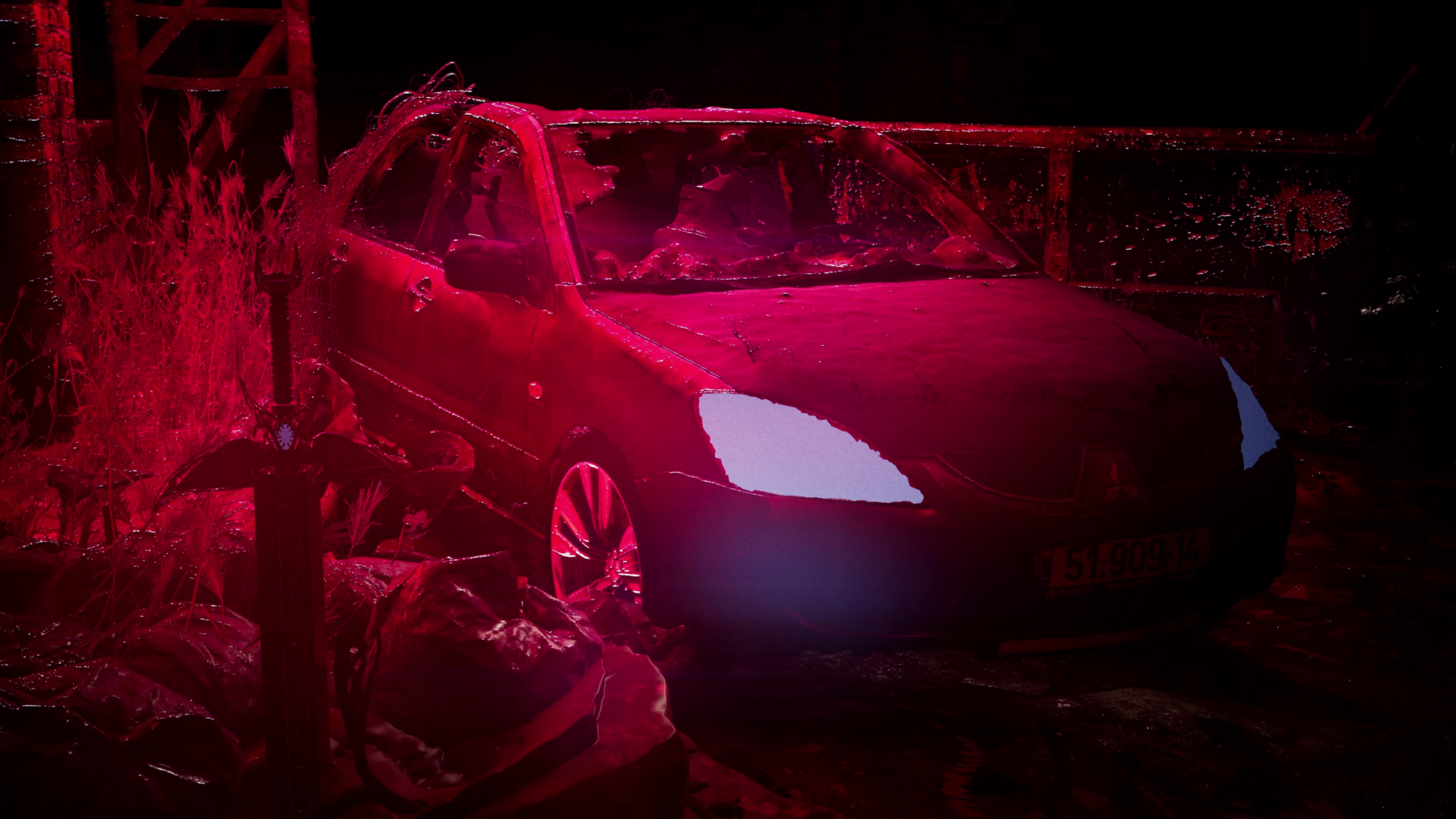
The opening chapter of the program, featuring Lundahl & Seitl’s River Biographies – Prelude to SWAMPING, unfolded as a performative and interactive launch, inviting the audience to position themselves as nonhuman object and subject, such as a stone or a river and allow themselves to immerse through artists guidance with nonfunctioning VR headsets, which gave a space for imagination of the participating audience.
Since wetlands, swamps and rivers are inseparable, the project’s starting point was the meandering Ruhr River, whose re-naturalization process became both subject and collaborator. The exhibition invited the audience to observe, pay attention and listen to this slow transformation, unfolding over years rather than moments. Extending beyond the Ruhr region, River Biographies connects to other rivers across Europe, continuing the artists’ long-term research into the dynamic living systems of water
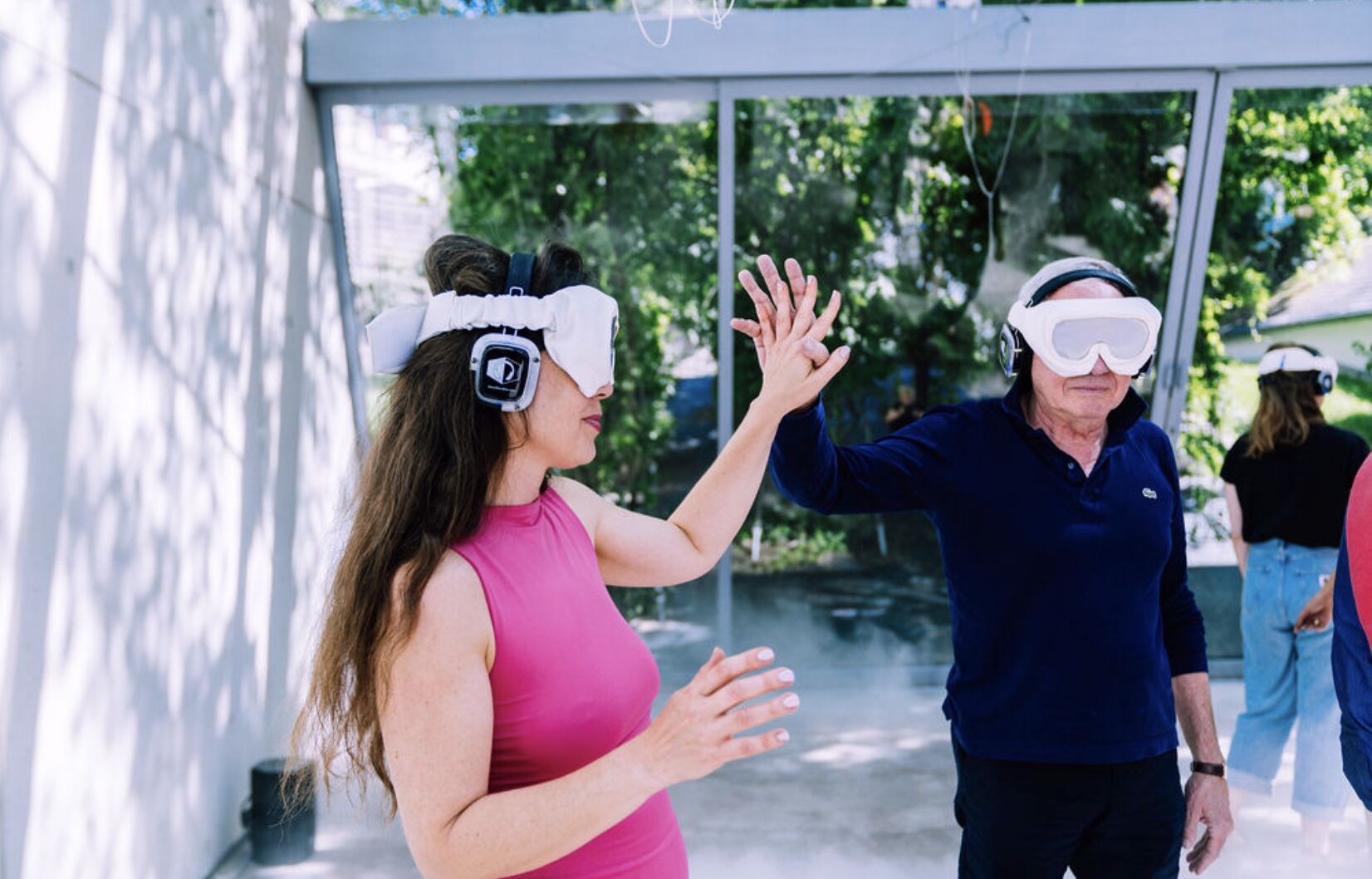
Described as a living artwork, the project required activation through multiple participants, who together shared a sensorial and collective experience of healing and recovery. Although I have often questioned the accessibility of performative projects that rely on VR, in this case, the VR gaggles functioned less as a technological barrier and more as a symbolic gesture. Rather than transporting participants into a predesigned virtual environment, the headsets invited them to generate their own internal imagery, shaped by the memories and stories the artists shared throughout the activation.
This approach contrasted with typical uses of VR tools, which often limit wider audience participation due to on-site resource constraints. Here its immersive qualities were redirected: the technology did not become a spectacle, but instead served as a medium of care—an interface capable of holding, guiding and mediating an encounter with water’s memory. By inviting audiences to attune to the flow and the processes of river rewilding, River Biographies opened a space for reflection on planetary health, forging a connection between the immediate experience of local waterways and the broader, global efforts toward ecological restoration.
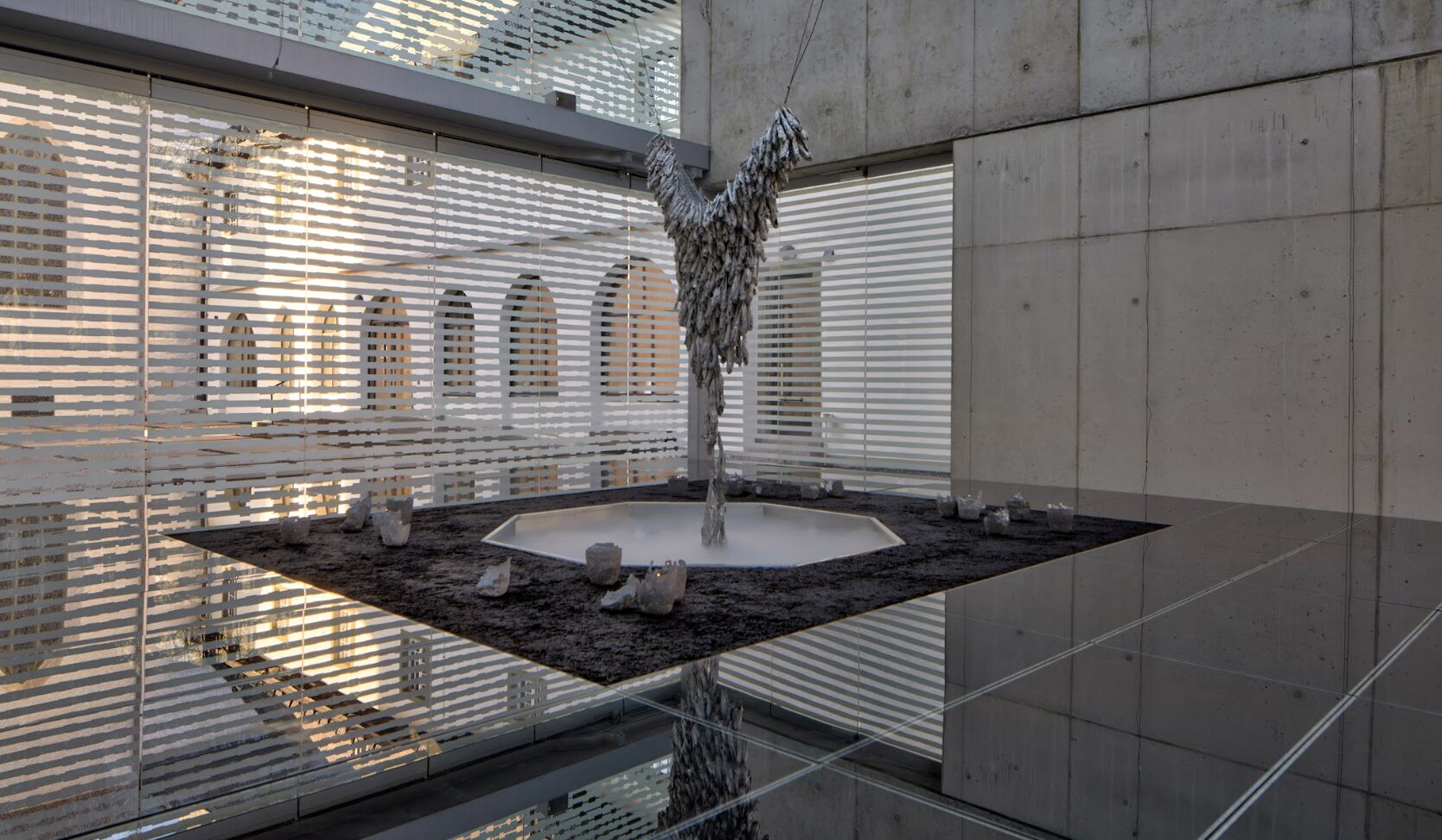
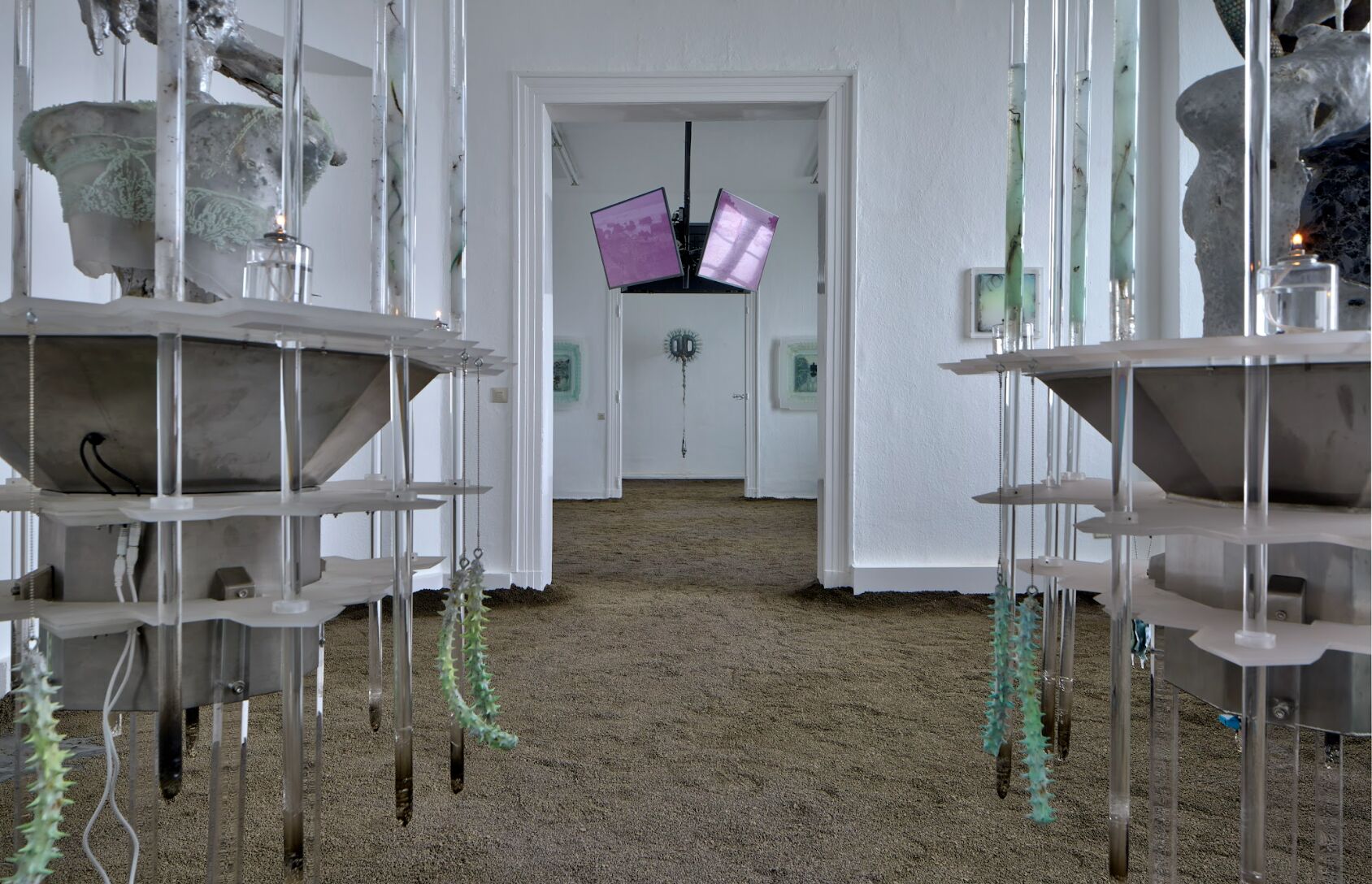
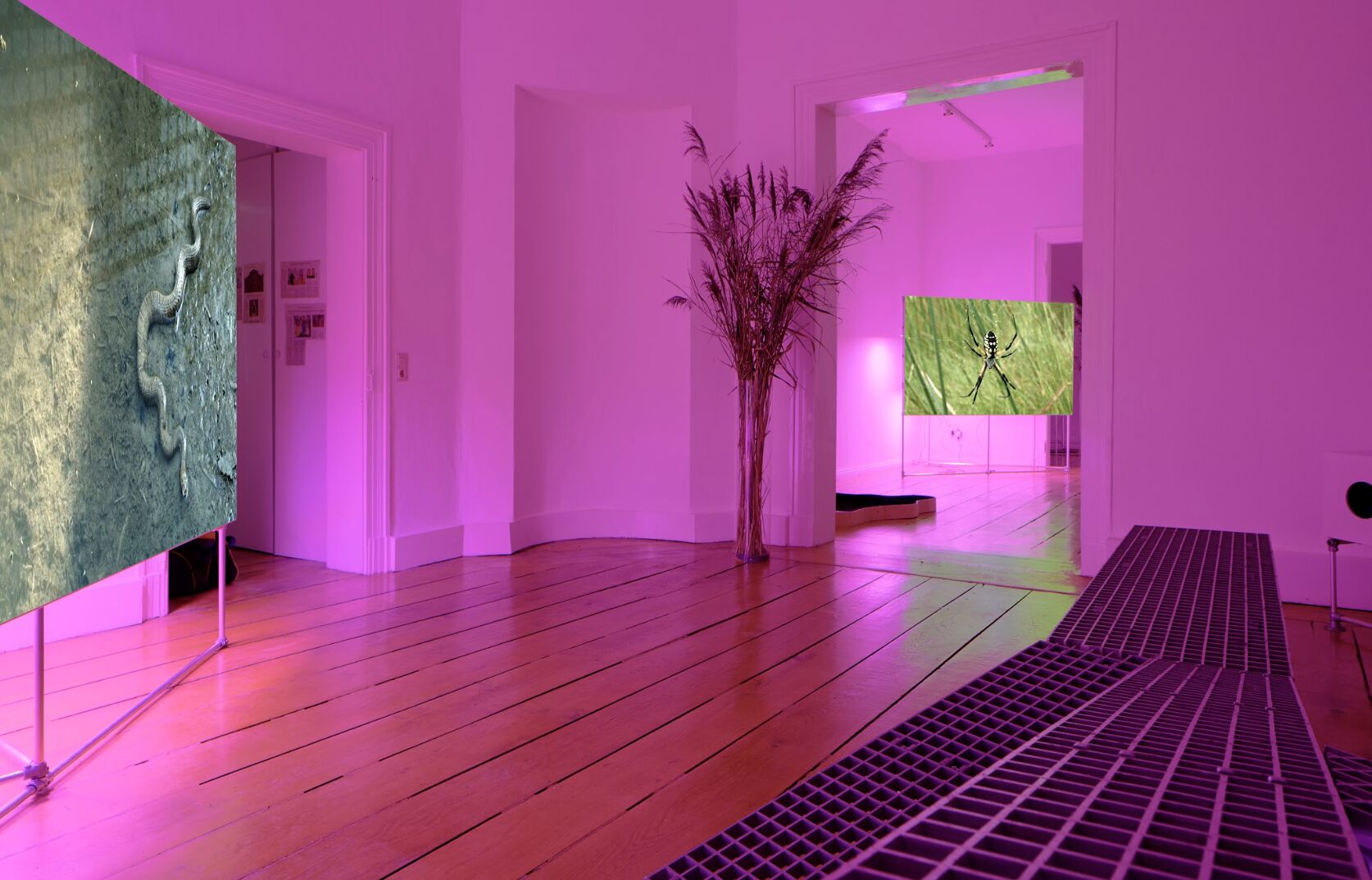
The second chapter, Adriano Amaral’s Vitals Vapors, delved into the ecosystem as a multimedial environment. Drawing from indigenous cosmologies of the southern Americas as well as cyberpunk and techno-shamanic aesthetics, Amaral merged silicone, aluminium, plastic and moving images into an elemental choreography. His work blurred the boundaries between the natural and the synthetic, the living and the non-living and myth and science fiction.
Since water cycles and evaporation sustain all life, Vitals Vapors offered a poetic reminder of how all bodies of water are connected through the atmosphere, i.e. evaporation. It can be interpreted as a poetic act that all rivers could unite in the air thanks to water cycles and evaporation. In the exhibition, humidifiers recreated a continuous mist, evoking the humidity of forests and the breath of wetlands. An aluminium fish suspended from the ceiling had a totemic presence, a relic of ancient stories and a fossil of techno-culture, symbolizing the intergenerational memory of water.
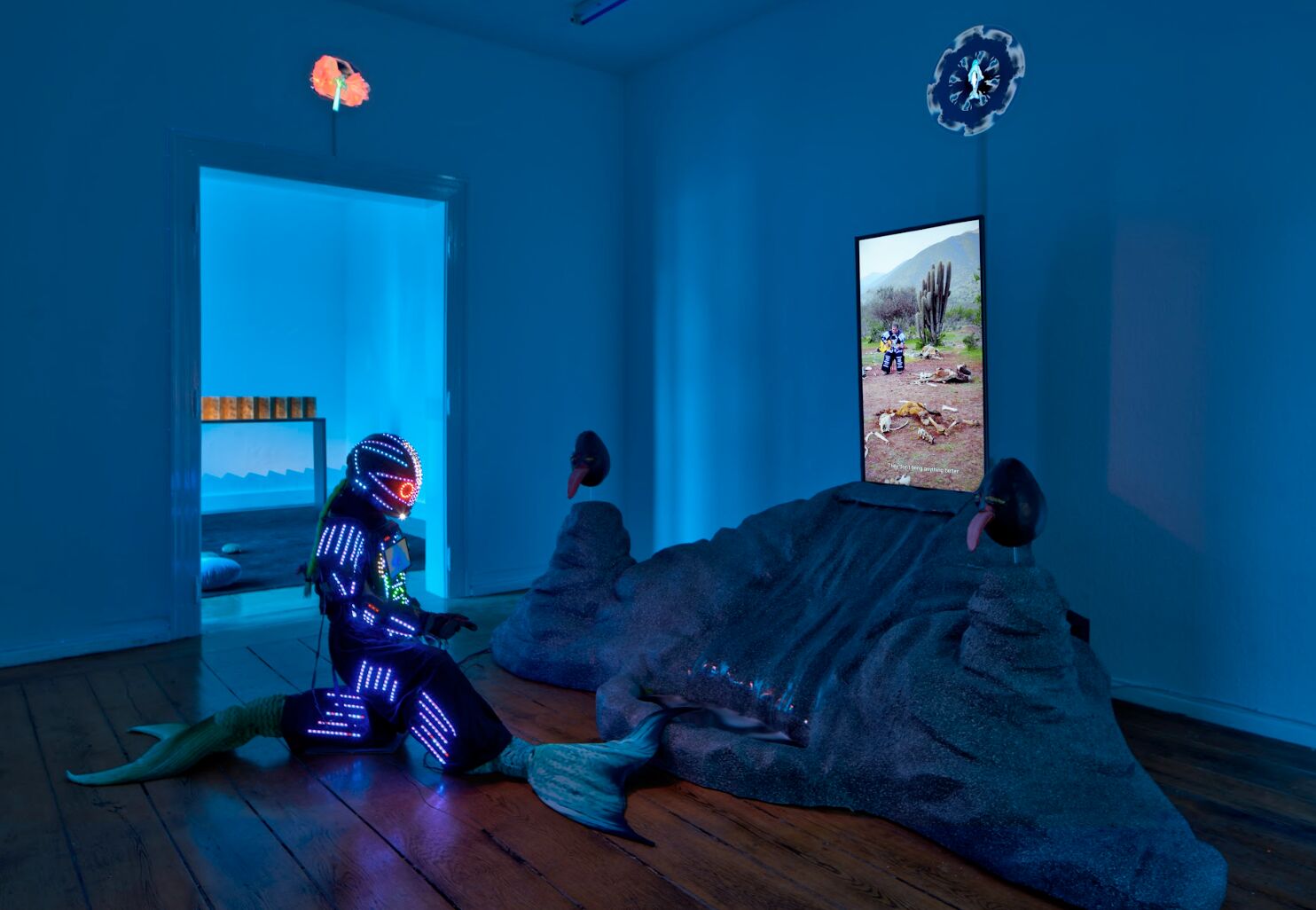
In the third chapter, Patricia Domínguez’s Liquid Mantras, continued the dialogue between spirituality, ecology and resistance, grounded in her ongoing collaboration with Mujeres del Agua (Women of Water) and MODATIMA (Movement for Access to Water, Land and Environmental Protection). The Chilean context, where 98% of the water has been privatized, frames her research as both political and poetic.
As someone who grew up in a place where drinking tap water was never an option, I deeply relate to the urgency of this theme. Access to clean water is not a luxury, but a basic human right. The installation presented historical facts about how the Chilean people lost their right to water as a human right, how the privatization was implemented in the 1980s and how feminist activism has fought against it ever since.
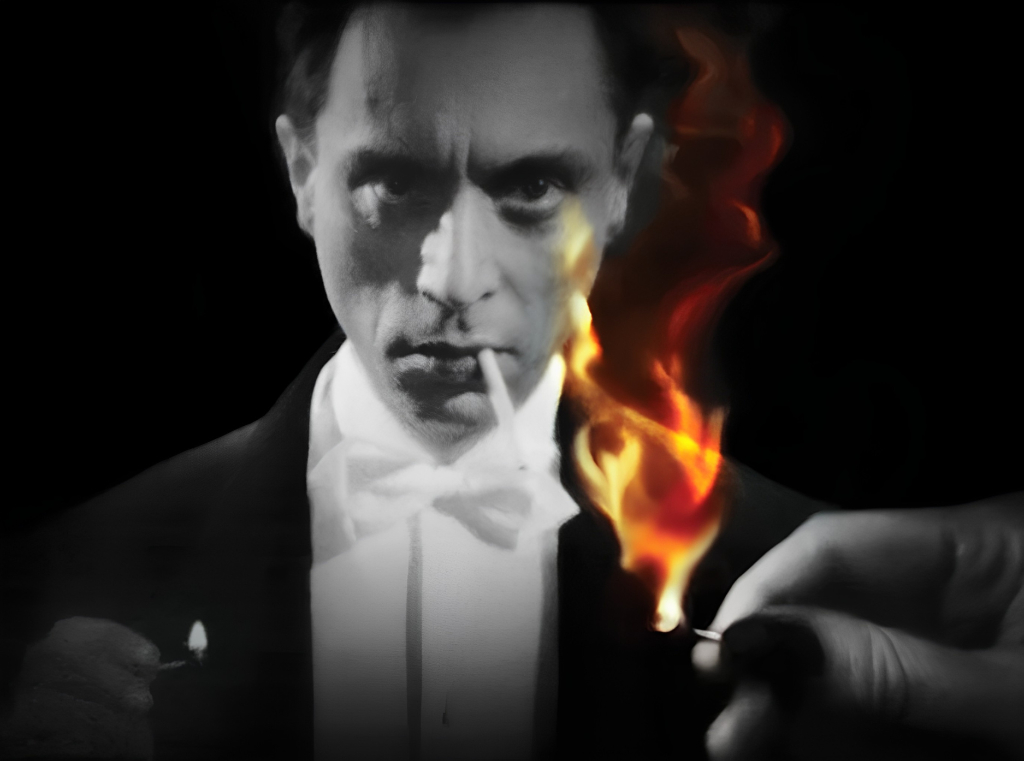
Domínguez’s The Ballad of the Dry Mermaids and the exhibition as a whole conjured the image of a techno-shamanic mermaid, mourning ecological loss while performing rituals of renewal. Through the divine voice of Juan López, who laments the devastation caused by Chile’s monoculture of avocados, the work became a call to action. Liquid Mantras weaved feminist and indigenous activism into the global discourse on water justice, positioning art as a space of collective healing and resistance.
During Liquid Mantras, the two-day symposium Wetlands for the Future brought together artists, poets, scientists and MA students from Kunsthochschule Weißensee to reflect on ecological and spatial strategies for sustaining biodiversity and the future of wetlands and forests. This intersection of artistic, academic and scientific voices epitomized the spirit of Swamping, where knowledge did not flow hierarchically but circulates like water, across disciplines and perspectives.
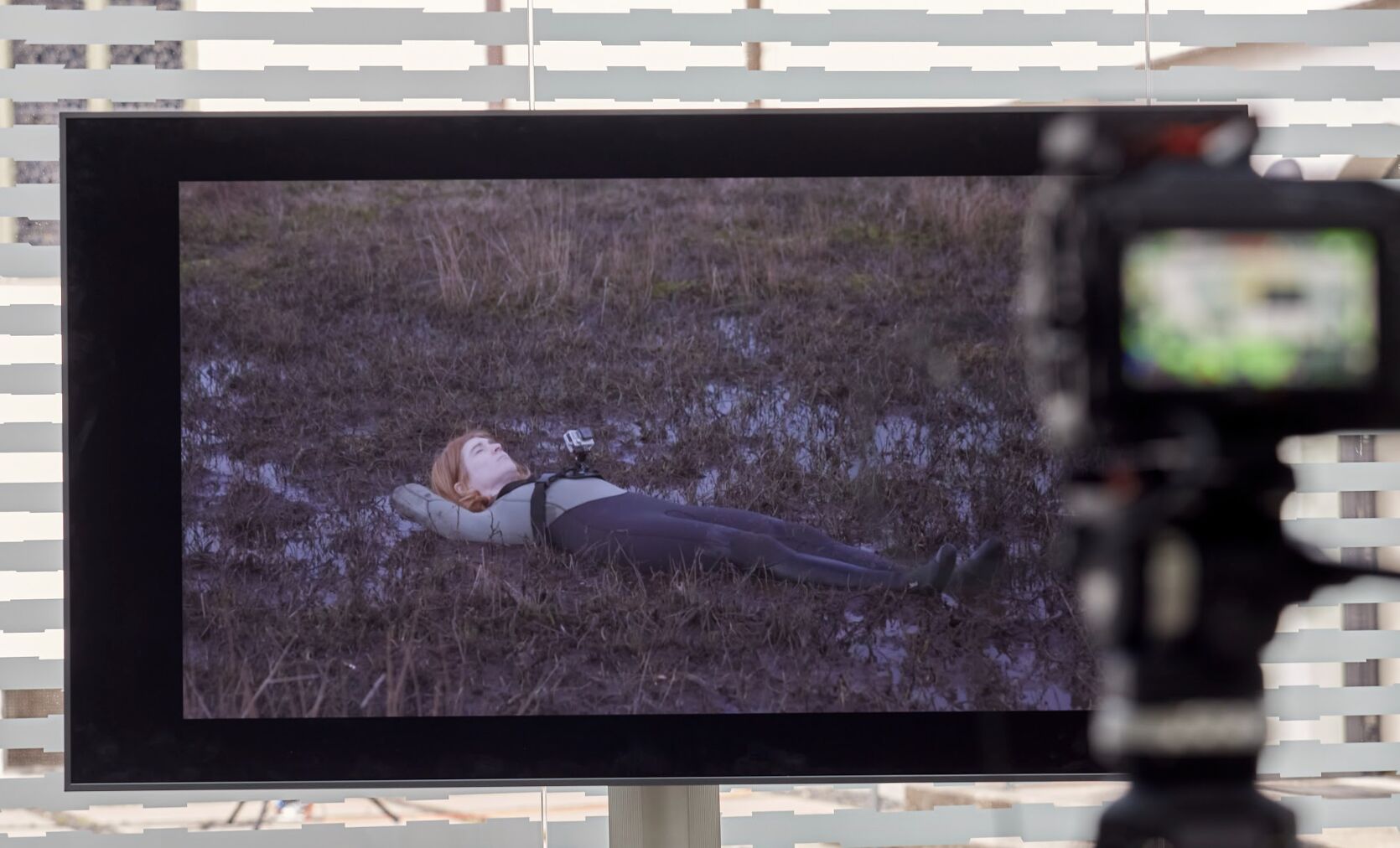
The closing exhibition, Elise Eeraerts & Roberto Aparicio Ronda’s The Starlight Dims Its Blissful Gaze, The Springs Are Steaming—We Descend in Haze, grounded the series in a more explicit scientific dialogue. Bringing together reeds and grasses from wetlands, layered soundscapes of interviews with swamp scientists and architectural fragments from field research, the installation became a temporary research station and an experimental zone for listening. The overlapping voices of the scientists spoke of destruction, rising carbon dioxide levels and loss, yet also of resilience and hope, seeding a belief that planetary health can still find its equilibrium.
In the Moors and Mires/Kirkpatrick Marsh video, we hear the voices of three scientists over the footage of a key wetland location, the Kirkpatrick Marsh near the Rhode River in the USA. One interview snippet caught my attention when he described an individual observation and its drastic scale: he said that, as a wetland expert, he observed a 20% increase in carbon dioxide release in his dataset. He added, ...imagine this is happening all over the planet.
On the contrary, another scientist narrated, you don’t need to worry about the environment; focus on yourself and the planet will adapt… but it is essential to remember that how we care for and nurture ourselves depends on our relationship to air, water and soil. What we plant, the water sources we use and the nutrients available in that environment ultimately shape our bodies and our relationship to self-care. Despite his attempt to comfort the audience, he actually advocated caring for the planet from a holistic perspective.
Years ago, during a lecture by visual artist and researcher Pınar Yoldaş, her opening statement struck a deep resonance within me. She said, if one does not touch, smell, or taste it, people don’t believe that climate change is happening. A lack of sensory experience for massive changes can make it hard to grasp. It becomes challenging to convince a climate change denier due to this fundamental comprehension limit. I see that the program Swamping gives a response to this gap.
The artists create spaces where sensorial, immersive and experiential encounters bring ecological realities closer to the body. Each chapter of the program flows into the next like tributaries feeding a larger delta of thought, emotin and activism. And yet, what makes this project especially potent is not only the sensory immersion itself, but how artistic practices open access to expanded lines of thought. Through the interventions of the artists involved, Swamping becomes a platform where global narratives of water, wetlands and planetary health can be approached together, not only through distant data points, but through embodied, situated shared experiences.
Artistic research enables audiences to engage with complexity in ways that scientific reports alone cannot by staging encounters with living materials, by reshaping the architecture of perception, by inviting rituals and speculative visions and by allowing multiple voices of human and more-than-human species to participate in the discourse. Together, they remind us that water, in all its forms, holds memory and that caring for it is inseparable from caring for ourselves.
Perhaps this is the task for artistic and curatorial practices now: to become more like a wetland, to hold, to filter, to nourish and to let overflow.