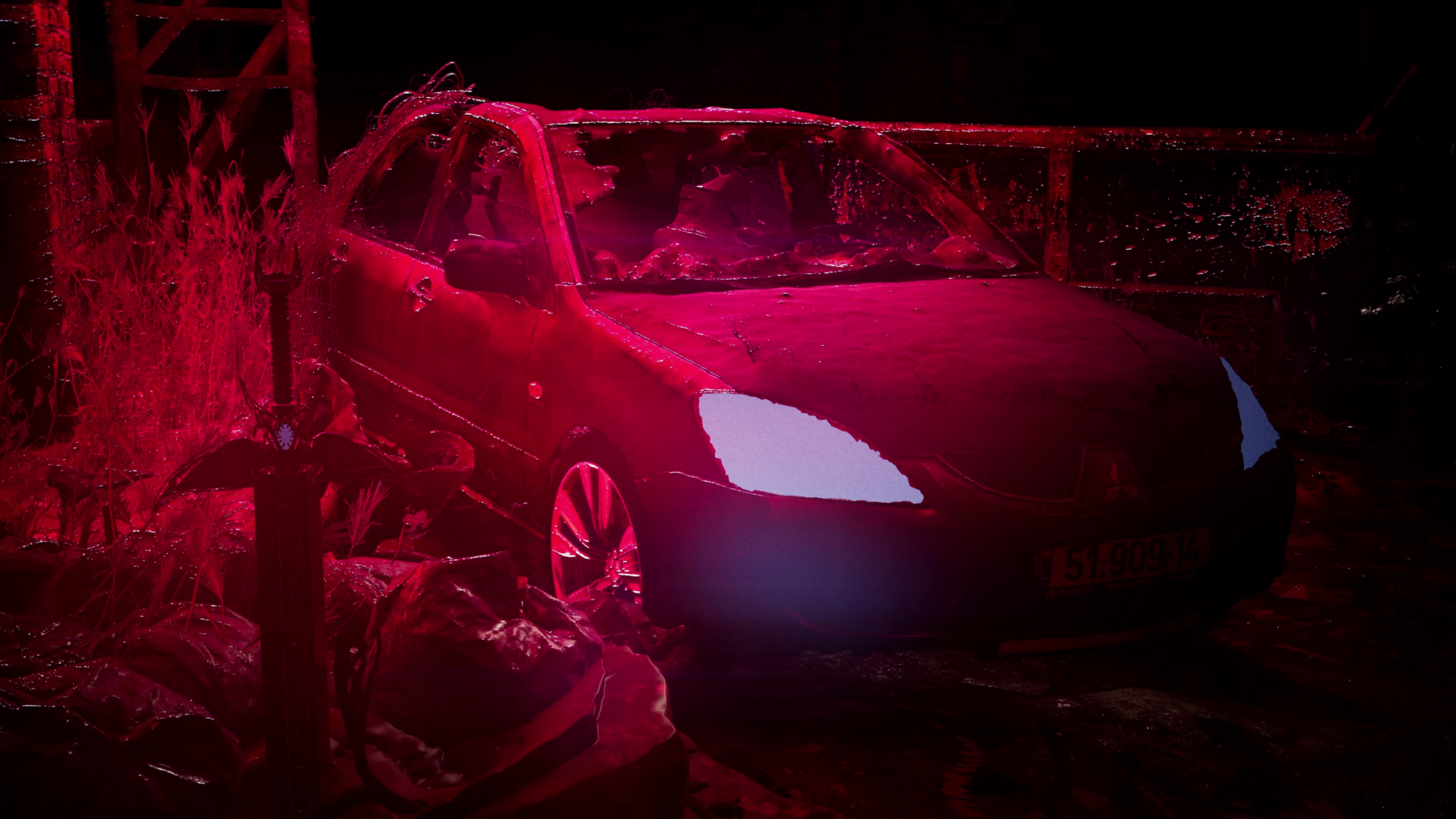
Text by Rodrigo Guzman-Serrano
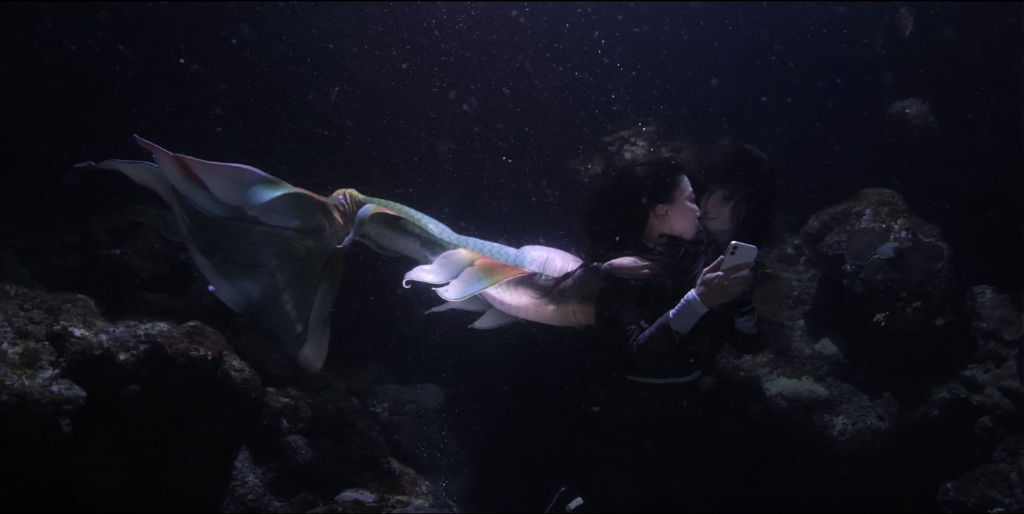
In the first part of this article, I discussed the origins and evolution of Backslash at Cornell Tech, from its early incarnation as ArtFoo to its current identity as a program that pairs artists with technologists to produce finished, exhibition-ready artworks. I traced how the program’s ethos has shifted over time, moving away from an emphasis on cutting-edge technology and toward a more open-ended sensibility in which the right tool is whatever best serves the work. What follows picks up that thread, probing some of the projects more directly, asking what Backslash shares with (and what sets it apart from) the longer history of art-and-technology collaboration, and what the program might still become.
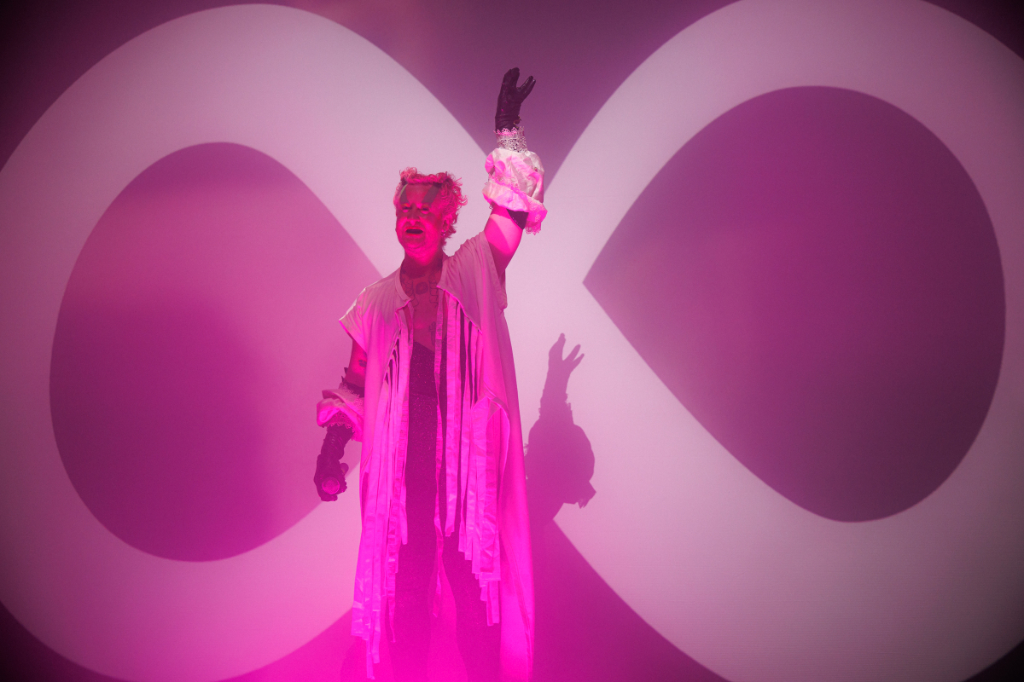
Jen Liu’s project, which culminated in her video work The Land at the Bottom of the Sea (2023) [1], began as an exploration of Large Language Models (LLMs) and image generation programs to explore how to visualise the people and voices that have disappeared or have been “liquidated,” as she puts it. Liu, who worked with Soul Choi (2022 MS in Information Science graduate), soon realised the limitations of these technologies and how ideological machine learning was. Through conversations with Choi and others, Liu’s project morphed, as she explained to me, into an exploration of the limits of machine learning, pointing to a larger inability to see. Liu is no stranger to the use of new technologies as material and conceptual tools in her practice, and she is well embedded in the art-and-technology community (she was the recipient of LACMA’s Art + Technology Lab grant).
But her Backslash project is less a probe into using machine learning for art-making and more a reflection of what we, as society, expect these technologies to do or reveal. To be clear, I believe the shift I’m talking about is more rhetorical and narrative than programmatic. From the start, Backslash has supported artists whose practices are fundamentally idea-driven—artists for whom technology is a material to think with rather than a new toy.
The program’s first fellow, Matthew Weinstein, for instance, was interested in creating what he called an anti-interactive work. Kate Gilmore, on the other hand, was less interested in technology than in the performativity of physical gestures and their cultural and political associations. Miao Ying‘s Pilgrimage into Walden XII, for all its visual dazzle, is ultimately, as I see it, a meditation on gamification, labour, and the seductions of virtual utopia. In all these cases, the technology clearly matters, but it was never really the point. What seems to have changed is the way the program talks about itself, a recalibration of emphasis from the tools to the questions those tools might help pose.
Once again, what has remained constant is the emphasis on the partnership and on creating an outcome that can speak for itself outside the figurative walls of the program. To achieve this, the interaction between artists and technologists is crucial. There is no fixed project proposal at the outset. Artists are not expected to arrive with a fully formed concept awaiting execution. Instead, the work emerges through conversation, studio visits, meetings, and the slow accretion of ideas exchanged between people who think differently about problems. When I asked Liu if Backslash introduced any new tools or technologies into her practice, she replied, They didn’t give me any tools; they gave me the human.
The shape of the project and the texture of the work emerge from a real conversation between partners. Cornell fellows are creative contributors to the work, not only in the way they solve technical problems but also in how the project shapes up conceptually and physically. The technologists and engineers aren’t merely technical hands executing someone else’s vision. They bring their own expertise, their own curiosities, their own sense of what a technology might do.
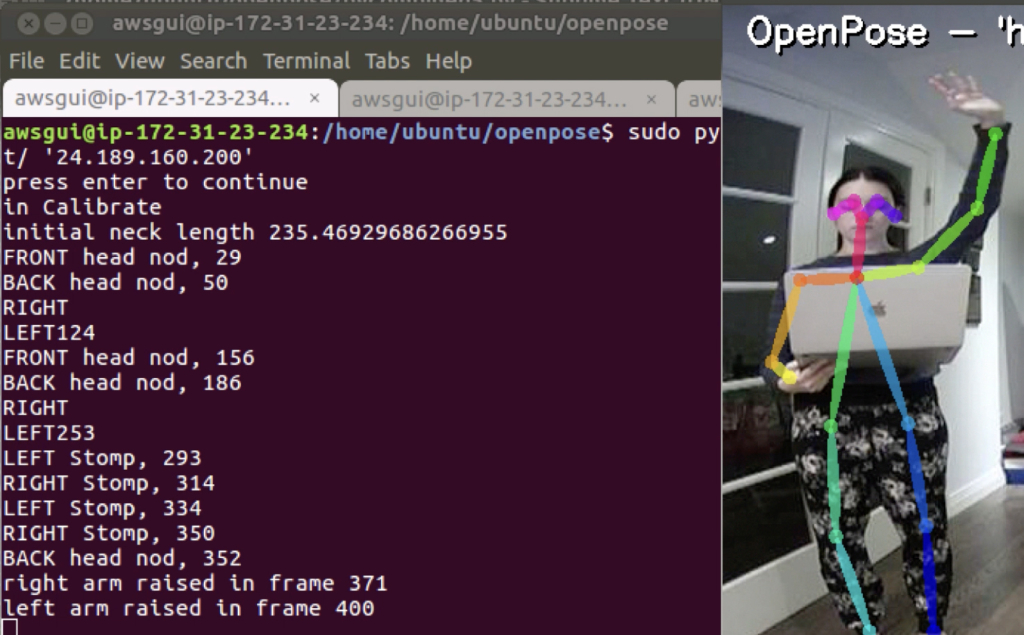
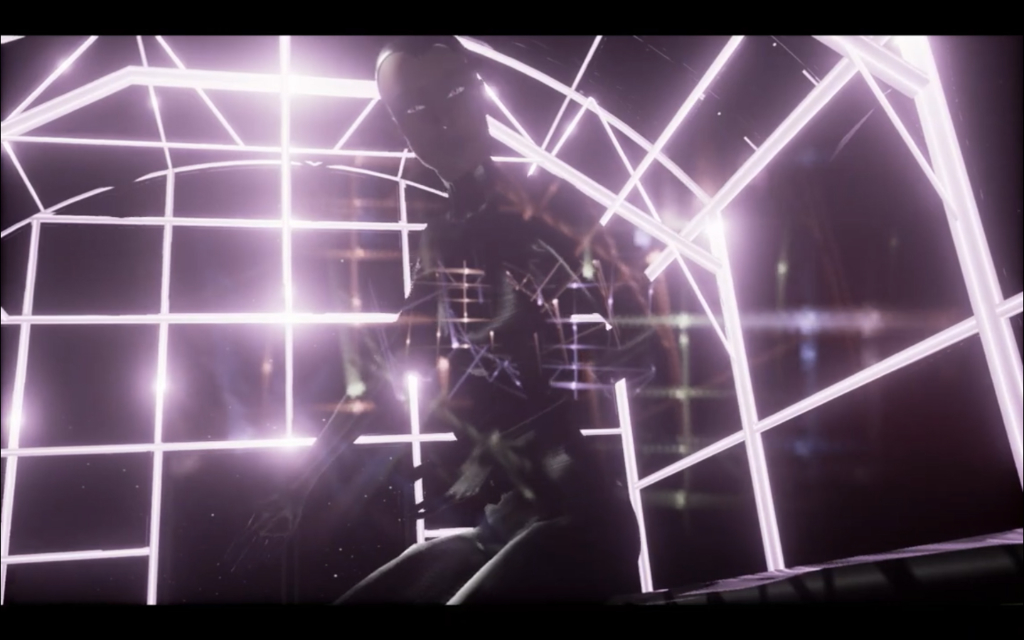
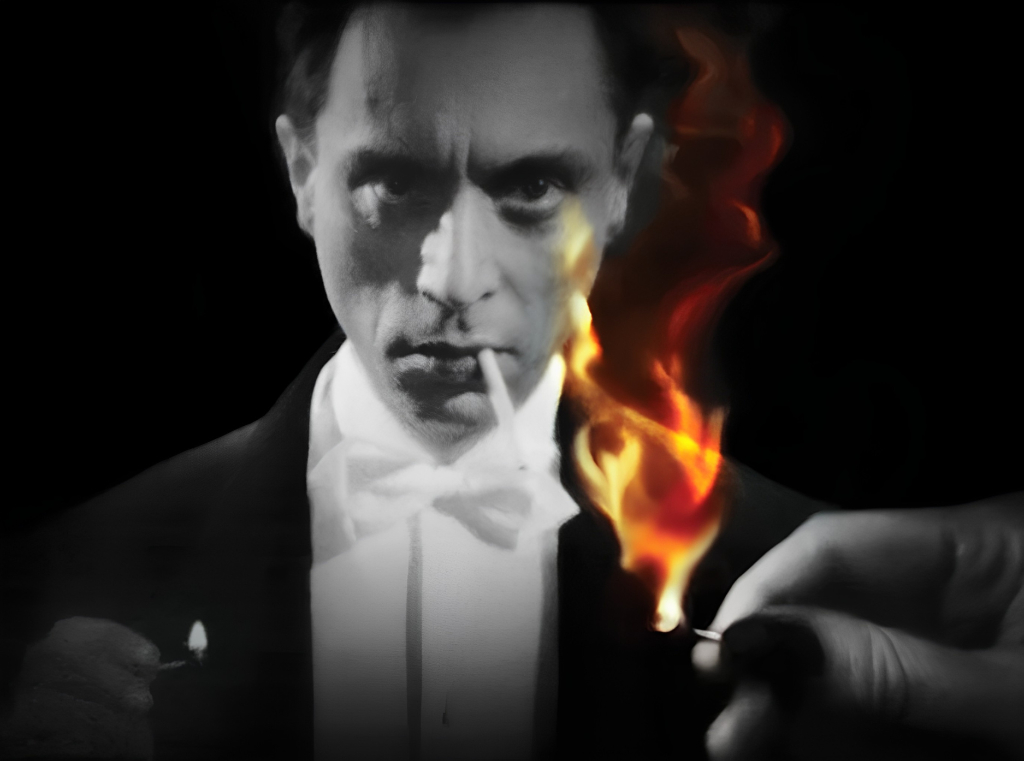
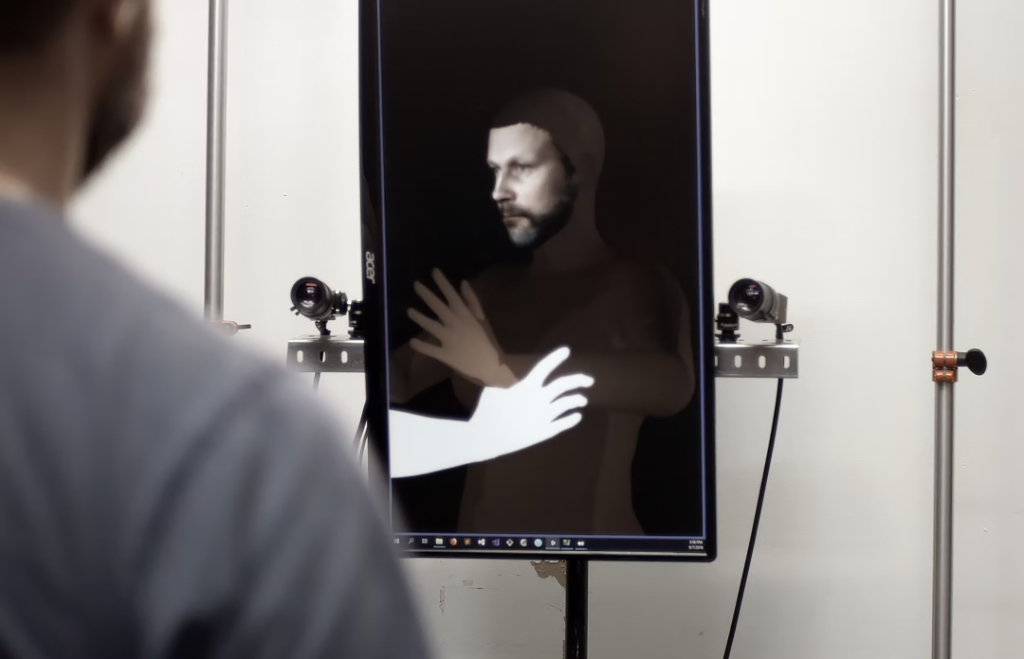
For Matthew Weinstein’s The Living End (2017) [2], for example, the artist wanted an animation that would respond to the audience without viewers necessarily being aware they were influencing it. The work needed to feel ambient, reactive, almost alive, but not like a video game waiting for input. To this end, Weinstein’s collaborators Brandon Plaster and Alap Parikh experimented with different systems before eventually settling on the game engine Unreal and a set of Kinect sensors to collect data from the room, such as the number of viewers present, the location of a randomly selected viewer, a viewer’s breathing rate, etc. The sensors needed to be positioned very close to one another, as they were calibrated relative to each other.
They also needed to remain attached to the Kinect camera. It was a finicky technical problem with no off-the-shelf solution. Plaster ended up fabricating a 3D-printed contraption to hold everything in place, a small but essential piece of custom hardware born out of necessity. The anecdote is minor, but it illustrates the texture of these collaborations: a solution emerging through conversations and improvisation rather than specification. For the Cornell fellows, moreover, this was also a window into different ways of producing creative outcomes. It was nice, Plaster told me, to work in tech for something other than a product to be consumed. This, ultimately, is what Backslash is about: not technology itself, but the conversation between people who think differently, and the unexpected things that emerge when they build something together.
The creation of a collaborative environment for artists and technologists is not an entirely new concept, of course, and it is worth placing Backslash within this longer history. As an art historian, I would be remiss if I didn’t. (Greg Pass himself is aware of this longer history.) The second half of the twentieth century witnessed a boom in interdisciplinary initiatives at the intersection of art, science, and technology. Some emerged through grassroots partnerships, others formalised into institutional programs that would shape the landscape for decades to come. Experiments in Art and Technology (E.A.T.), founded by Robert Rauschenberg and the engineer Billy Klüver in the 1960s, brought together artists and Bell Labs scientists to collaborate on performances, sculptures, and installations. MIT’s Center for Advanced Visual Studies (CAVS), established also in the 1960s under the direction of György Kepes, offered artists residencies within a research university. LACMA’s Art and Technology program, which originally ran from 1967 to 1971, paired artists with corporations in Southern California’s aerospace and electronics industries. A model that, for better or worse, anticipated the tech-company residencies that would become fashionable half a century later. These initiatives established a template: put artists in proximity to engineers and scientists, give them time and resources, and see what happens.
Backslash inherits this tradition, but its positioning within a technology-focused graduate campus sets it apart from many of these early initiatives. The program is better understood in the context of more recent university-based efforts. MIT’s Center for Art, Science & Technology (CAST), the successor to CAVS, operates on a broader scale and with a wider institutional mandate. CAST collaborates with departments, labs, and centers across MIT. Its scope encompasses visual artists, musicians, composers, and performers, and its Distinguished Visiting Artist program, through the Dasha Zhukova Distinguished Visiting Artist residency that typically appoints artists for an entire academic year. The scale of MIT’s program, however, goes far beyond visual art, and it often engages late-career artists from diverse disciplines.
Similarly, Princeton’s Fund for Collaborations between Artists and Scientists or Engineers [3] encourages collaborations between faculty in the arts and those in the natural sciences or engineering. Another initiative, closer to home, is CUNY’s Art and Science Connect [4], housed at the Graduate Center in Manhattan. This initiative brings artists and scientists together, aiming to spur cross-disciplinary research and teaching. Although all these programs share a certain Zeitgeist, many of them emphasise the academic nature of their endeavours.
What distinguishes Backslash from many of these, I think, is its insistence on producing finished artworks rather than research papers, curricular experiments, or symposia. There is something almost contrarian about Backslash’s emphasis on a finished product. In the academy, process is often prized over product; the research paper, the conference presentation, the grant report, all document what was learned along the way. Art-and-technology programs, in particular, have tended to valorise the experimental, the prototype, the proof of concept, the demo that gestures toward a future application or work that may never arrive. Backslash asks for something more committed.
The fellowship exists not to explore a question or test a hypothesis but to make something that can stand on its own in a gallery or museum, something complete enough to meet an audience–the echo of Cornell Tech’s open studio spirit, which I mentioned in the first part. This is a subtle but significant distinction. It means that the collaboration is accountable not just to the institution or to the collaborators themselves but to the broader public that will eventually encounter the work.
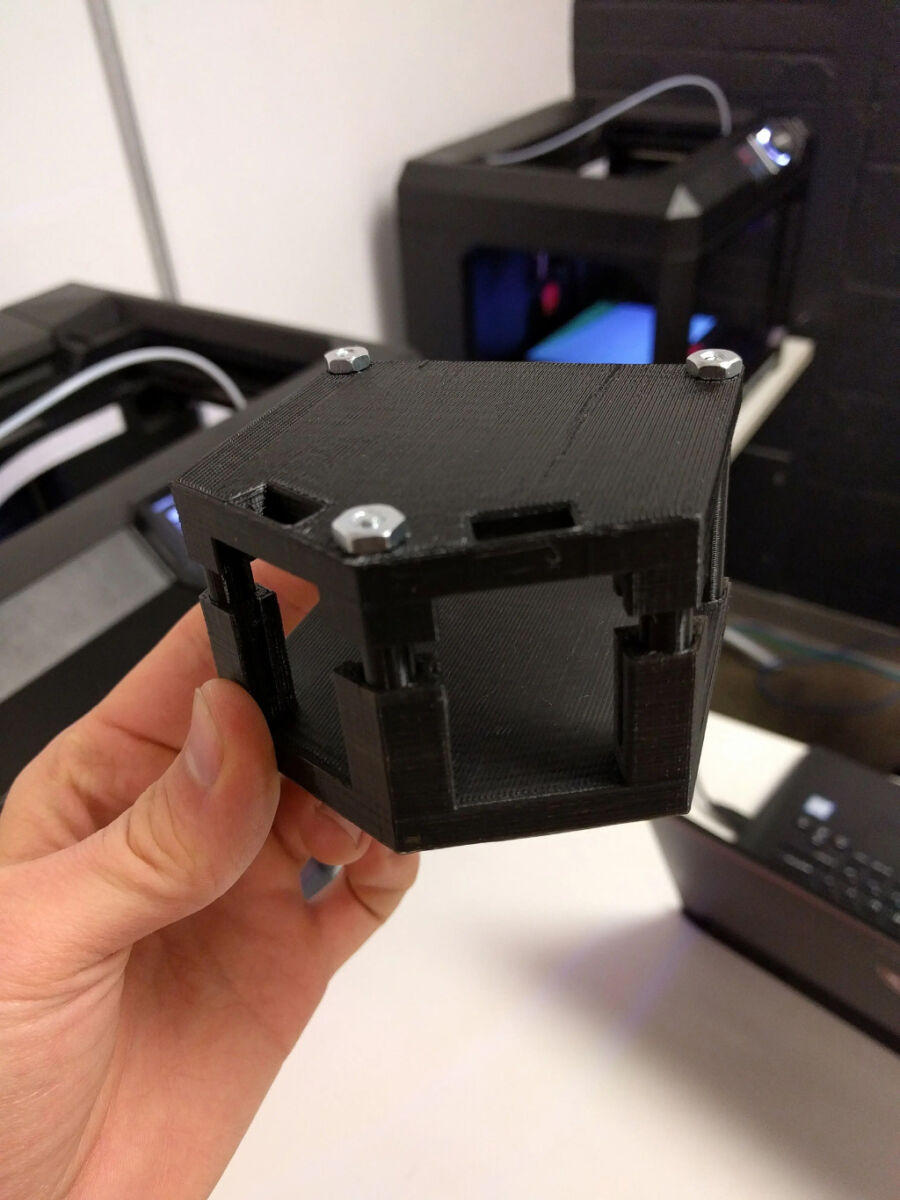
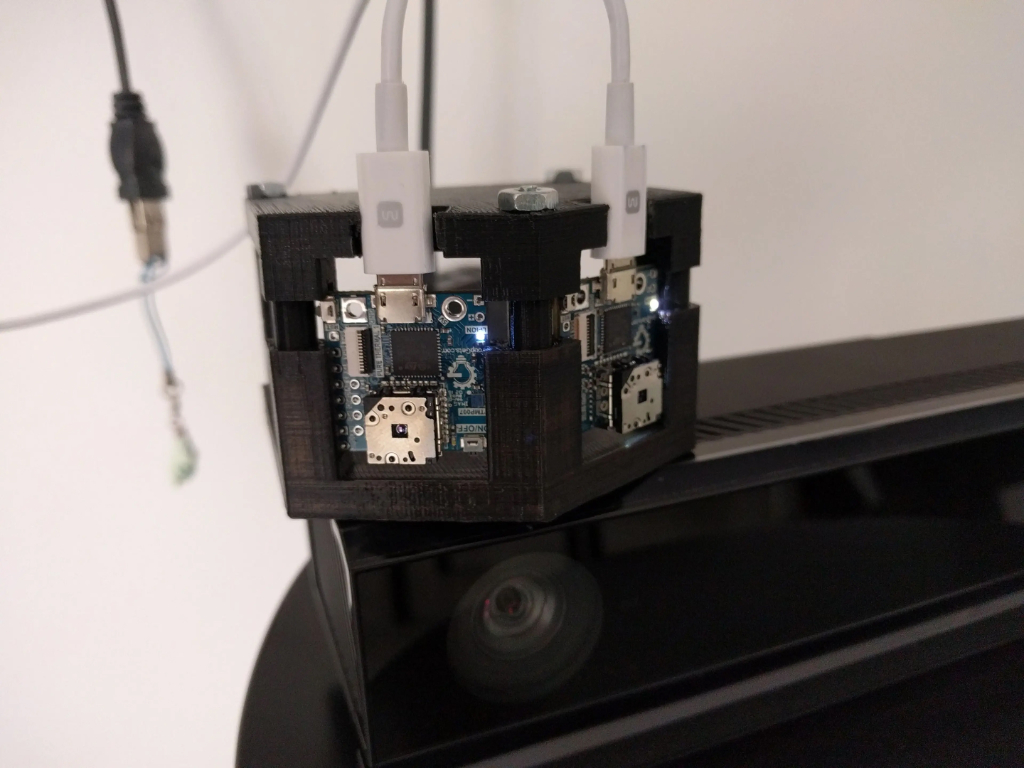
Matthew Weinstein’s The Living End (2017). Photo credit: Brandon Plaster & Alap Parikh
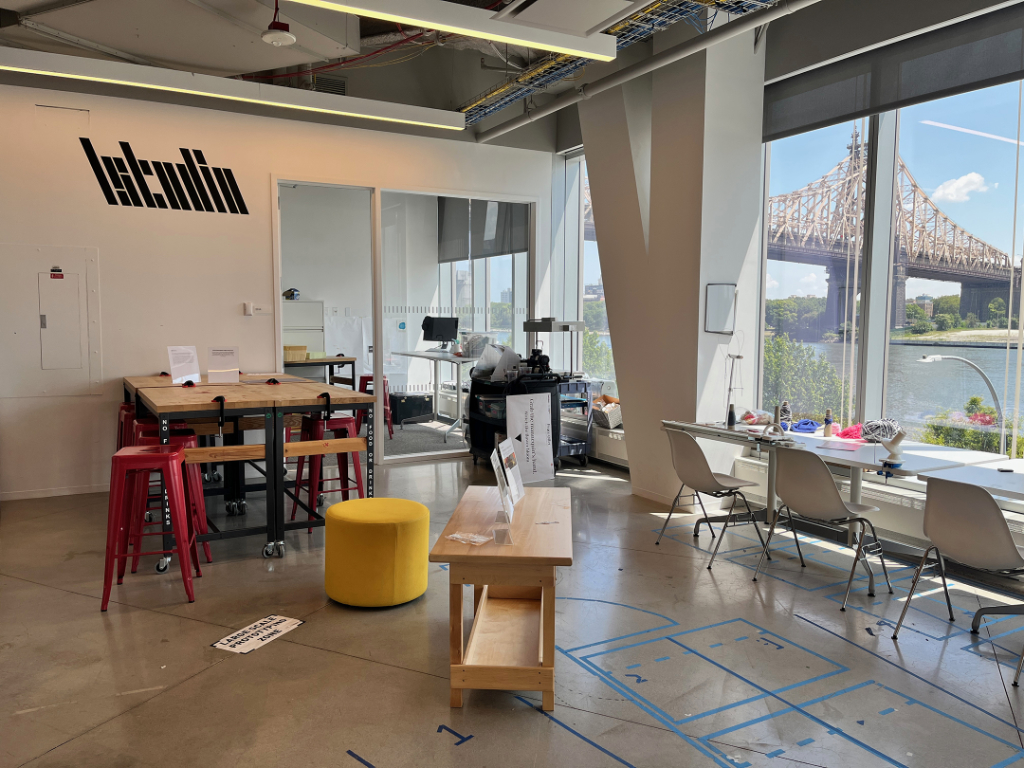
For all its strengths, however, the program has room to grow in various ways. One is the need for a dedicated space for both collaboration and presenting finished work to the public. The Backslash studio inside the Tata Innovation Center, which opened more recently, is a gesture toward addressing this, and the sporadic use of Cornell Tech’s MakerLab offers another partial solution. However, many of the artists I spoke to said they rarely worked in these spaces. Also, Backslash still lacks an exhibition space or gallery of its own. Perhaps this has been a blessing in disguise, forcing the projects developed through the program to truly live outside the university, at museums, in galleries, and institutions where they can reach broader audiences. The program could also benefit from a more systematic approach to the longevity of the works it produces. Some previous Backslash fellows I talked to expressed concern that the pieces they created might not be exhibitable just a few years down the line, a familiar problem in technology-based art, where hardware becomes obsolete, and software stops running.
Another area that might benefit from attention is the selection process itself. Without naming anyone, a couple of the artists I spoke with said they felt they were the wrong person for the program. Some questioned the fit between their practice and the program. In some cases, the projects didn’t seem to run smoothly, both conceptually and practically. A more rigorous emphasis on artists already committed to thinking critically and materially about technology might strengthen the program’s identity. Then again, too much definition might run counter to the spirit of openness and flexibility that has allowed Backslash to evolve as it has. The tension, perhaps, is the point.
One thing is clear to me, however. Beyond the particulars of how the program has operated over the past decade, its evolution, what distinguishes it from similar initiatives, and the areas where it might improve as it enters its second decade, Backslash has served as an incubator, in the most literal sense, for thoughtful artworks born from collaboration between artists and technologists. And these works have proven to be, as we say in the industry, “exhibition-ready.”
A final thought about the value of this program. Although, as I have argued throughout this essay, Backslash insists on visible, concrete outcomes, often as works of art that can be exhibited, experienced, and encountered by a public, it has also produced some unexpected returns: it has launched careers. Alap Parikh, who collaborated with Weinstein on The Living End, used his experience with Backslash to immerse himself in the culture of art and technology. Back then, he told me, the thought of being an artist was a pipe dream.
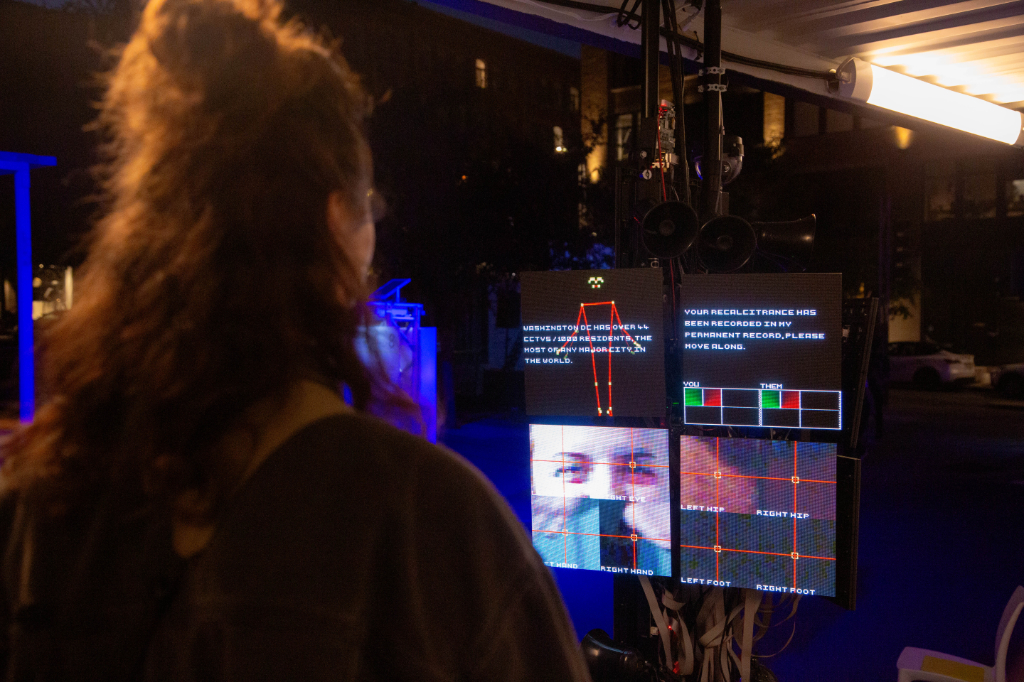
Since his fellowship, Parikh has worked on numerous creative projects involving VR and XR storytelling. He credits Backslash with helping him reorient his entire career; without it, he suspects, he’d be working at some startup. By chance, I ran into some of his post-Backslash work in the wild at an exhibition at ZKM in Karlsruhe [6], Germany. He served as technical director on Captured (2018–21) [6] by Hanna Haaslahti, a piece now in the ZKM collection. The fellowship, it turns out, was not just an incubator for artworks but for the people who make them. That may be Backslash’s most enduring output: not the works it has helped bring into the world, but the sensibilities it has quietly, collaboratively, and irreversibly shaped.