Text by Jacobo García
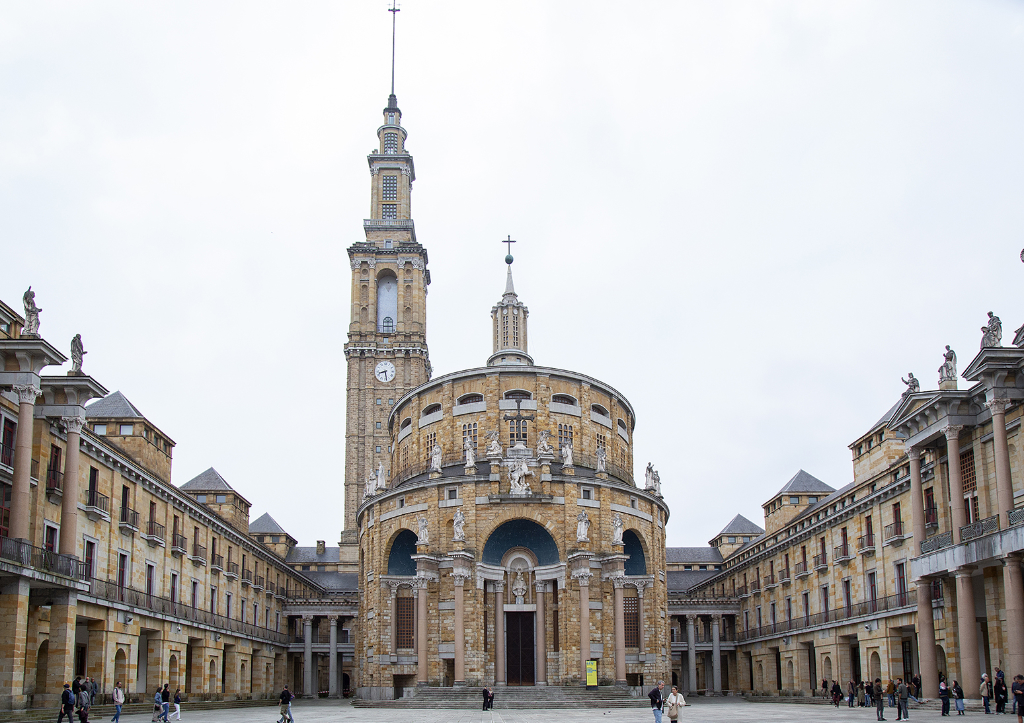
There is a building in Gijón that has experienced several lives. A Francoist vocational school, an emblem of post-industrial reconversion, a regional cultural complex. A heritage site declared BIC (Asset of Cultural Interest) in 2016 and added to Spain’s UNESCO Indicative List in early 2025. La Laboral has been the main stage for L.E.V. Festival since its inception.
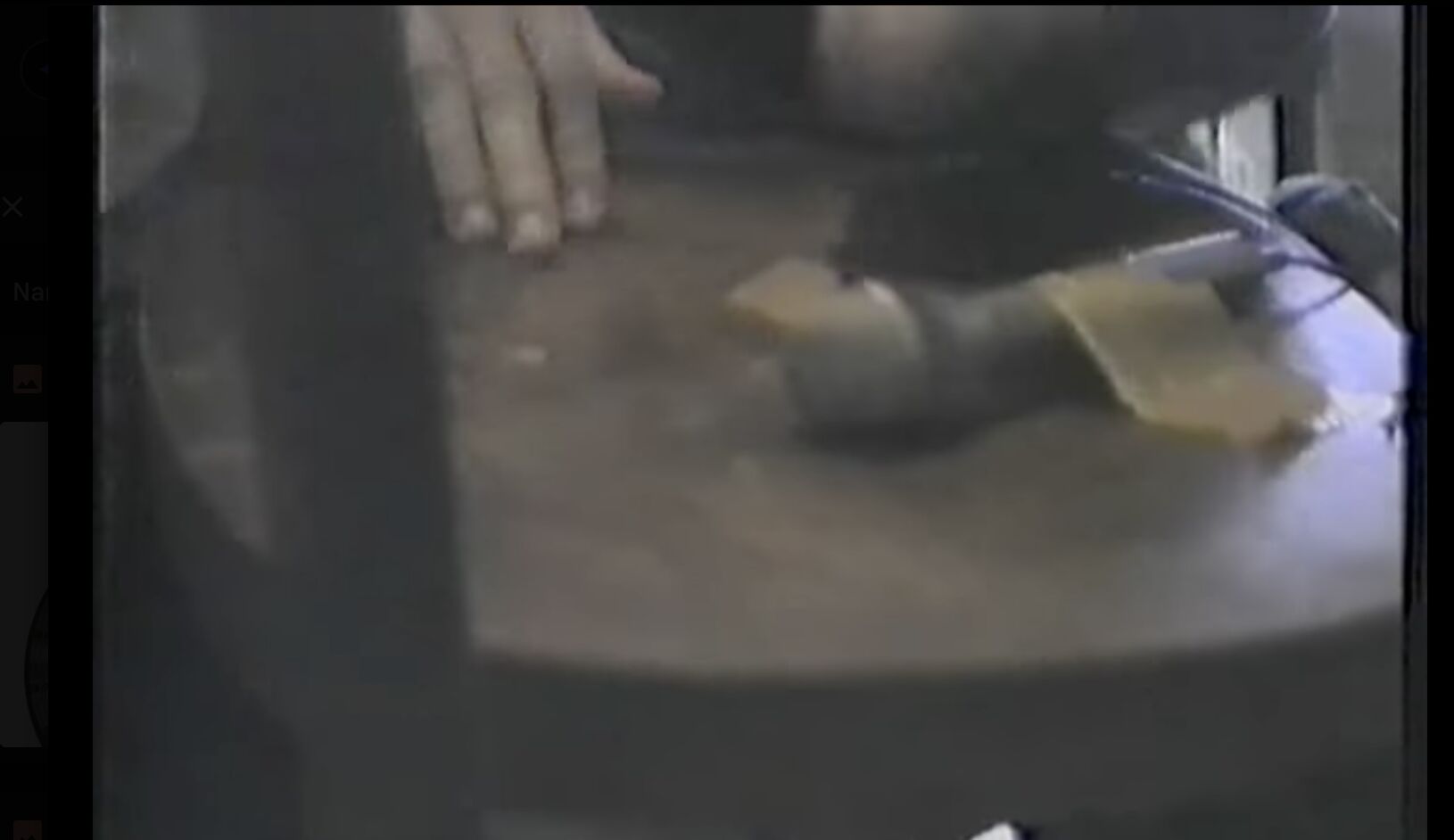
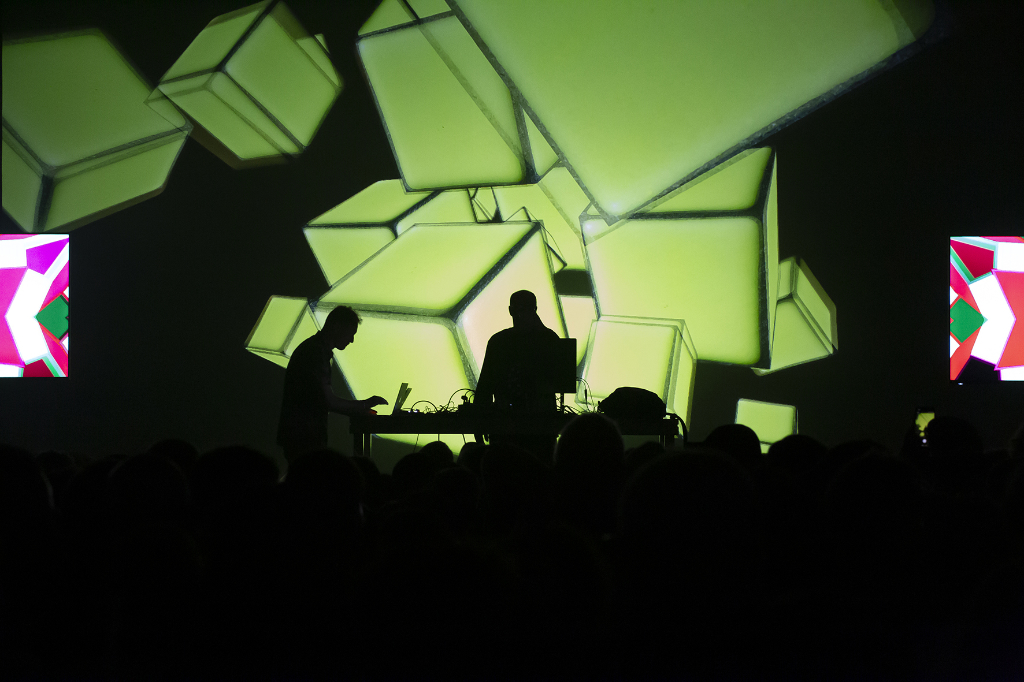
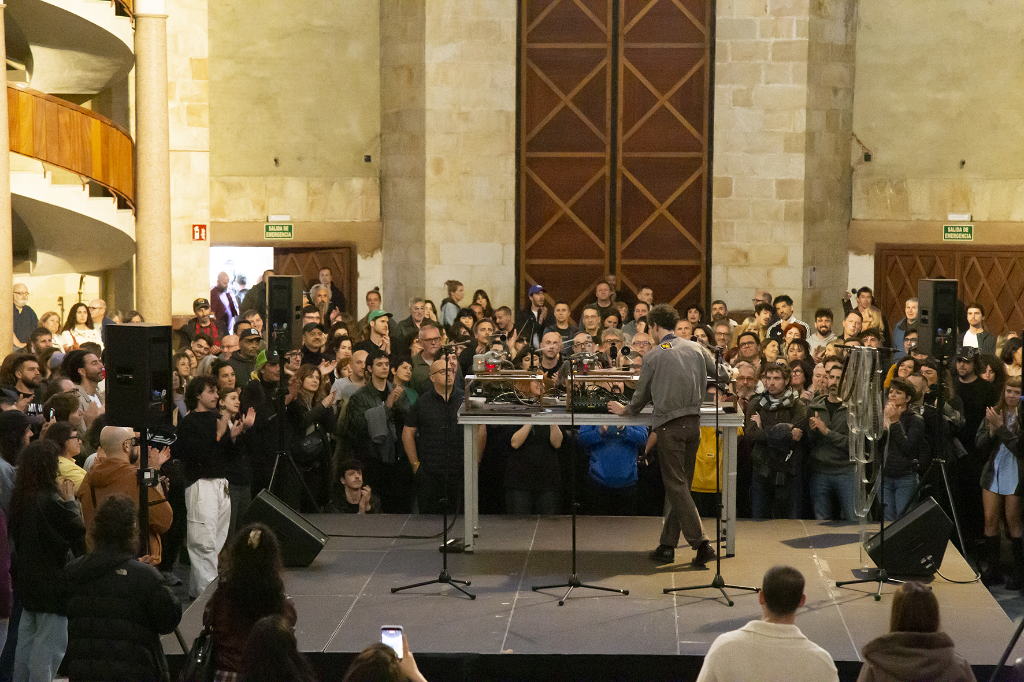
The festival celebrated its 20th anniversary from April 30 to May 3, 2026, and after two decades, L.E.V. has long ceased to occupy venues; the festival evolved to interpret them. On Saturday and Sunday evening, Enrique del Castillo performed Umbráfono beneath its elliptical dome, a piece that turns 35mm film into sound through optical readers he designed himself; an analogue ritual staged inside an architecture stripped of its sacrament. This is a relevant clue; it’s the first concert in the church after six years of renovation work, a favourite venue from past editions.
A festival that grew laterally
When L.E.V. emerged in 2006, the wager was almost confrontational. Asturias was a region still metabolising the closure of its mines and the long exit of heavy industry; its electronic vernacular was techno. Therefore, to programme such a festival in Gijón, in that decade, was less a curatorial decision than an act of cultural rebellion. Two decades on, L.E.V. is one of the most recognisable European festivals in its category. By any metric of longevity, it now belongs to the small constellation of audiovisual festivals, alongside CTM, MUTEK, Unsound, SEMIBREVE, that have survived long enough to articulate a recognisable community.
Festivals of comparable tenure tend to expand horizontally by adding stages, bigger names, and dates, but somehow L.E.V. evolved by adding places. As time passed, editions have been folding new architectures into their choreography: the Teatro de la Laboral and the Nave at LABoral Centro de Arte; the granaries of the Muséu del Pueblu d’Asturies, where electronic music is performed inside a hórreo; the Jardín Botánico Atlántico, designated for silent listening at the festival’s close; the 19th-century Teatro Jovellanos; the Antiguo Instituto; the 18th-century Colegiata Revillagigedo; the recently restored Capilla de San Esteban del Mar; and, this year, the desacralised church. None of these spaces was conceived for the audiovisual performance L.E.V. cultivates, yet all have been read into the festival’s vocabulary.
This is the first legible gesture of the 20th anniversary. L.E.V. has not expanded; it has grown in other directions: horizontally and in-depth. The festival hasn’t evolved into a brand; instead, it has become a reading of Gijón and its patrimonial heritage.
The festival as an argument
Over the past 20 years, L.E.V. has developed a method. Not as a programmatic statement on the festival’s part, nor a manifesto issued from its curatorial direction. It is, rather, a logic that becomes legible only retrospectively, by tracing the line between editions. The method consists of treating each space the festival enters as an interlocutor rather than a container. Therefore, the venue is not the surface on which the work is presented; it is one of the work’s voices.
This distinction has major implications. The dominant festival model in European electronic culture treats the venue as a technical given, a black box whose acoustic and architectural properties are to be neutralised, optimised and invisible to the work. The artist arrives, the rider is honoured, the lights are dimmed, the room recedes. The performance is executed as if it could have happened anywhere else with comparable rigging. There is nothing wrong with this convention; much of the contemporary audiovisual practice depends on it. But it is a convention after all; in this context, alternatives with character radiate, and the audience answers.
The path L.E.V has chosen consists of selecting spaces with biography: buildings that already meant something before the festival arrived, and curating performances that can absorb that meaning without being tamed by it. For example, pairing a baroque collegiate church and an immersive video installation is not, in principle, made for one another; the curatorial labour lies in finding the artist whose grammar can survive the architecture, and whose architecture can survive being read by it.
When the encounter succeeds, neither space nor work is reduced to backdrop or content. They cohabit. The audience perceives the work and the room simultaneously, and the perception of one alters the perception of the other. This method produces something approaching a critical practice: L.E.V. has effectively assembled a counter-history of Gijón: a city read not through its civic monuments or its tourist itineraries, but through the dialogue between its inherited architecture and the most contemporary forms of audiovisual creation.
The map illustrated
The thesis advanced in the previous section is, in the end, only as good as its evidence. What follows is not a chronicle of the festival but a reading of four operations the 2026 edition made visible. Each operation answers a different question about the relationship between a work and the room it occupies.
The first operation is the most explicit: two pieces, programmed in two desacralised spaces, performed the same gesture in different registers. Beneath the church of La Laboral, Enrique del Castillo installed Umbráfono: an analogue contraption that conscripts film into sound. The architecture had been stripped of its sacrament, but the piece supplied another one, mineral and mechanical, in which celluloid is read by light as scripture once was.
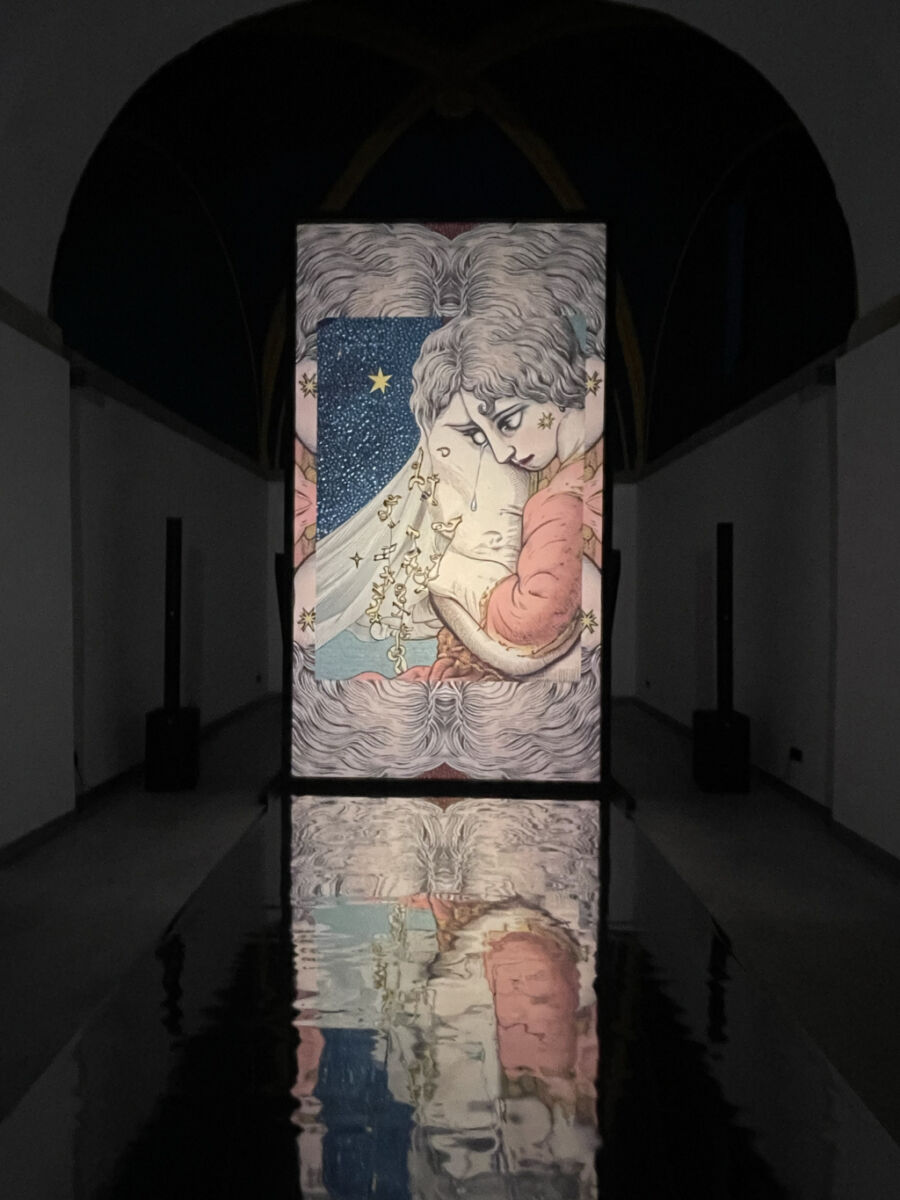
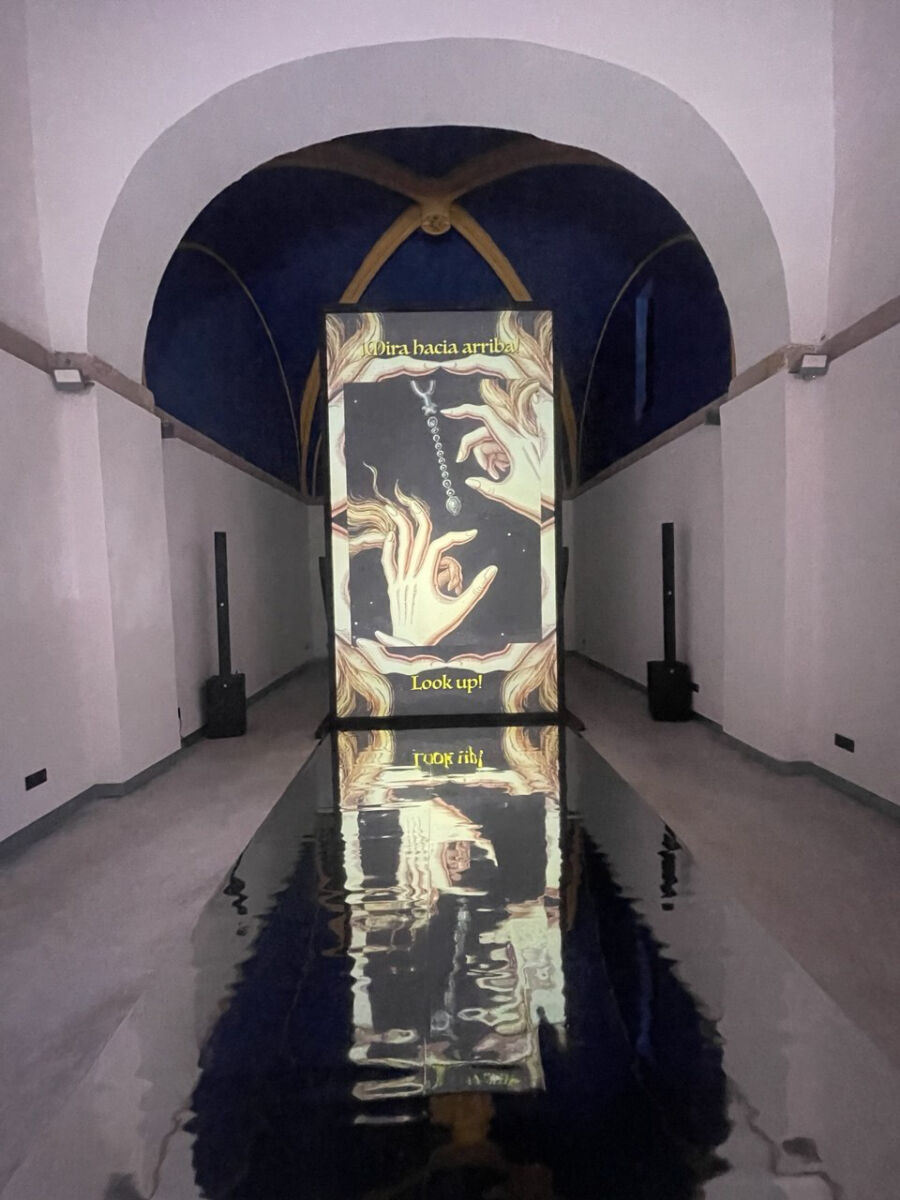
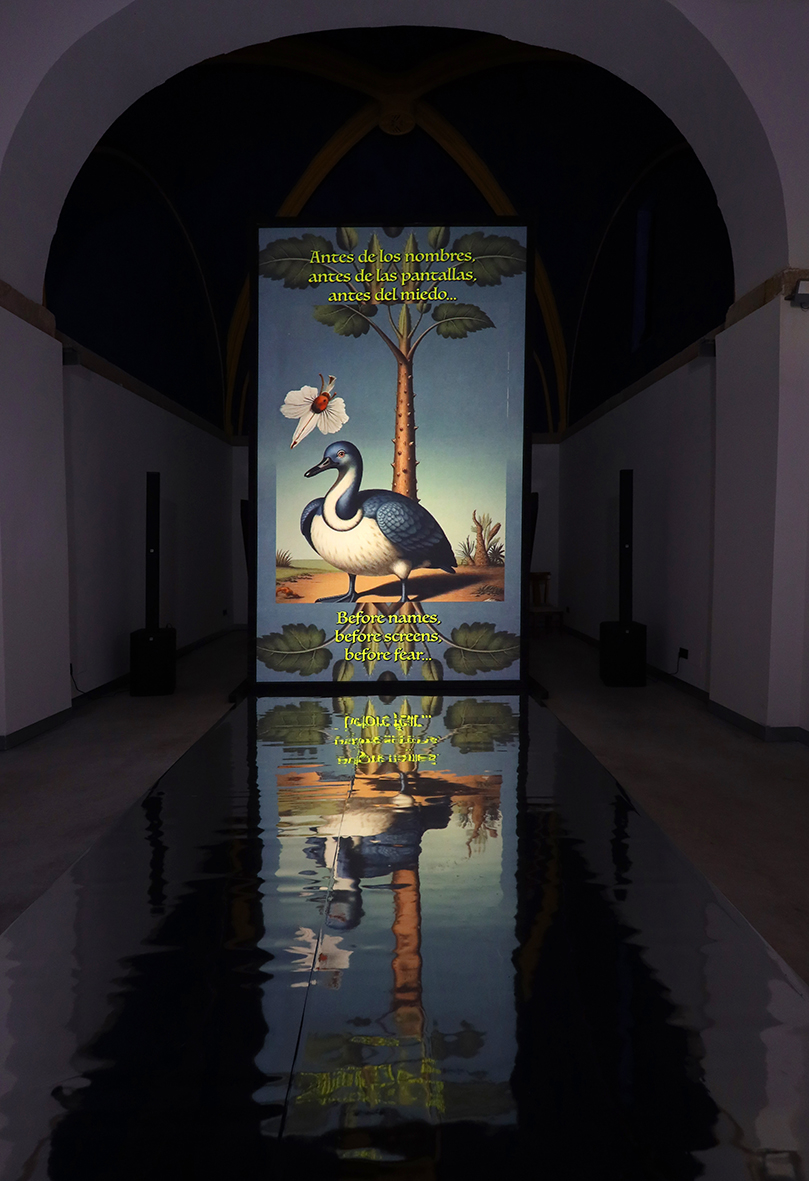
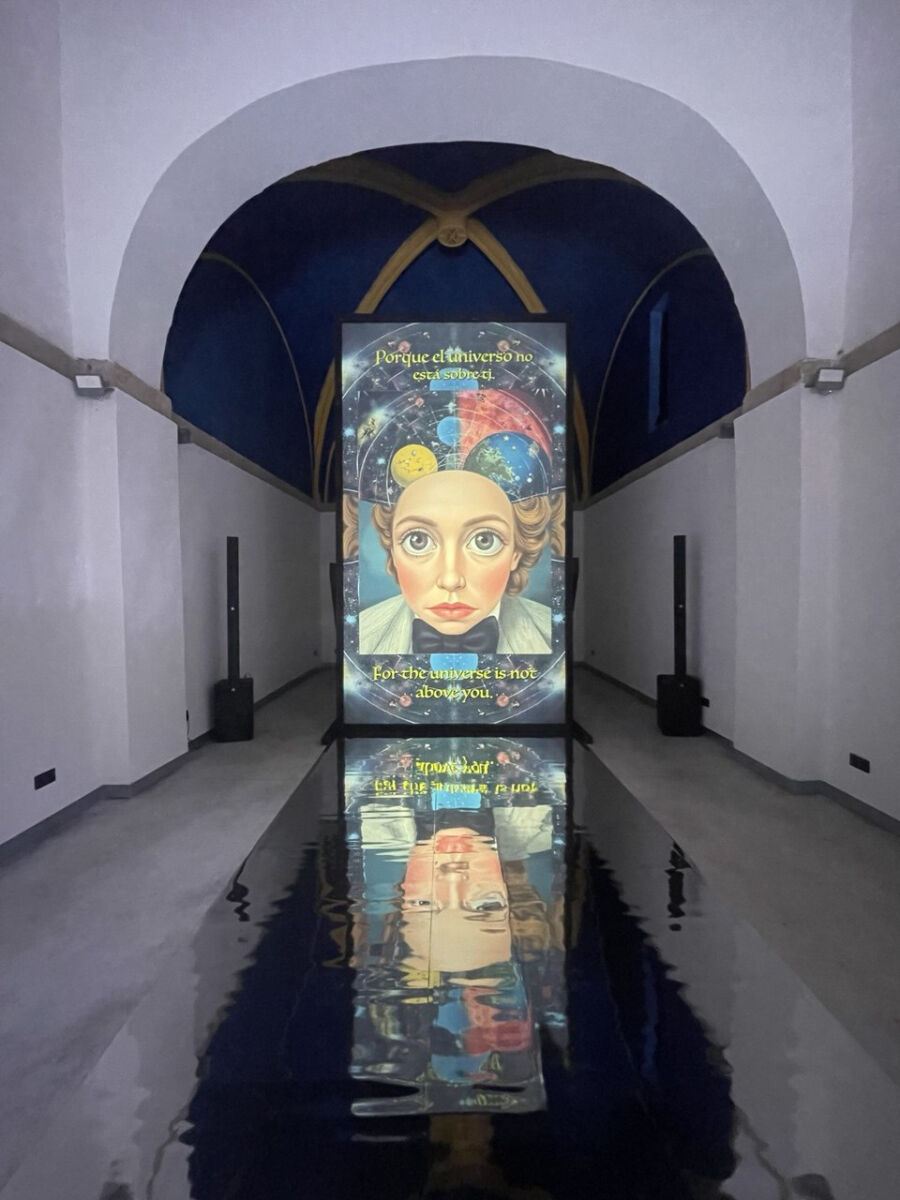
A few kilometres away, in the recently restored Capilla de San Esteban del Mar, Anne Horel installed La señal está abierta, a vertical video work composed of surrealist collage and generative imagery, conceived, in the artist’s own words, specifically for the sacred spatial context. Horel’s piece substitutes religion with ancestral archetypes, astrology, and hermetic symbolism to compose what she calls a contemporary incantation.
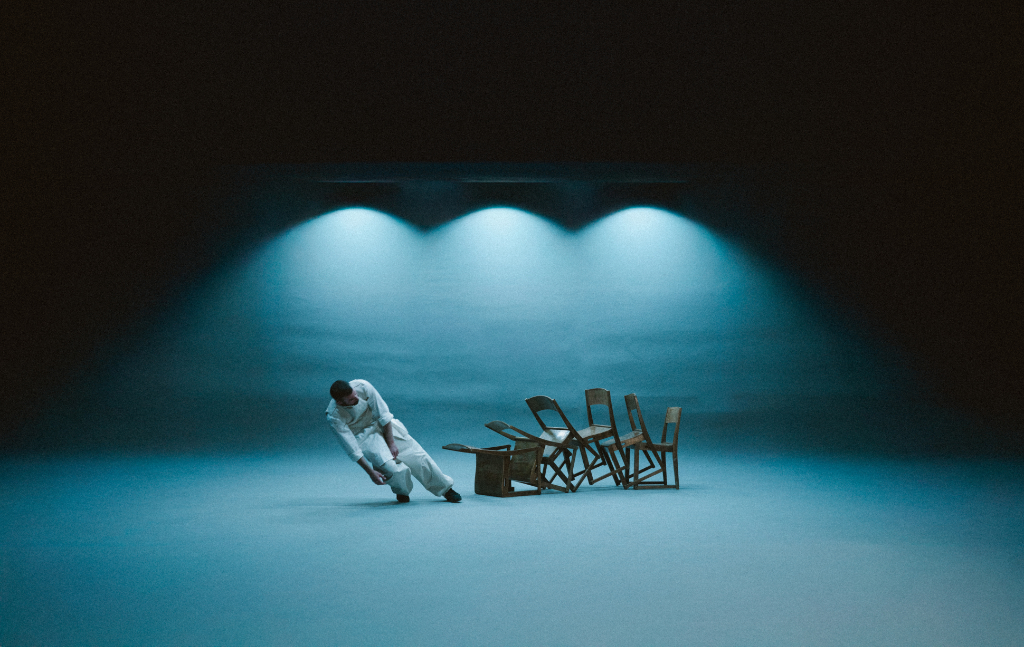
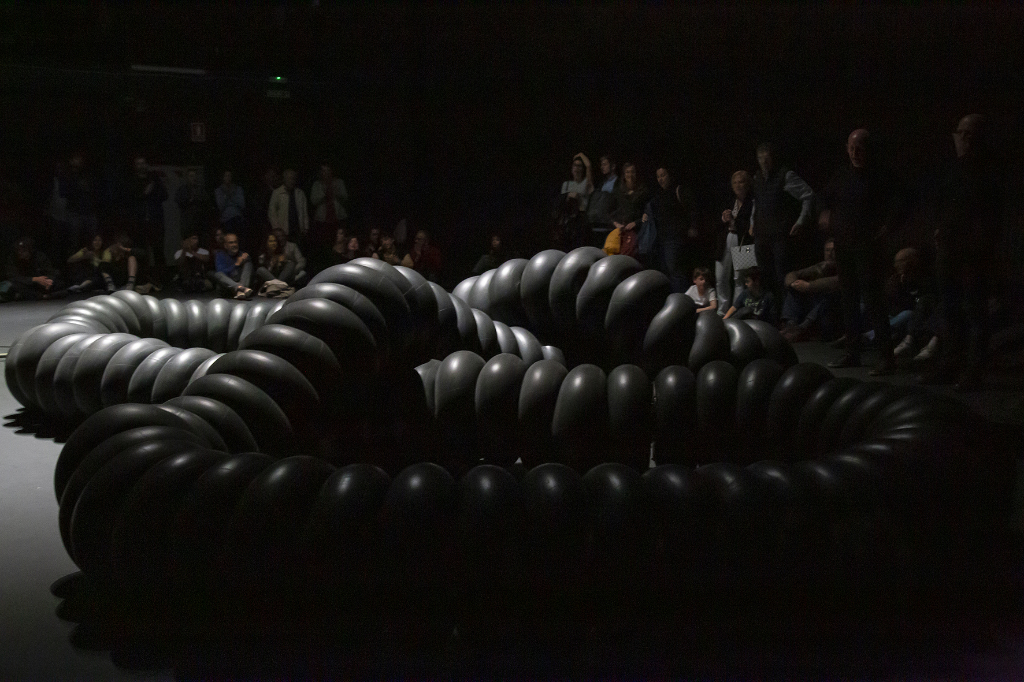
The second operation is subtler, πTon, the kinetic installation by the Swiss duo Cod.Act, was presented at the Teatro Jovellanos, a 19th-century Italianate house with royal box and proscenium intact. The piece was not commissioned for the venue, and yet its grammar lent itself to it. An eight-metre ring of welded rubber tubes contorts and undulates under hidden motors while four human carriers, each fitted with a loudspeaker, surround it, emitting synthetic litanies of primitive character, voices that oscillate, in the duo’s own description, between embodiment and mechanisation.
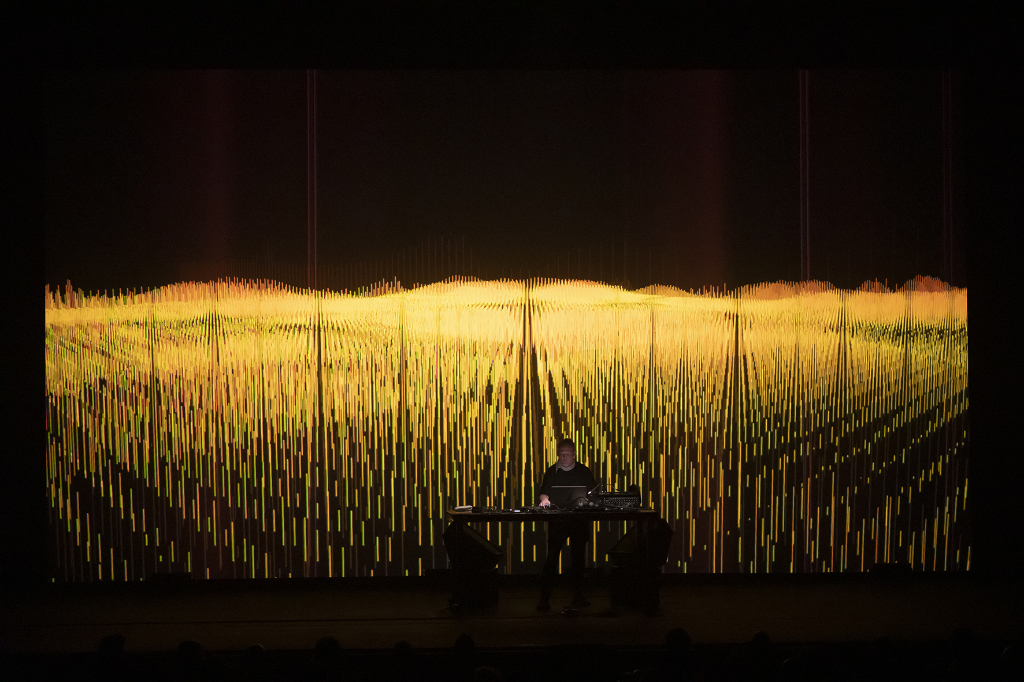
The third operation is recognising when to suspend the method altogether. Some works arrive with an internal architecture so complete that the room can do nothing but step aside. Abul Mogard‘s concert at the Teatro de la Laboral was a study in this kind of autonomy. His music proceeded by eternal crescendos that never fully resolved, melodic landscapes built from granular textures, an austere impressionism conducted at sustained attack. Something similar applied, in another register, to Alva Noto‘s premiere of HYBR:ID UNI PARA: an architecture of data and mathematical precision in which the room is simply the dimension across which the grid is plotted.
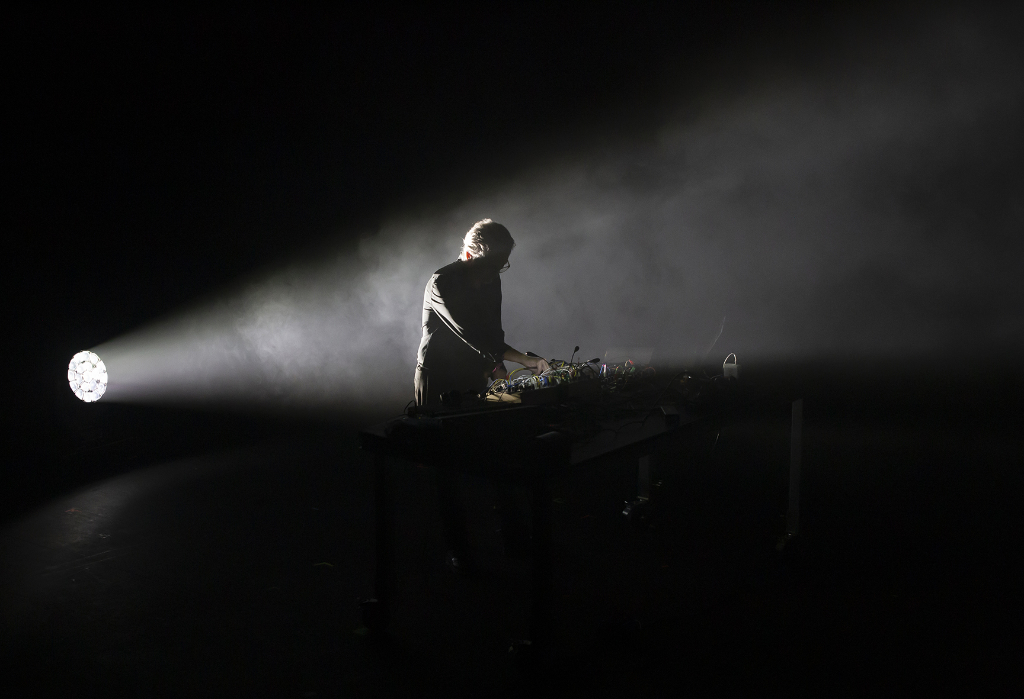
And then there was the afternoon at the Muséu del Pueblu d’Asturies, which, slowly, is becoming the high point of the festival. Jlin, whose practice has carried the rhythmic logic of Chicago footwork into a postclassical syntax dense enough that the Library of Congress commissioned its first electronic music piece from her in 2025, performed in daylight, to a crowd that included both committed listeners and curious passers-by. NAH played before: drums, samplers, a punk DIY economy that absorbs noise, jazz, and raw electronics, effortlessly moving between genres.
The fourth operation was reserved for the closing and, in its own way, was the most generous. After three days of inherited architectures, the festival ended at the Nave of LABoral Centro de Artes. Mike Paradinas, performing as µ-Ziq with ID:Mora, delivered a luminous and unguarded set that gathered three decades of British electronic genealogy: the Rephlex and Planet Mu lineage, hardcore, drum and bass, and garage, into a celebratory gesture appropriate to a twentieth anniversary.
NikNak‘s experimental turntablism preceded him with another reading of the same legacy. Neither set required the room to have any particular meaning. The room was a stage, and the festival, for one evening, allowed itself the relief of using it as such.Read together, these four operations describe a curatorial method. Programming for a space, programming with a space, programming despite a space, programming a space simply as a stage.
Closing
Whether L.E.V. continues to read Gijón critically, or whether the city begins to read L.E.V. back as one of its assets, is the only question that the twenty-first edition will be able to answer. For now, the festival has done what few of its peers have managed: it has reached an age at which its method is its own subject, and its territory is no longer a backdrop. What it does with that achievement is the question for the next twenty years. The twentieth anniversary was a celebration of duration and the moment at which the method became its own subject.