Text by Mila Azimonti
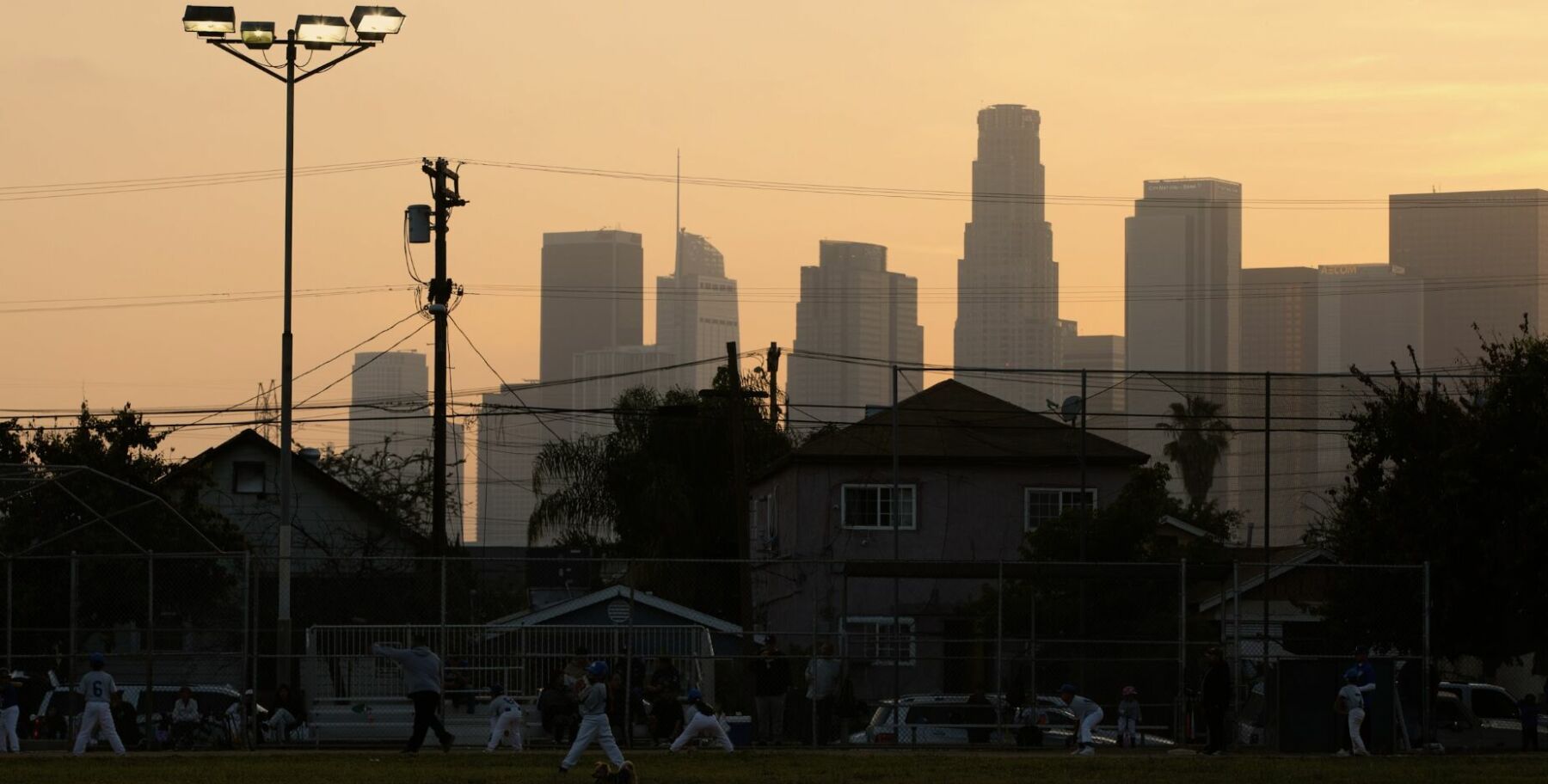
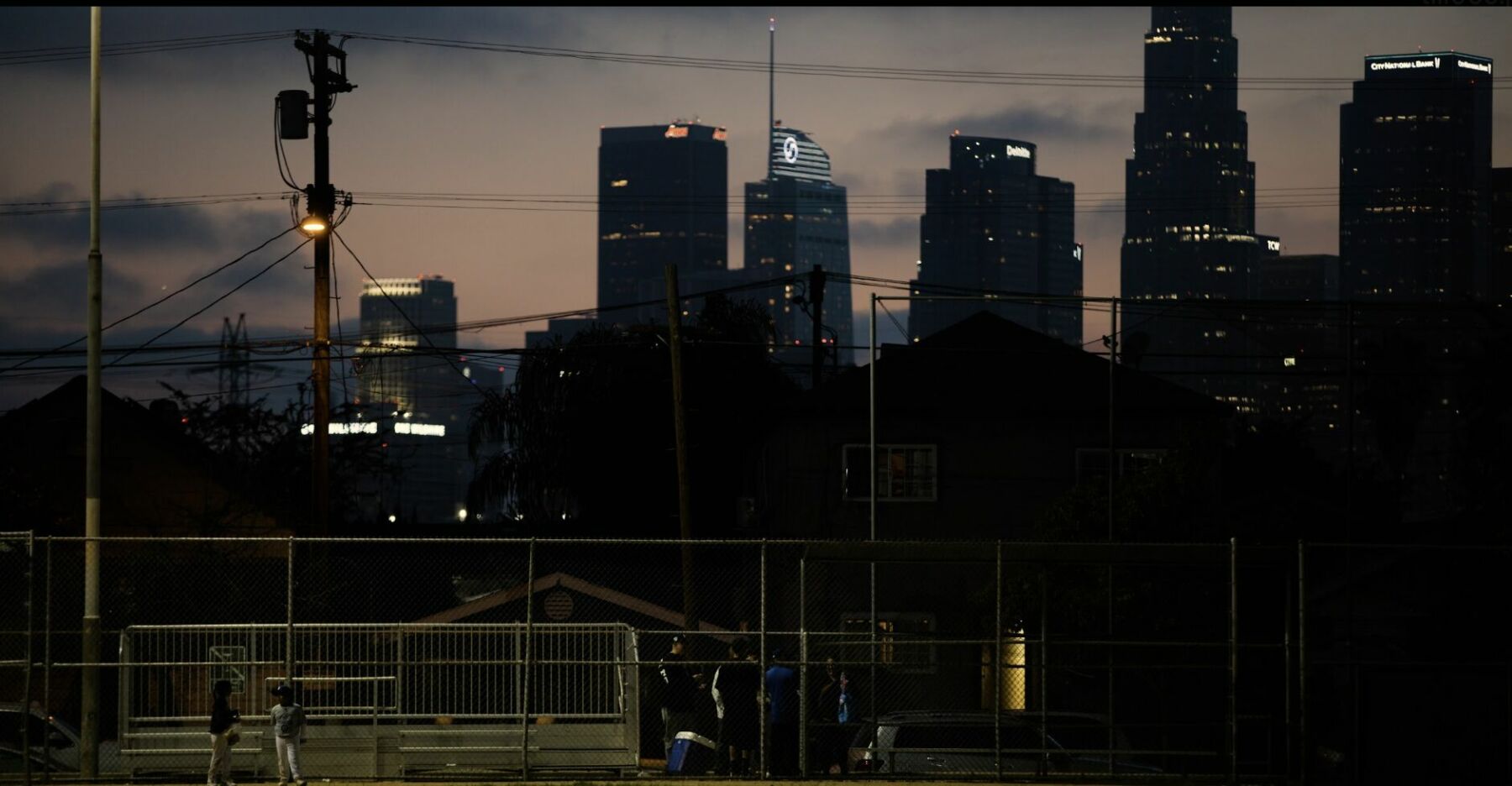
Downtown LA dissolves into dusk. On a neighbourhood baseball field, children take their cuts, a dog tears across the outfield, families settle into folding chairs, half-watching, half-gathered. The floodlights hum as the city’s glow absorbs what remains of the sun; the air still holds the heat of the day. Helicopters cross the orange sky. An ordinary Los Angeles: a little suspended, peripherally watched-over, the everyday playing out in the residual shadow of the mythological.
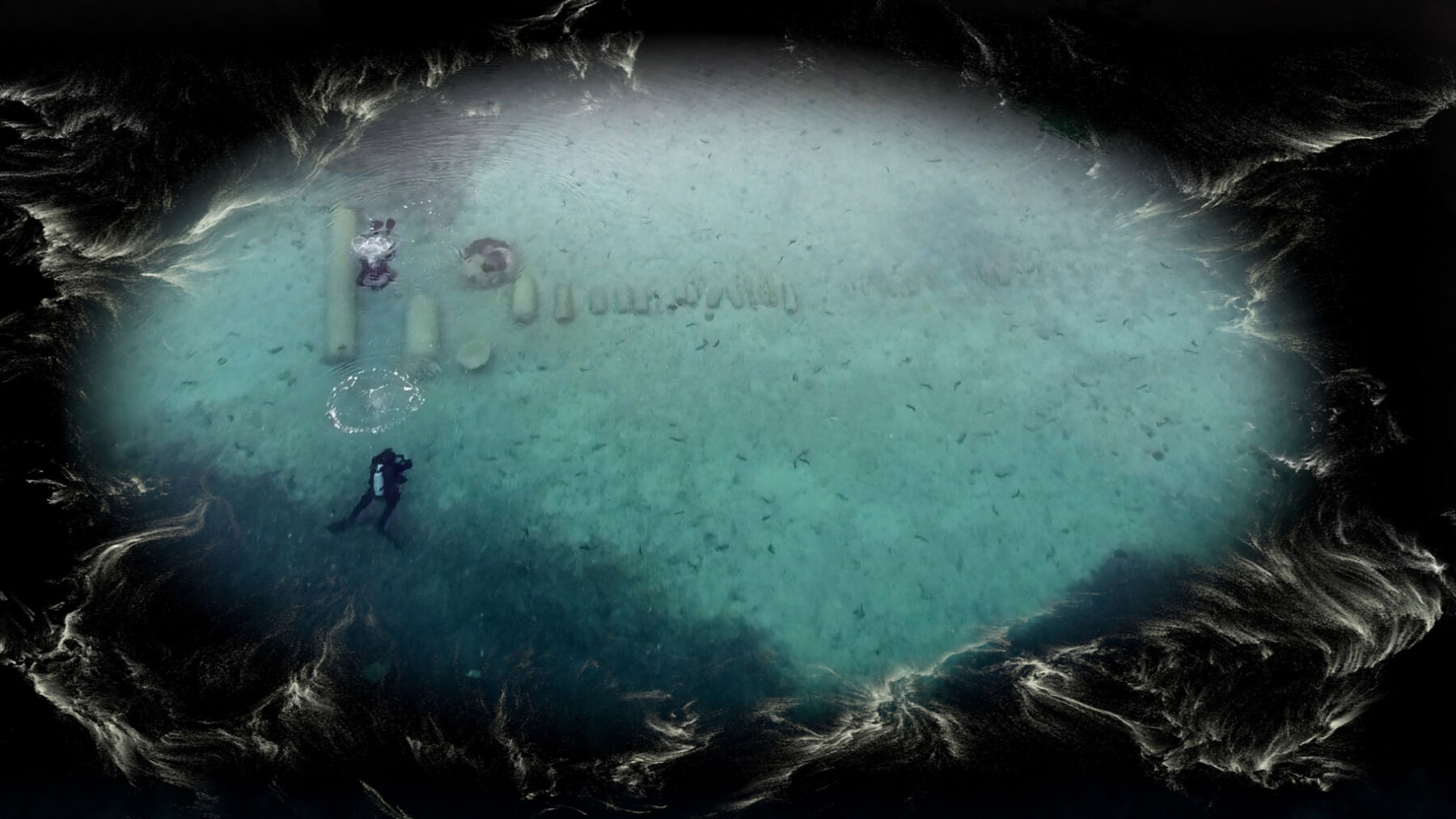
reception is the second in a series of track-length visual works made to accompany TRU FOLK, the latest album by LA-based musician and producer Holodec (real name Alex Jieh), released through Phantom Limb. Co-directed by filmmaker and cinematographer Alexander Girav, alongside writer and curator Jonathan Jayasinghe, the film forms part of a wider project whose first instalment, quiet water, loud water, was released earlier this year.
Together, the films build an impressionistic, observational portrait of LA, capturing moments and spaces in which the mundane gives way to the sublime. Drawing on experimental documentary and slow cinema, they eschew conventional narrative, allowing light, sound and duration to dictate their rhythm. The result is a meditation that never drifts into abstraction, but remains deeply anchored in place, held close to the textures of public life.
Alongside the video series, the album is also being developed as an installation for Deluge, an LA-based performance series curated by Jonathan Jayasinghe along with his collaborators Davin Singh and Kelman Duran. TRU FOLK was conceived as one continuous movement, part urban memoir, part dimming reverie. Wind chimes, families chatting, a dog barking, an argument on TV; street corners, bus stops and parks captured across Los Angeles, San Francisco, Taipei, Oakland, Keelung, the San Gabriel Valley and South City. Through this lived-in collage drift distant synthesis, low-lit melodies, decaying echoes and arpeggios that glimmer like light moving across water.
You describe TRU FOLK as a folk record and an audio document, extending folk tradition into electronic timbres. But the material itself isn’t an acoustic song or traditional instrumentation. What does ‘folk’ mean to you here?
AJ: I understand folk as ordinary life … the presence, place, and textures of our everyday lived experiences. My recording process acknowledges that our surroundings are always making sounds. It’s a fact I’ve never really been able to escape, largely writing and recording in my apartment, a space I live and share with my partner. So I accept the presence of domestic life entering my recordings … footsteps, cars outside, drawers closing, and voices moving through the space. And on this album, it took more of a central role. So in this way, folk is about choosing to recognise and honour what is human-made, material, and imperfect … viewing sound as evidence of living, rather than an escape from it.
What role do electronics play in this expanded sense of folk?
AJ: It’s a reflection of the norms of today. DAWs, synths, and other electronic devices are now the popular and accessible instruments being used, much like mandolins or flutes or accordions previously. Almost everyone has a way to produce and record music on their phone or laptop, whether they’re in Durban or Los Angeles or São Paolo. So if we can agree that ‘folk’ is the shared, emergent practices of ordinary people, then our understanding of folk culture can be expanded so that it’s not frozen in time or place.
You’ve been recording sounds for over 15 years now. Are you always ready to capture whatever appears, or do you go out with a specific intention?
AJ: I record anything. To capture something sonically is not too different from snapping a photo or recording a video. So I guess you could say my approach to field recording is similar to photographers who ‘shoot from the hip”, documenting where I’m at and what’s going on around me in that moment. What is random and otherwise meaningless always reveals itself later on. Listening to field recordings along the banks of the Tamsui River will send me there. The smells, the feeling of mosquitoes swarming around me, the humidity and sweat stuck on my skin, and the passing conversations I didn’t notice before. That’s the serendipitous nature of any type of raw recording, I guess, that it captures a moment in time that can never be exactly reproduced.
What does slow looking/filming make possible in a city like Los Angeles, so often represented through speed, spectacle, industry and surface?
JJ: It’s true that LA is most often represented through a series of fast, fragmented, seductive surfaces. But I think most people who have spent any significant time there realise that the truth of LA is that it’s very slow. It frustrates some people, but if you do choose to let it be what it is, and adjust your perspective or way of seeing accordingly, there’s an abundance of (often quiet) beauty to be revealed. I don’t think we’re the first to arrive at that conclusion, by any means, but it very much guided what we sought to capture here.
I wonder whether the videos also function as visual field recordings; is that a useful way to think about them?
AG: ‘Visual field recordings’ is a great way to think about them. We wanted to create a visual response to the record that embodied its sensibility rather than trying to, say, simply match its mood or vibe, or to literally translate the more legible narrative elements of it. We never arrived at a phrase like ‘visual field recordings’, but it’s very apt, and we love it.
The first two videos of the series seem to share a certain exploration of light, whether it’s transforming the architecture or giving pace to the video. Is light a common thread in the whole film series? What’s so charming about LA light?
JJ: Light is something that Alex (Girav) and I spend a lot of time thinking and talking about. Light is, of course, a foundational technical element of any recorded visual media, but it’s also something we both think about in ontological, spiritual, and cultural terms.
When Alex (Jieh) and I first started talking about the project, my impression of Holodec’s visual world up to that point was that it was quite nocturnal. But what this record was doing sonically, the delicate ephemerality of the field recordings, spoke to me of the fleeting and often revelatory nature of natural light. A lot of LA can feel static and unchanging, but one thing you can rely on to orient yourself in time and space here is being sensitive to what the light is doing.
While watching the videos, I was also thinking that sound can record voices, water, wind, cars, but it cannot record light. It’s almost as if the visual work becomes a way of giving form to something that sits outside the album’s sonic archive…
That’s a lovely insight. Light and sound are what most shape my sense of a given place, so hopefully what we achieve by focusing on it so closely here is to match the record’s depth of attention to space and place in a different but complementary form.
Tell us more about the collaboration process. How did the relationship between sound and image unfold across the project?
JJ: The record was finalised before the collaboration started. We’d been speaking about it as it was being completed, and having broader, more organic conversations about art and life without necessarily having a specific collaboration in mind. So by the time Alex (Jieh) proposed the collaboration and shared the record with us, there was a foundation of shared references and sensibilities. From there, Alex (Girav) and I did an exercise of going through our own archives of visual material; our camera rolls, our reference folders, and developing a broad set of visual ideas drawn from there, and then refining the set based on what made the most sense with certain tracks. Again, it was a way of embodying Alex (Jieh)’s process of drawing on his archive of field recordings for the record, not just for the conceptual gesture of it, but because our own archives were the richest starting point for a distinctive, lived perspective on our subject.
I’ve always had a conflicted fascination with Los Angeles. It seems to me like an impossible city: a place of ‘perfect weather’ and unbearable distances, shaped by cars and freeways, dreamlike but deeply unequal. What kind of LA are you trying to show in this series?
JJ: Yeah, it’s not lost on us that LA is the most documented city in the world, and many people before us have made efforts to put forth a more true or accurate representation of it. That condition has also been theorised to death, so I’ll resist doing so myself. At the risk of putting too fine a point on it, and possibly being reductive, I’ll say that what we’re hoping to capture is the grandeur and beauty that exists at street level in this city, and how that’s shaped, for better or worse, by its environment.
There is a sense in the videos that the city’s monumental forms (freeways) and surveillance systems (helicopters) are always present but never fully dominant; everyday life goes on beneath them. I’m not sure whether that was a conscious intention, but that tension between infrastructure, control, and ordinary social life feels very present and seems to say something broader about contemporary urban life.
JJ: The first video at Hollenbeck Park in Boyle Heights visualises this condition in which a freeway cuts through an otherwise idyllic park, but the disruption of the infrastructure becomes an unlikely canvas for this kind of dazzling light show that happens every morning. For me, that moment is an invitation to consider the history of the place, the displacement that’s occurred, and what’s been lost in the process.