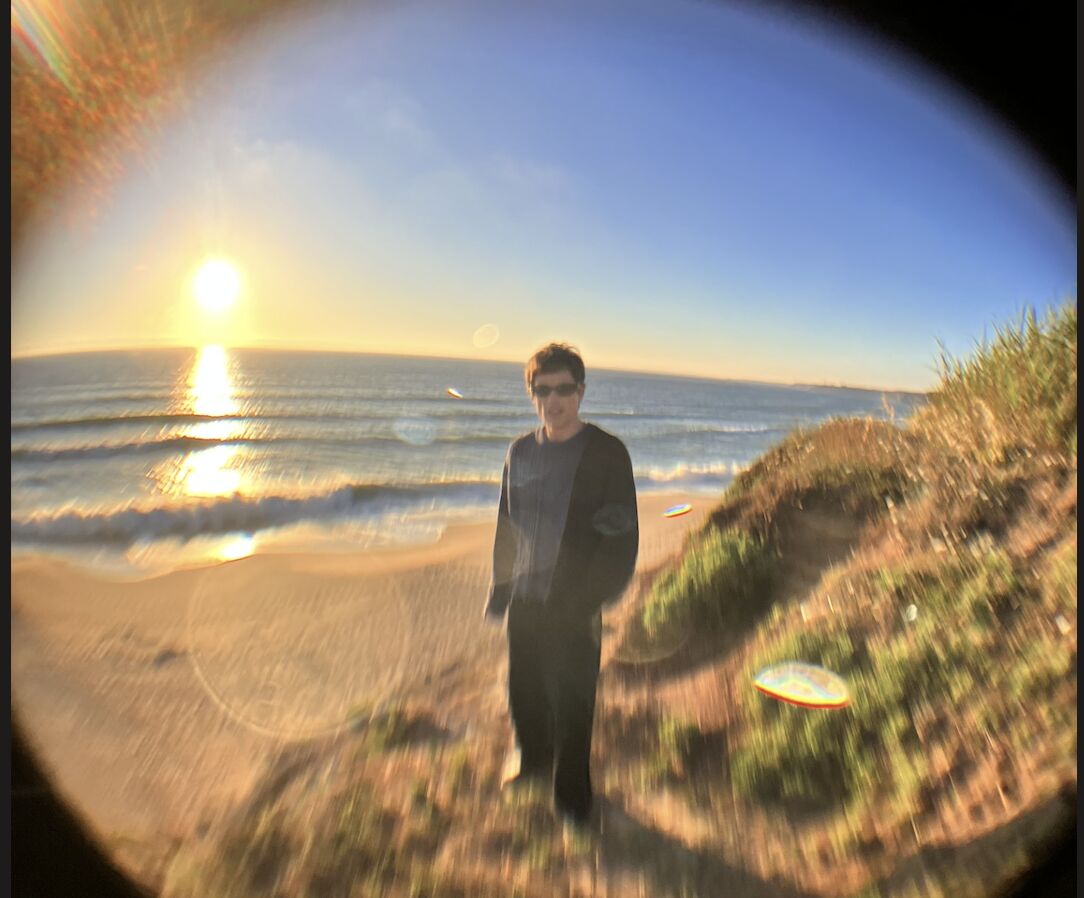
Text by Dom Stevenson
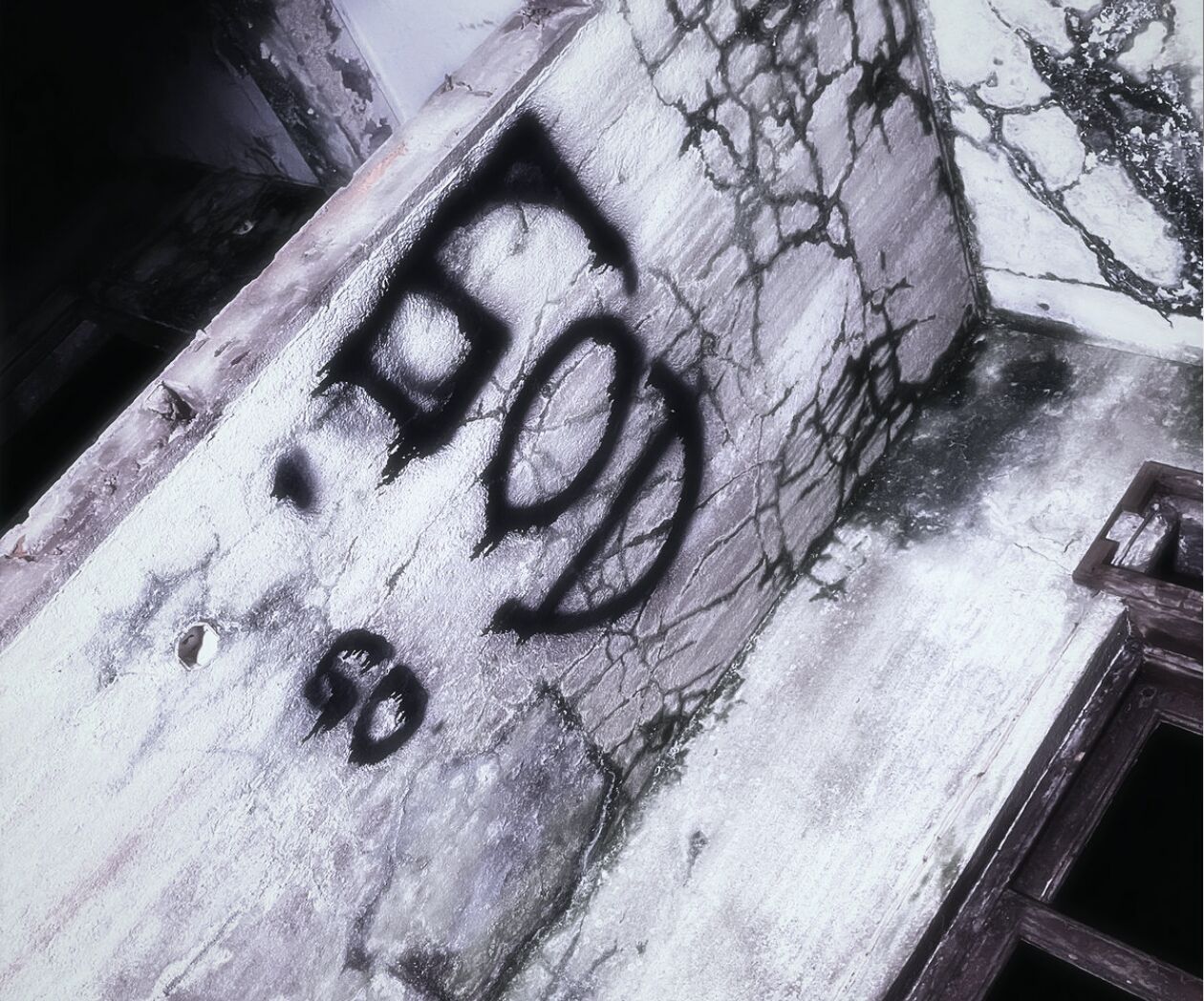
The latest mixtape comes from Donna Haringwey, the alias of Portugal-based producer Toni Quiroga, whose work occupies the shifting territory between hardcore, industrial, noise and electronic music.
Emerging from a world of experimentation, musical fluidity and an enduring commitment to following creative instinct over stylistic convention, the project has gradually developed a distinct artistic language that resists easy categorisation.
His latest release, GOD (Strange Therapy 2026), marks another chapter in a catalogue defined by sonic confrontation, emotional immediacy and an unwavering resistance to the conventions of genre. Described by Quiroga as “a record about love, without spectacle”, the album channels deep emotional undercurrents through a relentless collision of distortion, industrial ferocity and hardcore energy. Along the way, echoes of emo, early dubstep and cloud rap emerge, while the softly auto-tuned vocal intimacy recalls bands such as Team Sleep, balancing sonic extremity with moments of introspective vulnerability.
We caught up with Donna Haringwey to discuss the evolution of the project, artistic freedom in an age of algorithms, relocating to Portugal and the influences behind his exclusive CLOT mixtape.
Looking back across your work as a whole, it feels like there’s been a gradual refinement of both your musical language and the ideas driving it. Beneath the distortion and relentless momentum, GOD is an unexpectedly intimate record. The movement between drone-like stillness, slow, melodic spoken passages, and hardcore-adjacent screams feels less like a contrast than an emotional necessity. Has that dynamic become the most expressive way you’ve found to translate deeply personal ideas into music?
I didn’t really use this dynamic consciously — it came more intuitively. I listen to a lot of chill or emo-adjacent music in my day-to-day life, and I think that naturally shaped the album.
My previous albums were more like anger catharsis for me — god still has that in parts, but it is emotionally more multilayered. I wanted it to feel more open and, in a sense, more positive conceptually. I’d describe it as melancholic, sad, but also uplifting at points.
It’s also way less focused on sound design than my earlier work. I think that comes from doing a lot of sound design for other projects — when I make my own music, I don’t want it to feel like work or technical exercise anymore. I want it to be something I write intuitively and something I actually enjoy listening to. Thats why I’m more interested in whether it speaks to me emotionally than whether it’s technically interesting.
We’ve reached a point where almost every aspect of music is shaped by systems of optimisation, from streaming algorithms to personal branding and AI-assisted creativity. At the same time, your work has always resisted easy categorisation. Despite that, there’s something unmistakably internet-shaped about the way it sounds, as though different histories, genres and digital cultures are continually colliding. What’s your relationship with the internet’s evolution, and how has it filtered into your music?
Yeah, I’m on the internet a lot — that’s basically where I discover most music and cultural references. It also works like a huge, messy archive where you can jump between different times and scenes really quickly, which definitely affects how I think about sound and music.
I’m interested in how that affects behaviour too, especially on social media — how people adjust themselves when there’s always an audience. This last point was a constant source of inspiration for my previous albums – human performativity on social media. For ‘god’, I thought I’d focus on the opposite: on states that do not function through these social systems rewarding some form of behaviour. My dog is a reminder of that opposite in a very simple way; he doesn’t perform for an audience or optimise himself for one. Which I find very refreshing.
For god, I wanted to focus on the opposite—states of being or love that don’t exist to be seen, rewarded or validated by an audience or some for of social structures.
You relocated from Berlin to Portugal in recent years. While programmed, heavily processed percussion has remained central to Donna Haringwey, the project has also occasionally expanded into a live band format for specific shows. I’m curious how much shifts in place or process affect the psychology of the work. Has relocating altered your production pace or reshaped the way you create?
For sure – I feel more grounded since I relocated. Not only my lifestyle choices but also being in a less hyper-competitive city where most people are trying to outdo each other affects me in a very good way. Being outside a lot and not going six months without seeing the sun helps my state of mind a fair bit.
Even though I work fewer hours, I’m more productive because making music feels less forced. In Berlin, I felt like I had to write music every day. I don’t really think like that anymore. I still treat music and sound as a daily practice, similar to how a professional athlete trains, but that doesn’t necessarily mean writing songs daily. Some days it’s mixing, making samples, building presets or experimenting with sounds. Keeping those different parts moving makes the whole process feel fresher and more exciting for me.
One of the things that strikes me about Donna Haringwey is how influences seem to coexist without ever feeling like quotation. As you’ve put together this mixtape, I’m curious what qualities in other artists’ work tend to stay with you and eventually find their way into your own music. What does this mix reveal about your listening world, and what thread ties these selections together?
The mix is basically about bands and artists I was listening to during the time I was writing the album. Lots of shoegaze, slowcore, post-metal, cloud rap and witch house. I enjoy all of these genres a lot, and I believe they all have a common denominator, which would be an emotional directness, heaviness, vulnerability, physical immersiveness and melancholy. I am also less interested in genres and more into emotional climates and making something unique. I feel like god works in a similar way. It moves between different genres, but it’s trying to stay within the same emotional world rather than a particular musical style.
Tracklist:
Tracklist:
Tuffie – Eraser
Elusin – .410
Jesu – Homesick
Ssaliva – The longest sleep
PET – When you let go
Eterna – So different
Fine – A/B
Deftones – Kimdracula
SALEM – Never Let
Killogne – Whitearmor is a blessing
Nokia Angel – Fade away
Operant – The Squirt of Christ
Helen Island – Alice dj
Website https://donnaharingwey.bandcamp.com/
(Media courtesy of the artist)