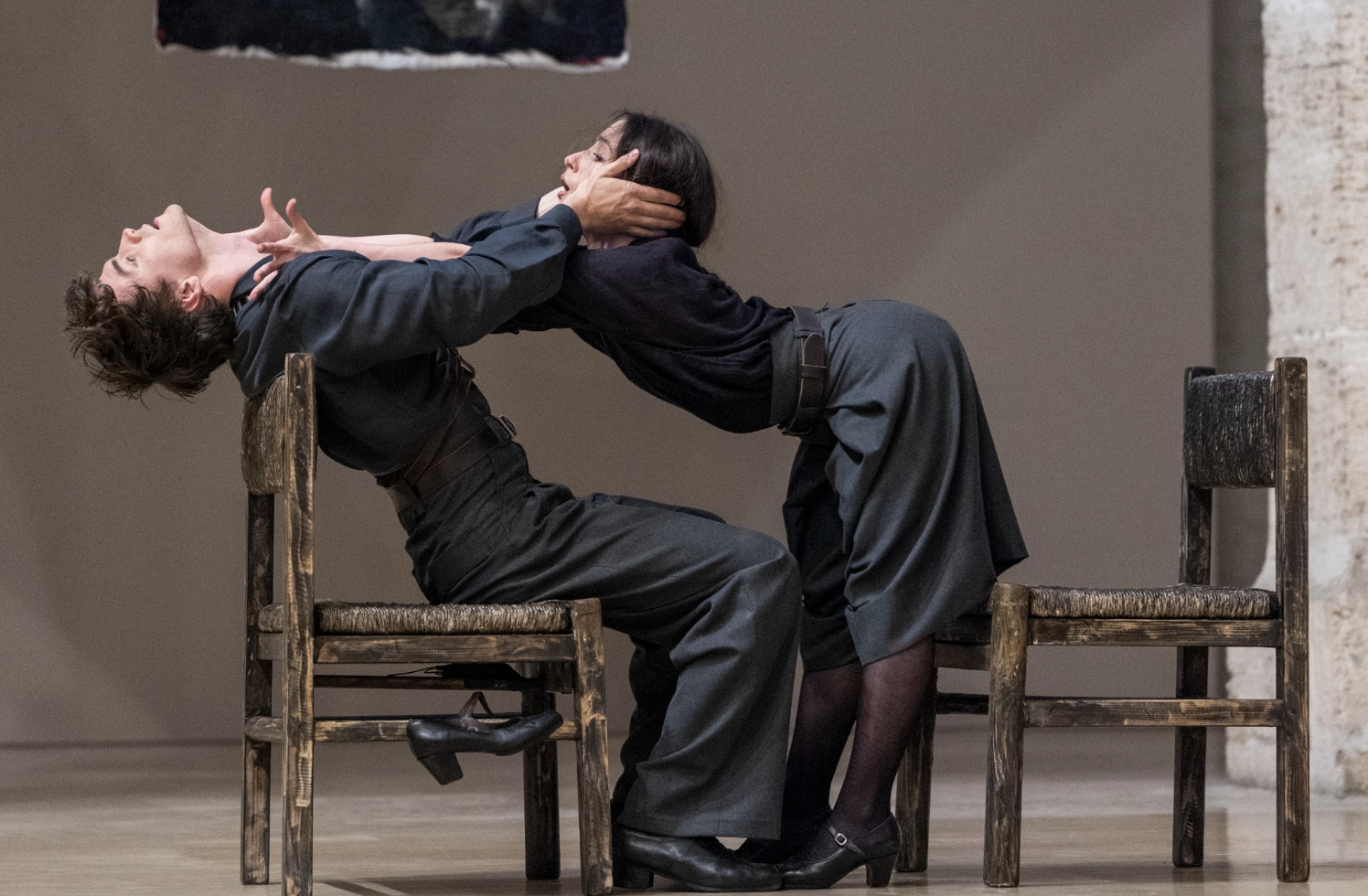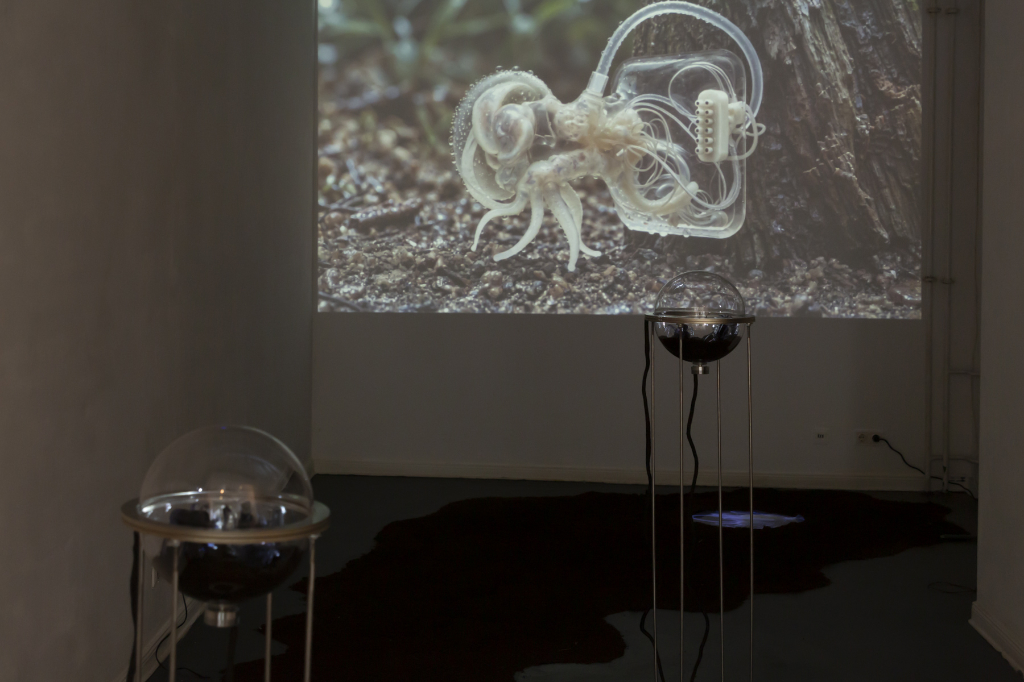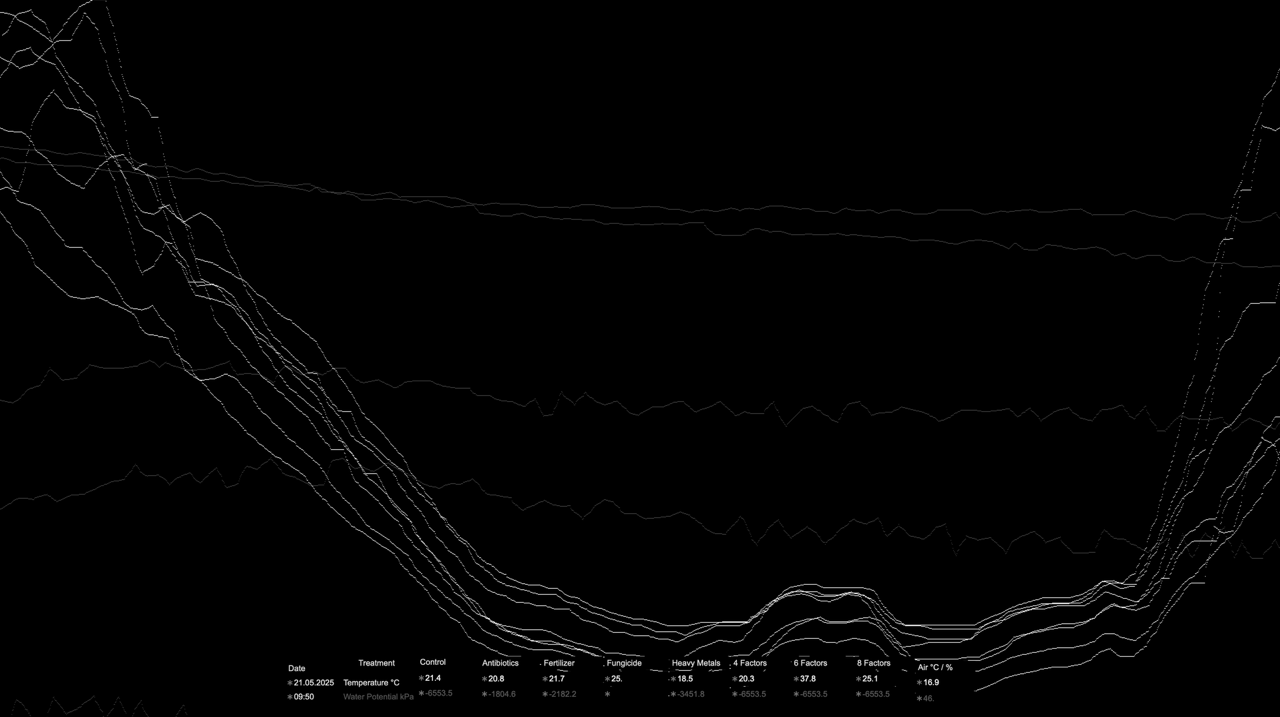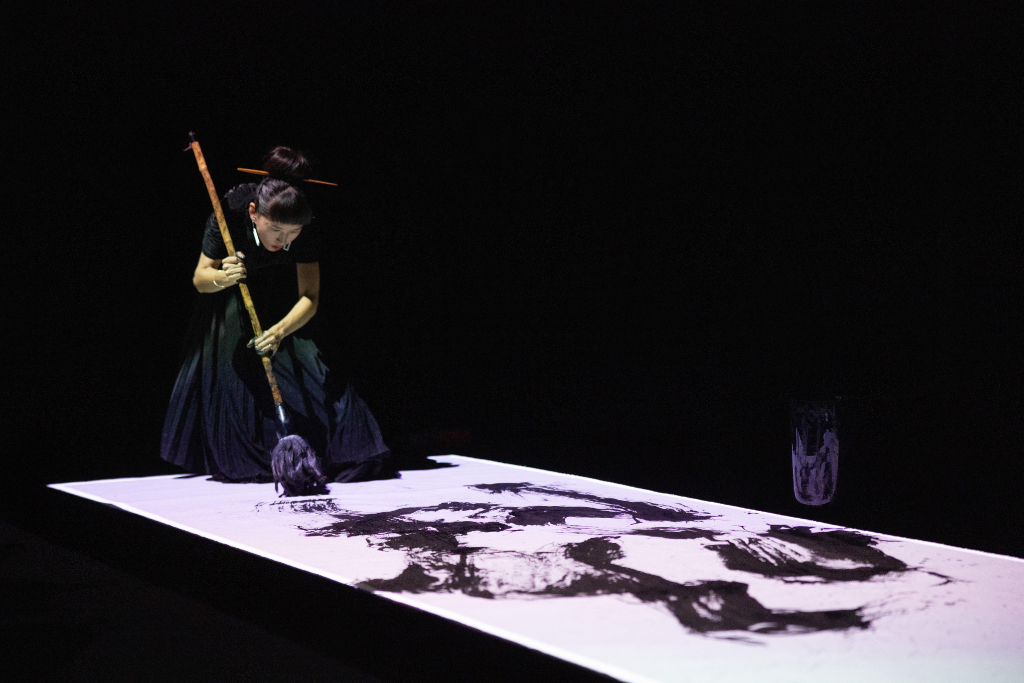
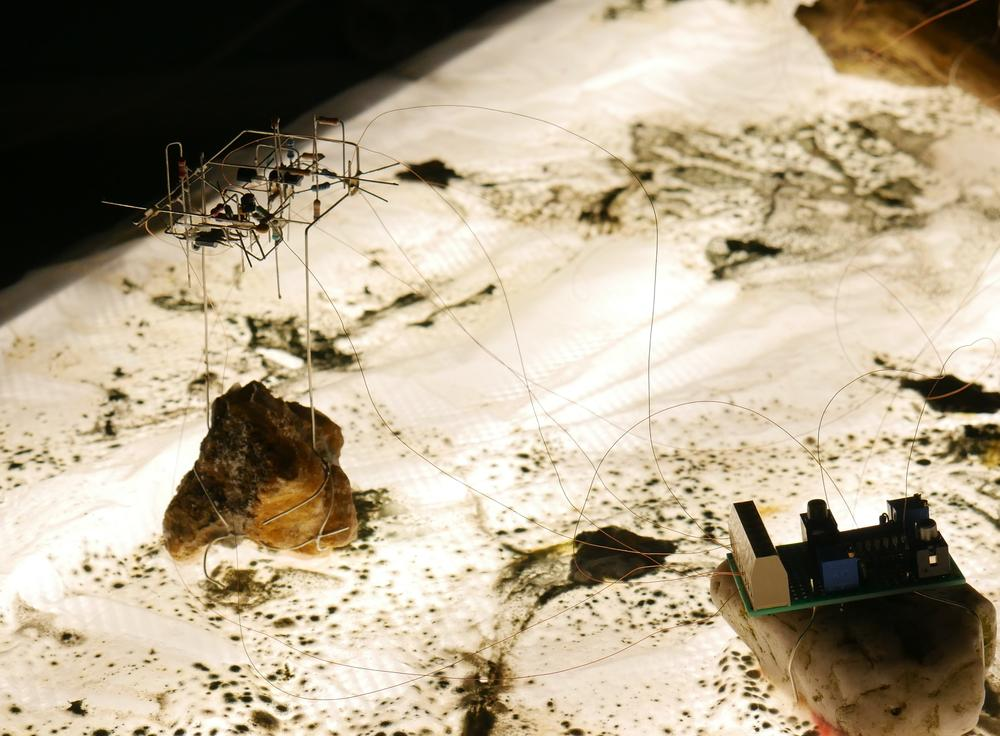
Text by Ludo Bulciolu
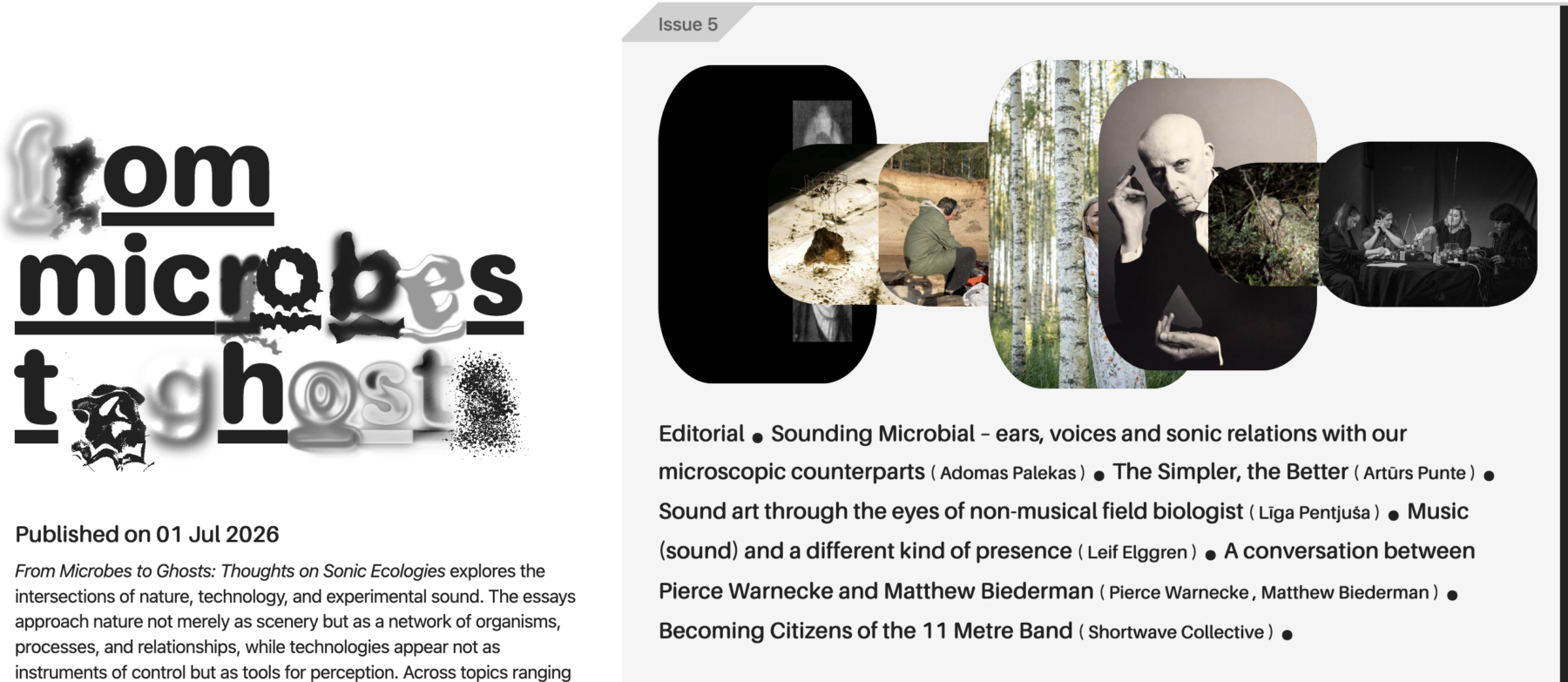
Tekhnē journal is an online publication providing information and reflection on themes linked to sound, technology, and creative usership. The project is part of tekhnē, a collaborative project bringing together six European organisations to engage in conversations, residencies, and artists’ commissions around technology as a potential emancipatory tool in music and sound art. Each of the six partners involved with tekhnē takes the lead in one of the Journal’s issues. CLOT Magazine extends this inquiry through a series of six critical overview essays, each expanding on one of the journal’s propositions. This essay expands on ‘From Microbes to Ghosts: Thoughts on Sonic Ecologies’, the journal’s last issue, curated by Skaņu mežs, an experimental music festival in Riga, Latvia, running since 2003.
Tech, Teck, Tekkkk. Techn,oooo. No. Techno.
Tikkk-tokkk-tikkk-tokkk. Kkkk. Shhhhh. Nhhhh.
Logic. KKK. Go. Logos.
Tecnologia.
Sssh.
Tékhnē.
As I try to remember becoming familiar with this word for the very first time, Plato came to mind. Apologies for that; I won’t be too long. It was the early 2000s, and I was in high school in Italy, still reading what was given to me, though maybe not only, which, in this case, was one of his dialogues. I recall reading it meant trying to make sense of its absurdity, while also being fed some kind of obvious truth that my then-teen body had somehow already internalised just by living.
τέχνη (pronounced: tékhnē): the ancient Greek word-root of the English technology, governing all aspects of our lives and desires, the word that gave the name to this collaborative journal, around which several critical essays, art projects and reviews were commissioned and assembled. I would like to take a step back. Or perhaps make a circular movement, somewhere else in space, and stop there for a moment.
In one of his cryptic dialogues [1], when Plato talked about the world of thoughts and the world of things, on one side there was everything that is unchangeable, immaterial, eternal, intangible. There was silence. On the other side, in the world of material things, there were human bodies and nature (together, but not too much) as mutable, corrupted, changeable, chaotic things. There was noise.
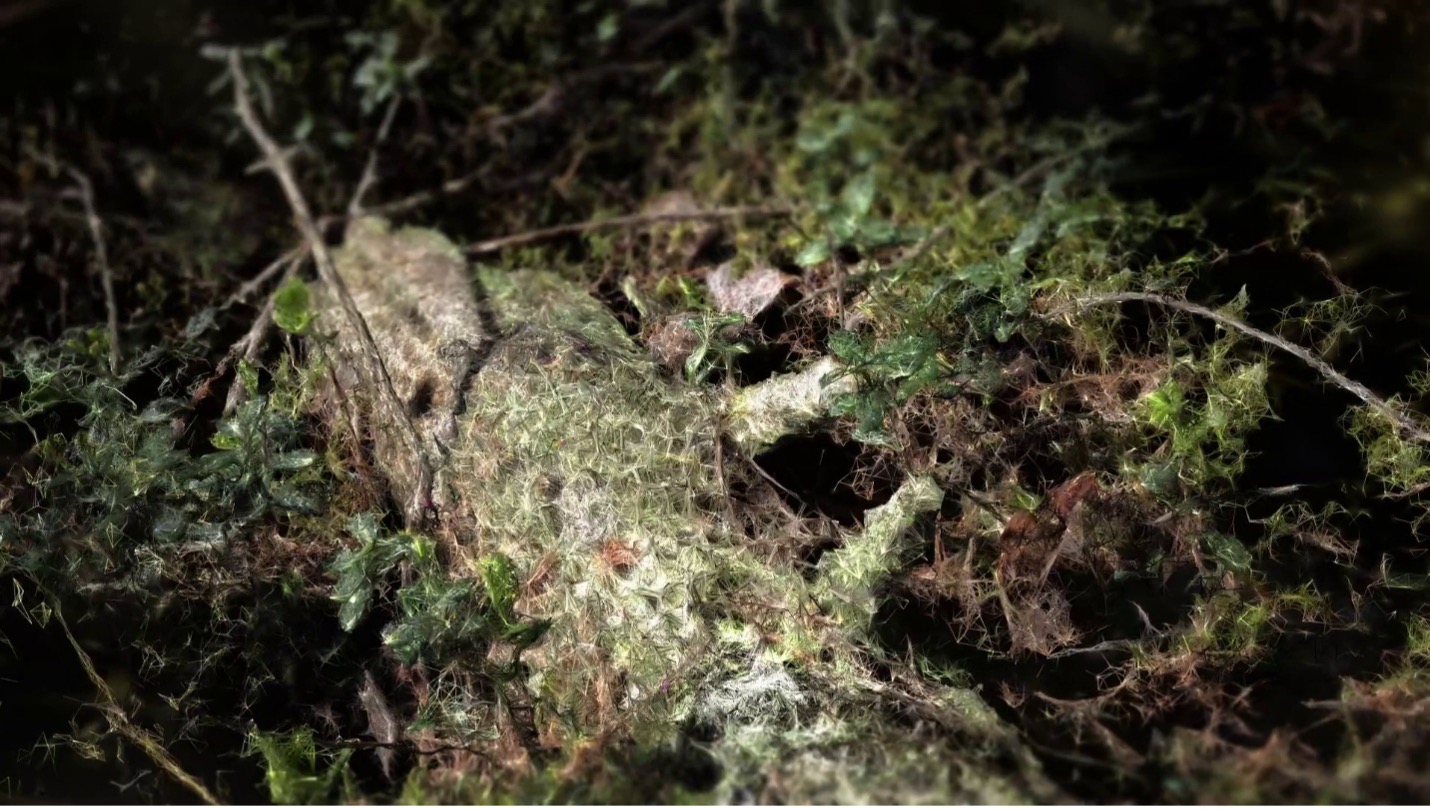
In these ancient times, chaotic and unreliable materiality was seen as completely separate from the intellect, from the silent logos within it. They were the first literary and philosophical attempts to find a specific place, space and a commensurable depth for everything. Everything we knew, and all we didn’t. tékhnē is an attempt to define a philosophical concept, designating production, fabrication, craft, making, process, but it goes well beyond both the rational knowledge of the act of making, well beyond the practical skill needed to execute that making, but also far beyond the intellectual idea, the silent engineering of it. In other words, it’s an ambiguous realm, an open-ended term used to describe or refer to something material that is the fruit of some kind of process, so inherently interconnected with nature as to almost being a continuation of it.
It’s here, at the crossroads of this order of things, the very first enunciations of a Western dual system of thought, that the word tékhnē came about and preoccupied thinkers such as Plato so much, to devote an immense body of work to it. I find it curious, probably beautiful, to think that the word was born as a way to bridge two opposites: the eternal silent logos and the perishable noisy matter. Tékhnē and sound were already inherently interconnected, porously and infinitely close.
Still, in this order of things, if thinking human bodies and mysterious wordless nature shared their own part of materiality, they were also part of a system of domination that quickly came into place and defined both their existence and their relation. The world of ideas and the world of concrete things were very much structured according to two rules: man over nature, man over slaves and women. It rings a bell, doesn’t it? An early stage of the colonial, capitalist project, which refined itself over the following centuries. Here, citizenship meant the right to take an active part in political life and to vote.
Citizenship wasn’t granted to women, or to slaves of any gender, nor were flora and fauna held under any juridical circumstance. Young, healthy, upper-class, noble men took the leadership in defining and speculating around the abstract, silent idea of tékhnē; writing, thinking, fantasising about it, turning it into a science, so as to make the most of nature, of time and working bodies. In the meantime though, in the fields, homes, streets and woods, slaves, women and some poor men were cracking open loud logs of wood, moulding incandescent pieces of iron, crafting herbal remedies guided by the smell of their crackle, cooking rotten bones broth, listening to the rivers’ flows, feeding the animals they secretly loved in sweet unspoken sounds.
I am coming back to us, but this is actually already us. It has always been.
If from early on tékhnē was regarded as a form of science, it also quickly became a tool of patriarchal control, where nature was measurable with mathematical laws and calculations on predictability. What followed, and ended up in the big, important books legitimising this very system we still inhabit, was the idea of the body as a collection of silent organs, alongside a rationally calculable, exploitable nature at the service of privileged bodies. A deincarnated thinking into a dehumanised body.
Although over the 20th century we came to acknowledge that neither bodies nor nature were predictable machines, but instead complex and self-organised structures, the idea of scientific progress kept being inseparable from the idea of domination, from trespassing the limit, from the instrumentalisation of natural life[2].
What is interesting here, and what emerged so beautifully from the articles commissioned for From Microbes to Ghosts: Thoughts on Sonic Ecologies, the last editorial of the tékhnē journal, is that sound seems to be the very factor that continuously links those elements that a dual system of thought has been keeping separated. In a way, this hasn’t changed. Adomas Palekas, whose practice investigates the sonic relationships between humans and microorganisms, in the introduction to this article interestingly notes that he will be using the terms “sound” and “vibration” interchangeably. The word sound being commonly used to describe mechanical vibrations that are being audited by hearing organs, he explains:
Even though the term “sound” can be expanded as ultrasound or infrasound, to address a hearing range beyond human, in the vastness of all possible vibratory relations, it is still limiting; for example, when talking about earthworms sensing surface vibrations caused by raindrops, fish and their lateral line, or microbial responses to sound. Due to these indeterminacies, I will assert that everything that receives vibrations impactfully – hears, whether through specialised auditory organs or not- all vibrations will be treated as sound and vice versa.
Isn’t this incredible? The possibility of receiving a vibration, to capture its shifts or movements (whether it is a bacterium, a worm, or a child), and the ability to turn that into information is, in fact, what makes sound itself a tékhnē, in the more ancient connotation of the Greek word. In Palekas’ ears, the cosmos is not silent. Microbes are responsive agents rather than passive biological organisms, and according to the artist, this unspeakable complexity sheds light on how misunderstood the connections between sound, life, and ecological systems are.
Art exhibitions, fashion collections, modern urban planning, advertising industry. Marketing. Nowadays, everything points toward a broader understanding of human and non-human coexistence. Or at least everything performs this acknowledgement. But performance isn’t only a bad thing; it can have its cathartic function. Sound, intended as vibration, traverses not only mortal matter but also everything that is beyond. What is already dead or what was never born.
In Leif Elggren‘s artistic practice, for example, copper pipes function as antennas for installing a form of dialogue with the dead. Tékhnē, originally intended as an attempt to define the tension within a making, crafting process, in fact, complexly holds an array of possibilities for this world of interlinked sonic connections to be exposed and become carriers of other, sensitive types of communication.
We are born to become angels. We are unable, while in this world, to understand the peace of heaven because human words are inadequate. Angels know no greater happiness than caring for and instructing those who arrive from the world. We are spiritual beings but live in material bodies so that we can function in the natural world.
This excerpt is from a vocal CD recording of the artist reading a writing of Emanuel Swedenborg. While human words are inadequate to connect with the other world, the spaces between words, the voice as a cord instrument, are irregular sound generators capable of travelling through time, space, and beyond.
On a very different note, in Becoming Citizens of the 11 Metre Band, the Shortwave Collective also explores how sound connects humans and nature through the Citizen Band (CB) radio. Through skywave propagation, radio waves travel long distances by interacting with the ionosphere, revealing how communication, in this case human communication, is interconnected with atmospheric processes.
Static, interference, and distant voices create an invisible sonic landscape, making sound a powerful link between what humans can experience and the rhythms of the natural environment that allow this transfer to happen. Listening is here a possibility to reveal hidden connections. Although the Collective is committed to deepening interest in this historical DIY tool, the CB radio exploration also shows how the male-dominated radio culture is still strong, alongside exposing how socially structural barriers limit access to this shared medium. Sound is here both a physical phenomenon shaped by nature and a medium that connects people to each other and to their environment.
Instead of going into further detail on how each essay in this collection addresses the link between nature and experimental sound-making, I will let you go and discover it on your own time: the beautiful work of Pierce Warnecke & Matthew Biederman, Līga Pentjuša, and Artūrs Punte. Hopefully, the invisible thread we have been weaving along, with sound as an ancient vibrational yet spiritual connector, will soften the inherited contradiction between nature and electronic music, between technology and sound. An ode to nature which has never been a setting or a context from which to act or to adapt to, but a continuation of how our very cells are an extension of our ability to hear, to experience, feel and love.