Text by Mariana Machado
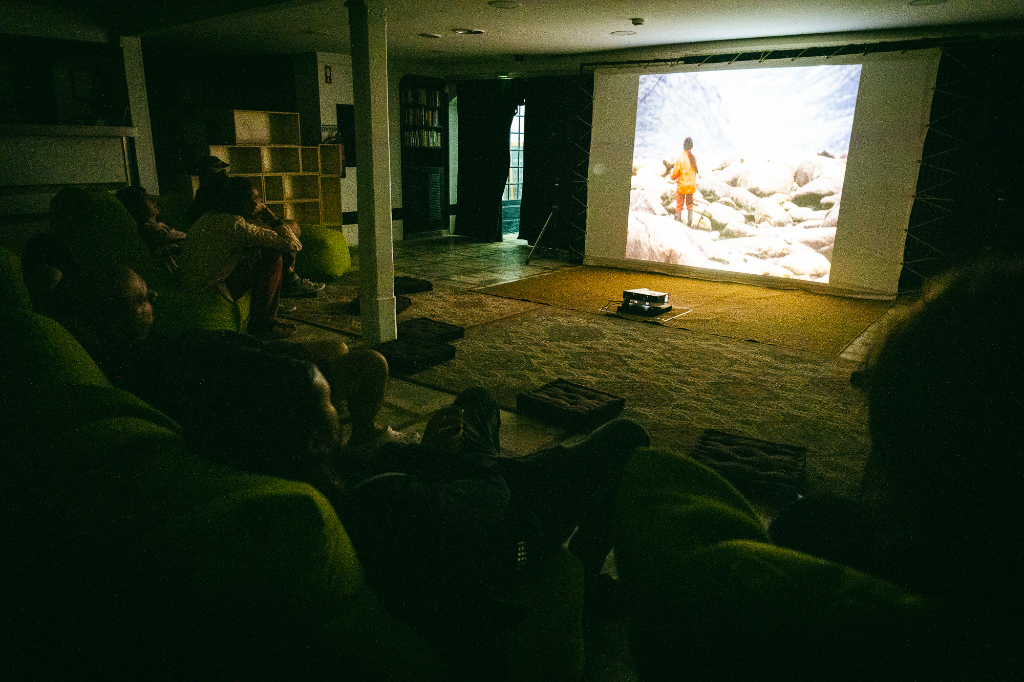
OUT.FEST is an experimental music festival held annually in Barreiro, with its first edition taking place back in 2004. Spread across Barreiro, in the Setúbal district and separated from the capital, Lisbon, by the River Tagus, OUT.FEST positions itself not merely as a self-contained festival of exploratory music, but also as an experiment in the relationship between music, audiovisual art, thought and, above all, the local community.
In this vein, this year’s programme began with a day dedicated to the conference These Abilities: Perspectives on Music & Disability, where, in collaboration with the Nós Association, the relationship between musical creation and disability was discussed – not only from the perspective of inclusion, but above all with a view to the potential for experimentation and the ideas regarding music and improvisation that may emerge. Throughout the day, talks covered projects by Grupo Operário do Ruído and Paulo Jacob, as well as discussions featuring the artists Manja Ristić and JJJJJerome Ellis.
I would particularly like to highlight the latter two, as the festival paired these talks with concerts by the artists on the following days. Building on the link between artistic experimentation and local experience, Manja Ristić presented at the festival the outcome of a residency she undertook over the previous two weeks, exploring the city’s sound archive and her experience of the local area.
As for JJJJJerome Ellis, following his talk about his stammer and how he began to incorporate a condition – often seen as a handicap – as an expressive potential within his practice, he gave a concert, also at the SIRB ‘Os Penicheiros’ venue, where this same subversion was evident in the way he delivered the verses that he was rapping. In an intimate performance that embraced closeness and dialogue with the audience from the outset, he laid down verses over gentle beats about the people close to him, love and acceptance.
Alongside this range of approaches, the festival also honoured the recently deceased artist Phill Niblock with a small tribute. After the first day’s conference, the installation The Movement of People Working opened; it remained active throughout the festival and consists of a series of silent films, five of which were screened here, depicting manual labour in various parts of the world.
These were exhibited alongside sound pieces that, while not intentionally synchronised, unfolded in a way that allowed intersections and dialogues to arise purely by chance. Complementing the installation, on the second day of the festival, the musicians André Gonçalves, Manuel Mota, Margarida Garcia and Rafael Toral – all former students of Niblock – performed two extended pieces: G2,44 and First Out E. On what would have been Niblock’s birthday, the four Portuguese musicians performed these electric-guitar compositions, characterised by their immense harmonic density.
Finally, whilst the first day of the festival served as a springboard for many of the conceptual strands that would define this year’s edition, that evening – before a concert by the string trio comprising Whitney Johnson, Lia Kohl and Macie Stewart, which was once again the result of a residency – we also witnessed the first in a series of performances dedicated to the Porto-based duo of Xavier Paes and Inês Tartaruga Água.
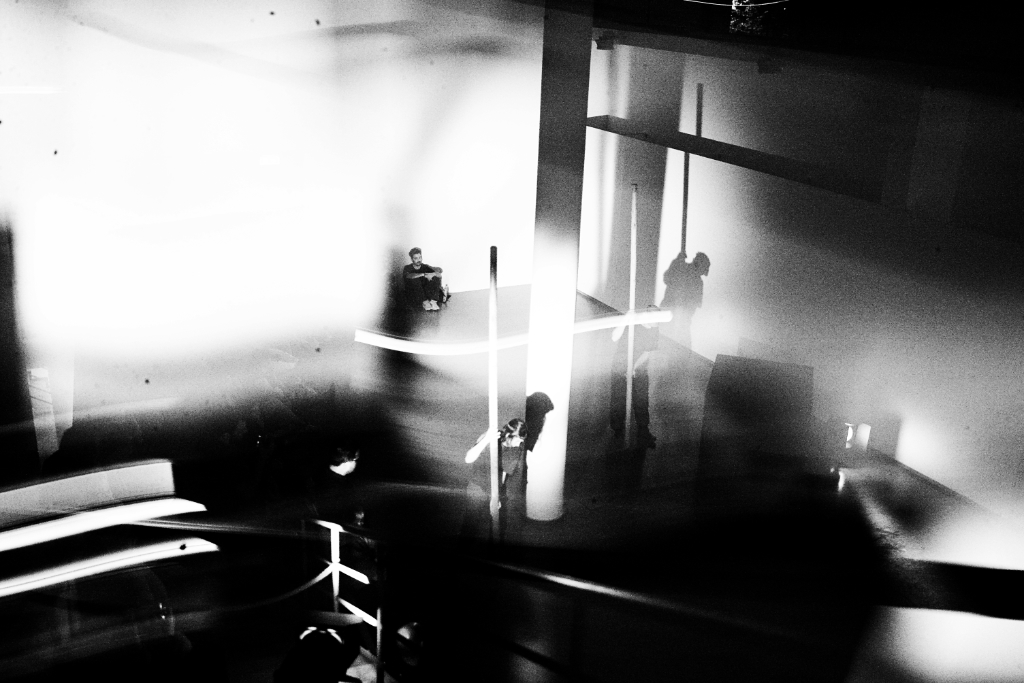
Devoted to the continuous exploration of sound’s materiality, its association with gesture, and the creation of immersive drones, they presented the performance Berrante, in which the soundscape emerges from wooden posts rubbing against the floor. As the festival progressed, their focus on sound as a performative production by an object in space expanded into the performances Passage to Crystallisation, Variações para piões nº 1, and Puro Spirito, presented in that order on the remaining days.
By incorporating unusual, inexpensive objects with pre-established symbolic meanings in everyday life, such as spinning tops or a pencil on a sheet of paper, into artistic and sound-based works, sound minimalism is complemented by a tangible physical exploration for the audience.
From this vast array of approaches, what emerged is not only a prelude to what was to come artistically, but also a first encounter with a city and a festival characterised by community and freedom, where concerts and performances do not isolate themselves or distance themselves from local life, but proudly coexist with it.
Personally, having attended OUT.FEST before, though only as a spectator who travelled to the city solely to attend the concerts, the experience of staying there for almost a week, having lunch and dinner, strolling around, and taking in the various events throughout Barreiro became central to what truly constitutes the festival. As such, I also had the pleasure of seeing this festival take shape as a community experience for many others, from artists and staff to fellow journalists.
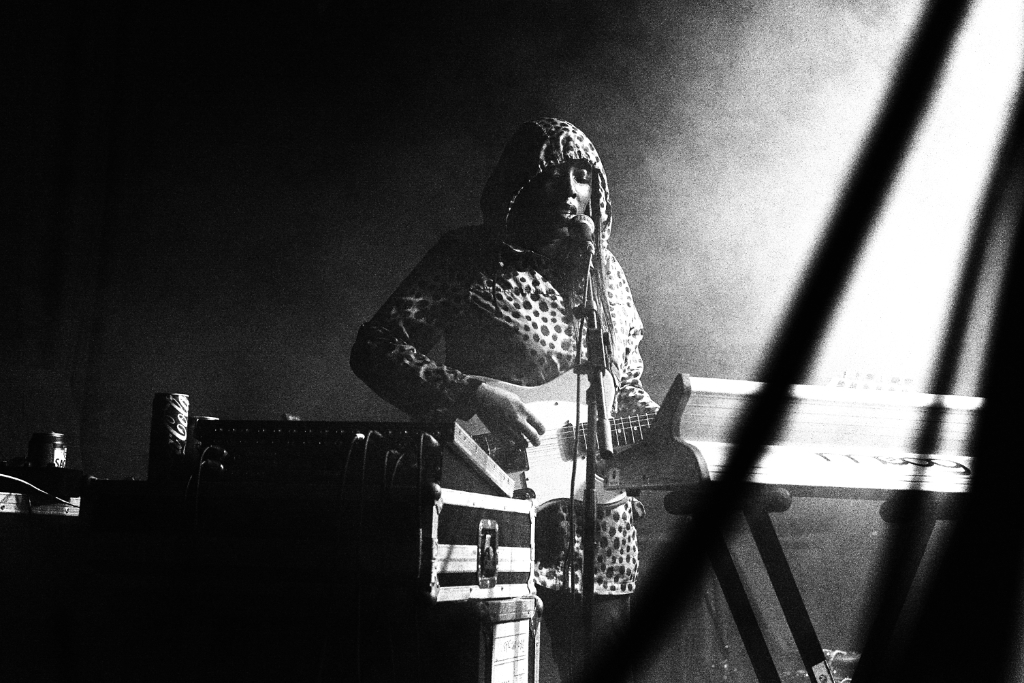
Although the festival truly thrives on spreading throughout the city, on the days with the most concerts the focal point is undoubtedly ADAO; for example, on the second day, we saw performances by Klein, DEAFKIDS, and Senyawa. With completely different concert styles, Klein, for example, took to the main stage amidst a mist that mystified her deconstruction of popular culture into an abstraction that accompanied her shadow – always visible yet unrecognisable – an undefined icon of a culture of personas, including a brief moment when she posed to the sound of cameras clicking.
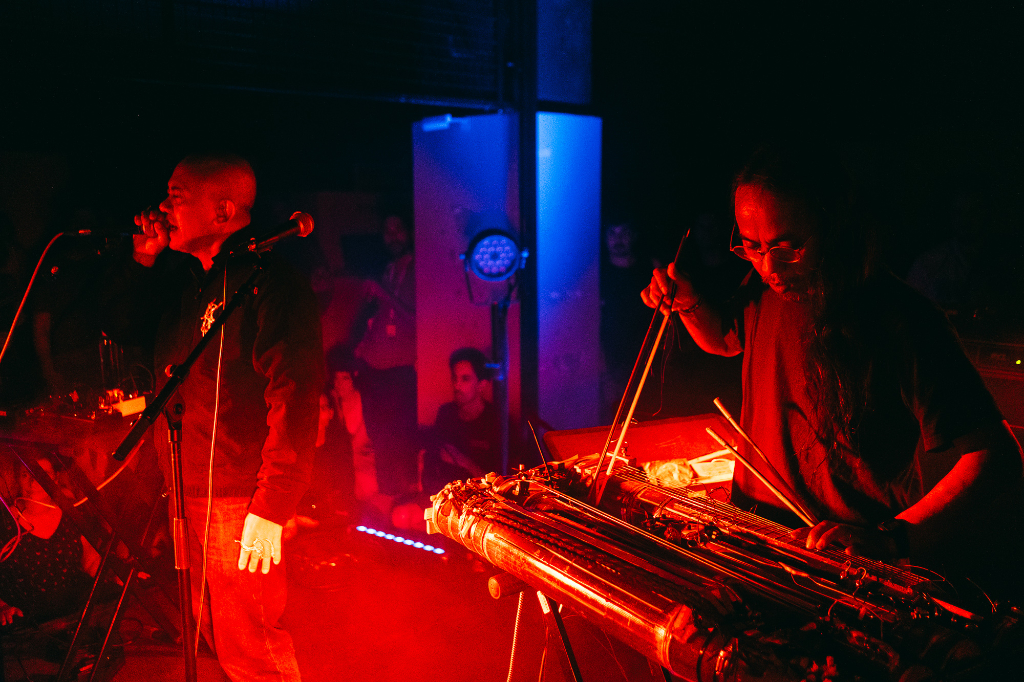
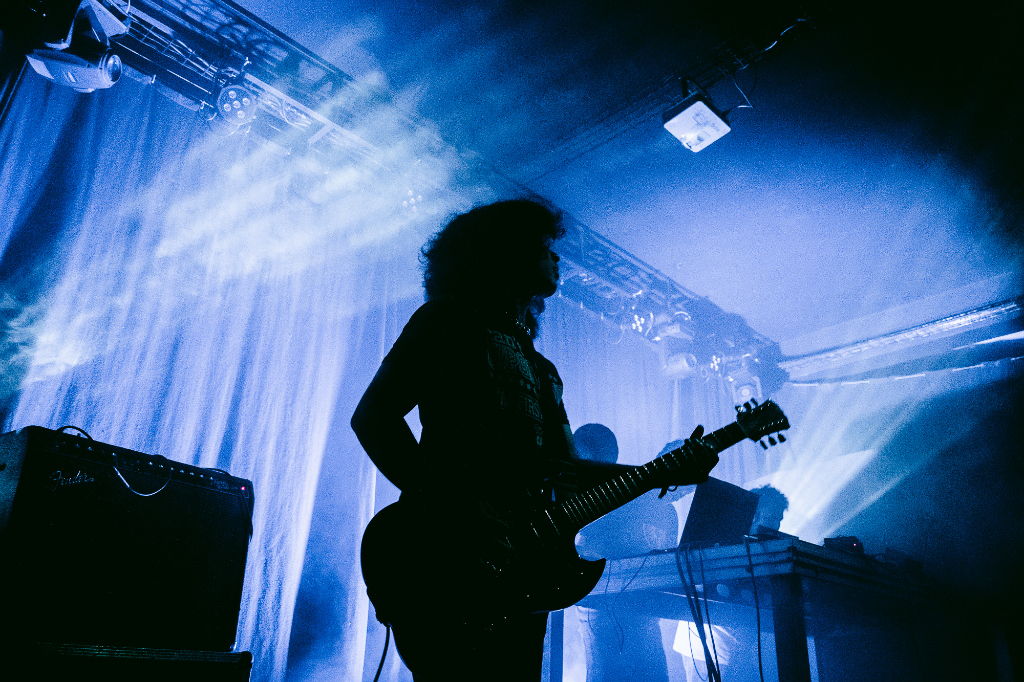
As for DEAFKIDS, who have already given countless performances in Portugal, they kicked off a world tour to promote their new album, now with just two members. Without a bass, the guitar moves towards an increasingly abstract noise, accompanied by frenetically psychedelic rhythms and an ever more evident traditional Brazilian rhythmic influence. In a similar vein, Senyawa presented their usual blend of traditional Javanese music with industrial and psychedelic elements, topped with Rully Shabara’s screeching vocals, agonisingly close on ADAO’s smaller stage.
The third day of the festival undoubtedly spread the most performances across the widest range of venues. I’d like to highlight the ever-important Gasoline, which prioritises heavy, intense sets and hosted Slikback, who blended gqom and dancehall influences with industrial techno, creating the massive, intense collective catharsis that defines this venue every year.
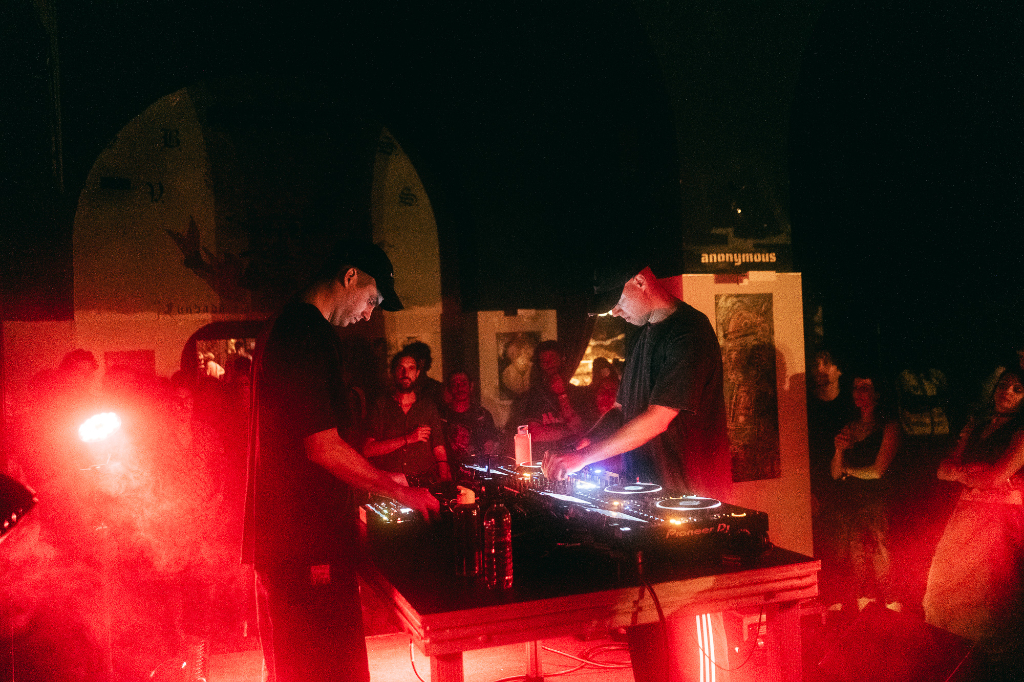
Meanwhile, at ADAO, the varied experimentalism of the performances continues to take on new forms, as was the case with the set by the Porto-based duo TNL. Using four CDJs, the duo crafted a musical performance situated in the liminal, intentionally deconstructive space of concepts such as the DJ set, concert, or sampling, concepts that form the lexicon of popular and contemporary music.
Drawing solely on the logic of a DJ set’s mixing, the layering, editing and fragmentation are so incisive that they generate an original creation that oscillates between the familiar and the inaccessible, always anchored in club music and proving that, in an age where so many sounds are being produced, no further sounds are needed to construct an expressive and authorial perspective.
The festival’s final day rounds out its programme with its most focused moment. I’d like to highlight the last two concerts, which, despite their vast differences, brought the festival to an unforgettable close. On the one hand, Weed420 is an extremely young collective from Venezuela and, as such, expresses the hyperactive nature of contemporary youth through a blend of Latin music and noisy atmospheres. This trend has become increasingly central and defining in recent years. They add iconic sonic symbols to their riffs that root the music in this generation’s popular and digital culture.
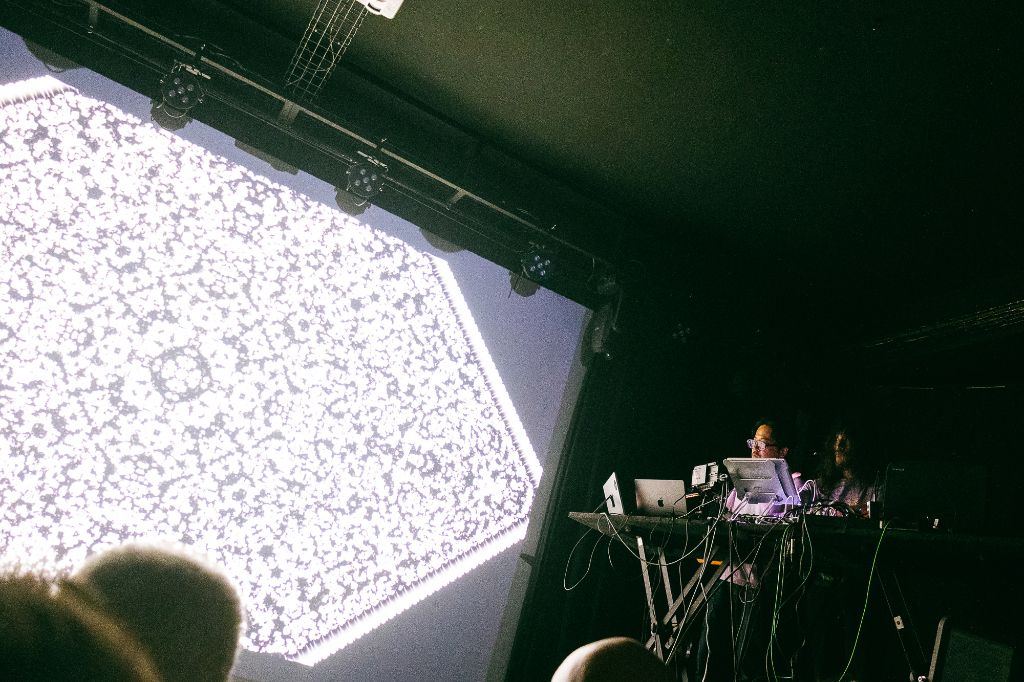
In contrast, ∈Y∋ + C.O.L.O introduced us to Yamantaka Eye, one of the most legendary figures in Japanese experimental and noise music, as well as the creator of Cosmic Lab, with an immersive audiovisual work that aims to completely distort perception through extremely high volume and exaggeration in every sense. Antithetical to any notion of passivity or detached observation, the audiovisual show that brought the festival to a close left everyone physically stirred, verging more on a mind-blowing physical experience than on the intellectualised or emotional experience we are often told music is. Amidst this frenzy, OUT.FEST ended exactly as it sets out to be: a series of days in an ever-present city, where anyone can allow themselves to discover new ways of being, seeing, and hearing.