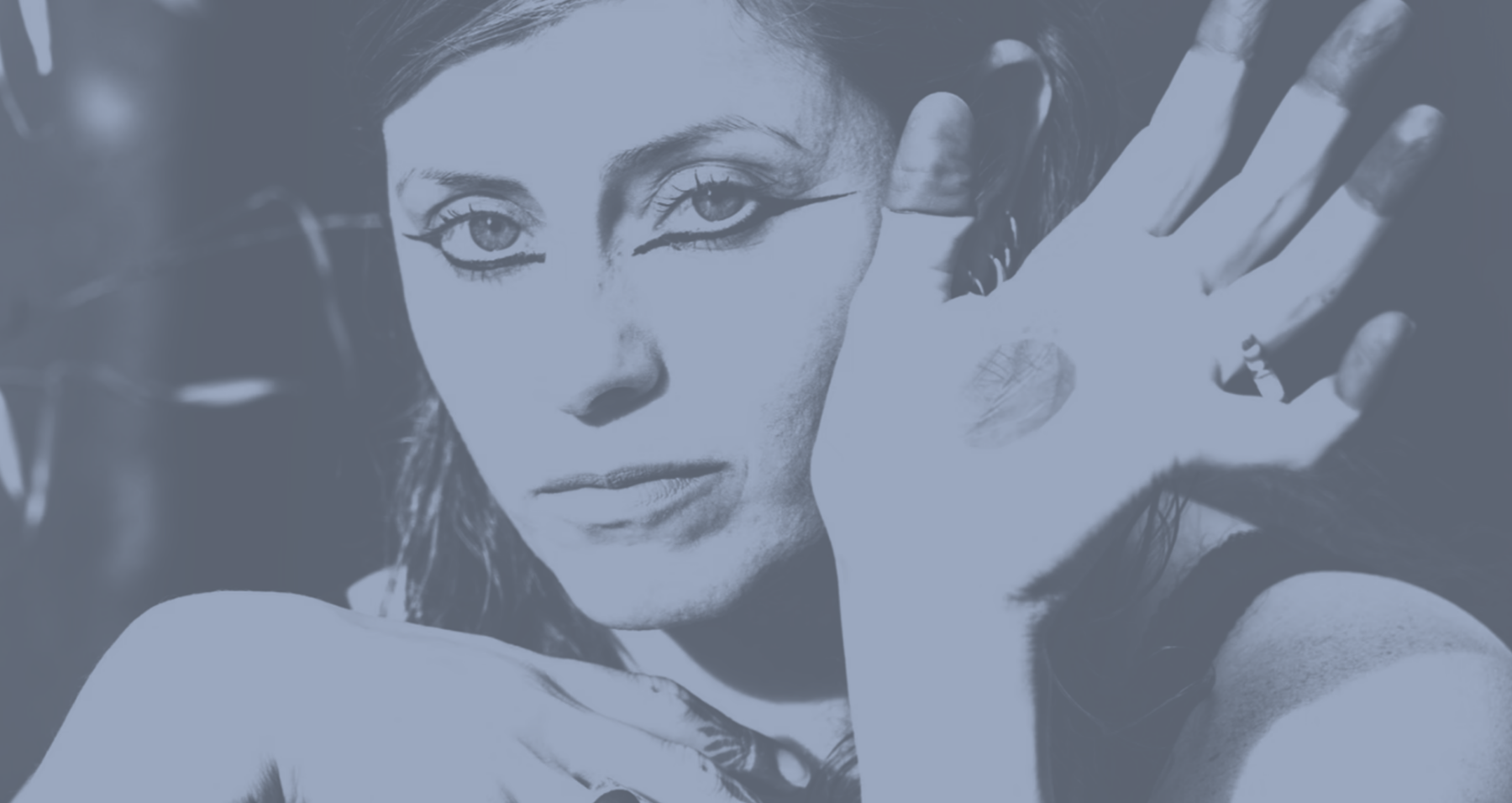
Text by Dom Stevenson
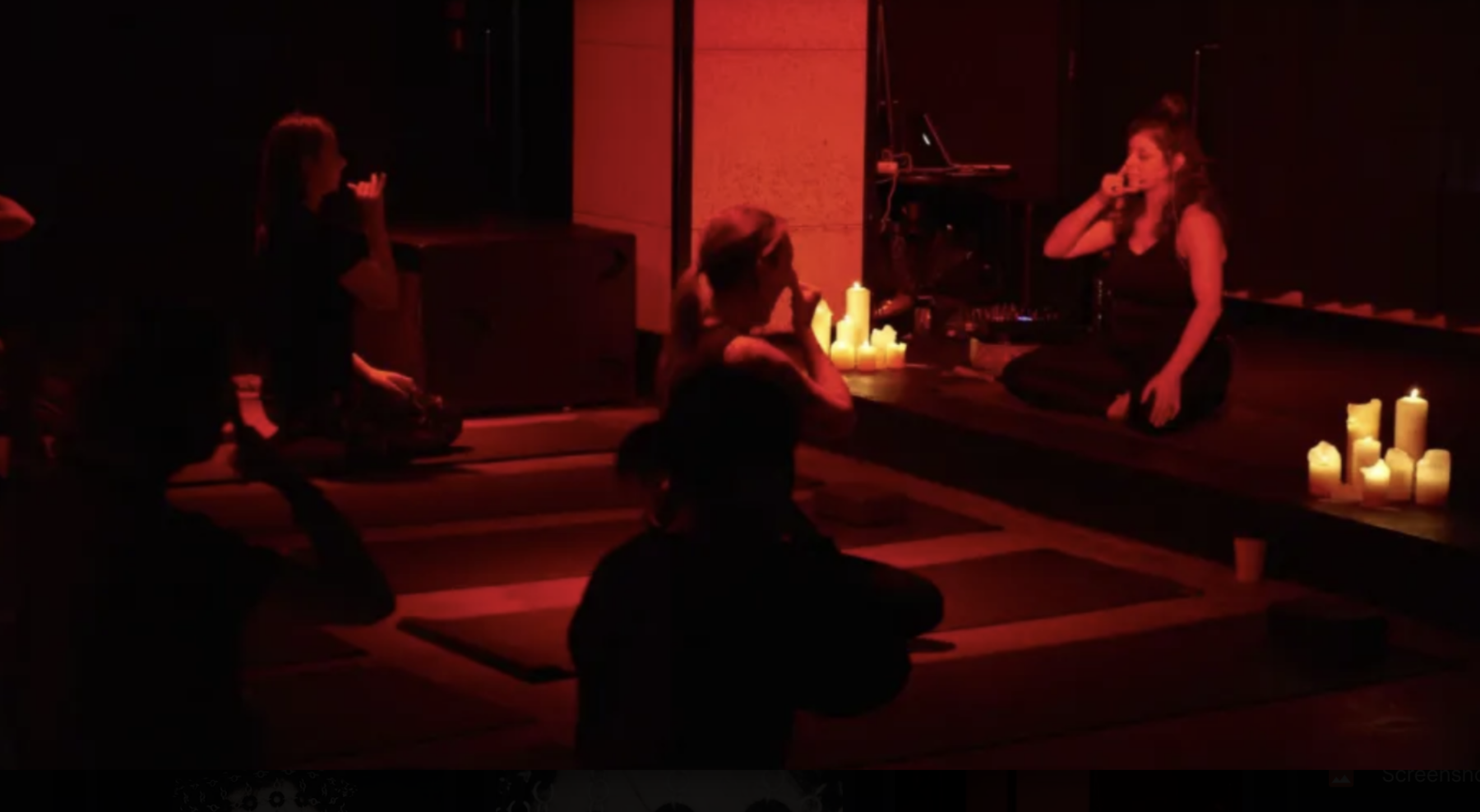
As the noise of contemporary life becomes increasingly dissonant, Do.omyoga offers a retreat of a different kind. Here, the doom of the outside world gives way to another form of intensity, one shaped by deep, sustained vibrations, immersive sound and the perceptual possibilities of listening.
Founded by Kamellia Sara, Do.omyoga occupies a distinctive space in London’s experimental music landscape, operating at the intersection of underground sound culture, meditation and embodied experience. Drawing on the philosophy of Nada Yoga, or awareness through sound, the artist-led platform explores how drone, repetition, low-frequency vibration and silence can reshape our perception of time, space and the body.
At the heart of Sara’s practice is the idea that listening extends far beyond the ears. Sound moves through bodies and architecture, while sustained frequencies and repetition invite audiences to surrender conventional notions of musical progression and become immersed in the present moment. Rather than treating meditation as something imposed upon music, Do.omyoga creates the conditions for sound to be experienced more fully, allowing each listener to encounter it on their own terms.
Beyond its physical and perceptual dimensions, Sara also considers deep listening a form of resistance to the fragmented attention and relentless stimulation of contemporary life. In reclaiming the capacity to remain present, listening becomes more than an individual experience, opening up questions around awareness, participation and our relationship with the world around us.
Accompanying her contribution to the CLOT mixtape series, we spoke with Sara about the physicality of sound, the relationship between drone and meditation and the potential of deep listening to reshape how we experience music and the world around us.
We caught up with Kamellia Sara to discuss the origins and philosophy of Do.omyoga, the relationship between sound and the body, deep listening as a form of resistance and her exclusive CLOT mixtape.
Drone music often engages with duration, repetition, and altered states of perception. What role do sustained repetition and low-frequency immersion play within your wider practice?
When we listen deeply to music, our ordinary relationship to time begins to dissolve. Music can give us an experience of eternity not eternity as an endless amount of time, but as a moment in which time temporarily ceases to organise our perception. There is only what is sounding now. For me, the drone has a very particular ability to carry us into that eternity.
This is where drone becomes inseparable from meditation within my practice.
A sustained tone removes many of the markers through which we normally measure musical time. There is no verse arriving, no chorus to anticipate, no obvious beginning or end. There is less for the mind to follow and less opportunity to project itself forward into what happens next. Repetition stops functioning as repetition in the conventional sense and becomes immersion. The drone asks us to remain.
What initially appears static begins to reveal enormous internal movement. Harmonics appear and disappear. Frequencies beat against one another. The room resonates. The body resonates. Tiny fluctuations become perceptible. The sound may remain relatively constant, but the listener does not. The longer we stay with it, the more our perception changes.
Drone works on me in a similar way. Low-frequency immersion makes that relationship even more physical. Bass occupies architecture. It travels through floors, walls, cavities and bodies. Listening is no longer confined to the ear. The body becomes part of the listening apparatus. This is fundamental to my wider practice because DOOMYOGA is underpinned by Nada Yoga the yogic understanding of sound not simply as something we hear, but as a route into consciousness.
This is why I don’t think of drone as simply an aesthetic choice within DOOMYOGA. It is the sonic architecture of the philosophy underneath the practice.
I am interested in what happens when we remain with sound long enough that we stop demanding that it entertain us through constant change. Sustained repetition asks something different of the listener: surrender, attention, patience, presence. Eventually you stop waiting for the next thing to happen and begin noticing what is happening inside what initially appeared to be one continuous sound.
Across the project, sound feels treated as something deeply physical rather than purely auditory. How important is the body within the listening environments and experiences you aim to create?
he body is always present. It is the mind that wanders.
That has become fundamental to how I think about listening. We arrive at music already embodied. We have had different days, different experiences, different emotional states. We are carrying tension, exhaustion, excitement, anxiety, and distraction. Everything that has happened to us before entering the room is present somewhere in the body, and that inevitably affects our capacity to receive what we are about to hear.
Over the years I have become very attuned to this. I can physically see where people are holding themselves shoulders lifted, jaw clenched, breath sitting high in the chest, bodies unable to settle. So before I ask anybody to listen, I bring them back into the body.
The techniques themselves can be incredibly simple: becoming aware of the breath, noticing the weight of the body, feeling the seat beneath you, releasing superficial tension, withdrawing attention from everything competing for it.
For me, yoga is intimacy with all things.
That is where yoga and listening become inseparable. To listen fully is an act of intimacy. You have to be available to what is actually there. The body is not something I am trying to transcend in order to reach some elevated listening state; it is the point of entry. Breath, sensation, vibration and awareness bring us into contact with the present, and from there we become more available to sound.
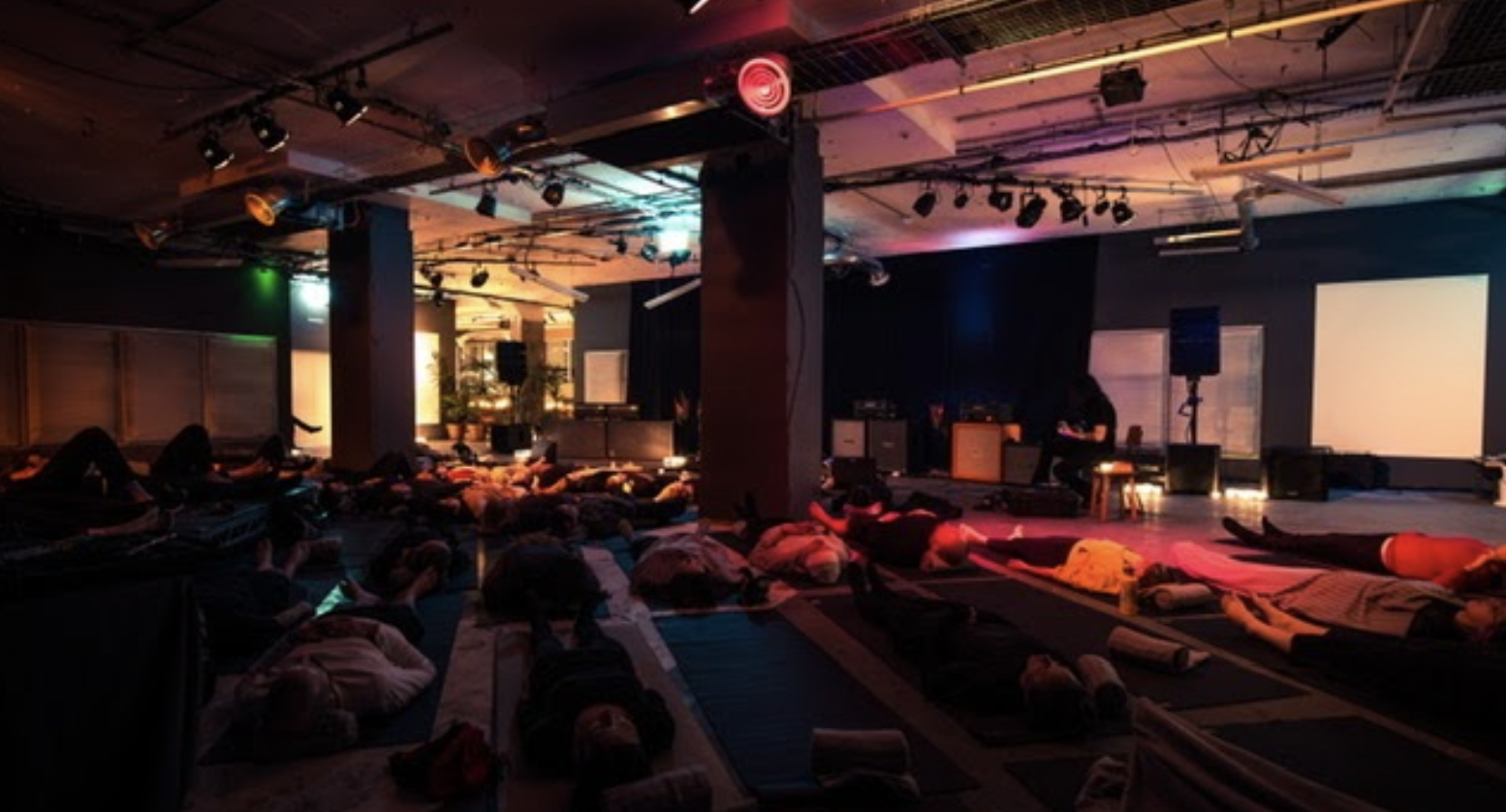
Not all music needs to be watched. There is something incredibly powerful about closing your eyes in front of live sound and removing the visual hierarchy between performer and audience. Suddenly you are not watching somebody make music. You are inside an acoustic event. Space changes. Time changes. Your awareness of the people around you changes. You begin noticing where frequency is landing in the body, how bass occupies the chest or floor, how sound moves through architecture, how your breathing responds to intensity.
The body is essential because there is no listening without it. We don’t experience music through the ears alone. We experience frequency through flesh, bone, breath, nervous system, memory and emotion. We experience it through the particular body we have brought into the room that day.
My role is not to make everybody arrive as the same body. That would be impossible. It is to acknowledge that difference, help people arrive inside the bodies they actually have, and create enough space around them that they can give themselves completely to listening.
The body is already there.
I am simply bringing our attention back to it.
When listeners fully surrender to these immersive sonic states, what kinds of psychological, emotional, or perceptual outcomes are you hoping might emerge through the experience?
The experiences have no prescribed outcome and that is fundamental to the practice.
Surrender means relinquishing expectation. My role is to create the conditions for deep attention and complete listening; what emerges within those conditions belongs entirely to the individual.
We all arrive carrying something different. We have different bodies, histories, memories, emotional states, nervous systems. Even the same person could experience the same piece completely differently from one day to the next. So I am not trying to manufacture transcendence, catharsis or any particular emotional response. My role is to create the conditions in which something can emerge.
When you remove distraction and remain with sound for long enough, attention begins to change. Time can become strange. The boundary between the body and the sound can become less distinct. A sustained frequency that initially seemed static starts revealing extraordinary internal movement. You become aware of harmonics, vibrations, your breathing, sensations in the body, thoughts appearing and disappearing. You might become acutely aware of yourself, or you might temporarily lose that constant sense of yourself altogether. And emotionally, sound can take us somewhere that language often can’t.
Music has an extraordinary ability to access memory and feeling without requiring us to explain either. Something can surface before we have named it. That could be joy, grief, discomfort, release, tenderness, fear, nothing at all. I don’t think one response is more successful than another. Awareness is not about producing the “right” feeling. It is about becoming capable of meeting what is actually there.
I don’t necessarily need somebody to leave DOOMYOGA having had a revelation. I want them to have experienced music fully. If for a period of time their attention was completely given to sound, if they heard, felt and inhabited music rather than consuming it alongside everything else, then something has already happened.
I create the conditions. The sound does its work. What emerges belongs to the listener.
The idea of ‘deep listening’ feels increasingly significant within a culture shaped by distraction and constant information flow. What does deep listening mean to you today, both personally and through the philosophy of Do.omyoga?
For me, music is meditation, and meditation is a radical act of activism.
We live in a culture that constantly pulls our attention outwards towards information, reaction, consumption, comparison, endless stimulation. Our attention is continually being competed for. So to consciously reclaim it, to sit still, to listen deeply and become aware of what is actually happening within and around us, feels increasingly radical to me.
Deep listening begins with attention, but for me it ultimately becomes awareness.
There is that ancient proposition: know thyself. If you want to change the world, begin with yourself. Become aware of your patterns, your reactions, your conditioning, the things you project onto other people, the ways you move through the world unconsciously. You cannot meaningfully respond to what is happening around you if you are incapable of noticing what is happening within you.
That is why I see meditation as activism. Not because sitting quietly is in itself a political action, and certainly not because I believe we can meditate our way out of structural problems, but because awareness changes the quality of our participation in the world. Before we can respond consciously, we have to be capable of receiving. Before we can receive, we have to be able to pay attention.
Within DOOMYOGA, music is the way in. I have always been interested in music’s ability to interrupt ordinary consciousness. A sustained frequency, a drone, repetition, silence, these things can hold our attention long enough for something else to become perceptible. Instead of immediately reacting, categorising, judging or reaching for the next stimulus, we stay.
Personally, I need that practice as much as anybody who enters DOOMYOGA. I don’t position myself outside it as somebody who has mastered awareness and is now teaching everybody else how to be present. I am practising too. Awareness is ongoing. There is always another reaction to notice, another assumption to question, another way in which we have stopped listening.
And perhaps that is the political dimension of deep listening that interests me most. So much of contemporary life encourages immediate response: speak, post, judge, react, move on. Deep listening interrupts that sequence.
Receive. Notice. Process. Then respond.
That tiny space between stimulus and response can change everything.
So for me, deep listening is simultaneously musical, meditative and political. It is the practice of becoming more intimate with what is actually here: sound, body, self, other people, the world around us. If you want to change the world, you have to be willing to encounter yourself within it. And listening is where I begin.
Further information on upcoming sessions, special events and bookings can be found at doom.yoga
Tracklist:
MARIA W HORN – ATROPA
SARAH DAVACHI – BANYAN
JASMINE WOOD – III
AMULETS – BLOOMING
MMMD – HAGAZUSSA
HILARY WOOD – WHERE THE BOW HAS BROKEN
NORTT – TIL GRAVENS VI
RAFAEL ANTON IRISARI – DISPLACEMENT
ABUL MOGARD – THROUGH WHISPERS
KALI MALONE & DREW MCDOWELL – NOTHING HERE IS LOST
BIG BRAVE – THIS DEAFENING VERITY
Website: https://www.doom.yoga/about-3-1
(Media courtesy of the artist)