Text by Mila Azimonti
Curating musical expressions today can be an important calling.[i] The line catches me while I drift through Politics of Curatorship,[ii] picked up the day before from a small table of Norient publications tucked inside the festival. The task is not to anticipate what a scene will reward, the argument continues. Yet so often curating stops at selection and display: it circulates works, usually among artists who already hold enough cultural capital, without shifting how we listen. Institutional commitments to diversity haven’t dissolved the patterned exclusions that structure most Euro-American festivals.
‘Diversity line-ups’ may satisfy representational quotas but leave structural conditions intact. Sandeep Bhagwati, composer and Norient friend, proposes something else: moving from gatekeeping and trend forecasting to caretaking. If musical life were understood as something living, the question(s) spontaneously turn(s) elsewhere: what allows it to thrive across its many aesthetic communities? What forms of participation sustain it? What degree of support is required? How much regeneration, compassion, solidarity does the present demand? Can contemporary music help us move through complexity and the entanglement of human and non-human forces? How, ultimately, might music help us continue to live together?
To think of curating as care means that selection cannot be the endpoint; every inclusion produces an exclusion, afterall. What matters is what happens next: situating a work within wider conversations, sustaining its presence beyond the moment of display, and allowing the contours of art itself to move. Among the many festivals that seem to run on curatorial autopilot, one project takes this responsibility with uncommon deliberation.
Founded in 2002, Norient began as a platform engaging contemporary music worldwide through writing and interviews, later expanding into podcasts, books, sound pieces, and eventually a festival. Initially a music-film programme curated by two friends, ethnomusicologist Thomas Burkhalter and filmmaker Michael Spahr, it set out to show audiences in the Swiss capital what, as Thomas puts it, nerds around the world are doing. For me, they are not niche or underground. These are the messages people should hear.
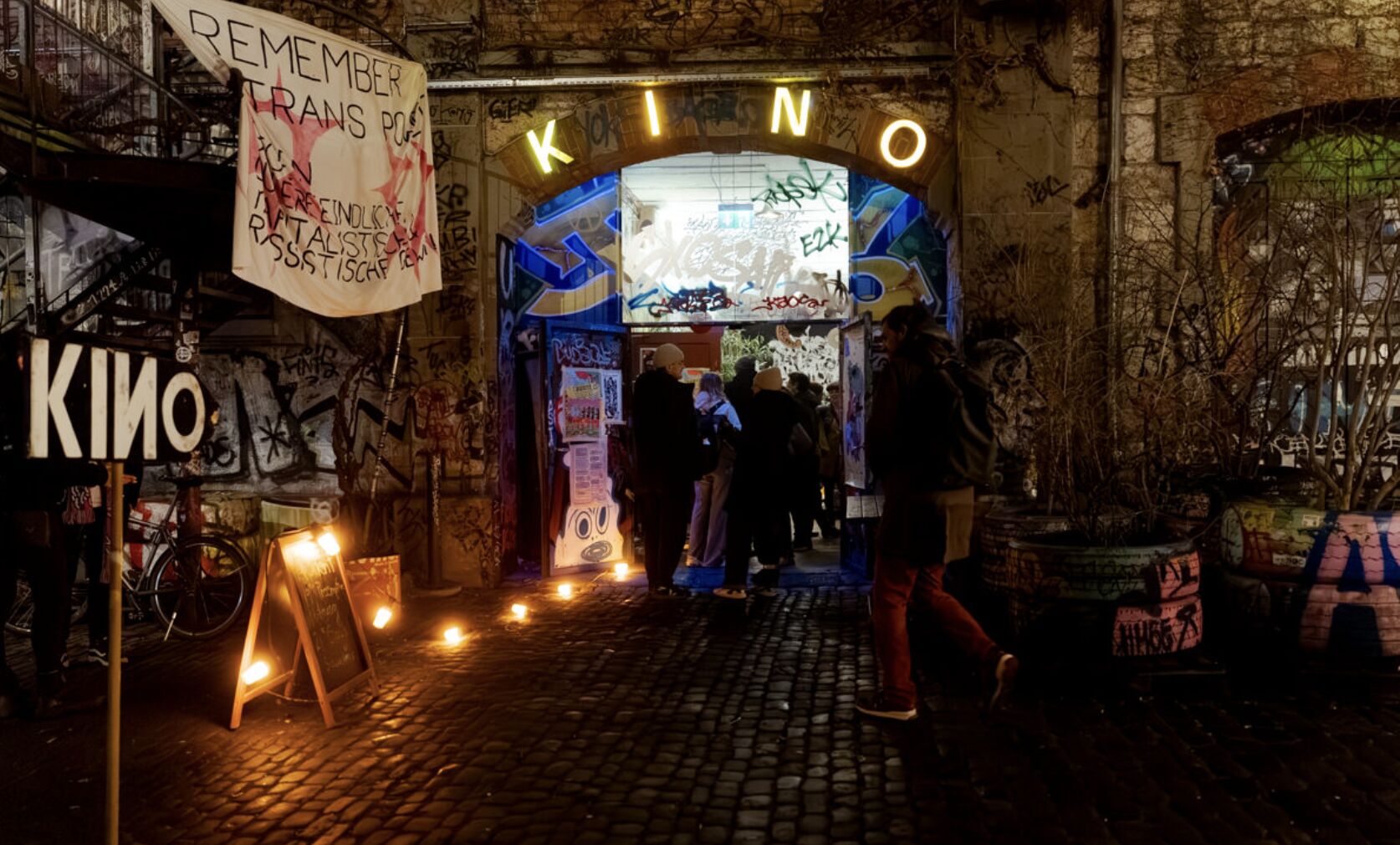
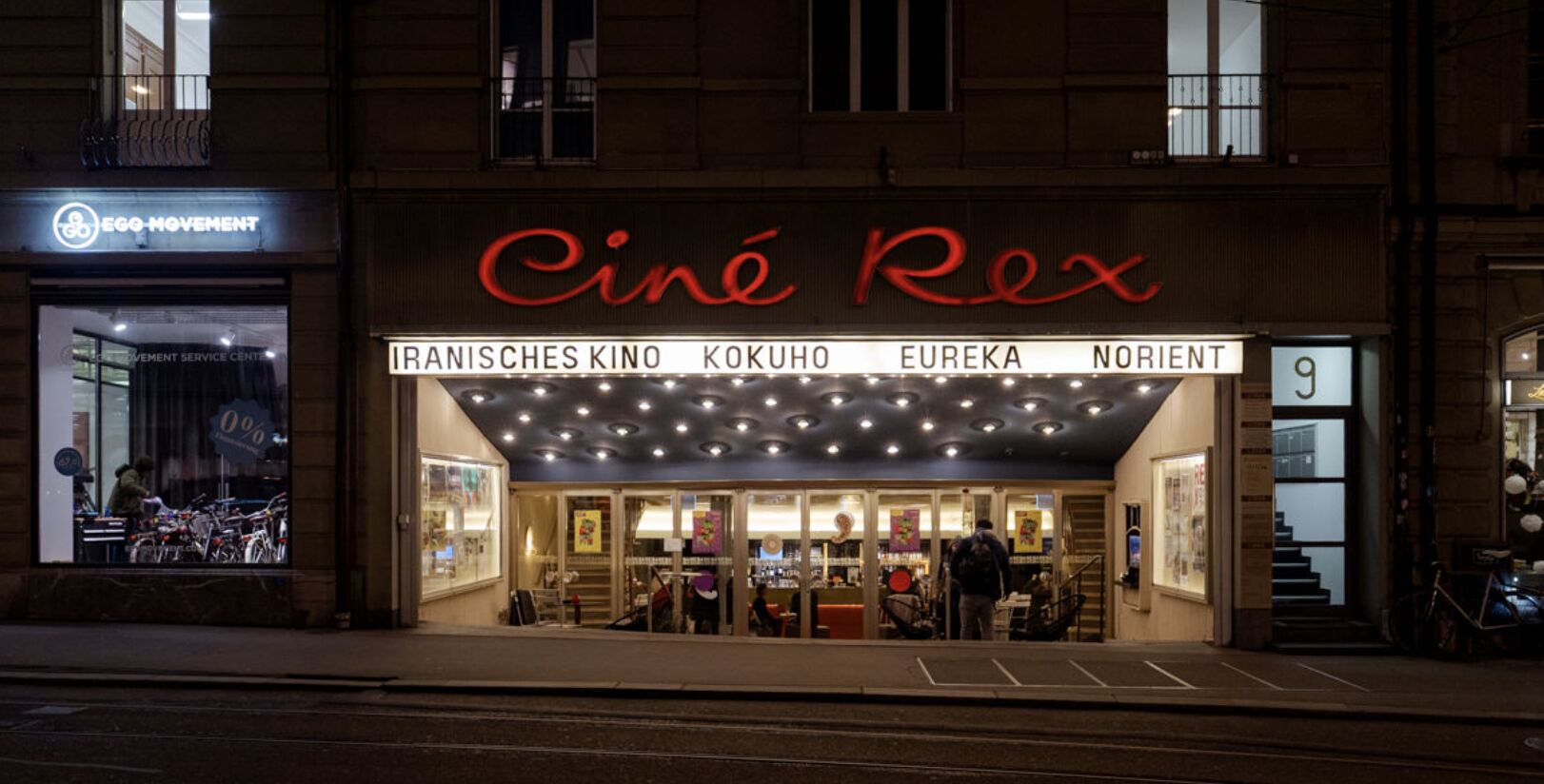
The films found their way to the kino in (der) Reitschule, the autonomous cultural centre that anchors Bern’s cultural ecology. Shaped by DIY practice and a long leftist political history, it’s also where many, including Thomas, were formed musically and politically. The festival has only taken place there three times, including this year. Still, it’s important for us to be here, he says, even as the venue faces increasing pressure and some hesitate to enter the surrounding area
Since its dawn, the festival has repeatedly morphed form. I think the name changes every year, Thomas laughs. First Norient Music. No—Norient Film Festival. Then Norient Music Film Festival. Now it’s Norient Festival, I think. Beneath the team’s informality lies a highly self-reflexive curatorial practice. Of course, no stance forms in a vacuum; this one emerges within wider tensions that continue to condition the field. Curating is as much a social practice as a cultural one, and as such, it inevitably reproduces the exclusionary dynamics of the environments in which it operates.
Several theorists argue that curatorship remains historically tethered to long-standing organisational logics: systems of classification, control, and cultural authority. Efforts to resist these structures, whether through ‘uncurated’ exhibitions or anti-institutional gestures, are often absorbed back into the frameworks they seek to transform. The field expands, but its underlying structures largely persist.[iii] None of this means curatorship is doomed, though. Salomé Voegelin, who has long approached listening as a socio-political practice, suggests that at its most generative, curation reveals our orientations and creates opportunities to reorient ourselves. But it does demand sustained effort: a constant willingness to confront its limits and to reconfigure structures, not just rhetoric.
ONE TO MULTI
In recent years, Norient has deliberately moved away from a singular curatorial voice, even though that model was efficient and easily replicable. The festival works now with multidisciplinary teams that vary from year to year and are geographically dispersed. This makes the project more fragile, organisationally and financially, but also more open. Thomas jokes: Sometimes this year it felt a bit like the early days of the festival again…but philosophically, that’s also the beauty and the strength of it. Unfortunately. Philipp Rhensius, one of the long-standing curators, suggests this shift became especially pressing once decolonial thinking turned into a buzzword rather than a critical practice.
Even the name Norient (short for No-Orient) signals a refusal of frameworks that treat cultures as distant, siloed entities defined by presumed (and consumable) difference. Rather than staging diversity from afar, the festival situates cultural practices within concrete proximities. Like on the opening night, when the Zurich-based collective BLKSHFT and Nairobi DJ, activist, and journalist Coco Em opened the first club session with a conversation. Standing together in front of the DJ booth, the lineages of what we would soon hear on the dancefloor were traced: the musical traditions, ramifications, migrations and struggles, the community infrastructures that gave rise to Chicago house and Detroit techno. Assembling a DJ set requires research and historical awareness. Knowing where sounds come from is part of what allows new trajectories to emerge, what makes it possible to write one’s own story and future.
Norient isn’t concerned at all with representing diversity. It’s more interested in shaping situations where relations, frictions, and different ways of listening make plurality experientially unavoidable. Plurality can exist as discourse, where difference is acknowledged, or as structure, where perception is reorganised. It’s the difference between presenting multiplicity and composing relational fields. Having multiple curators doesn’t automatically create structural plurality; it depends on how those voices relate and interfere with one another. Many festivals assemble multiple curatorial voices, but these often remain parallel contributions, segmented within a programme. Here, materials circulate among curators, references are exchanged, and ideas are continually reworked in response to one another, so that influence becomes reciprocal and programmes emerge through collision and mutual transformation.
Having recently read The Death Of Eros,[iv] I find Byung-Chul Han’s distinction between assimilable difference and irreducible otherness quite fitting. Contemporary consumer culture multiplies difference while eroding the experience of the Other—that of radical alterity. Difference can be recognised, named, and managed. Once translated into something legible, it becomes a variation within what is already familiar. Otherness, by contrast, resists assimilation. It remains opaque, relational, and unsettling. The Other must stay Other: once intelligible, alterity collapses into information. Because it destabilises the self, the encounter with the Other is what makes genuine transformation possible.
It seems to me that much institutional diversity work operates at the level of difference, producing environments where plurality is visible but not transformative. Rather than foregrounding commodified difference, Norient works through proximity, allowing for something closer to Han’s otherness to emerge: unassimilable alterity that cannot be fully represented (nor curated as content) and unsettles the self. It’s a curatorial approach that stages encounter instead of offering explanation, cultivates friction without resolving it into synthesis, and sustains opacity while resisting full legibility.
COMPOSING MEANING
Another central question is how meaning actually forms. Curatorial models that impose ready-made frameworks of interpretation onto the viewer-listener do not care for perception but instead control it. Norient works against that impulse by rearranging perception through relation rather than hierarchy, treating montage as epistemic principle. Early filmmaker Lev Kuleshov showed that spectators derive interpretation from sequences rather than isolated images. What matters is not what something is about, but how it is assembled.
This logic extends from film editing into curatorial composition. Thomas describes the festival programme as a collage: radically different forms, styles, and practices are placed side by side so that the boundaries of specialised scenes loosen and their collision generates new interpretive possibilities. A bit like Suvani Suri’s sound collages. Suvani is both an artist and one of the curators of this edition, and she speaks about curating with the same poetic sensibility that shapes her sonic work.
For her, curating is first and foremost relational: a way of bringing together elements that would not necessarily meet on their own, a space for assembling, arranging, and creating productive short circuits. When practices collide, when questions collide, she says, something else happens. Form, too, remains open: It develops in conversation. A symposium can become a performance. A poet can enter a club or introduce a film. The point is not to stabilise formats but to create situations.
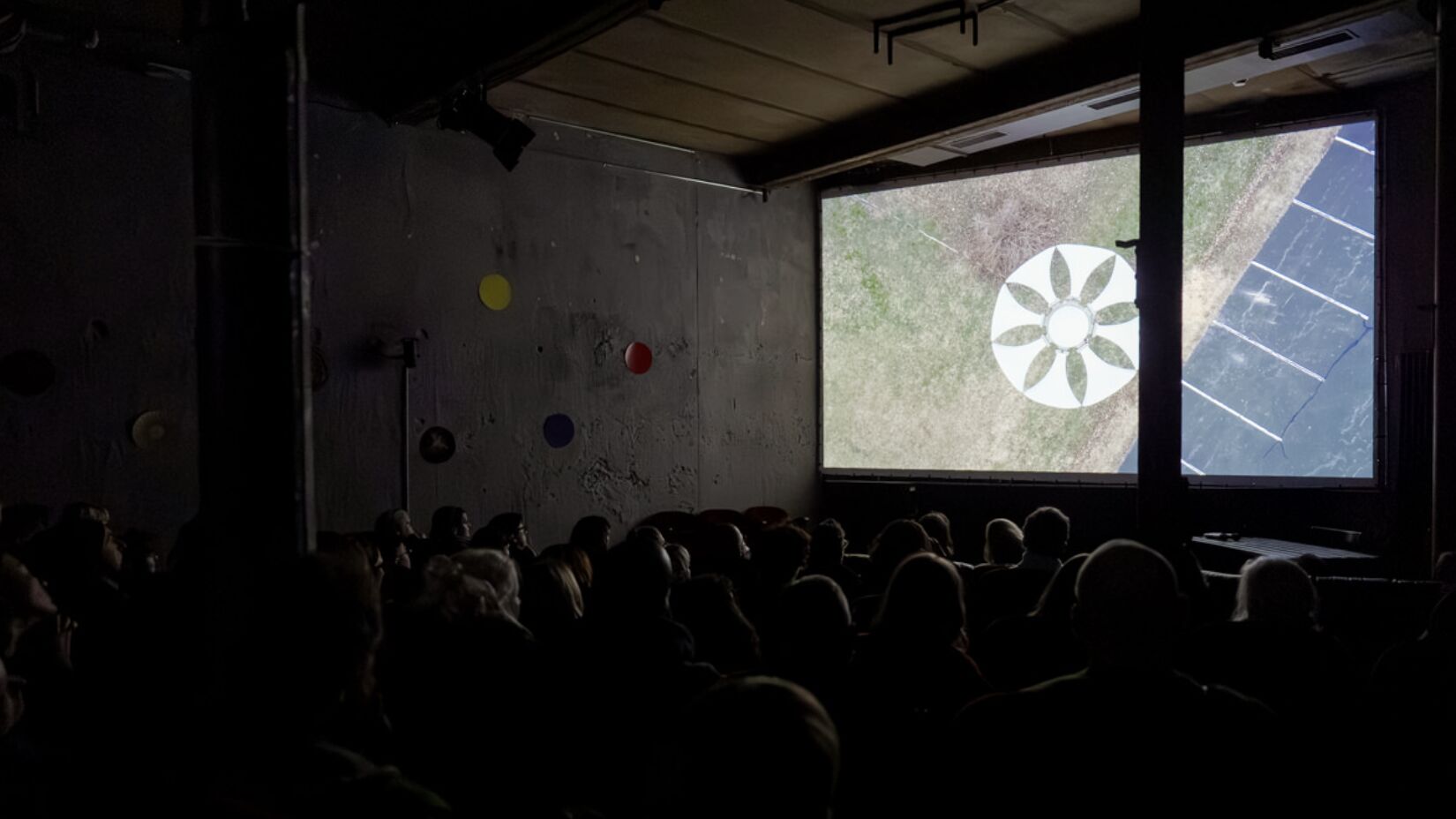
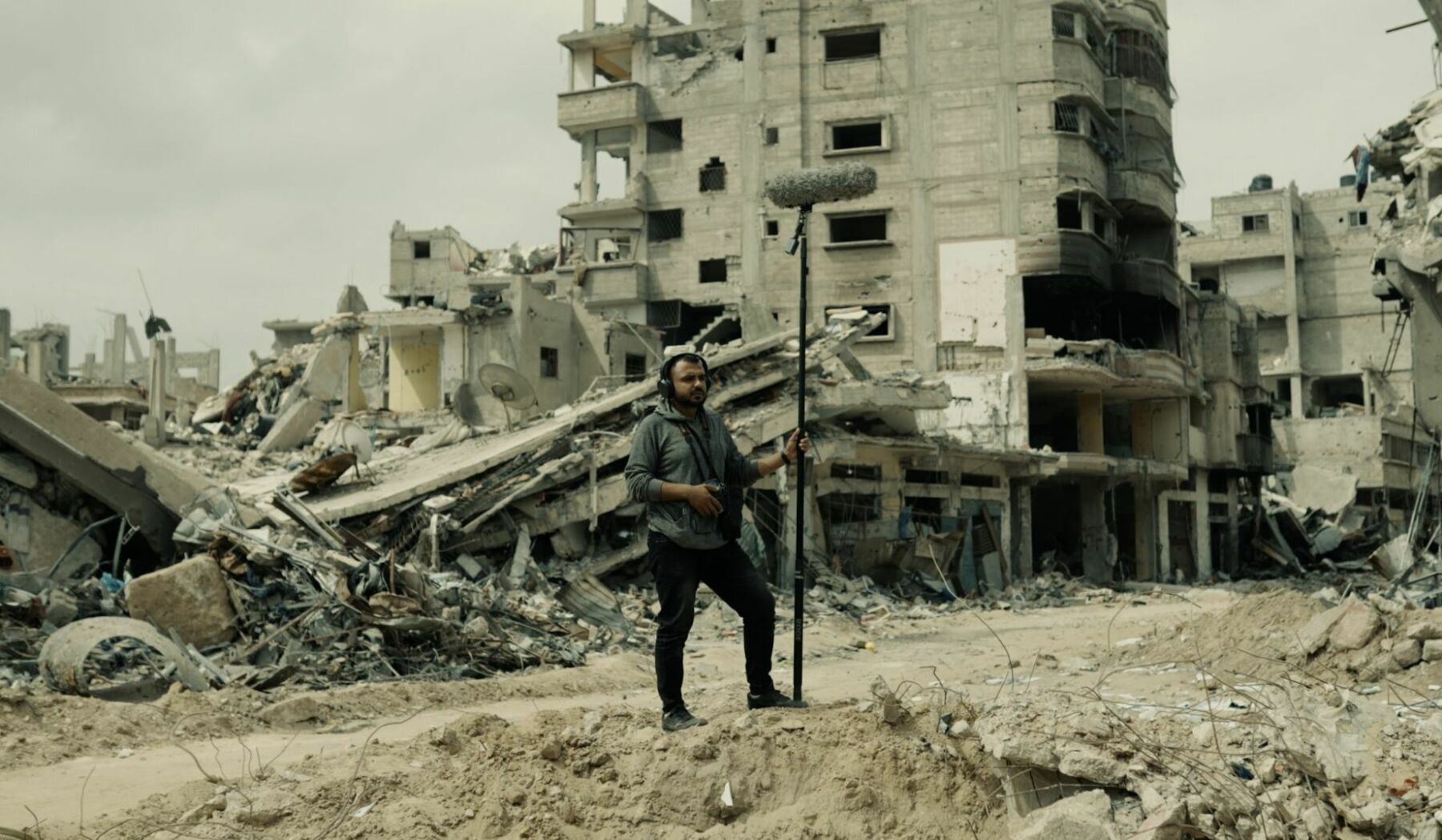
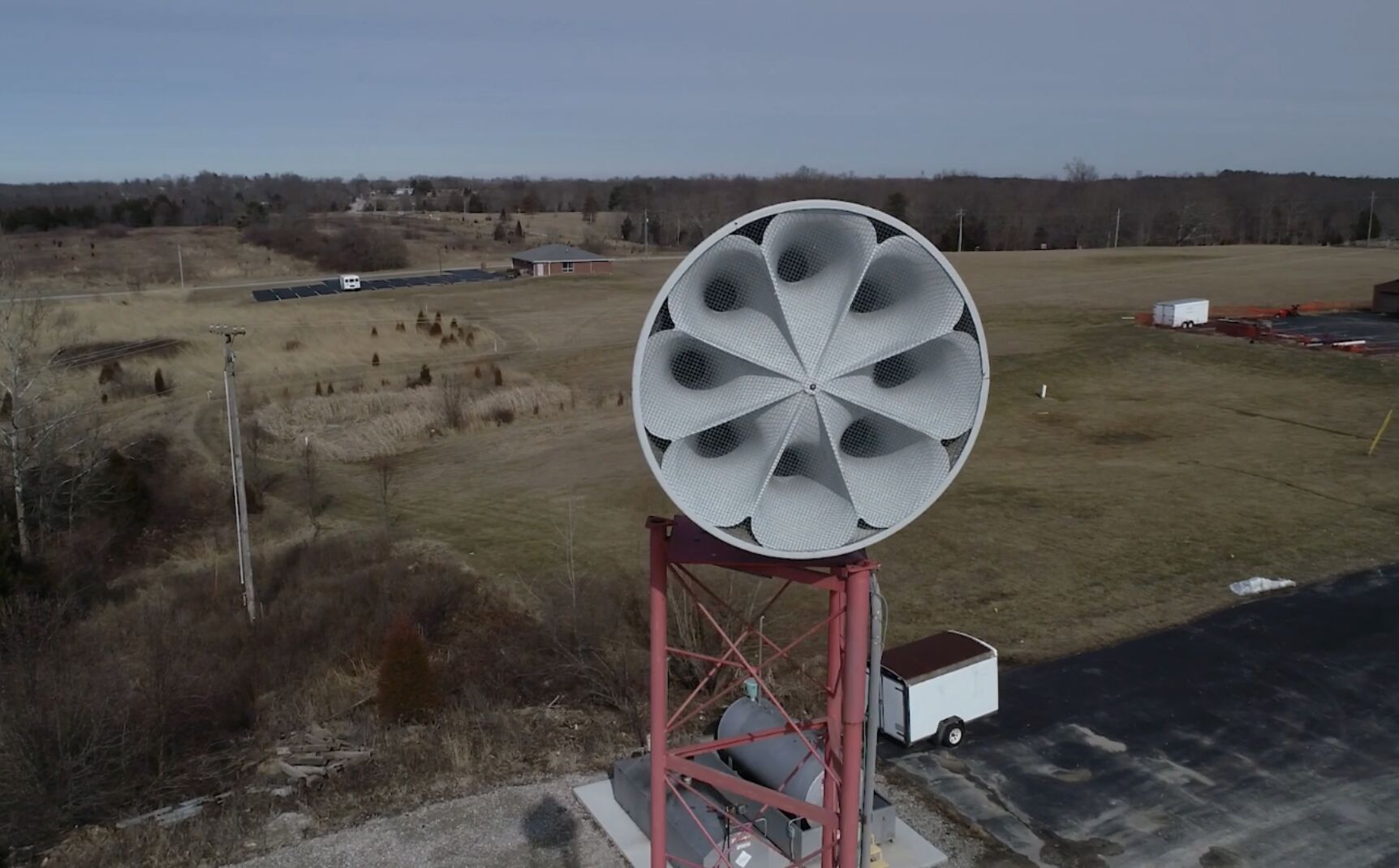
Norient is an unfolding of interdisciplinary blocks that shape how works resonate with one another. Staying within a block reveals the logic of assembly. The opening chapter, titled Sonic Emergencies: Between Sensing and Sense-Making, brings together two screenings: Aura Satz’s Pre-emptive Listening and Mohammad Yaghi’s Gaza Sound Man. The first is an exploration of listening as anticipation: the charged moment before something happens, when sirens squeeze perception into vigilance. Listening is the threshold between emergence and emergency, danger and rescue. The second follows the last sound engineer in Gaza, documenting sonic life under constant threat.
Here, sound is residual: archive, trace, evidence under surveillance. In the interference between the two, meaning emerges and expands. Together, the films stretch listening into a continuum: from anticipation to endurance, sensing to witnessing, alarm to memory. Sound becomes the medium through which crisis is lived and remembered. Listening shifts from aesthetic activity to a condition of being-in-the-world under pressure, showing how it must be renegotiated in relation to what one encounters.
THE LABOUR OF LISTENING
At Norient, we take listening very seriously, Philipp tells me. Norient is a collective with many contributors. What connects our activities is an invitation to think with sound rather than about sound. You begin by taking seriously what you sense and hear, not only what you already know. Listening is not an abstract position; it cuts through you and is always situated. It happens from where you are, in the moment you are in. If listening becomes the primary mode of engagement, it is not simply because of an interest in sound practices. Unlike visual or textual distance, sound is difficult to hold apart.
You can close your eyes, not your ears. Listening thus begins as exposure. It places the listener in a position of receptivity toward signals and presences that cannot be fully controlled. Under such conditions, listening is no longer something one consumes, but a condition of being affected; and perhaps for that very reason, it holds particular decolonising potential.
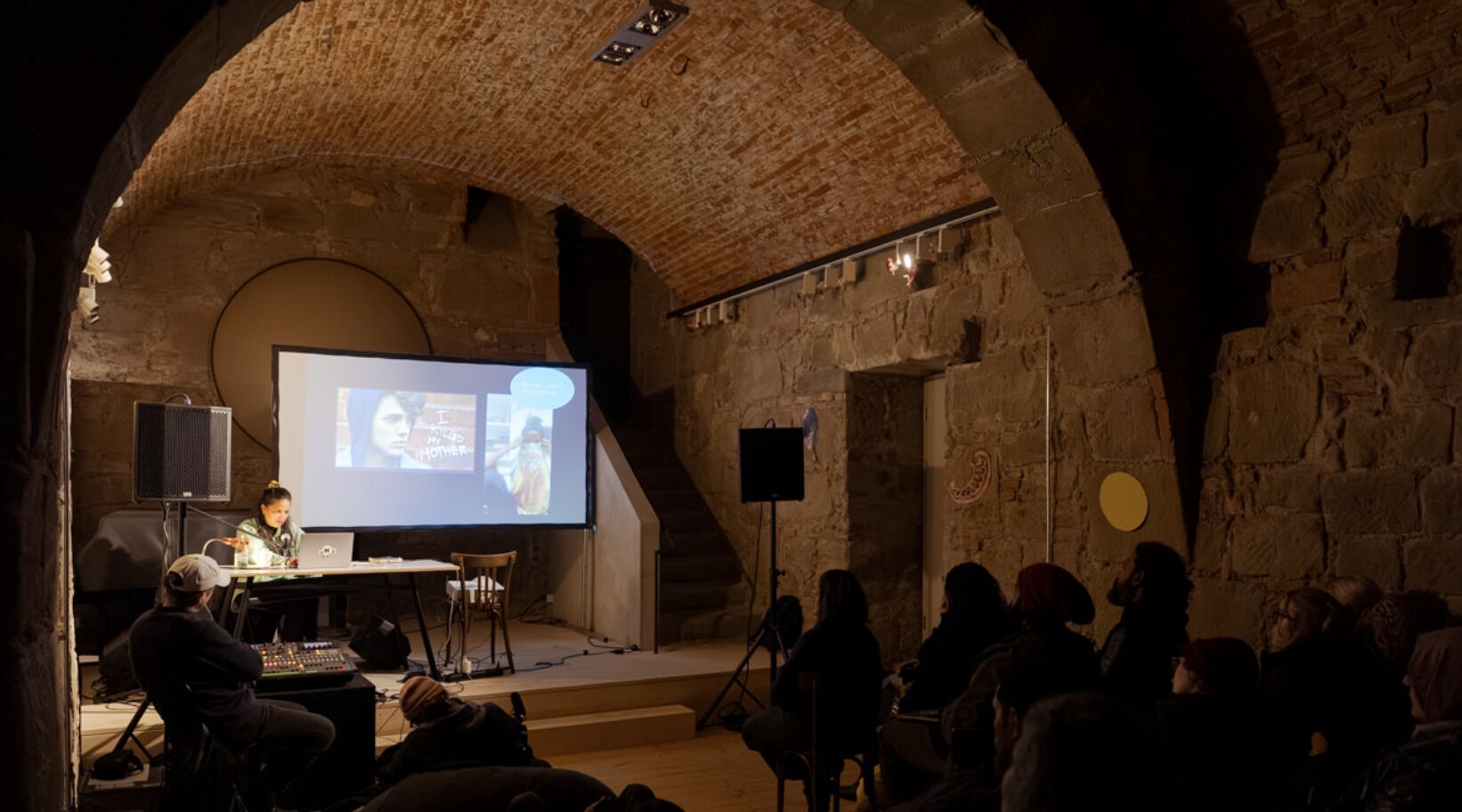
The festival is the space where listening can be carried beyond its usual limits. One way this happens? A twelve-hour poetry marathon unfolding till 2 AM on a Friday night, for instance. People drift in and out—a coffee, a cigarette—before descending again into one of the many vaulted cellars beneath the old town, summoned by the sequence of voices that warp temporal perception inside the Lunaire. Uzma Falak reads erasure poems, where gaps and fragments conjure the lives of Kashmiri women, imagining other possible realities.
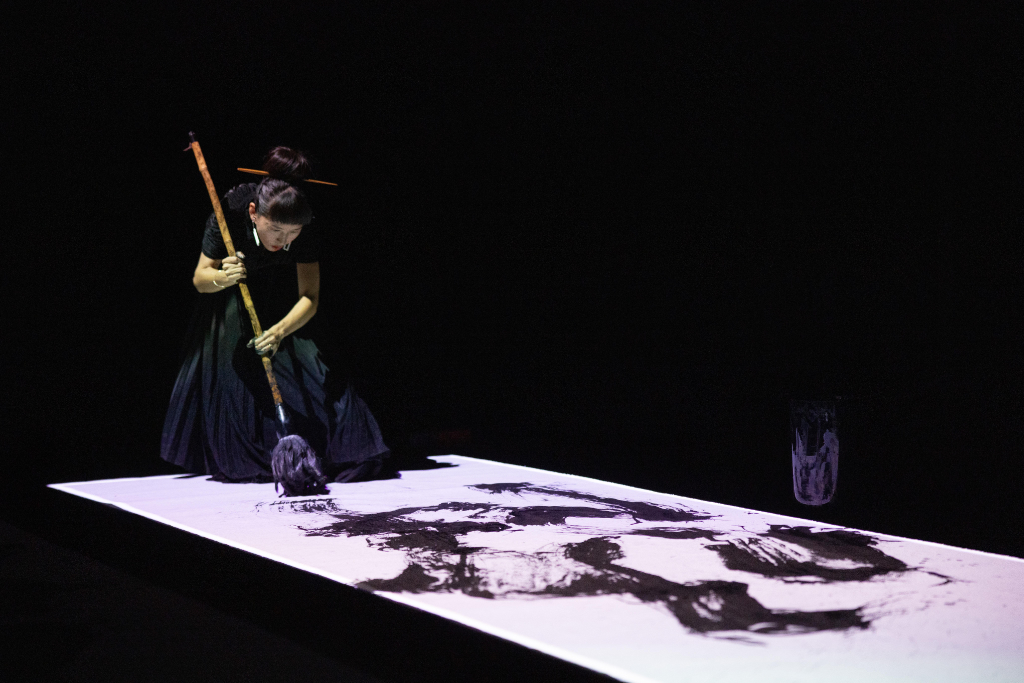
Yashaswini’s lecture-performance moves through documents and recordings, piecing together an autobiographical investigation destined to remain incomplete, circling universal questions and dilemmas. Past midnight, Stella Nyanzi’s unapologetic, steel-tongued fierceness breaks whatever softness was left. She calls out the president of Uganda; her poems led to her imprisonment at home, and she now lives in political exile[v], nithin shams, who performed earlier, decides on the spot to join her with an improvised set. Suvani and Philipp too perform that night. Yes, listening happens differently in this intimate space tuned to a collective speculative sound practice, where poetry makes something not-yet-here briefly perceptible. A rehearsal for futures still forming?
Suvani says she is drawn to practices that shift attention and introduce instability: moments when meaning begins to falter and language slips. Poetry is one of the spaces where this happens most intensely. Poets create these conditions at the formal level, through the restructuring of language and the way something is spoken, written, or read. She mentions Franco ‘Bifo’ Berardi, who describes poetry as pushing against empirical reduction in times of crisis, pointing toward what cannot be computed. One of the guiding questions of this edition, then, became what the poetic gesture could do within a programme that also includes films about sound and music, and performances that direct attention through other sensory and temporal arrangements.
Poetry moves among these forms; at times resonating with them, at others interrupting. Placing sound and poetry in close relation also disturbs linear time, comments Philipp, in a way comparable to sonic fiction: I want people interested in sound to recognise that poetry is not what they remember from school, like a boring sonnet. It’s a method. Philipp fell in love with poetry the moment he realised it was not the inflated form he had imagined. Struck by its smallness and fragility, it’s a language that knows it cannot fully realise what it promises. It’s a quality I don’t often encounter in music, even though sound remains his primary framework of thinking. Music often appears too complete or resolved. The curatorial experiment was therefore also to reconnect sound with its vulnerability.
AND AFTER THE COLLAPSE?
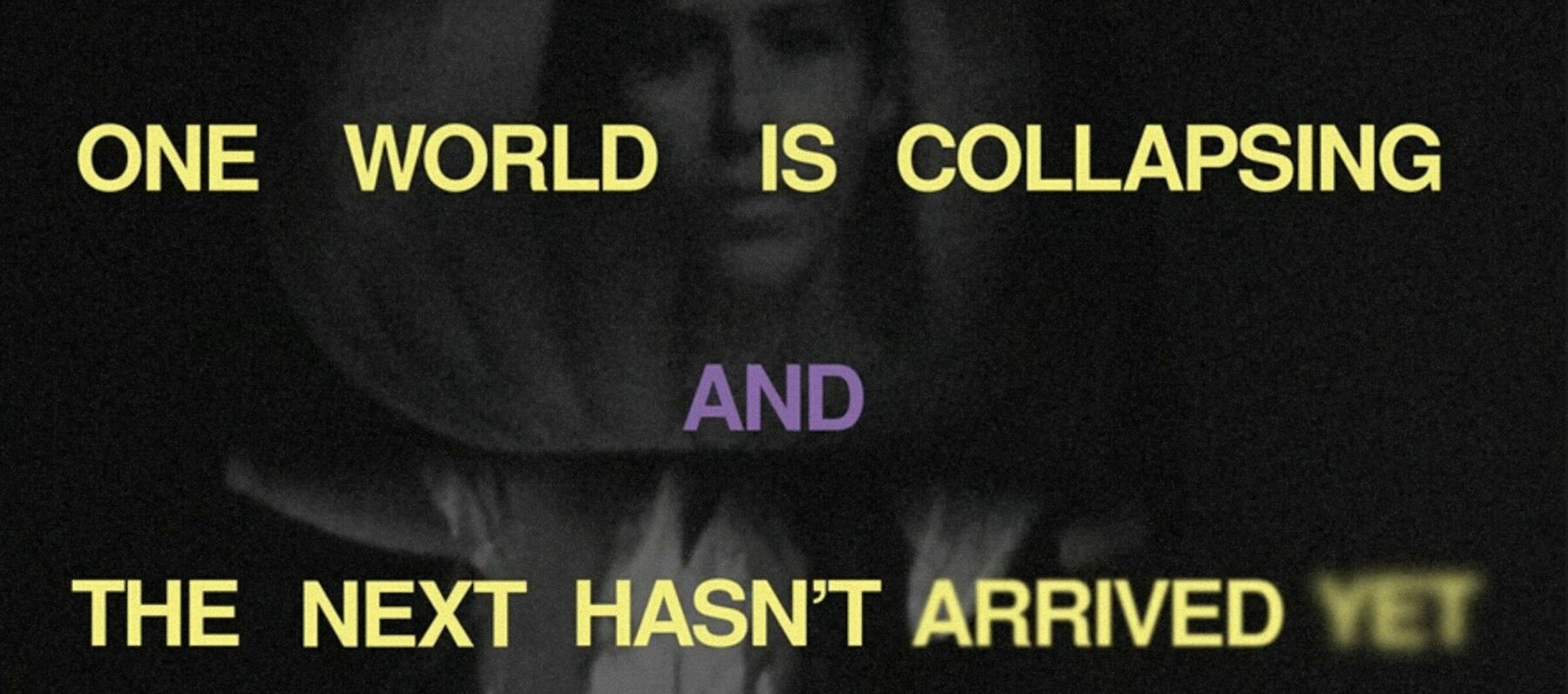
A sentence hovers on the Norient Festival website: ONE WORLD IS COLLAPSING AND THE NEXT HAS NOT YET ARRIVED. I’m wondering how this sits with Mark Fisher’s diagnosis of capitalist realism. Hauntology names something many recognise immediately: the sense of living among the remains of futures that once seemed possible but never arrived. The slow cancellation of the future describes a present that endlessly recombines what has already been, haunted by what never came to be.
When hauntology theory came out, Philipp recalls, I kept nodding. There is truth to it. But if you zoom out, like with Simon Reynolds’s Retromania, you realise it reflects a very specific perspective. Still worth taking seriously, but mainly in the Western world. Hauntology captures a specific historical exhaustion, not a universal condition. Once you attend to sonic practices across the planet, the claim that nothing new is happening becomes difficult to sustain. What disappears is not futurity itself, but the authority of one particular worldview to define what counts as new.
Boaventura de Sousa Santos describes the collapsing world as the fading power of the cognitive empire of euro-logical thinking.[vi] Federico Campagna makes a related argument: what is disintegrating is not the planet but a system of meaning—the symbolic order through which modern Western societies have interpreted reality. Ideas of progress, linear history, and technological mastery belong to a cosmology whose explanatory force is diminishing.[vii] The crisis is therefore not only political or ecological but also cosmological. If a world collapses, critique alone cannot sustain life within it. What becomes necessary is worldbuilding: the creation of new symbolic orders and new ways of narrating existence.
Thinking about futures today requires something more basic: provincialising the West. Not rejecting one’s intellectual tradition, but recognising that it’s only one possibility among many. That what we call the norm, sometimes even the superior, is often nothing more than the imprint of particular historical conditions.
Festivals are often described as temporary utopias, and not without reason. For a moment, they gather people into shared intensity and attention. But such atmospheres can dissipate quickly once their time runs out. Norient attempts something more enduring. Suvani explains the festival does not try to build worlds from scratch. Instead, it shifts attention toward those already present but difficult to perceive within dominant frameworks. A constant pursuit of elsewheres, but ones that exist within the here. Listening becomes one way of engaging in worldbuilding because it attunes perception to multiplicity. The task is not to invent worlds but to recognise the many worlds one already inhabits, and to make them perceptible.
As Suvani notes, we might return to the shared ethymological root of festival and feast: a coming together to chew on something together, to think together. From there, shifts become possible. The festival’s potential lies in moments when something opens, when the we folds into the I and the I into the we. Not like a Venn diagram with an overlap in the middle, more like a Möbius strip, or a Klein bottle—where it becomes difficult to tell where one begins and the other ends. At such moments, those present recognise themselves in what is unfolding, and what unfolds responds in turn. Curating, in fine, is a matter of trust. Trust that artists and those present will explore in their own way. Trust that what emerges may exceed intention, or even disappoint. That, too, may be part of the process, adds Philipp, because hopefully it came across that we wanted to be as open as possible.
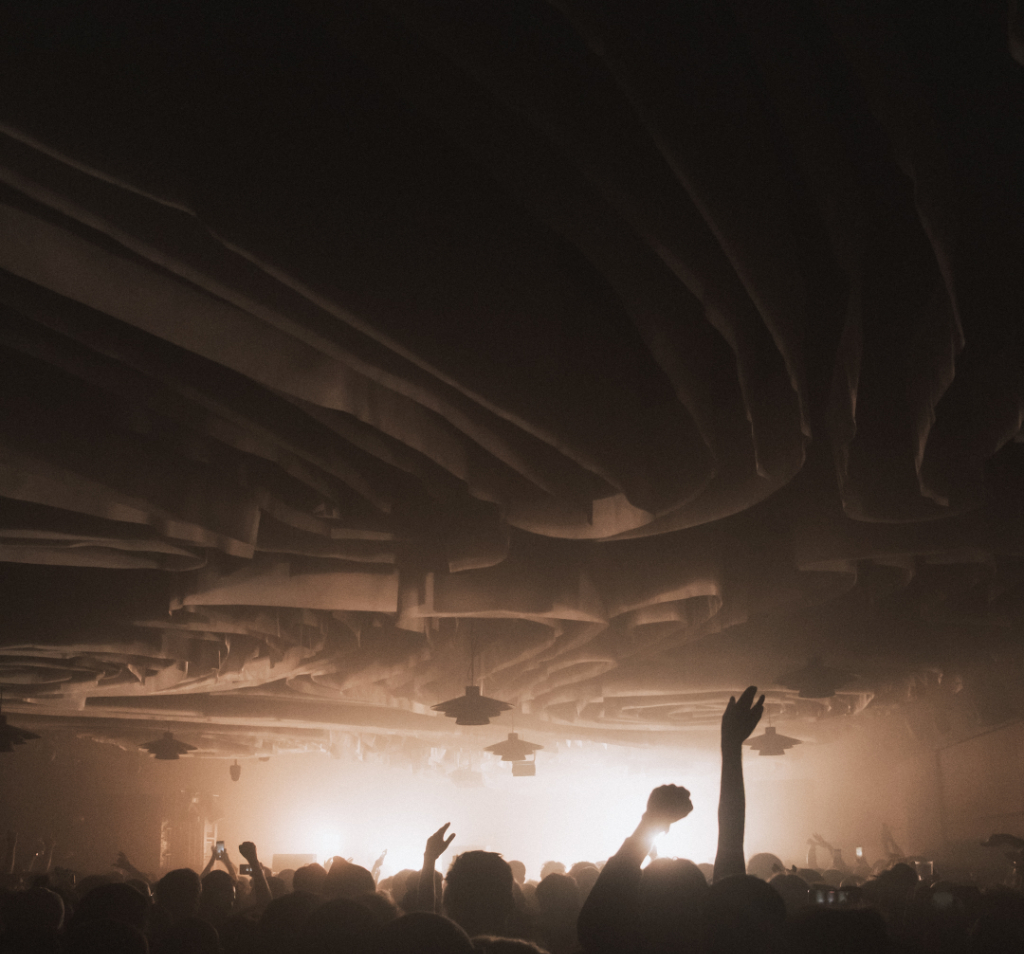
Luckily, on Saturday night, the trust experiment turns into feasting. Logan February enters Reitschule’s stage with his velvety, sensual prose that suffuses erotic mysticism with mythic symbolism at an hour usually reserved for dancing. ALY-X, Ruhail Qaisar, NÂR and Ego Death noise performances give way to the local yodeling club, its century-old vocal tradition winding inside a club many of them had never entered before, dissolving generational boundaries together with the assumptions about who belongs where. And then the much-awaited collective decompression: audience, team, and artists releasing together what days of concentrated listening and thinking have built up—moving to ’70s salsa during Ed Lalo’s set, shots of homemade liquor leaving fingers tacky as they move from hand to hand.
One world may be collapsing, and the next may not have yet taken shape. What Norient demonstrates, however, is that worldbuilding does not occur in abstraction. Theoretical constructs slip off the page to become lived processes: very differently from temporary utopian suspensions, as something that continues through relationships and shared orientations far beyond the event. A humble yet steadfast form of curation emerges: multivocal, decentralised, responsive to the worlds it reflects. One that holds the potential to renew subjectivity itself, a tactical movement toward reinventing life.
That, to me, feels like the beginning of another world.