Text by Juliette Wallace
By descending into one’s inner depths, one encounters the future
– Rilke
Technology and the accelerating development of AI are having a profound effect on our perception of self and, in turn, identity. The avalanche of information we are exposed to on a daily basis through our algorithmic rhythms is flooding ours minds; rushing inside us and throwing pieces of information around this way and that; chucking things from opposite spectrums together and, in the process, upturning grounded thoughts and generally causing chaos. More and more we turn to AI chatbots and other tools to solve our issues and provide us with simple, packaged responses that relieve us of the responsibility of holding so many truths at once. This attempt at condensing and comprehending the immensity of what modern tech offers us […] reveal[s] both the liberating and enslaving edges of a high-tech, low-life world [1].
Despite our willing engagement with it, the dangers of AI are clear to us. We are losing jobs, comparing ourselves to fine-tuned digital influencers and carrying out actions of war without direct human involvement. But what if we were to dig deeper into the relationship between the human mind and the digital? What if we took it upon ourselves to venture into the territory of the ‘digital human’; into the conjectural post-human aesthetic and cosmology, […reimagining] modern history and evolutionary psychology through the speculative agency of AI? [2]
This month, from the 8th until the 29th of October, one of New York’s newest and hottest galleries, Offline (powered by the leading digital art platform, SuperRare), will play host to an exhibition that explores this challenge of the self, presenting the task of preserving humanity and humanness in a rapidly developing digital landscape.
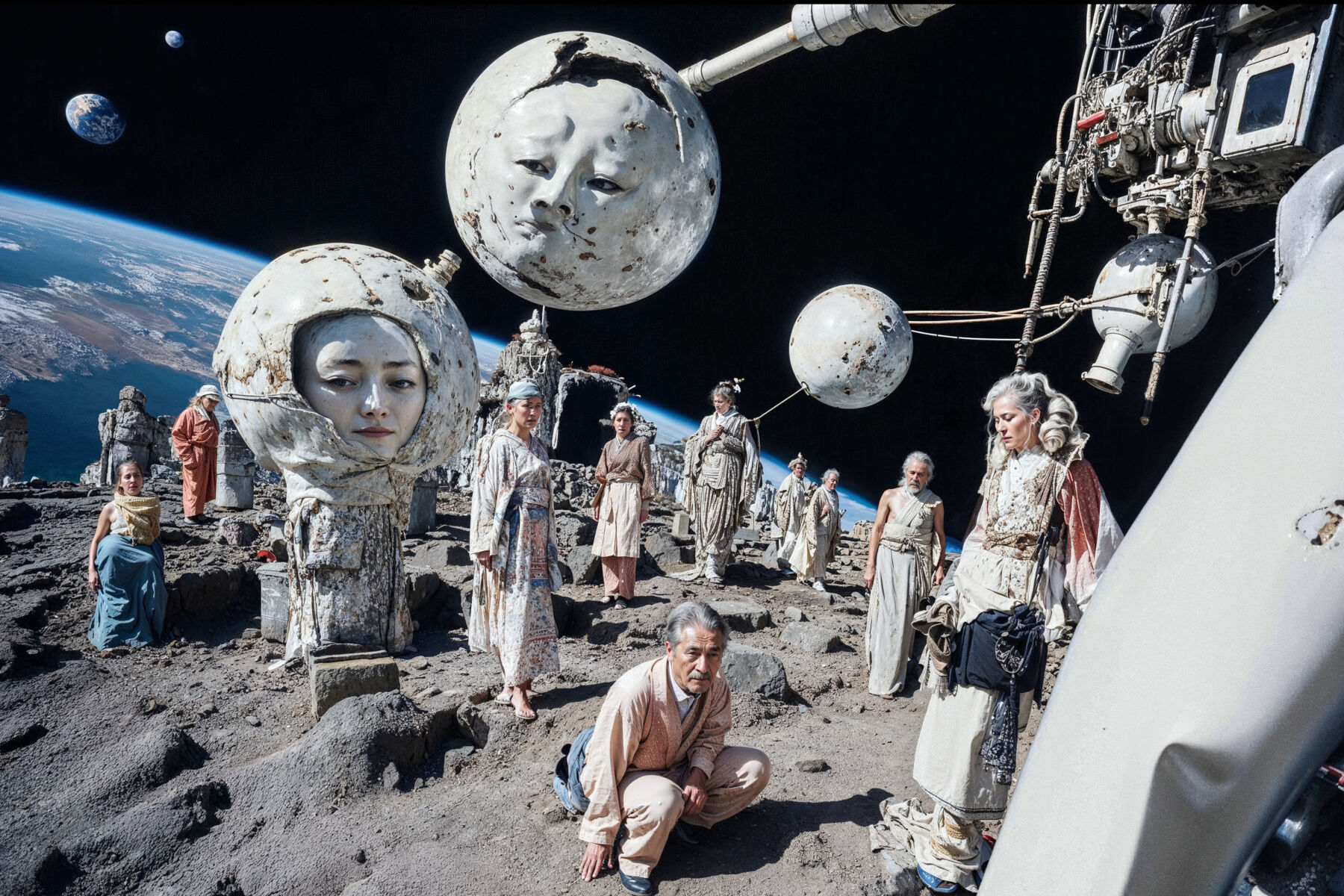
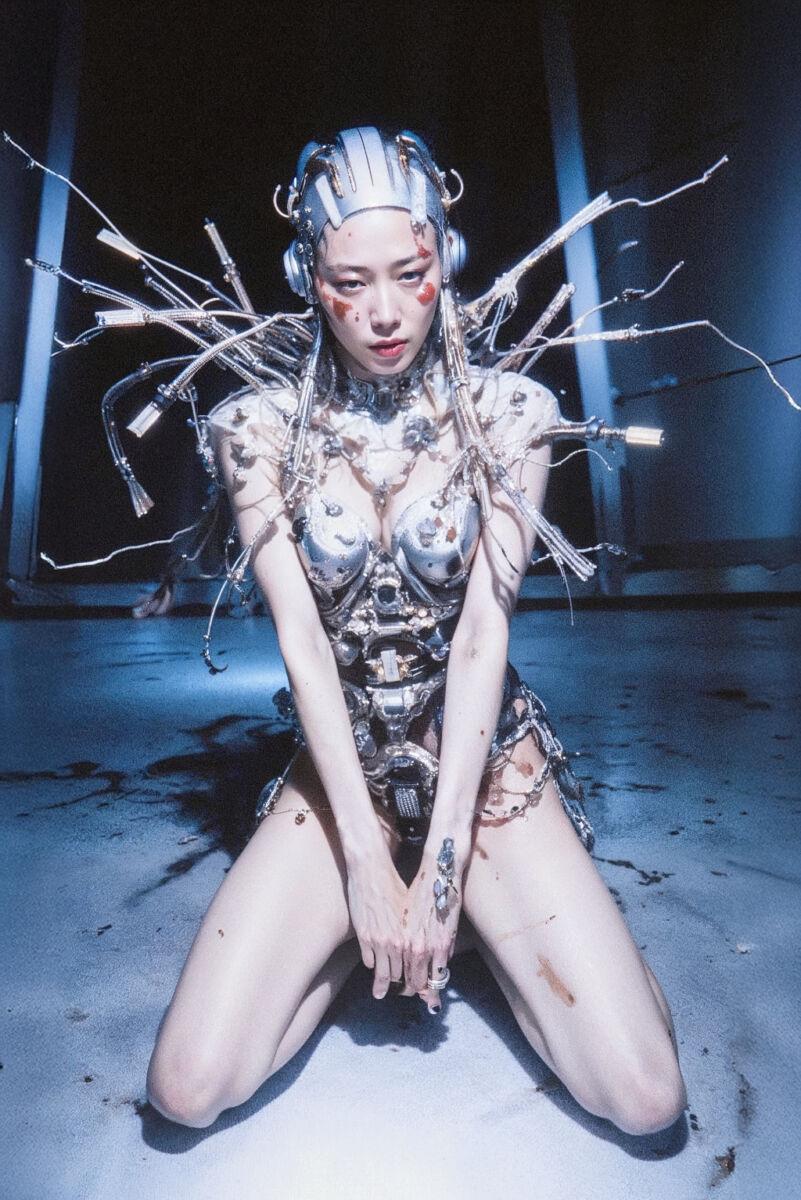
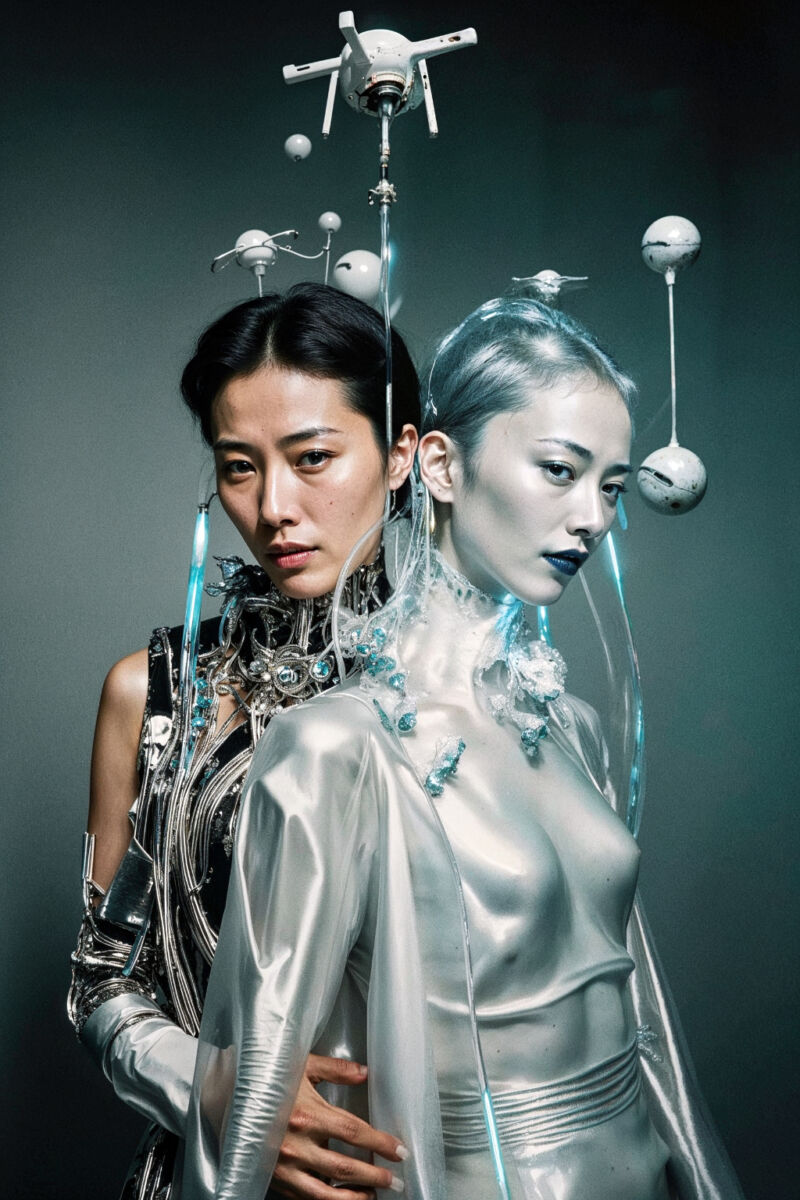
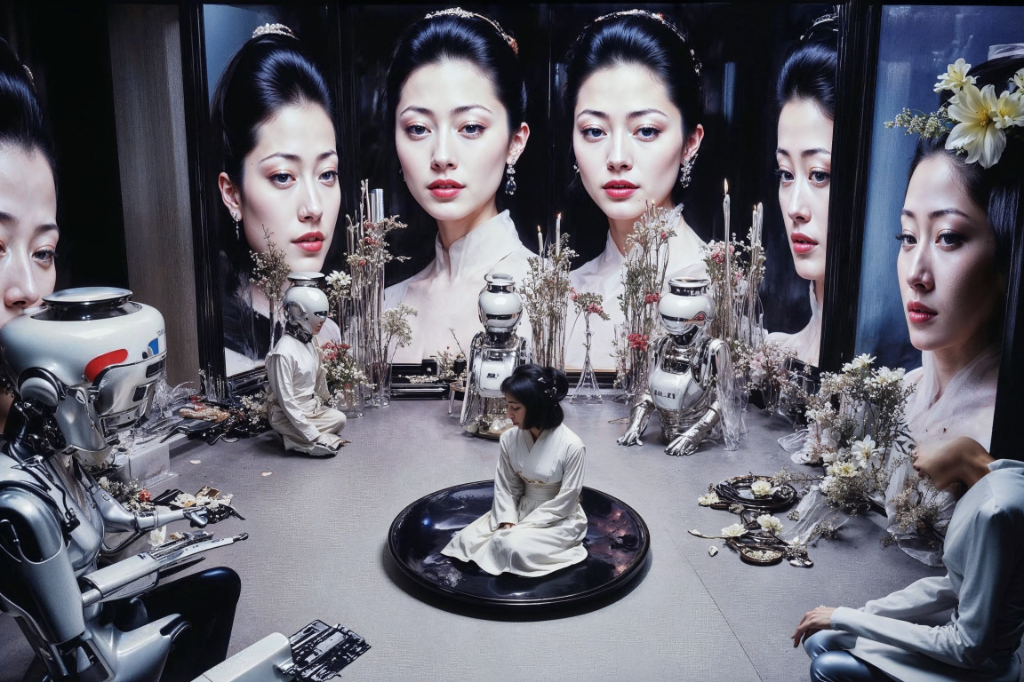
EGO in the Shell: Ghost Interrogation is an immersive collaboration between Japanese multi-media artist, Emi Kusano, and the iconic cyberpunk landmark work, Ghost in the Shell, curated in tandem by Offline director, Mika Bar-On Nesher, and guest curator, Yohsuke Takahashi. The project is about […] the fragility of memory and the instability of selfhood [3]. Kusano explains: By combining AI reconstructions with fragments of my past, I want to create a ritual where audiences confront both the permanence and impermanence of being. […] In today’s world—where information overflows and algorithms accelerate division—I want audiences to reflect on what it truly means to remember, to feel, and to live in reality [5]. The artist does this indirectly, through presenting a digital realm that forces us to consider our perceived ‘true’ reality in contrast. It is, as the title suggests, an interrogation of what we know, what we think we know and what role computers play in this.
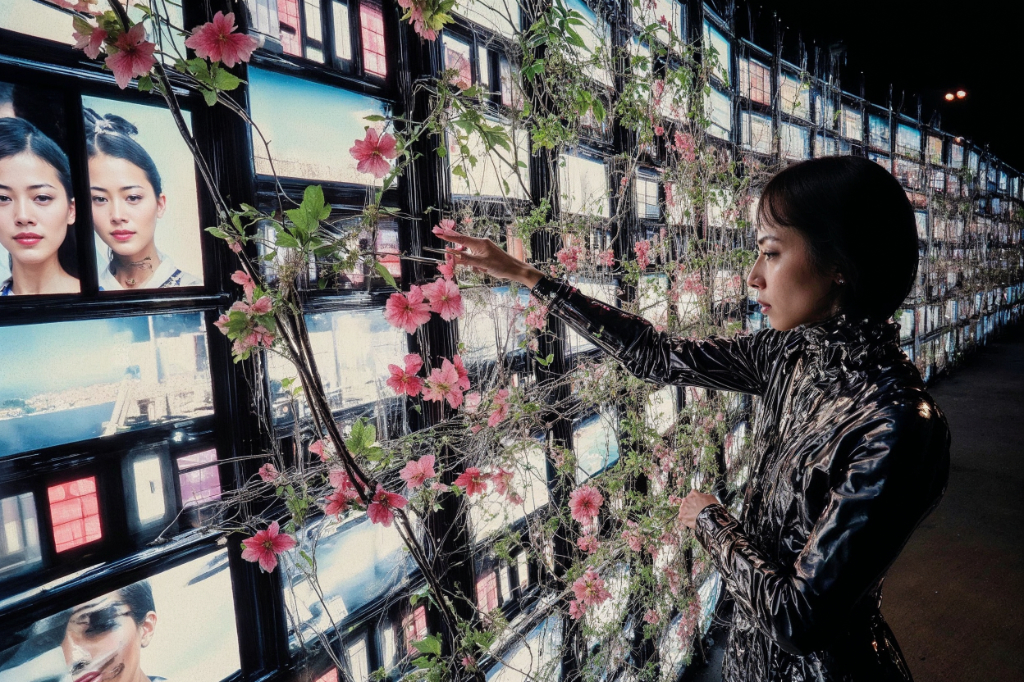
The concept of memory is key in Kusano’s piece. Memory is incredibly fragile — it’s constantly being rewritten through the brain’s electrical signals and chemical reactions. Each time we recall something, we’re not accessing the original moment, but a new version created by our biology [5]. Ghost Interrogation immerses participants in a cyberpunk-inspired interrogation chamber where a mandala-like sculpture of stacked CRT monitors projects fragments of Kusano’s private memories alongside AI-driven reconstructions. Compared to the “typical Japanese beauty” that AI tends to generate, my image introduces a strange kind of imperfection, an uncanny humanness. In one of my large-scale series with over a hundred images, my face dissolves into a crowd — somewhere between myself and someone who doesn’t exist. I find that moment of ambiguity very beautiful. In that sense, I treat myself as both the material and the ghost within the machine” explains Kusano [6].
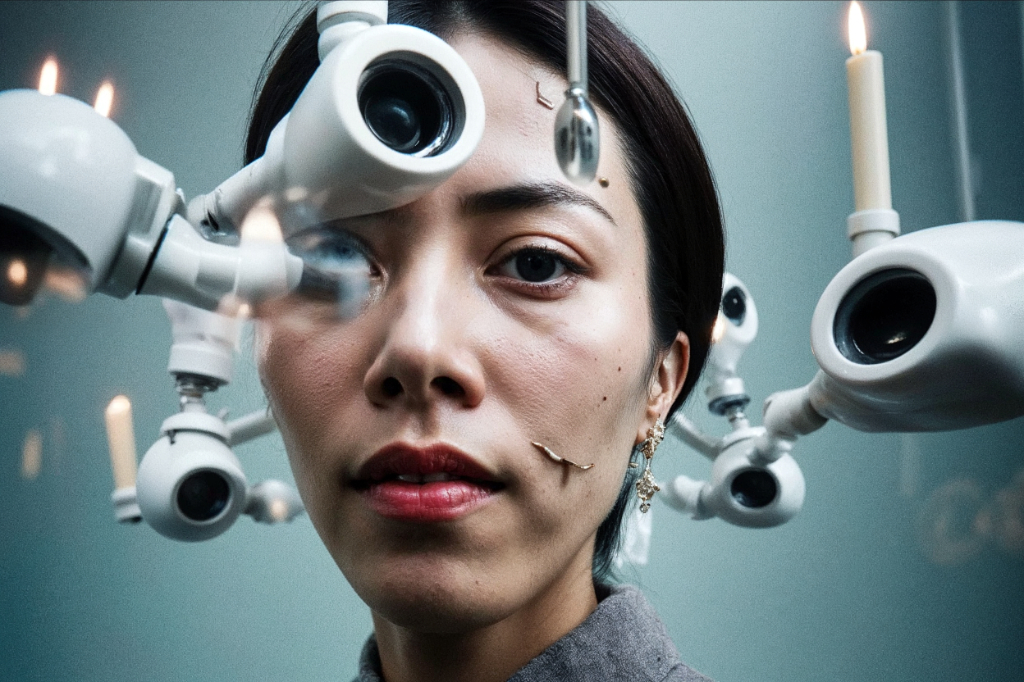
A holographic version of the artist appears as both interrogator and interrogated, while surveillance cameras capture and reflect the audience back into the installation. Drawing on Ghost in the Shell’s profound meditations on consciousness and selfhood, the experience questions the permanence of memory and the ego in a future shaped by AI.
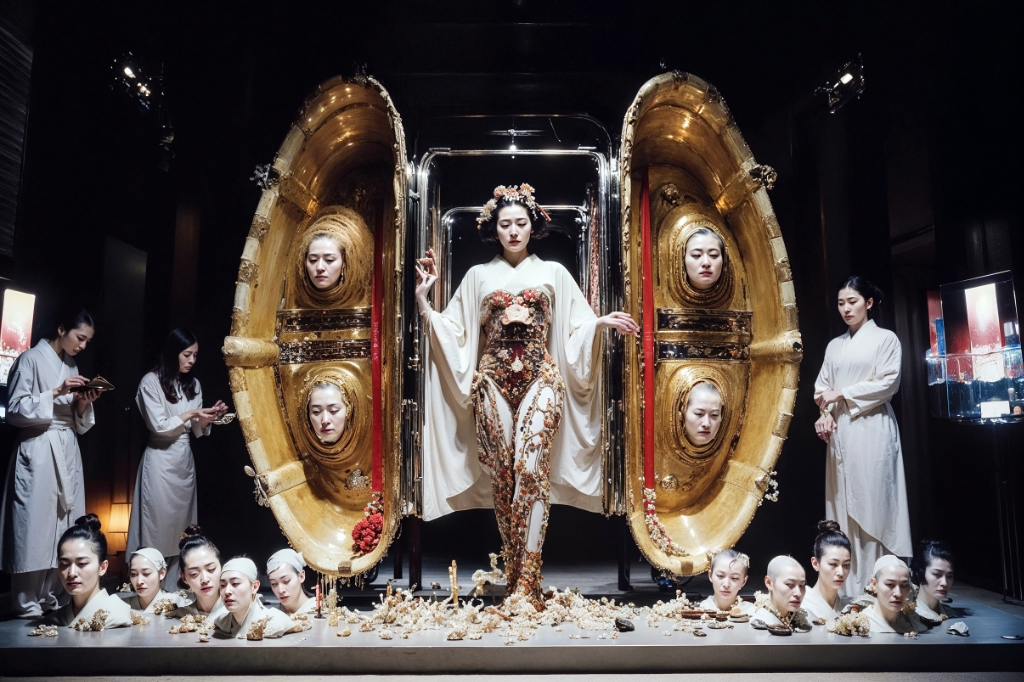
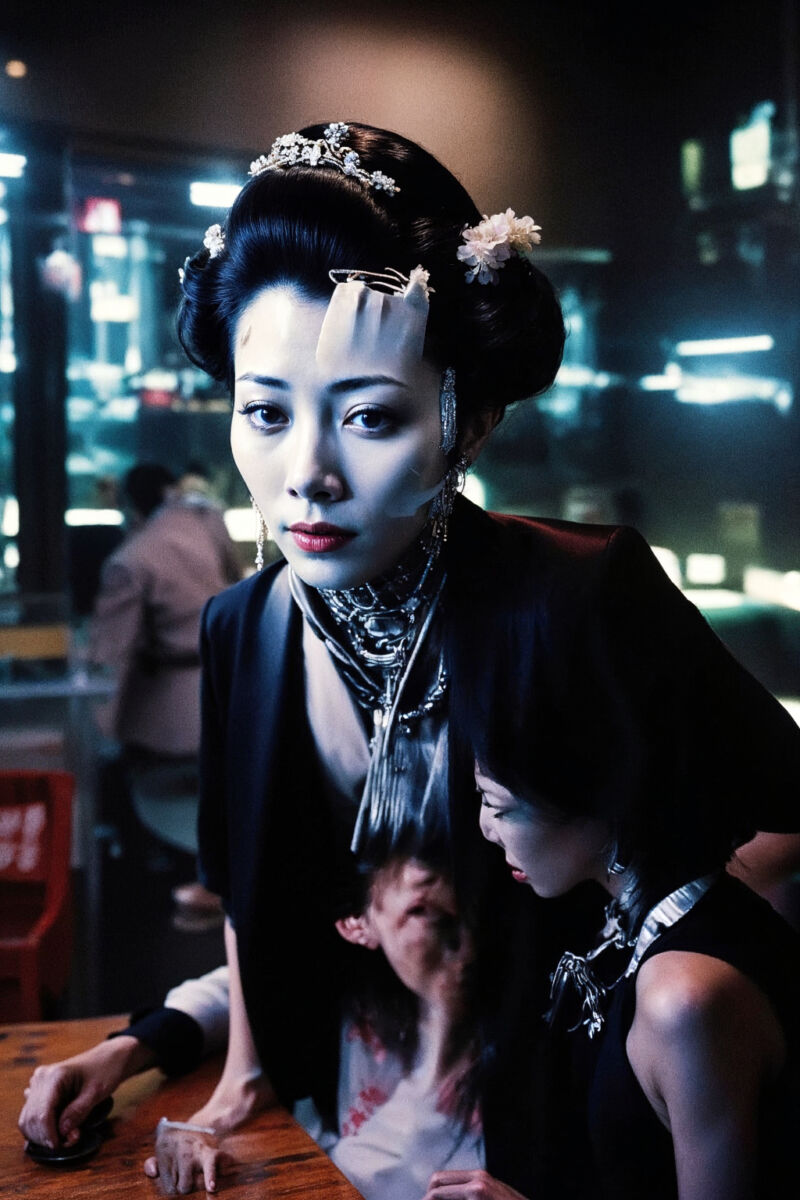
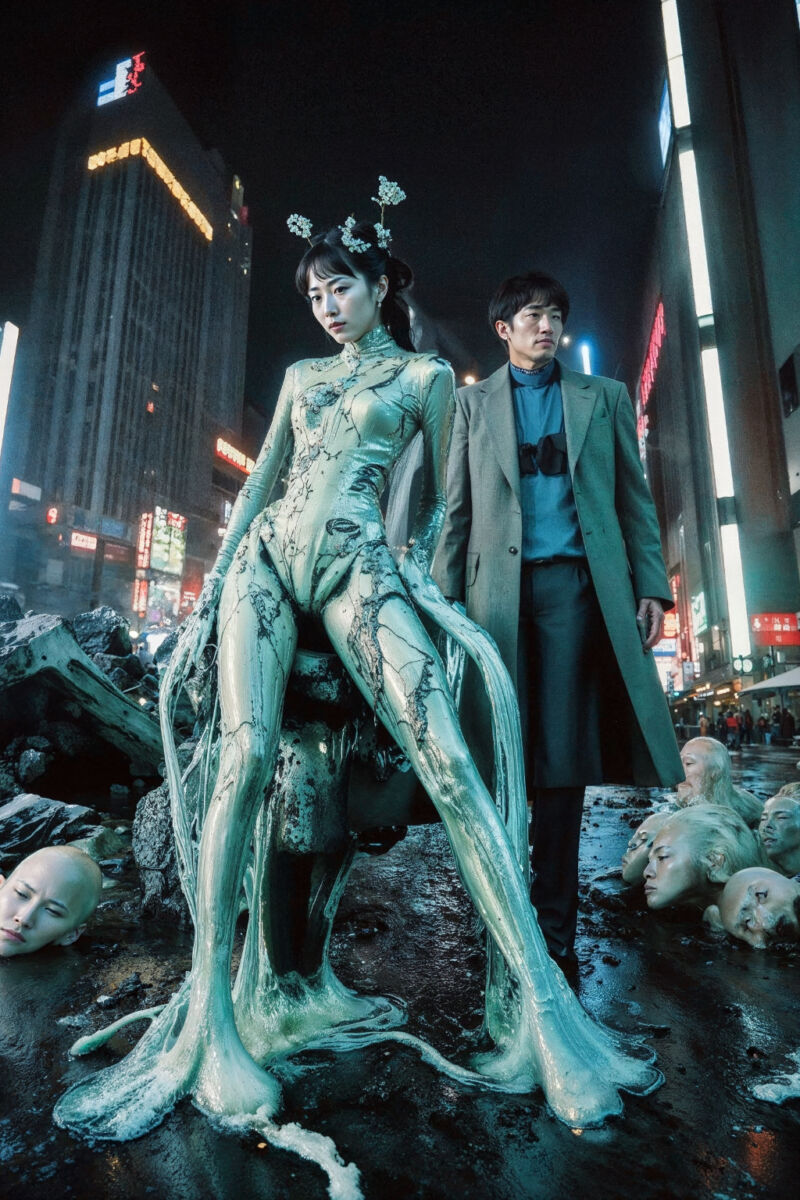
In the same way that the collaboration bridges generations (Ghost in the Shell originally came out in 1989), so does the content of the work itself through its exploration of the past, present and future. In discussing her relationship to the original text, Kusano explains I wanted to revisit questions like: What is a ghost? What is a shell? — and reinterpret them through the lens of the AI era [7]. What results is not just an artwork but an experience, eerily brought to life within the subterranean space of Offline where the visitor’s journey begins at the moment of severance from daily life through a […] descent from the noise of New York into the quiet underground of the gallery [8].
The curation of the exhibition is key in the architecture of this perception. Japanese curator, Takahashi explains: [t]his exhibition has been conceived as a speculative site where, from an Asian perspective, the human psyche is reimagined in a world after the engineering of life’s mystery. Pleasure and discomfort, the private and the public—these opposing states intertwine throughout the exhibition. Beauty alone is insufficient; unease and fear are also productive affects. The curatorial challenge, then, was to remain at that fragile threshold—to resist the closure of comprehension and let the viewer waver within uncertainty. If, within this exhibition, your perception and cognition begin to tremble, then our curation has succeeded [9].
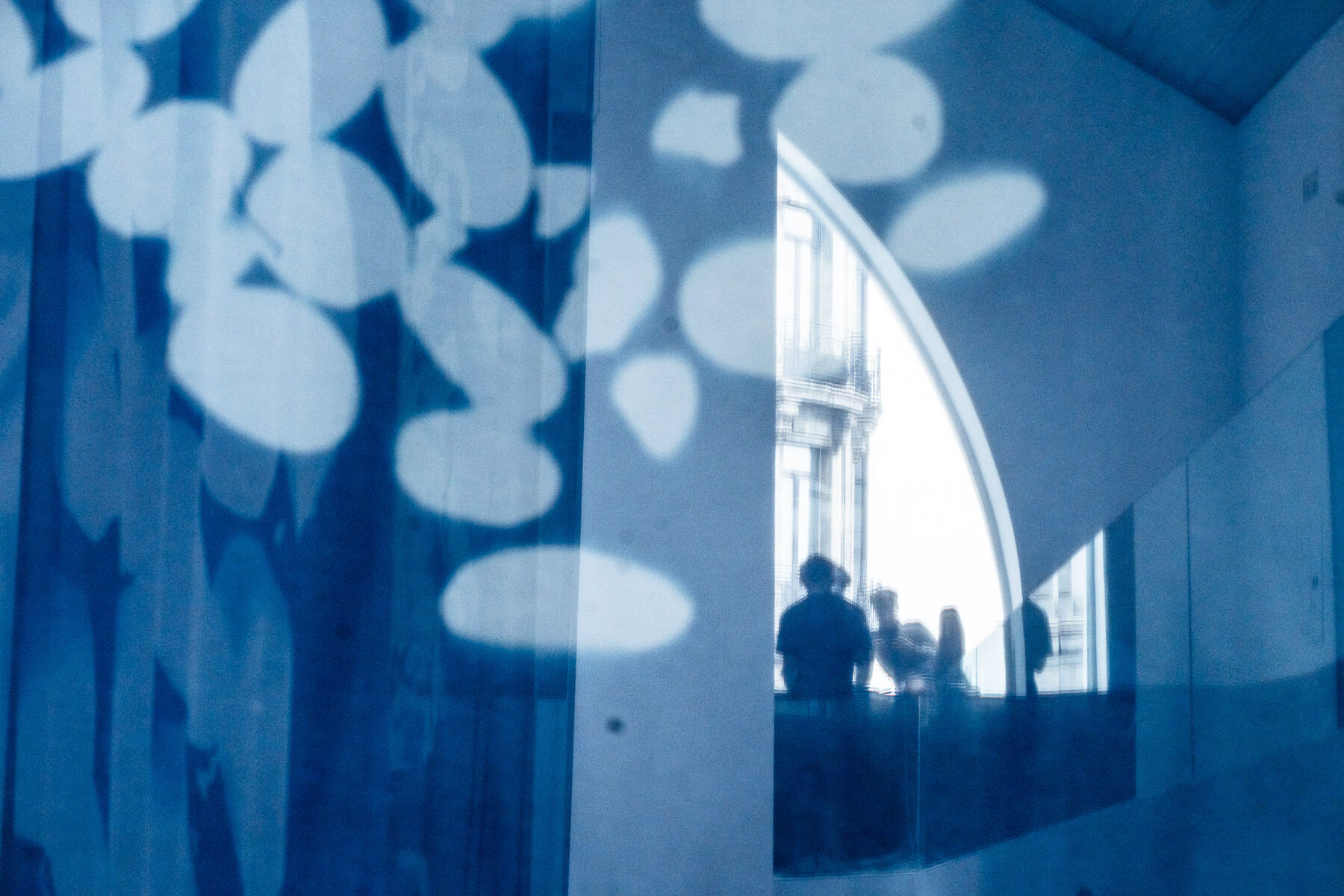
The space is divided between two floors. Upstairs, the exhibition opens with a kind of thesis statement that shows the link between Kusano’s work and Ghost in the Shell. Here, we are presented with the ongoing exploration of the relationship between the “digital self” and “fragile memory”, drawing visitors into a dialogue that connects anime culture, Japanese notions of memorialisation, and the vulnerability of personal data in the age of AI. Downstairs the visitor finds themselves in an immersive space where a programmed AI version of the artist shares with us 3D projections of memories that never existed. Even as the viewer recognises them as fabrications, these memories, through their immersive presentation, confront us with an uncanny sense of nostalgia in which fragments of childhood and the everyday of postwar Japan fuse with futuristic technologies and refract back into the present, unsettling us with their mixture of intimacy and unease.
EGO in the Shell: Ghost Interrogation confronts us with a truth and forces us to dance with it. Kusano doesn’t propose that technology is bad and humans are good but, rather, that AI and our human selves may have to learn to have an earnest conversation, one that allows for duality and coexistence. Unlike at the time that Ghost in the Shell was first introduced, this thought experiment is no longer speculative but pressing. Concepts such as the fusion between network and body, brain–computer interfaces, and the blurring of truth through AI and personal data are no longer science fiction.
And so where do we as art viewers fall into this? More to the point, what has art got to do with it? Kusano explains: As AI makes creation easier, what becomes more valuable is not the output itself, but the intention behind it — the human context, the cultural specificity, the worldview that can’t be replicated by machines. Art’s role will be to preserve those uniquely human traces — the things that reveal why we create, not just how [10].
It is through our continuing curiosity and desire to understand ourselves and our surroundings that we remain the agents of our own inners selves. We must continue to attend exhibitions and events like EGO in the Shell where agency and the human hand remain present, powerful and beautiful and where technology is not our leader but an accompaniment on our journey.