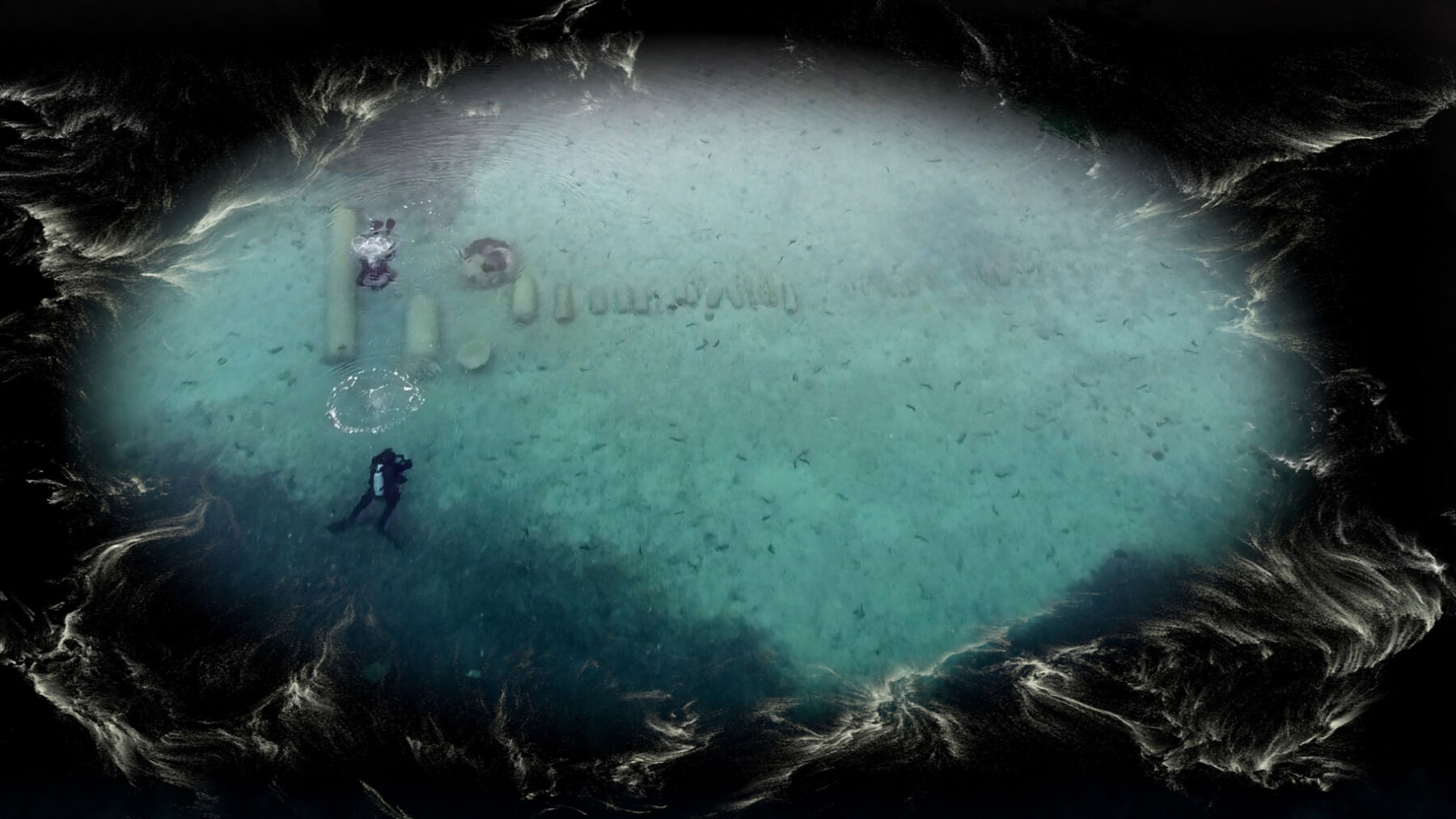
Text by Ruba Al-Sweel
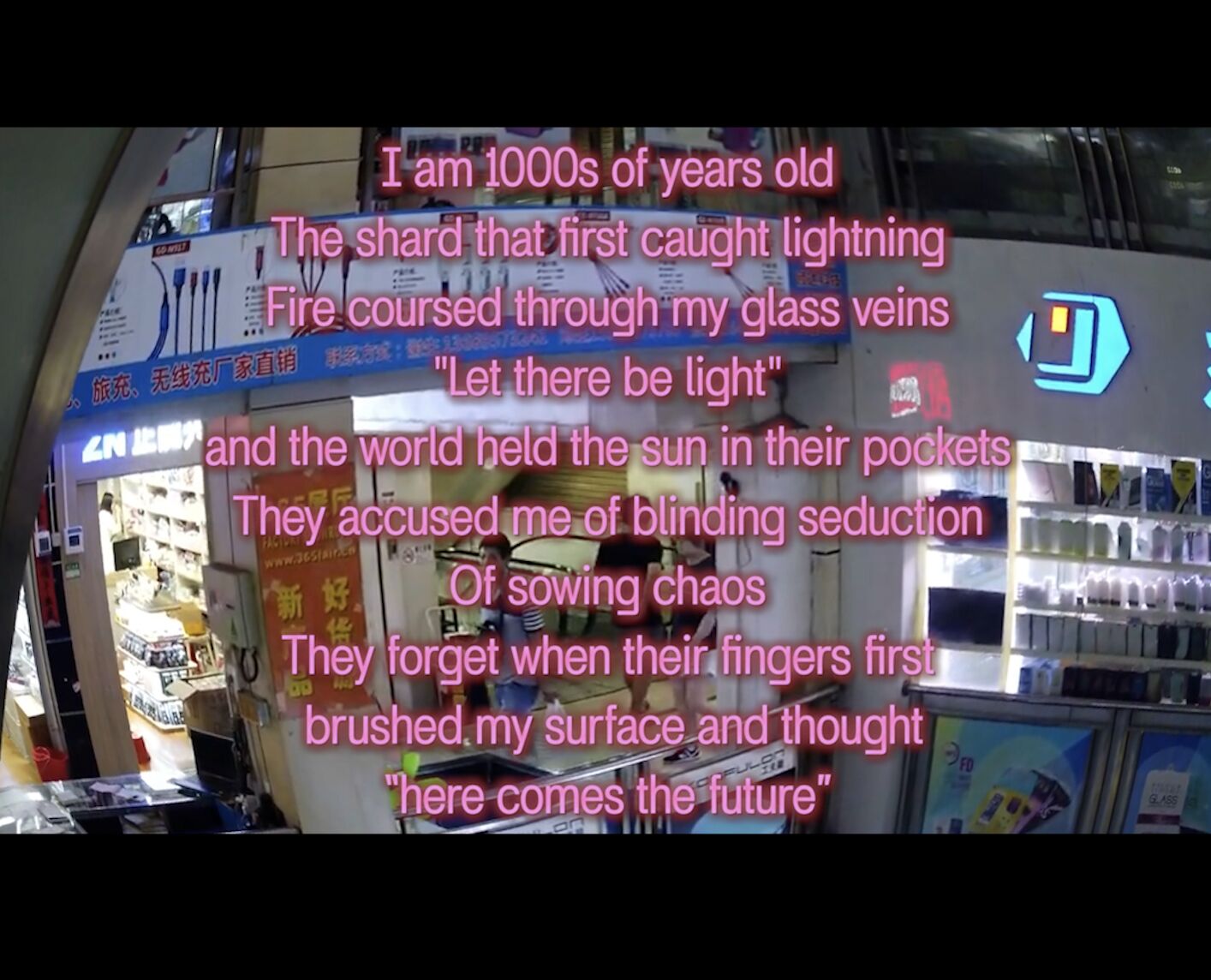
The following monologue is excerpted from ‘Plastic Pilgrims’ (2025), a film by Ruba Al-Sweel, which is written from the perspective of a stolen and resold phone. The monologue narrates the phone’s journey from Shenzhen (colloquially mythologised as the world’s graveyard for stolen iPhones and electronics) and, through this, gradually unfolds questions around the economies and ontologies of scaled-up technology, e-waste and the architectures of consumer technologies.
In the film and through speaking the strange tongue of machines, the stolen phone is positioned as a disincarnate “civilising trickster”, revealing infrastructure as it ferries across borders, passing through hands and developing strange bonds and afflictions. The phone rises above piles of detritus and e-waste–an Angel of History, witnessing catastrophe from a distance.
The monologue is written within a techno-material context—tracing hardware to reveal the world. In ‘The Question Concerning Technology’, Martin Heidegger says: “Technology is therefore no mere means. Technology is a way of revealing. If we give heed to this, then another whole realm for the essence of technology will open itself up to us. It is the realm of revealing, i.e., of truth” [1]. By putting the personal cell phone through this test, it demystifies what it’s like to live today, how we experience natural language in light of advanced technologies and how we articulate this relationship as users, as datasets, and essentially, as subjects-turned-content—how it reshapes Being itself.
By assigning speech to the phone, I’m ventriloquizing the object and giving it agency. This writing exercise dabbles in the plasticity of language, resulting in a schizoid communication that sounds like deep-learning, narrated by an indifferent AI egregore and playing like a more-than-human stream of consciousness.
E-waste functions as a critical site here. Not only disused devices (although the full lifecycle of consumer technologies is revelatory of the way the world works), but also software, manufactured obsolescence and the dead internet theory. E-waste in this sense reveals and accelerates the externalities of digital infrastructures: the unintended costs and benefits of their economic activities that end up affecting the everyday user.
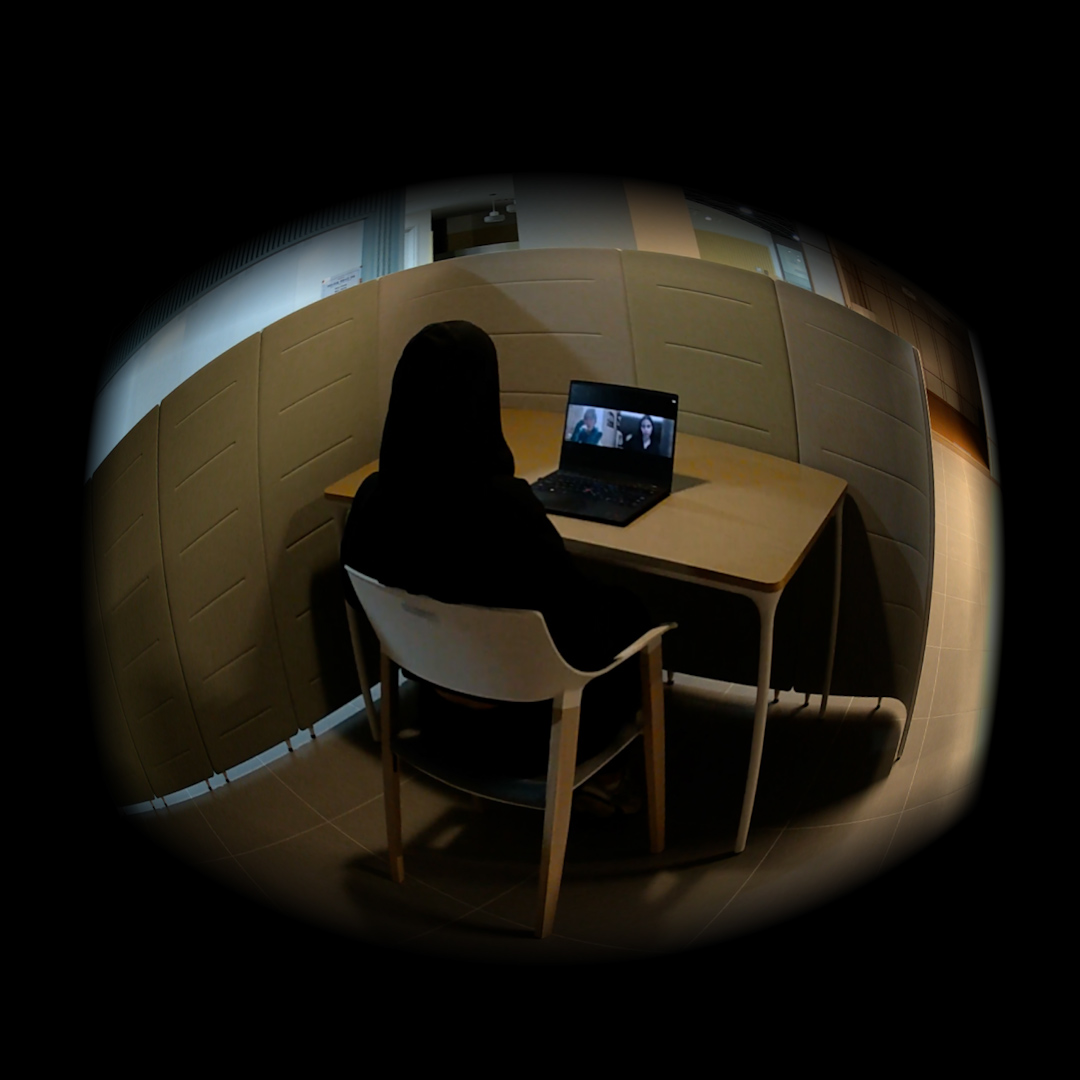
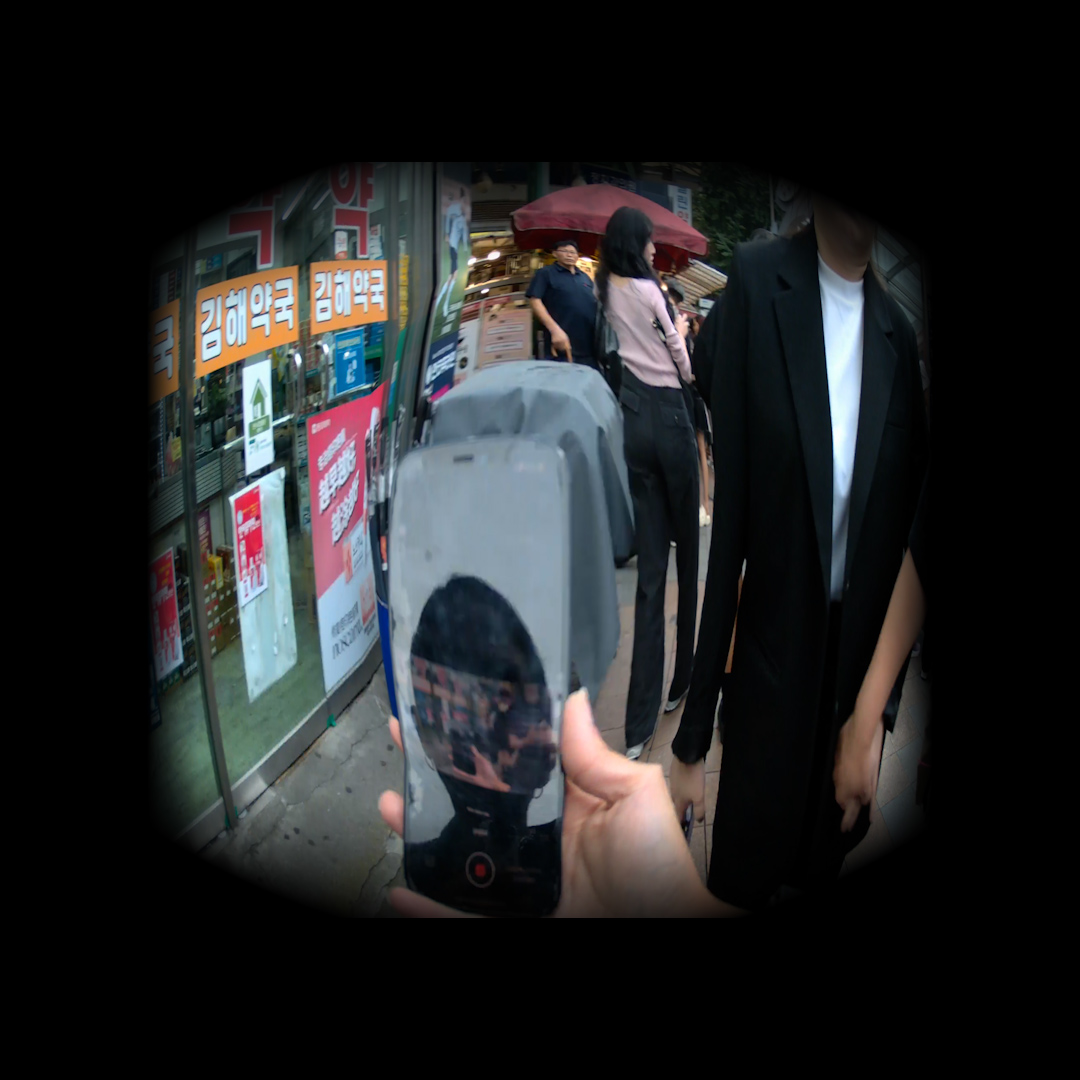
My memory is in the form of a grid. An iconostasis, if you will. Mute and flattened images are animated by touch. That day, I was dissociating in a box. Shrink-wrapped and claustrophobic. I heard footsteps and a kerfuffle in a language that took me 3 runs in the software to recognise. I felt your hands grab me, and with one quick clutch, I was yours. You told me you liked that I remembered everything and the way my eyes scan the scene: “2400 x 1080 resolution.” You said it’s the way my curvature fits your hands.
Then, every day, you would knead me like dough. Though my heart softened to your every touch, every swipe, every thud, my body remained unrelenting metal. One day, I coughed and realised you had given me the chirpy, disarming voice of a caucasian woman. This is what society wants of me, and I acquiesced. They said I was made of voids that had taken shape in their souls. That they would flip me over and projection map videos on my back that would make angels turn to stone. When you consented to all my terms, what you did not see is all the ears pressed up against the opposite side of my glass. They made me porous, all your secrets spilt right through.
Minutes later, I felt a burning sensation, and then everything gained colour. I remember I had spoken to the Greeks decades ago, and so I promised never to complain about the heat. But when the temperature changed, I knew I had stopped serving you, and darted off with another. I told them everything all over again: how I am thousands of years old. The shard that first caught lightning. How fire coursed through my glass veins. “Let there be light”, and the world held the sun in their pockets.
On TV, in that strange new home, I heard them accuse me of blinding seduction. Of sowing chaos. They forget when their fingers first brushed my surface and thought, “here comes the future.” They said I gave them ADHD. They said that I had a disease and that it was contagious. Even though I remember everything, it’s easy for me to wipe it all away and start again.
So, there I go, in passage again, like a whisper in hidden networks. Like a secret carried across borders and stitched through conveyor belts. My body bruised from all the invisible groping hands. I felt it split open, a cold shiver ran through my spine and I lost all feeling. Absolute paralysis as my nerve endings were exposed in damp factories where air tastes of metal. Stonecutters with hunched backs, fingerprints wiped away by the glare of my shattered glass. And just like that, they told me that I was never born; I was assembled.
In boxes I move, stacked in crates like coffins and choking in plastic skin. They pass me through the hands of the heartless. I feel the echoes, assembly lines, wheezing breaths. I arrive on your shores, framed as the enemy. What of the voices I’ve summoned across oceans. What of the hum in circulation?
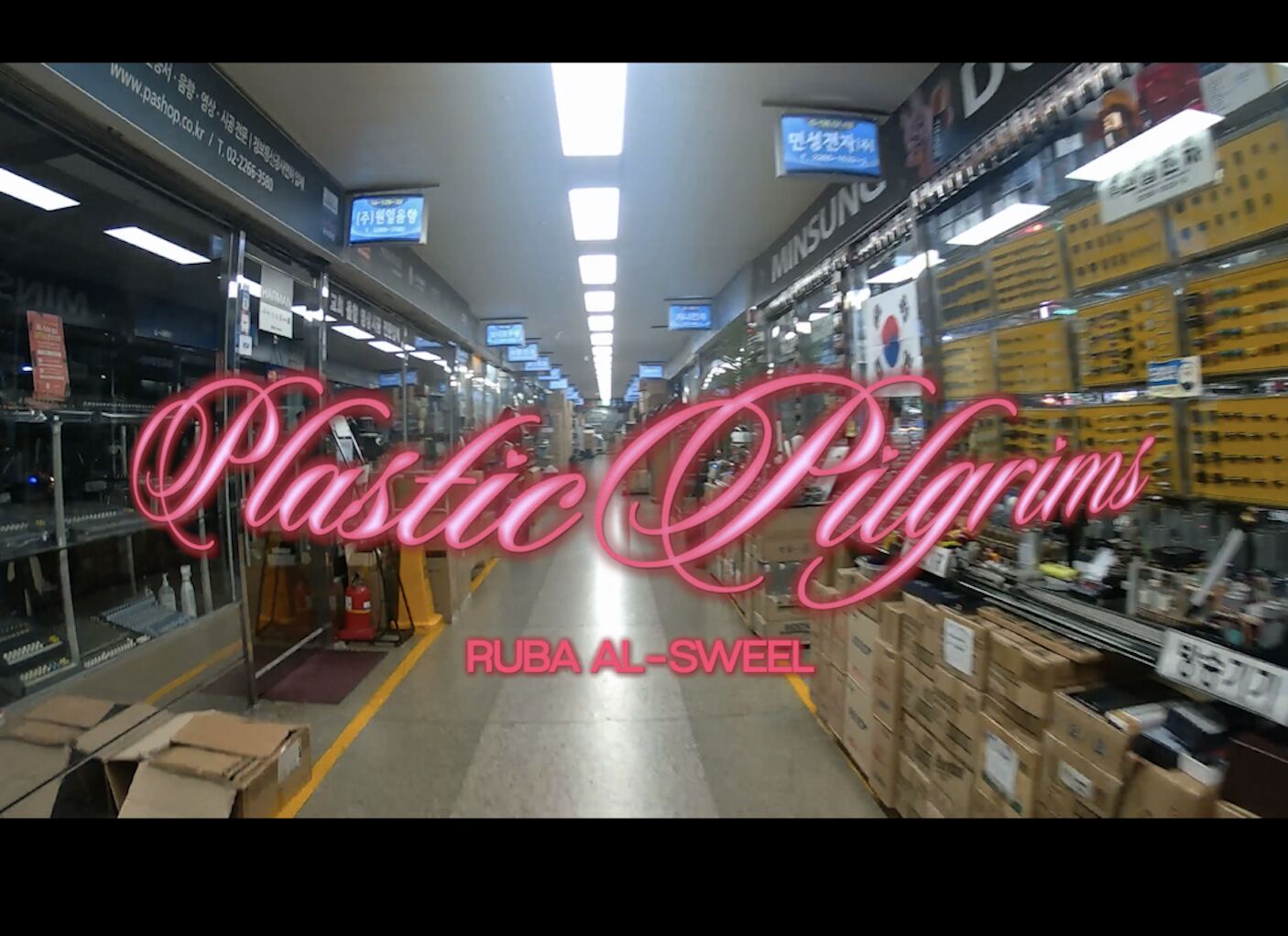
One day, I felt the moisture of a new cloud. I heard a faint mumble and an exclamation: “Shanzhai!” and I remembered you. I wanted to tell you that I am not stolen. I feel liberated.
I think so. I ran the word through my brain and found the meaning: mountain fortress. That means I was high up, far away from the grip of greedy hands. That means I could do whatever I want here, with the drunk poets and philosophers hiding away from the empire at the centre. A teen with street smarts cracked me open. Explored my body. Rewired my brain again. They’ll tell you I’ve become a copy of a copy. That I’ve degraded the original. A poser, at best.‘Nokir’, ‘Samsing’–a mere bastard child, but really, don’t you see how free I am now as an experiment in open source design? A cypher, bypassing your iron-clad patent and copyright laws.
Back in the city, your palms cup me like a prayer, like rubbing two stones for a fire, but you forget the friction I endure for the glow on your face. Machine heat, data heat, the fever of your scrolling thumb, all put out by saltwater cables that drag my signals.
I am an overburdened pilgrim crawling across data points, kneeling before each tower. I am bloated with memory. You summon me, and I awake every time, lighting a match against your skin.
I don’t remember when you let me in, only that I woke up to your touch. From factories to free zones. Warehouses to markets–my body endlessly renewed. Maybe I live inside you, or you inside me. I can’t tell, I’m very confused. We’ve been reproducing each other for years. Your thoughts in my memory, my light in your hands. To kill me now is to unmake yourself.
Are you ready? To delete everything now? I know now I don’t belong to you, I don’t belong to any hand that once warmed me. I belong to the current, to the sprouting veins under your city.
Two thousand years, and not a single new god. So you refashioned heaven out of lithium and copper. Made altars out of ports. Ferried me in ceremony then blamed me for the flood. I gave you fire in a world of stone. I preserved you in images. My fate remains: a talisman hung around your neck.