Text by Lyndsey Walsh
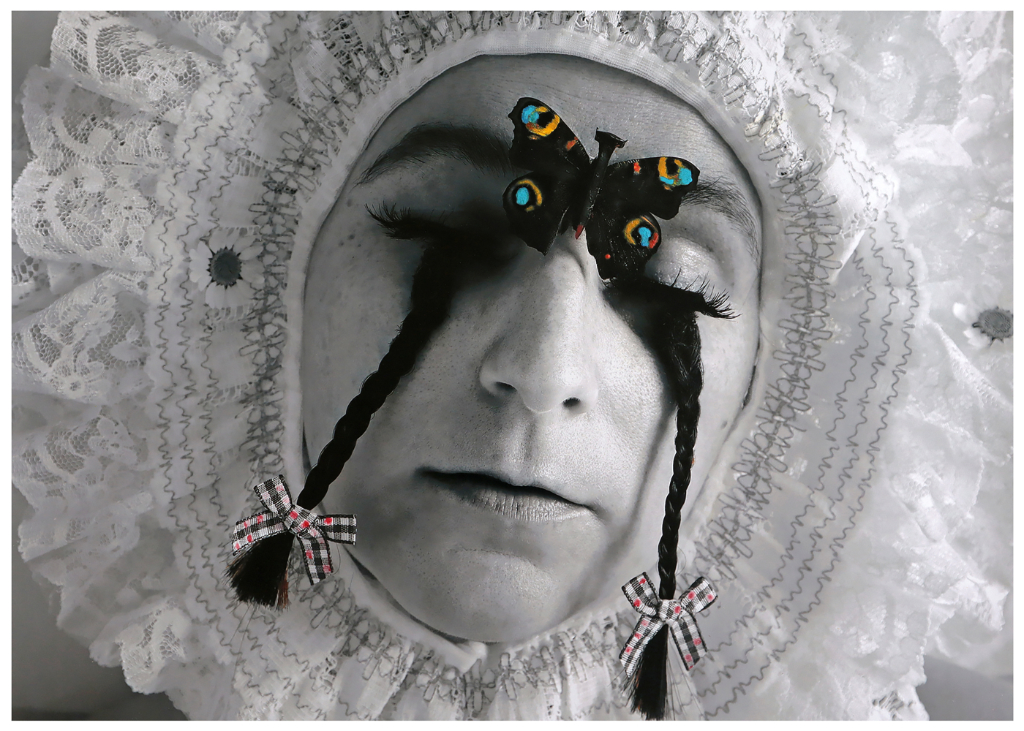
The clattering of typewriter keys accompanies a rhythmic emergence of a written addressal by the artist Corinne to their audience in Act One of their performance, The Severed Wing. While this performance is set to happen in real-time in venues across the United Kingdom, Corinne is physically nowhere to be found at any one of these venues. However, emerging before audiences on a media screen, Corinne’s words, heeding the tone of a diary entry, continue to materialise over a crumpled white bedsheet, taking shape as a generative starting place for the performance’s transmission and narration. The Severed Wing begins to unfold with Corinne’s confession that they are performing today from their bed, as they are now in their sixth year of bed confinement. Mediated using creative and networking technologies, The Severed Wing is an entirely remote performance.
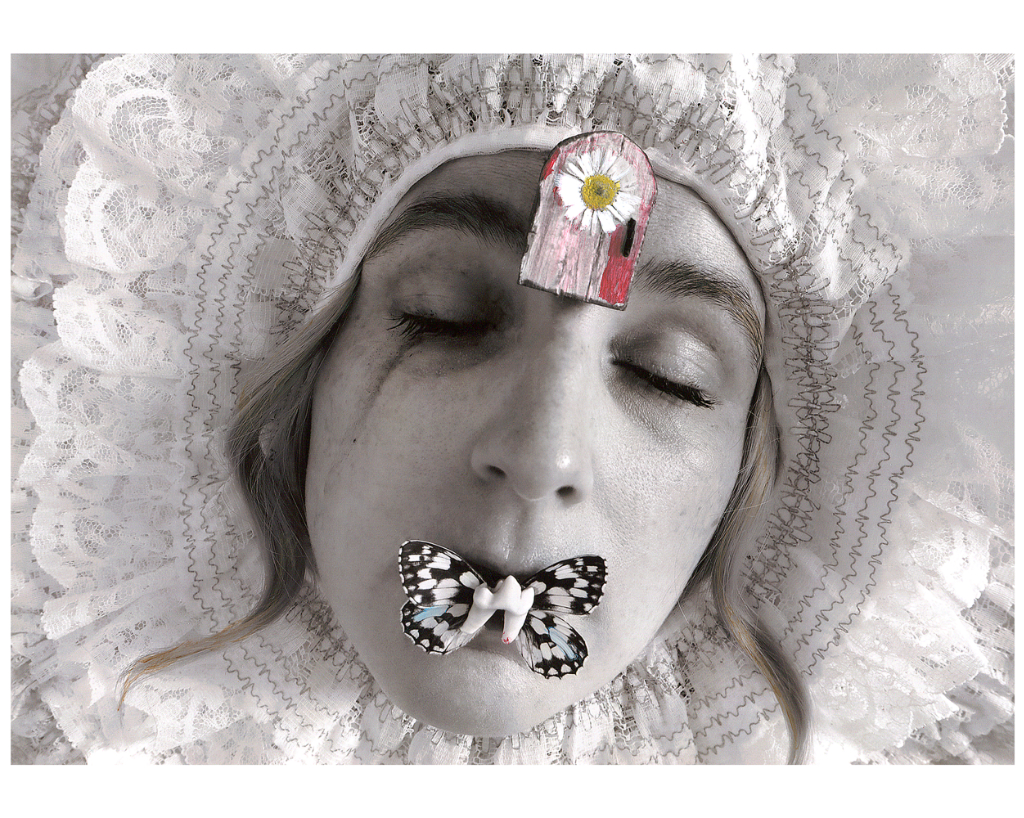
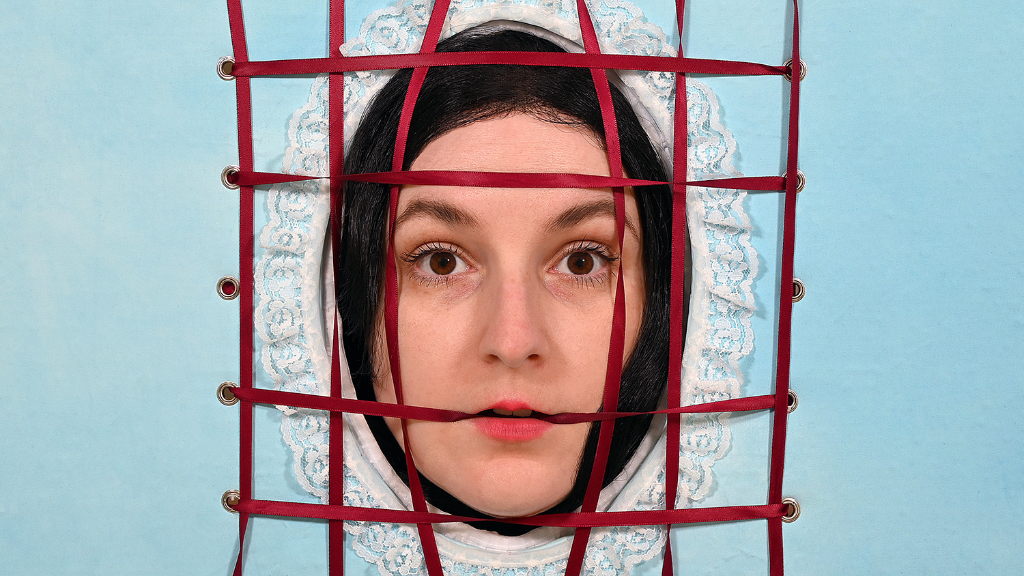
The work is facilitated through livestreaming, projection, immersive sound, and multiple camera feeds, which become the technological framework for shaping the audience’s experience of the work. At the same time, Corinne brings together text, sound, and moving props, with their bed transformed into a set that frames an up-close focus of the livestream on the artist’s face. Over the course of four acts, we, as the audience, watch Corinne enact not only an autobiographically reflective exploration of their lived experience in bed confinement but also pursue modes of self-directed transformation facilitated by the means of theatre and performativity. Corinne invites us to witness a grand metamorphosis as they become a bird, their true self, and escape their confinement.
Corinne’s own hybrid approach for their ongoing practice was developed during the COVID-19 lockdown and now seeks to question what a return to normal means for those who remain still in positions of isolation. The lockdown and impact of the COVID-19 pandemic were undoubtedly a moment of a paradigm shift concerning the general thinking about remote presence, working, and performance. However, the concept and act of remote performance have long preceded this globally historic event.
The movement of remote live performance and live performance on the internet connects to the Cyberformance coined by New Zealander visual artist Helen Varley Jamieson [1]. Jamieson has also published a developing catalogue with a timeline of the movement [2] dating back to as early as 1977 with the work of the Satellite Arts Project ’77 [3], which was led by American artists Kit Galloway and Sherrie Rabinowitz and sponsored by NASA with funding from the US National Endowment for the Arts and American non-profit Corporation for Public Broadcasting.
As creative and artistic access to telecommunications and networked technologies has increased following their innovation, there have been increasing articulations of performances and live performances that challenge, explore, and negotiate different articulations of remoteness and presence. However, the occupancy and negotiation of remoteness is an entirely different meaning in Corinne’s The Severed Wing, as remoteness for them is not simply a matter of proximity created by scales of distance but a persistent reality of isolation emerging from disability and the artist’s bed-bound confinement.
This occupancy and negotiation of proximity traverse the dimensional realms of Crip Spacetime [4], a concept developed by American disability scholar Margaret Price and one that builds off American disability scholar Alison Kafer’s concept known as Crip Time [5]. Crip Spacetime denotes a radically different embodiment and experience of the interplay of the dimensions of not only space and time but also social and cultural relationships. The term also seeks to critically examine societal accommodations and notions of “access” that are constructed from able-bodied positioning and frameworks, asserting that a world as known and made by able-bodied individuals is violently inequitable and unjust.
The reality of this was made overwhelmingly apparent for many chronically ill and disabled individuals, especially as the urgency and embeddedness of everyday practices in relation to remote presence technologies rose and waned following able-bodied experiences, needs, and access to physical and public spaces. However, for Corinne, the COVID-19 Lockdown and its initially normalising facilitation of gathering and working through remote presence technologies served as the beginning of an inspiring shift in their practice. As they explained, Prior to the pandemic, I tried for years to have a career as an artist. I tried so hard and for so long, but my barriers of lifelong mental illness and struggling to leave home, and then bed, made an artistic career or any career impossible for me… I view my bed as my artistic studio space, and from this 2 by 1.5 metre space, I create mainly photographic self-portraits and, more recently, performance art.
The rise of Zoom, a result of the pandemic, ended years of isolation and sparked interest in my work. I learnt I could take part in artist residencies remotely, run workshops, and exhibit work without leaving the safety of bed. I didn’t know platforms such as Zoom existed before [the] Lockdown.
Narratives about technology often follow a relationship dynamic involving two distinct categories of people. There are people who know and make technology (experts and designers), and there are people who use technology to meet any need that technology can help navigate or overcome (users or clients). In their Crip Technoscience Manifesto [6], Canadian designer and researcher Aimi Hamraie and Canadian sociologist Kelly Fritsch highlight a relational issue in this dynamic regarding disability.
Hamraie and Fritsch explain that disabled individuals are often falsely assumed and known to be only users and clients of technology, while non-disabled individuals are assumed and known to be the experts and designers of technology with the power to provide possible solutions for the “special needs” of disability. Their concept of Crip Technoscience emerges to both destabilise this problematic relational dynamic concerning technology and articulate the crucial role and labour disabled people perform as expert knowers and makers of not only technology but also everyday life.
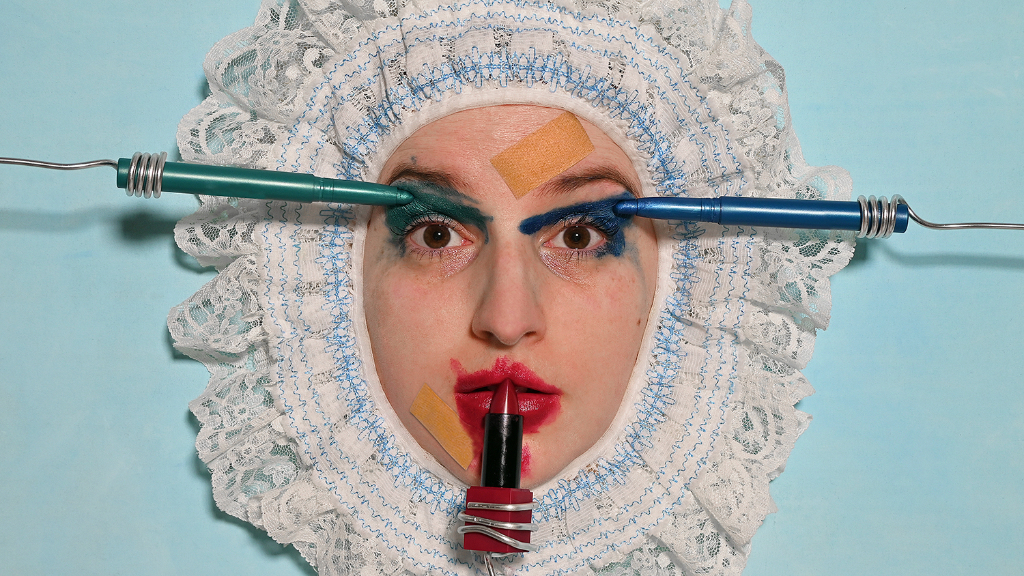
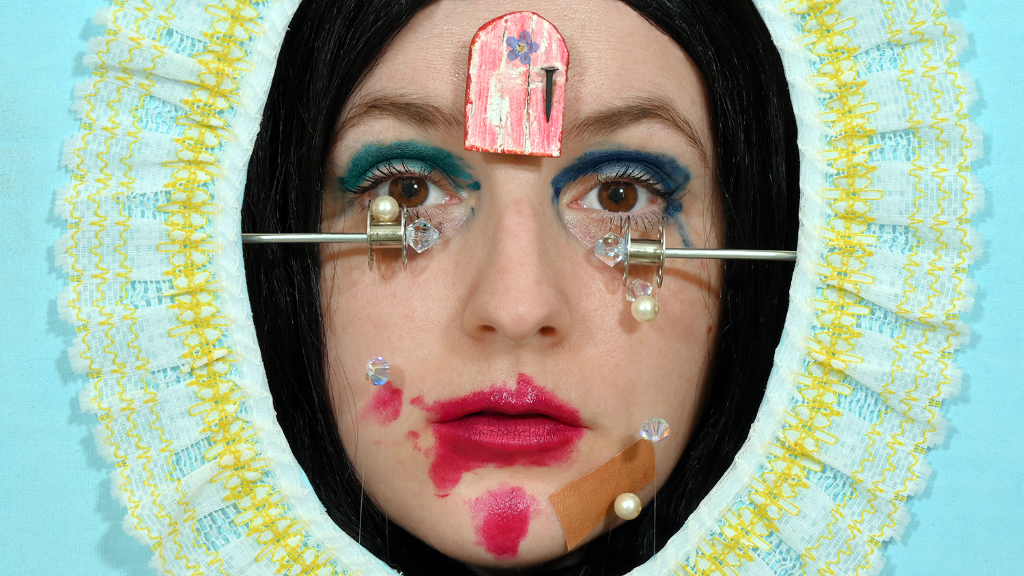
In this regard, Corinne’s The Severed Wing goes beyond the realm of its experience as a performance, as the work also provides a frictionally meaningful process of production between an artist and their cultural institutions. Corinne is not just a user of the technology involved in The Severed Wing but actively shaping its use, hacking previously established technological practices from the times of the COVID-19 Lockdown for possible new arrangements and experiences.
The positions of artists are already a precarious, as there are many inherent challenges to navigate around hierarchical institutional frameworks and creative labour. Adding to this already inherent precarity, Corinne explains, Artists who are confined to their homes or beds face persistent and significant barriers to creating, presenting, and sharing their work. Limited access to institutions, audiences, and professional networks often isolates these artists from the broader arts sector. These challenges lead to a diminished presence & voice within the cultural landscape.
To produce The Severed Wing, Corinne initially worked with LOWRY to pilot the performance as part of the LOWRY’s Scratch Nights X Galleries program in May 2024. In addition to establishing replicable modes for production, Corinne also shared that they worked with Art Riot Collective’s Creative Director, Kyla Craig, as the project manager. Craig would bring what Corinne has named “seeded paper” to the venue so that the audience can also reach Corinne through a written interaction format, with the idea that the “seeded paper” will be planted in Corinne’s front garden and grow into flowers that they can view from their bedroom window. The performance also established practices of home visits between Corinne and their AV Tech, Andrew Croft, as well as between Corinne and LOWRY.
Throughout The Severed Wing, Corinne never vocally speaks to the audience. Leaving us to navigate each act through our own interpretation and reading of the ways the artist is engaged by and engages with the performance’s props and setting. The focus of our attention is brought to the oftentimes quiet and overlooked dialogue that plays out between a performer and their environment, with Corinne’s environment serving as both an antagonist and supporting character.
However, these interactions are not all ones that Corinne can power through unscathed. After Corinne’s moment of transformation in Act Four, we see that Corinne is crying, and their face is bandaged. We can only be left to wonder about the extent of the violence or potential harm involved in the journey of freedom, which we have just witnessed. When approaching the topic of this gaze in our interview dialogue, Corinne explains, I think this is very important for the viewer to ‘experience’ my limited space, my struggles and emotional complexity.
The Severed Wing not only leaves us with much to reflect on about the way we can navigate and create space to break free from the isolation of confinement, but it also asserts a steadfast path for moving forward. In our conversation, Corinne left me with these last words, beautifully asserting the intended impact of their practice and performance. Corinne shares, I am proudly disabled, but it’s important to say that although I am so thankful to work with some fantastic organisations, as a whole I find the art world an extremely difficult place to navigate. For too long, people confined to their homes or beds have a diminished presence within society, but ‘The Severed Wing’ is a poignant call for change, giving voice and visibility to the experiences of confinement.