Text by Patrick Tanguay
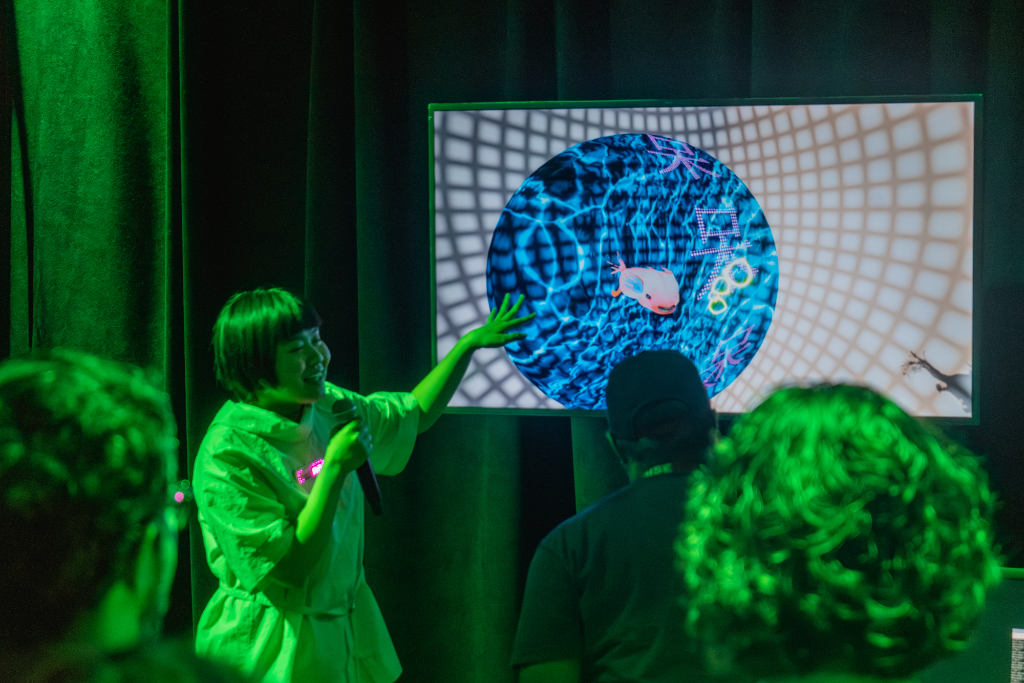
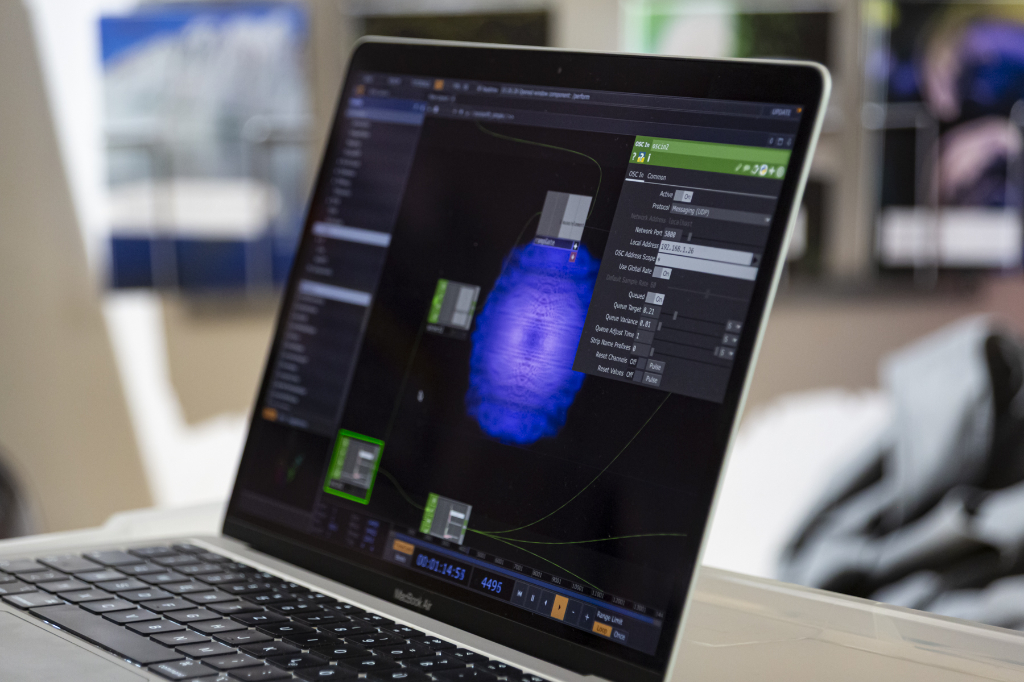
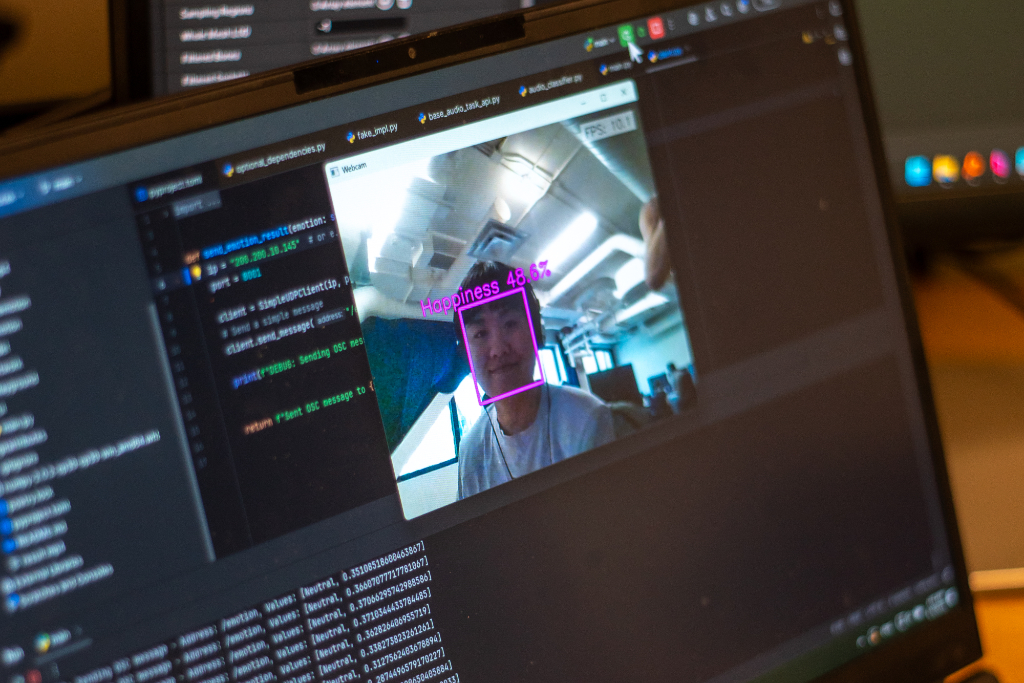
In one corner of the building, three rooms with people at keyboards, some in animated discussion. While they might appear to be doing ordinary computer work, they’re actually creating 3D worlds, developing emotionally responsive digital creatures, and building tools to measure environmental impact. Moving through the rooms, you spot unusual equipment: custom tripods, multi-screen setups hovering above workstations, custom multidirectional loudspeakers, and what looks like an experimental omnidirectional treadmill. These are the tools of teams exploring cutting-edge technologies for immersive creation, mixed realities and telepresence.
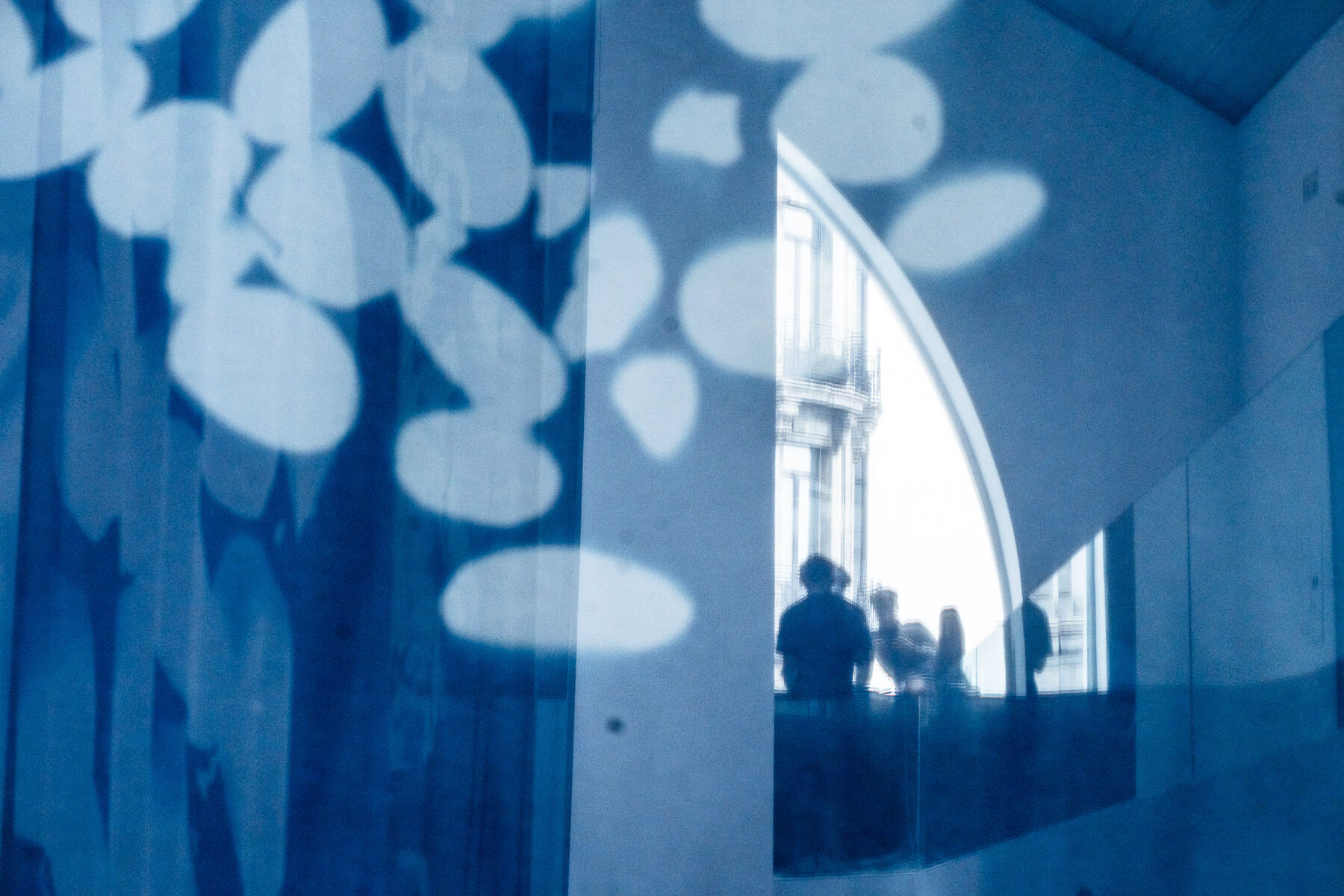
This creative hive exists within a remarkable structure. Step back and take in the entire building: a huge dome sits on the roof, next to the entrance there’s a wide front window featuring a light installation. Inside, a large atrium leads to stairs with lights embedded in concrete, surrounded by a mix of modern technology and the building’s original industrial features–tall pillars and exposed structural elements. The second floor opens into creative workspaces with open areas where people focus on their screens — the visible surface of the deep innovation happening within.
Welcome to the Society for Arts and Technology [SAT] and the MUTEK AI Ecologies Lab hackathon [1]. Over the last decade, the acceleration of AI — whether in terms of performance or adoption scale — has carried substantial environmental costs, notably significant energy and water consumption. This impact reveals a critical blind spot in current AI development. The Lab, in partnership with Milieux Institute [2], Applied AI Institute [3], and Abundant Intelligences [4], wants to establish ideal conditions for tackling such “wicked problems [5]” by fostering sustainable AI practices and frameworks in the cultural sector.
As seen in our first article, the Lab guides interdisciplinary teams in developing sustainable AI-driven solutions for the cultural sector. This approach emphasises co-creation, iterative design, and ecological awareness, connecting technological innovation with artistic and cultural practice.
A structured approach
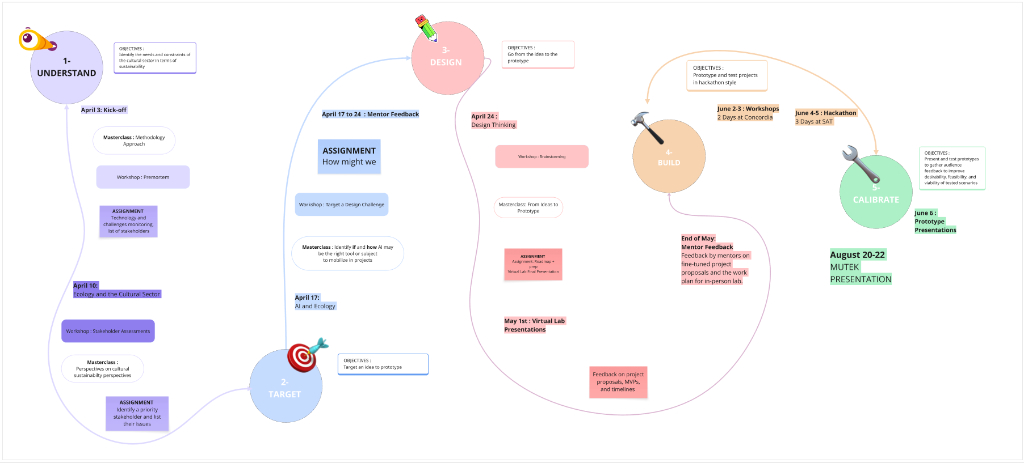
The Lab integrates Design Thinking and hackathon formats to foster sustainable AI in the arts. It situates its work within broader histories of critical making, research-creation, and collaborative prototyping. The lab uses a structured methodology across five phases: Understand, Target, Design, Build, and Calibrate. This human-centered approach guides interdisciplinary teams through co-creation and iterative design, moving projects from theory to action through rapid experimentation and prototype development. Design Thinking emerged to integrate specialised fields of scientific knowledge [6] for a holistic approach to complex problems.
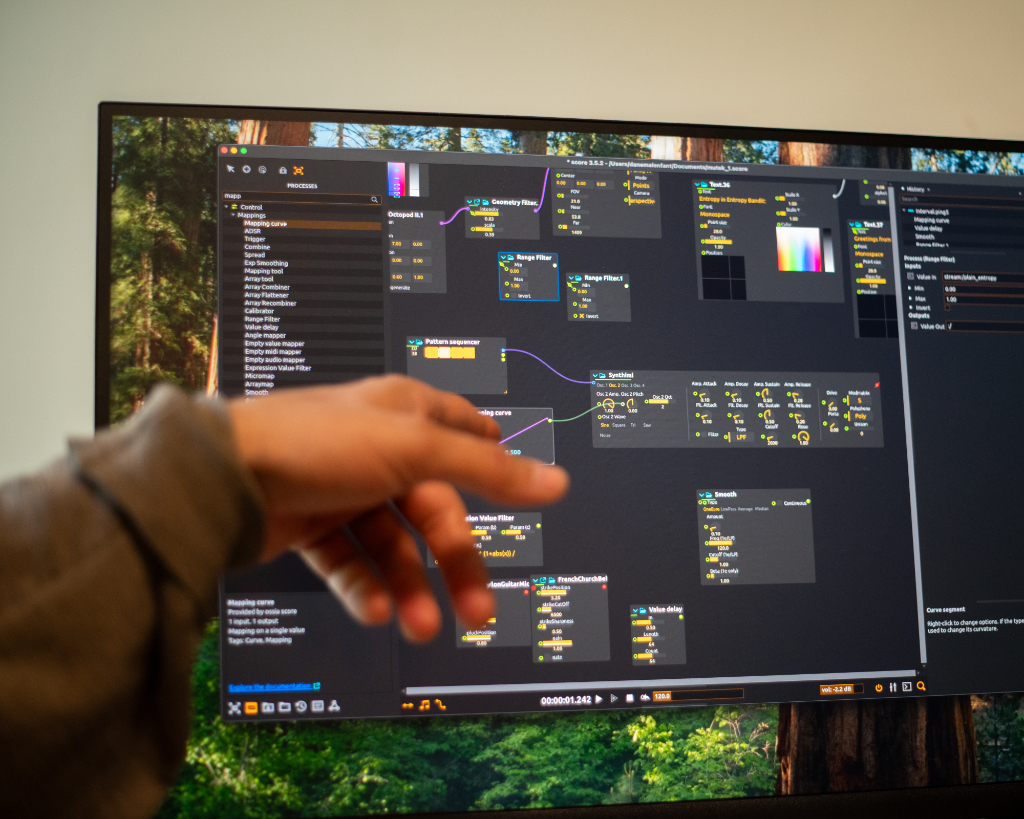
The “Build” phase unfolds as a hackathon week, where intensive collaborative sessions take place. It emphasises rapid experimentation and Minimal Viable Project/Product (MVP) development, responding to ecological and cultural concerns through AI. The immersive SAT environment allowed participants to iteratively externalise and refine complex concepts in real time, encouraging experimentation with various ideas. As participant Lionel Ringenbach noted:
The close arrangement of participants encouraged discussion and collaboration. It was the most experimental residency I’ve participated in. The visits of Milieux and Mila Institute before the hackathon brought a lot of inspiration, and I received abundant support from the SAT team during the hack. The facilitation was outstanding.
–Lionel Ringenbach a.k.a Ucodia [7]
The possibility for deep collaboration was enabled by two days of relationship-building when the cohort met in person for the first time—at Concordia University. The first half of the week focused on building relationships, sharing knowledge, aligning intentions, and establishing a collaborative atmosphere. Activities included a “Prismatic Approaches to Working with AI–The Hologram Workshop” facilitated by the Applied AI Institute, an “Ecologies Nature Walk on Mount Royal” led by N’ART Projects [8] exploring local ecosystems, knowledge sharing sessions between the AI Ecologies Lab cohort and Machine Agencies [9], and tours of Mila [10] and Milieux Institute with talks on reinforcement learning and indigenous epistemologies in AI.
This collaborative groundwork set the stage for the intensive hackathon portion at the SAT. Hackathons are short, problem-focused events where small groups rapidly ideate, develop, and present solutions, simulating real-life design activity in a condensed time frame. This format allows rapid prototyping, emphasising building “just enough to learn, no more” to test assumptions and reduce risk. Although these concepts may sound theoretical, they translate directly in the participants’ experience. Case in point, here’s what one of the participants, Dane Malenfant [11], had to say:
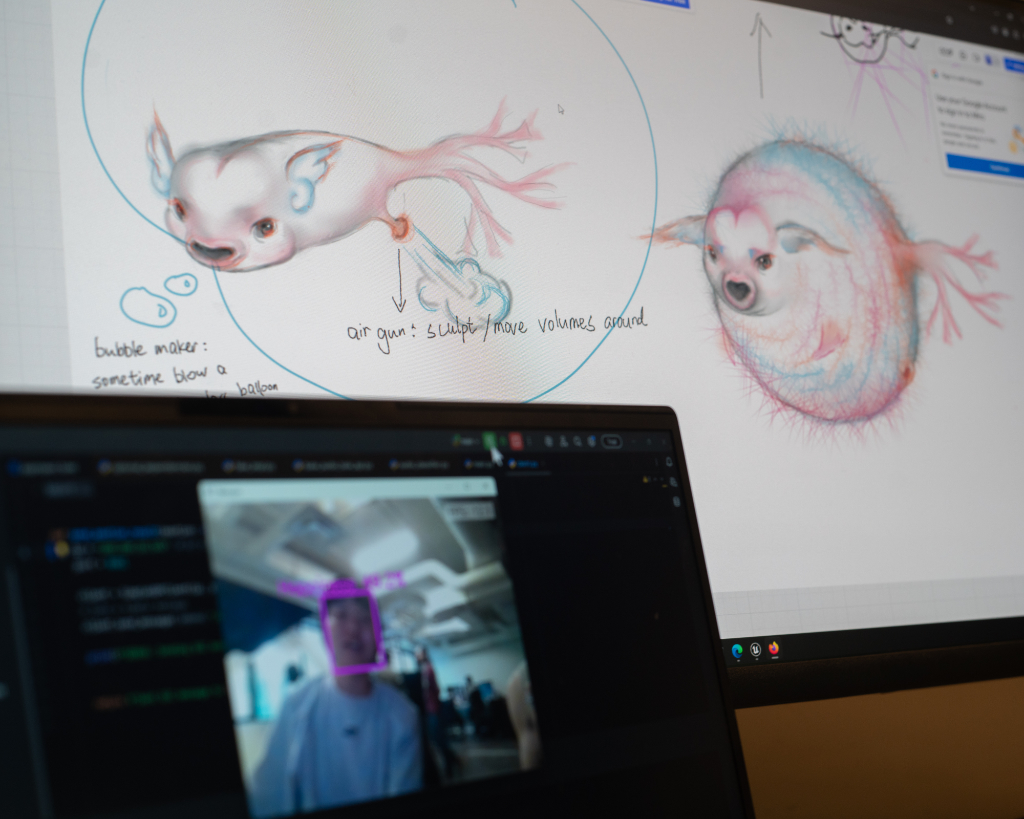
The lab’s design radically reshapes the creative process. It fosters rapid prototyping by convening artists, technologists, and researchers in a hybrid online and in-person format—a departure from the slower, siloed pace of traditional laboratories. The immersive SAT environment and collaborative sessions let me iteratively externalise and refine a complex, abstract machine learning concept in real time. This format gave me the freedom to experiment with many constructions.

Online phase
The buzzing activity at the SAT represented the culmination of three months of structured online collaboration. Through virtual sessions, participants progressed from broad exploration (Understand) to focused problem definition (Target) to detailed project planning (Design).
Working with experts like Devon Hardy [12] on sustainability, Tegan Maharaj [13] on responsible AI, and Véronique Paradis [14] on design methodology, participants transformed initial concepts into testable project proposals. By the time they arrived in Montréal, each carried carefully constructed blueprints ready for the intensive prototyping phase–connecting months of virtual preparation to the hands-on work ahead and setting the stage for the final Calibrate phase.
Calibrate
Since closing the intense build phase and leaving Montréal, prototype work is ongoing, as participants prepare for the final “Calibrate” stage. This phase is focused on presenting those prototypes to diverse audiences and stakeholders, gathering feedback, and refining project direction for future iterations, partnerships, and implementation. This will be achieved through demonstrations and networking during the MUTEK Forum [15] on August 20, at Monument-National. Their aim will be real-world testing of ideas and assessing the cultural and environmental relevance, feasibility, and viability of each project.
Key learnings and project evolution
Residents learned a lot, and it was exciting to observe the progress, redirections, and evolutions of their projects. The lab experience, especially the in-person component, significantly impacted the participating artists’ projects.
Project transformation: For Dane Malenfant, the biggest change was transforming an offline, flat 2D AI training representation into an online, multi-sensorial one. This rapid progression was unexpected before the lab. Lionel Ringenbach (Ucodia) redirected his project from a browser extension to a tool for developers to measure coding assistant energy usage, an essential shift sparked by a mentor’s insight. Influenced by artists’ skepticism regarding AI use of their work and the effort involved, David Barlow Krelina [16] shifted from aiming to use multiple illustrators’ styles for AI image generation to working exclusively with his own images.
The lab offered opportunities for knowledge sharing, creative thinking, and in-person work that made my project more innovative and exciting. The field trips through different universities, AI campus, and nature (walking on the Mount Royal) helped us connect, be inspired, and explore our project ideas in a more playful way than desk work alone.
–David Barlow Krelina
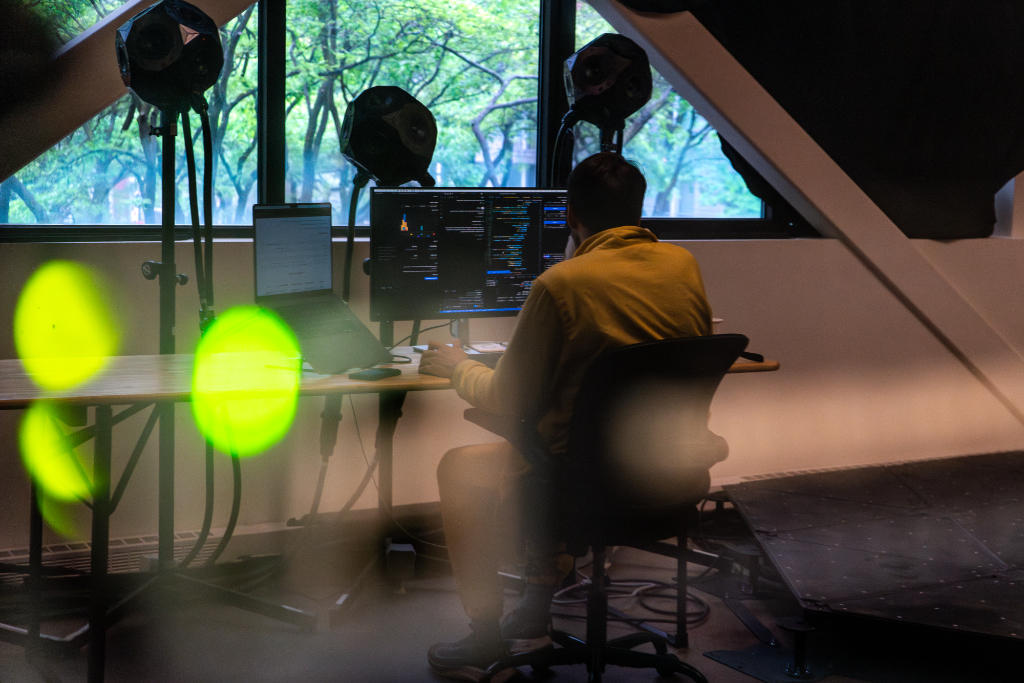
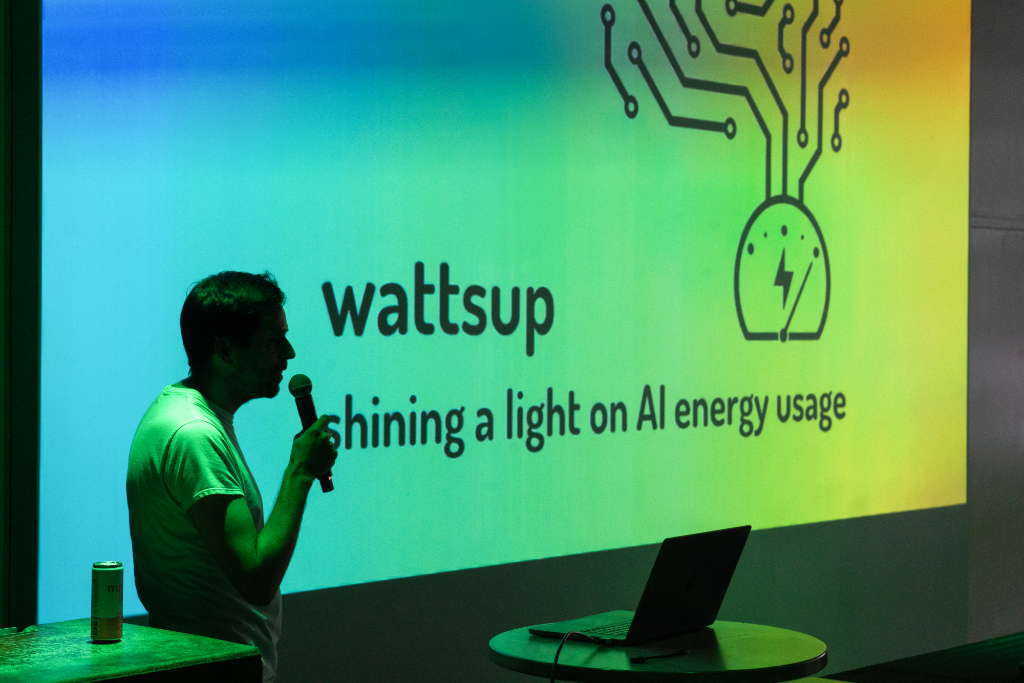
Mentor input and collaboration: Mentors were essential to project evolution. Dane Malenfant credited his mentor, Tegan Maharaj and the lab’s collaboration with the SAT. Eyez Li [17] credited multimedia-integrator and mentor Charles Bicari for encouraging further exploration in running AI on low-end devices, revealing potential and struggles for accessible edge AI. Another mentor, Dr. Migueltzinta Solís [18], encouraged Li to embrace public engagement, which proved impactful. The close proximity of participants and the support from the SAT team fostered discussion and collaboration.
The final execution exceeded my original concept. It was an unforgettable experience, like running a marathon in the dark with shooting stars. I couldn’t have done it without the gentle push and solid support from Mutek and SAT folks.
–Eyez Li
Innovative design: Participants praised the lab’s design for its innovation and effectiveness. It reshaped the creative process, fostering rapid prototyping, and diverging from the slower pace of traditional laboratories. The residency allowed autonomous exploration while providing support, giving artists control over their creations. Field trips and diverse projects offered unique perspectives, expanding participants’ views. The environment encouraged knowledge sharing, creative thinking, and in-person work, making the experience more innovative and exciting.
In short, I feel like the residency gently held our hands to explore all the possible resources, but then gave artists full control of what they wanted to make. Maybe it’s a personal preference, but I’ve been in some strongly structured residency. While they provide all resources and possibilities, they also break and reconstruct artists’ creation in the process. I personally have a very very hard time with this type of rigid structure, and it can really diminish and limit creativity. I normally end up feeling forced to make something I don’t care about anymore.
–Eyez Li
The MUTEK AI Ecologies Lab represents more than just an innovative methodology for sustainable AI in the arts–it offers a blueprint for approaching complex sociotechnical challenges across disciplines. By successfully integrating diverse expertise, from artistic practice to technical development to ecological thinking, the lab demonstrates how hybrid collaborative models can address problems that single disciplines cannot solve alone. This approach has potential applications beyond AI sustainability, extending to areas like climate tech innovation, and ethical technology development.
As AI tools continue to proliferate across industries, frameworks like MUTEK’s could help shape more responsible implementation practices. The lab’s emphasis on rapid prototyping coupled with critical reflection creates a middle path between technological acceleration and careful consideration of consequences. In the coming years, this methodology might influence how cultural institutions position themselves as vital intermediaries in technological transitions, helping to ensure that innovation remains grounded in human needs and ecological boundaries. The true measure of the lab’s impact will be seen not only in the specific prototypes developed, but in how its collaborative approach ripples outward to inform more responsible relationships between technology, culture, and the natural world.