
Text by Iris Colomb

Through five articles rooted in practice and lived experience, tekhnē’s fourth edition, These Abilities, presents a variety of perspectives on Technology, Music and Ableism. This edition and its topic align with tekhnē’s focus on technology’s emancipatory potential in music and sound art contexts. They are brought to tekhnē by OUT.RA, a cultural organisation based in Barreiro (Portugal) and one of tekhnē’s six European collaborators. OUT.RA’s projects include annual experimental music festival OUT.FEST and music-focused film festival SONICA EKRANO.
We took technology to mean a lot of different things, notes Rui Pedro Dâmaso, co-founder and co-director of OUT.RA, reflecting on the framing of several tekhnē editions, including These Abilities. Through this, they open up an expansive understanding of tools as a vast range of devices and methodologies allowing people to make music.
This outlook resonates with OUT.RA’s exploratory engagement with experimental music, which Dâmaso describes as the broadest possible sound world. Fittingly, These Abilities celebrates multiplicity, invites us to embrace contrasting perspectives, to seek nuance, welcome questions and keep listening in new ways. OUT.RA’s presents disabled perspectives not as a lack of tools but the use of different tools, with each article building on the understanding that each person has different tools.
OUT.RA’s longstanding engagement with the topic of Technology, Music and Ableism is rooted in improvisation, which Dâmaso considers as one such music-making tool. Their interest was initially sparked by workshops facilitated by renowned musician, facilitator, and academic Alan Courtis, who is known as a founding member of the band Reynols, whose percussionist and frontman, Miguel Tomasín, has Down’s Syndrome, as well as for his worldwide experience developing music projects involving people with disabilities.
Courtis’ collaboration with OUT.RA began in 2016, when Dâmaso invited him to run a week-long workshop for over 20 people with various disabilities, in partnership with the local non-profit NOS, which fosters the integration and social inclusion of people with disabilities. The project aimed to develop new approaches to musical expression with disabled people through collaborative improvisation. Courtis led it alongside local musicians, and the group presented their collective work through a public concert.
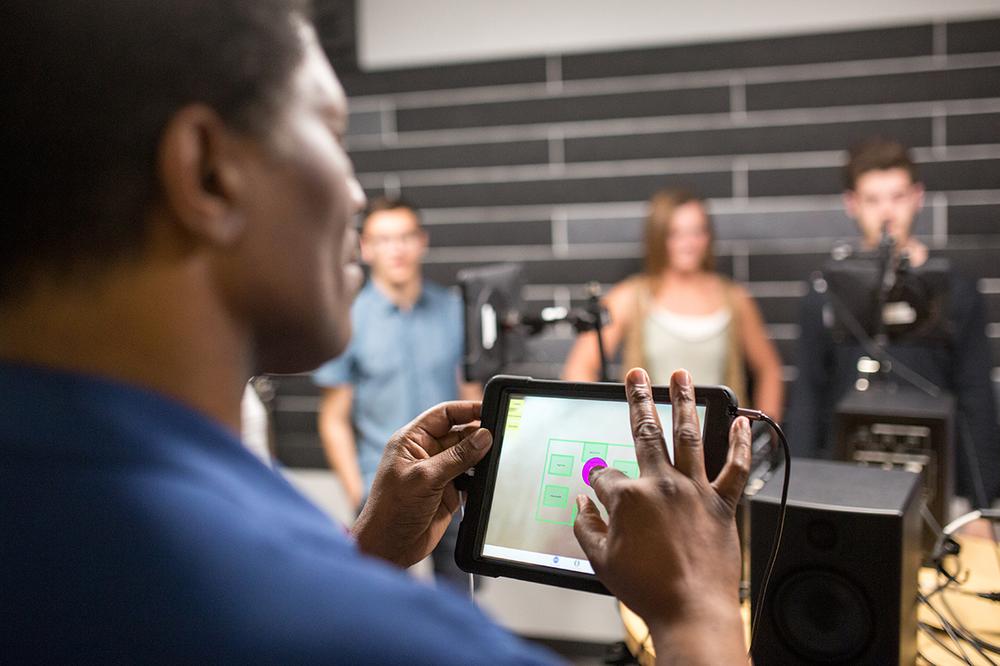

The first workshop and its resulting showcase were met with such enthusiasm from participants and audience members that it was repeated the following year and the years after that, eventually morphing into Os Heróis Indianos Romanos Africanos [Indian Roman African Heroes], an inclusive musical collective named by one of its 30-odd members. Os Heróis Indianos Romanos Africanos has since performed multiple concerts across Barreiro and beyond, with a documentary and releases forthcoming.
Dâmaso highlights OUT.RA’s commitment to encouraging audiences to listen to music made by disabled people as an experimental music lover, as a listener, as somebody that is just fascinated by making something out of sound. Rather than framing projects such as Os Heróis Indianos Romanos Africanos as therapeutic, OUT.RA aims to create opportunities for disabled participants to make music and be recognised as creators.
In These Abilities, both Alan Courtis and local improvising musician Bá Alvares, who joined the project early on, share their perspectives on Os Heróis Indianos Romanos Africanos through their respective lenses. While Courtis’ contribution focuses on the values that drive his advocacy for inclusive, collaborative music-making, Alvares recounts his experience of the project from its first workshop, reflecting on its influence on his improvisation practice and his thinking about ableism and music.
Beyond OUT.RA’s own initiatives, These Abilities also explores Music Ableism and Technology, through contributions from composer and musician Molly Joyce whose work explores disability as a creative source, d/Deaf artist and film-maker Alison O’Daniel who explores sound beyond the auditory and composer, improviser and educator Matt Robidoux whose interest in accessible instrument design led them to create the corn synth, also known as Kinetically Operated Randomness Network, or KORN.
Each practitioner draws on their perspective and experiences to offer insightful approaches to music and disability. Joyce uncovers and challenges the ableist norms and constructs embedded in live music contexts. Robidoux reflects on the playful unpredictability, tactile qualities, and accessibility of his Corn Synth instrument, a Eurorack modular synthesiser system embedded in two aluminium corn-cob sculptures. O’Daniel examines d/Deaf listening through attention, vibration and captioning.
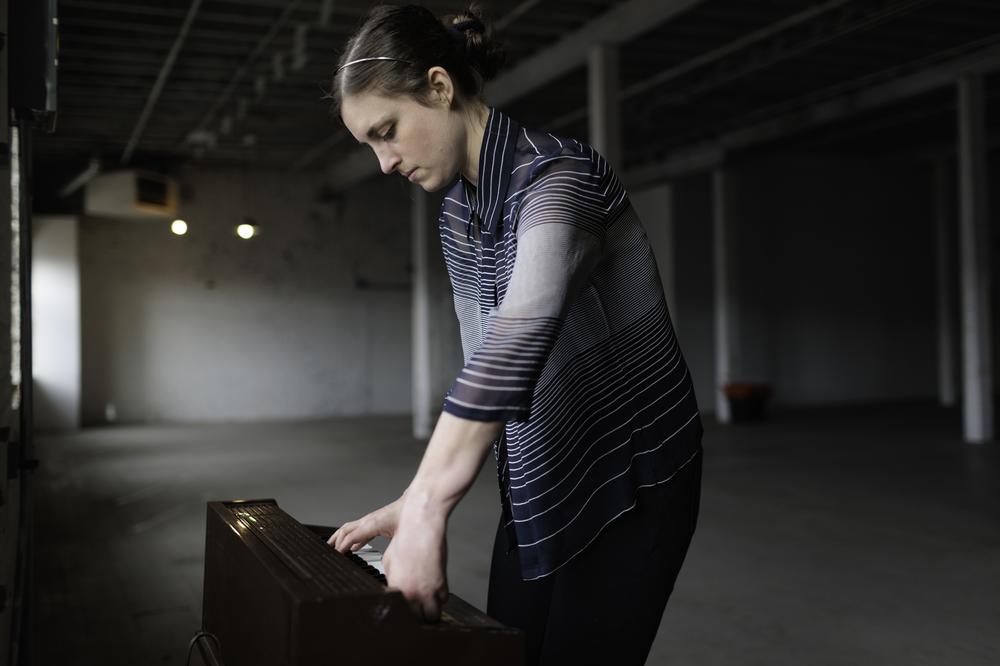
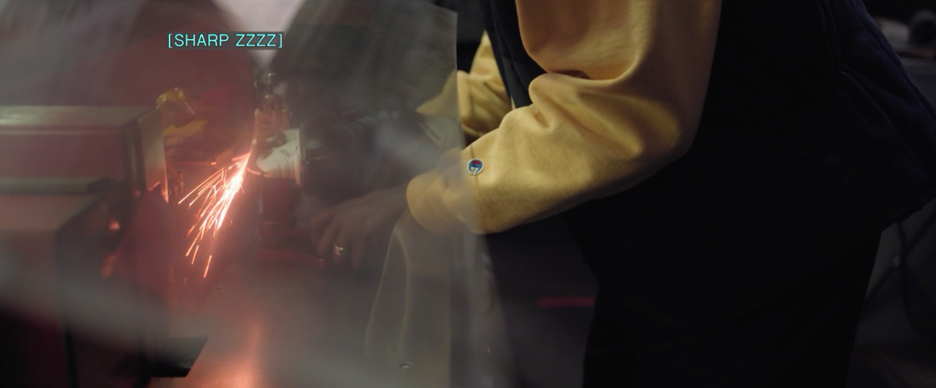
Dedicated to the legacy of composer and improviser Pauline Oliveros, These Abilities is shaped by her multifaceted practice. Her influence echoes across this edition, from Alvares, whose discovery of Deep Listening grounded his music practice, to O’Daniel’s fresh perspective on the methodology, and Courtis and Robidoux, who collaborated directly with Oliveros herself.
Her impact extends far beyond sonic attunement: she also co-created the Adaptive Use Musical Instrument (AUMI), a digital interface that uses camera tracking to let people with diverse ranges of mobility perform music through movement. This groundbreaking project, which began in 2006, and the community that has since built around it have inspired multiple initiatives, including the book “Improvising Across Abilities: Pauline Oliveros and the Adaptive Use Musical Instrument” put together by the AUMI editorial collective.
Building on its collaboration with tekhne, OUT.RA has been developing plans to deepen its exploration of Music, Ableism and Technology through a conference as part of OUT.FEST. This conference, named These Abilities: Perspectives on Music & Disability, after the tekhnē edition, will pursue its emphasis on practice and lived experience and is to take place on the 1st of October 2026, on the first day of the 22nd edition of the festival.
The conference will include a preview screening of the documentary on Os Heróis Indianos Romanos Africanos as well as discussions involving speakers including Bá Alvares. It will feature a conversation with US-based artist, poet and composer JJJJJerome Ellis, who, beyond his diverse artistic practice presents himself as a sufferer, and person who stutters. It will also platform two Portugal-based projects: the Coimbra-based group Ligados Às Máquinas [Connected to the Machines] and Porto-based Grupo Operário do Ruído [Workers’ Noise Group].
Ligados Às Máquinas is a wheelchair-bound sample orchestra that brings together members of the Coimbra Cerebral Palsy Association (APCC) to create collective performances that span genres from hip-hop and fado to classical and concrete music. Grupo Operário do Ruído is an open collaborative music project that uses unusual and mundane instruments from the Atlas of Utopian Instruments, a set of devices chosen for their inclusive qualities. The group’s aim is to create a space where all sounds are equally valued and can become music.
Collaboration not only runs through Heróis Indianos Romanos Africanos, OUT.RA’s first project engaging with Music, Ableism and Technology and their upcoming conference, it is a constant of OUT.RA’s activities. Dâmaso sees this as rooted in the organisation’s connection to its city’s working-class history and the stark operational realities of its festival setups.
Originating in a former industrial hub built on grassroots workers’ associations and self-sufficient community halls, OUT.RA inherits an ethos where collective effort was once a matter of daily survival. Because the organisation operates without its own dedicated venue, it relies entirely on this local network of historical ballrooms and shared spaces to host its festival. In Dâmaso’s words, this means that we have to work together, with a lot of people, to make things happen. In this context, collaboration is neither an abstract theme, or an aesthetic choice, but an indispensable tool,;without it, you wouldn’t be able to do things.