Text by Eleni Maragkou
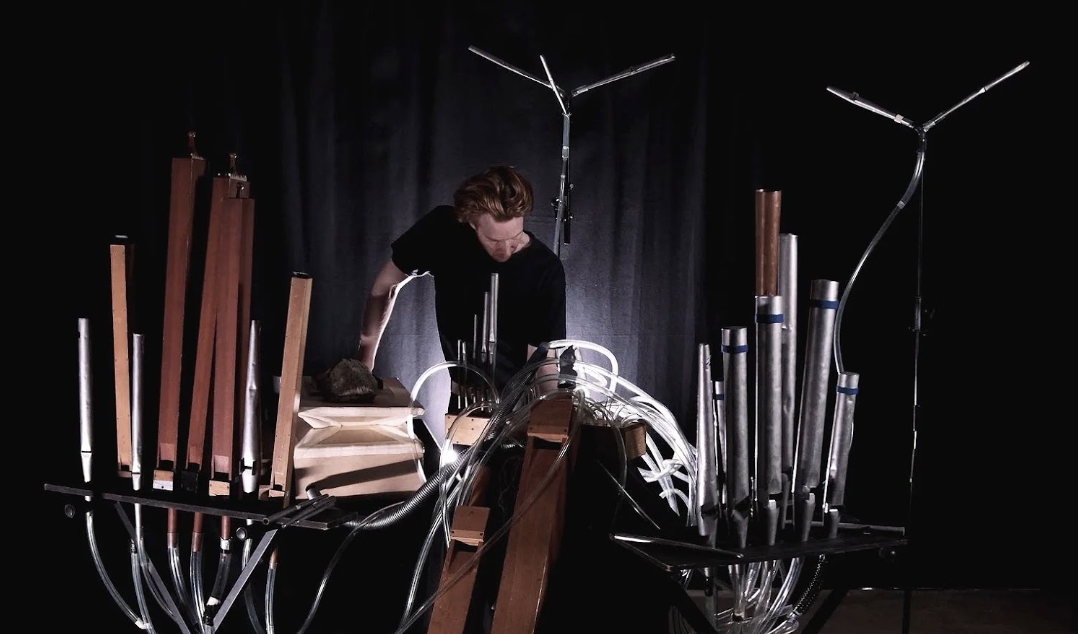
Festivals are like microcosms: heterotopias, pockets of other time folded into the ordinary calendar, a place where people agree, for a few days, to live by a different measure. Most music festivals use that suspension simply: a banner, a lineup, a licence to come undone. Since 2010, Lunchmeat has paired musicians with visual artists, often for the first time, and staged the results as premieres in a gallery basement, wagering on chemistry before it exists.
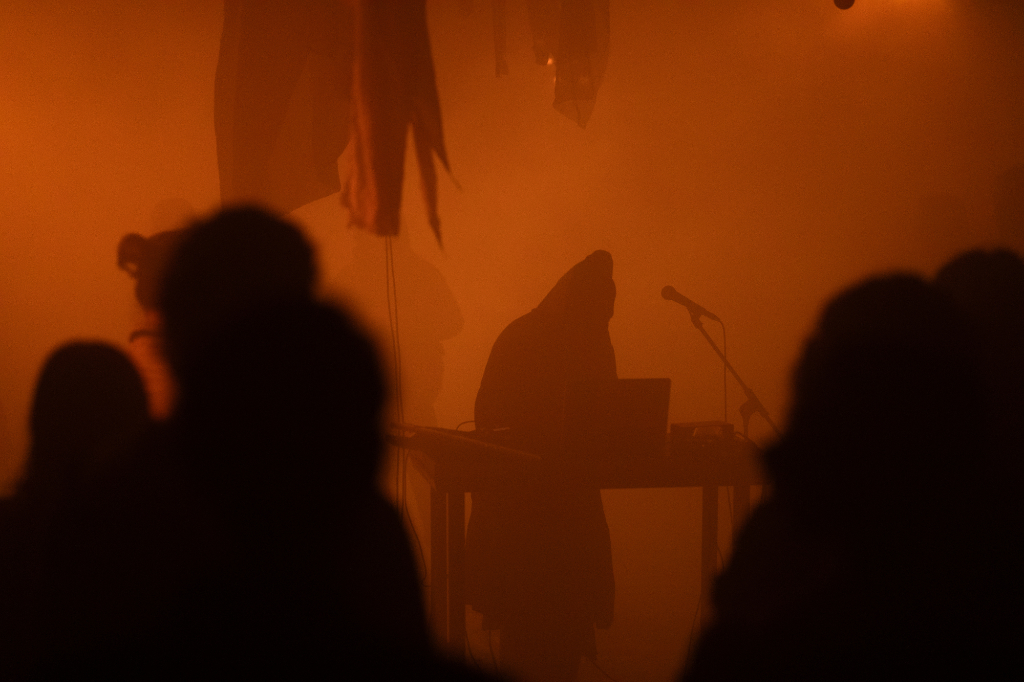
I arrived in Prague as dusk settled; I wove through narrow alleys toward Ankali, a club that had lingered in my imagination for some time. On this first night, the space wasn’t pulsing with dancers but held a subtle anticipation. There is a particular intimacy in seeing a club at rest, its architecture exposed, the air charged with the memory of movement and the promise of what might unfold. For the seasoned clubgoer, Ankali reveals itself as both familiar and mysterious, a vessel brimming with potential.
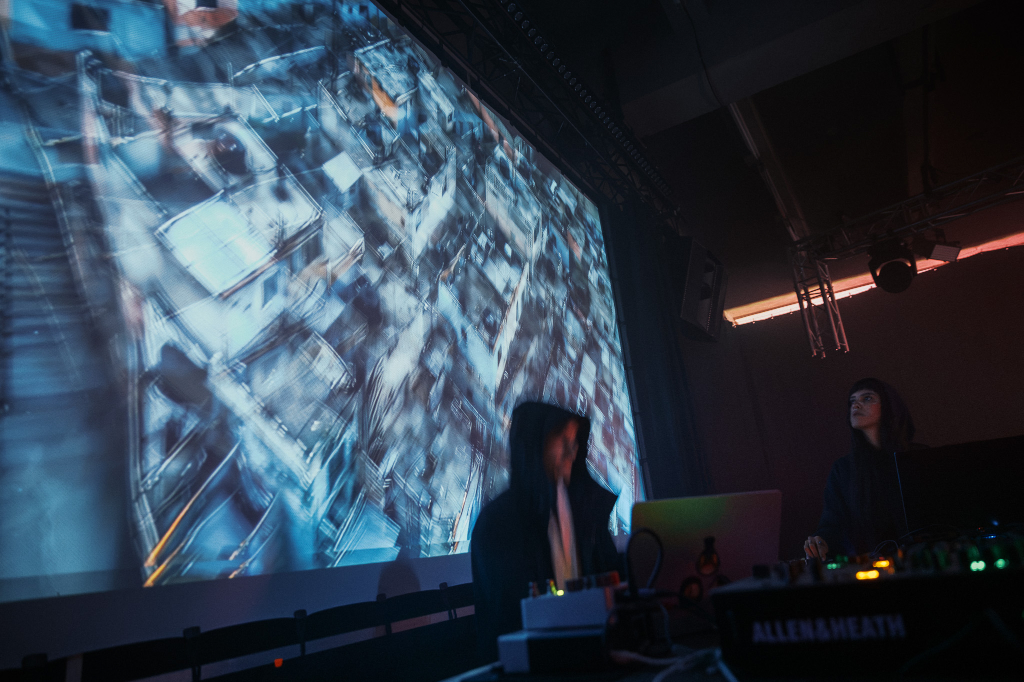
Matthew D. Gantt built his sound inside virtual environments, where every object has its own audio language. On screen, through the smoke, a crystalline world assembled itself like a video game while the sound system filled the room. The room itself seemed to inhale the sound, every surface vibrating with its presence. When Tati au Miel extinguished the lights, we found ourselves suspended beneath columns of illumination, the sound not just surrounding us but threading through our bodies. The experience was a sensory onslaught – oversaturated, spectral, almost disorienting. At its peak, the sound fractured into exhilarating bursts before dissolving into pure, unstructured noise.
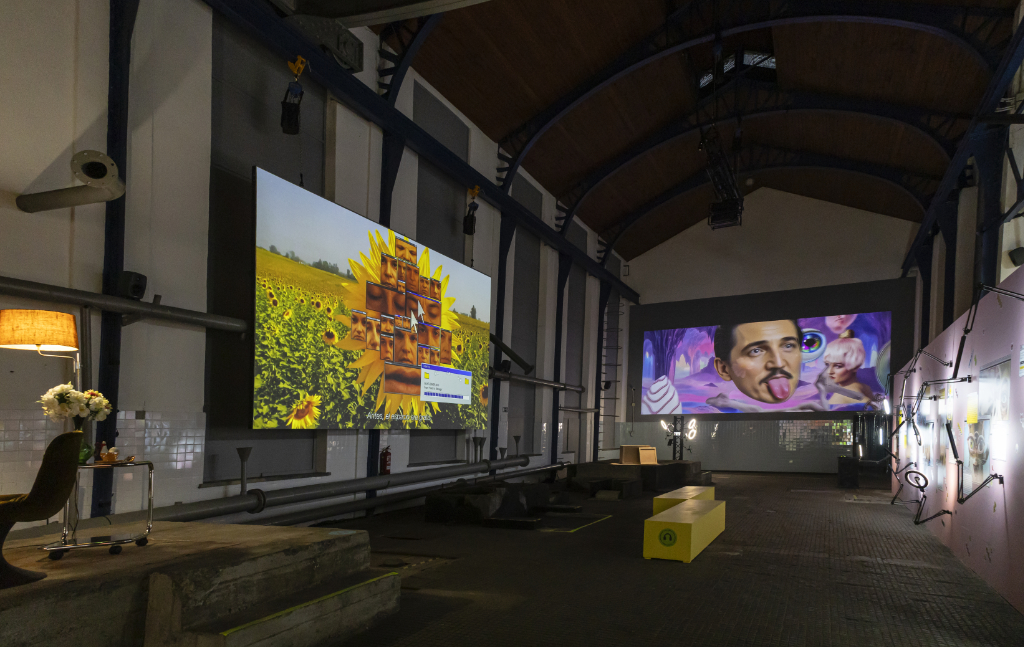
The main programme of Lunchmeat unfolds in the monumental Veletržní palác, the National Gallery’s Trade Fair Palace. Built in the 1920s for commerce to display itself, it now houses the country’s modern art. For four days in September, it becomes something else entirely. The building’s history lingers, heavier than its clean lines suggest. Not every room was dressed for spectacle. The Concert Hall, a raked concrete amphitheatre rebuilt each year as a black box, dazzled. The Club stage was stripped back, almost bare. Yet the music shaped the air in both, and the interplay between these spaces became a silent thread running through the experience.
As we moved from one room to the next, the atmosphere subtly shifted, each space tuning the senses anew. With the main programme taking place under a single roof and sets arranged without overlap, the building became a gathering point, intimate and charged with presence. Afternoons drifted through talks, films, and the label fair, while evenings settled into unhurried, spacious concerts. Nothing here was showy, but everything felt necessary. Lunchmeat’s premise was clear: listening is something we do together, with our bodies as much as our minds. For a few days in Prague, that was the ground we stood on.
The symposium, held in the same building’s Korzo hall, circled Eastern European hardware on Friday 25 in the afternoon. Ģirts Ozoliņš of Latvia’s Erica Synths and Václav Peloušek of Bastl Instruments spoke of instruments not built for export, but for themselves and their circles. They assembled them out of necessity and invention, and the wider world found them largely by chance. Bastl, the Brno company whose name is Czech slang for tinkering, framed its story as cultural: if you can’t buy it, you build it. The quiet implication for Western makers was clear: the most vital tools often begin not as products, but as responses to absence.
The panel that followed turned from instruments to rooms. Mariam Otarashvili of Mutant Radio, Yuko Asanuma of setten agency and Ankali’s own Jonáš Verešpej asked what it means to think of clubs as civic institutions. They drew on Tbilisi, Berlin and Prague, where rising costs and political pressure are closing in. After Friday night, the question felt less abstract. The conversations were lively, timely and free to attend, yet the room was sparsely filled. The symposium’s own introduction found solace in small communities.
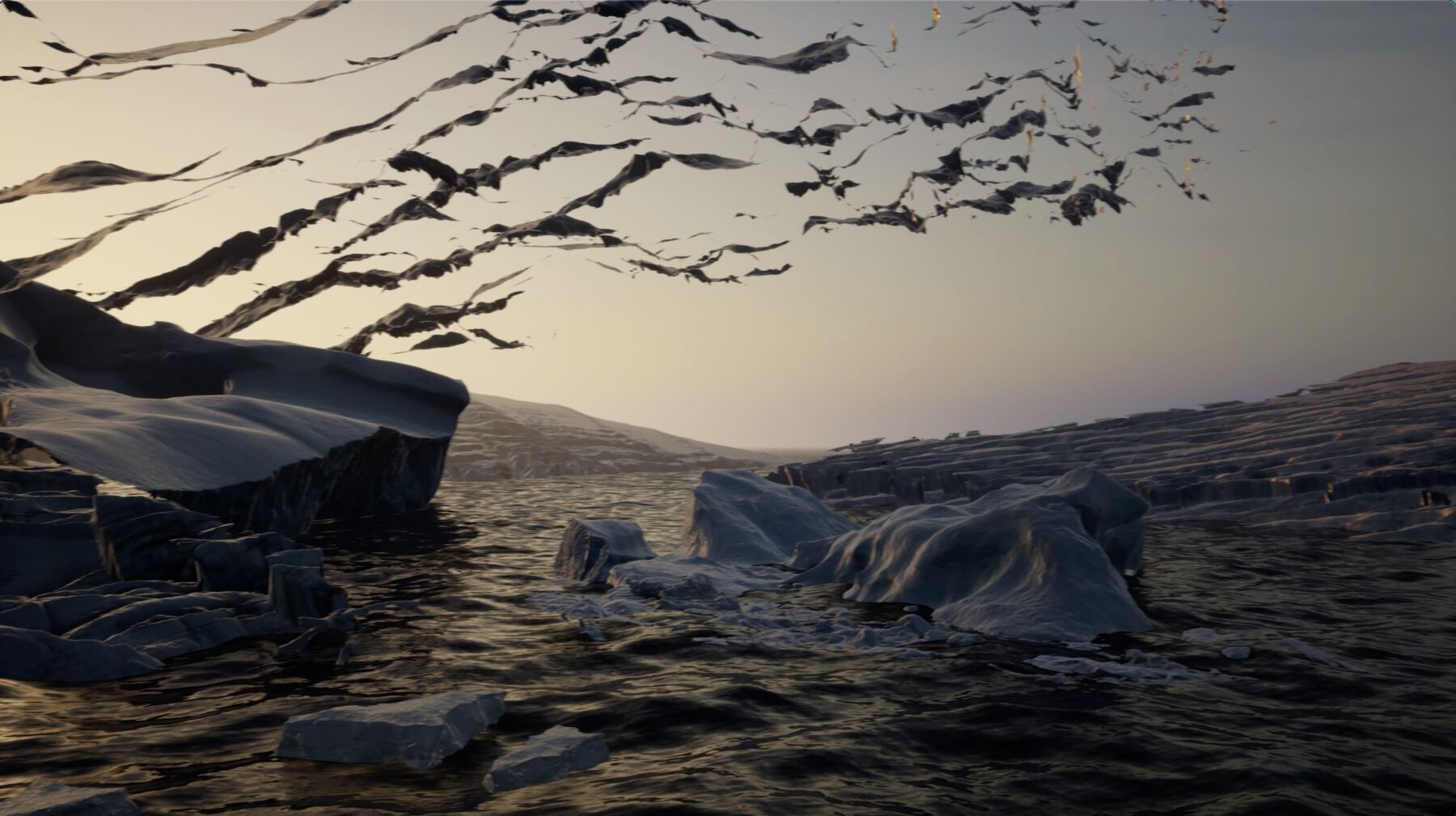
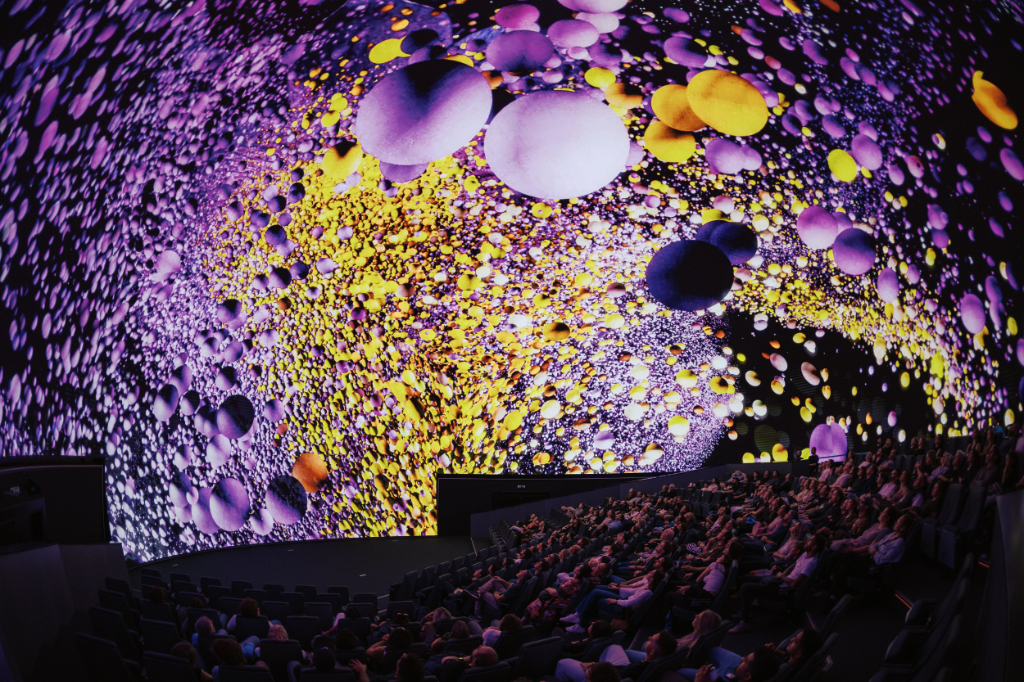
The screenings at the Planetarium’s 360° dome in Stromovka felt much the same. PAST Studio’s Vanishing Flora and Studio Above&Below and Einar Fehrholz’s Semi-Diurnal Spaces – Tidal Temporalities were a welcome change of pace. But they sat on a separate ticket and a short trip away, slightly disjointed from everything else.
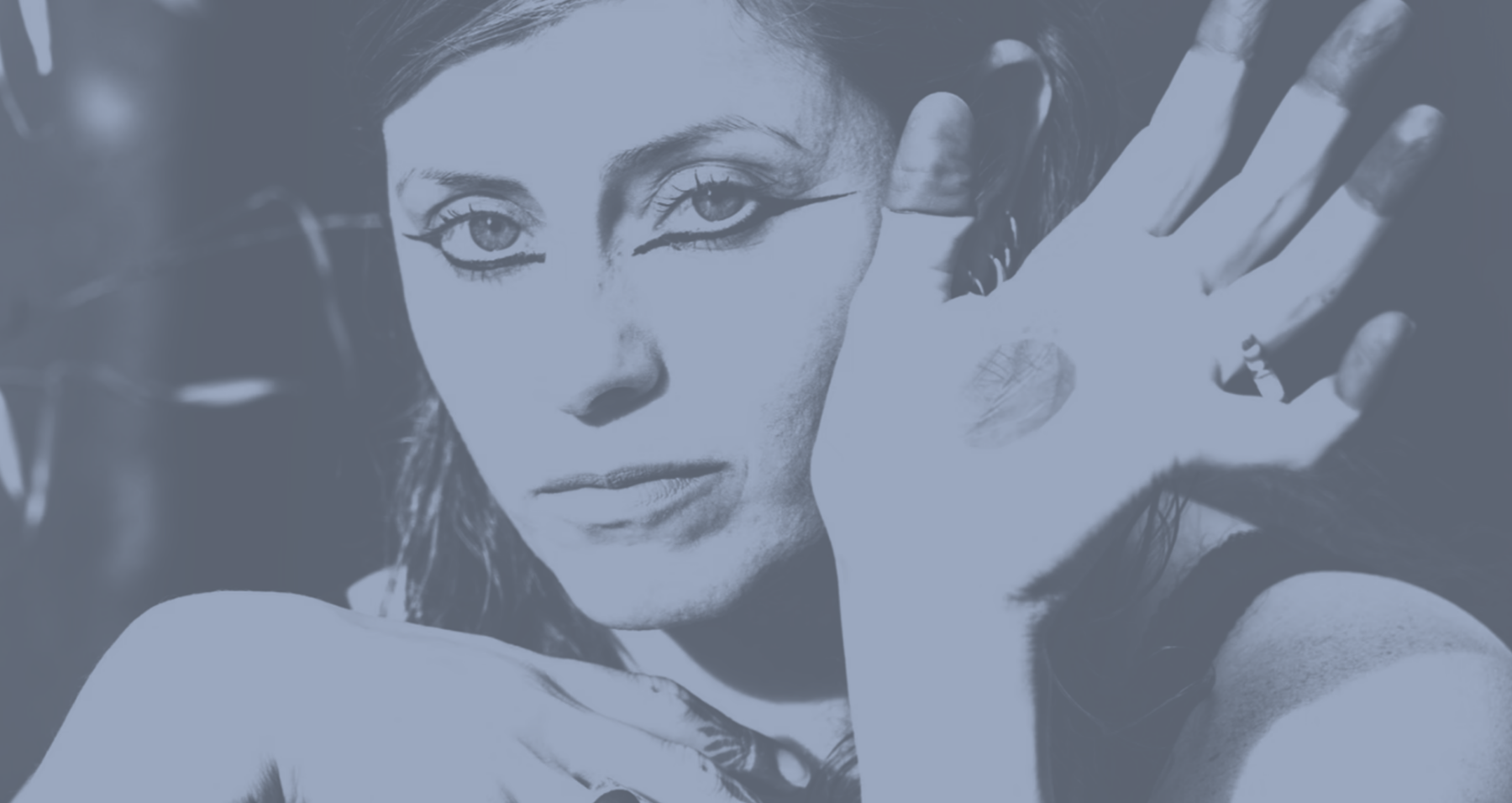
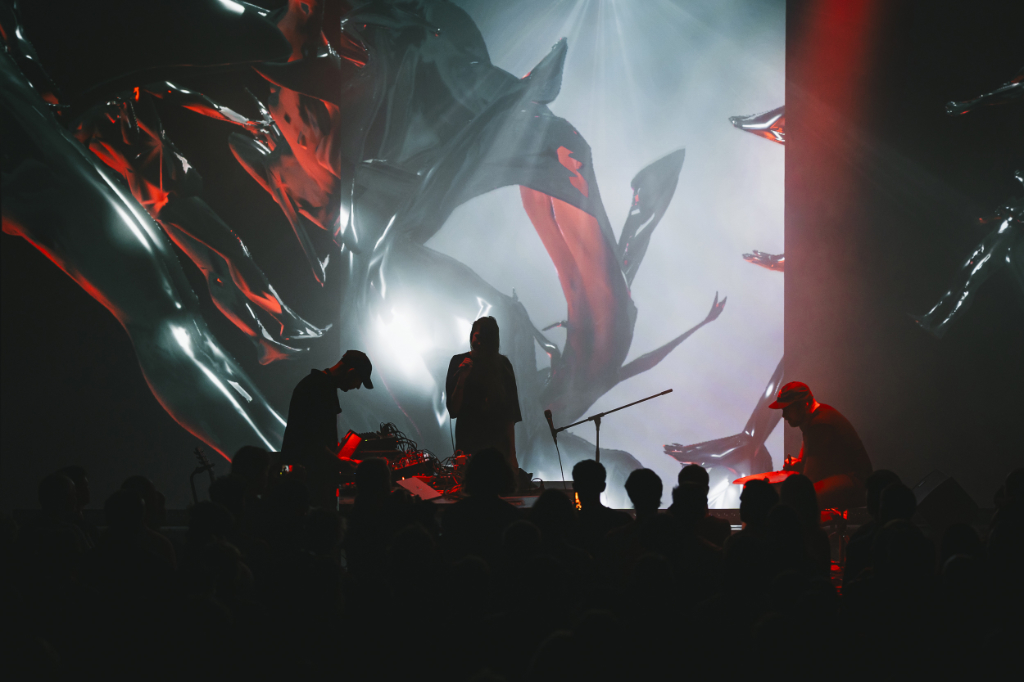
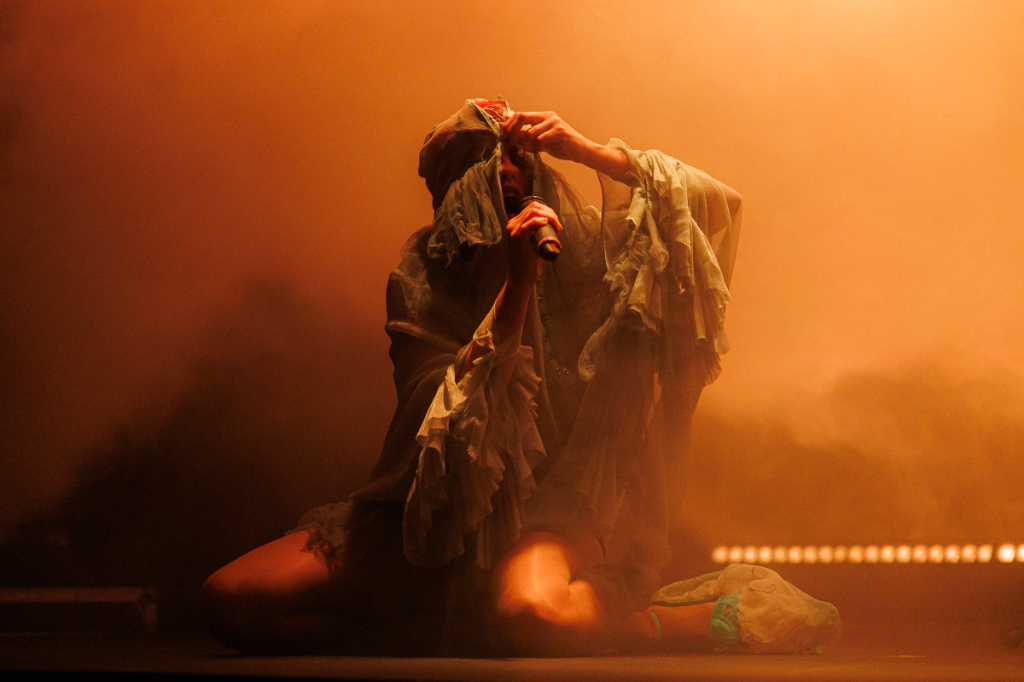
On Friday 25, KMRU and Nick Verstand presented As Nature in a haze of white smoke. A sheet descended over the crowd. The sound shifted from machinic saturation to organic texture, an undulating sea that melted into softness before erupting into something closer to a molten inferno. In that moment, staging and sound were inseparable. Miriama Kardošová’s I Tell Her To Speak followed her alter ego, Victoria Oren, an imaginary pop star on the brink of collapse, through handmade masks, costumes, and a touch of cabaret. The piece is designed to unsettle the audience’s personal space – successfully so. Somewhere in the crowd, a camera provoked a drunken outburst: a drink was thrown, security intervened, and the room booed as they led the man away.
No time for reprieve, no moment to catch our breath. PLF’s set unfolded as a kind of controlled chaos, a restless improvisation stretched to its breaking point, yet never losing its grip. Peter Kutin’s light-feedback machines sent pulses through his synths, while Lukas König’s drumming answered with a force that felt almost physical, a dialogue of resistance and propulsion. Elvin Brandhi’s voice sliced through the soundscape, as sharp and volatile as shattered glass, sparking with energy, anchored by a raw, almost primal undertow. Stripped of backing tracks and any sense of safety, the performance hovered somewhere between free jazz and handmade noise, a singular event suspended in time, never to be repeated.
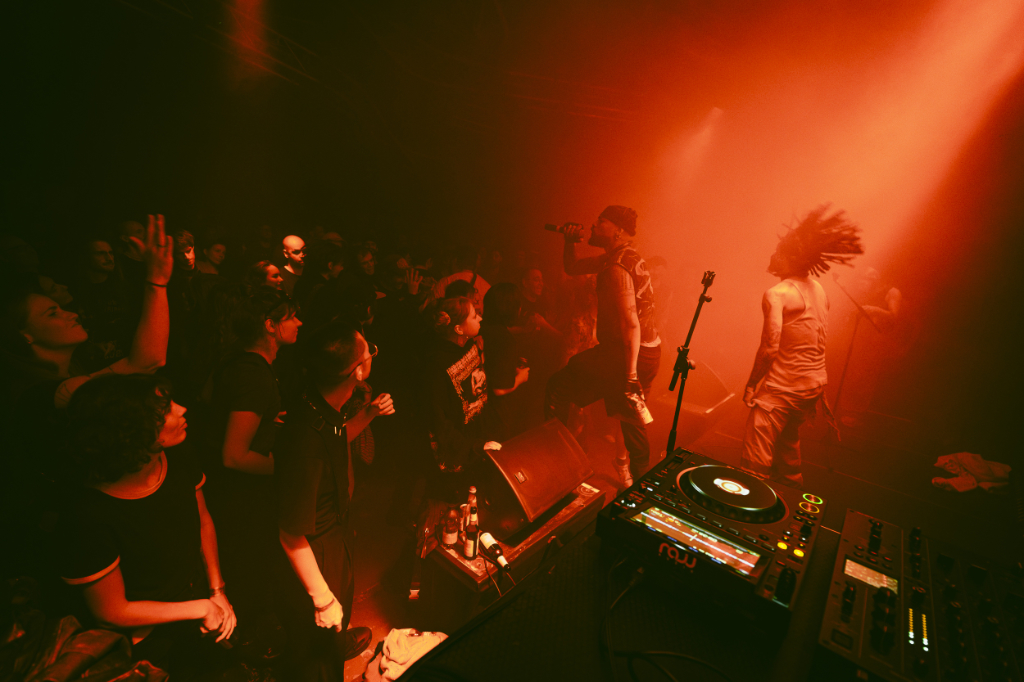
On the Club stage, a voice cut through, crackling with fireworks, underpinned by something guttural, relentless as a drill to the chest. Nexus (B4mba & Mooki6), of Barcelona’s Pan-African Jokkoo collective, were joined by the installation duo Akyute. They were rowdy, raucous, magnetic, colliding screamo and metal with dancehall, trap and baile into music pitched at a world in collapse. Earlier, the Mexican duo Buena Tarde and ztaa had treated the brutalist architecture of Mexico and Europe as a resonant body, the textures granular, a microcosm of shifting particles in a proper club set that set the room alight.
Saturday 26 turned to the machinery itself. Kevin Richard Martin, better known as The Bug, slowed dub to a glacier in Sub Zero, under Charlie Hope’s 360° lasers. Kevin Peter He and FITNESSS staged a walk through a forest, and Zora Jones, long a builder of rendered worlds, emerged from behind her screens, her voice carrying the ache and resilience of heartbreak into the open. On the Club stage, Isama Zing and DJ GÄP’s Prelude for Light and Fog amplified eight fog machines, four strobes and twelve moving heads into their own percussion. Echoing Friday’s panel, the evening was a meditation on tools: not just instruments, but collaborators in creating experience.
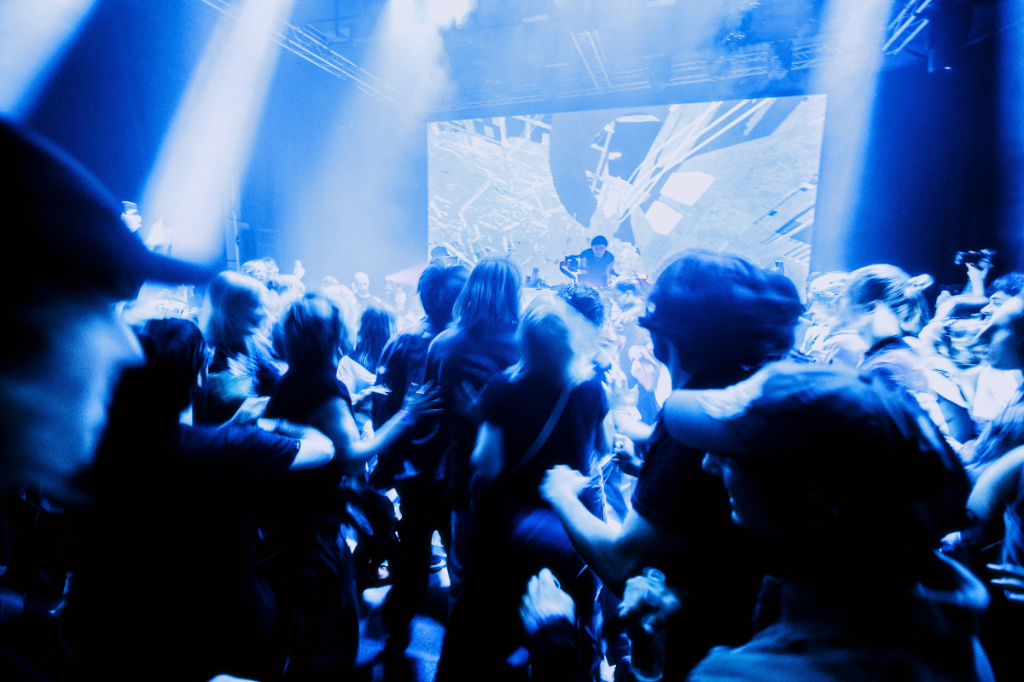
See You Dancin’ is the festival’s invitation, a phrase that lingers in the air like a subwoofer’s pulse. umru – shaped by the pixelated landscapes of Minecraft’s online communities – spun a set where genres collided and ricocheted. The room shifted as Nunguja took over, weaving jazz and African rhythms into the circuitry of electronics. Saturday brought Bitter Babe and Lechuga Zafiro together, two Latin American selectors orbiting the same sonic constellation, their set a kinetic blend of glitch, acid, and Latin textures. The dance floor became a breathing argument for the festival’s ethos: scenes born in their own corners of the world, converging in Prague, dissolving boundaries in real time.
Though ostensibly Lunchmeat dispenses with headliners, it’s hard to think of Autechre, billed to play in near-total darkness, as anything but. Once the lights fade, though, distinctions blur. What lingers is a shared pulse, a sense of being suspended together in sound. Throughout the programme, the visuals do not simply echo the music; instead, they unfurl as an instrument in their own right, shaping the atmosphere and inviting the senses to wander beyond the edges of the audible.
Over seventeen editions, Lunchmeat has become a stage where intimate scenes expand, and attention becomes a shared resource. A microcosm, it turns out, can hold more than its size suggests. For a few days, these delicate networks are given space to breathe, their fleeting intensity magnified within the festival’s monumental home.