Interview by Neshy Denton
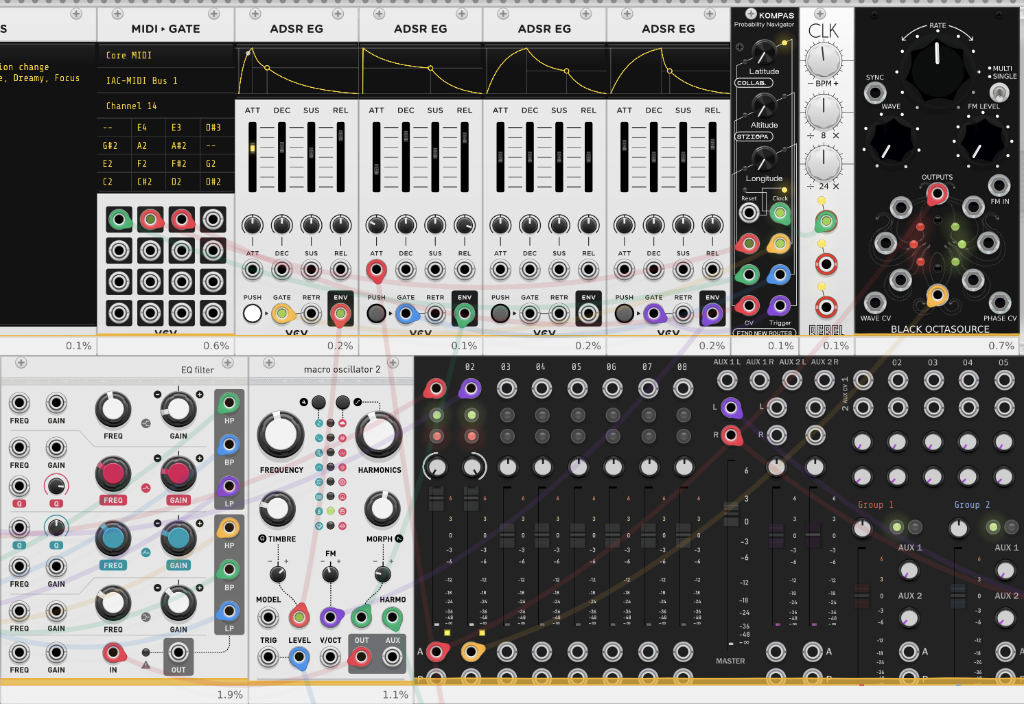
There is a domestic mystery to the way sound inhabits a room. Long before we attempt to parse a sequence of tones as music, or a rise in pitch as an emotional queue, sound is simply a physical presence. It warns us about its whereabouts, settles into the corners of our surroundings, and subtly bends our sense of where the room ends and our own bodies begin.
We spend most of our waking lives assuming that perception is a passive window through which we look out at an objective world. Yet, spending time around the practice of Julius Holtz has a way of unravelling that assumption, replacing it with a far more meditative inquiry into how we construct reality from moment to moment. Heading back into Holtz’s early days, when he moved to Berlin back in 2002 with a thirst for 90s techno and free jazz, I am struck by how naturally his time in Berlin’s electronic underground feeds into his current work.
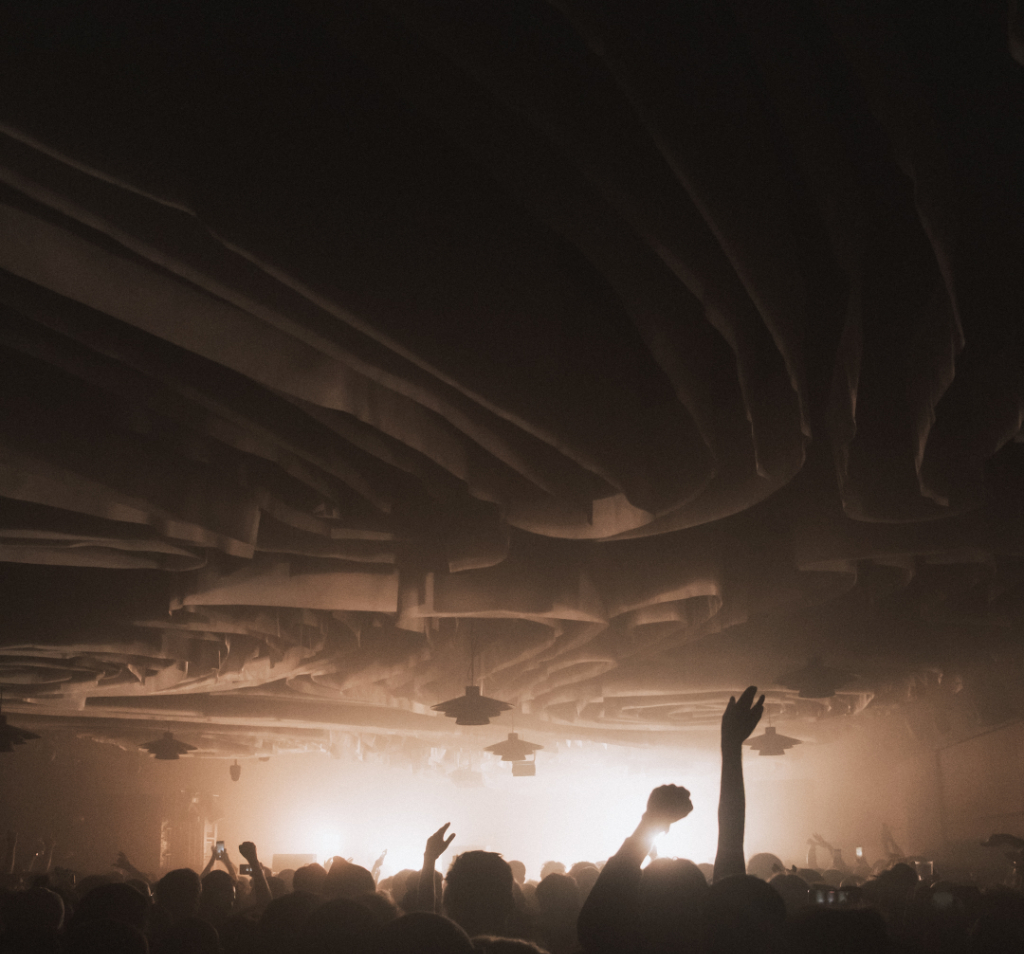
It is easy, and perhaps a bit lazy, to view the tactical detour from club scene to spatial installations and neuroart as a sharp departure. But if you slow down and look at the underlying currents, the connection is incredibly logical. The way a dance floor encourages rhythm or escapism is partly the main attraction not only for young people, but for anyone who connects with losing themselves, or simply for the fun of dancing with their mates. But understanding the club’s intuitive nature of forming nightlife music rituals, that, all things considered, is nothing short of tribalistic traits.
For Holtz, club culture became an informal laboratory for collective attention. It demonstrated how frequency alone could synchronise a room full of strangers, bypassing formal language to establish a simultaneous, visceral state of consciousness. Without abandoning this instinct, he eventually backed away from the urgency of the club scene to examine its physiological mechanics in a quieter space. Holtz often talks about “hacking the senses,” though he uses the phrase with an exploratory touch, without any real desire to disrupt.
Homing in on the human brain, it’s forever working to try and save energy by relying on shortcuts, stitching together whatever scraps of sensory information it can find just to keep up the illusion of a solid world. But for those who live burdened by the constant enigmatic tickle of curiosity like Holtz, this wasn’t going to be enough to satisfy any idea of perception. Adding a bit of friction in that process was the way forward.
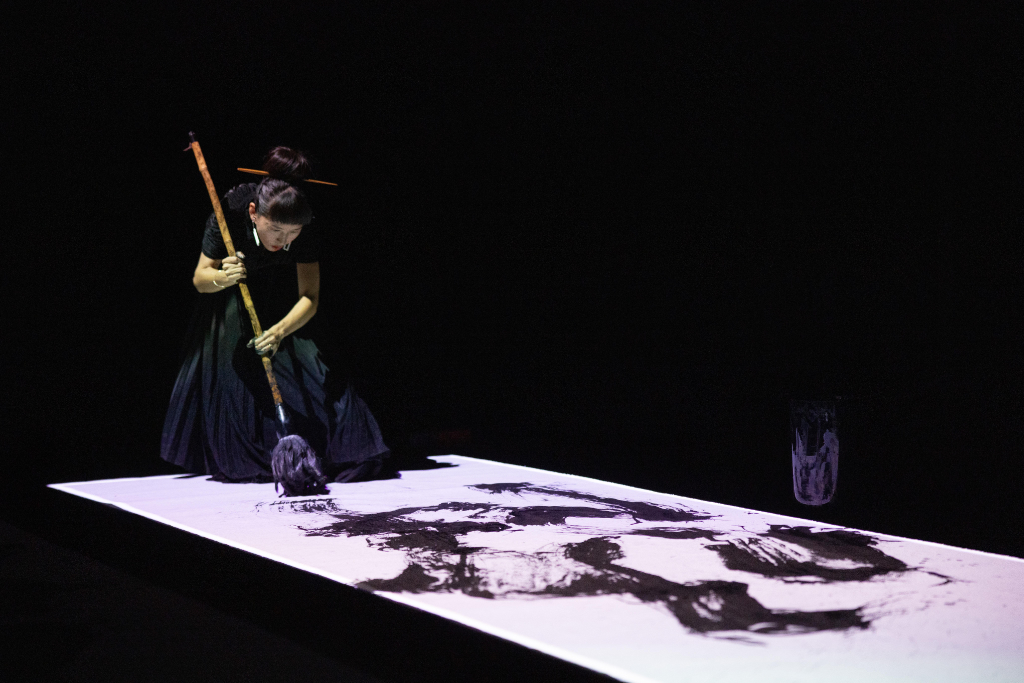
In Nocturne in Z Minor, for example, Holtz takes the anti-war poetry of Christian Hawkey (which itself remixed the work of Austrian poet Georg Trakl) and, alongside vocal artist Audrey Chen, slowly dismantles the spoken text. As Chen’s voice interacts with the spatial sound design, language loses its semantic footing, unspooling until the meaning simply collapses under its own weight. What stays behind is the sheer texture of breath as a subtle return to a way of communicating that sits well underneath our intellectual habits.
That same patience turns up in Paraconsistent Invention, where he leans into the awkward tensions between harmony and dissonance, or medical ideas of bodily order versus physical noise. Holtz isn’t trying to package these contradictions up into a neat, clever argument. Instead, he just leaves them sitting side by side in a kind of quiet, suspended space, leaving us to wonder about the fairly arbitrary lines we draw between what feels restorative and what feels broken.
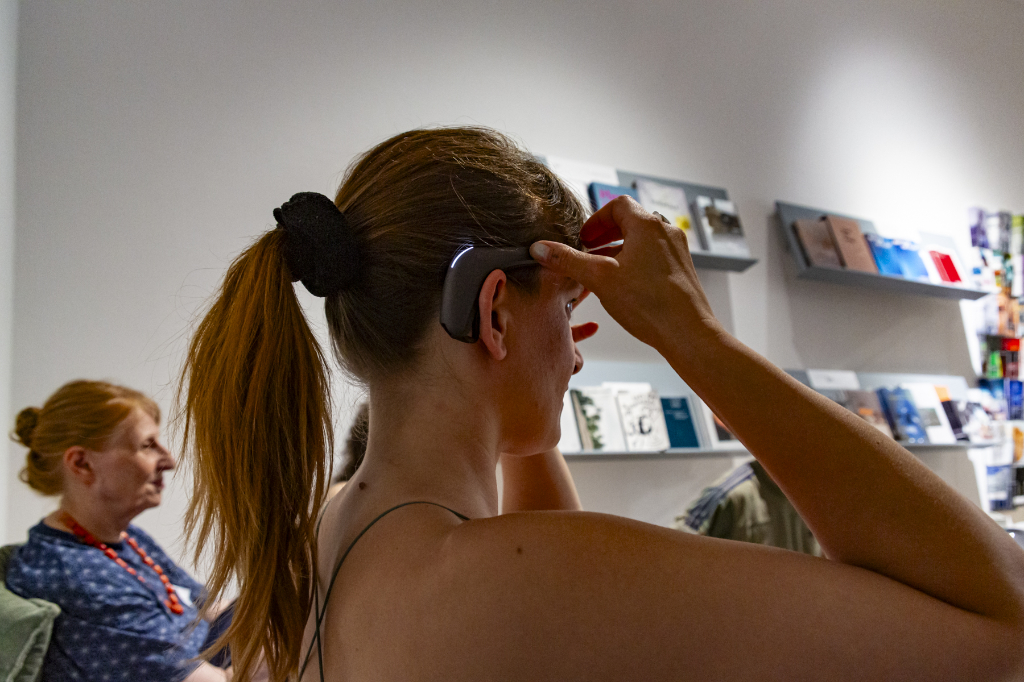
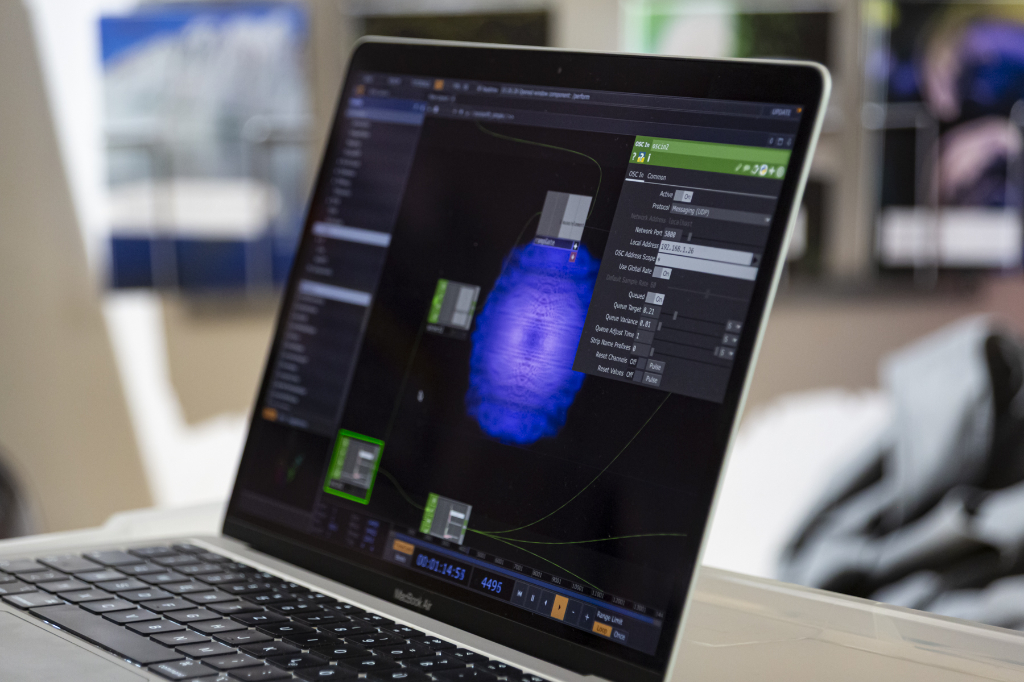
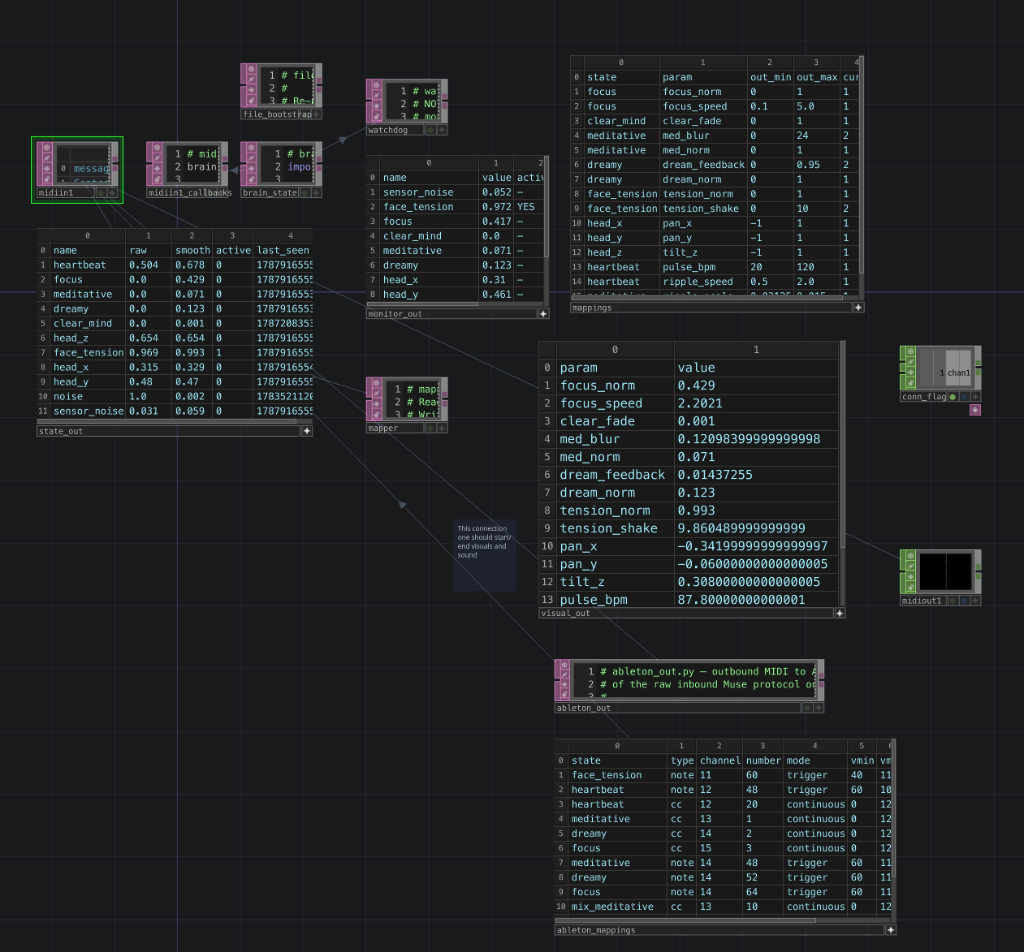
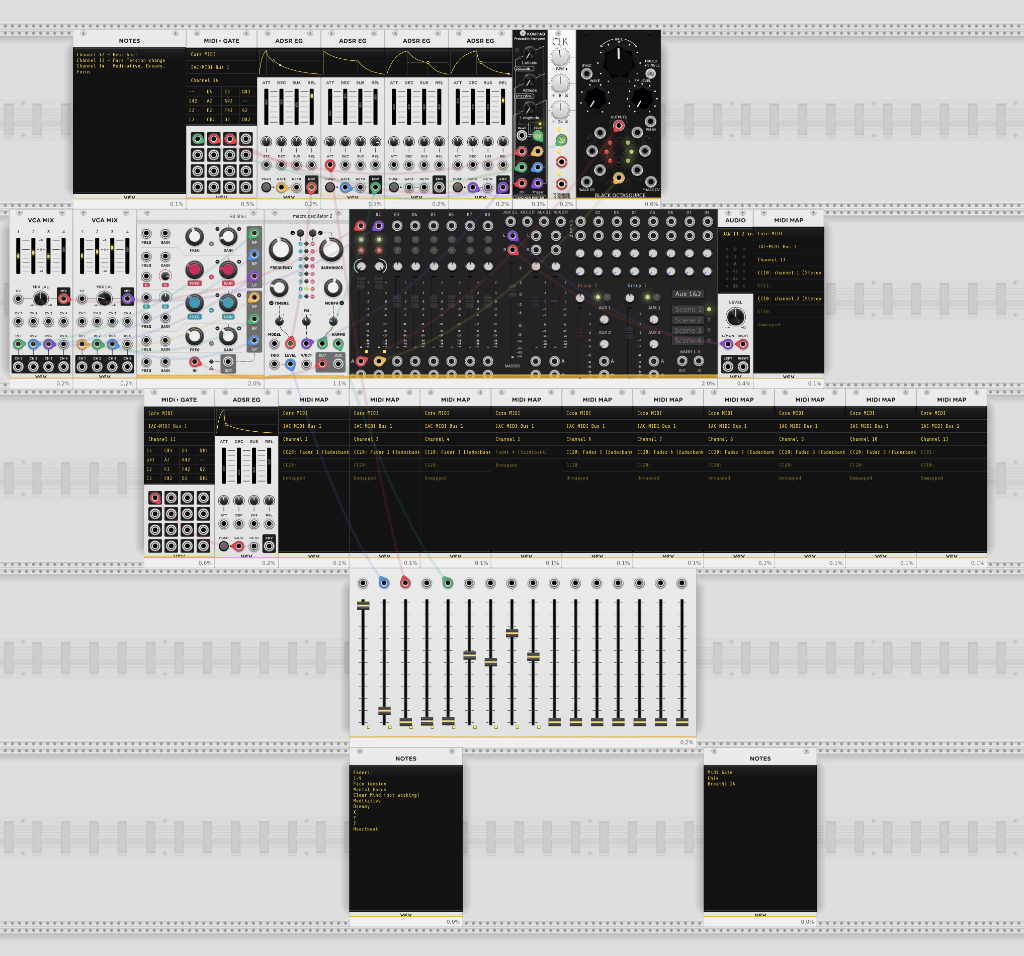
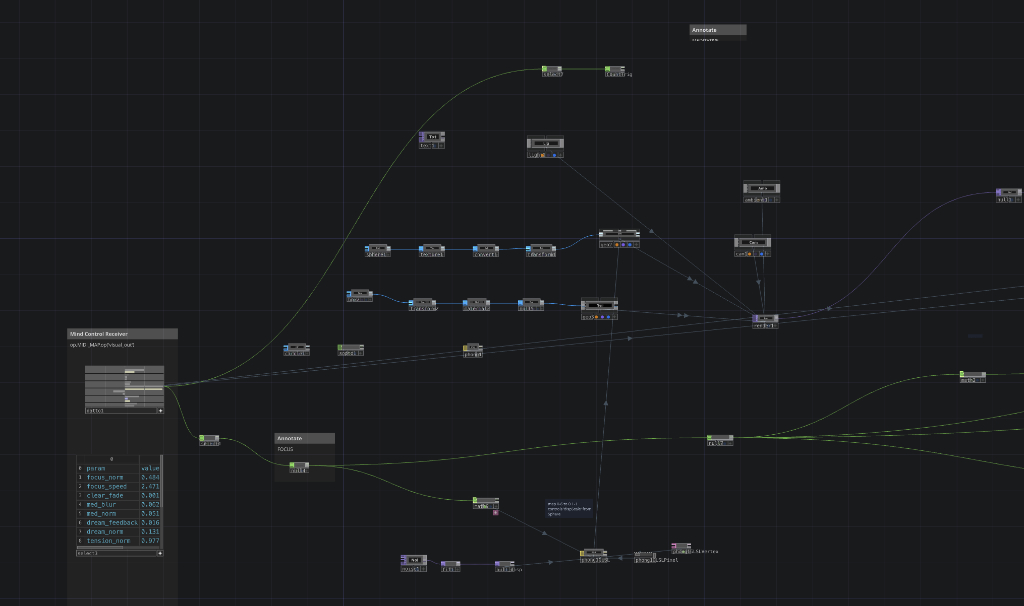
Recently, that curiosity has led him into the CHRYSALIS.ARTISTS IN LABS research programme at Art Laboratory Berlin, opening up a contemplative dialogue with neuroscience and sleep chronobiology. Building on earlier spatial experiments like Introspective Garden (presented at Charité and MIT Tangible Media Group), his newest work, COMMON GROUND, sits right at the edge of transhumanist inquiry. Working alongside researchers at Charité and the Bernstein Center for Computational Neuroscience at Humboldt University, he uses brain-computer interfaces (BCIs) to feed a visitor’s real-time neural waves into a generative AI. The system translates those unseen cognitive currents back into an evolving acoustic environment.
Where a scientific study usually tries to trim away variables to get down to a measurable fact, Holtz uses those exact biological signals to open the complexity back up. Even at times, his spaces depend entirely on who is in them; if nobody steps into the room, the piece simply sits in total silence. Instead of producing an artwork waiting on a wall to be looked at, the living, slightly unpredictable exchange between a responsive system and the person wandering through it turns into the artwork itself.
What first captures my attention about your work is how consistently it challenges our assumptions about what sound can be. Not simply something we hear, but something that reshapes our perception of space, language and even the body. Was there a particular moment that led you away from traditional music production and towards this multisensory approach?
I don’t think there was one defining moment. It was more a gradual realisation that sound is not simply an object we listen to but a force that shapes how we perceive the world. My early work as a composer and producer focused on creating musical narratives, but over time I became increasingly interested in perception itself. I began asking questions that music alone could not answer. How does sound influence attention? How does it shape our sense of space, time, or even our awareness of ourselves?
That curiosity eventually led me toward installation, neuroart, and artistic research. Today I see sound less as a composition and more as a living environment that continuously interacts with the listener.
You describe your practice as “hacking the senses,” which is an intriguing choice of words. Hacking basically suggests disrupting an established system from within. What, in your view, is the system you’re trying to interrupt, and what do you hope people discover through that disruption?
The system I am interested in is perception itself. Our brains constantly construct reality from incomplete sensory information. Most of this happens unconsciously, so we tend to experience perception as something objective rather than something actively produced. By creating unusual relationships between sound, space, visual information and increasingly neural activity, I try to reveal this hidden process. I don’t want to deceive people. I want to make people aware that perception is fluid, adaptive and deeply relational. If visitors leave my work questioning not what they experienced but how they experienced it, then I feel the work has succeeded.
Before focusing on installations and multisensory environments, you were active in Berlin’s electronic music scene as a DJ and producer. Looking back, do you see your current practice as a departure from club culture, or an extension of the same artistic curiosity?
Definitely an extension. Berlin’s club culture taught me that sound is social. It synchronises bodies, attention and emotions without language. Thousands of people can become connected simply by sharing rhythm and/or listening. Today I explore similar questions through artistic research rather than dance floors. Instead of asking how music moves a crowd, I ask how sound shapes perception, consciousness and collective experience.
Throughout your repertoire, sound becomes intertwined with physical spaces, visual elements and abstract ideas. When beginning a new project, do you start by imagining the sonic experience itself, or do the surrounding space and concept shape the sound from the outset?
I usually begin with a question rather than a sound. The concept defines the perceptual situation I want to create. Only then do I think about which technologies, materials, and sonic structures can produce that experience. Sound is never isolated in my work. It exists within an ecology that includes architecture, light, movement, technology and human behaviour. Every project has its own instinct about a speculative future involving humans and technology, an experimental setup and – often after the project has happened – internal logic.
At what point in Nocturne in Z Minor does language stop being language and become something else? Were you hoping to create a new emotional vocabulary through sound?
I was interested in the threshold where language loses its semantic function but retains its emotional and physical qualities. Even when we no longer understand words, we continue to perceive rhythm, melody, breath and timbre. Meaning shifts from language to perception itself. Rather than inventing a new language, I wanted to explore communication before language, where sound speaks directly to the body and imagination.
Then, in Paraconsistent Invention, you explore harmony and dissonance through both musical and medical perspectives, questioning what we perceive as beneficial or harmful to the body. Are contradictions like these something you consciously seek?
Absolutely. Contradictions often reveal assumptions we didn’t know we had. In medicine, technology, and music, we frequently divide phenomena into healthy or unhealthy, harmony or noise, natural or artificial. Reality is usually more complex. My work tries to create situations where opposing ideas can coexist without immediately being resolved. That uncertainty creates space for reflection rather than certainty.
Many of your installations invite audiences to step inside the work rather than simply observe it. How much of the final experience depends on the audience themselves? Is there an element of unpredictability that you actively embrace?
The audience is an essential part of the work. Especially in my current research, the installation only exists through interaction. If there is nobody in the room, there is silence. Every movement, every decision to listen and every social interaction changes the system. The work is therefore never fixed. It continuously reorganises itself through the presence of its visitors. That unpredictability is not a side effect. It is the artwork.
And now, your participation in the Chrysalis research programme at Art Laboratory Berlin has brought your practice into dialogue with scientific research. What drew you towards an environment where art and science exist in constant conversation?
I’ve always been fascinated by perception, but art and science approach it from different directions. Science seeks measurable explanations, while art investigates lived experience. The Chrysalis programme offers a rare environment where both perspectives can enrich one another without losing their identity.
Working with neuroscientists at the Bernstein Center for Computational Neuroscience, Humboldt University, and the Institute of Physiology for Sleep Research and Clinical Chronobiology at Charité allows me to ground artistic speculation in contemporary neuroscience while opening scientific questions to aesthetic exploration. That dialogue is incredibly inspiring.
Your Chrysalis research brings your work into conversation with neuroscience and sleep research. Has collaborating with scientists altered how you understand the relationship between sound and consciousness?
Very much. One important realisation has been that consciousness is not a fixed state but a continuously changing process. Attention, relaxation, wakefulness and dreaming are dynamic patterns rather than stable categories. This understanding has influenced my current artwork/experience, where neural activity becomes part of an adaptive sound environment generated with artificial intelligence. What interests me is not measuring the brain itself, but exploring how sound, perception, neural activity and social interaction continuously shape one another within a shared environment.
What interests me most is that scientific research often seeks precision, while artistic practice embraces ambiguity. Within Chrysalis, how have you navigated these two ways of understanding the world?
I don’t see them as opposites. Science reduces complexity to understand specific mechanisms. Art often increases complexity to reveal new perspectives. The interesting space lies between those approaches. Scientific methods provide rigour and precision, while artistic practice allows us to ask questions that cannot yet be answered experimentally. Together they create a productive form of curiosity.
Looking back over your artistic journey so far, what discovery or realisation has surprised you the most?
Probably that listening is an active process rather than a passive one. We often think of listening as receiving information. In reality, listening continuously shapes perception, attention, memory and even our relationship with other people. That realisation changed not only my artistic practice but also how I understand communication itself.
What’s your chief enemy of creativity?
Certainty. The moment I become convinced that I already know the answer, curiosity disappears. Most of my work begins by questioning assumptions I previously took for granted.
You couldn’t live without…
Curiosity. Everything else in my practice- technology, music or neuroscience is simply a way of following questions that I don’t yet know how to answer. Curiosity is what keeps the work alive.