Text by Mila Azimonti

Which feels more familiar: technocratic confidence or prophetic inevitabilism? When we speak about technology, we tend to fall into one of two postures. Either it’s a tool, whose consequences depend on regulation and proper oversight; or it’s an autonomous force, driving social change beyond human control. One language belongs to policy documents and corporate manifestos. The other circulates in divination, whether it’s Silicon Valley techno-optimism or its darker counterpart, where platforms and AI congeal into total environments too infrastructural to prise apart. Both positions share the same assumption: that technology arrives in our hands already constituted, as if it were a self-contained product. What slips from view is the ongoing process through which technical systems are continually reshaped and resignified.
tekhnē begins from that blind spot. Stirring away from machine-fetishism, it recognises that what technologies become depends less on innovation alone than on how they are engaged in practice: how people learn to use them, live with them, and collectively shape them. As AI systems consolidate into proprietary black boxes and “convenience” naturalises their opacity, understanding how tools operate becomes a matter of political necessity. This position draws on a loose but persistent lineage that approaches technology as a relation rather than an object (designed elsewhere and passively received): from Gilbert Simondon’s insistence that autonomy begins with technical literacy and participation in how systems function [1], through feminist and situated critiques that dismantle the fantasy of neutrality and universality [2], to more recent attempts to imagine plural technological futures rather than a single trajectory of progress [3]. It is within this horizon that tekhnē engages the emancipatory stakes of technology in music and sound, attentive to how new technical conditions have repeatedly reconfigured both artistic practice and social life.
The tekhnē journal forms one strand of a four-year collaboration among six European organisations, dedicated to sound, technology, and creative usership. The project advances through adjacent and complementary positions. Q-O2, a sound art laboratory in Brussels, focuses on research residencies and process-led inquiry. GMEA, a centre for experimental music creation in Albi, France, develops educational programmes and modes of transmission. CTM, the Berlin-based festival for experimental music, stages public experimentation at the intersection of nightlife, theory, and politics. OUT.RA, in Barreiro, Portugal, addresses questions of access and locality through festivals and site-specific projects. Skaņu Mežs, a festival for experimental music in Riga, explores circulation across scenes and infrastructures. TRAFO, a contemporary art centre in Szczecin, Poland, fosters exchanges between sound, visual art, and research within transdisciplinary practice.. Each partner curates one issue, grounding the inquiry in its own domain of practice. The journal has so far traversed four propositions: Why DIY?, Materia Prima, Mutating Tradition, and, most recently These Abilities, with two further publications planned for this year.
CLOT Magazine will extend tekhnē’s inquiry into these prescient topics through a series of six critical overview essays, published monthly, each reflecting on one of the journal’s propositions and examining why they feel so charged at this juncture: as technological systems intensify, material infrastructures become impossible to ignore, and accessibility and tradition are renegotiated under mounting social pressure. In doing so, CLOT approaches tekhnē as a site of active dialogue, a space to articulate experimentation and research.
Institutional support sustains the environments in which experimentation can endure, protecting what market pressure constantly erodes: time, shared learning, risk-taking, and the right to fail. Unsurprisingly, periods of cultural effervescence have often coincided with strong public investment. In post-war Europe, arts subsidies underwrote long-term laboratories such as the Darmstadt Summer Courses and the Donaueschingen Music Festival: spaces artists and audiences could return to year after year to test forms and recalibrate listening. Within public broadcasting, including the BBC, experimental sound practices were developed through ongoing dialogue between composers, engineers and producers, embedding innovation directly within public media. Such structures gave artists the temporal latitude to develop their work and provided audiences with prolonged exposure to difficulty and unfamiliar forms. Cultural funding, in this sense, is not only essential to production but to the constitution of publics.
Today, while public investment in culture is far more precarious than in the post-war decades, Europe still rests on a lattice of cultural support—festivals, public institutions, journals, and funding bodies—that shapes what becomes possible. Even modest backing, if it continues over time, can give artists the room they need to refine technical approaches, test ideas publicly, and build communities of practice. The collaboration between tekhnē and CLOT Magazine grows out of this landscape, contributing to the ongoing work of discussing and situating experimentation.
BEYOND INSTITUTIONAL FRAMEWORKS: DIY CIRCUITS
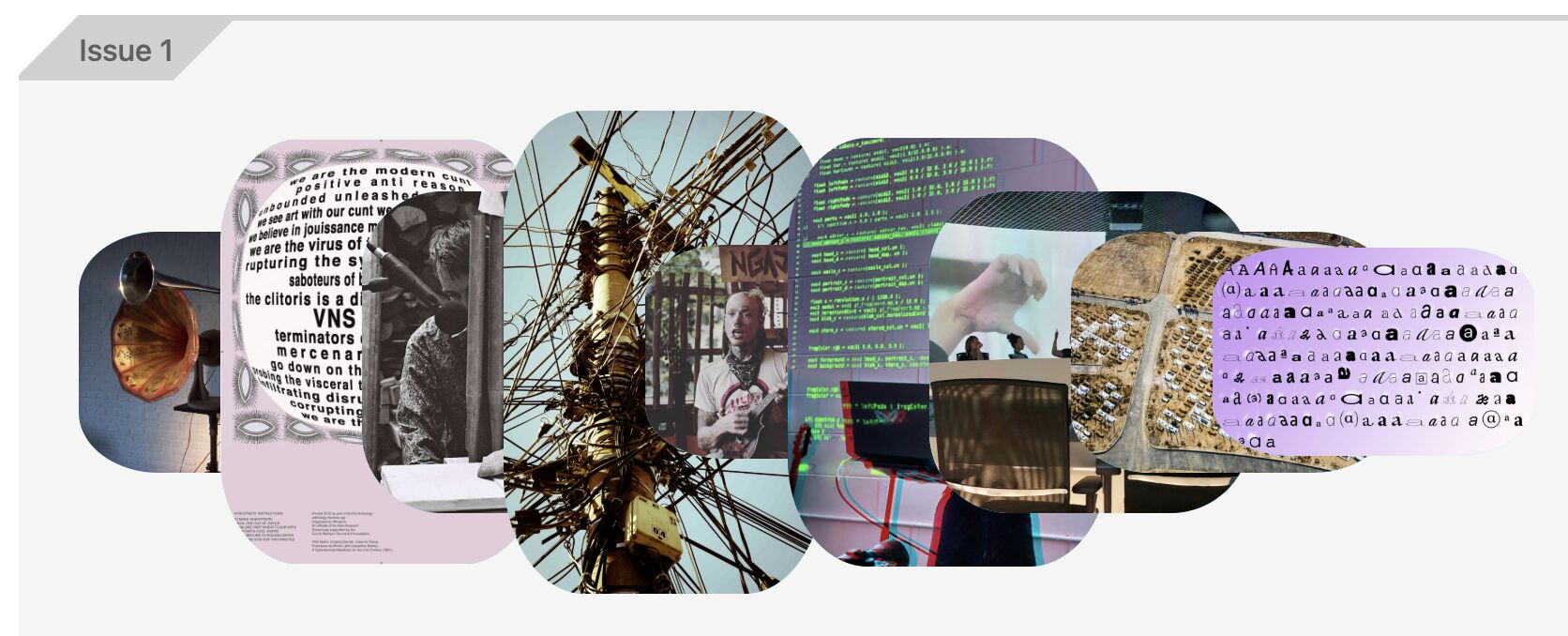
As venues disappear, costs escalate, and corporate systems increasingly mediate visibility and even modes of learning, experimentation reorganises itself elsewhere. The first issue of tekhnē begins from this shift, approaching DIY not so much as a subcultural identity but as a political infrastructure: a mode of organising the material and social conditions under which work takes place. DIY builds its own circuits of learning and production, often operating outside formal institutional frameworks. Knowledge circulates through situated practice rather than accreditation; spaces are assembled as needed; distribution proceeds through contingent and adaptive channels.
Forms of collective upkeep replace the mythology of individual authorship. Here, autonomy does not mean choosing among available options (deciding whether to upload your work to Spotify or Bandcamp) but intervening in the structures that determine how participation is organised in the first place (building alternative distribution networks rather than). In this sense, DIY also functions as a critique, asking: Can experimental culture remain experimental when its tools and channels are privately owned, paywalled, and optimised for extraction rather than exploration?
Running through this ethos is a sustained attention to law, governance, and the politics of the interface. Platforms organise activity through interface design and data capture, shaping user behaviour into legible and economically actionable forms. In response, DIY turns to strategic misuse: leaks, obfuscation, alternative protocols, counter-platforms. By exposing how systems operate and where they can be bent, it reclaims usership as an active position, insisting that technological relations remain open to collective reconfiguration.

MATERIAL ENTANGLEMENTS
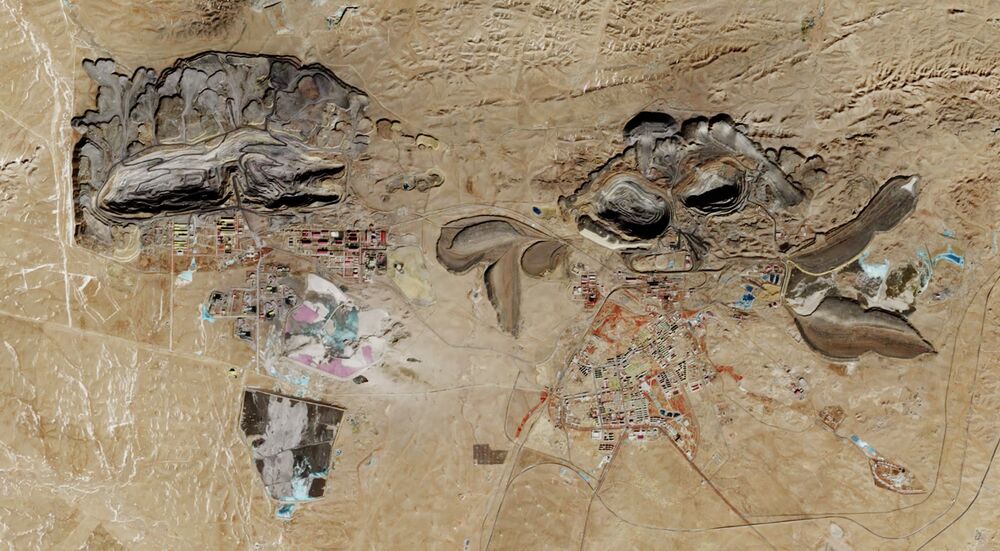
The idea of media as weightless (“clouds” storing data, “wireless” networks, “seamless” interfaces) has become increasingly untenable. Attention has shifted toward the dense infrastructures that make contemporary media possible: extraction sites, logistics chains, data centres, energy systems, zones of waste. The second issue of the tekhnē journal leans into this materialist turn, treating sound technologies as a way into the hidden politics of digital culture. Sound, often imagined as fleeting or immaterial, reveals rare-earth elements embedded in speakers, lithium powering portable listening, and silicon enabling mobility, while tying musical practices to global regimes of extraction. Dematerialisation becomes legible as a process rooted in metallurgy, obsolescence, and planetary cost.
By foregrounding materiality, tekhnē aligns experimental sound-making with broader ecological concerns in contemporary art and sound studies: extractivism, environmental justice, infrastructure visibility, and the responsibility entailed in making with, and through, resource-intensive systems. Refusing both moralisation and innocence, particularly at a present where “green” futures often coincide with mining boom, the aim is to insist on accountability. tekhnē treats cultural production as entangled (i.e. unable to stand outside the material systems that sustain it) and asks how sonic and technological work might respond once it recognises the material conditions that make it possible.
WORLD-DESIGN
Until recently, in cultural policy and arts institutions, accessibility has been framed in terms of representation and accommodation, directing attention toward inclusivity within environments whose basic organisation remained intact. Increasingly, attention has shifted toward the configuration of those environments: how norms become embedded in design, how participation is materially structured, and how infrastructures distribute capacity. tekhnē extends this analysis to the organisation of musical life itself: tempo and endurance, rehearsal structures and labour expectations, instrument design, spatial conventions, implicit behavioural codes. Do technologies reinforce or unsettle these defaults? What happens when accessibility operates as a design principle embedded in the construction of environments? When embodiment is recognised as a form of knowledge, and interdependence and care as cultural methods? What takes shape is a shift from inclusion at the margins to accessibility as world-building. From How do we include? to What becomes possible when we begin to think from difference rather than norm?
A parallel logic animates the journal strand dedicated to the resynthesis of tradition. Across anthropology, heritage studies, and sound studies, tradition is understood as historically produced through transmission and reinterpretation, rather than as a fixed inheritance. Tradition, like accessibility, becomes a matter of world-building, a continual reorganisation of cultural conditions. The Mutating Tradition issue approaches heritage as an ongoing process of formation, attentive to nationalist capture, exoticisation, diaspora longing, and competing claims to authority.
In a rightward political climate where heritage functions as an instrument of mobilisation, tekhnē foregrounds autonomous practices that maintain tradition as an open field of transformation. Technology participates directly in this process as a catalyst of both continuity and rupture: a means through which histories are transmitted, interpreted, and reactivated across time.
Taken together, these fields of investigation return to the question of futurity, acknowledging that technological development does not unfold along a single universal path but through multiple culturally situated trajectories. tekhnē resists singular narratives of progress, working to keep open the conditions under which different futures remain possible.