Text by Jacobo García
Our contemporary life is wholly embedded in screens; there is a screen on the treadmill in the gym, multiple screens in the car we drive to get there, and a screen on our wrist, where a clock used to sit. Our screen-equipped phone faithfully reminds us of how many hours we have spent looking at its screen; in reality, we spend even more time doing it.
Screens have become so ubiquitous, and our use of them so extensive, that I arguably can assert that we are tired of looking at them. Digital arts are determined by screens almost by definition; screens are practically synonymous with The Future, another fetish of the digital media and electronic music scenes. A question feels nearly compulsive: can we construct new narratives that reinvigorate the use of the venerable screen, narratives that compel us to look back at.
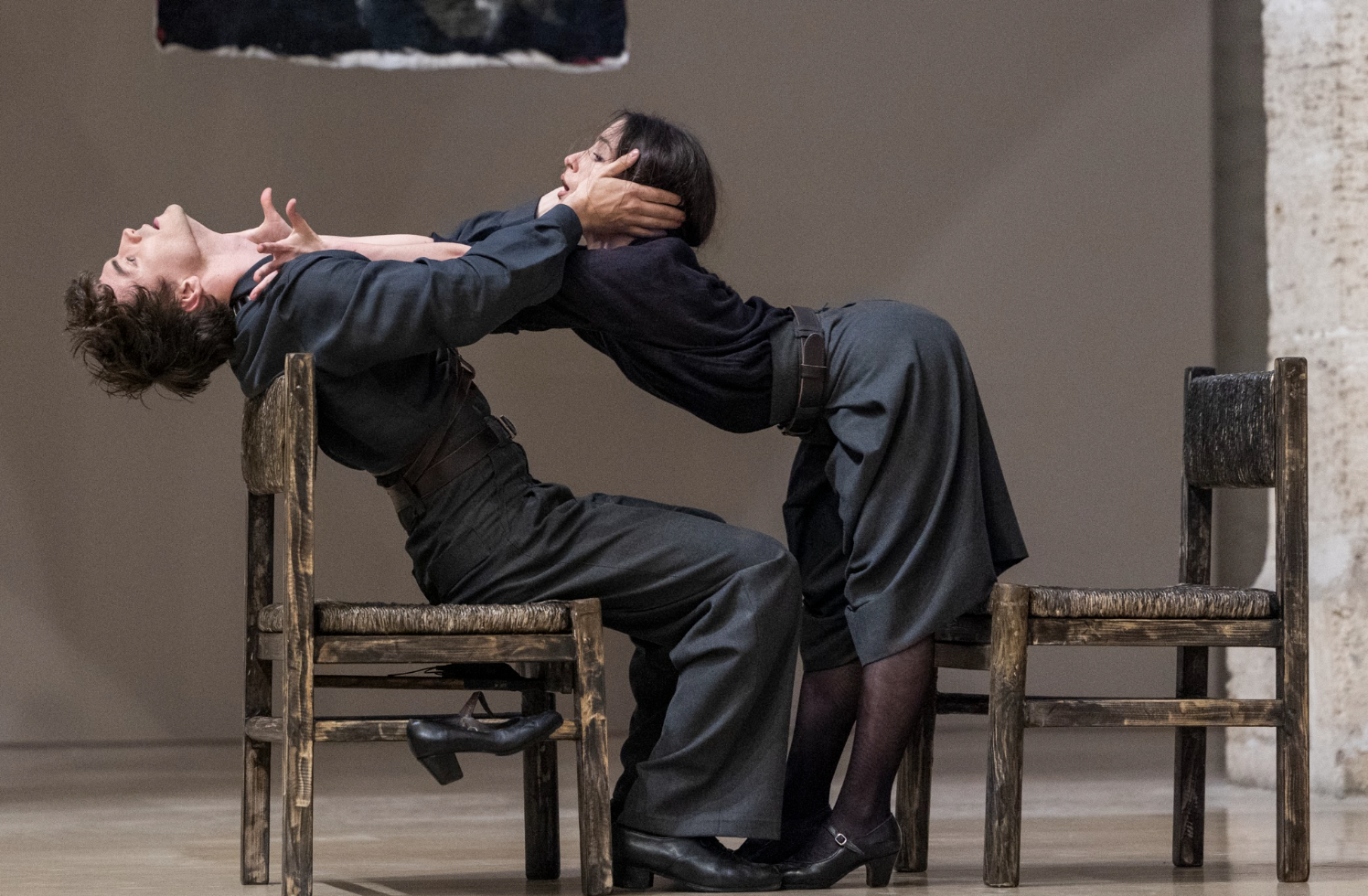
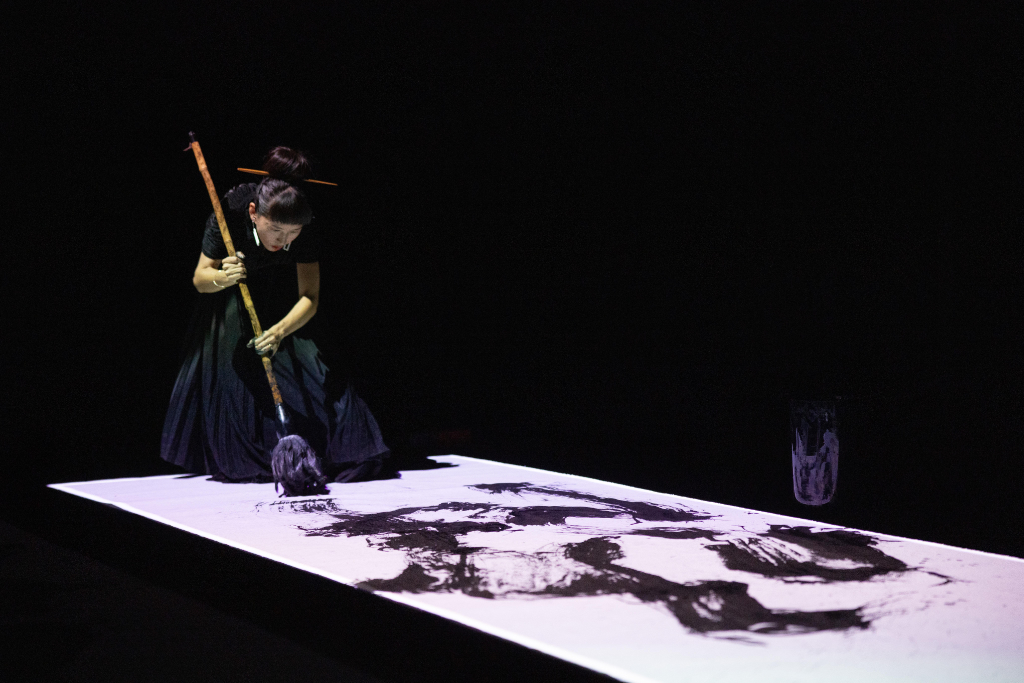
The seventh edition of L.E.V. Matadero, held in Madrid from September 18 to 21, offers an answer: the expanded stage – bridging the void between screens and audience, with performance as its steward.
SCENE 1 – Choreography Renders the Stage
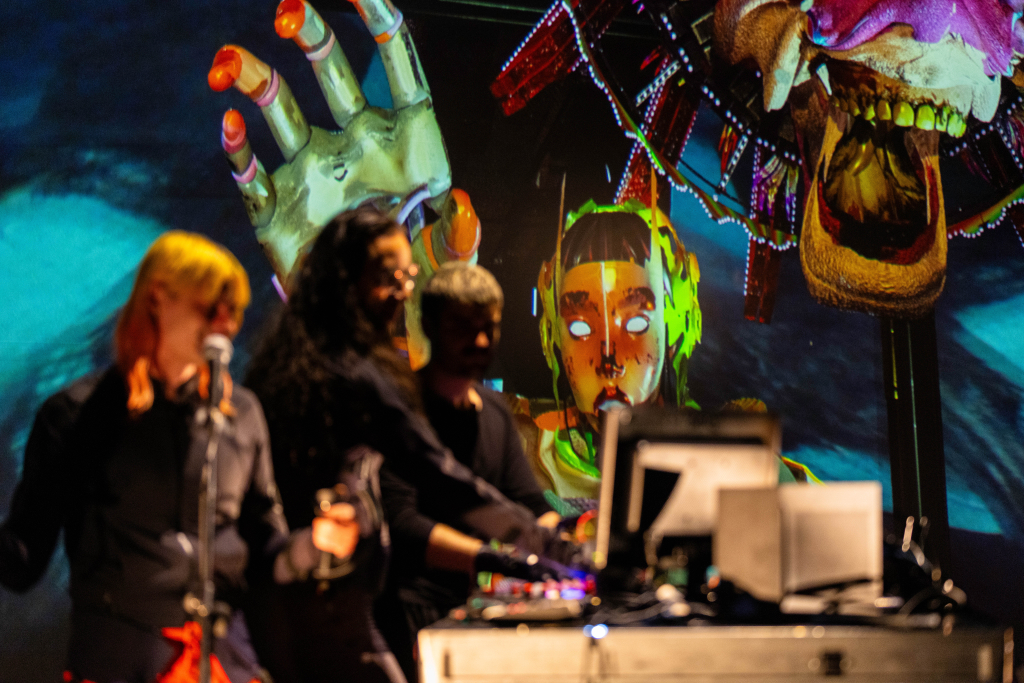
MP3 (Movement Played by 3) comes after an internship in the Centro de Residencias Artisticas (CRA) at Matadero Madrid. The project uses body movement as a device to generate and dynamise synthesised sound.
Using their background in contemporary dance, the collective formed by Arnau Pérez, Pau Vegas and Fernando Careaga delivered an idiosyncratic display, intermingling electronic rhythms, auto-tuned vocals and spoken word. Weird in the good sense, the performance excelled at convincing by delivering physicality and body-through aggression—the final garnish: a challenging blend of poetics and abstract dance movements. The combination felt thoroughly refreshing.
SCENE 2 – Corpo-reality in a Phygital Space
Nothing could embody the festival essence better than the 321 Rule by Team Rolfes and Lil Mariko. Hailing from New York, they presented a hyper-contemporary take on themes of digital serfdom through the modern gig economy, and the precarious hustle of one of the world’s busiest urban sprawls.
Employing real-time motion capture, on-stage actors played characters inside a video game, the protagonist – played by Lil Mariko – surviving as a memory bounty hunter in a cyberpunk New York. The music was frenetic, shifting from accelerated hyperpop to trap-metal – including Lil Mariko’s haunting growls – with every other hyper-stimulative genre in between, which contributed significantly to the immersion in the show’s themes. The standout performance worked on multiple levels; it could have been an old-fashioned theatre play or live radio show, but watching the performance unfold on the screen in real time gave it an ultramodern edge. At the heart of it all, Lil Mariko commanded attention—hustling, shining, slaying, and delivering comedic moments with perfect timing for a flawless show.
INTERLUDE – Murcof: Ambient as Thaumaturgy
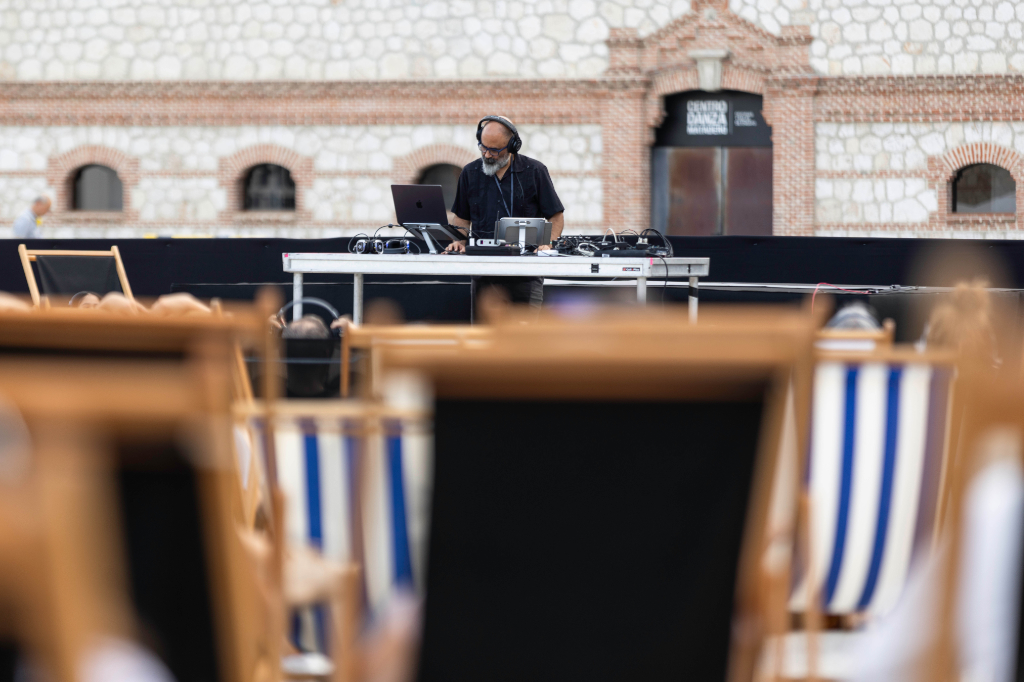
Murcof – the Mexican minimalist virtuoso – arrived at Matadero’s Plaza for a silent session, to present two works: The Etna Sessions and Twin Colour. What appeared to be an innocuous outdoor listening session quickly turned into something more menacing: clouds were arriving in the sky above us, as elegiac pads filtered through our ears. Swirling arpeggios as swirling dust clouds, then a sultry late-summer weather, it seemed like Fernando Corona was conjuring the fumes from the volcano upon us as he delivered his solemn sound.
SCENE 3 – The Postmodern-Classicist Dialogue
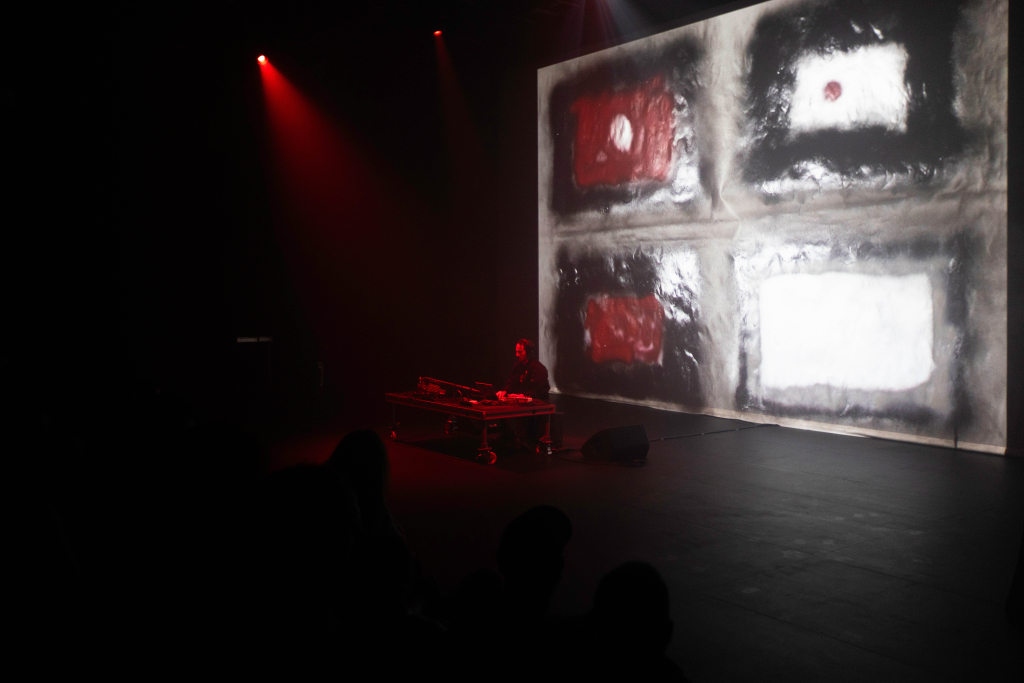
What once defined the modern avant-garde two decades ago now sits comfortably within the cultural establishment, even in experimental underground contexts. Against this backdrop, and signalling a more reflective, mature stage in his trajectory, Lorenzo Senni unveiled Canone Infinito Xtended, his take on the canon: a scholastic compositional technique, dating originally from the Medieval period.
Composers formulate canons using recursion; a motif is self-replicated with successive replicas starting after a given duration of time. Senni takes the concept ad-infinitum by using contemporary synthesis techniques: slowly opening parameters, detuning oscillators to create variation, and bit-crushing the loop until it disappears.
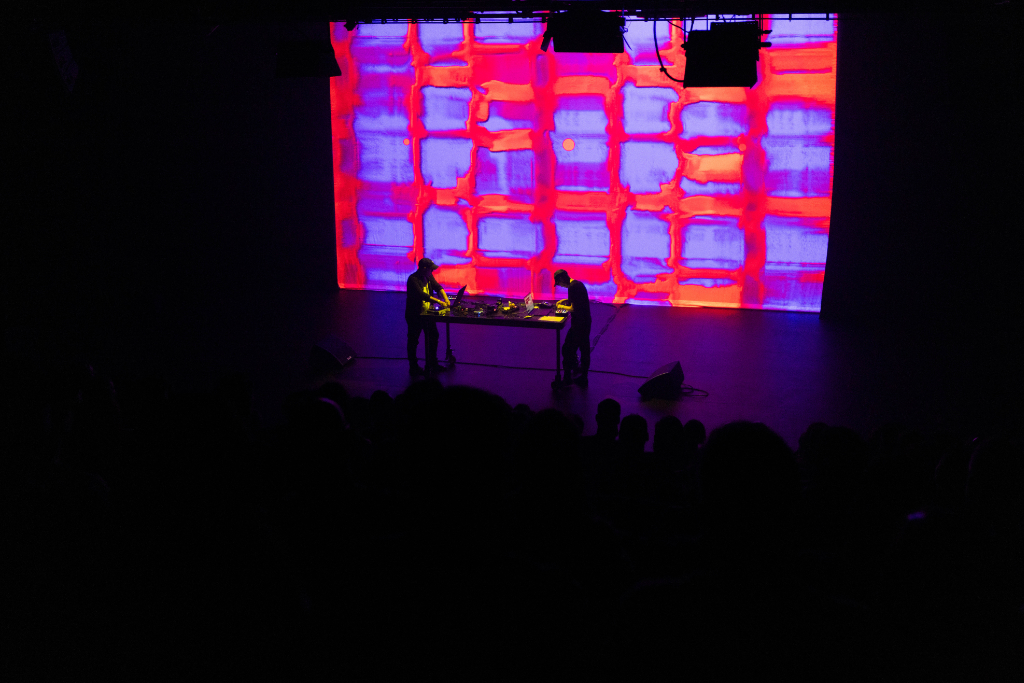
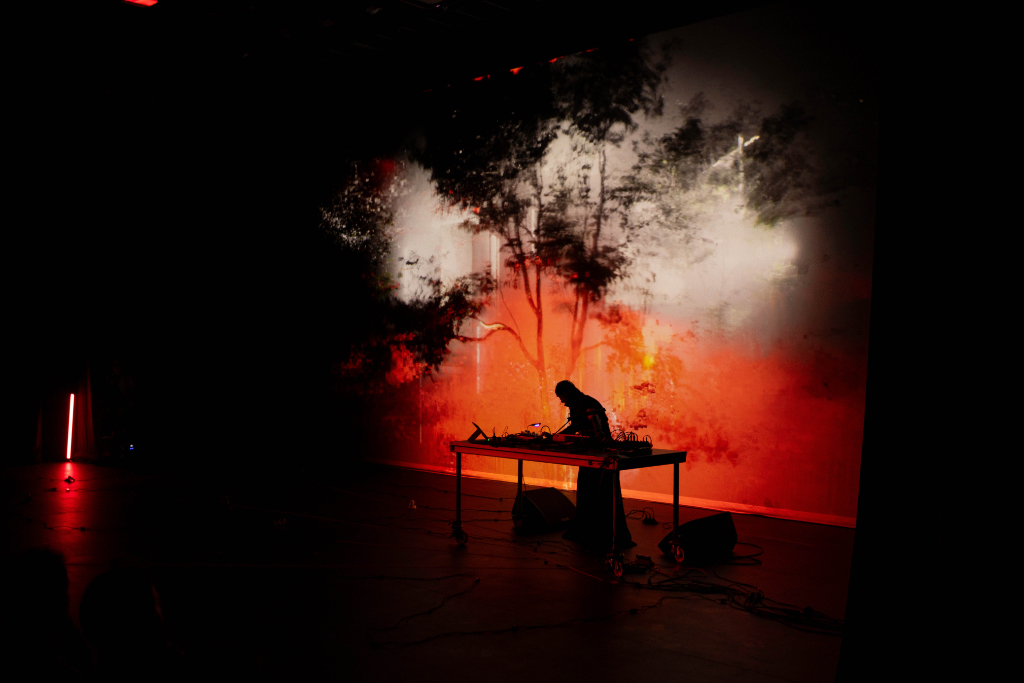
A nuanced performance, full of miniature details, anticipating the last musical bits of the festival, which were by their own right for Matthew Biederman & Alain Thibault, two classic modernists who delivered an assertive show, full of arpeggios, live synthesis and fat analogue sounds interlaced with a psychedelic, grainy visual backdrop. A testament to the fact that sometimes, nothing outperforms the class of two seasoned old-schoolers.
SCENE 4 – In VR, the Stage is Yours
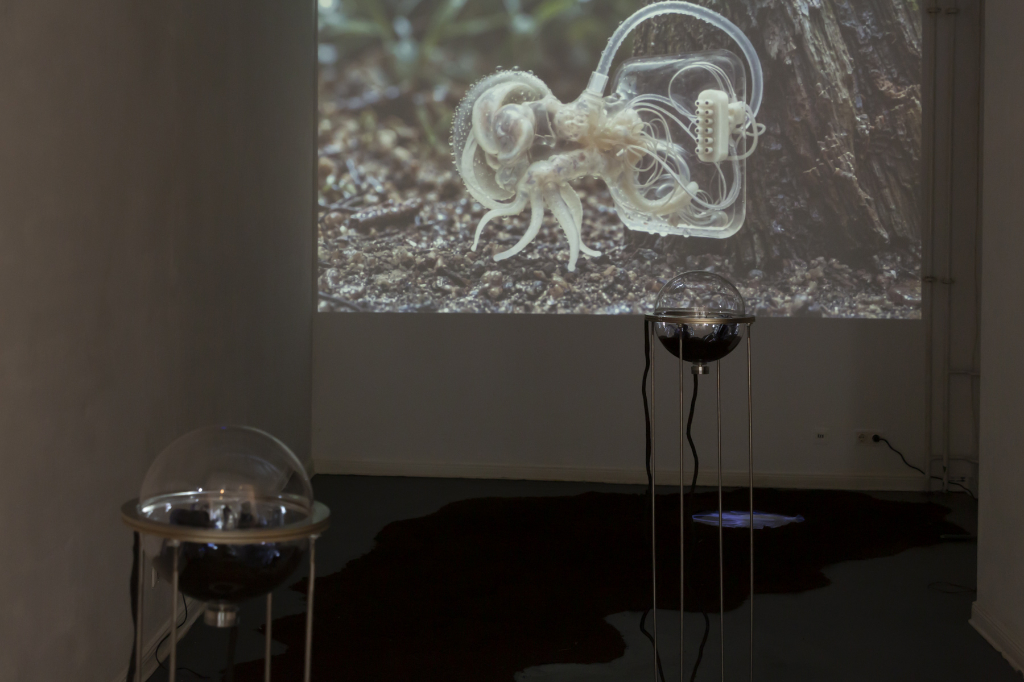
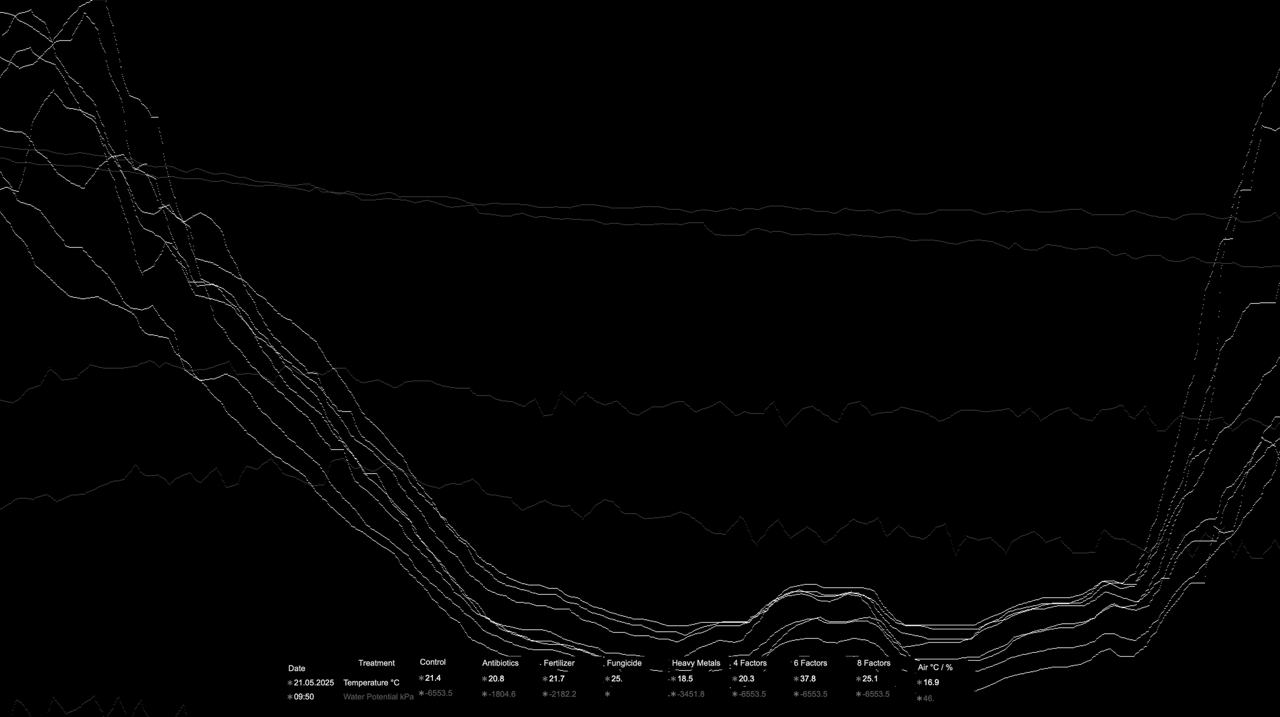
Installations – whether physical, digital, VR, MR, or AR – are essential elements of L.E.V. Matadero. They act as a connective tissue between performances while offering a set of experiences and narratives that place the audience at the centre of the performance. This edition showcased striking examples: from the raw, literal take on 1950s American racism (Noire, Stéphane Finkinos and Pierre Alain Giraud), to contemporary critiques of the contradictions of modern urban life (*****2025/…, Carlos Castaño), and to works of pure visual delight and playfulness (Liminal, LP Rondeau). In this ecosystem, the audience becomes an integral part of the act itself, co-performing alongside the artists and blurring the line between observer and performer.
EPILOGUE A Stage of Futures
L.E.V. Matadero has undergone considerable evolution since its inception. Originally conceived with a similar concept to its Gijonese sibling, after seven editions, it has evolved into something distinct: less raucous and more contained.
Yet this shift is not a loss — it trades sheer volume for precision, placing performance at the centre. The festival now functions as both a showcase and a laboratory, experimenting with new performative grammars for the digital age, where artists and audiences alike are invited to navigate, inhabit, and reshape the experience.