Text by Jacobo Garcia
Semibreve reached its 15th edition this year, a symbolic threshold that speaks of maturity: a festival that knows what it is, where it stands, and how it resonates within Europe’s experimental music ecosystem. Semibreve contemplates itself as a tapestry woven from multiple eras of sound: veteran voices and new experimenters, analogue craft and digital flux, ancestral technique and future-facing invention. This edition made that intergenerational weave unmistakable, a set of threads in constant dialogue, crossing time rather than observing it.
You may not be familiar with Hildegard von Bingen, also known as the Sybil of the Rhine. She was a German Benedictine abbess who produced an outstanding volume of work, serving as a writer, composer, philosopher, mystic, visionary, medical author and practitioner. Her work, vast, spiritual and insightful. Heinali and Andriana-Yaroslava Saienko presented Гільдеґарда (Hildegard), two pieces by the Holy Roman polymath, reinterpreted using modular synths and Ukrainian traditional singing.
At the monumental Basilica dos Congregados, the performance commenced delicately with Heinali’s drones, gradually unfolding alongside Andriana’s vulnerable, fragile, and hallowed grace. Her voice marches on, transforming fragility into power and evoking a resilience akin to that of the Ukrainian people in their current struggle against Russian colonisers; this does not appear to be unintentional.
Minutes pass in this hallowed ground, and at this point, the concert devolves into a semi-mythical ritual, the Ukrainian singing elicits ancient traditions, encompassing something beyond medieval Catholic traditions, something far, primaeval, shamanic and magical, something which belongs to a time when we didn’t worship a Christian god, but the winds, the fire, the moon. Heinali’s synthesisers humbly open the field for the presence of Andriana’s virtuosity to dominate the church, his drones subtly increasing in intensity when both musicians feel the need to move us closer to God. In an instant, music faded out, an ecstatic end.
Rafael Toral is in a remarkably lucid phase of his long career. After last year’s acclaimed Spectral Evolution, the Portuguese maestro returned to Theatro Circo to unveil Traveling Light, his latest exploration in sound. In it, Toral reimagines a set of Jazz standards, gradually diffusing their form until only traces remain – what might best be called ambient blues.
Accompanied by a diverse, multi-generational cast of musicians, Yaw Tembe (flügelhorn), Pedro Alves Sousa (tenor saxophone), Bruno Parrinha (clarinet), and Clara Saleiro (flute), from a whimsical onset, the show suddenly mutated into an ecstatic, comfortable dwelling of dissociative Blues. The successive interventions by the accompanying musicians served to reinforce the main message: the Blues is here, only blurred, drenched in coatings of effects.
Traveling Light reinterprets Jazz standards such as Solitude, a song originally composed by Duke Ellington and made famous by Billie Holiday in the late 1940s. The overall feeling familiar, the output abstract; the discourse innovative. The sophisticated use of feedback – sneaking into layers of texture – might appear sombre or gratifying depending on the song, but always evocative, carrying you to a far and familiar place: myths and legends of the desert blues. You could even feel Miles’ presence, in a silent way.
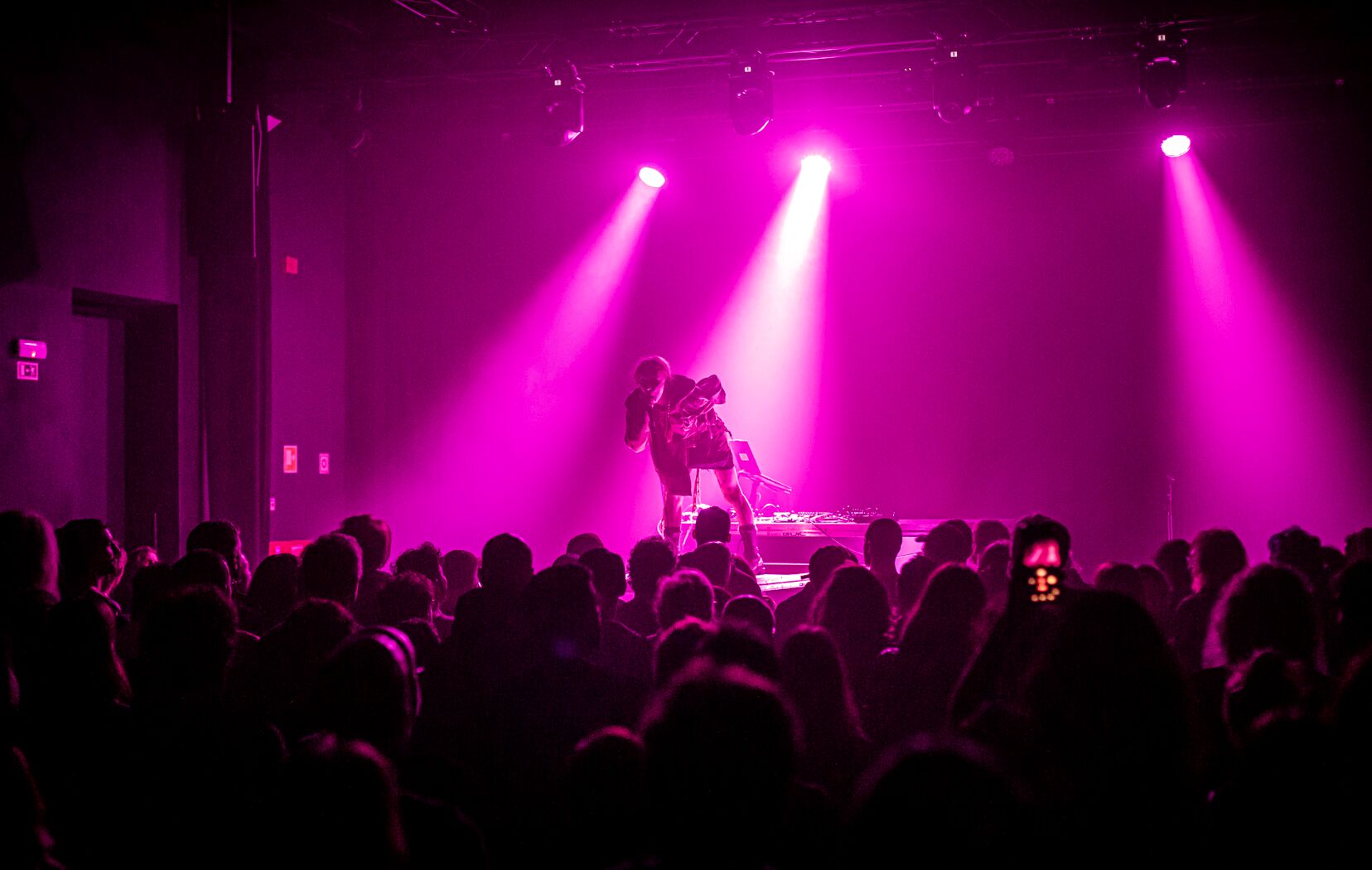
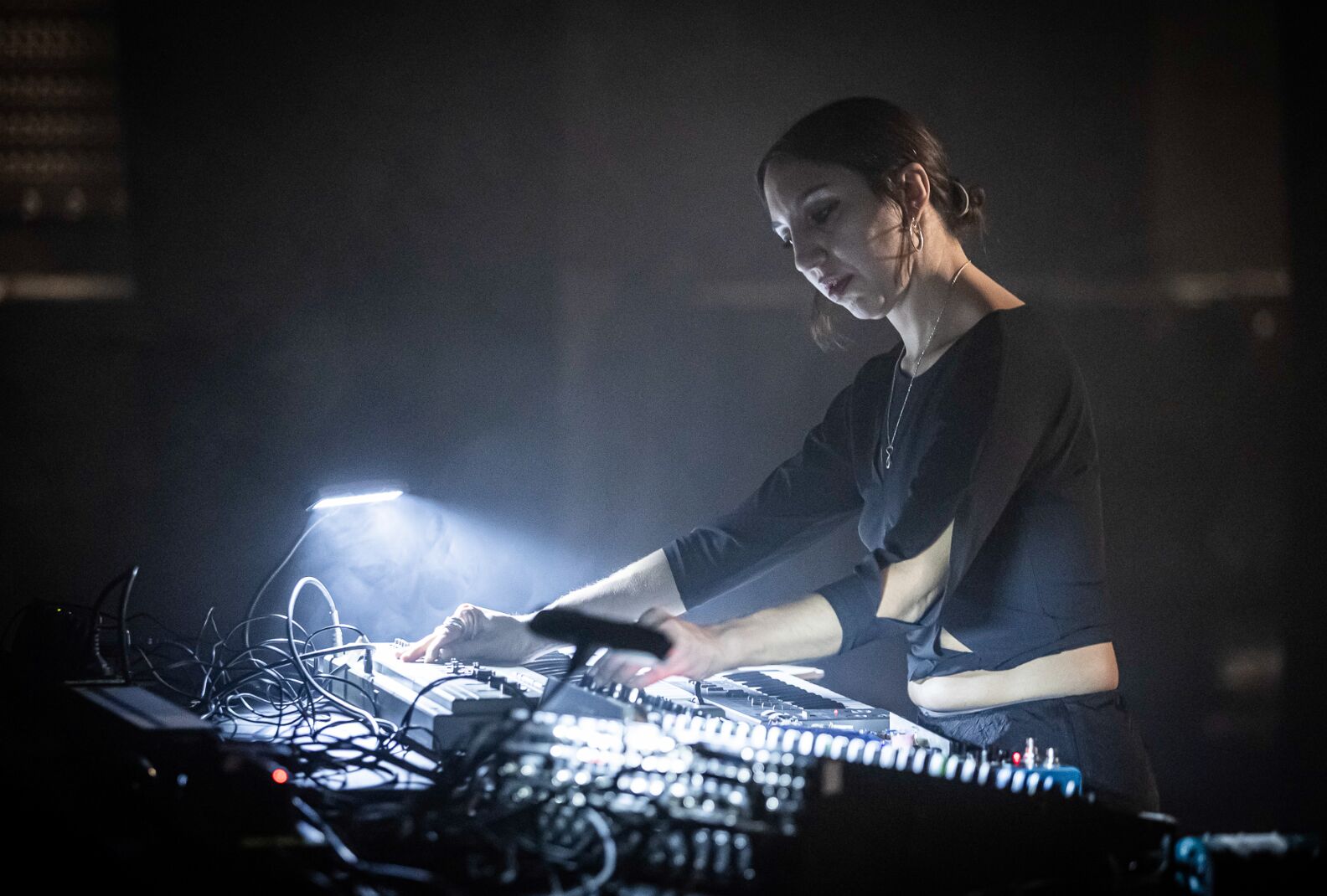
Afterwards, Marta de Pascalis and Marco Ciceri assumed the mantle left by Toral and his accomplices at Theatro Circo. Pascalis premiered her latest work, Tell Me the Sun. The album, still unreleased, delves into the vastness of the cosmos, tracing its slow rhythms of expansion and contraction. Resonance is the driving element of her show, the distinctive timbre of the instrument’s filter, here employed in an assertive, exuberant form, yuxtaposed with other sound waves: pristine, clean, still as a lake. In this contrast lies the beauty of de Pascalis’s work.
Aya is in absolutely magnificent form. I can attest to this, as it is the fourth time I have seen her perform in the last 12 months. Her shows are bewildering, unpredictable, and witty—a true tour de force in their own right. At gnration, she didn’t disappoint, unleashing the intense barrage of songs that inhabit hexed! – her latest album – a sincere, explosive and hyperactive telling of her life path.
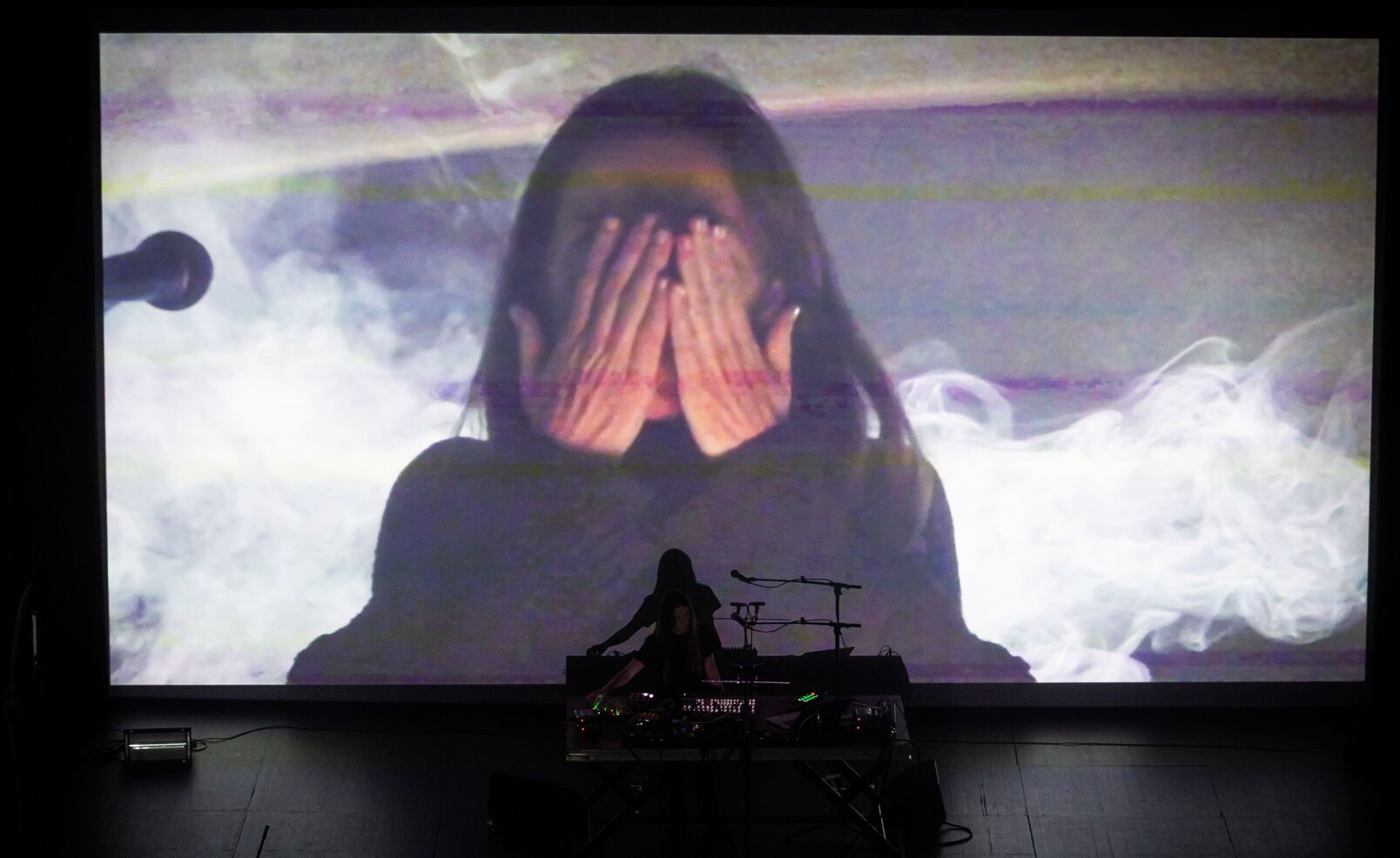
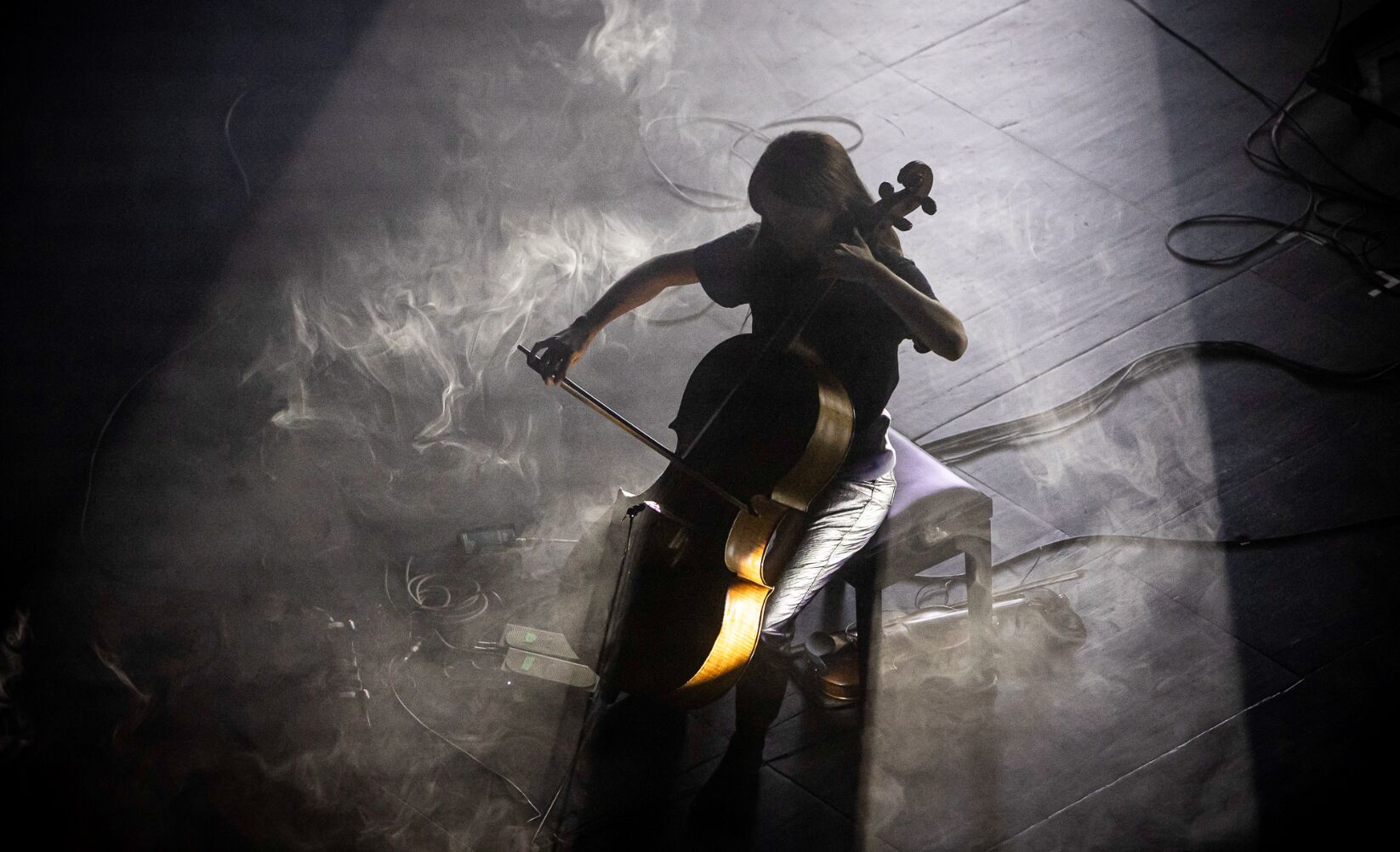
Lucy Railton began her concert by tracing the air with a cello bow, its strings hanging loose and broken, creating an undulating sound that was immediately recorded, looped and processed. Not a Word from Me is a joint commission by Semibreve and the ICA, conceived as a three-part work combining film, light, and sound. Rebecca Salvadori provides the visual component, while Charlie Hope shapes the lighting.
The exchange between the three media feels effortless, intimate, almost instinctive. Static-fed drones hover in the air, two narrow beams of light slice across Railton, distortion stretches thin like exposed flesh, voices drift in from nowhere, and strobing flashes tighten the pulse. On the screen, Railton’s own face, showing determination and fragility. The stage is reduced to stark minimalism, delicate, yet piercingly present.
Emptyset’s new show, Dissever, felt more like a boxing match than anything else. Their sonical minimaximalism entered Theatro Circo and knocked us out with a direct KO in the very first round. A hyper stimulative sound design that didn’t contain a single drum kick in the whole show, just distorting, churning and resonance obliterating our ears. A brutally hard, abrasive, punishing show of force, with relentless painful light, courtesy of MFO, this unholy pairing evokes feelings of a bleak expanse, a stripped-bare wasteland, a black hole that consumes everything and leaves only a vacuum in your mind.
It drains and drains and drains every last drop of humanity we may still carry in this post-capitalist underworld, where we wander in despair, slowly flaying ourselves, shedding our skin until only the marrow remains marrow that itself keeps peeling and peeling like a stone exposed to the relentless wind of the cruellest desert. It reduces us to carbon atoms, reminding us of the utter insignificance of our existence. I don’t think I can add anything else: Go, watch them.
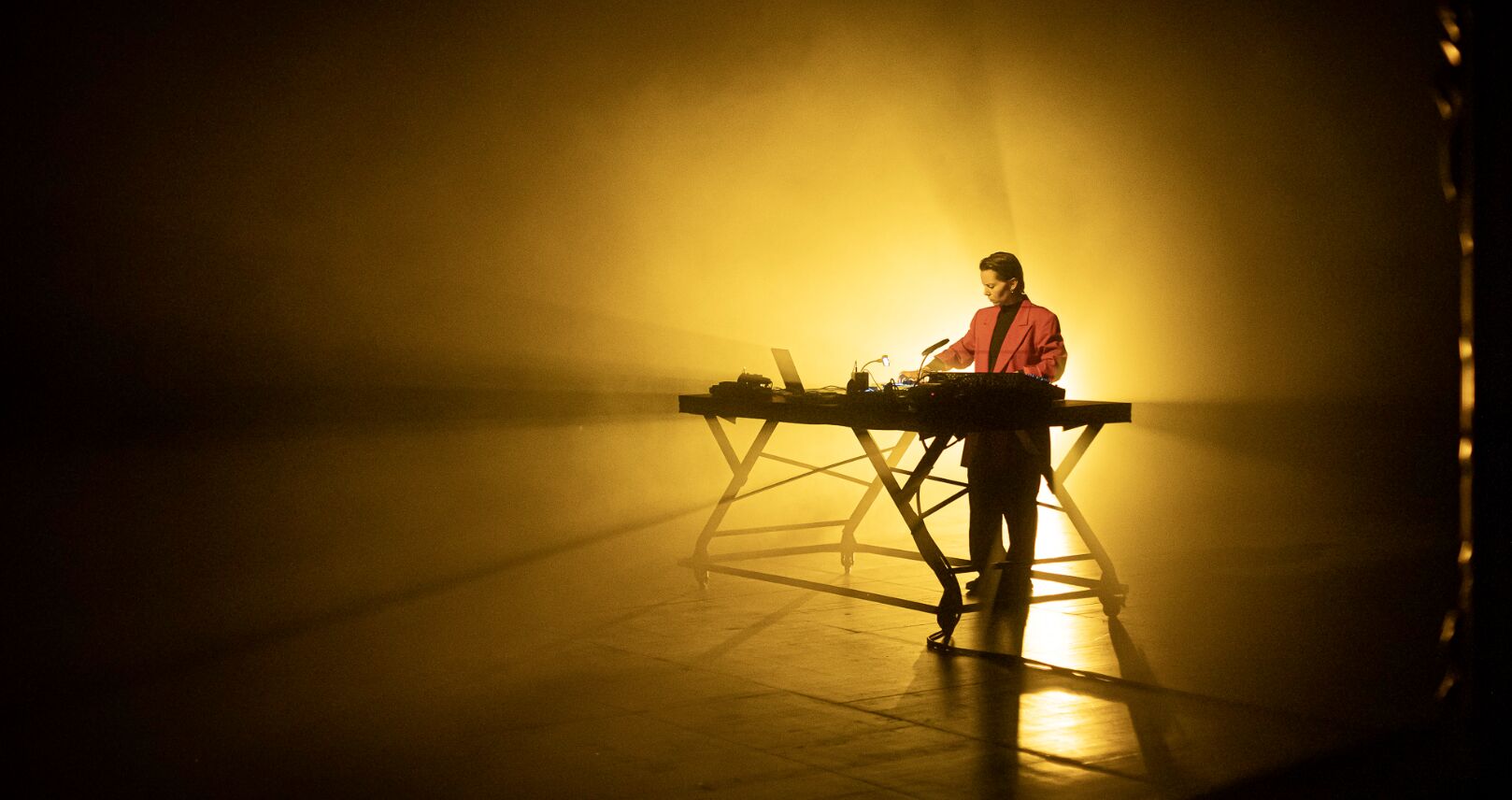
On Semibreve’s final day, I walked into Theatro Circo charged with anticipation for the rendezvous of Suzanne Ciani and Actress, a blend as unexpected as it is appealing. Two artists split by generations, by methods and tools, by aesthetics, sharing the stage, opening a dialogue between music languages, and worlds of sound.
In a time when shows are increasingly pre-fabricated, the performance focused on improvisation and live dialogue has acquired added significance. Sometimes, a game of guesswork, to figure out which artist was behind each sound: the rhythmic cacophonies, the dissonances and reverberations, the blurbs, blurps and bubbling textures, the beams of light.
Another notable element of the show was the quadrophonic spatialisation of sound, which conveyed the presence of each sound and the way they merged, playing with our senses to create impressions of milling machines, angle grinders, jackhammers, demolitions, and excavators. A special experience, abstract to its core, and as gratifying as it can get.
Grand River was invited to close the festival with the final performance of the program, a performance of her latest album: Tuning the Wind. The show began gently, introducing Mediterranean strokes, LFOs modulating alongside field recordings of birdsong and water streams, subtle crescendos, and a rising sonic pressure, evocative of distorted light and fractured clarity. Intensity was built through reverb and frequency layering. Stacked delicate sonic layers slowly giving rise to a substantial physical presence.
Has that sub-oscillator been there on the same note for 18 minutes – yes, I counted – and I have barely noticed it? Or has it subtly changed without me noticing? In any case, it doesn’t matter; it’s pure beauty, epic, in slow motion, what really counts. The show peaked with strings felt like medicine, a piano, a formal beauty that cleanses the soul. We descend: cinematic traces, we’re diegetic subjects in our own reality, streams of conscience through sound. The epic quality remains, then the intensity falls into an end, the grand finale has come.
Fifteen years in, Semibreve is no longer a snapshot of the Zeitgeist, but an ongoing process of lasting impact, one that extends not only to our memories and the power of the performances, but furthermore to the community built over these years. A spot in the year-round where we assemble to observe musical innovation embedded in tradition, in a captivating city in the northern region of Portugal.