Text by Dom Stevenson
Immersive listening, unwavering curation, and an intangible fabric of community –
the kind that only a late return to the Hotel Forum can reveal.
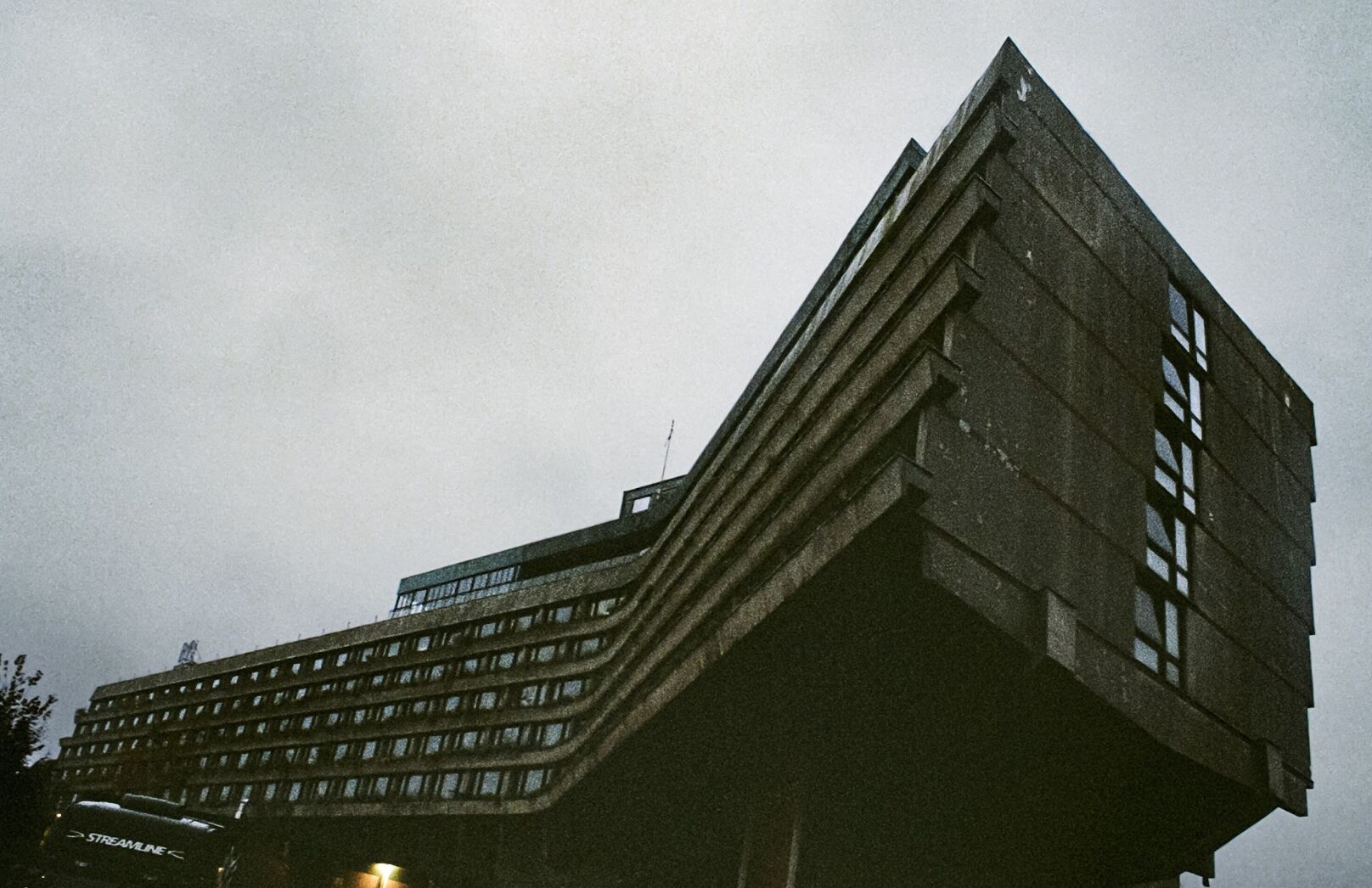
It was Saturday evening – the penultimate day of Unsound. I sat at a bar in Kraków around a small outside table with four others – a mix of familiar faces and recent acquaintances, carried along by the spontaneous rhythm of the evening. Conversation moved easily between recollections and observations, paced by regular trips to the bar and a growing anticipation for the night ahead – the final evening of shows at the iconic, retro-brutalist Forum Theatre.
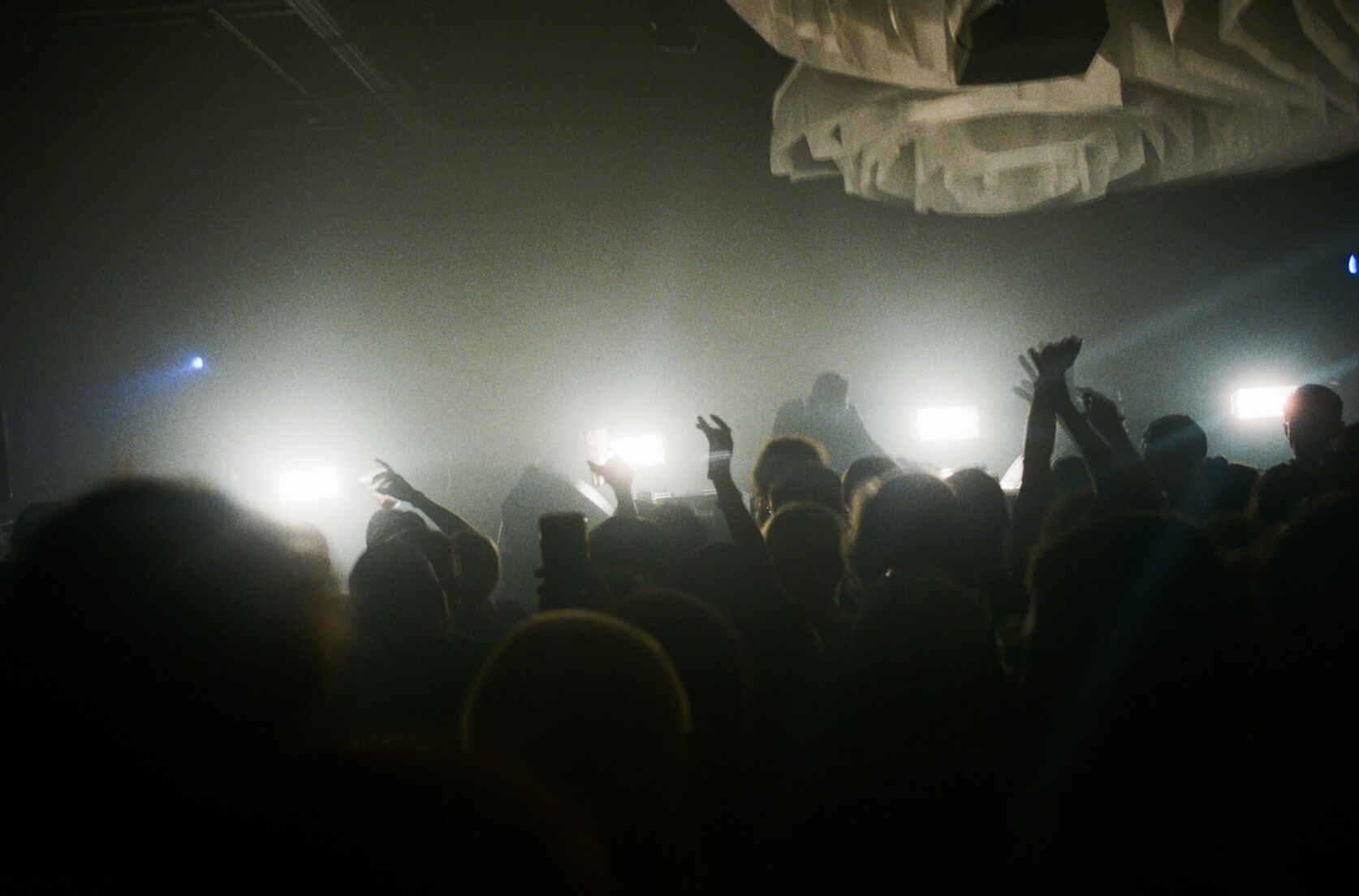
The conversation landed on tempo – that invisible framework of electronic music that often decides many elements of style. Within seconds, it had turned into a playful exercise in rhythmic precision, a kind of avant-garde Wheel of Fortune: a game of instinct and timing, of shouted numbers and friendly debate over where the categorisation of music begins and ends. Someone named a genre, another called its BPM, the rest debating whether footwork sits at 160 or gabber closer to 190. Spirited and precise – the kind of exchange only possible among those attuned to the finer nuances of musical form.
For me, this has always been a defining part of Unsound – a fine web of connection between artists and devoted listeners, all resonating in a week-long moment of alignment. Conversations often drift toward the abstract, tracing the edges of experimental art through shared curiosity and imagination – that rare sense of collective focus where everyone begins to feel fully in tune.
Perhaps that is why WEB felt so fitting for this year’s edition. In its 22nd year, Unsound has explored a multitude of themes, often condensed into single words – a method that leaves ample room for personal interpretation, which I tend to admire in its simplicity. Certain echoes persist across editions: the spirit of DADA lingers in the subterranean corners of Forum Theatre, SURPRISE emerges through the careful curatorial touches, and it’s no coincidence that my first Unsound was THE DREAM back in 2014.
It was at that edition eight years ago that I first met the group of people I’d stay with this time around – and four years since I’d last attended the festival. Walking the streets again felt slightly surreal: the same beautiful Kraków, yet surrounded by a quiet sense of renewal and change, with many events across the week and time spent in spaces that were new to me. An experience that might feel disorienting for some, yet exciting for others – and I counted myself among the hyped.
I arrived on Wednesday just in time for the opening party – so let me take you through some of my most cherished moments from the week, starting there, while we ponder whether an Avant-Garde Wheel of Fortune could ever fill the shoes of Unsound’s iconic karaoke night, notably absent from this year’s edition.
CRY – Relaxer & Kilbourne
To officially open the first club event of the festival, the first night took place at a new venue – SKY7 Jubilat – overlooking Kraków’s old town, offering panoramic views of the city from an angle I hadn’t experienced before. On arrival, the music carried a worldly energy, continuing Unsound’s tradition of platforming intriguing DJs from across the globe – this particular set emerging from the Latin club scene. The mood was bright and rhythmic, undeniably vibey – yet beneath it, I found myself craving something darker, more challenging.
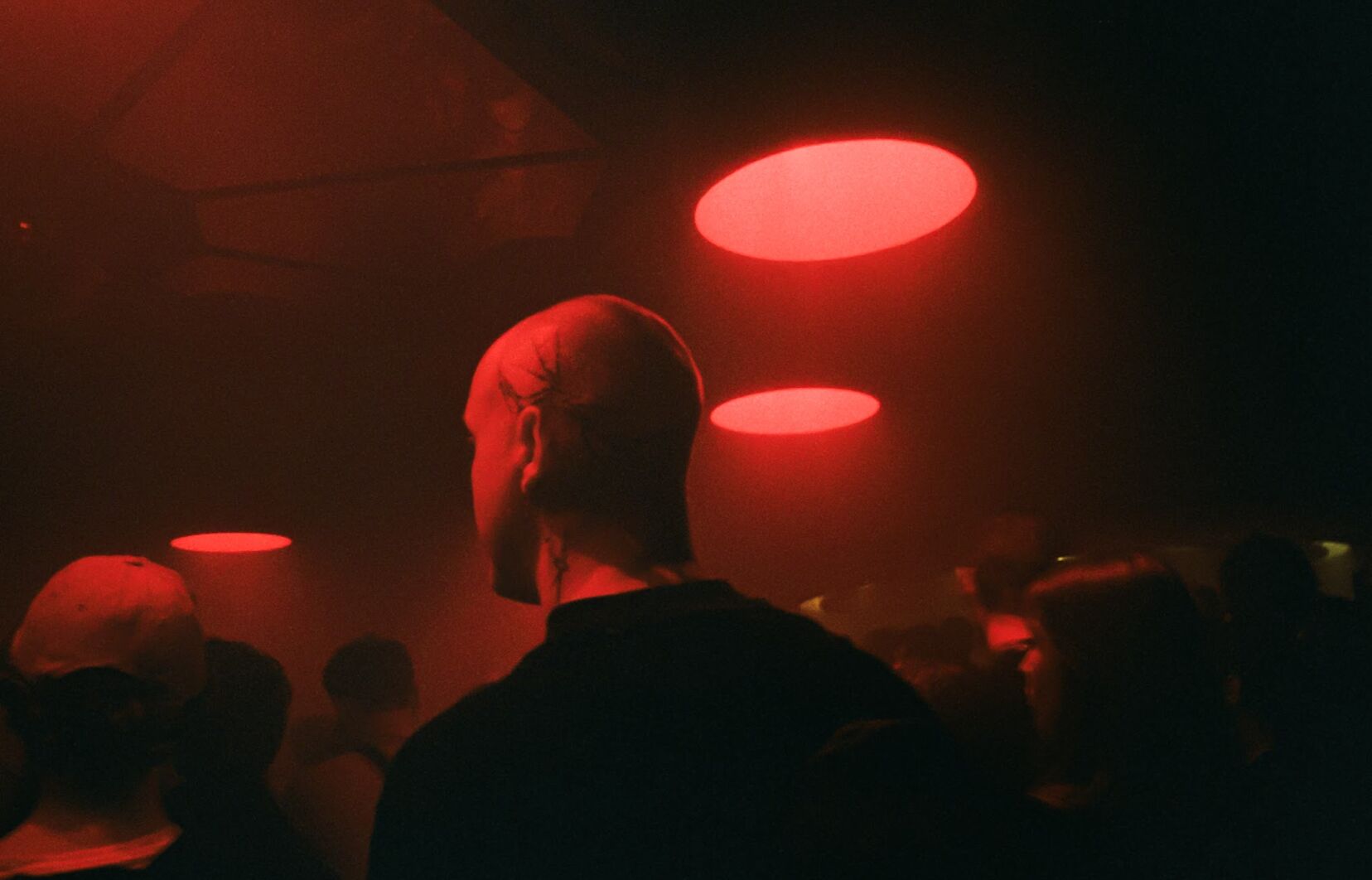
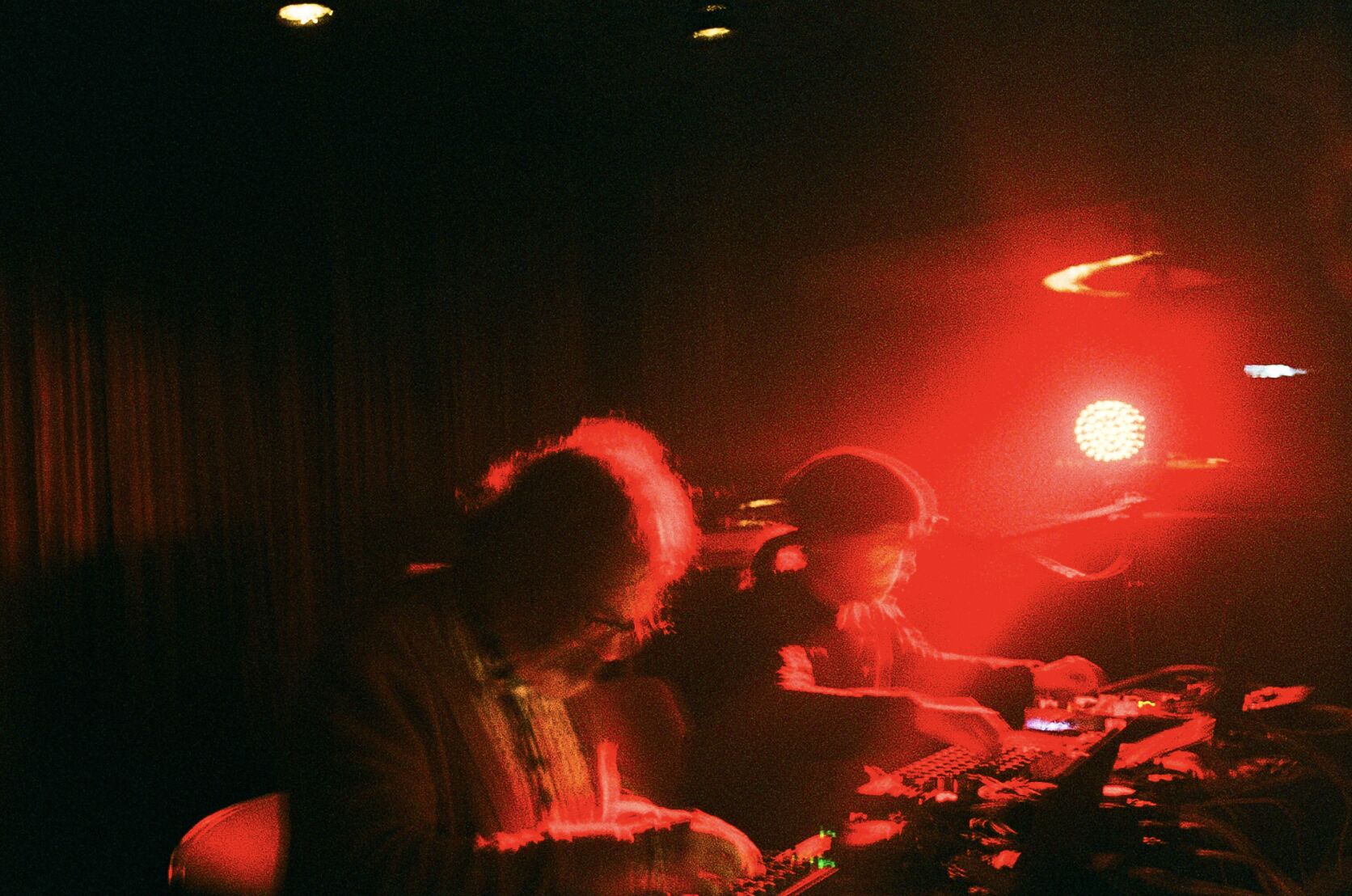
That moment arrived with CRY, the collaborative project of Relaxer and Kilbourne. Having not yet encountered either artist live, it was immediately clear, as they took centre stage – literally setting up in the middle of the crowd – that this was what I had been hoping for. I gave a quick, muted clap to the Unsound programming team.
The shift was exhilarating. The duo channelled the warmth and openness of the earlier DJs, energy-wise, but twisted it into something heavier, more rigid, and sonically intense. The most striking moments came with bursts of near-screamo vocals – Relaxer unleashing a high-pitched, hair-whipping yell straight out of teen angst-era emo, while Kilbourne countered with mischievous inward screams – a properly evil yet oddly cute hardcore counterpart, delivered with an ever-present cheeky grin.
This blend of styles felt entirely new to me in a live techno context, holding my attention from start to finish. The set unfolded with a strange, freeform logic within the rigid techno grids – evoking the chaos of bands like Giant Swan, or a version of Operant from a bizarre parallel universe.
Part of what made it so captivating was the sheer hands-on intensity of it all – the synced Octatracks, the tangle of cables spilling from an oversized stage mixer, and the sense that everything was being pushed to its physical and sonic limits as the crowd closed in around them. It was a fully immersive, somewhat epic way to kick things off.
FUJI|||||||||||TA & Ka Baird – “Where does fire end?”
The following day was slow and a bit rough, and we rushed to Kino Kijow after dinner to catch the start of FUJI|||||||||||TA & Ka Baird’s collaborative performance.
The venue was intimate and charming, though perhaps a touch too small for such a singular event. Without seats, we perched on the staircase at the far left of the stage – perfectly fine, given how immersive the set became.
This was the first time FUJI|||||||||||TA and Ka Baird had joined forces, commissioned by Unsound Festival for performances in Osaka and Kraków. Their work explored air and breath as sonic material, shaping texture, pressure, and rhythm into an ecstatic convergence of their distinct approaches.
The performance evolved from subtle, tactile beginnings into epic improvised peaks. Instruments, textures, and spatial dynamics intertwined as the set twisted unpredictably, each sound physically resonating with the space. The audience was drawn into a shared, hypnotic focus, witnessing something both meticulously crafted and vividly alive.
To the right of stage, FUJI|||||||||||TA focused on his self-built pipe organ, powered by a blacksmith’s pump. Its sound ran through multiple processing elements, creating a dynamic, otherworldly texture unlike anything I’d really heard before. For anyone unfamiliar with air shaped in this way, I’d highly recommend catching one of his sets.
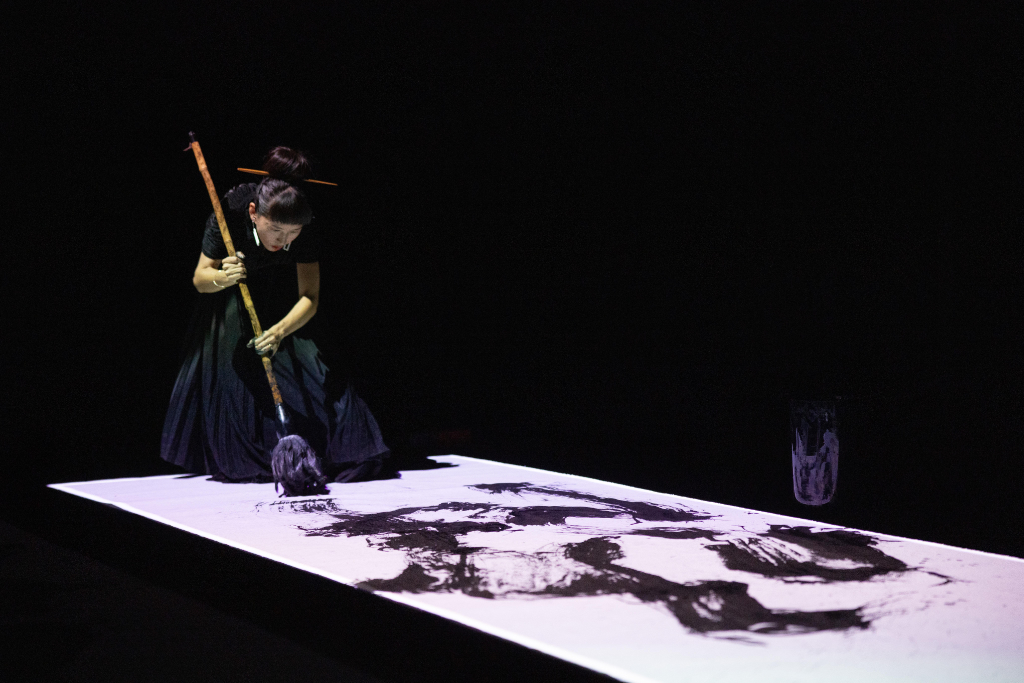
To the left, Ka Baird moved intermittently, her body patched with sensors feeding into a computer behind her. Often holding a microphone in each hand, or experimenting with a small collection of sound-making devices, she swayed abstractly and intentionally – using microphones as beaters on her body or to shape her voice.
Together, they blurred the line between music and movement. Traversing instruments and textures, the set became a living organism – tactile, physical, and unpredictable. Staccato air-vent stabs and abstract rhythmic progressions pulsed through the space, drawing the audience into a hypnotic, fully immersive experience.
Which brings me to Thursday – the opening night at the Forum Theatre.

Jim O’Rourke in conversation with Philip Sherburne + Wlodzimierz Kotonski remixed by Jim O’Rourke & Eiko Ishibashi
I took some time considering how best to write this section, trying to link the earlier talk to the evening’s performance – for me, they felt strangely intertwined. What stayed with me most was the clear rapport between Sherburne and O’Rourke, a thread that began in the discussion and carried through downstairs at Club 89, where I spotted Sherburne watching attentively from the crowd.
The talk for me was a highlight of the week’s discourse program. Two mavericks, each deeply experienced in their own realms, converging in the world of sound – it was a joy to watch them converse. Sherburne opened with a brief question and expressed his excitement for the discussion, and O’Rourke quickly carried the conversation across a range of topics and personal anecdotes.
Some highlights for me included his gung-ho beginnings recording other bands’ music, the ubiquity of John Fahey’s recorded catalogue – which only seemed to distance him further from the music – and the intricate nationwide loan system in American libraries. In a time before the internet and modern ways of accessing media, this network seemed to hold almost everything one could need, provided you could wait a few days for items to arrive from another location, and it was lovely to hear, in detail, how grateful he was for that.
There were many laughs, alongside some incredible insights into sound, individualistic creativity, and Jim as a person.
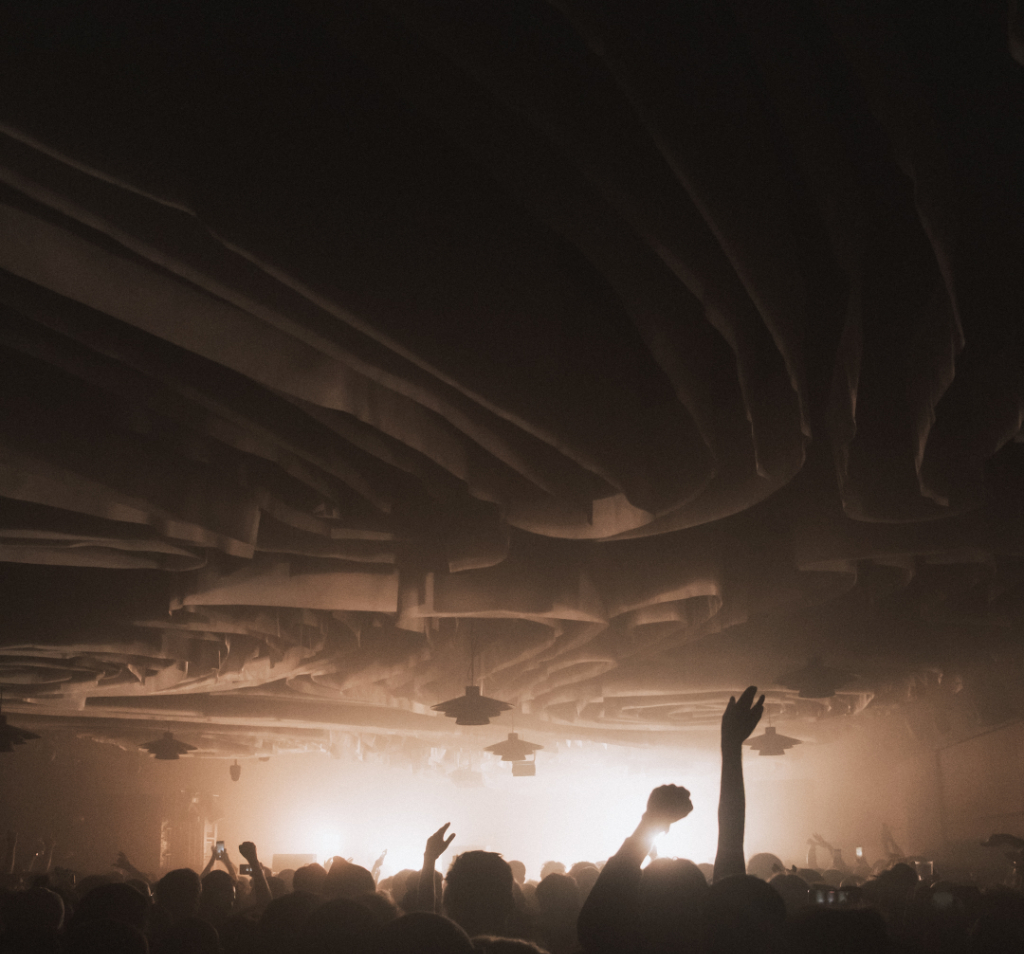
Later that night, I found myself slightly dazed by the sheer amount unfolding at once within the Forum, as multiple stages pulled focus in every direction. I drifted downstairs to Club 89 – maybe I’d find a booth – with no real set structure of how to govern the night’s schedule, or of what I was walking into.
Sometimes moments like that catch you off guard in the best possible way, shaping how you experience a performance. It’s one of my favourite things, actually – and that’s exactly what happened here.
On stage sat Jim O’Rourke and long-time collaborator Eiko Ishibashi, reworking a piece by pioneering Polish composer Włodzimierz Kotoński. Beautifully paced, strangely processed sounds trickled through the worn-down cylindrical walls of Club 89 – ghostly and precise, abstract tones floating through the room in a hazy, dream-like way.
As the performance unfolded, I felt transported to the early origins of sound art – musique concrète-like textures spilling from the stage, the red-carpeted floors and rows of booths evoking another era. It felt as though I’d stumbled into Cabaret Voltaire, right at the moment DADA was being born.
It was a perfect setting, accompanied by a performance that embraced space and chance, exploring sound with a sense of openness and spontaneity that drew the audience in completely, making this set one of the most memorable and immersive experiences of the festival for me.
Mohammad Adam
Another great moment came downstairs at Club 89, this time on Saturday, the final night of shows at the Forum Theatre – Mohammad Adam. It was my second time catching his set this year, having seen him at Berlin Atonal about a month earlier, so I was more than ready when the words “United we stand, divided we fall” emerged from beneath the thick gushes of smoke.
Unlike at Atonal, Adam remained unseen by most of the audience. Whether he was somewhere out of view on stage with a laptop, I couldn’t tell – and I found myself seriously questioning whether he was even at the venue at all. There was something mischievously conceptual about the idea that he might have simply triggered his set remotely, letting the audience believe he was physically present.
There’s something deeply intriguing about Mohammad Adam – from his near-total online anonymity (aside from a dense catalogue of releases on Bandcamp) to the way his music feels charged with political undertones. It carries a similar sense of coded commentary you might find in the work of Dean Blunt, where meaning hangs just out of reach yet feels undeniably present.
The performance was compelling to the point of fixation, though at times disorienting – long silences, extended fade-outs, and sudden shifts in mood left the room in a constant state of suspense. The set moved with restraint and emotion, underscored by an unspoken sense of protest – an artist clearly uninterested in playing by anyone else’s rules.
I believe in my friends, the only thing I need is revenge, looped again and again – a phrase that stuck with me as I pieced together the mystery of Mo, and everything left unsaid by the Leicester-based producer.
Special DJ moments
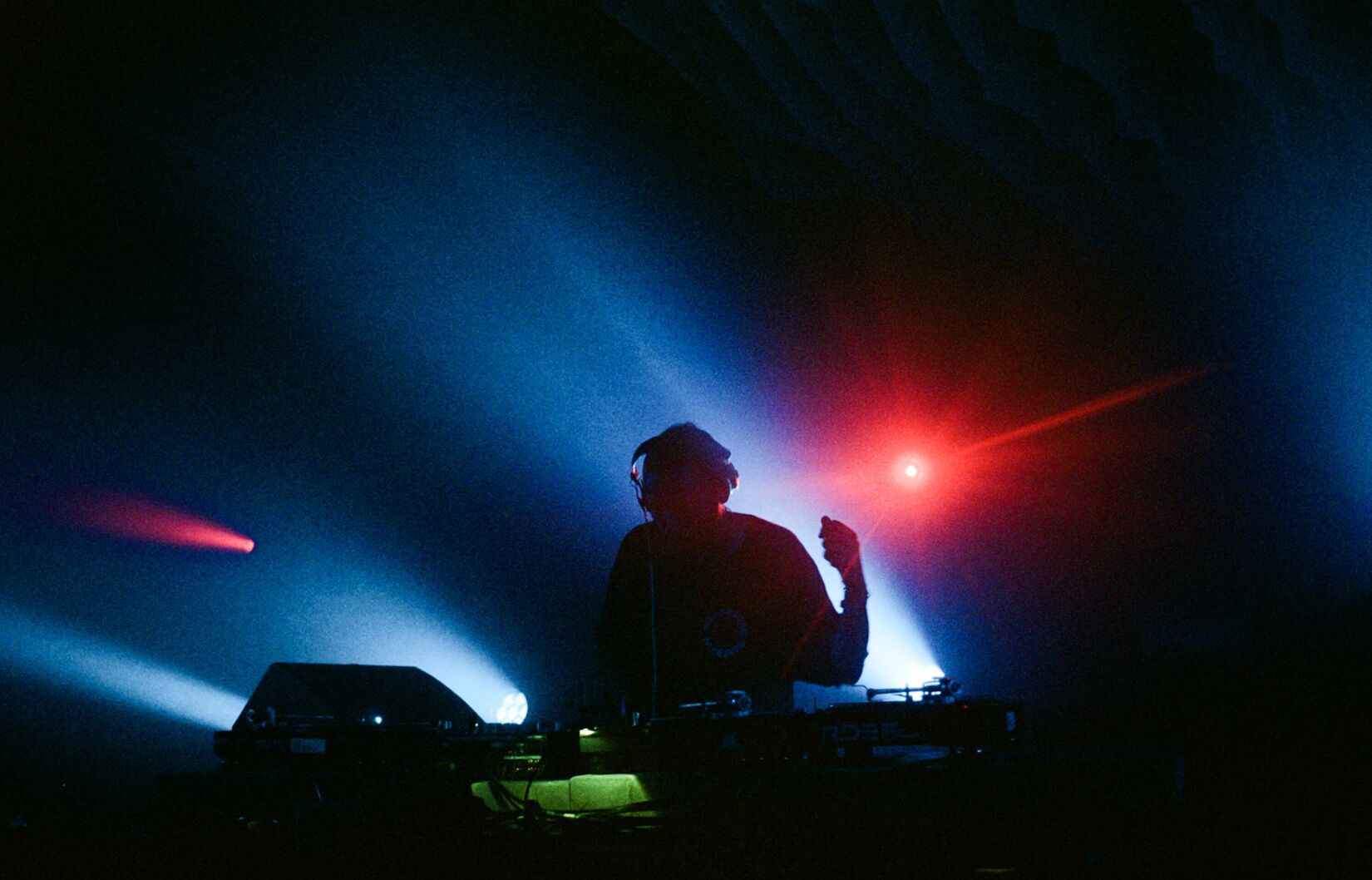
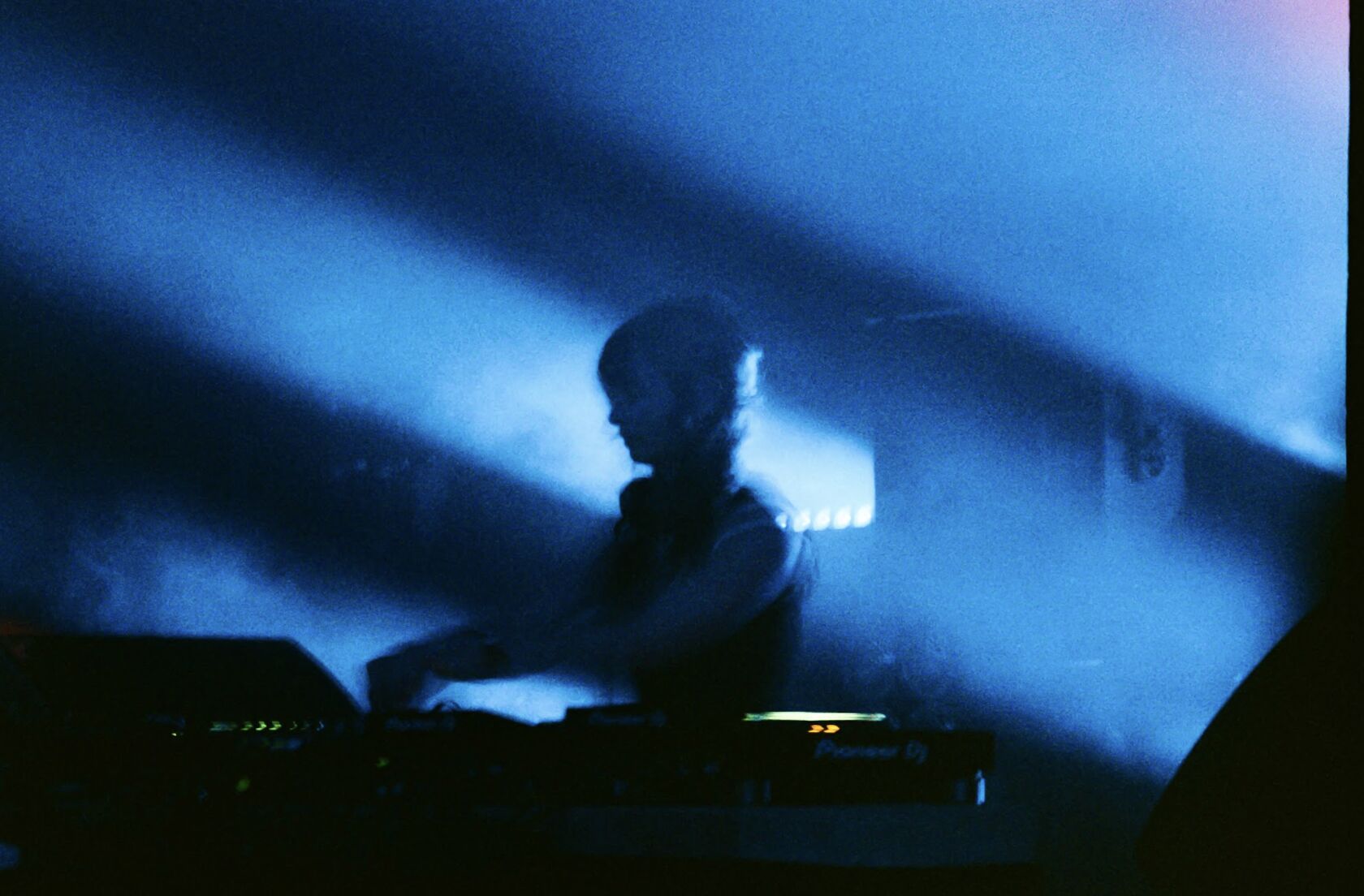
To quickly round up some of my favourite DJ moments – both sets came from the Forum weekend at the Ballroom stage. Djrum and Kia stood out, mesmerising me with the sheer craft and delicate skill of selecting and moulding music into one beautiful, immersive, and incredibly fun listening (and dancing) experience.
Djrum obliterated the crowd with a high-intensity, skillful collage of eclectic and exhilarating tracks – all played from vinyl. I spent most of the set in complete awe, captivated not just by what he was playing, but by the artistry of how he played it. It was groundbreaking DJing – immaculate track selection, delivered with a delicate, almost artistic touch, taking the audience on a journey through sound.
Kia performed one of the closing sets on Saturday, also on the Ballroom stage. Her set was smooth, intricate, and effortlessly cool – perhaps exactly what was needed after consecutive days of large-scale, multi-room audio intensity. Incredibly articulate and thoughtfully constructed, it was one of the most refined sets of the festival. Where others leaned into sheer force, Kia favoured tension and detail, building a performance that rewarded close, attentive listening. Each transition felt deliberate, and every track carried emotional weight through precision and control, perfectly rounded off by a beautiful roll into a final Hüda’s edit of Massive Attack’s Teardrop. It was quite epic.
So back to WEB and what it meant for me –
The networks between people: artists eager to engage, new collaborations forming, audiences returning year after year. It’s an event built around a community of music lovers – a journey where you can attend every show, party without pause, stay engaged to the point of exhaustion, and still somehow leave feeling refreshed and inspired.
For that, I thank Unsound – for its unwavering drive to push boundaries, curate fearlessly, and bring together like-minded, genuine people. It was wonderful to be back.