Text by Mila Azimonti
The electric dehumidifier I came for isn’t there. All that’s left on the shelf are plastic moisture absorbers, bright white and translucent, in three sizes. In London, mould turns up when the clocks go back, and on this Tuesday evening in November, in the Air Treatment aisle of B&Q, I’m not the only one muttering. Next to me, a woman stares at the gap on the shelf where the dehumidifier should be. We exchange the look of two people who’ve crossed the city for nothing.
Deflated, I try to cheer myself up in the Houseplants section. There are Monsteras for £22, poinsettias in plastic pots and, in the middle, a row of Kentia palms wrapped in red and green fairy lights, each blinking at odds with its neighbour. Between the kitsch of the display and the big-box-store fatigue, I zone out. Every flash lands on a drum hit, every pause on a gap in the record playing in my headphones, sent over by one of Artetetra’s two label bosses. An orchestra of ten festive Howea forsteriana, reading from the same score as me. Or I’m delirious. What with the palms and the heating on full blast, I start sweating under my puffer jacket. It’s hard to tell whether it’s the ceiling LEDs that are frying or the synths in my ears.
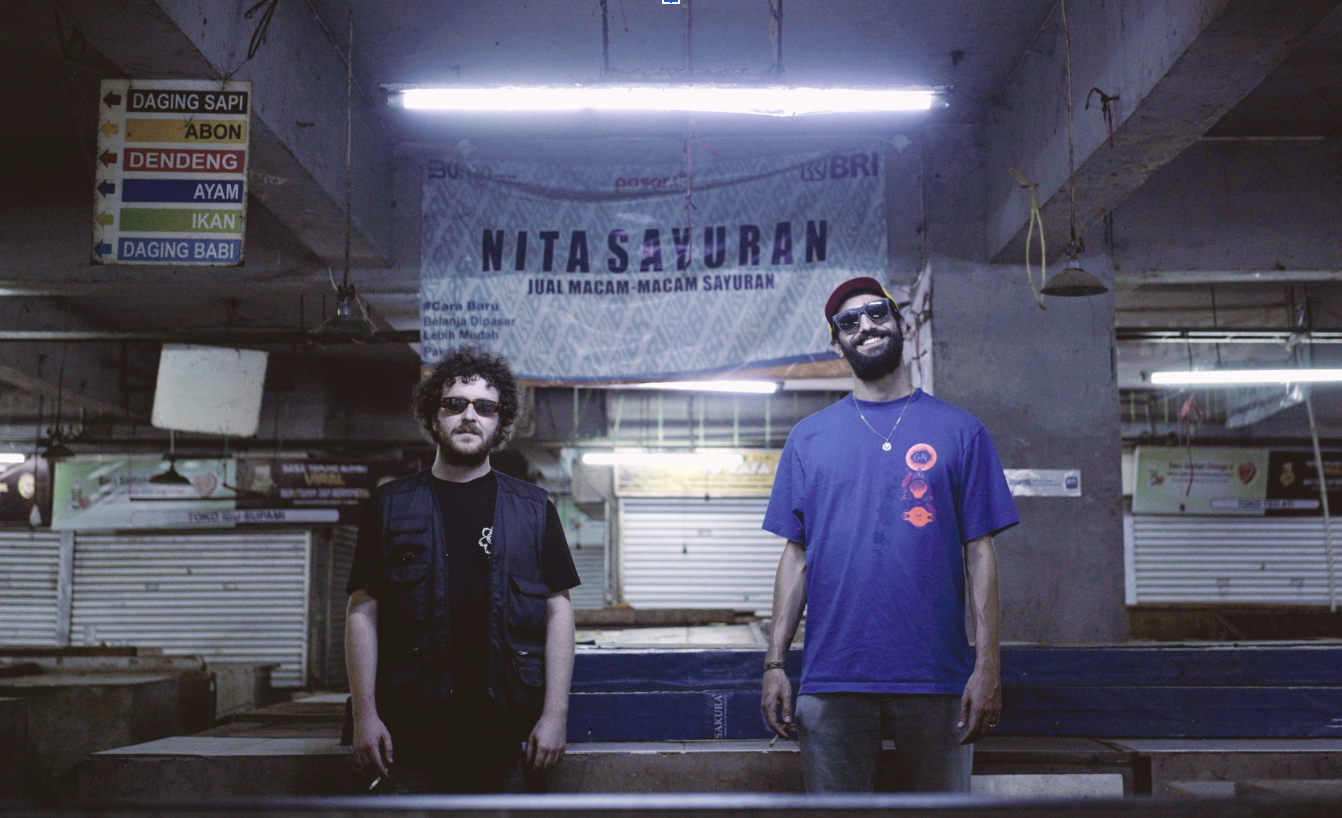
Saturday Night Dengue are the latest arrivals on Artetetra: a duo from Jesi, Alessandro Guerri on electronics and Andrea Pasqualini on drums, whose debut came out earlier in November, co-released with Bloody Sound. Seven of the record’s eight tracks are titled with strings of illegible glyphs. Asked to decode them, ChatGPT replies: “Undecipherable.”
Jesi, incidentally, isn’t far from where the label began. Artetetra is run by Luigi Monteanni and Matteo Pennesi, both from Potenza Picena, a small town on the Marche coast they mention often and smugly. The label is celebrating a long tenth anniversary, with some sixty-plus releases to date. Mostly on cassette, the catalogue spans artists scattered across Indonesia, Argentina, the United States and the province of Macerata.
A key concept for decoding Artetetra’s world, on the other hand, is exoticism. Not so much an imagined place, they explain, but a feeling: what happens when a sound reaches us as foreign or alien. Now that everything once far away is within reach, and there’s no real “elsewhere” left, they go looking for that feeling mostly online, sourcing internet folklore in the most forgotten corners of the web, mapping out a “Fifth World” along the way.
Every Artetetra release opens a portal onto a universe that contains others. For this feature, rather than describing the label from above, I wanted a format that respected their worldbuilding, and the result is, inevitably, labyrinthine. We asked some of the label’s artists to pick a favourite release from the catalogue and act as our guides. Weird Shit U.S.A. 2 leads us to Kink Gong, New York City Chapters to Rainbow Island, Rainbow Island send us back to them, and the path winds on like this for seven stops, each one opening onto the next. At every crossroads we find Luigi and Matteo, answering questions like riddling gatekeepers. Don’t expect a complete map. The Fifth World can only be drawn by gathering clues along the way, and nobody knows where its edges are.
If you’d rather explore in person, part of the ecosystem surfaces at The Horse Hospital in London on 6 December, with Babau (Luigi and Matteo’s own duo), Nicolas Gaunin and Too Early/Too Late.
1. Weird Shit U.S.A. 2 picks
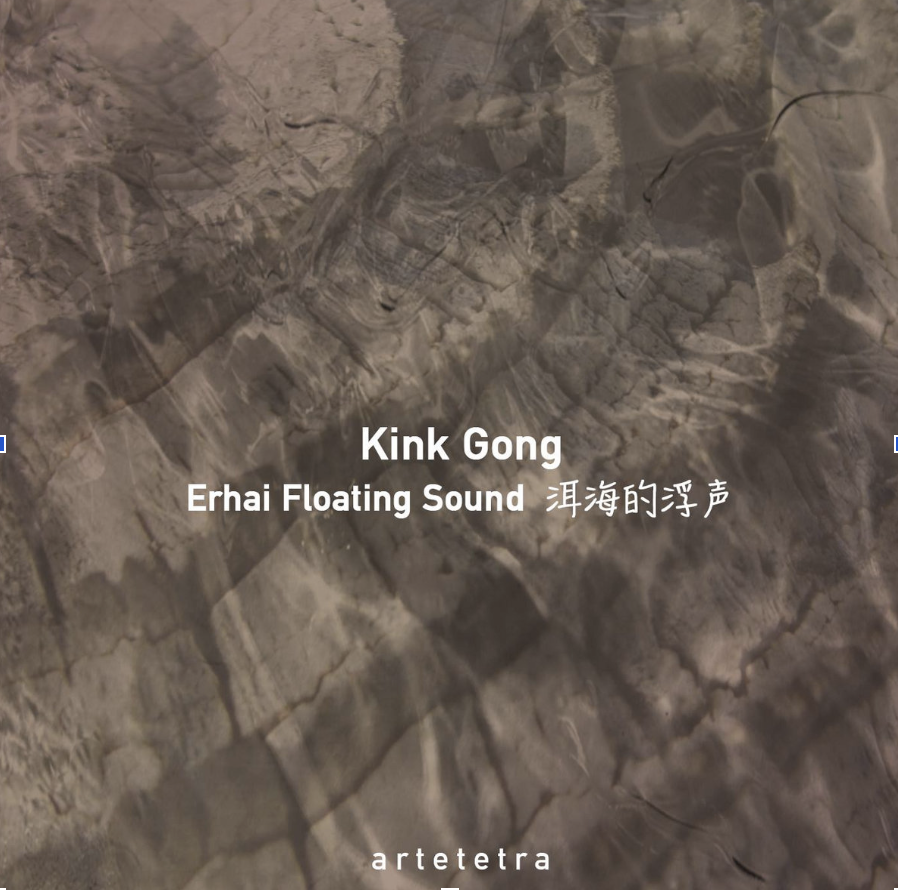
If this is true: “Erhai Floating Sound” is a spatialized live sound performance which took place on Erhai Lake in Dali, Yunnan, China, in May 2010, involving Laurent Jeanneau aka Kink Gong and Julien Claus. The electronic sounds were produced on a small fishing boat inside the lake connected by underwater cables to other four boats, each of them carrying a speaker.” Then: I think about this performance, how it sounded on the water, the effect of buoyancy on the decisions being made or how drift can affect one’s mindset in a landscape in a strange land. It is cool that music doesn’t need to be translated, and albums like this just ask you to listen.
Artetetra has a very global flair, with releases from artists based all over: from Bandung to Curuzú Cuatiá, from Huston to Potenza Picena. For the listener, it’s sonic tourism without ever leaving the couch. Which also makes it sound like you two are constantly on the move.
Yes! Artetetra was actually born as an “on the move” label. When we started all of this, it was because, in 2014, Luigi was relocating to Berlin and we would not have the same amount of time to rehearse as Babau. We somehow were about to have an EP out that we did not really know who to send to, and around the same time we were beginning to organise some small events in our tiny town on the Adriatic coast of the Marche region, which also included other artists who, at the time, did not have a huge outreach (believe it or not, one of these was Nicola Tirabasso aka Visio).
Our region, despite somehow being part of the no-one-knows-part-of-Italy, on the other hand, was really active, particularly when it came to bands, labels, collectives and festivals that were pushing loud band music ranging from noise rock and metal to no-wave and post-punk. Very un-Artetetra, we know. This included the Onlyfuckinglabels festival in Macerata, where some of the main Italian underground labels would meet every year. Therefore, we took the opportunity and decided to understand the discographic world by founding a label.
Yet, the province does not allow the same kind of exchange with the rest of the world as, say, Milan or Rome, so from the onset, we started being in touch with musicians from everywhere our optic cables could reach. We weren’t moving, but our mouse cursors and digits on the keyboard certainly were. Since then, we have moved a lot and let these new places and artists become part of our world, but this has happened just as much through the digital psychogeography we were developing by surfing the internet from our bedrooms more than ten years ago. We’re internet tourists par excellence!
2. Nicolas Gaunin picks
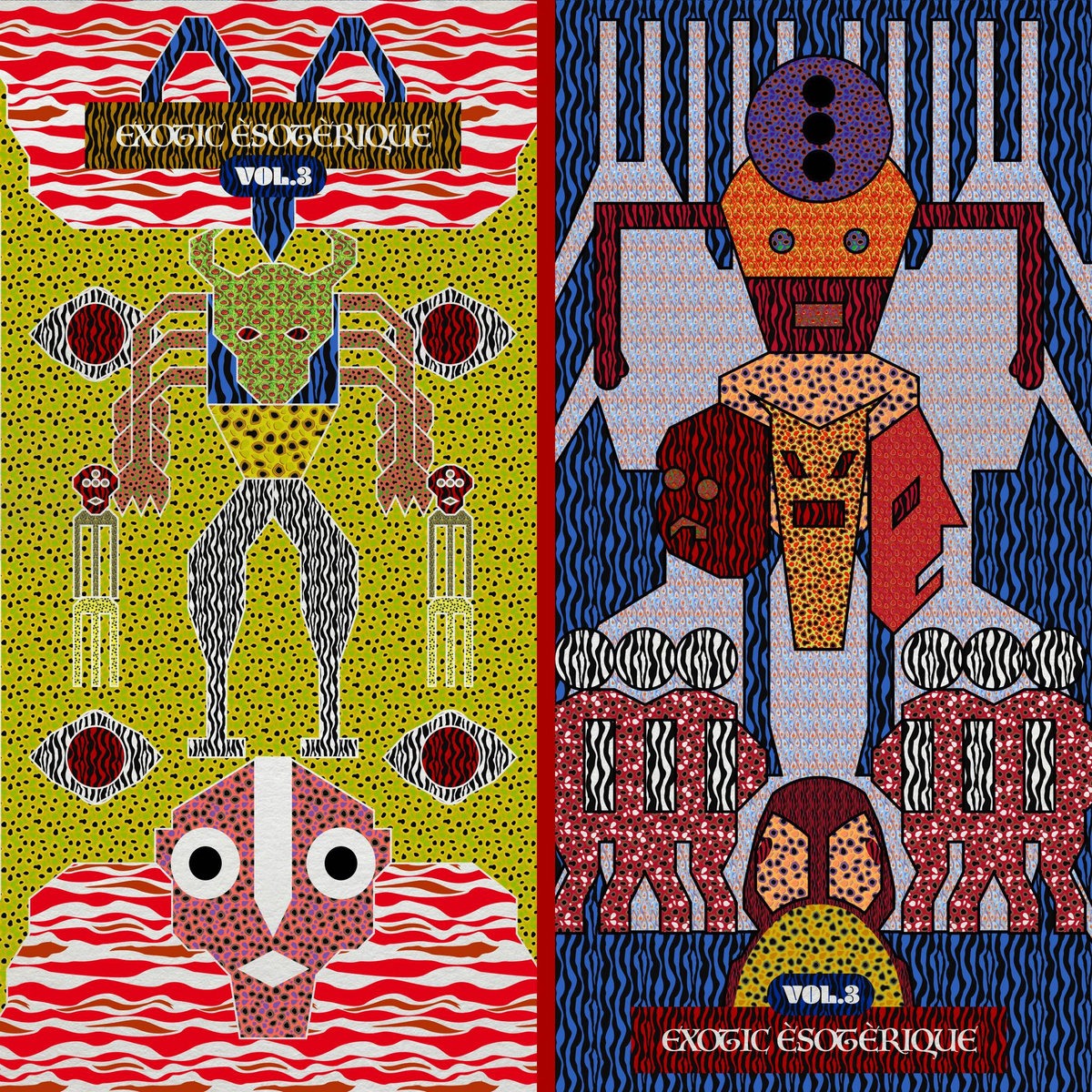
Exotic Ésotérique Vol.3 captures the full force of Artetetra’s idea of Quinto Mondo: not a closed concept, but an expanding sonic universe. Every Artetetra’s release feels like another tile in an expanding mosaic, another thread woven into this globalized, post-geographical folklore; but this double cassette sounded, in 2021, like a manifesto. It gathered together artists I deeply admire, some I know only through their music, others as fellow travellers, and placed us inside the same strange map. Its borders are still blurred, still being drawn; that is exactly what makes it alive. Listening to it now, I don’t hear a compilation as much as an ecosystem: many ideas, many imaginary geographies, all pointing toward something larger than any single artist. Being part of it still moves me.
Despite its transnational flavor, your research and sound maintain a strong regional component. However, yours is an exoticism whose origins you can’t quite place (is that what post-geographical means?), and which seems to break away from the Western gaze it’s usually associated with. Is this what Fifth World music is about? How do you avoid the kind of flattening pastiche AI is built for?
Fifth World is a cheeky spin on Jon Hassell’s Fourth World music. After the problematic reveries of exotica with Les Baxter’s “Ritual of the Savages” and Richard Hayman’s “Voodoo!,” Hassell’s idea that one could think of imaginary people’s music through a combination of Western technologies and “primitive” music (sigh), and the arguable failure of world music as a reparatory genre for the mess of colonialism, there has been a paralysis around anything that wasn’t thinking of music as exclusively a cosmopolitan phenomenon. The exotic was, rightfully so, equated with outright racism. And while the Internet has certainly promised us a flatland where everyone would become a citizen of the world, a digital airspace where we’re all the same from Delhi to Potenza Picena, we were actually amused to notice how the web started to inspire people both to create their own new little outlandish worlds and imageries and to create environments where the familiar becomes exotic and vice versa.
From regional traditions to individual obsessions and straight-up invented pseudo-cultures, we live in a mesh of ambiguous glocal phenomena and practices by users for users, the quintessence of digital folklore. So, yeah, for us it’s about this idea of a radical exoticism where not only geographical location might be irrelevant. Think of the fact that Italian Brainrot was never really Italian nor made by Italians. It is also about how the globalization of sounds has actually created many more micro-communities and forms of subcultural fragmentation: endless feedback loops of found samples, decontextualised remixes and such. It is a tongue-in-cheek term because it points at the paradoxes that globalization has created through the internet, a place where one can discover themselves as an other: an avatar, a meme, a profile, a bot. Even an interesting form of self-exoticism, if you will. It’s about reveling in the paroxysms and ambivalences of global cultures. After all, “WTF am I even listening to?” comes from nowhere and everywhere at the same time.
3. New York City Chapters pick
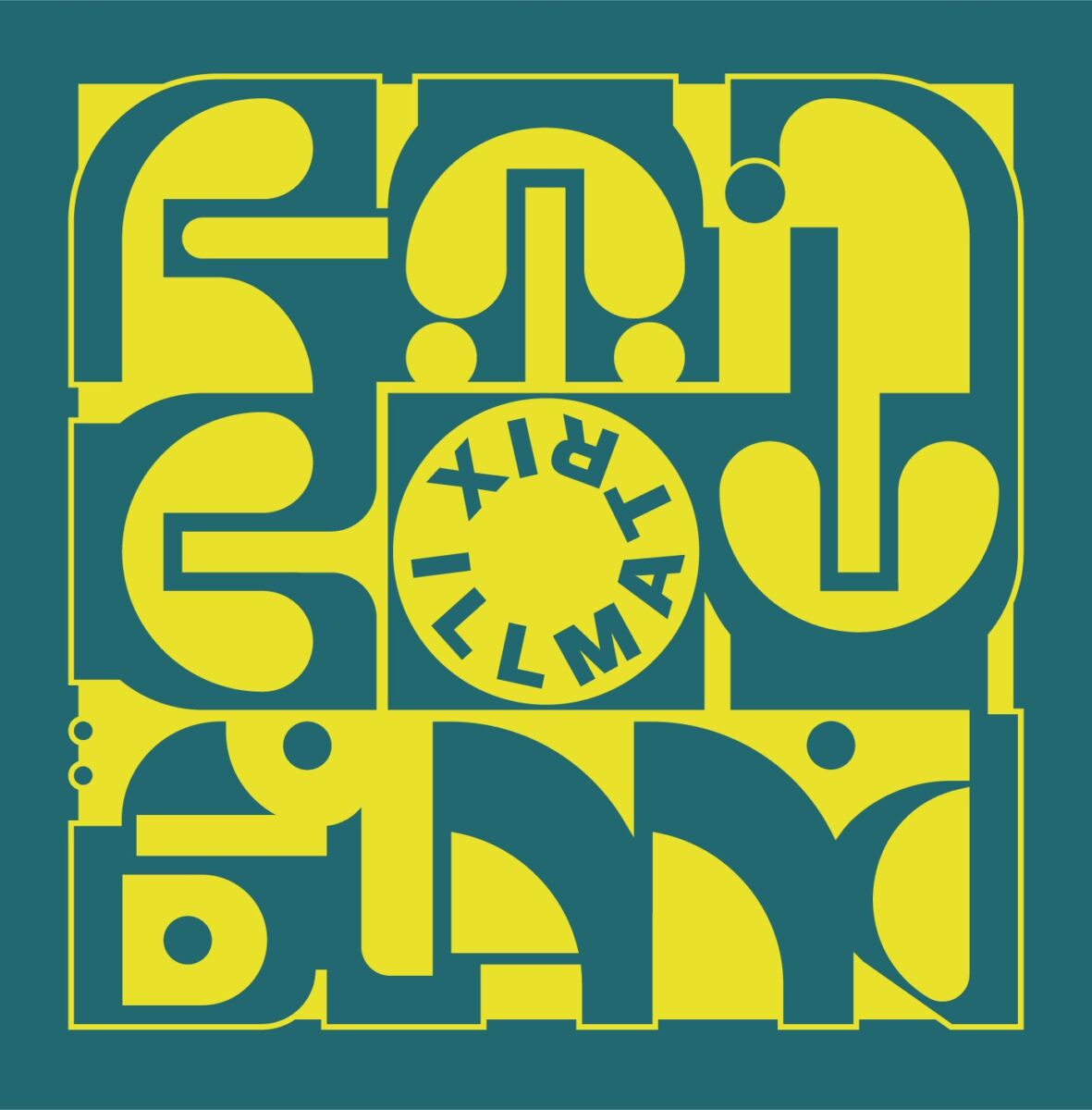
Rainbow Island is a delocalized neo-psychedelia quartet founded in Rome, and has always been the kindest and bravest outsider of the Italian underground. Each album in their discography and every live performance is a chapter in an endless journey. For this ArteTetra debut, they faced their biggest challenge yet: trying to escape from ILLAMTRIX, fighting the everyday illogic of the world, internet negativity, and aggressive tendencies with dubwise digital knives, squared arpeggios, and blasting beats. While most of the world was struggling with COVID-19, the infamous Bottegone digital think tank invested in ArteTetra assets to press an impressive number of copies of the ILLMATRIX CD. You could find them undercover on the streets, in markets, pharmacies, and airports. At first, the message may seem obscure, but if you pay attention and spend some time with it, you may begin to understand. Perhaps the gate will open, and, like in many monotheistic religions, you will discover that there are only two options… and the rest is history.
Entering the world of Artetetra means stepping into a super weird, coded universe: disorienting until an uncanny familiarity infiltrates. Self-mythologisation (one that is never solemn, real and fantastic all mixed up) seems foundational to the label. What’s the relationship between imaginary and reality in Artetetra’s mythopoetics?
You get it! We are especially fans of the type of mythologies that are created in the mundane: the ones that children might create when they reimagine a plastic sword as having supernatural powers, or that Actress has developed in Ghettoville when he “argues” that the homeless are the literal spiritual guardians of The Streets. Oftentimes, when we talk about poetics and mythologisation, loads of artists tend to create artworks that seem to be aiming at grand narratives, magnum opuses, entire systems in which everything is magniloquent and serious. And of course, when it comes to things like Afrofuturism, this necessity is important indeed. Instead, we try to celebrate all the worldbuilding that does not make any sense but that enlivens our daily lives. Little pockets of fantasy, patchworks and collages of times and spaces, mismatched blobs of spiritual themes and basic mundane creative practices, pantheons that you make up as you go, and make-believe scenarios full of loopholes and dead ends. Reality is just something we all traverse thanks to impostor syndrome and a fake-it-till-you-make-it attitude, after all: stories we tell ourselves. Some true, some believable, some just fake. Therefore, we might as well tell stories that are exaggeratedly fun and outright unbelievable, but that strangely forge or elicit connections with the listener. We love the estrangement that mixing the high and the low, the literal and the metaphorical creates. It’s a comforting but weird sensation. Something alien but still relatable.
4. Rainbow Island pick
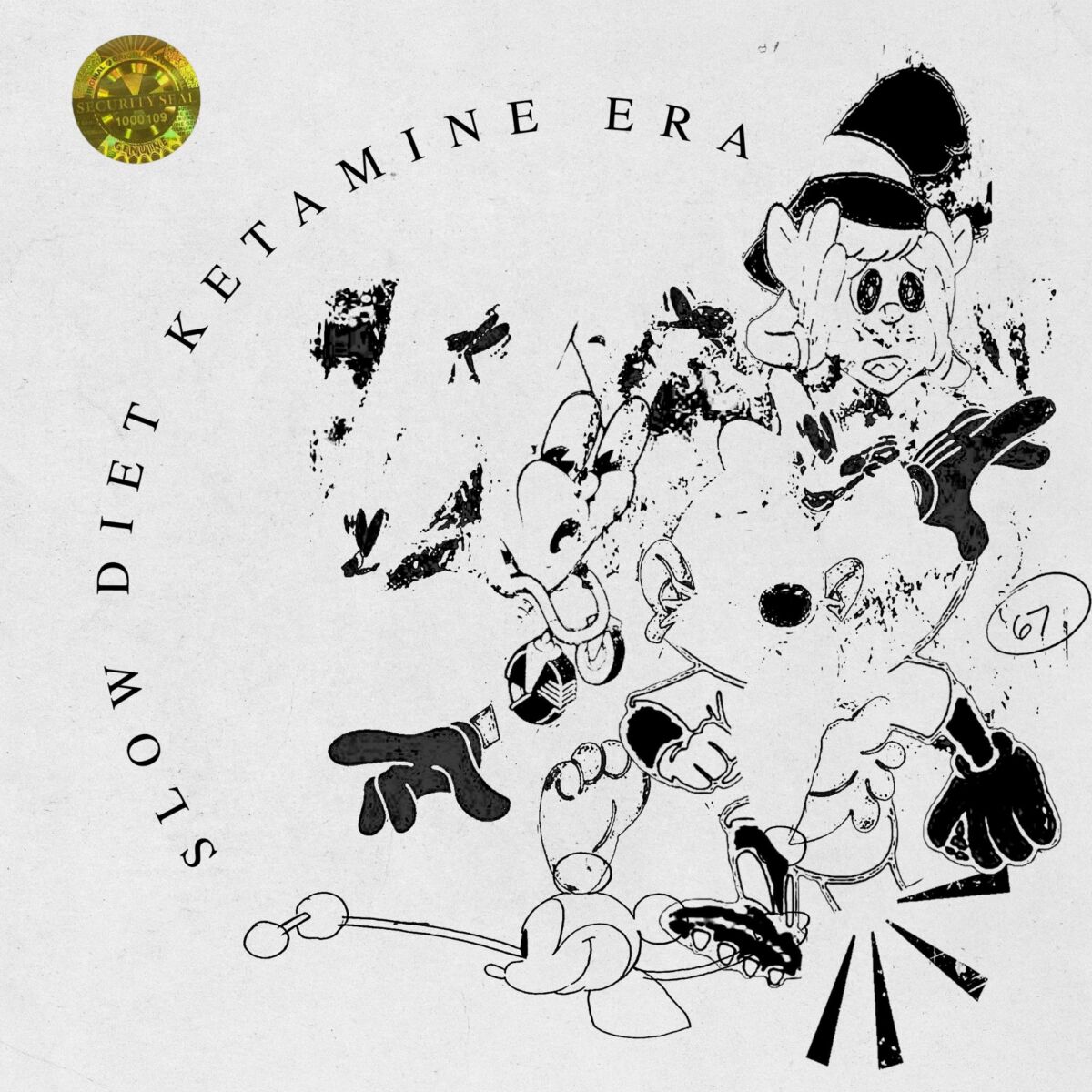
Slow Diet Ketamine Era feels like a New York observed through a malfunctioning air conditioner during a record-breaking heatwave: cold air blowing into the sweltering smog, hot humidity endlessly recirculating. Side A twists this existential sweating state into a radioactive Knicks afterparty, a blobby delirium of melted memories, dollar-bin ghost objects and faded urban myths. Side B pushes the hallucination further, turning the city into a viscous gloop of sun-warped basslines, psychedelic debris sandblasted into dry eyes and mutant beats crawling across softened asphalt. We chose this LP from the Artetetra catalogue because it captures both the exo and eso dimensions of something we thought we already understood, but didn’t entirely yet: how contemporary city life is structured by embodied metropolitan mythologies. On the surface, there are the familiar signs, the recursive references, the cultural debris; underneath, everything is mutating, overheating and dissolving into strange new forms which have no name yet but can be felt. In the AGGROCENE era defined by a diffusing MUNDOMORBO and the ubiquitous oppression of MULTITENEBRA, Slow Diet Ketamine Era sounds like the population of a city, a metropolis, and perhaps even an entire ecumenopolis, slowly melting into its own subconscious to mutate into millions of aggrocene crawlers, burrowing deeper to escape the glistening obscurity of smerluvio.
I’m not 50, but Artetetra does that effect to me sometimes. AGGROCENE, MUNDOMORBO, MULTITENEBRA, smerluvio: what’s this cult-speak all about? I find it quite interesting to think about the tension between building this dense, over-the-top personal language and something Weird Shit U.S.A. said earlier: that music doesn’t need to be translated.
This is what we, without believing in it too much, call Future Pidgin. Technically, a pidgin is a simple makeshift language that develops when groups of people who do not share a common tongue need to communicate, historically for trade or work. It’s something we find everywhere from Nigeria to Papua New Guinea to China. We noticed how lots of the musicians around us, from Rainbow Island to Kuthi Jin, were talking with these invented terms that did not really mean anything specific, or that, rather, would be elastic, read nonsensical, enough to be applied to various things in conversation, making up and developing what, if you’re bold, you can call a meaning only through usage and progressive association.
We think that this represents one of the tendencies of the internet and of constant interaction with others through memes and vibes, across languages, social phenomena, ages, etc. We just joke about the idea that this is the language of our people: users who are terminally online, inventing or picking up new words along the way. It’s about invention, participation, the capacity to translate something that can’t really be translated because there is nothing behind it that is officially translatable, and the creative appropriation of something you don’t really know how to use but that you’re confident enough to experiment with. Ultimately, the music we release speaks languages that don’t exist, but that, strangely, everyone can understand. We have no idea why this even works. We just know that contemporary media formats allow this language game to thrive.

5. Arcibanda pick
Today we’re doing something absurd, and the midi orchestra is coming! A collage of musical influences as much as a complex network of jokes mirroring the extravagant human experience. A cartography of clichés and artistic licenses with digital drums, baroque midi ensembles and frantic lyrics merging into an exquisitely organised scatteredness. Every section and transition materialising a sound-objects oriented ontology that pulls you into a world it is hard not to fall in love with. Artetetra and Arcibanda share the same understanding: that the absurd is a way of seeing, one that finds in the ordinary something worth turning into an adventure, and in the eccentric a place you somehow already knew.
Contrary to the “experimental music” cliché (music is a serious thing, it should be difficult, etc.), fun seems to matter a great deal to you. Tons of words have been spent on irony being the default cultural setting of our times, but a lot of that sarcasm, mostly nurtured online, hides an underlying nihilism, ending up hollow, unconstructive, trapping us in a loop of endless criticism. What I like about you guys is that below these massive doses of self-irony there seems to be a real optimism and enthusiasm about music…or life in general.
Thank you for this. We really do appreciate these words. It has been said that this irony that we have collectively constructed and enjoyed over the last, say, ten years is one that, interestingly, allowed users to distance themselves from a lot of stuff and never engage with anything “seriously.” For example, by enjoying music that you actually hate. Interestingly enough, this is a format that a lot of “serious” artists have engaged with, and that has then hemorrhaged into Instagram content used to self-promote through trite formulas, propose curated selections of memes as the next step of artistic research, and even exploit vernacular trends as a brand. All of this has turned fun into the jester defeatism of doomscroller internet subcultures. Choose one: gallows humour for cynical and edgy individuals or the next communication trend to milk.
To be quite frank, inasmuch as we at Artetetra have been deep into memes and irony, we have always just enjoyed humour and unseriousness as the life-affirming field where one can experiment with formats and music without creating works that demand to be taken seriously or surrendering to accepted ways of being funny, aka trite meme formats. Yet, with a lot of the music we release, the challenge is exactly to try and think about how much work, commitment and practice go into records that sound so whimsical and lighthearted. Probably it’s not a very good business move overall to have so many releases that sound like failed videogames and fucked-up cartoons that were never produced, given that it’s almost impossible, if you think about it, to name foremost artists who engage with playfulness so much without being scared of being taken unseriously. Maybe Foodman would be an exception. We used to say that fun is the mf’in gun. We don’t know if it’s funny anymore.
6. Merchants pick
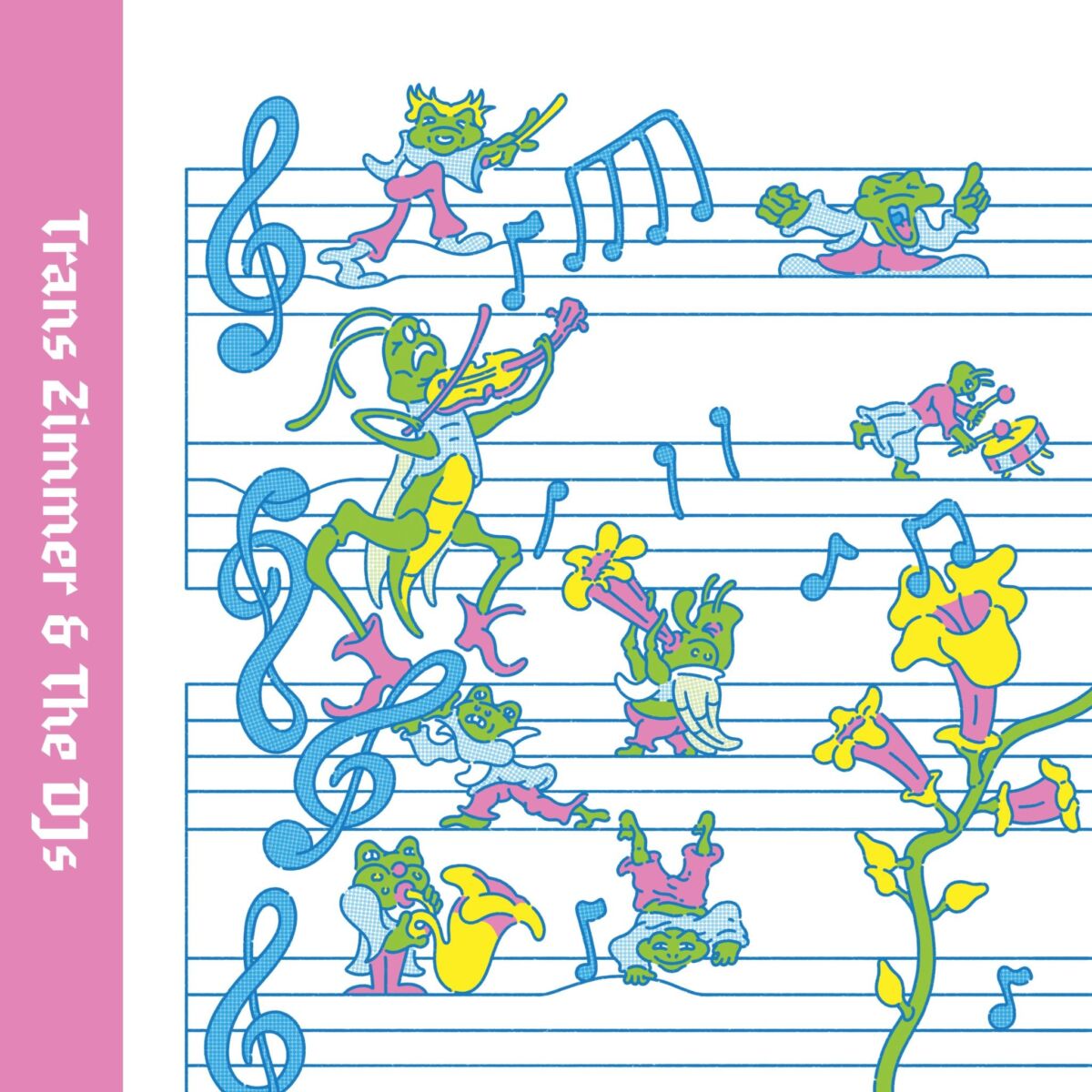
This tape is a masterclass in arrangement and unpredictability. On his second AT outing, Nicolas Gaunin weaves together interlocking rhythms and sends out digital woodwinds, choirs and strings to chase them, skewed and relentless. Huti ゲーム is the soundtrack to an imaginary videogame in which a hero sets out to face his scaly nemesis, but you won’t need liner notes to understand that the music is telling you a story: let the fictional orchestra engulf you in its lyrical fabric of digital folklore; hear tense pizzicatos and syncopated fills give way to soothing bowed melodies; listen to a wordless story sung by synthetic voices. The beats will propel you through a rhapsodic voyage, its epic confrontation and its rewarding resolution. The only downside to this Fifth World, four-dimensional palette is that you’ll want more than eleven tracks. From the hero’s journey theme to the endlessly refreshing mutability, everything about this release speaks to us.
I agree with these guys, I want more. Give us more: Artetetra through 3-4 non-musical references. Books, b-movies, videogames, subreddits, whatever else built this world.
Challenge accepted!
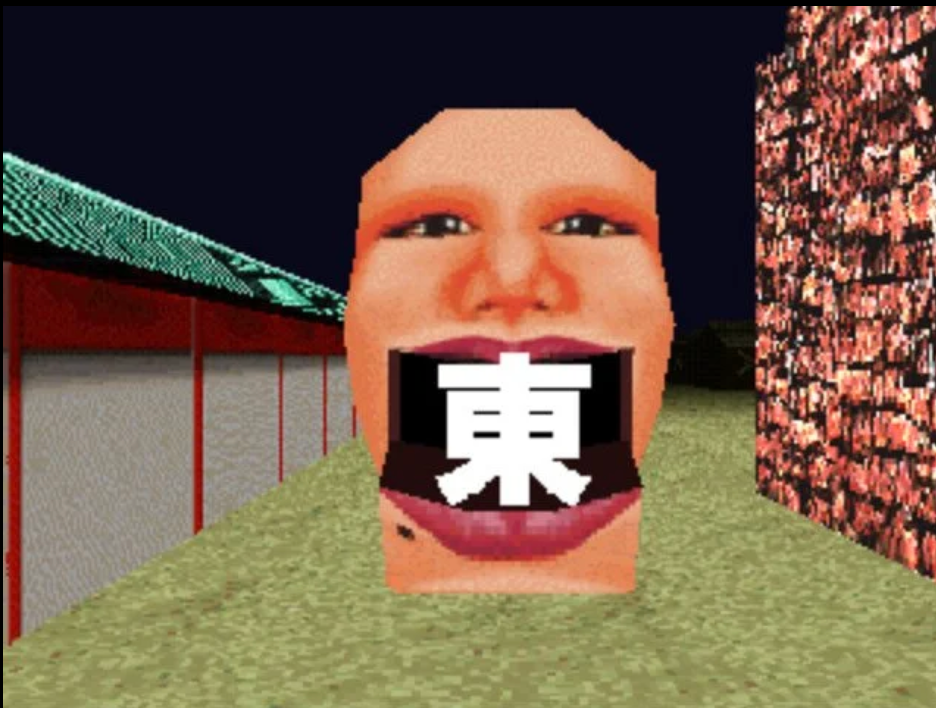
1. LSD Emulator: this was an obscure PS1 game designed by Japanese media artist Sato Osamu in the nineties and recently rediscovered thanks to countless YouTube channel unearthing the next weird forgotten videogame gem. The premise is that basically Sato wanted to create a videogame that replicated the dynamics and moods of lucid dreaming. The result is a weird walking simulator game where the player has to explore diferent surreal and absurd environments in which every interaction with the surroundings lead to either another area or the end of the “dream.” There is no aim in the game besides unlocking different narrative videos by playin 365 levels. LSD Emulator has been so popular that has inspired other excellent games like Fatum Betula and Cruelty Squad (Gorbino’s Quest represent!), confirming its legacy and relevance as one of the most influential obscure media in recent digital history. Relatively to our own catalog, it has directly inspired Arcibanda’s New Item, which we consider one of the best releases we have put out. If you want, some people on the internet have realized a 1:1 replica that you can play right now. Otherwise, let emulators be your guide.
2. The Important Videos Playlist(s): this playlist is one of the first viral series to take the internet by storm on YouTube. It’s very difficult to describe, containing mainly short videos taken out of context from different ads, straight-to-video films, unknown bootlegs of cartoons, total fail memes and, in general, funny nonsensical content which some of you might remember from “Robert it goes down,” to “Jesus is the Bread,” and “Yee.” Just as the internet usually does, after the first important videos playlist, many others would spawn, trying to build on slash exploit the format, adding at least two and a half iterations to the original one. Although now it’s basically dead, at the time it was the apex of DANK as a defining feature of meme cultures. It has inspired our Covid project MicroTelevision and many of these memes have also been featured in one of our early mixtapes, which we still look at fondly. All hails to the Internet!

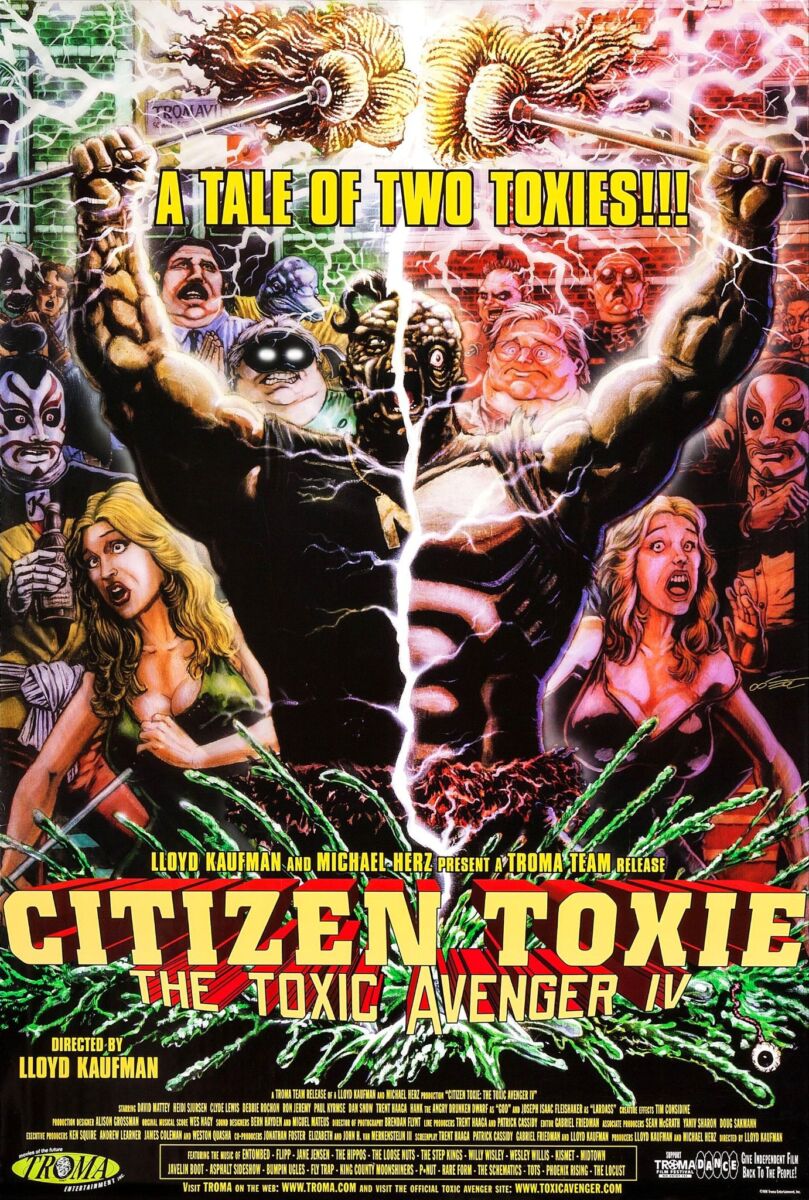
3. Toxic Avenger IV – Citizen Toxie: I mean, this is just our favourite – and probably least esoteric – movie by our favourite production house, Troma. Lloyd Kaufman is simply a genius and so much an icon for everything that is independent, sleazy, absurd and unapologetic in the world of cinema and has influenced a lot of our imagery made of weird pop culture references, urban mythologies and grotesque realism. We still remember watching this flick in our late teenage years presenting the world’s favourite janitor turned radioactive and mop-armed superhero at our local comic store and being quite shocked by the mesh of over the top violence, practical-effects deformities and lewd jokes and being changed forever, not necessarily for the better. Yet, besides being a staple of DIY ethos, the movie is impressive in how it featured a bunch of celebrities like Motorhead’s Lemmy, comics legend Stan Lee (the movie’s narrator), Corey Feldman, Ron Jeremy, Kevin Eastman (co-creator of Teenage Mutant Ninja Turtles), Newgrounds founder Tom Fulp, Hugh Hefner, James Gunn and Eli Roth. Additionally is one of the earliest examples of superhero multiverse before Marvel actually started milking the cash cow.
4. Inzane Johnny: In par with Catatonic Youth, probably this one does not need any introduction, but we’ll do it anyway. Noisemonger of legendary earsplitting trip metal duo Wolf Eyes also seems to be one of the foremost underground music memes authorities out there, bringing so many classic meme formats into an imagery of poorly attended basement gigs, instruments that never fucking work, unglamorous day job musicians and niche albums your coworkers would hate without any trace of self-pity, disrespect or cynical sarcasm. We guess that when he’s not busy trying to make you deaf by blowing into pvc pipes at unjustified volumes and relentlessly putting out music on American Tapes, he’s online shitposting like any of us. He once appreciated a meme we had made in the vein of what he’s doing, so for us is a badge of honour. Much like the dumb equivalent of being the opening concert for Wolf Eyes somehow. ZONING.

7. Grykë Pyje pick
Sunbeams dance upon a shifting mass of water that floats freely above the open ocean. The shapes of the reflections are constantly changing on the transparent, multi-curved surface. A closer look reveals what lies within. A multitude of small, lively creatures float inside, delighting in the tingling sensation in their bellies. At times their bodies are whirled wildly to and fro; at others they form groups and suddenly perform fascinating choreographies. When the sun briefly disappears behind a cloud, the creatures settle down to quickly rehearse their next lively dances. The restless life, full of joy and wonder, within this ever-changing water form never grows dull. A wonderful microcosm full of small, fascinating events: varied sounds of joy, euphoric onomatopoeic conversations, inspiring chaos and harmonious symbioses.
I think this is the perfect text to end on. It’s completely imaginative but it’s written like a marine biology documentary. A potentially infinite, borderless, ever-changing form containing an intensely specific and endlessly alive multitude inside it: somehow a description of the Quinto Mondo project. Personally, I will never look at the sea the same way again.
Indeed. Thus, before we end, a cautionary tale! The world out there is kind of grim, if you didn’t notice, traveller. God, if we all know how difficult everything is. Yet, if you have the energy, as you roam the lands, we’d like to invite you to try and listen to the songs of your people. Even if we’re divided by waters and lands, flex your ears, cables and antennas and listen up. Between one laugh and another, you might hear music. Far from inviting you to escape the here and now, we hope that these sounds can just make you appreciate a kingdom of pure imagination about the world you live in. After all, it’s probably the only realm that we have left. It’s a special kind of magic.