Text by Daniela Silva
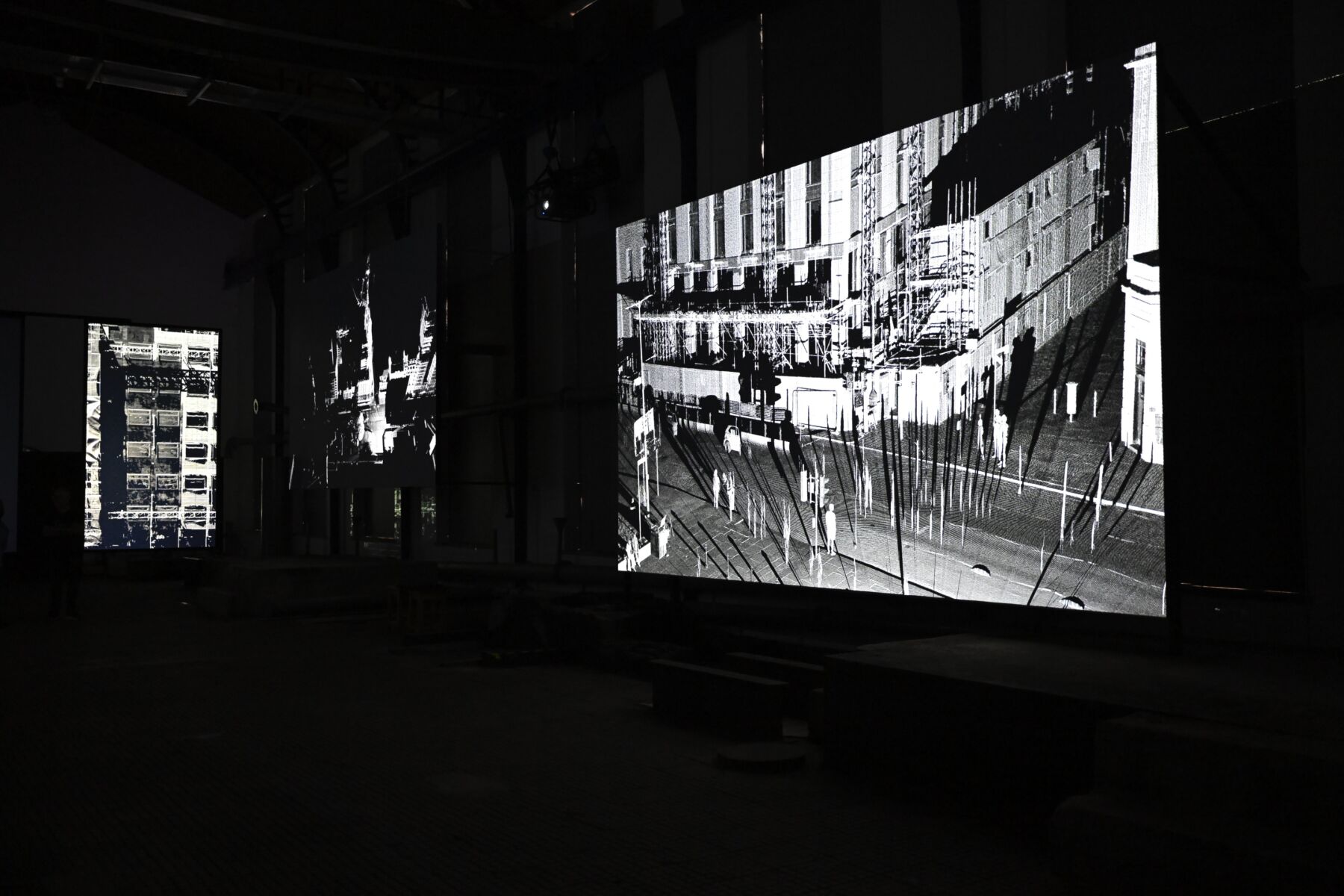
At Pozu Santa Bárbara, a disused mining shaft in the valley of Turón in northern Spain, the earth pulses with light. Once a site of extraction and exhaustion, it now hosts an act of profound observation—a space where geology, memory, and machine vision converge. Here, the London-based studio ScanLAB Projects presents FRAMERATE: Pulse of the Earth. This immersive video installation transforms 3D LiDAR time-lapse data into a sensory encounter with the planet’s slow transformations.
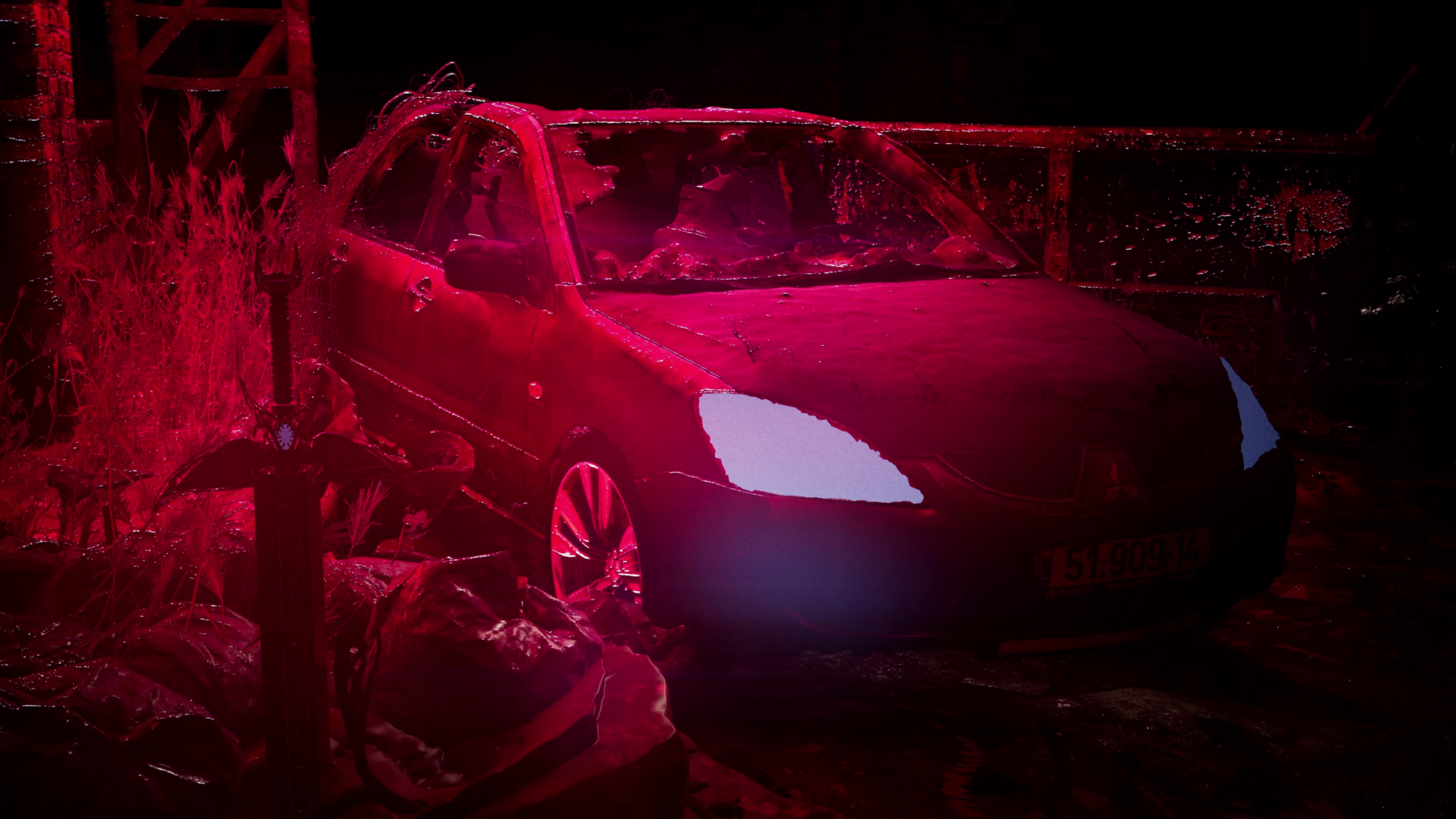
Presented as part of L.E.V. Festival’s program of electronic visual arts, the installation surrounds visitors with shifting landscapes, rendered as shimmering constellations of points and planes. Each frame is a record of change – cliffs collapsing, tides advancing, vegetation growing, structures eroding. More than documentation, Pulse of the Earth is an act of translation: a mediation between the temporal rhythms of geology and the perceptual limitations of the human eye.
The choice of venue is not incidental. Pozu Santa Bárbara, located in Mieres, Asturias, is the first mining shaft in Spain to be listed as a cultural heritage site. Its transformation into a center for artistic experimentation redefines the relationship between technology and territory. What was once a site of industrial extraction becomes a site of perceptual extraction, a place where data replaces coal, and knowledge replaces energy as the primary resource. This shift resonates with the conceptual framework of ScanLAB Projects, founded in 2010 by Matt Shaw and William Trossell. Known for their work with 3D scanning technologies, the studio navigates the porous boundary between art, science, and spatial documentation.
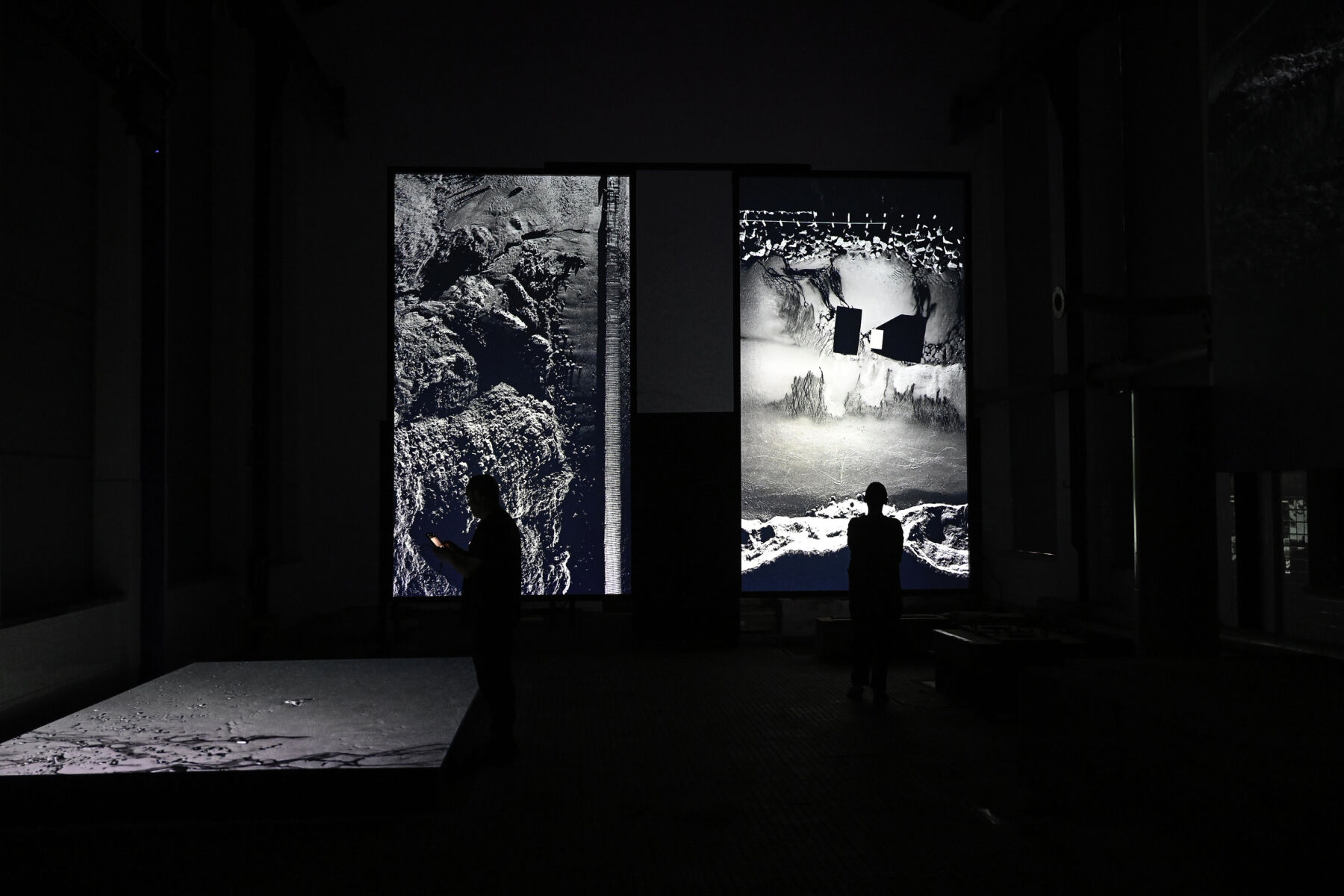
With FRAMERATE: Pulse of the Earth, ScanLAB continues a long-term exploration of how time, matter, and data intersect. The installation expands the possibilities of LiDAR as a medium, not only as a mapping tool but as a means of witnessing the imperceptible. By collecting three-dimensional scans over extended periods, the studio transforms vast datasets into choreographies of planetary motion, revealing a poetics of change that operates at the scale of geology.
Their practice challenges the perceived opposition between scientific precision and artistic expression. For ScanLAB Projects, the poetic dimension of Pulse of the Earth emerges precisely from the accuracy of its data. The landscape becomes both narrator and subject, its own geological and biological processes forming the basis of the artwork. The studio’s role lies in translation rather than manipulation, transforming temporal data into an experience that heightens awareness of the fragile, shifting systems that sustain life. Each LiDAR scan, collected daily across multiple British sites, captures subtle variations that define the passage of time: sediment accumulation, roots extending through the soil, and shorelines receding after storms. Sequenced into motion, these scans produce a kind of planetary cinema. One that unfolds at geological speed, revealing rhythms and movements that far exceed human perception.
The installation fosters a deep understanding of how humans are intricately linked with Earth systems that operate beyond ordinary awareness. It evokes what geologist John McPhee described as deep time, an embodied perception of the vast temporal continuum in which our individual existence is but a fleeting gesture.
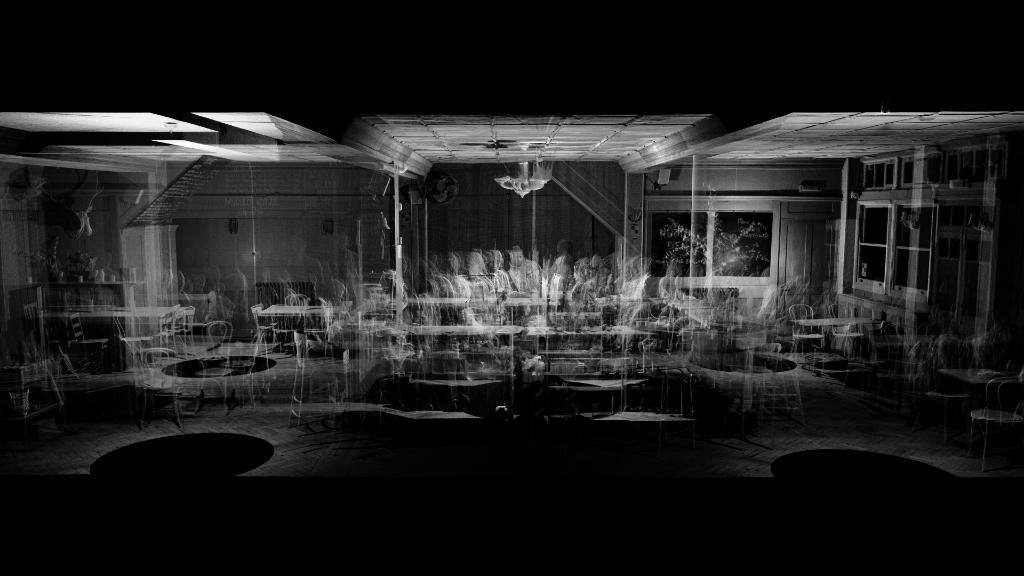
At first glance, the visual language of Pulse of the Earth might appear abstract, a cloud of luminous points suspended between figuration and dissolution. Yet within these point clouds lies a subtle critique of vision itself. LiDAR, or Light Detection and Ranging, measures space through laser reflections. Unlike photography, it does not capture surface appearances, but rather relationships —the geometric coordinates that define the world’s structure. Through this technology, ScanLAB Projects expands human sensory capacity, revealing dimensions of reality that typically elude our gaze.
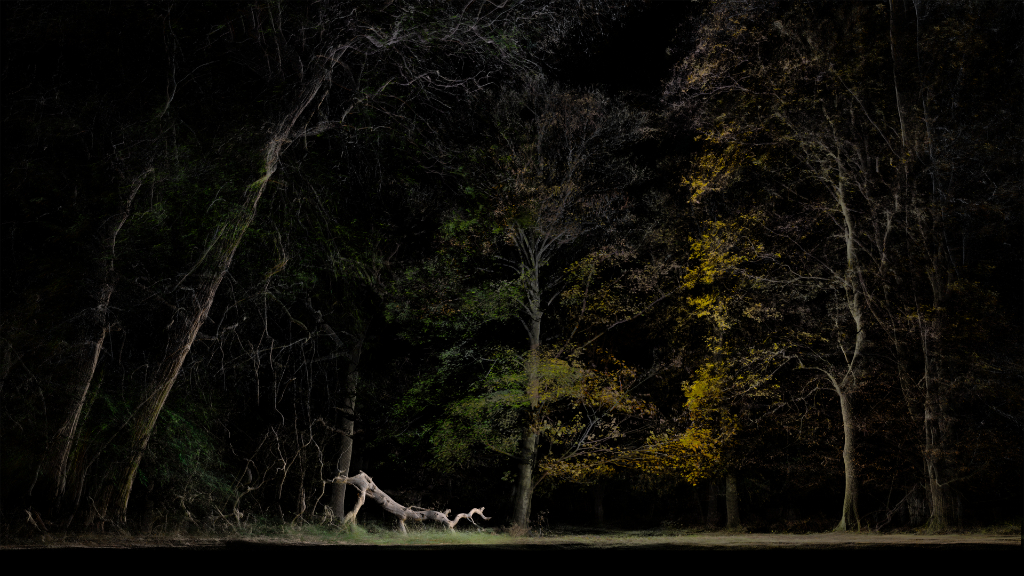
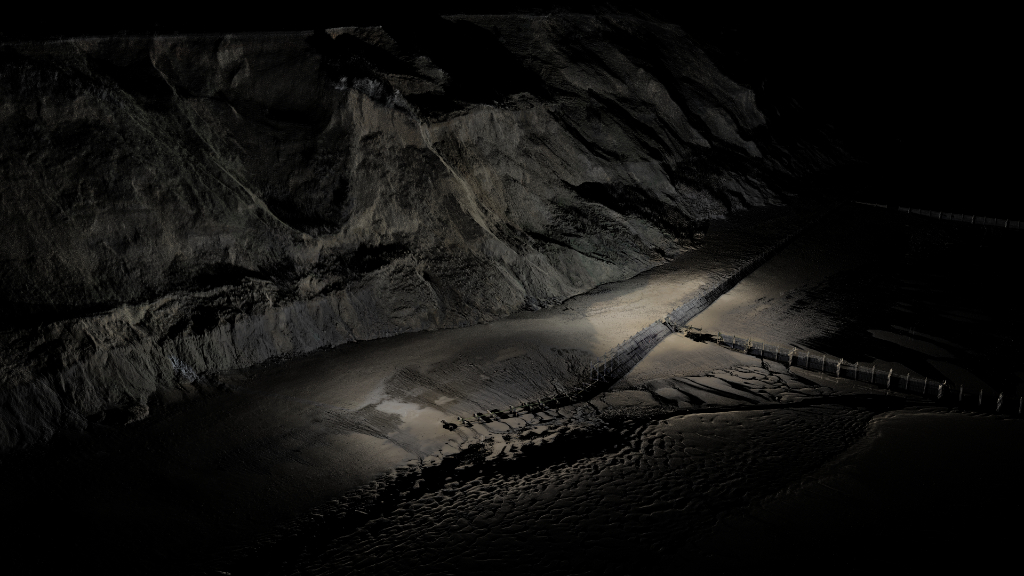
In long-exposure scans, human figures move too quickly to be fixed, appearing as spectral traces rather than distinct presences. What remains visible is not the individual, but the collective effect of human action —the transformations left upon landscapes by movement, extraction, and time. The work thus reframes humans not as protagonists but as geological agents, participants in processes of erosion and renewal that extend far beyond their lifespan.
While Pulse of the Earth unfolds as an aesthetic experience, it also holds scientific relevance. The datasets underpinning the installation, developed with millimetric precision, have been shared with organisations such as the British Geological Survey. Capturing environmental change at an unprecedented temporal resolution—sometimes daily—the project enables new readings of erosion, growth, and recovery cycles that would otherwise remain invisible. ScanLAB Projects’ methodology merges empirical observation with artistic intuition. Both domains—science and art—depend on patient attention, meticulous documentation, and interpretative synthesis. In this convergence, Pulse of the Earth demonstrates how quantitative data can acquire affective and philosophical depth. The work operates simultaneously as evidence and as emotion, suggesting that precision and poetry are not opposing forces but parallel expressions of care.
What makes Pulse of the Earth most compelling is not its technological sophistication but its insistence on slowness. It asks for time, observation, reflection, and stillness. Immersed in the enveloping projections at Pozu Santa Bárbara, the viewer becomes part of the system of observation, suspended between geological and human time, between the measurable and the perceptual. In the context of a former mine, this temporal shift takes on a particularly intense quality. The site’s past is marked by extraction, ambition, and environmental consequence; its present, by reflection and restoration. Situated here, the installation transforms industrial heritage into a platform for ecological contemplation. The mine no longer extracts from the planet; it listens to it.
FRAMERATE: Pulse of the Earth reveals how technology, often associated with detachment, can become a medium of empathy. When data becomes image and image becomes awareness, the distinction between measurement and meaning dissolves. The work becomes an invitation to pause, to perceive, and to feel the slow pulse of the Earth, not as an abstraction but as a presence.
FRAMERATE: Pulse of the Earth is on view through January 7, 2026.