Text by Dom Stevenson
The Noise Went On, The Cup Was Dropped, The Speakers Were Stretched, The Bells Were Rung,
The Building Shook, And The Drums Were Hit. This Is The House That Jack Built.
Much like the cadence of the nursery rhyme, Atonal 2025 unfolded as a cumulative story – each day layering new moments and experiences on top of the last, building a world that grew more compelling as the festival went on.
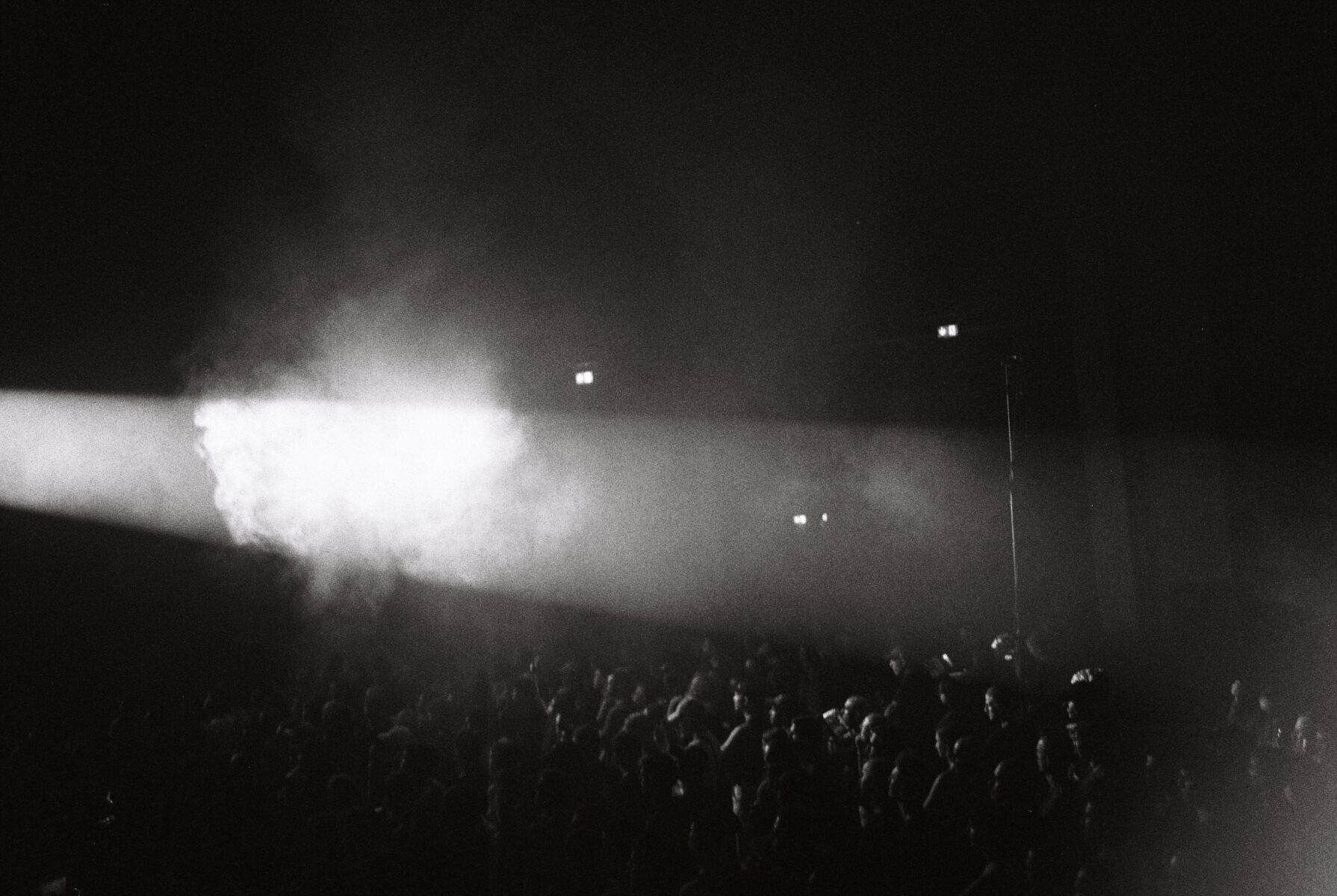
A week of daring performances upon endless nights, within a city that seemed to breathe in rhythm with the festival itself. Clubs tucked into every corridor, immersive performance installations at each wrong turn, and my own recurring unease about the ratio of smoke-machine to breathable air.
For many attendees, it was simply another chapter in their festival history; the culture and obsession surrounding this event runs deep, and nearly everyone I crossed paths with carried a story or memory from previous editions. But this was my first time, so I’ll tell it through my own eyes.
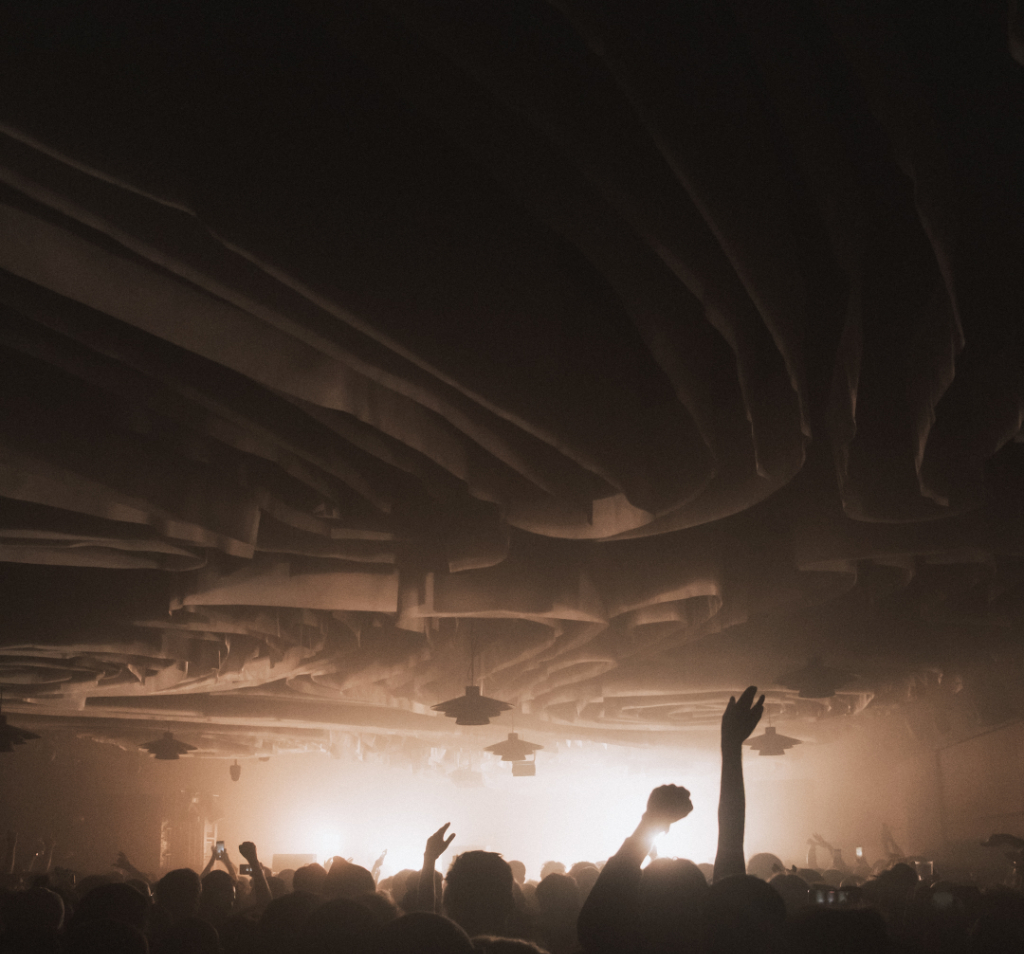
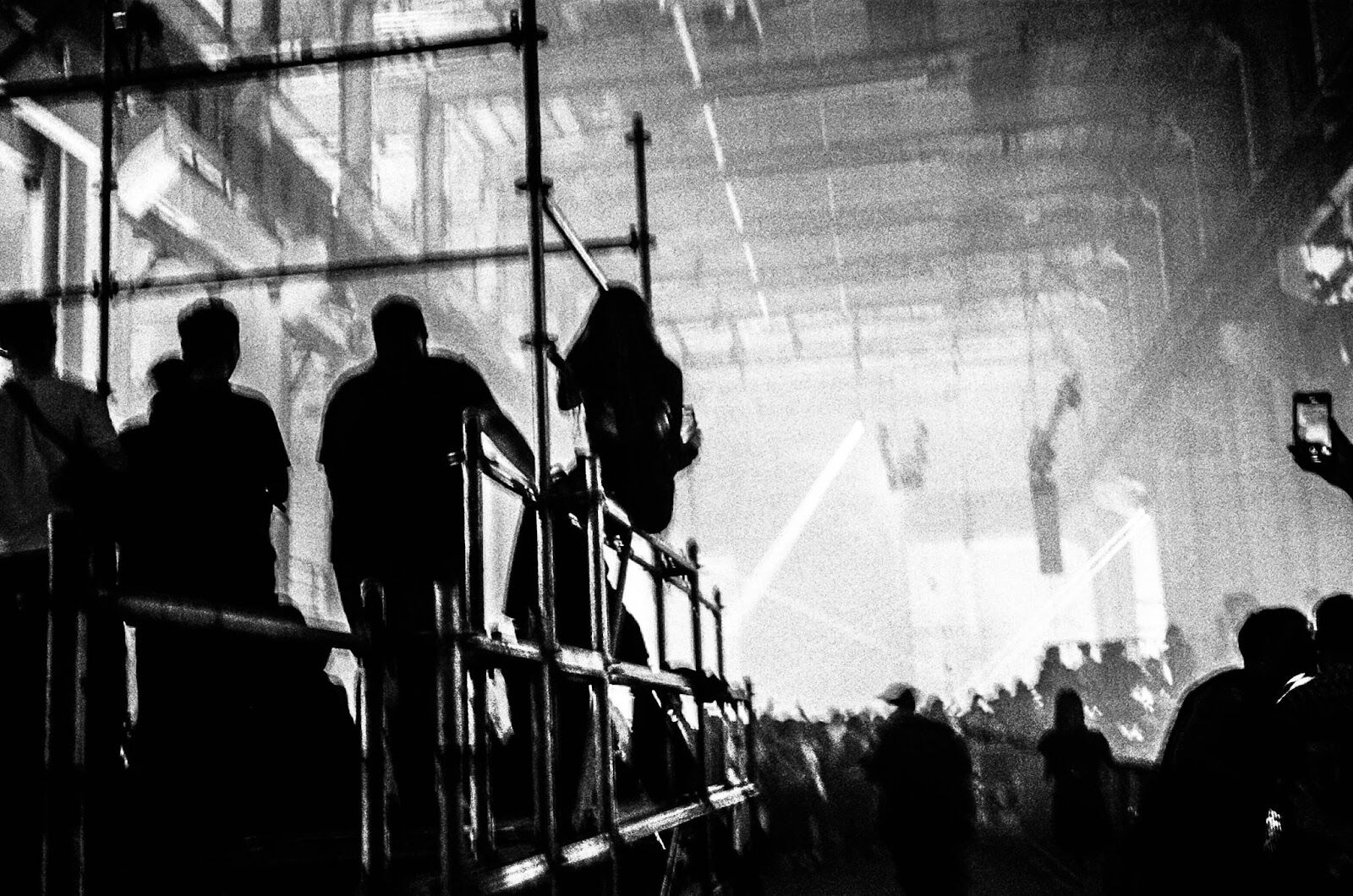
To understand Atonal, you first have to picture the space it inhabits. Imagine a colossal, 20-meter-tall carcass of concrete and steel rods – the abandoned shell of a power station. Its cavernous halls consume sound, its brutalist skeleton serving as a surreal passageway for black-clad crowds and festival-goers.
This is Kraftwerk Berlin, where bodies stack high within the walls and sound ricochets through the huge cement arches – equal parts Gormenghast and Carcassonne – a monolith of corridors and chambers that devours extreme noise and collapses it into tiny transients of reverb. As peaceful as it is pummeling, the sheer size of the building creates pockets of sonic intensity for every listening preference; somewhat predictably, it also causes crowds to move through the space at the most spaced-out, slow-motion pace imaginable.
Built in the early 1960s and decommissioned in 1997, the space was revived by Tresor founder Dimitri Hegemann in 2001. Once a short-lived power station for East Berlin, it now hosts a sprawling array of cultural and artistic projects. For the sake of this article, we can call Dimitri Jack – and this is the house that he built.
Word on the street echoed the sentiment – this year’s edition felt like a return to the greatness that had perhaps slipped in recent years. The festival, which first took place in 1982 and relaunched in 2013, had faced challenges in maintaining its avant-garde spirit amid financial constraints and evolving artistic directions. However, this year we were back to the glory of earlier editions with an insane line-up that radiated unmissable. And I was here for it.
A network of venues, pieced together with curatorial precision – intimate listening rooms, fleeting pop-up stages, basement clubs, and vast industrial theatres – all converged in the collective thrill of witnessing experimental upstarts alongside seasoned legends all under the same roof. A fortress of sound, and for five days, a home to us all.
Mouth Would – ‘The Noise Went On’
My first stop on Wednesday was OHM Bar, where Danish multi-instrumentalist Trine Paaschburg’s solo project, Mouth Wound, was performing – just moments after I’d heard retellings of LAMB K305’s set, which included the use of an angle grinder from behind the decks. How that got past safety regulations, we’ll never know, and how I would have loved to see it. Unfortunately, my night had been delayed by early-morning RyanAir proceedings, but I thought those power tool antics deserved a mention either way.
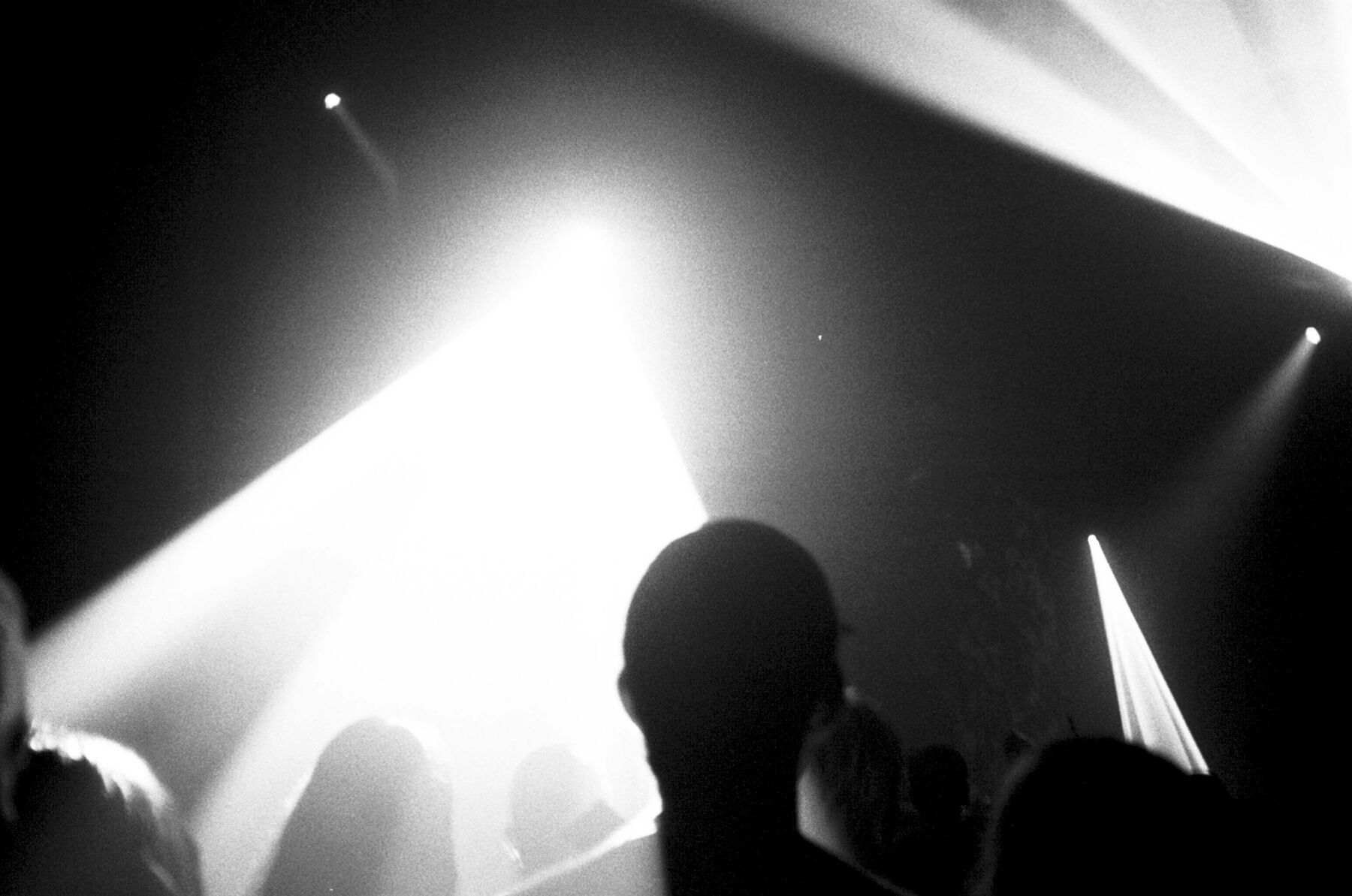
Mouth Wound was intense: my first (but definitely not my last) encounter with a smoke-filled room, where red beams of light cut through a sea of silhouetted bodies. Textural, throbbing noise blasted from the OHM sound system, swelling and bubbling as she gradually introduced subtle layers of tortured, distorted vocals. It was my first time seeing a live set at OHM, and the space felt intimate, with the performer present among the crowd at an equal level.
Speakers positioned at each intersecting point around the room offered ample opportunity for Paaschburg to push her frequency-band limits to the fullest. Known for exploring themes of physical and existential malaise, as well as the search for tranquillity, these elements were palpable throughout the set. As it developed, the lines blurred between physicality and abstraction, as if we were witnessing the sound of form itself being violently sucked down a black hole.
This was my first hint of a recurring motif that ran through my week: many of the noise-oriented sets I experienced seemed to twist, contort, or almost struggle against their own technology. It felt like a post-AI, dystopian clash of jarring, harsh noise and chaos playing out in real time. And this brings me to Carrier and Emptyset.
Carrier – ‘The Cup Was Dropped’ & Emptyset – ‘The Speakers were Stretched’
Thursday was one of the festival’s strongest nights, with a lineup that showcased both delicacy and intensity. Malibu’s set of ambient, emotionally charged compositions opened the evening, followed by the debut performance of Home, a new collaboration between Ziur & Sandi. The night then pivoted towards heavier terrain with Carrier and Emptyset, who delivered two powerful explorations in noise, rhythm, and restraint – a double bill of minimalist mastery that carried the spirit of Mika Vainio into the present.
Carrier conjured beautiful, brooding noise, each touch on his array of synthesis and sound devices revealing both intricate complexity and stark, brave simplicity. Renowned for his experiments with rhythmic tension, the intensity in the crowd was visceral, and he maintained a steady, deliberate progression throughout the set.
The volume seemed to rise, and the crowd locked into an intense, focused state. Carrier led listeners through captivating, otherworldly dimensions, and I followed every measured rise and fall of the set, with a new, profound naivety – I was immersed.
At that point, a storm of mid-range, percussive elements – sounds reminiscent of lo-fi producers tapping found objects in front of a laptop microphone. A plastic ‘Berlin Atonal’ cup was dropped behind me, which somehow synced perfectly with the timbre of Carrier’s percussive sounds. Was I witnessing the next stage of the audio experience? Had Bill Kouligas installed secret speakers amongst the crowd? What was this listening phenomenon?
I turned to my friend Sev, standing beside me, who had clearly felt the same sudden, enveloping surge of sound. How could that noise seem so perfectly integrated into the set? What the fuck was happening? I snapped out of my trance, questioning the very nature of perception itself.
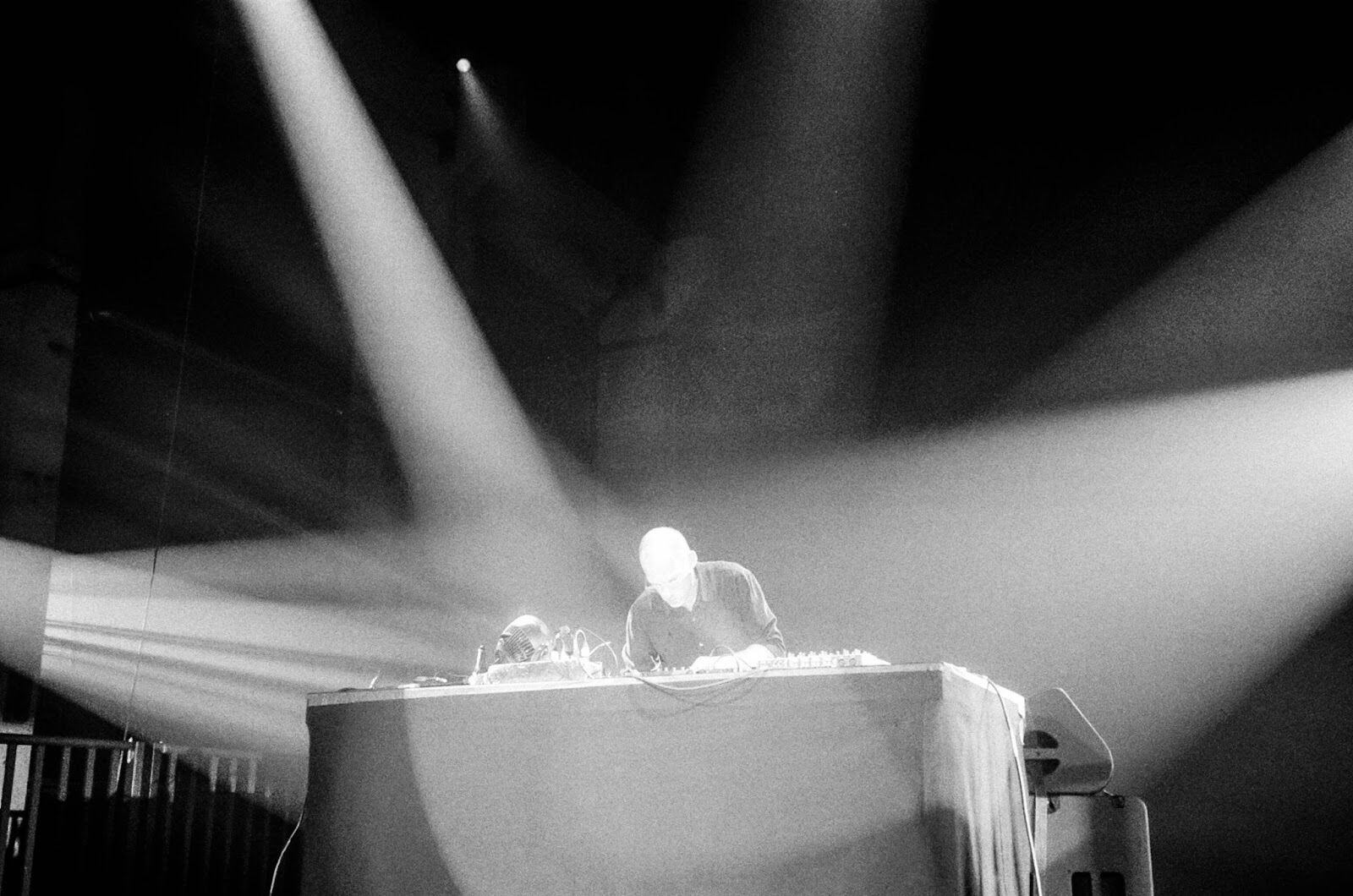
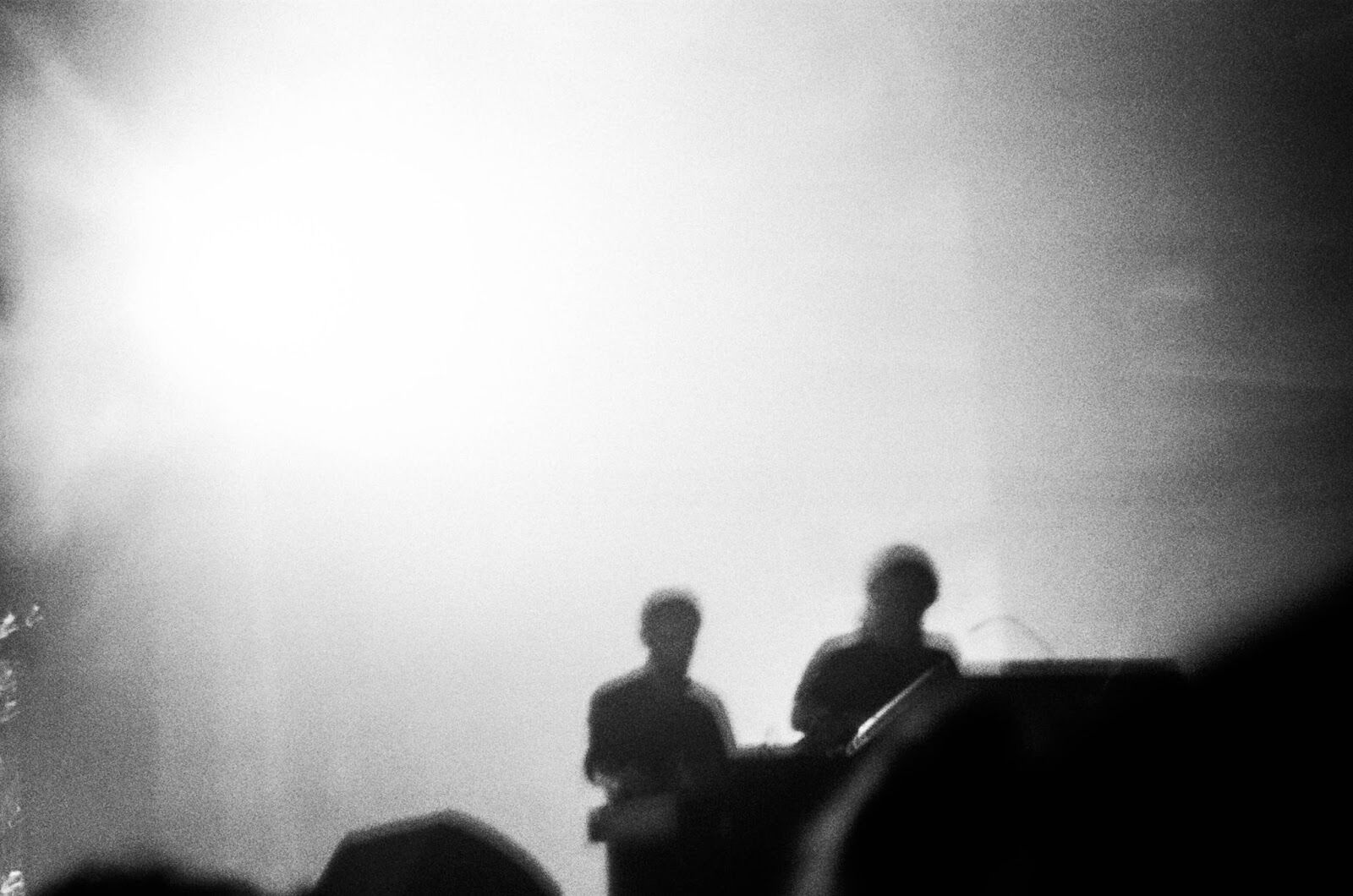
Next up was Emptyset, the Bristol-based project formed in 2005 by James Ginzburg and Paul Purgas – possibly the perfect follow-on from Carrier. While their sound and style differ, conceptually they feel closely aligned.
Emptyset have long been a personal favourite of mine, known for their steady-handed approach to noise and no-input mixer sound creation. Their willingness to embrace noise in its fullest form – and to sculpt it into slow, rhythmic structures – felt like perhaps the most fitting sound imaginable for a festival called ‘Atonal’.
This was evident throughout their performance, with massive low-end sweeps of rhythm that seemed to stretch the main stage speakers to their frequency and volume limits. The set felt in dialogue with the venue’s industrial carcass, tones and vibrations locking into a rough consonance with the towering space around them. Finally something discordant, finally something deeply ‘Atonal’ – as minimal as it is maximalist, in all its late-night glory.
Much like the house that Jack built, Atonal grew brick by brick – each performance a beam, each bass surge a pillar – and the building began to pulse, taking hold of everyone within it. And now, the perfect moment to discuss Bela.
Bela – ‘The Bells Were Rung’
I came into the set unfamiliar with Bela’s music, much like avoiding spoilers for a film, so the ending hits especially hard. That’s exactly how the set unfolded for me: full of performative twists, intense sonic moments, and a meticulously structured flow that guided every movement.
This was the world premiere of Bela’s new creation, Korean Love Sonnets, devoted to the acoustics of the guttural voice and its relation to other bodies and spaces.
Bela began the set sitting on stage at a table featuring a laptop and various noise-making devices, readjusting equipment while introducing the performance to the crowd and giving a heads-up that movement into the audience might happen, so if space could be made.
The interaction with the audience was humorous and grounded, bringing a sense of humanity to the main stage and breaking the barrier between performer and the listener – something not seen so far at the event, and something that felt needed. Bela captivated the room from the very first moment.
The performance unfolded as an intimate exploration of voice and resonance, with guttural tones echoing through the venue, weaving a physical and emotional connection between performer, audience, and space.
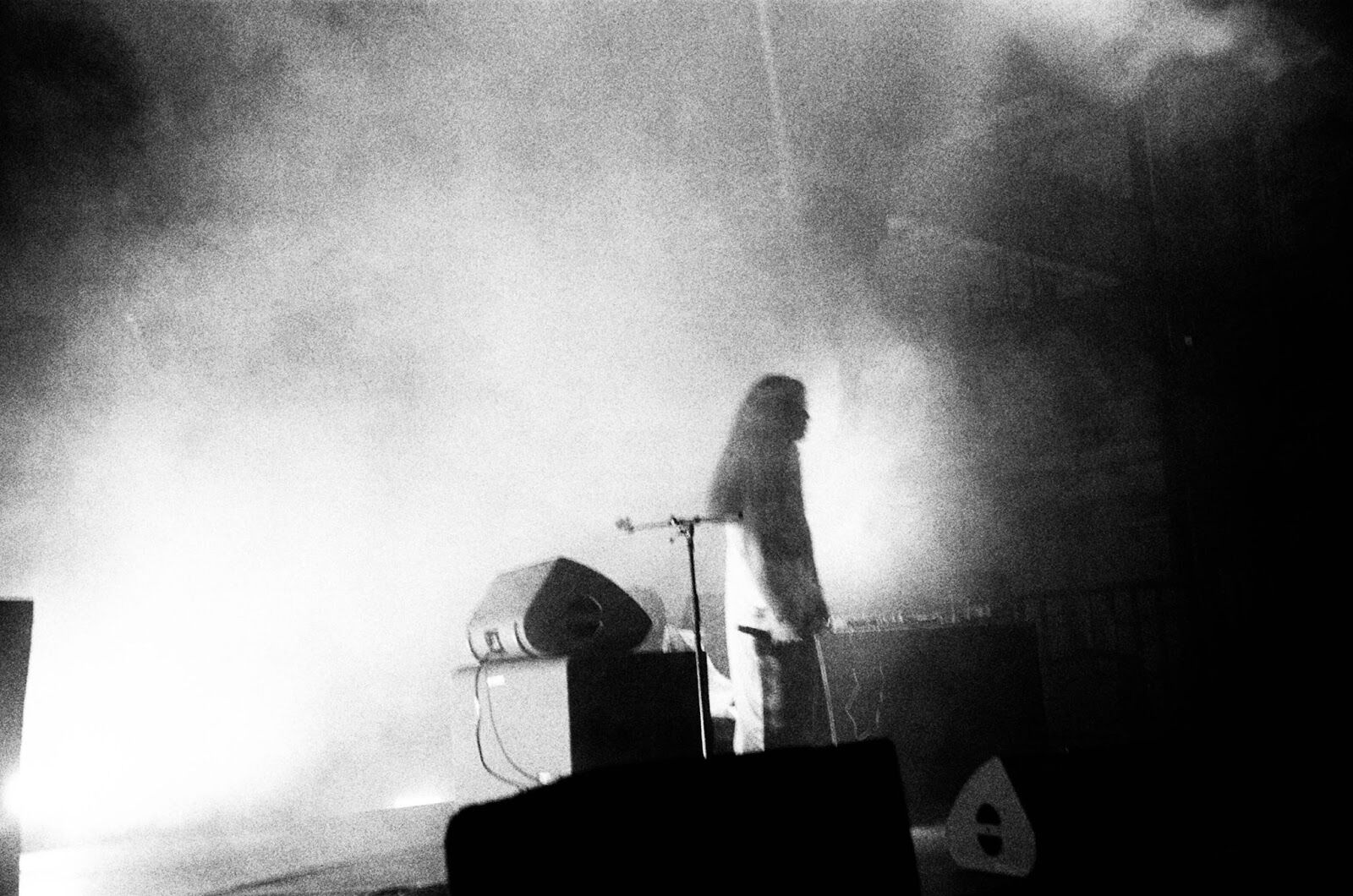
It wasn’t long before Bela stepped down from the stage and into the crowd, a movement that happened a few times throughout the set. The first descent, at the early stages, was accompanied by poetic spoken-word layered over harsh, sustained noise. I caught fragments of phrases – things like “The smell of belief, the better part of your youth” and “There are places in the air, marching to the pearly gates, into the clouds we must soar.” There was much more, but I was too absorbed to continue jotting it down.
Back on stage, Bela used a mouth-controlled feedback setup – a speaker paired with a lavalier microphone – to manipulate pitch and resonance directly with the mouth. The resulting sound was warm and hauntingly organic, blurring the line between electronics and human expression. Bela then returned to the crowd, pacing deep into the hall while ringing a set of bells overhead. A friend later described it as “some sort of black magic”; it had a sacred, almost otherworldly presence, made all the more striking by the dimmed lights and strobing corridors.
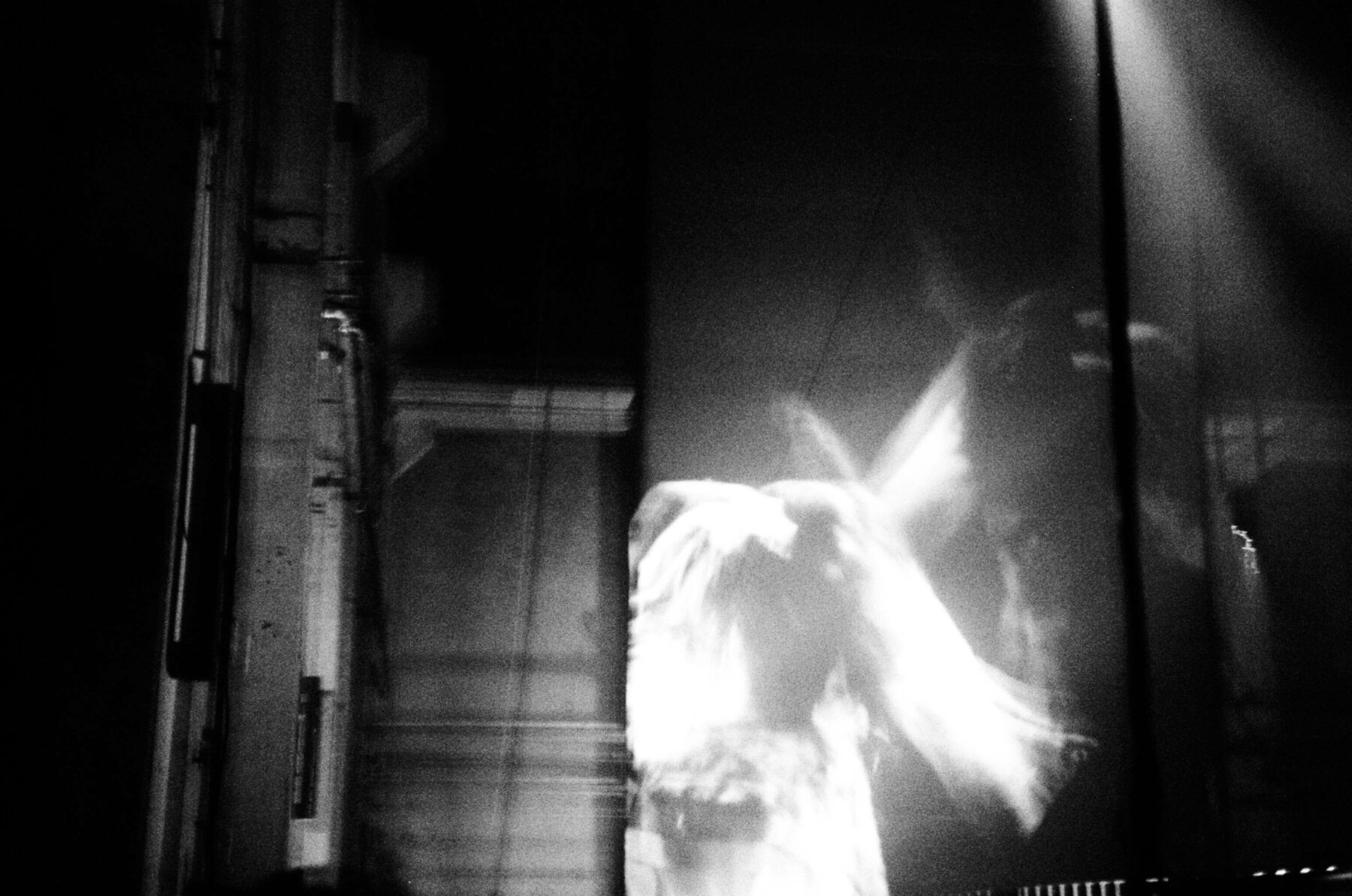
The set entered its final, crescendoing phase. Bela sat back at the setup, as massive projected visuals behind the stage came to life. Multiple clones of the artist appeared in real time, contorting in abstract ways that mirrored the disjointed flow of the audio rather than simply replicating movements.
The performance reached pure intensity as Bela stood upright, unleashing guttural screams in recurring bursts. The audience held a tense, reverent quiet, the weight of the moment lingering as the world premiere of Korean Love Sonnets concluded – less an unveiling, more a rite of passage, leaving the room suspended between awe and unease.
The set lingered long after leaving Kraftwerk, a perfect full stop to Thursday and a bridge into the next day, when I was ready to be dismantled in an entirely different way.
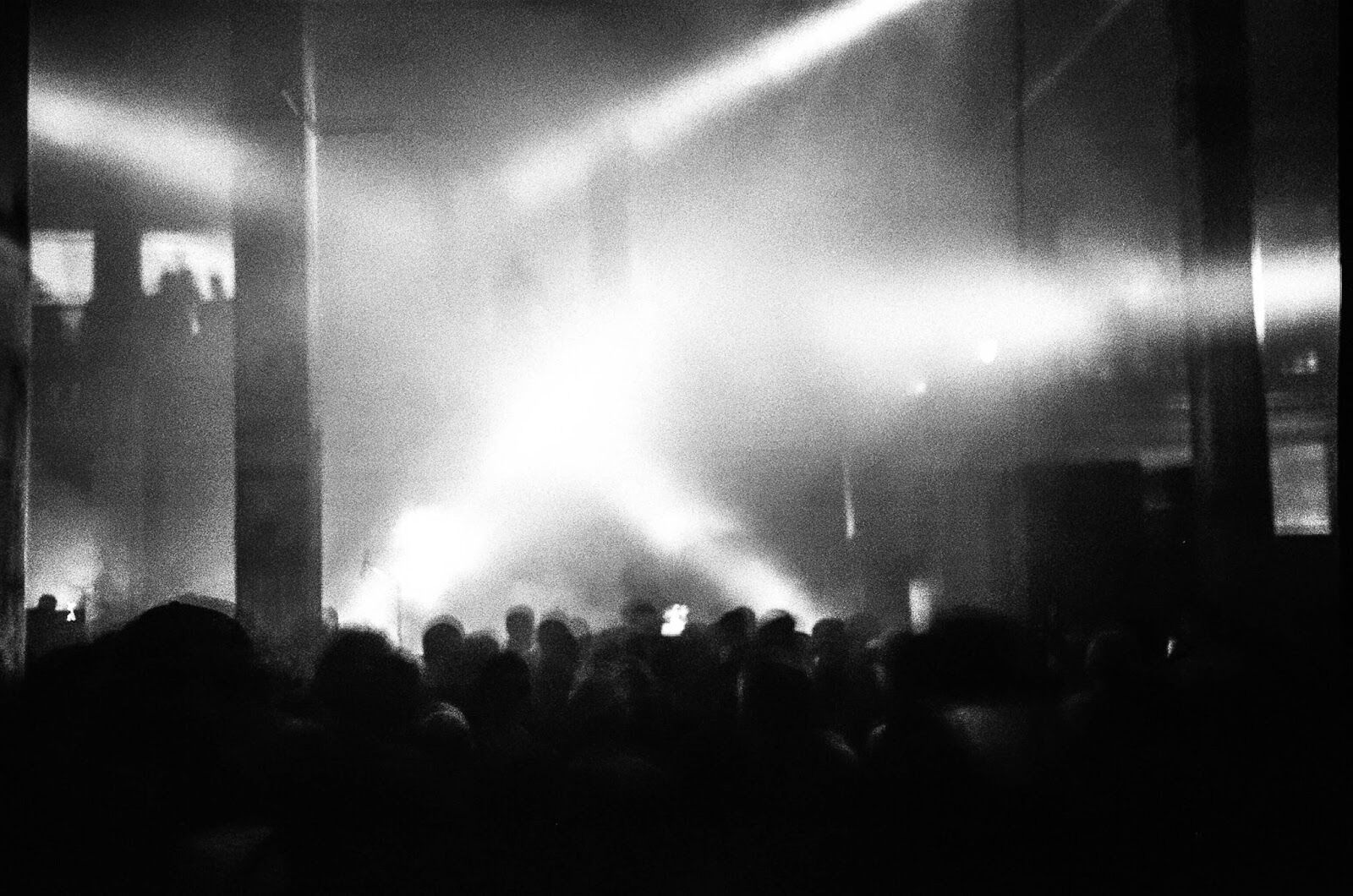
DJ Marcelle – ‘And the building shook’
The Third Surface stage was one of the festival’s most immersive spaces, designed to make every corner, surface, and reflection part of the listening experience. Sound here wasn’t just heard – it moved through the room, interacting with the architecture and the audience, creating a space where music and environment became inseparable.
One of the standout sets of the stage, DJ Marcelle – turning the unexpected into the essential – was a whirlwind of surprises and sudden twists. Reminiscent of sets by Bus Replacement Service and PC Music-adjacent London parties like Planet Fun, where the music evolves freely and follows whatever feels right in the moment, yet delivered with unique vigour and effortless nonchalance. The set was playful and unpredictable, inviting both movement and focused listening, always keeping you guessing what might come next.
A set to remind people that mixing doesn’t always need to be perfect – the tracks just need to be great. And to be clear, in my opinion, she was nailing both. The set felt entirely site-specific: the tunes resonating with the building itself, rumbling in rough cohesion. It was as if the tracks had been chosen so that their tones and textures perfectly matched the visual and physical palette of the space.
And as I watched in awe of her every move, dust crumbled from the walls – it was a DJ set like no other, and, to be completely honest, nearly impossible to pigeonhole. How enthrallingly fun. Now, on to Sunday.
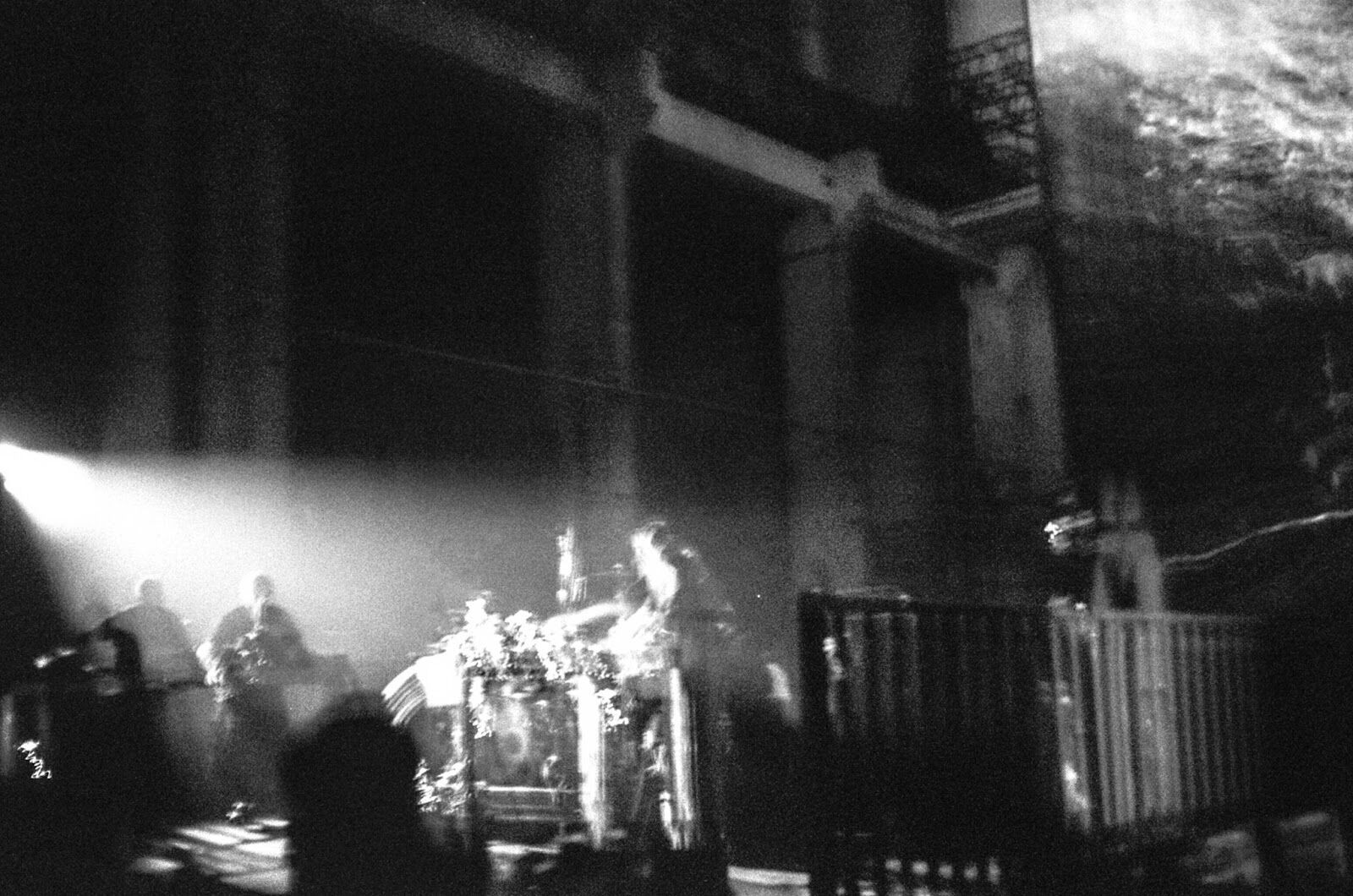
Merzbow/Iggor Cavalera/Eraldo Bernocchi- ‘And the drums were played’
Quite possibly the most anticipated set from the event, Merzbow, Iggor Cavalera, and Bernocchi stood preparing their individual noise-making setups. You could tell it was highly desired by the strong-footed, long-queueing audience, who would rather face off against any barrier-craving group trying to push through than step back and let them pass. The anticipation was undeniable – this was a crowd for the real heads, and, along with myself, it was clear that many had travelled here just for this.
The show began with all three enclosed and stationed behind noise tables, gradually building a steady murmur of textured sound. It struck me as unusual, almost like something you might encounter at an art gallery – a noise-based happening – but instead of three performers playing to a small gallery audience, it was thousands. That contrast alone was strangely mesmerising, yet also felt kinda safe.
Small bursts of chaos started to seep in, though nothing on the scale of the relentless noise walls Merzbow is known for in solo sets. This was its own distinct entity. As I watched with anticipation, I found myself wondering when the core concept of this collaboration would reveal itself – and when the first truly frenzied moment would arrive.
Paired with a looping visual sequence of first-person movement through a jungle-like environment, my mind wandered – Predator, Apocalypse Now… What was going on? I didn’t fully understand it, and I found myself wishing it were louder. As the set progressed, an intensity began to build, as if there was a plan unfolding. The noises hinted at it subtly, almost like an inside decision only the performers fully understood.
As the intensity began to rise, Iggor – much to the audience’s excitement – left his noise table and moved toward the silhouetted, stationary drum set. A gradual percussive element emerged, unlike anything in Sepultura’s style; this approach was fast, forward-driven, and focused on tom drones. It was a unique, innovative style, unlike much else I had heard. The slow-burning noise cacophony had suddenly redirected itself into something new, sharp, and cutting-edge.
This moment lasted little more than five minutes before he stopped, along with all accompanying noise. The show concluded. The three performers embraced, bowed, and left the stage.
In a way, a shame the drums had such a brief window of surging power. You’d think that on reaching this stage, there might have been room to explore a little further. Yet the performance clearly had a precise vision, and I was left thinking quietly, is there something here I’m missing?
But at least I had Korean Love Sonnets.
My last memories of Atonal were at OHM Bar on Monday morning, surrounded by great friends and fellow festival-goers. From there, I headed straight to the airport, heroically arriving on time but in a crumbling state of form, much like many of the sets I saw in the preceding days.
It had been a truly remarkable experience – a festival like no other.
And once more, to reiterate: the noise went on, the cup was dropped, the speakers were stretched, the bells were rung, the building shook, and the drums were hit. A recurring idea stayed with me throughout the event: this is the house that Jack built.