Text by Stephen McLaughlin
The atmosphere of political intrigue and conspiratorial thought especially since 2020 has led to many interesting projects interrogating the institutional capture and manipulation of the arts by political bodies such as Aaron Moulton’s work The Influencing Machine on the Soros Centers for Contemporary Art’s development of post Iron Curtain Eastern Europe’s burgeoning Digital art ecosystem and Jak Ritger’s (who has previously presented at Unsound) Astroturfs of Offense looking at more contemporary networks, not to mention the never ending ‘Thielbucks’ style accusations of artificial funding and boosting faced those who have someone in the media sphere who dislikes them, so on first glance one would be expecting another exercise in the paranoid style.
What’s actually being presented here is an inversion of that, a call for ‘a collective desire for comfort, cosiness, and safety’ as they put it themselves. At this stage, ‘Who paid the Piper?’ style investigation has been defanged to the extent of being fodder for ‘The CIA created abstract Art’ viral TikToks and an atmosphere of McCarthy 2.0 in relation to Independence and Authenticity (as if any of these GenX hangups have been possible since the advent of platform capital), in the end just leads to a creeping feeling that nothing’s real and your own power levels are negligible. Paranoia is joining dots and litigating the past while ignoring the everyday, base-level concerns of community that trust and care create.
Unsound’s specific strain of SOFT POWER seems to take its cues from Lora Mathis’s concept of ‘Radical Softness’: that personal vulnerability and emotional openness can be a source of strength rather than the traditional take that this is weakness. These fights against the current culture of bootstrap self-sufficiency and productivity expected from the perfect little neoliberal subject. This isn’t just smiling and sucking it up; it’s opening up a forum by saying the thing in the room that everyone else is afraid to say, breaking down these boundaries and forming new bonds.
It’s interdependence of strength as a larger unit rather than defensiveness of emotional detachment. That’s not to say people should use vulnerability to centre themselves and deflect criticism; it’s rejecting passivity in favour of finding the common ground for action as a unit. ____Refusing to be incapable of being affected merely because vulnerability makes a person easier to control, remaining open without the turning openness into an identity in the trap that many subcultures (not to mention cults) have fallen into.
For years, Unsound has deliberately fostered an environment to cultivate these new bonds between artists and larger themes. Whether it’s specifically matchmaking musicians and artists for one-off collaborations or juxtaposing seemingly disparate strands of culture and repurposing space so there is always a focus on creating a sense of permeability and community, bringing the conversations that only seem to take place online into institutions to the IRL without guardrails across borders and contexts.
Placing this in an AI context is particularly interesting; we are constantly told that AI itself, as an avatar for pure capital, is accelerating the conditions of liquid modernity through a machinic process that removes our attachments to individual ideals, thought, sovereignty, and even the comfort afforded to the employed. Computer says no.
Highlighting the power within softness reframes it to ask the question: ‘Are you not autonomous because you exist within the machine, or should you even value total autonomy, as a main human goal is to exist within a real community where you can rely on others? We have recently had people in the AI industry waving warning flags; perhaps the alternative to the acceleration of capital isn’t de-acceleration, but the acceleration of different kinds of relations.
A highlight of the discourse platform will undoubtedly be having theoretical researcher Marek Poliks and theorist and artist Roberto Alonso Trillo on staff to help us answer these questions. Their podcast ‘Disintegrator’ and recent book Exocapitalism have positioned them at the forefront of thinking on AI outside of the luddite doomerism that has captured most thinkers on the left (have a look at how much water that almond took to produce before panicking about data centres usage).
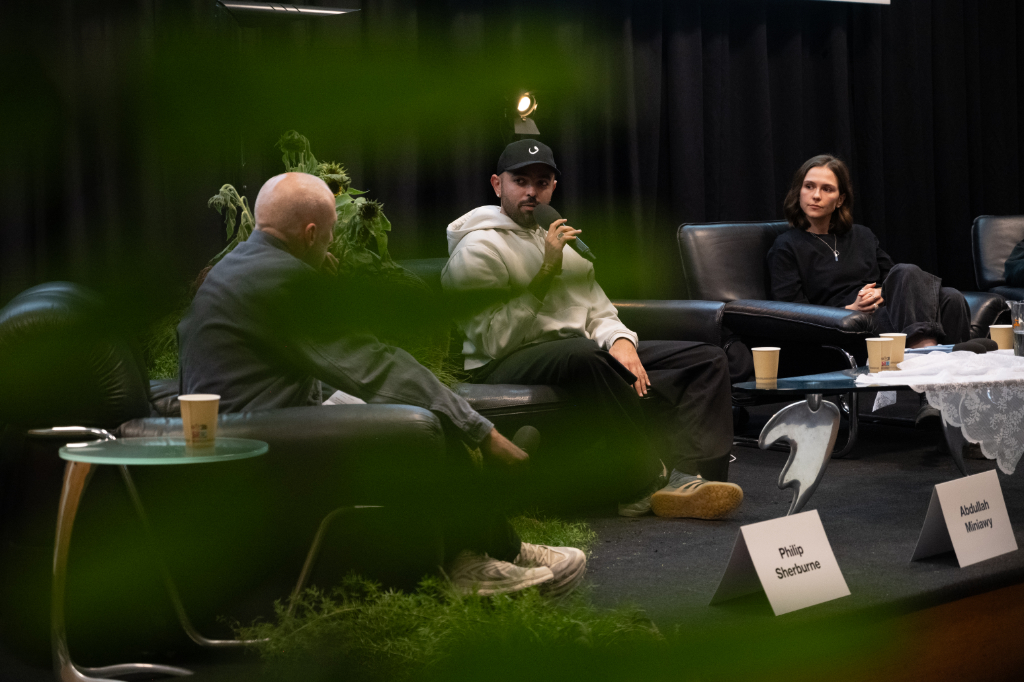
They place the focus back on the economic without abandoning utopian ideals and present this in a digestible form without drifting into a hedge maze of cryptic references. They will be on two panels in Kraków, the first on how creative communities and their infrastructures are being affected by AI with writer Liz Pelly and another on ‘Cringe realism’ questioning whether a true avant-garde can emerge through the slop in an era of digital context collapse.
In stark contrast, there will be reading groups on Amy Ireland and Maya B. Kronic’s Cute Accelerationism, which investigates modes of cuteness not just as a trend imposed by capital to subjugate femininity and move products, but also as something to be reclaimed toward transformative ways of being. The text has recently been translated, so there is the opportunity to participate in both English and Polish.
Another conversation not to be missed is with Marsha Courneya and Toby Heys, authors of Listening In: How Audio Surveillance Became Artificial Intelligence, who will look at how AI has accelerated sonic technologies’ ability to monitor spaces and generate human speech. They track the development of audio surveillance tech from Theremin’s first audio bug right up to now, when sound itself can be used to map out spaces. They also loop this back to how contemporary music and sonic work can be used to disrupt these practices.
Alongside this, there’s a stacked programme of panels on trending topics throughout the week, including Folk music revival, looksmaxxing, club culture evolution, Psy Ops in music marketing, and Lauren Martin presenting her book, Aftershock: The Seismic Impact of Dubstep. Dubstep OG Steve Goodman aka Kode9 will also be presenting the evolution of his work on sound in warfare before returning to the dancefloor later in the week.
The festival itself is structured around 2 very busy weekends with a very slight lull toward the centre, so it’s hard to draw your own personal journey through it, and one needs admiration for those tackling the whole 10 days given the depth of what’s on offer. The Morning Glory sessions take care of those who need a little more self-care and an earlier bedtime, with performances from Klein, Visible Cloaks, Hashtag Ensemble and Klein to ease into the days.
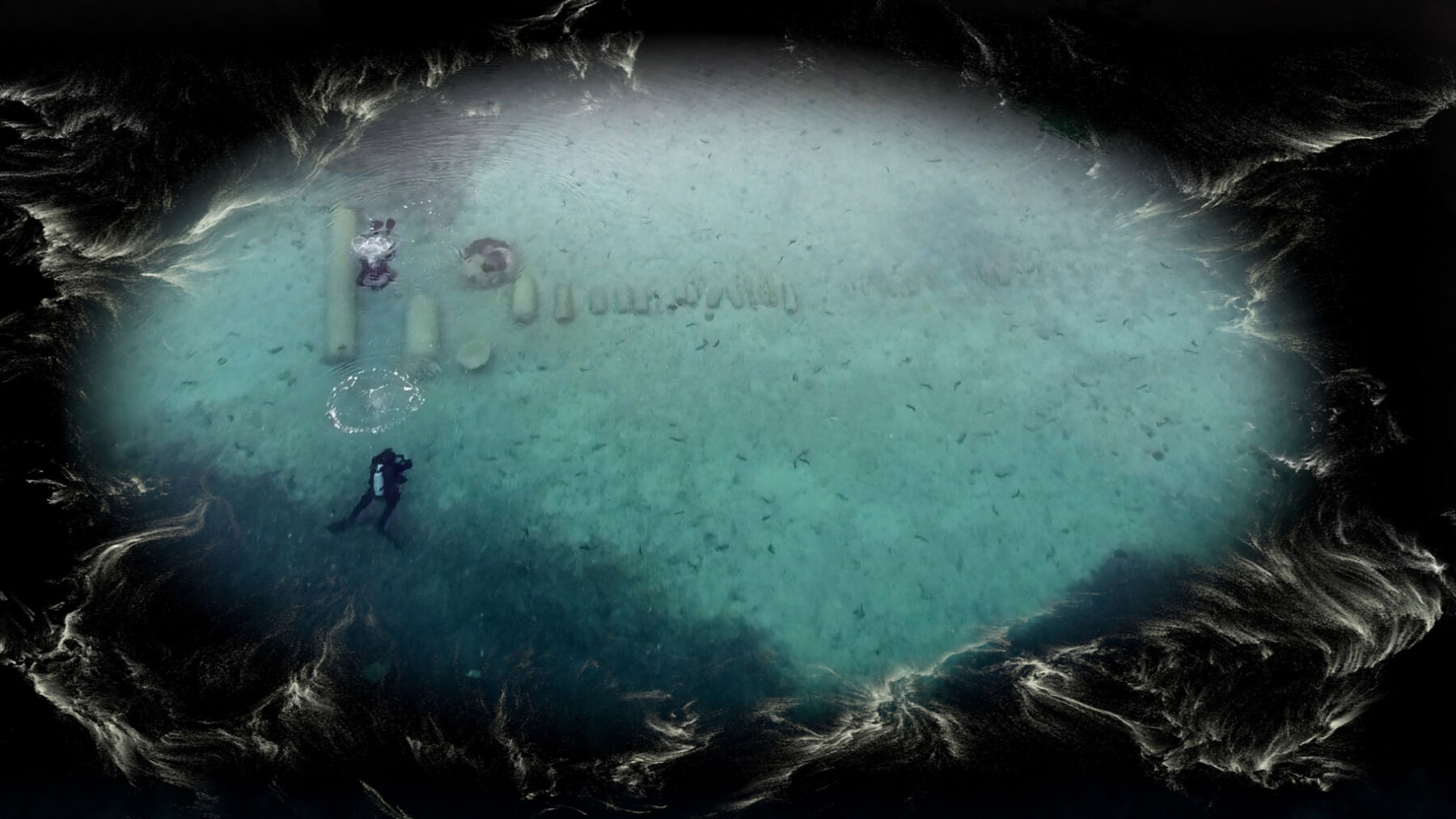
The opening hybrid theatre/Improvisation/rave from ASIANDOPEBOYS and dancer-choreographer Siko Setyant’s ‘Moyang 先祖 & Seaman 漁師’ with live music by Indonesian artists Kadapat and Nova Ruth is set to be an early highlight. It expands on 2024’s Ocean Cage using an expansive palette of sound, light and dance.
Club-wise, Saturday in Warsaw is the inescapable Arca’s Airdoll extravaganza. Her evolution from bedroom producer through transgression and rebirth into main stage Diva has been an inspiration to a generation, and now this expansion into club concept, both playing live and also DJing with fellow deconstructed club originator Bobby Beethoven AKA Total Freedom, is on the way to an affirming Gesamtkunstwerk.
Tim Hecker returns more than a decade after his olfactory installation Ephemera, this time backed with visual artist Vincent de Belleval’s custom-made LED light show. His work has always walked the line between brute force and tenderness, so it will be a welcome balm before the intensity to come later in the evening.
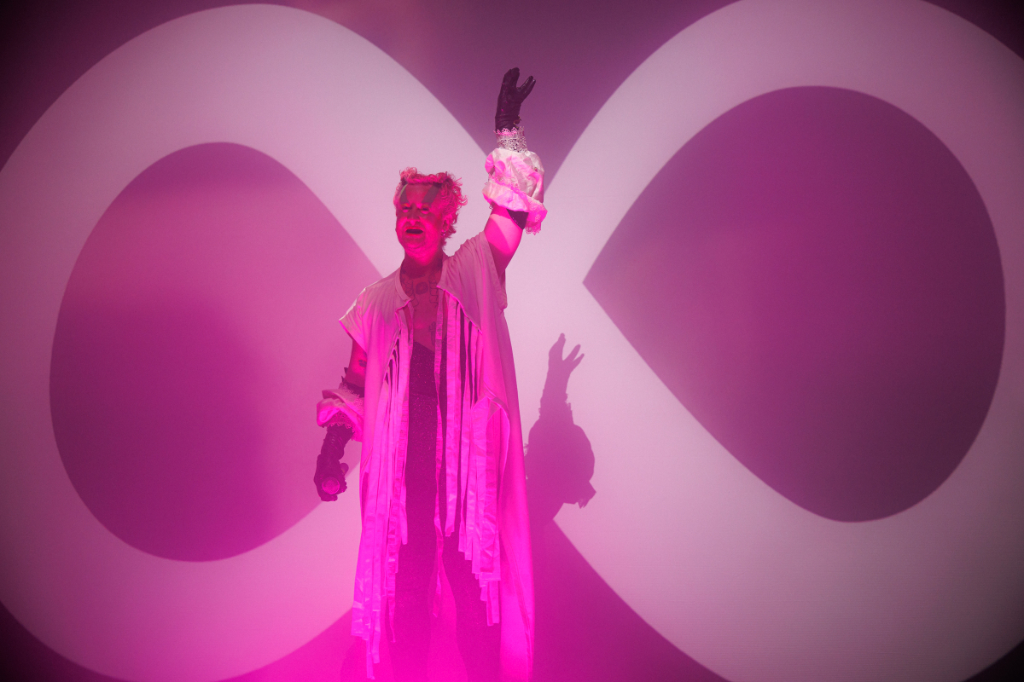
A solid contingent of the UK’s Northern Gothics is in town, from Black Haine to Space Afrika, fresh off their triumphant work at Leyland Kirby’s Blacklights festival in Blackpool, but here separated by cities. Also can’t miss the return of Tom Boogism and Ship Sket putting shifts in. A real coup is Monday’s performance from Diamanda Galas, fearless figurehead of the avant-garde for decades, joining the dots between disparate movements and a reckless disregard for convention. It’s hard to know what’s coming here, but missing out isn’t really an option.
The festival’s centrepiece will be a sonic journey by train on Wednesday, linking the 2 locations in Warsaw and Kraków for those intrepid enough to tackle the full 10 days. It will take place over 8 hours, with a stop in Kielce for a collective walk and concert at the Kielce Cultural Centre by the Radical Polish Arkestra, plus performances and a DJ car on the train itself. Unsound has a long history of activating underused and liminal spaces with creative care and attention, so I can sense genuine excitement about how this will play out.
Thursday features the highlight of the more traditional band setup, with LIars performing Drums not Dead for its 20th anniversary, placed alongside Maria Herlop and the unveiling of Actress’s new AV show at Laznia Nowa a little further out of town. Ireland’s One Leg One Eye bring their intense Celtic brand of folkloric doom electronics there the following night alongside Mandy Indiana and L’Rain.
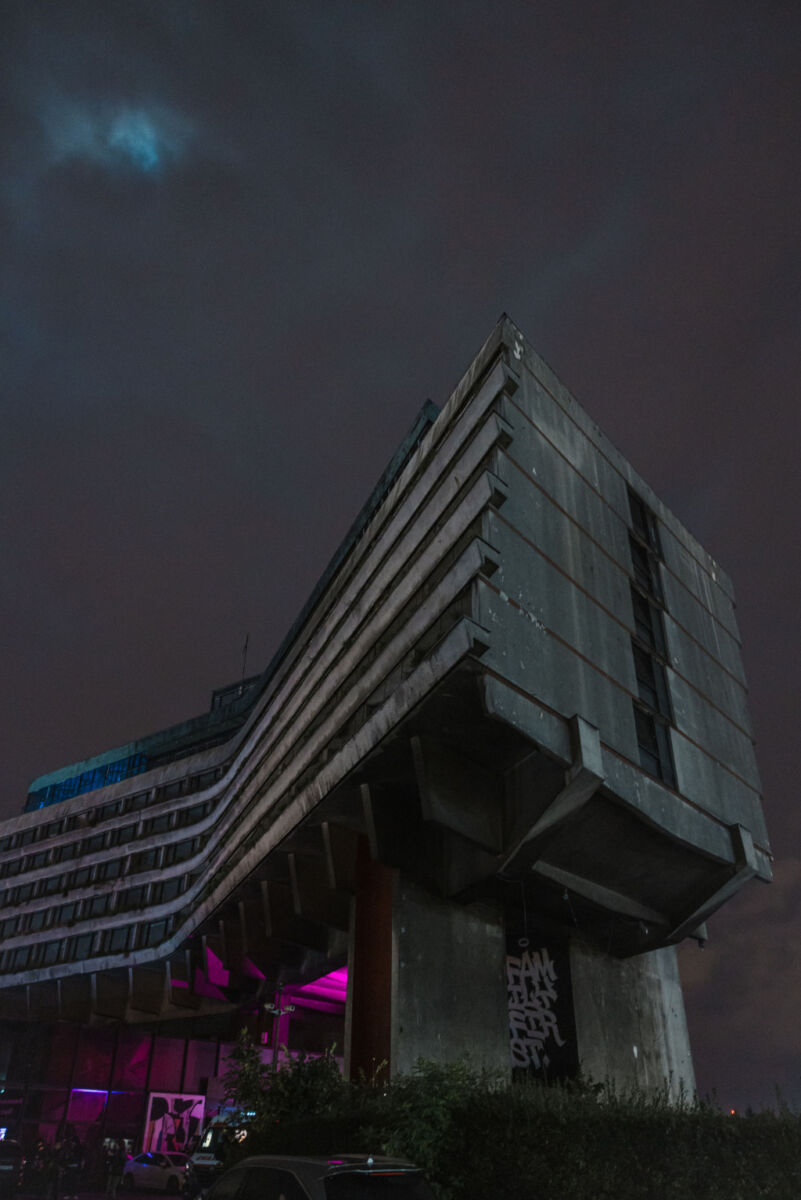
There was much excitement about the Hotel Forum’s return last year, and all 3 nights this year feature many who know the place well, such as Lorenzo Senni, Errorsmith, DJ Spinna, and Kode9, but there’s plenty of new blood. K Wata, whose album on Short Span is definitely a contender for my most-listened-to this year, draws a path from hardcore continuum dynamics, sanding the edges off to place them in a zone reminiscent of Chain Reaction at its most blissed out. Also make sure to seek out Dagmar Zunika’s lofi 4-track folk, which will be a welcome break from the chaos of the main room.
It’s very much a case of choosing your own tempo and line of flight; few have the collective capacity or stamina to accelerate through all of this, but openness to making new connections and increasing these flows are undoubtedly the seeds of a soothing experience. Just maybe book a spa day on Monday.